
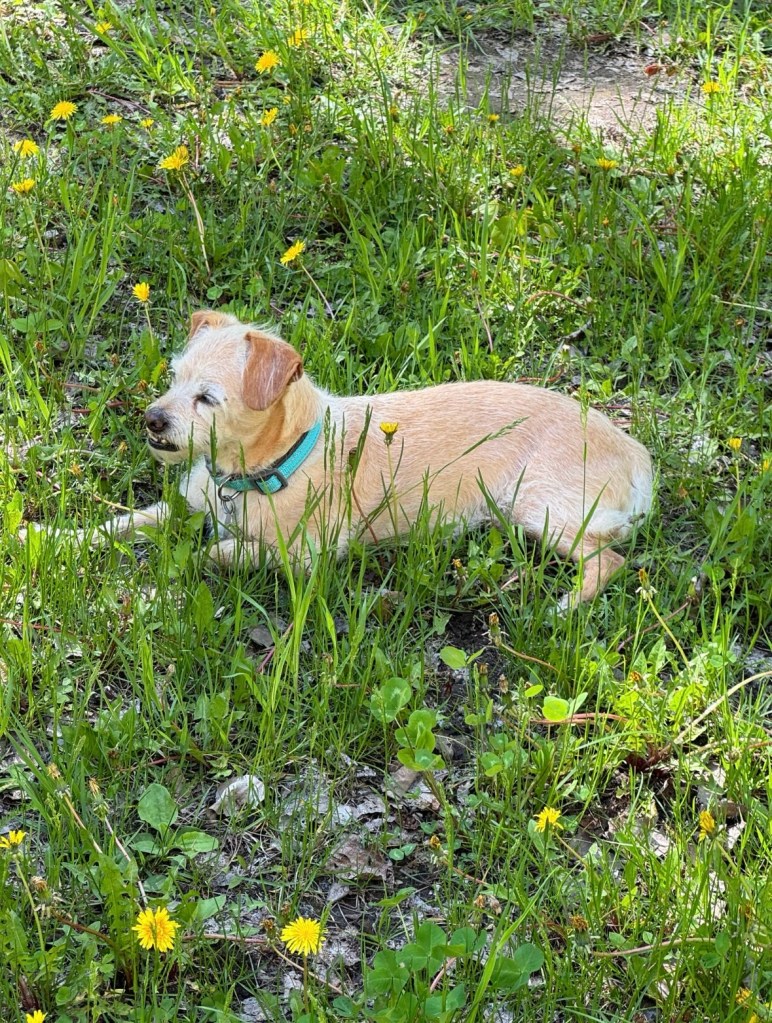
At the end of January, after almost a year of significant health challenges, we lost our 15 1/2-year-old dog. We knew that outcome was coming, and we were pretty aware of how much we would miss him. But it has been hard. He was our constant sidekick, and that included in the gardens. He was also our last dog. We have had dogs for 30 years as a family, and we do rescue, so they often come from tough past care and experiences. We loved every dog, dearly, but it is time to wrap up that part of our life.
2025 year was a pivotal year in other ways as well, and we are assessing other things now too.
In 2025 I went a tad much on daylily crosses. It is a lot of creative fun to plan the crosses, to see what blooms each day and do the available crosses, to see the crosses form pods and mature to harvest readiness. But mid-September last year it switched to “too much”. Last year I harvested 521 seeds, with 19 successful intentional (not pollinator) cross types, 17 of which were new. There was a lot of harvest related work, including storage work that went way too far into fall for my preference. And now, in Spring, I have 521 seeds in dry cold stratification. (More on that below.) Every single one of those seeds will require planting, monitoring to seedling, hopefully making it to seedling, and then planting in its 3-year home (to bloom). I loved previous years when I did much less. Last year was too much. So, we reassess.
As part of the assessment, I considered that, yes, gardening is my primary hobby, but it is my – hobby. And true, I added garden blogging 8 years ago, and last year I added historical research, but those are also hobbies. To keep at that scope, I am solidifying my decision, for 2026, to pare way back on doing daylily crosses. I will probably do 5-7 intentional cross types, as I did in pre-2025 years, but I want to spend a boatload of time just enjoying the gardens, including watching the pollinators enjoy the gardens. From there we will see where it goes. I do want to head farther down the historic path of daylily gardening, and I am still working on getting Flava (historic) daylilies, but if I can’t get them this year, that’s ok too.
Now for actionable info – As I mentioned above. I do dry cold stratification for my harvested daylily seeds. Yes, I am seeing that is not the currently documented best practice, but again, I am a hobbyist, and I am aiming for minimal complexity. Here’s my timing this year. On Feb 7 I put the 521 harvested (stored by cross, type and date) daylily seeds, in envelopes, in plastic bags, into the side door of our refrigerator. Super high-tech stratification 😉 In April I will plant some seeds indoors in trays, just because in April I get impatient for garden activity. However, the vast majority of my harvested daylily seeds will get planted in May, in multiples, by type, into medium pots, and the medium pots will go into protected seedling boxes where they will “sink or swim” outside. I know. Blasphemy! But this is the method I arrived at quite a few years back, and how I do this every year. Last year I had about an 80% seed to seedling success ratio.
More to come. As always, I will share as we go along 🙂
 Susan's Daily Garden