
My 2025 daylily crossing (hybridizing) work is done, and pods are formed and maturing. I have had a week to relax and just enjoy the bloom finale, and some lessons learned are coming to mind. I thought I’d share. Here goes:
1) The journey is exponential. I have gone from harvesting self-seed from one South Seas daylily 7 years ago to now well over 100 intentional and self-seed seedlings. I have seedlings at the townhouse and at the historic cemetery, and have planted seedlings in other gardens as well, including our little house up north that we sold. In addition, this year I have dozens of successful intentional crosses that have gone to pod. Pods often have multiple seeds, so hundreds more seedlings are potentially on the way next year. To move to the next step, some of the 2025 seedlings are moving up north this fall. Those are the 2024 seeds that went to seedling this season.
2) Crosses that worked one year may not work the next. Crosses to the red daylilies were crazy successful last year. This year? Very skimpy. And believe me, I tried. But new ideas abound, and even just flipping the cross, pollen to pod parent, works.
3) Daylilies I want to use a lot for crosses need to be very accessible. I love paths, but I do not love stepping through daylilies on a forget-me-not path. a) Forget-me-Nots stick to fabric, and b) it just feels wrong to step on flowers. As an example, this is Coral Majority. Although she is not a good pod parent for intentional crosses, her pollen is awesome. But she is not in a good accessibility spot right now. Eventually I need to move her to a more accessible spot. Probably next fall.
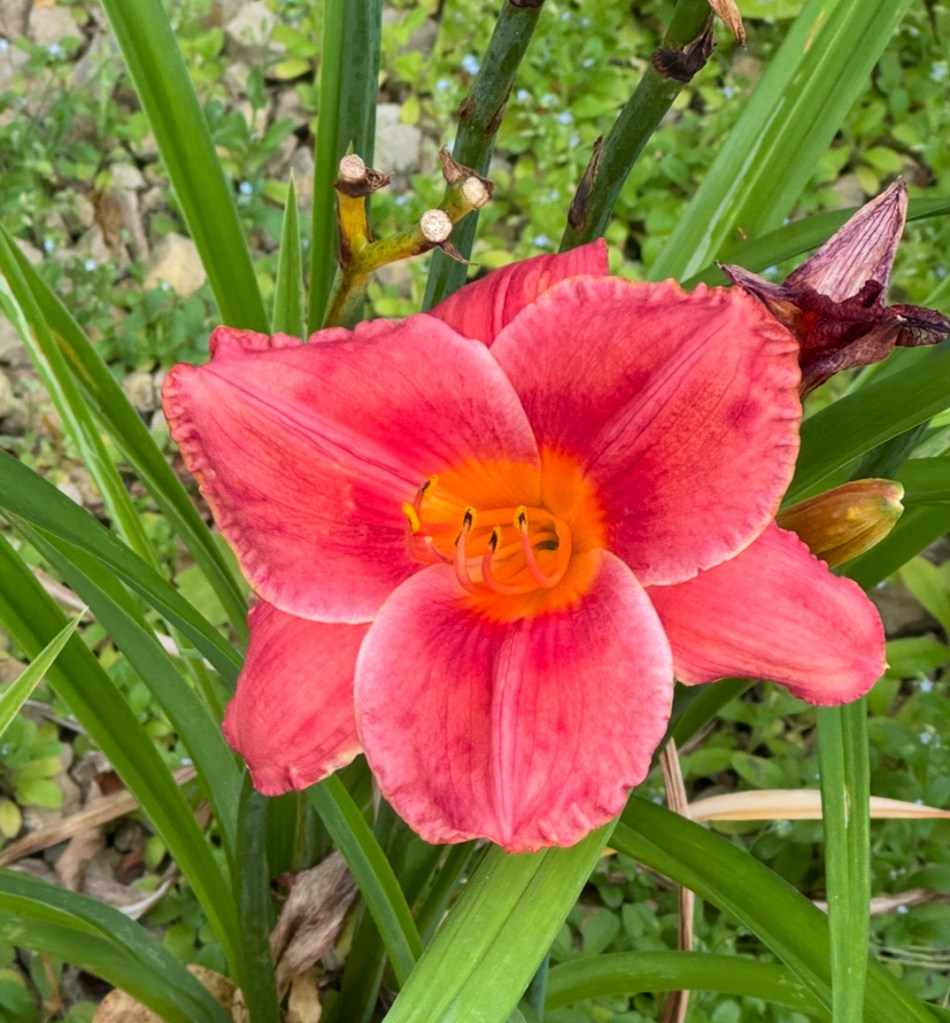
I have done crosses with her pollen this year, and she also has some self-seed pods again this year. I am, however, more often than not, just enjoying her blooms. She has had quite a few more tame (not so wild tie-died looking) blooms in the past few weeks. Isn’t she looking exceptionally lovely? I will miss her blooms.
4) Only cross one daylily type’s pollen to one clump of daylilies. This year I took that even farther for some crosses and only did one pollen type cross to all of the Marque Moon blooms, all on the same day, and I got 4 pods. Semi-Simplistic. Who wants to make a fun hobby stressful? Not me!
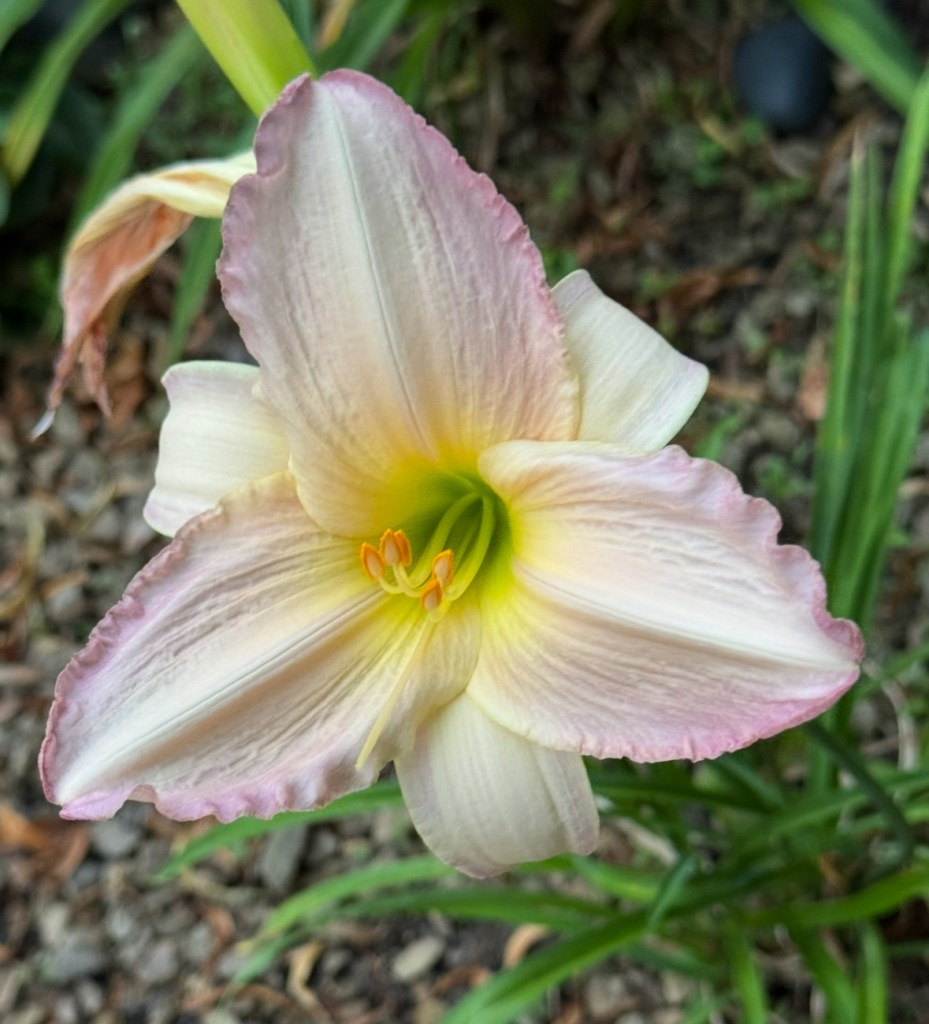
5) Take time to smell the daylilies – literally and figuratively. Some daylilies, like Tender Love (below), are very nicely fragrant, so don’t ignore that treat.
And figuratively, when doing crosses starts to feel like burn-out, stop. The pods will require work yet this season – harvesting, labeling, storing – and then the seeds all need to be stratified, and planted and cared for to germination and growth next year. No shame in setting a date to stop. Name a date and then stick to it.
6) Remember this is a very long game. Years. Maybe more than half a decade. Unless you are willing to pitch greens after just a few years, be patient. I had a six-year-old seedling finally go to bloom this year and it was well worth the wait.
7) There is landscaping, and there is gardening. For “landscaping” be willing to stick to a mass quantity palate. I have a red, white, and blue theme for the landscaping out front with masses of red daylilies – very simple.
8) Gardens are not landscaping. I have gardens out back. In gardens, especially daylily crossing gardens, color surprises happen. Wonderful surprises. And ”not for here” surprises. This year one of the surprises was a red daylily volunteer from the red daylilies out front.
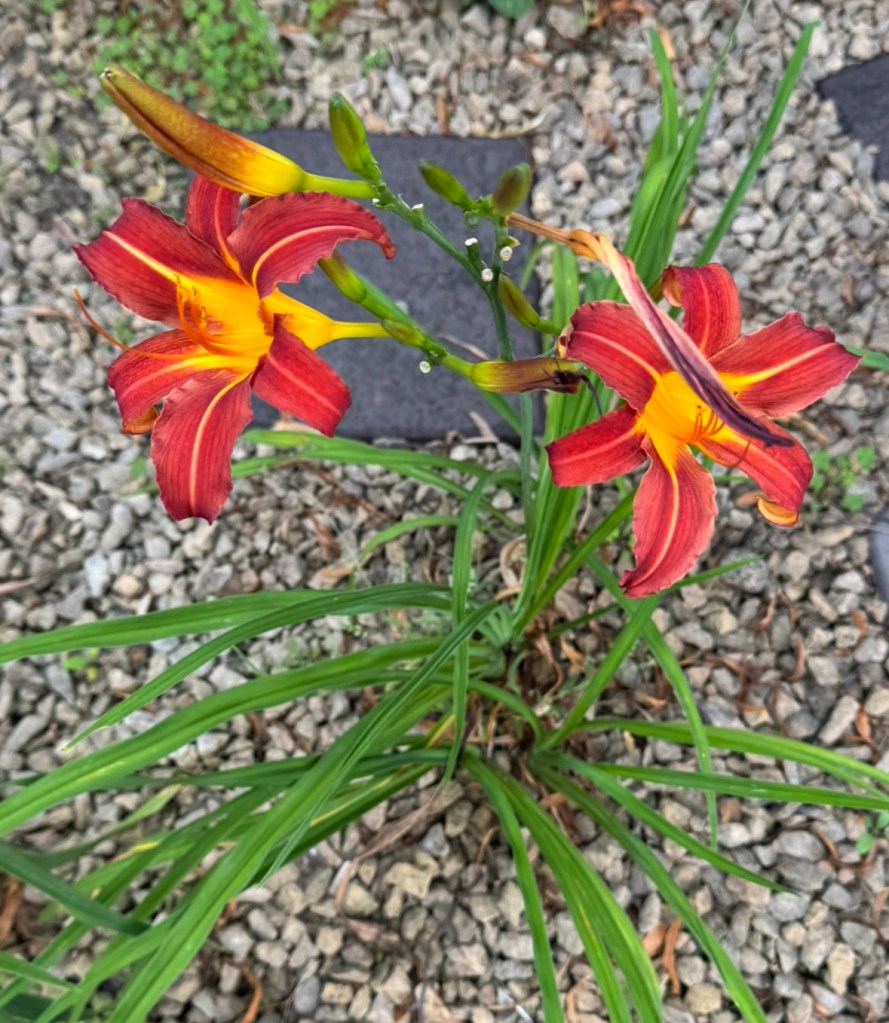
They used to be out back, and I think a seed got in with the Purple D’Oro seedlings I moved, right into my line of view where I sit on the patio. Right next to Equal Opportunity, which turned out to be a peachy, frilly bloom I wish I had 10 of. But Equal Opportunity is done blooming now, and you know what? The red volunteer just keeps blooming away. I love the masses of red out front AND I love the calm of pastels out back. I came to the conclusion that the red daylily seedling will be moving, but probably not until next fall. I am still hoping there are Purple D’Oro seedlings to come in that bunch.
9). Focus, Focus, Focus. Pick one or two lines for crosses (parentage), and work with that. South Seas is already, for sure, my primary. Pink Tirzah will probably be a secondary. Even though I can’t find Pink Tirzah’s parentage, I already have seedlings and pods from Pink Tirzah, so I know that line will also work.
10) Document, Document, Document. And document some more. My sad, sad story on that is that I am beginning to think I have a cross I mis-labeled in the early years. It went to bloom a couple years ago. I had it labeled as a cross between a diploid and a tetraploid, which I might actually have done back then. Or it could be a self-seed. Or it could have been a tetraploid cross where I wrote Pink Tirzah instead of Pink China Doll. It has fairly driven me bonkers! Especially since it has typed out two years in a row as a tetraploid and Pink Tirzah is supposed to be a diploid – but, then again, I found reports of it crossing with a tetraploid. Since this is such a long game, testing out for replication will take years. In the meantime, Hello Yellow is a nocturnal tetraploid that took a cross with two different tetraploids this year and made pods. And in the end, I am doing this for fun. Hello Yellow may forever remain a beautiful mystery.
11) Enjoy self-seeds. I have fallen in love with the self-seeds that went to bloom in our garden this year. They all will stay. I may even do an “only self-seed” year in the future. You never know.
So there you have it. 10 Lessons Learned from the 2025 intentional daylily crossing work I did, plus an extra option for “no intentional cross required” (the self-seeds).
I hope you have a wonderful weekend, and Happy Gardening!
 Susan's Daily Garden
I have never seen such beautiful day lilies as yours.
LikeLiked by 1 person
Thank you, Mags! I am so glad you are enjoying them! I hope you are having a good day!
LikeLiked by 1 person
My day was good.
LikeLike
Very fine
LikeLiked by 2 people