
The long wait is now over. Things are popping all over the gardens, and I am starting to see what made it, what didn’t, and what work there is to do.
At the townhome gardens, sadly, it looks like we lost two sedum. How that happened for one of them is a mystery to me. That one was our only variegated sedum, and I will miss it. It had been there for a long time, maybe over 10 years, so I am a bit surprised. I won’t replace it with another sedum, but I may put a daylily there this fall. Potentially a seedling. But first I want to refresh my memory on how strongly the sprinklers hit that area. I don’t think the variegated sedum died from sprinkler damage, but I want to make sure it is a safe place.
The other sedum that didn’t come back was under the linden. That one never did well. It just never took off. I won’t put anything in that spot to replace it because the daylilies are also starting to underperform there. There are a lot of linden roots. It is a spot I will leave as “rock only” as things fail.
On the flip side, we have a bumper crop of Bluebells clematis volunteers, and those are in the “work” category. I need to transplant them to another area. This area is not optimal 😂

The volunteers are from our large Bluebells clematis that always performs very well, and I suspect I will continue to have volunteers over the years now that it is well established. Last year I allowed one to grow around the red daylilies, and this past weekend I dug that out and transplanted it into the spot where another clematis volunteer (different type) was way underperforming. Hopefully this volunteer does well. So far so good.
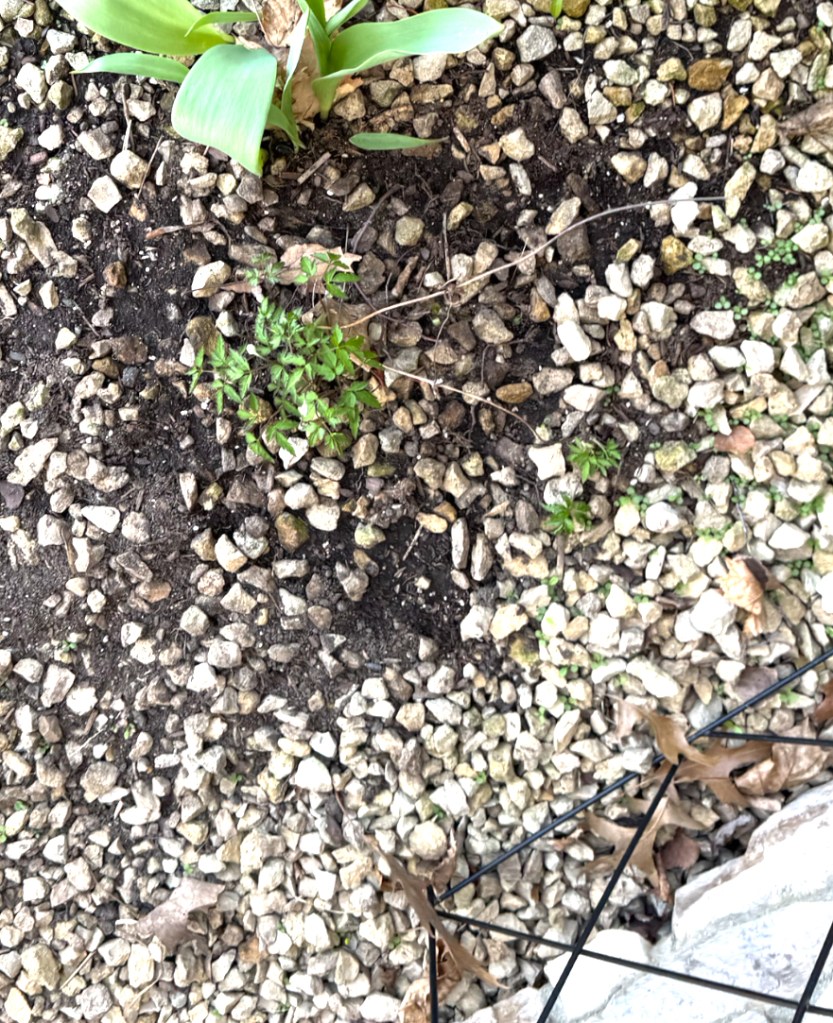
And then there are the missing hostas. There are three in particular that have no sign of anything, and that is a bit concerning. Two I was going to give to my Dad, but the third was one of my long-time faves, and if it doesn’t come back, I will miss it. BUT I have made a decision. If it doesn’t come back, I will convert that real estate to daylily space. That hosta really always amazed me because it should never have done so well there for so many years. That spot really is more of a … daylily sunny spot. But I put it there in my early years of creating our gardens, and it went to town for well over a decade. Probably 15 years. So if that hosta is gone, I will greatly miss it, but it will be replaced by a purchased daylily this fall. (Yes, I have my sites on a few candidates.) Then that entire area will be daylilies, with a few remaining Asian lilies, a few remaining tulips, and a legacy Autumn Joy Sedum.
For the other two “missing” hostas, if they do not come back, I will not replace them. The area where they were was getting way overcrowded, hence why they were going to find a new home with my Dad. And, my Dad just had a bunch of trees removed so they may have not done well there anyway.
Which leads me to story time. When I started our gardens at the townhouse many many years ago, I was head over heels in love with hostas. I planted boatloads of different hostas. I visited hosta gardens. I bought “hosta of the year” varieties I liked. I was gifted hostas. My Dad even bought me hostas from a neighborhood gardener he called the “hosta masta” (master, that is 😊). I have grown and divided all kinds of hostas for over two decades. I even tried my hand at harvesting hosta seeds and seeing if I could grow hostas from seed. (Not for me.) I love hostas. And I will keep the hostas I have that are still doing well. But that era was that era, and the garden “container” is the garden “container” (not getting any larger), and I am not getting any younger. So … in a finite space garden … hosta attrition makes way for daylilies, if the space is sunny. (Amazingly, I did have some huge hostas that did very well in relatively sunny spots. Go figure).
In this new era, I have my daylily seedling beds, and they are doing well. Those were solidified as the plan last fall. I also have one 6th year non-blooming daylily seedling in a different area, and I just can’t seem to move that one out, but we shan’t dwell on that. I figure at some point when the garden “container” is full, I will know it is time to stop doing daylily crosses, and then I will sit in my patio rocker, with a beverage of choice, and just enjoy. Haha, I can hear family and friends alike laughing uproariously. But that will be a few years yet. Hopefully quite a few. Because goodness! I have 60 “same cross”seeds I still need to get into pots in the seedling planter, and if even half of those go to seedling, oof! Realistically, experience tells me “probably not” and I will most likely end up with optimistically, 10 seedlings from that 60, to be planted in the 2025 seedling bed this fall, and watched for bloom starting next year.
At the historic cemetery, I am gonzo in love with what I see so far – legacy plants are doing so much better in year 3 of the mulch bed. The iris bed is in year 3 now, year 2 for watch to bloom, and I already see multiplication. Daylily seedlings I planted last year from here look great. Daylily purchases I planted last fall are coming up. Even the Blue Mouse Ears hostas made it.
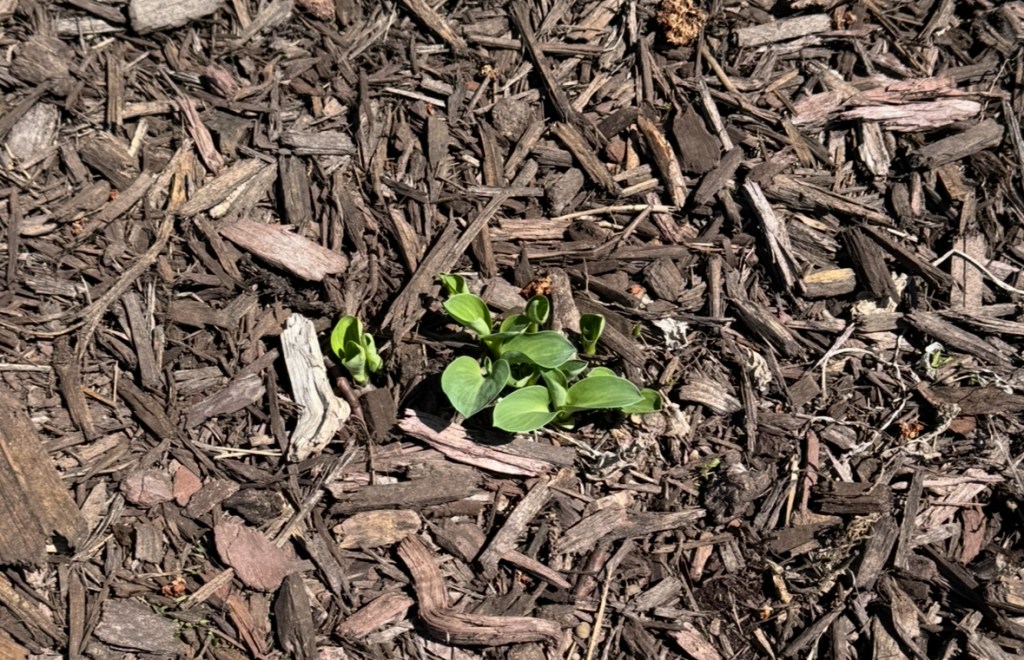
Overall, so far, so very good.
Weeding time at the historic cemetery is down to an hour per week – amazing what the mulch bed tamps down. The only thing I want to work on is the aging creeping thyme. It needs some cleanup, and I may grab some irises from the old garden bed and do some fill in there. Otherwise, one hour per week weeding, watch for the garden to do its thing, and maybe, optimistically, try a few crosses.
 Susan's Daily Garden