Happy Wednesday!
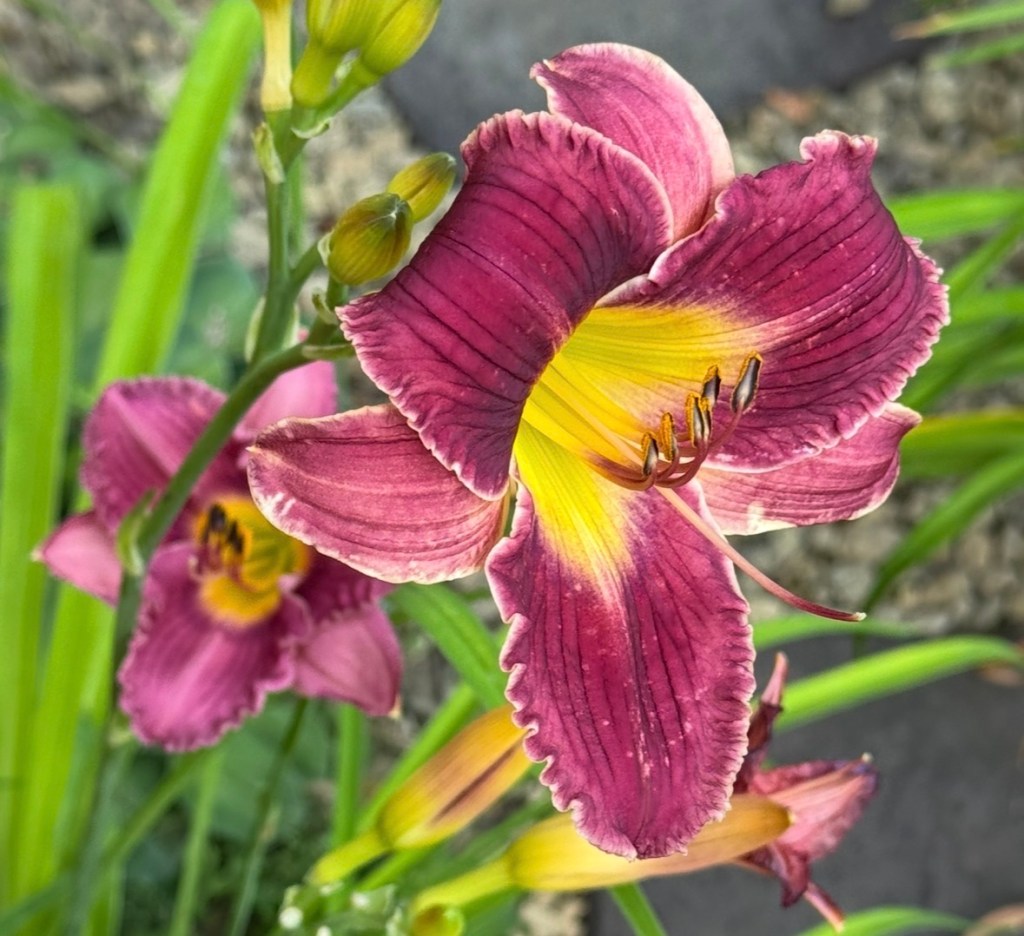
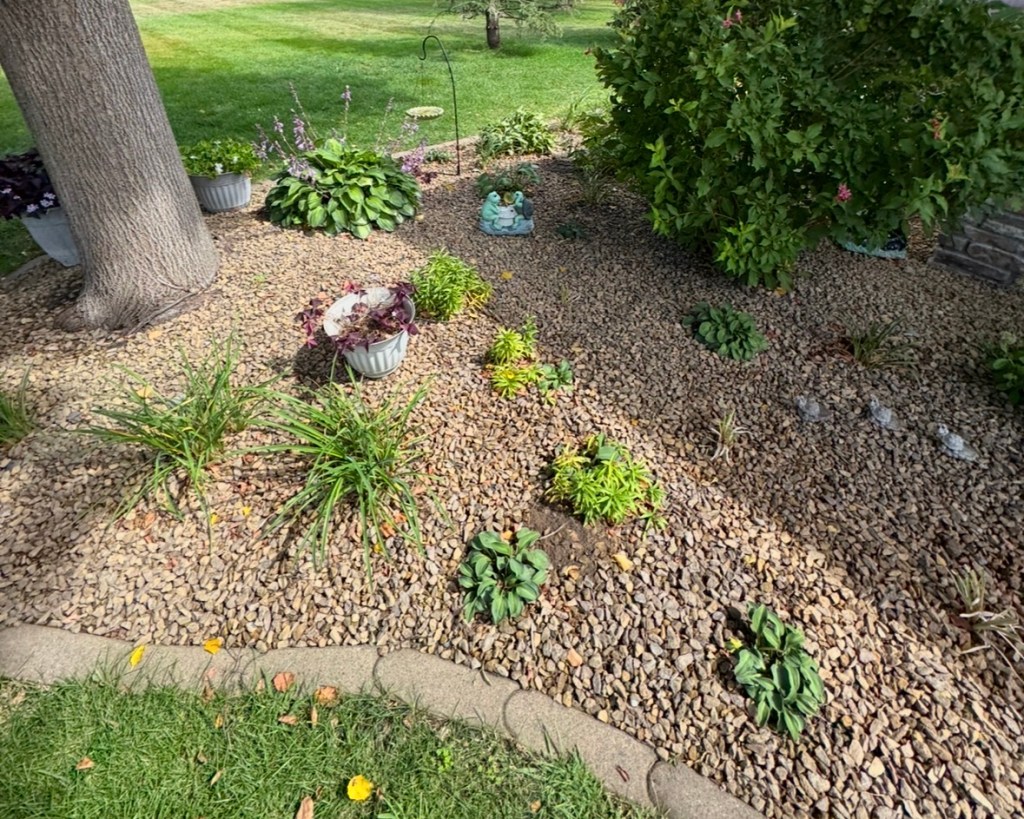
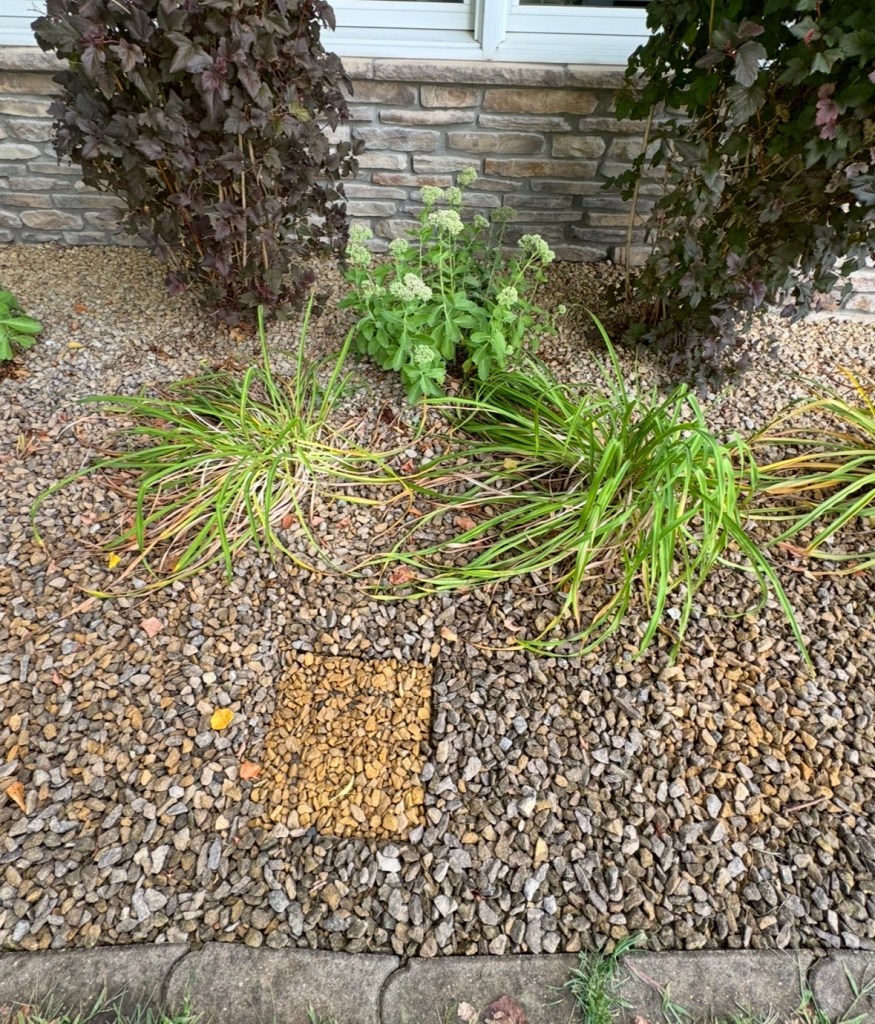
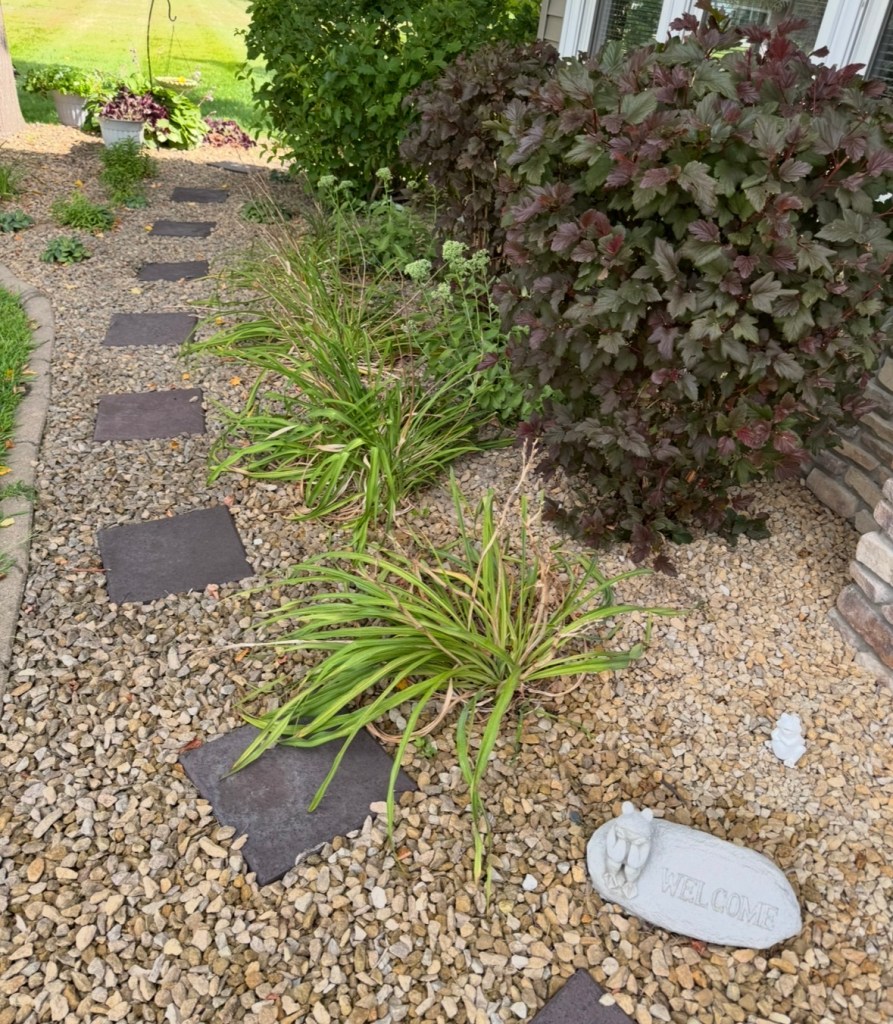
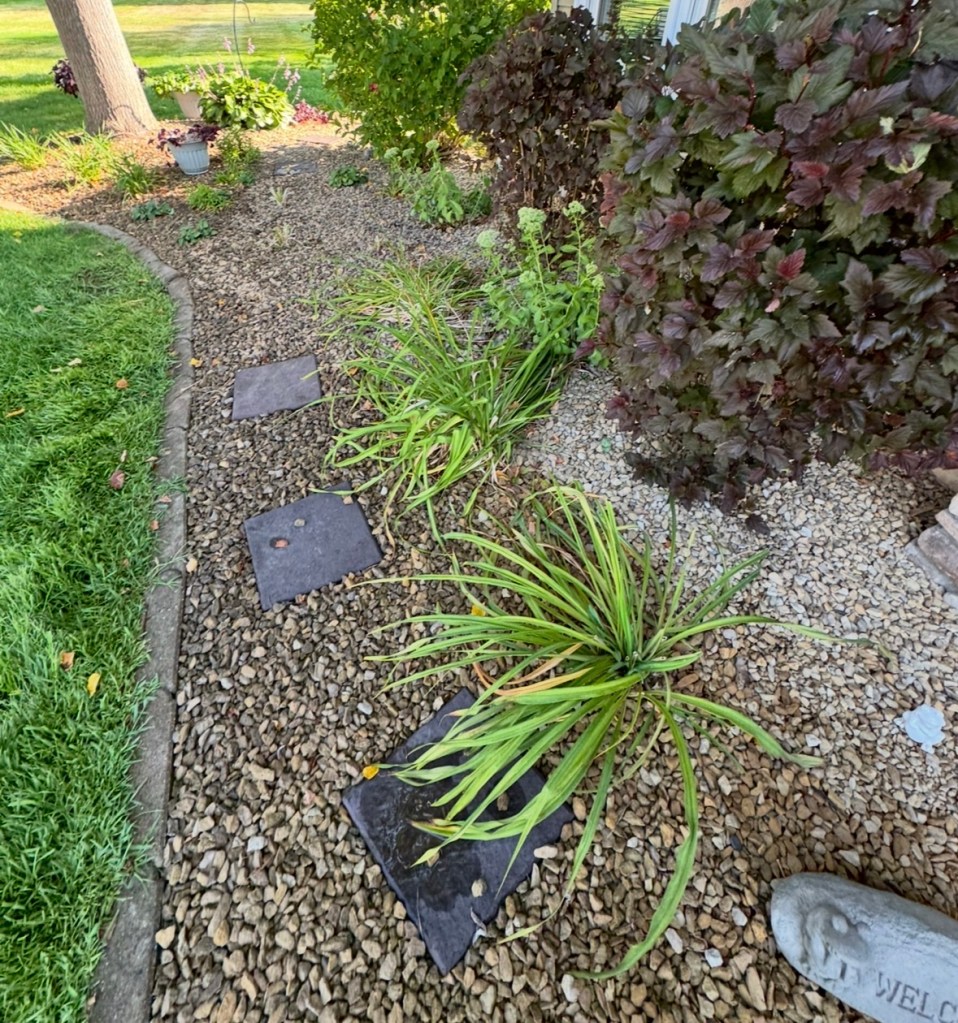
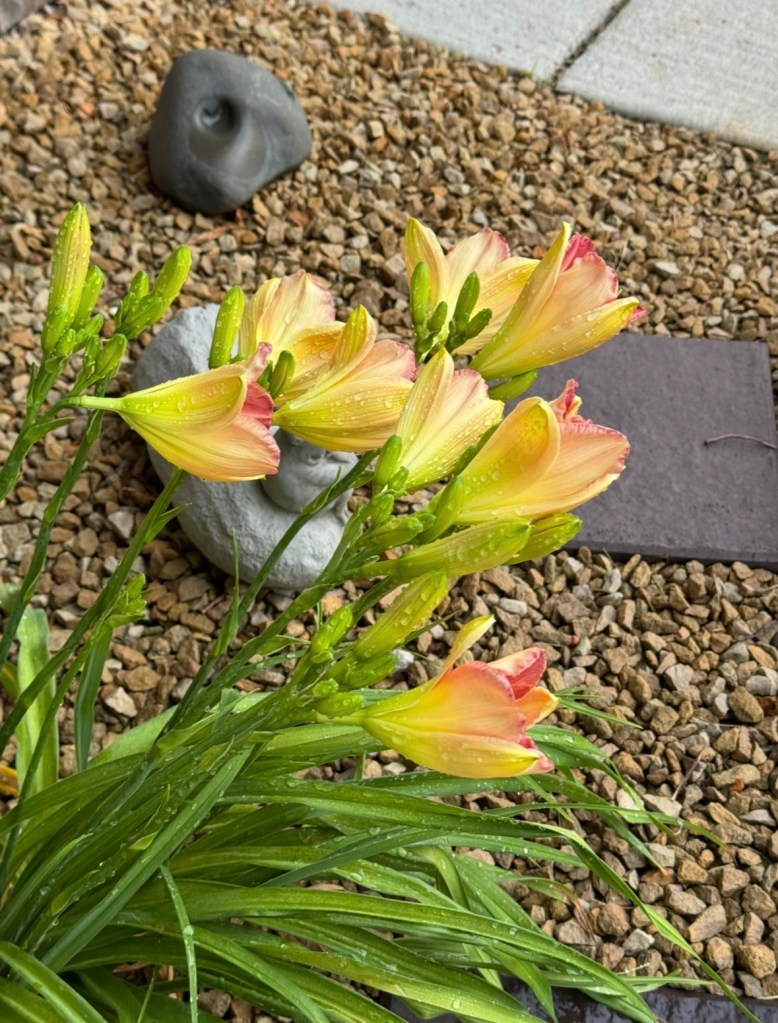
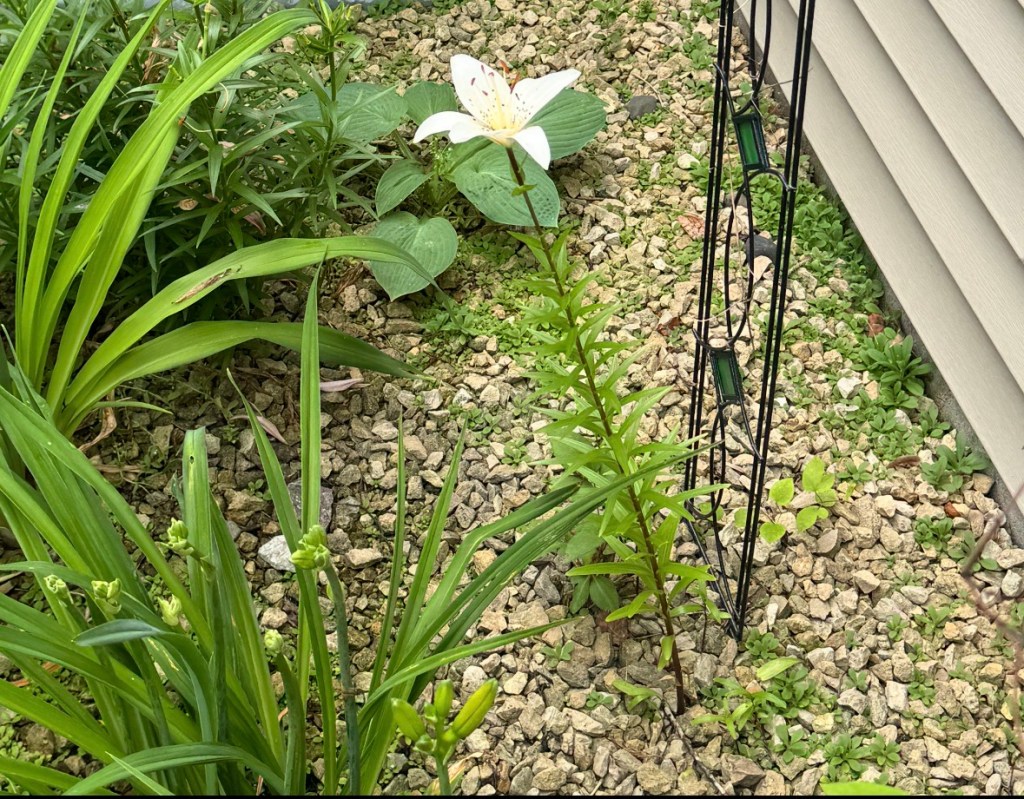
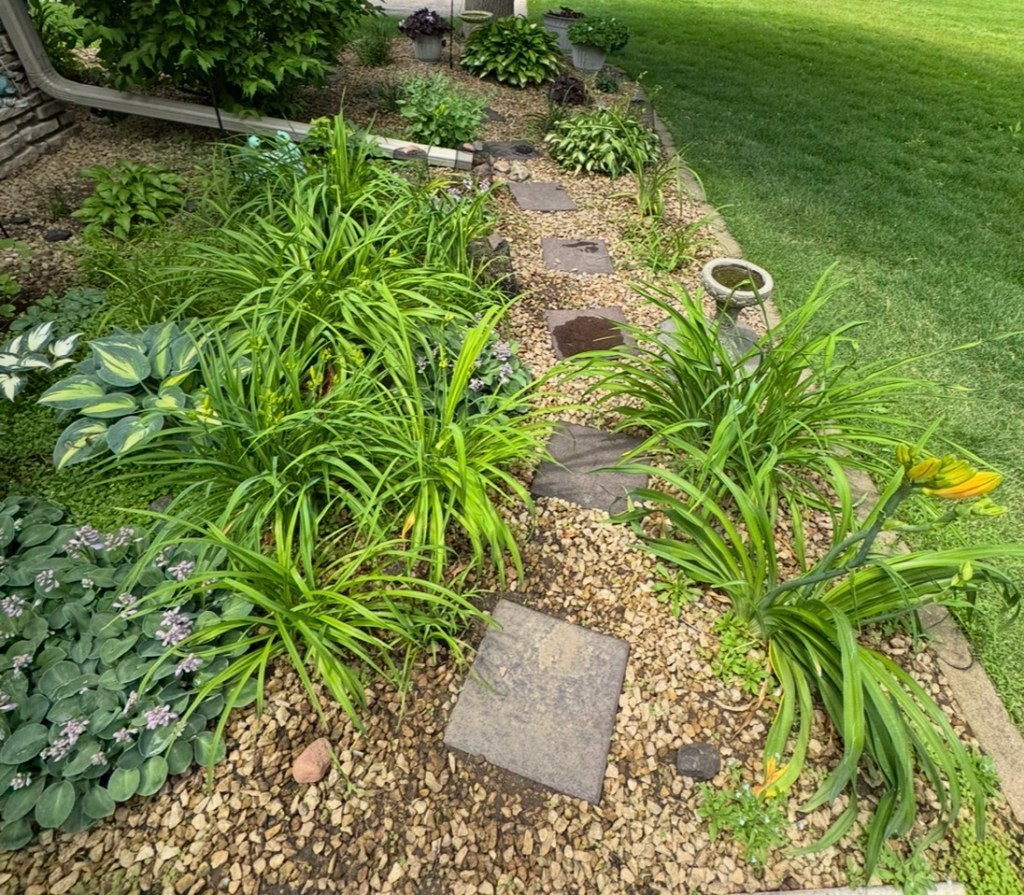
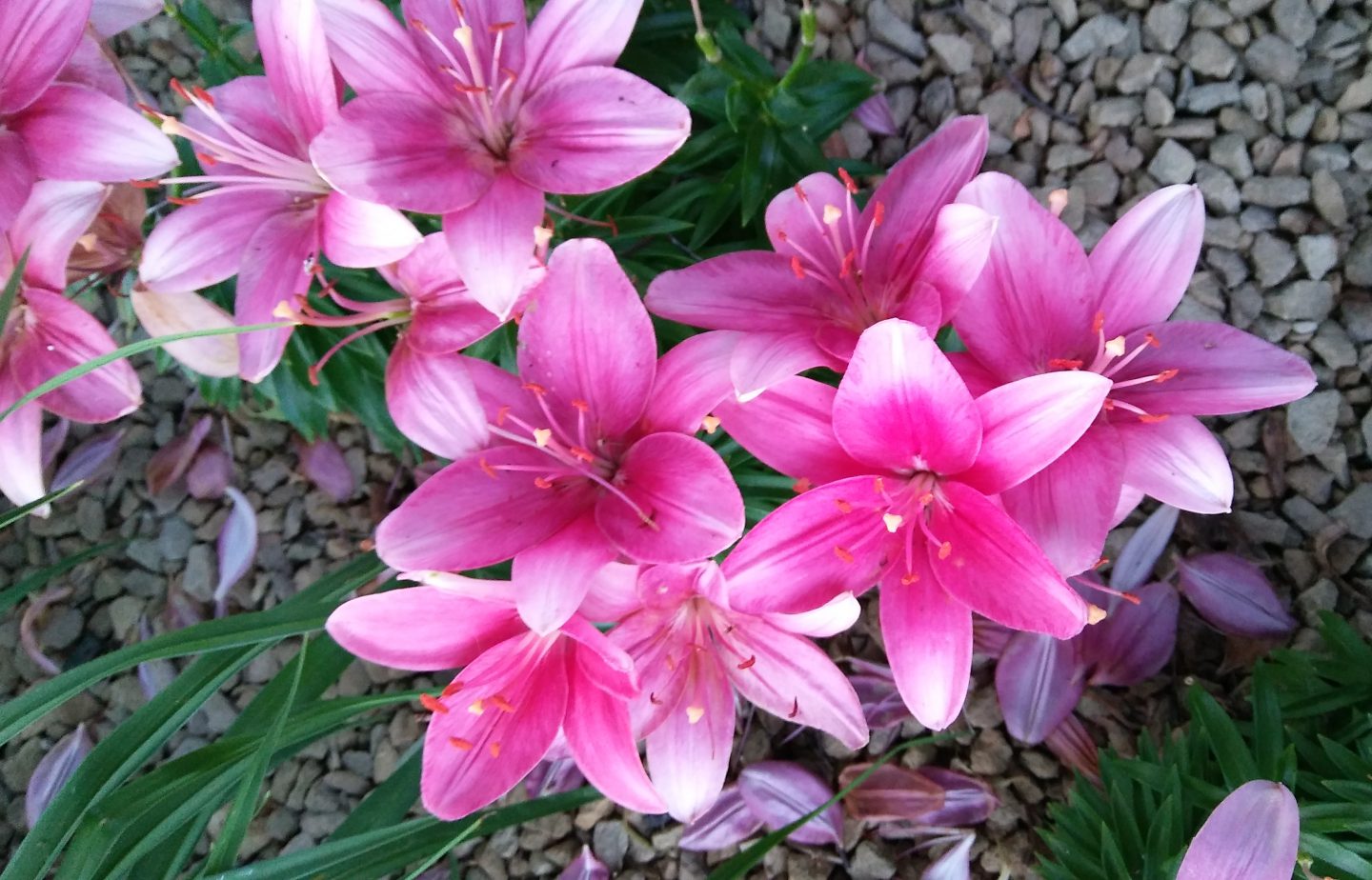
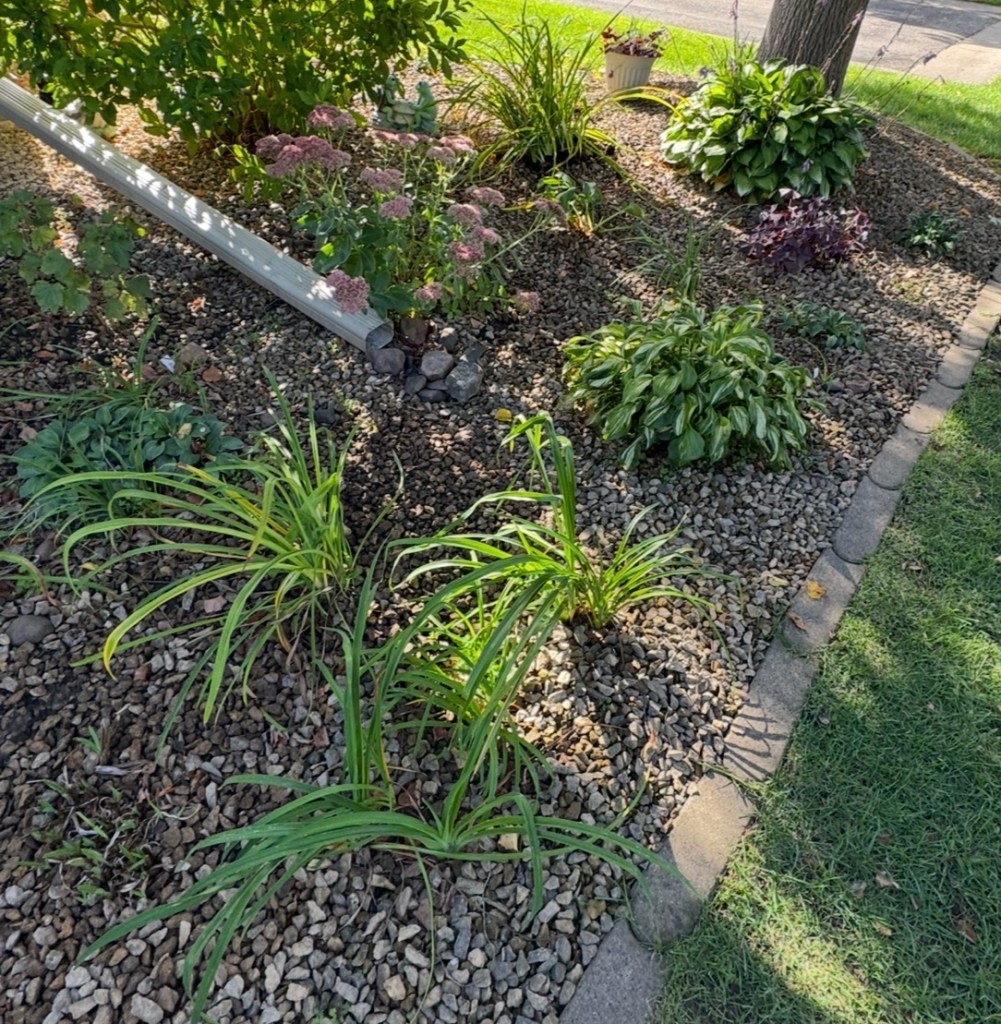
As we move into official summer, the look of the gardens is starting to change. The Weigelia has shed its blooms, save a bit of remaining color, and the Asian lilies are now in full swing.


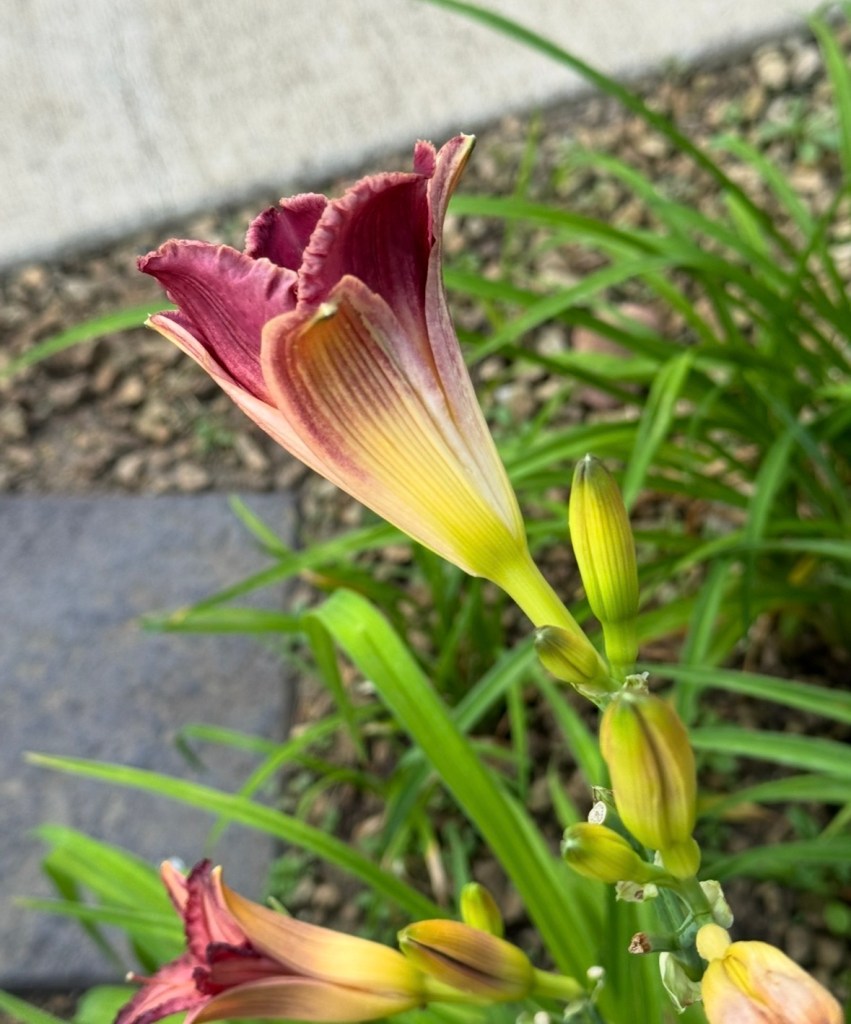
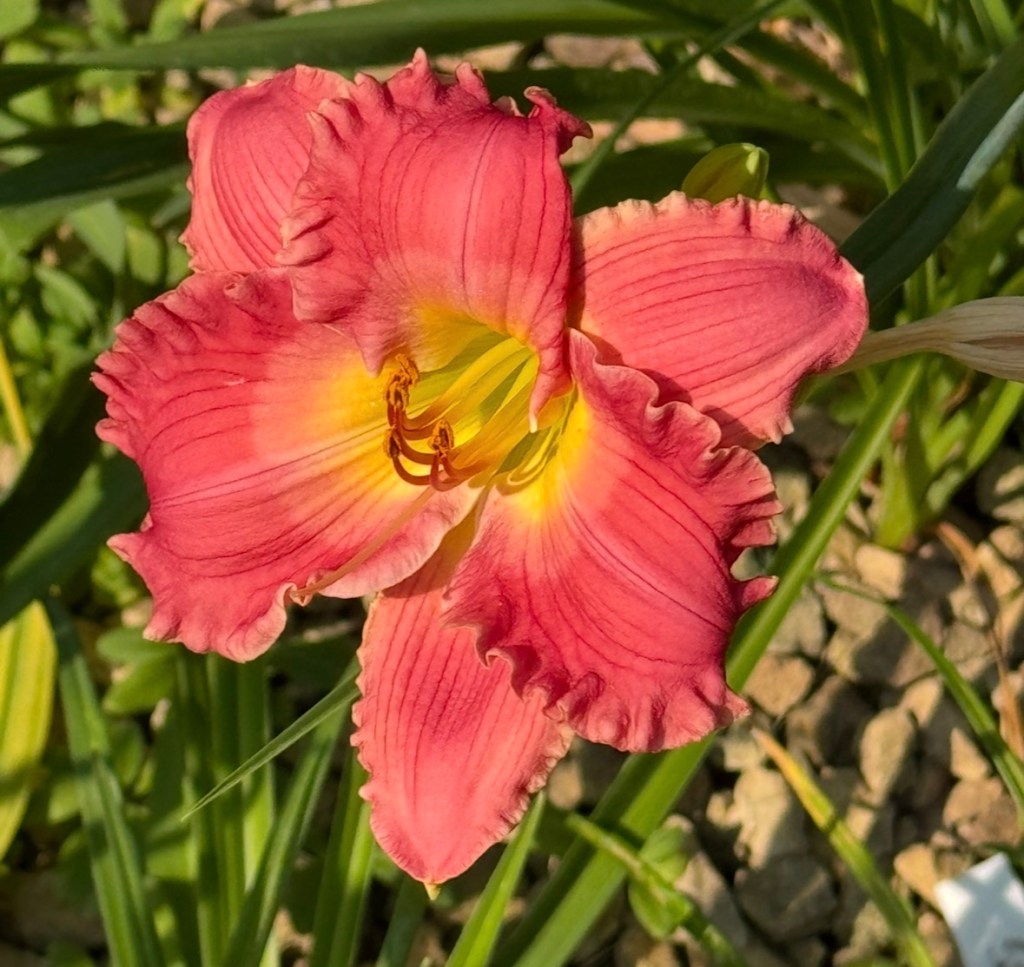
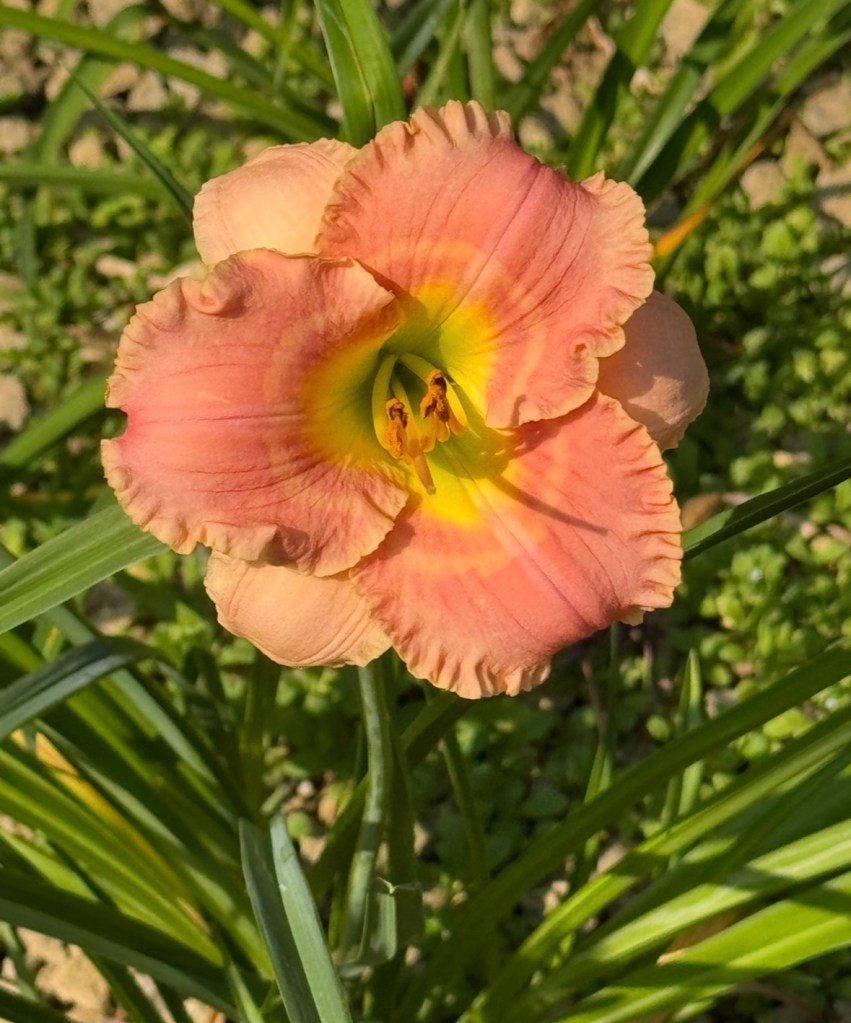
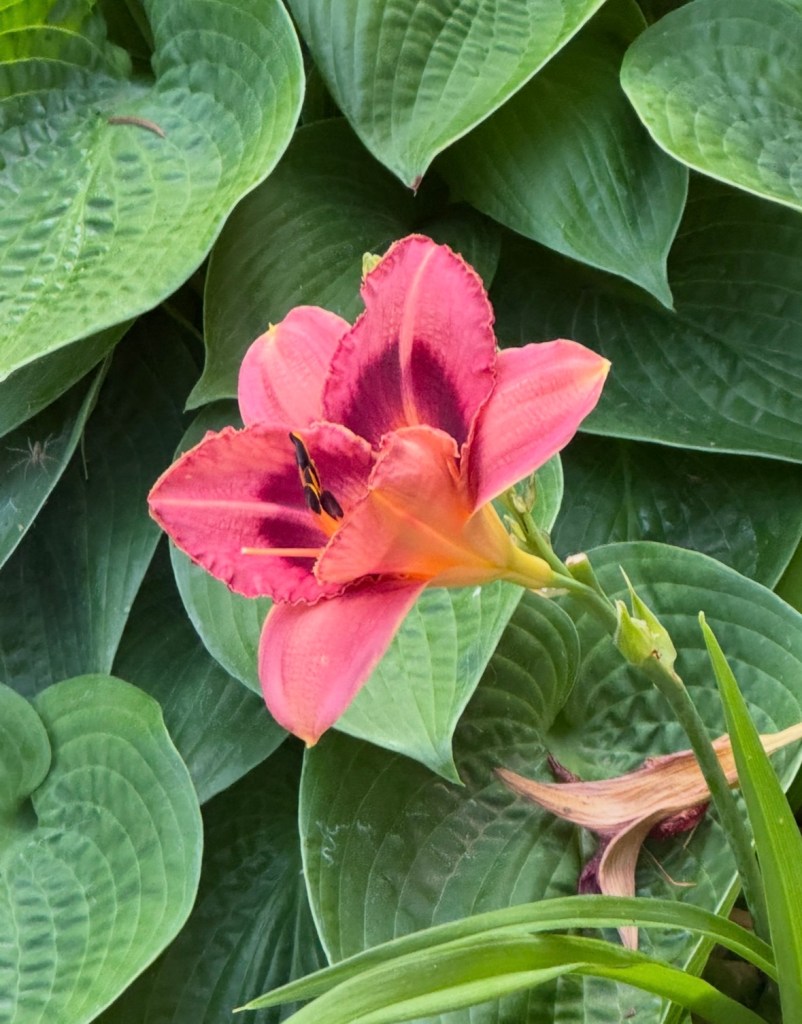
We will have a couple more weeks of Asian lily bloom and then daylily season will be upon us.
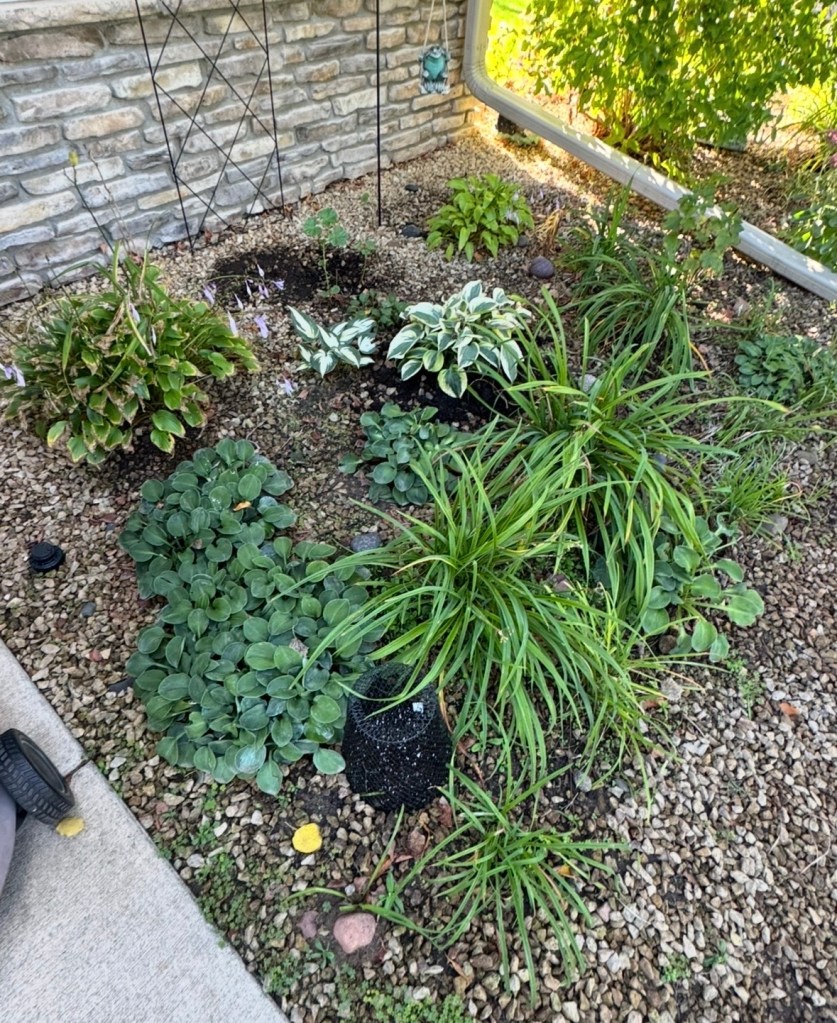
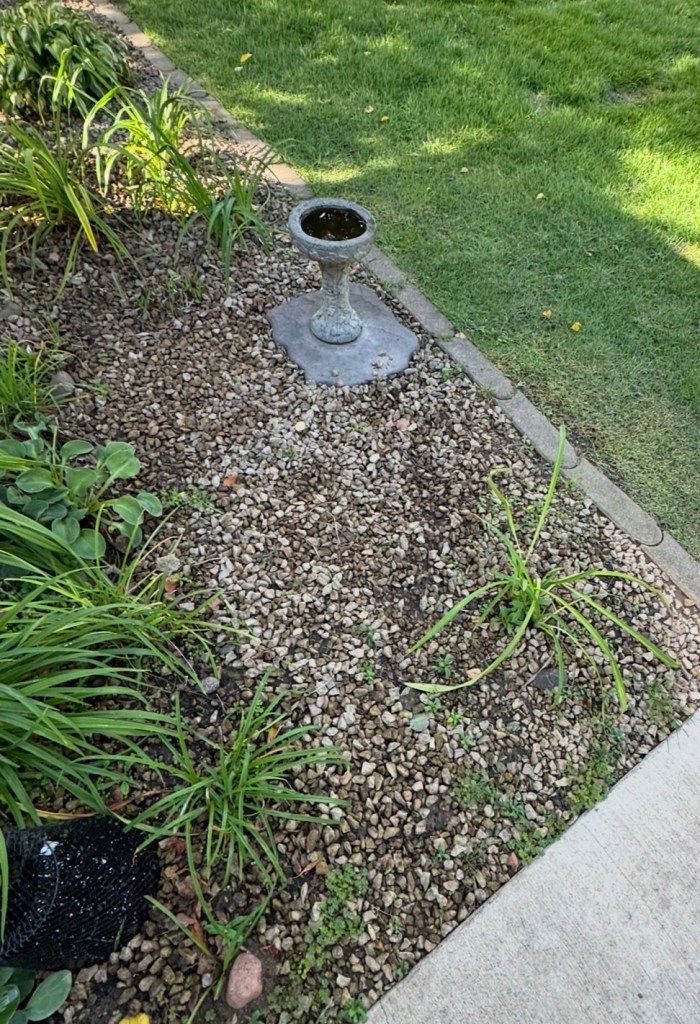
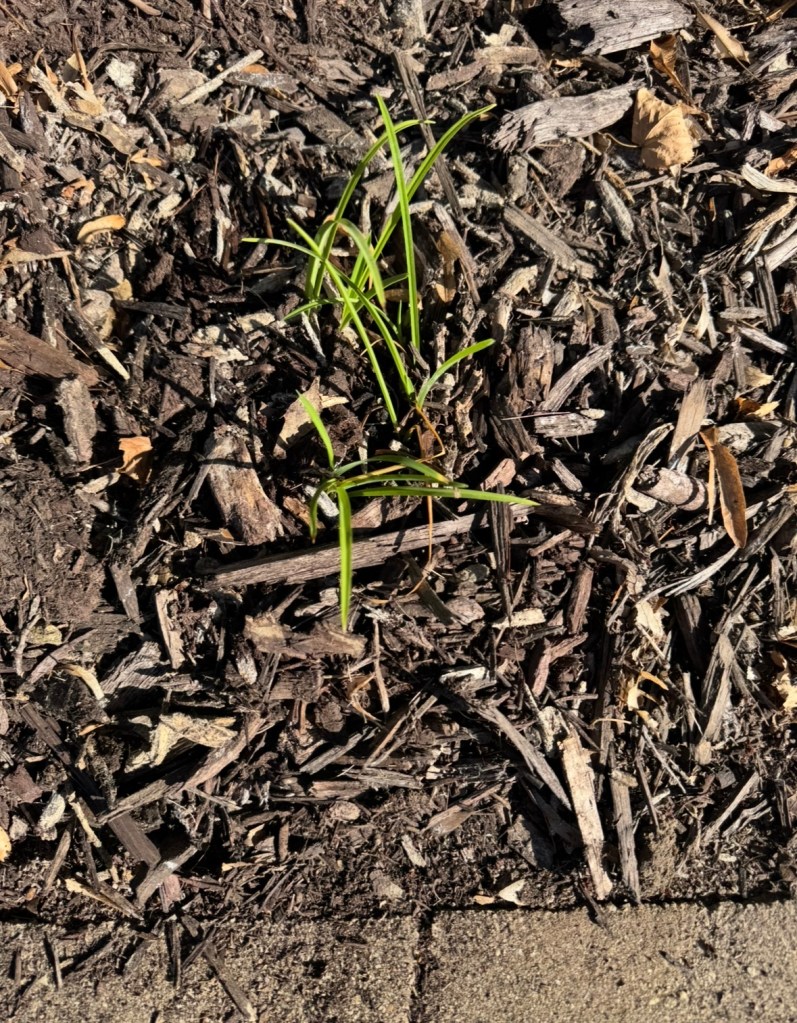
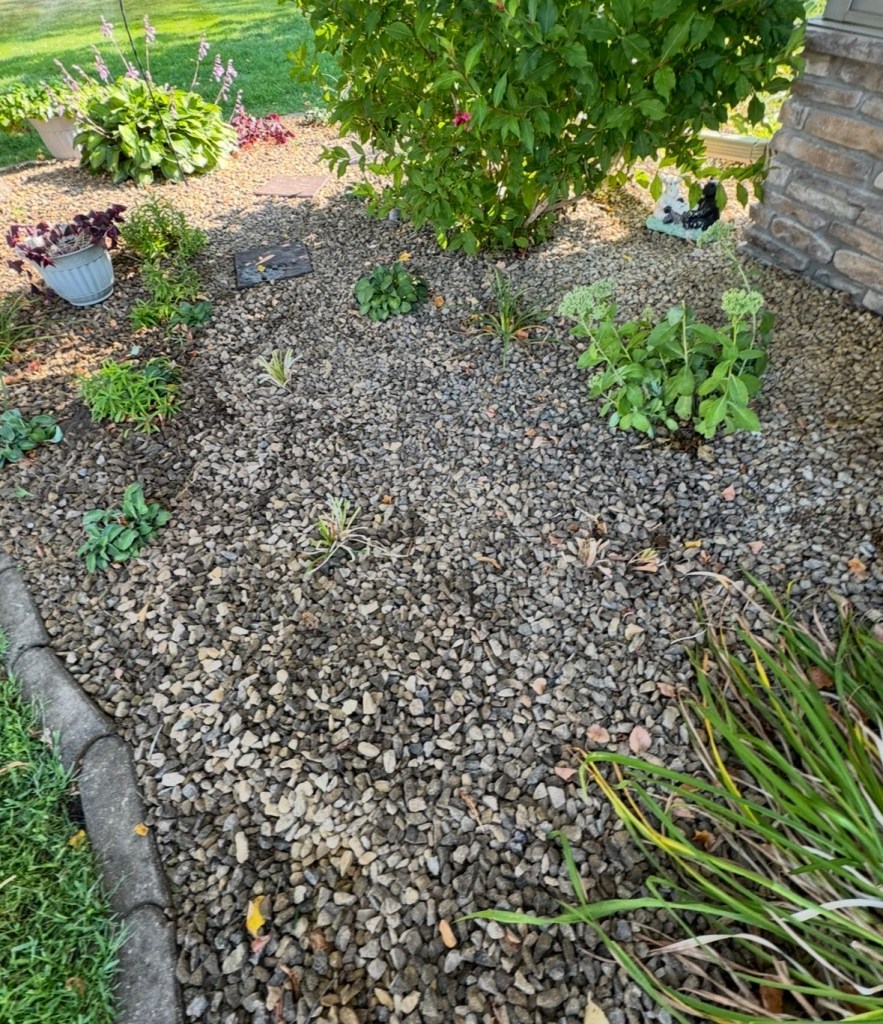
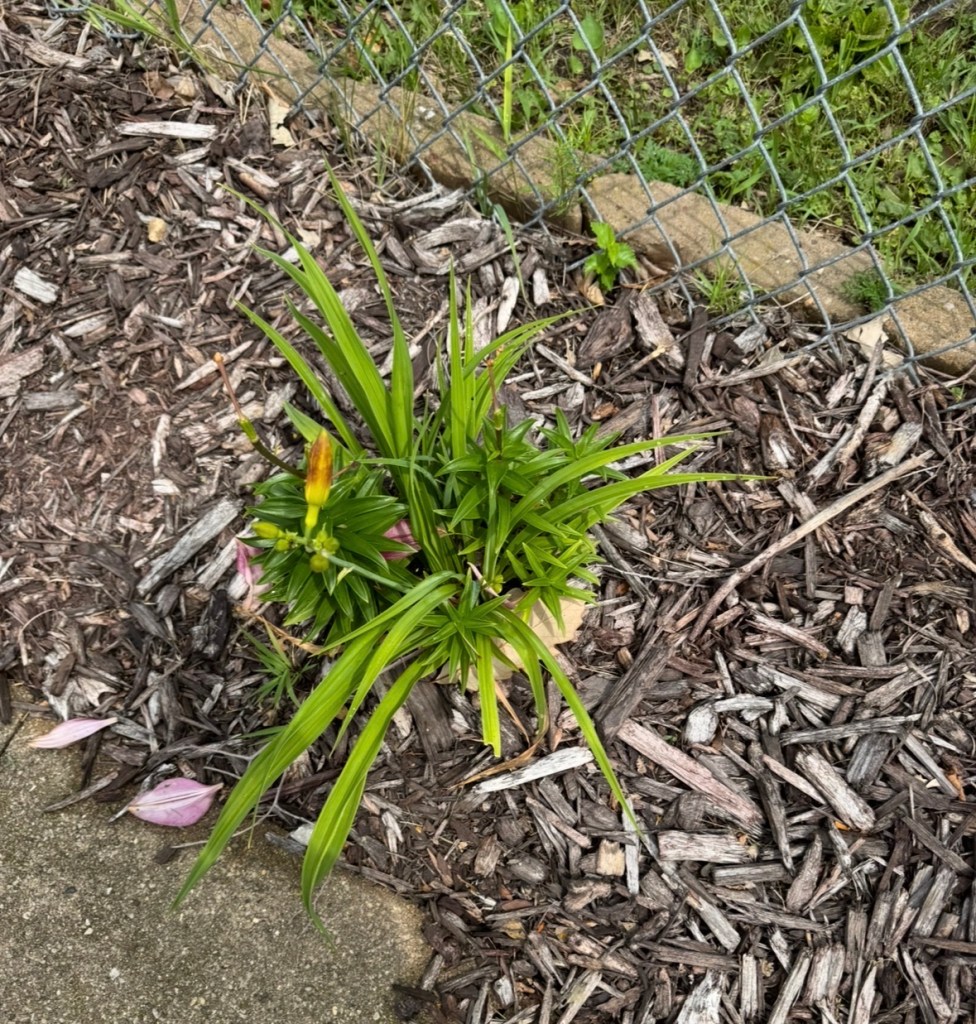
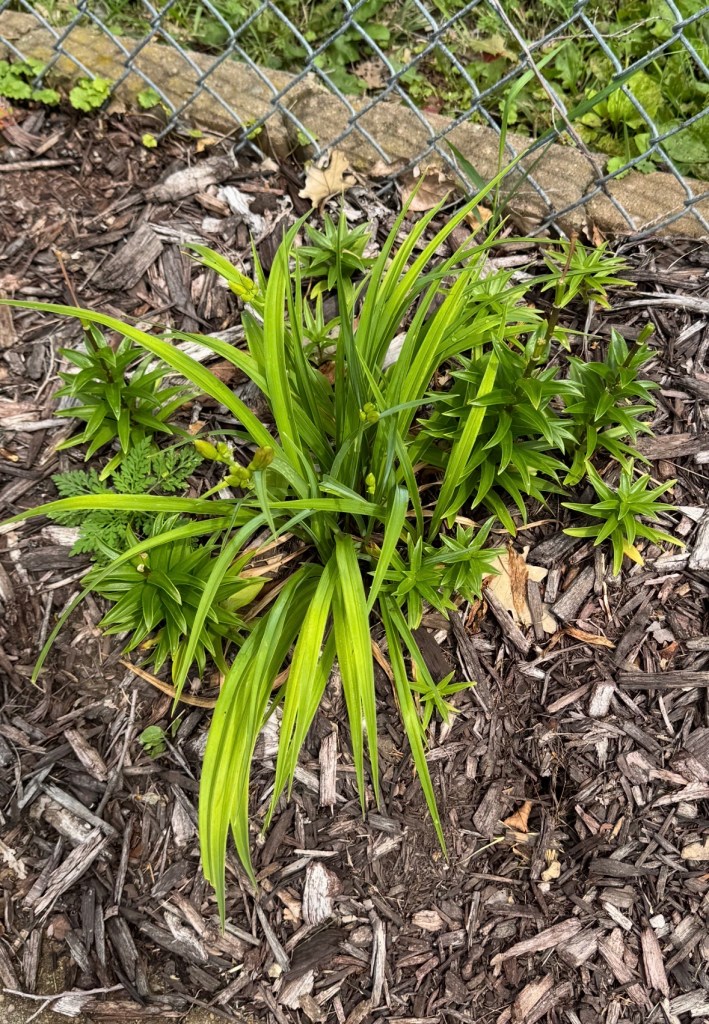
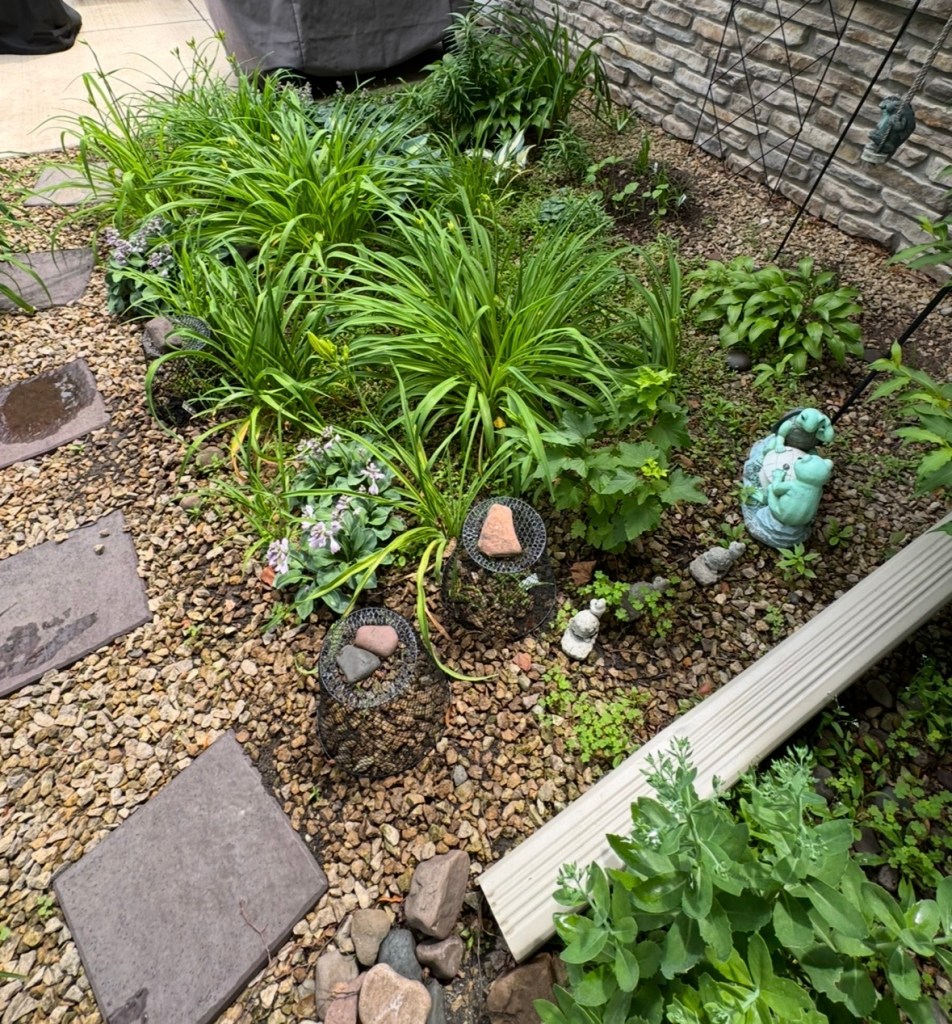
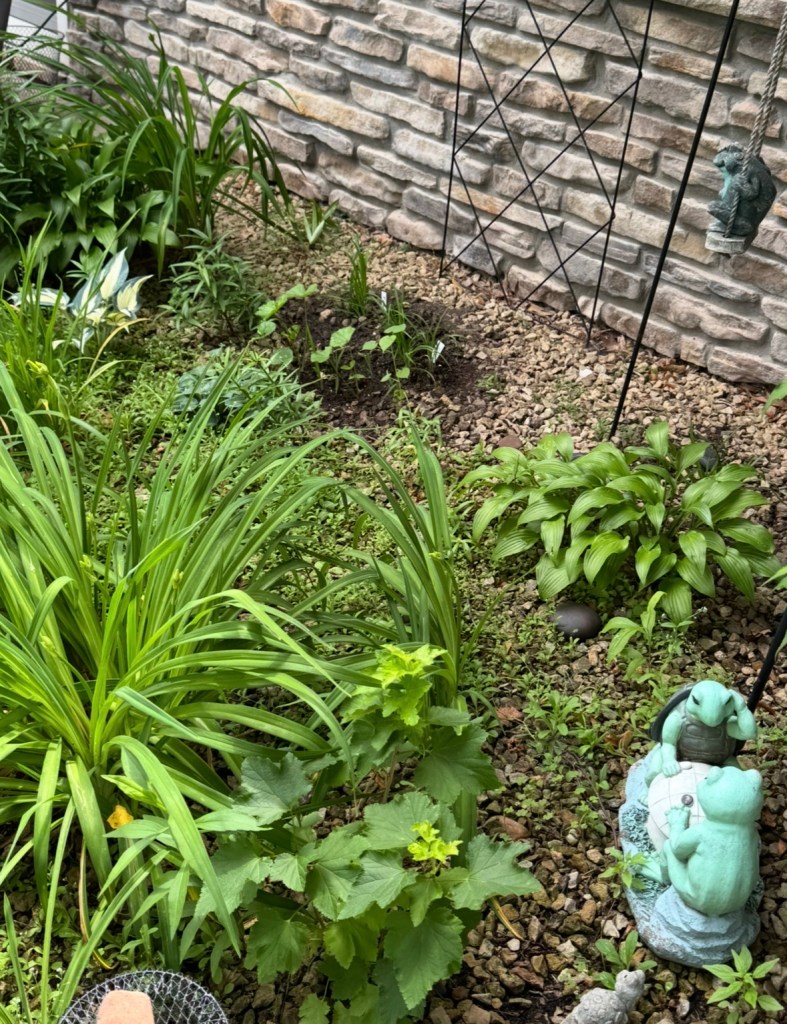
But before we get there, last year’s daylily blooms that made seed and went to seedling are starting to join our gardens. A lot of seedlings. They are getting tucked in between existing daylilies until they reach the bloom (daylily) status.
For a while I was wondering how much we would really end up with for seedlings. This year’s seedlings took longer to germinate than I am used to here. But in the end, the germination ratios proved to be consistent with previous years. This year’s success ratio by new cross/variety is now at 82%. The success ratio for self-seed germination by variety (which I track separately) is at 71%. And then both replications of previous year’s crosses were successful, so 100%. All that work over the past year has come to a blessing. Of course, bloom is years out, but they are on the way.

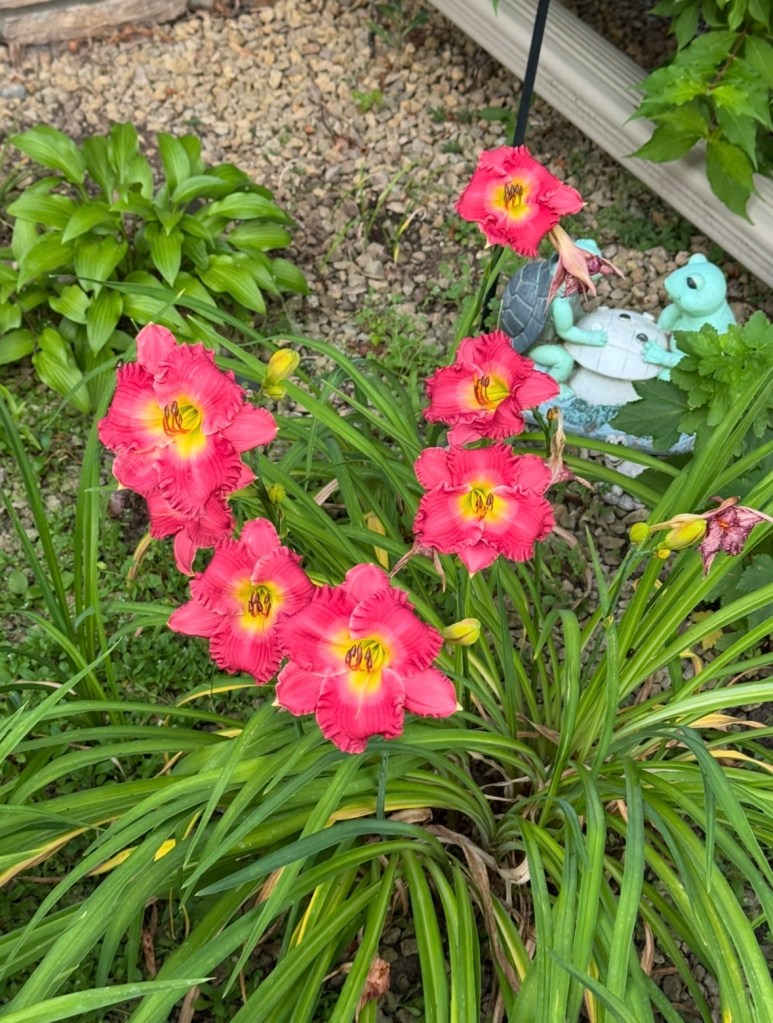
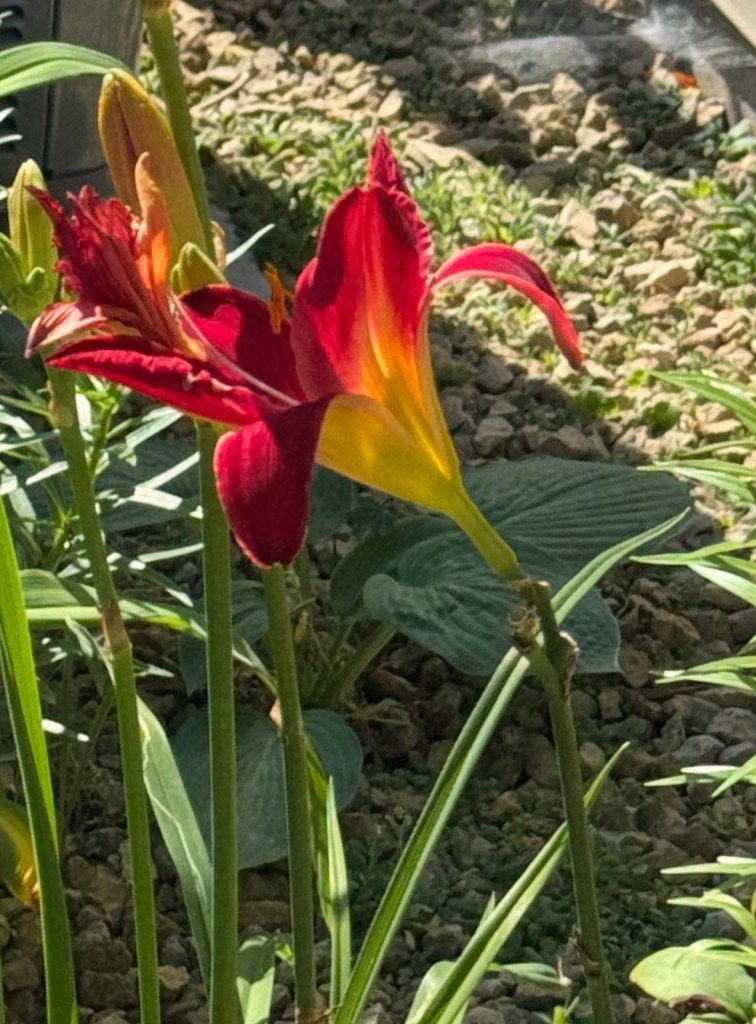
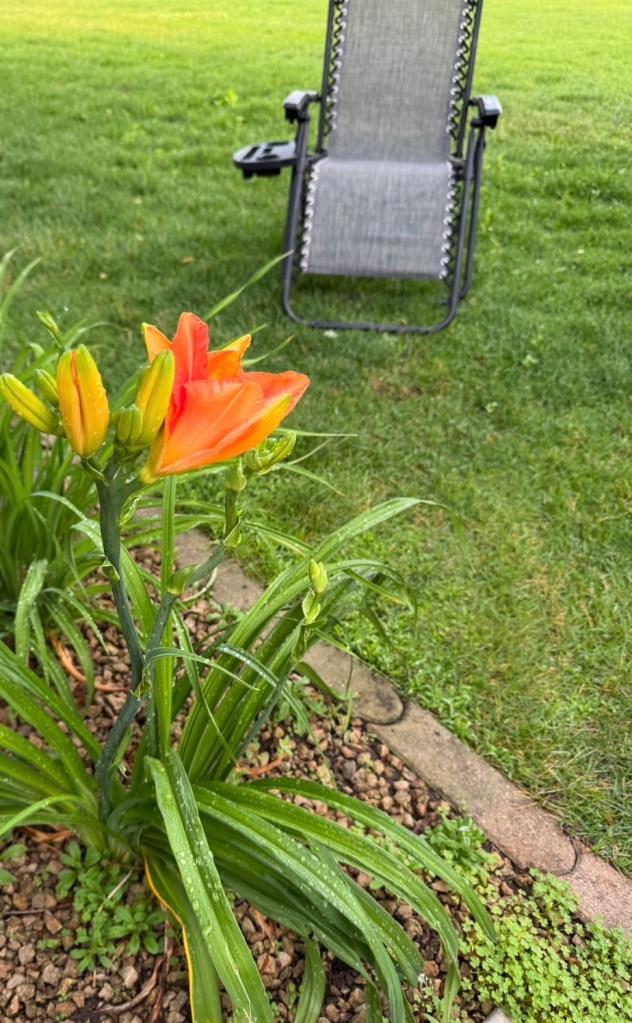
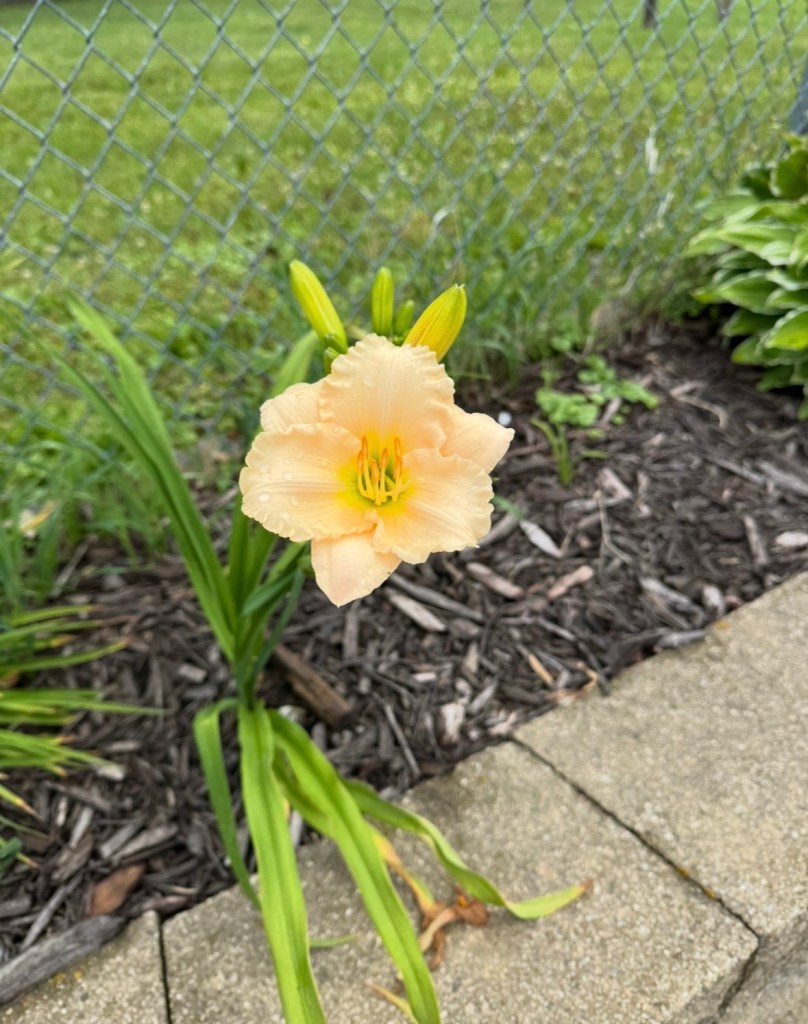
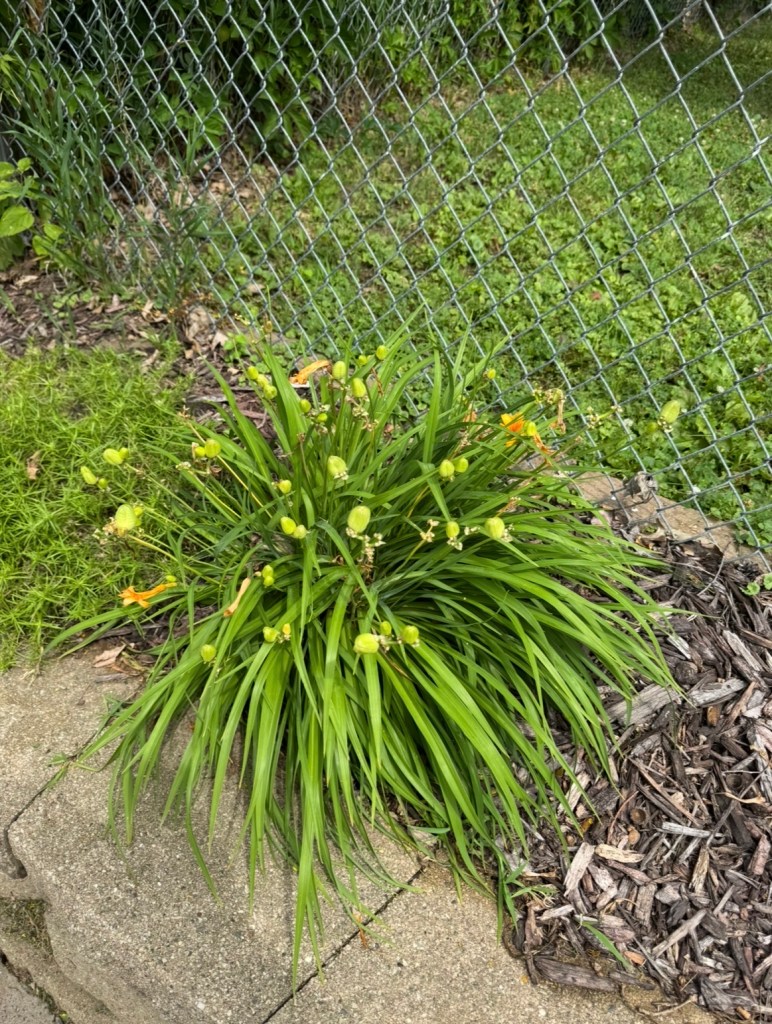
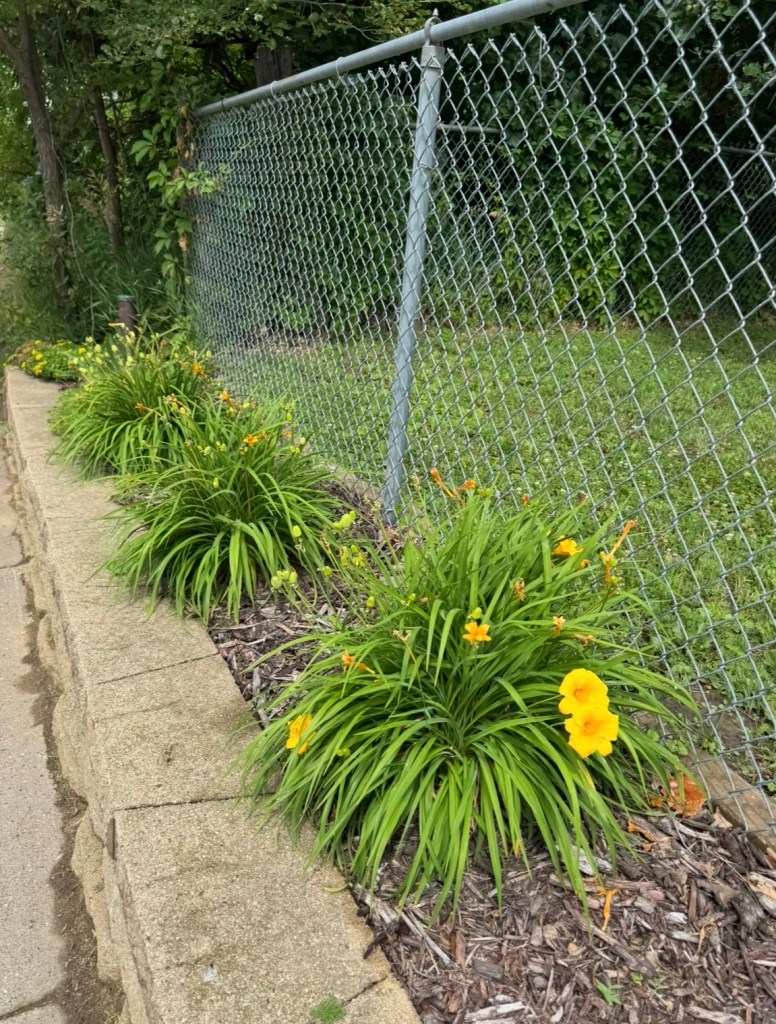
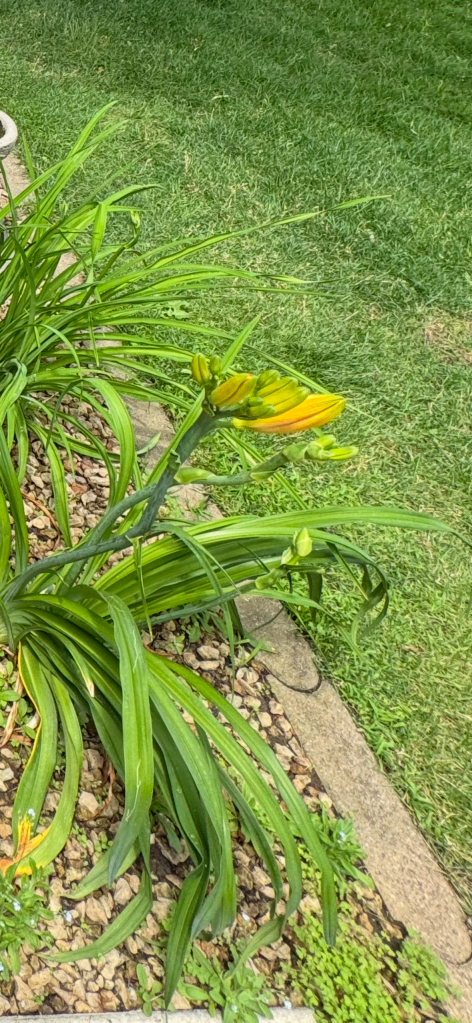
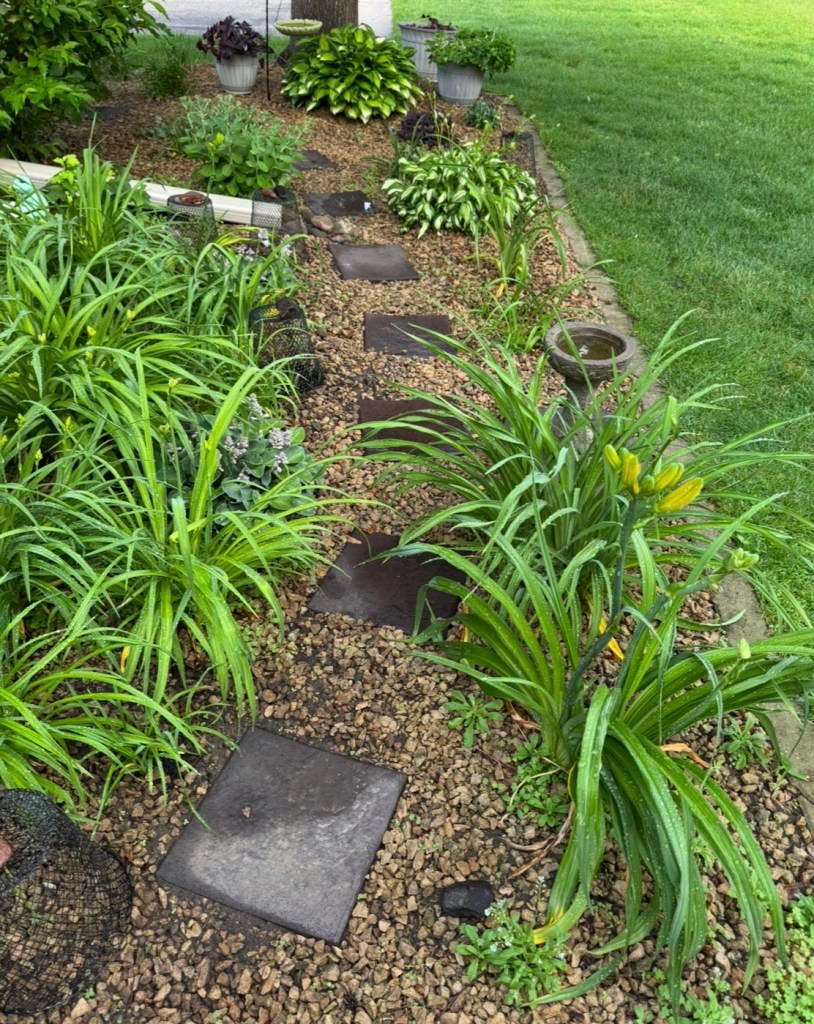
Now on to the 2026 daylily season. Most of the established daylilies are starting to get scapes. It looks like we will have a colorful July and August. And it looks like I will have pod and pollen parents for the few crosses I plan to do this year. Much less than last year. As always, I will also allow self-seed. But mostly I will enjoy the blooms. Maybe even a few new varieties of blooms from 3+ year seedlings.

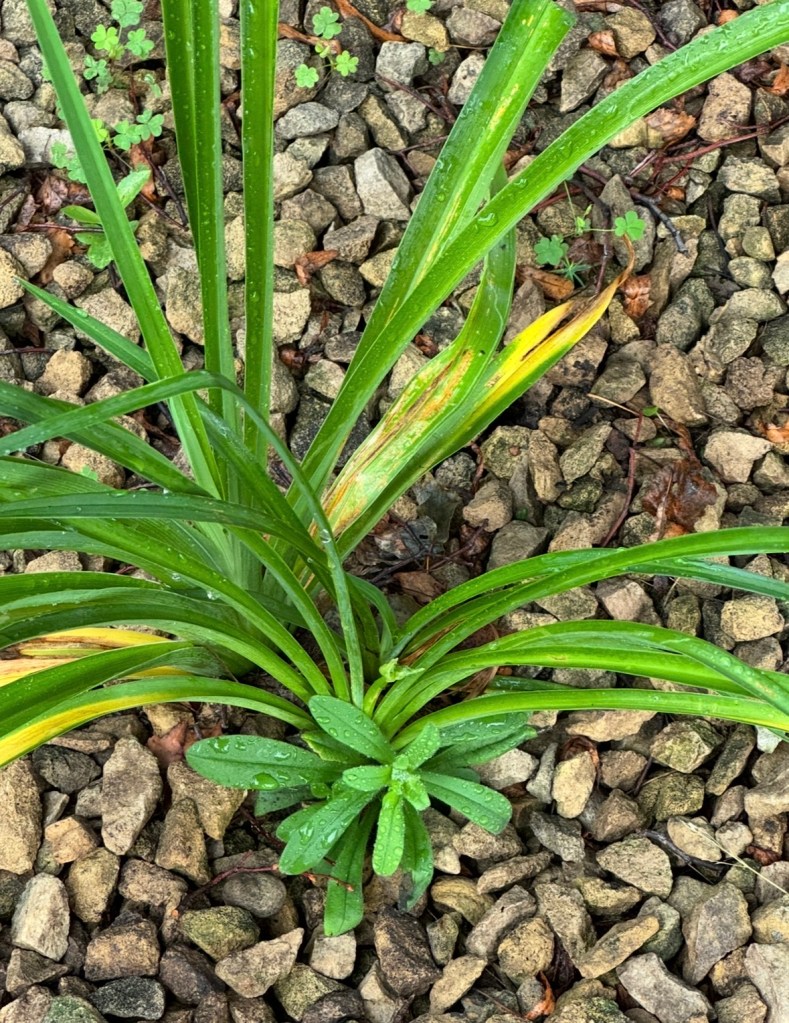
Speaking of self-seed, I had a Just Plum Happy self-seed germinate yesterday morning, the first time ever for that long time daylily in our gardens. That was such a pleasant surprise. Hopefully it will survive and eventually go to bloom.
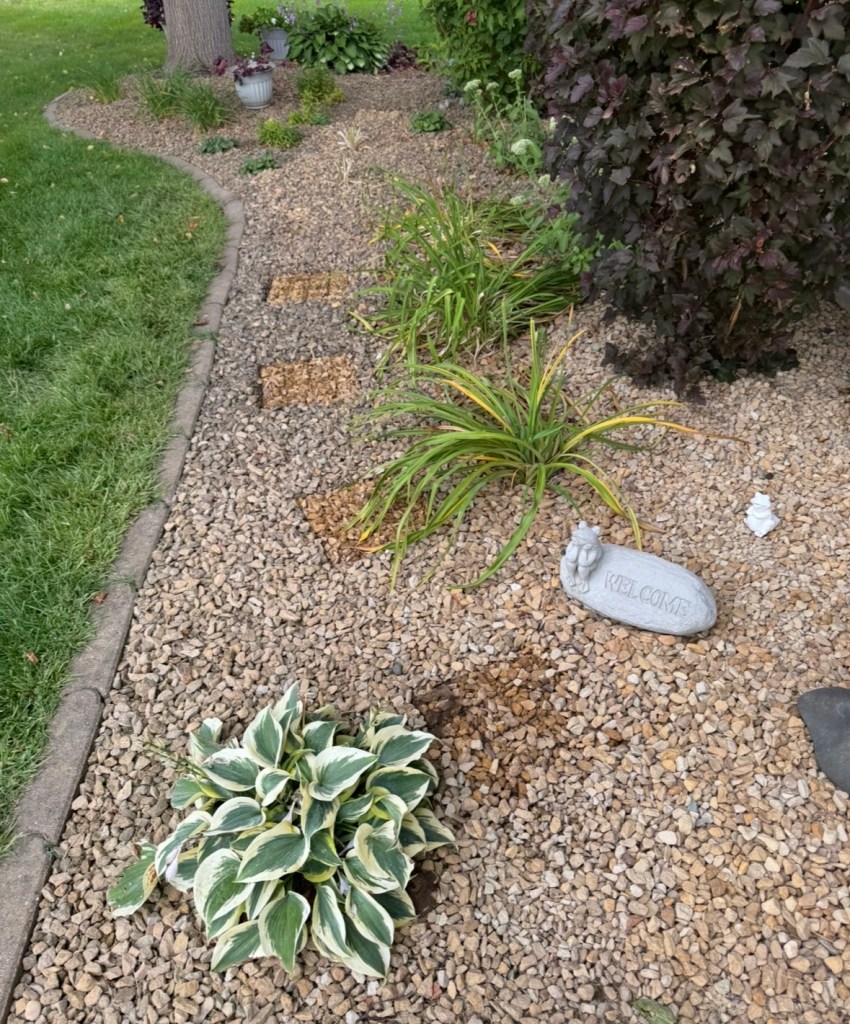
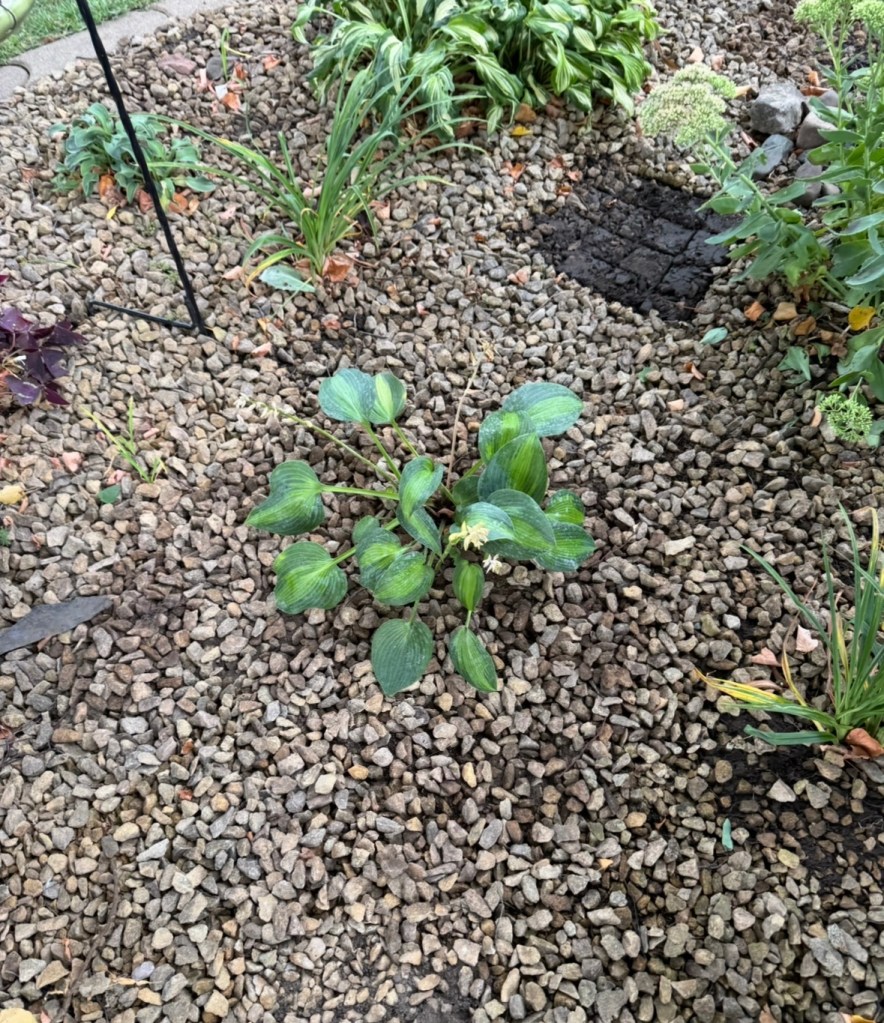
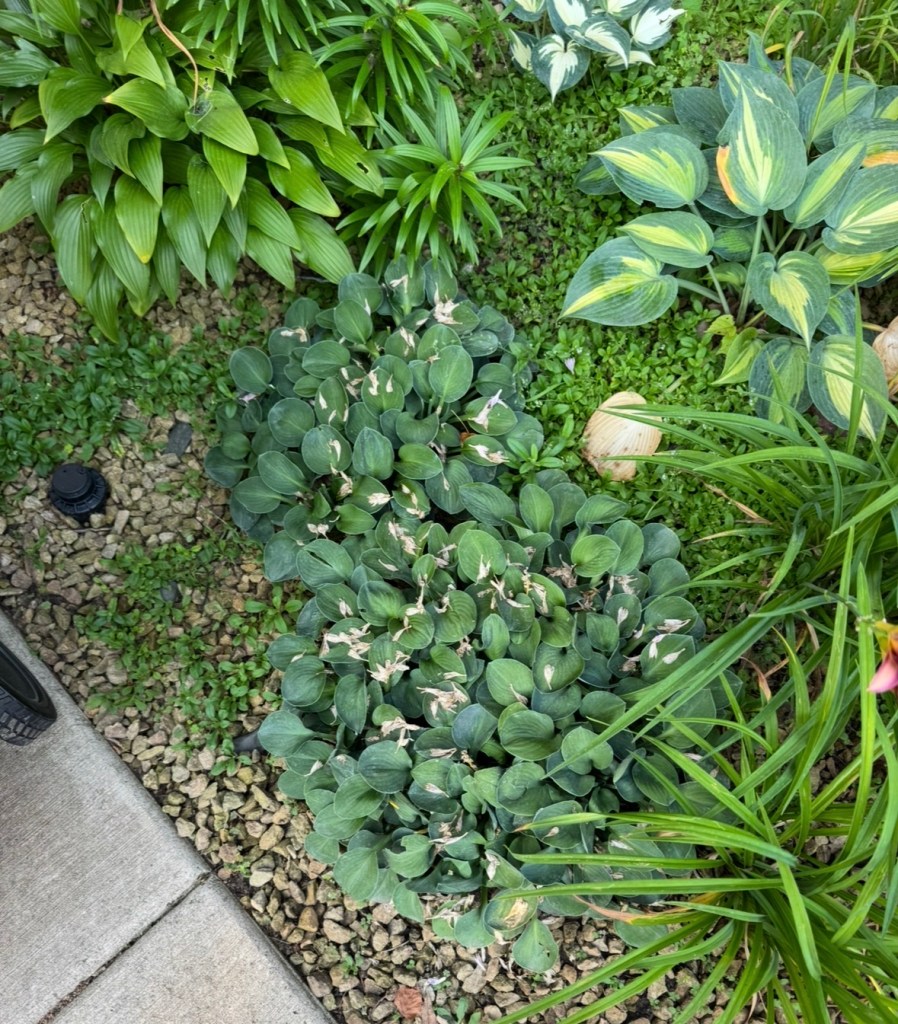
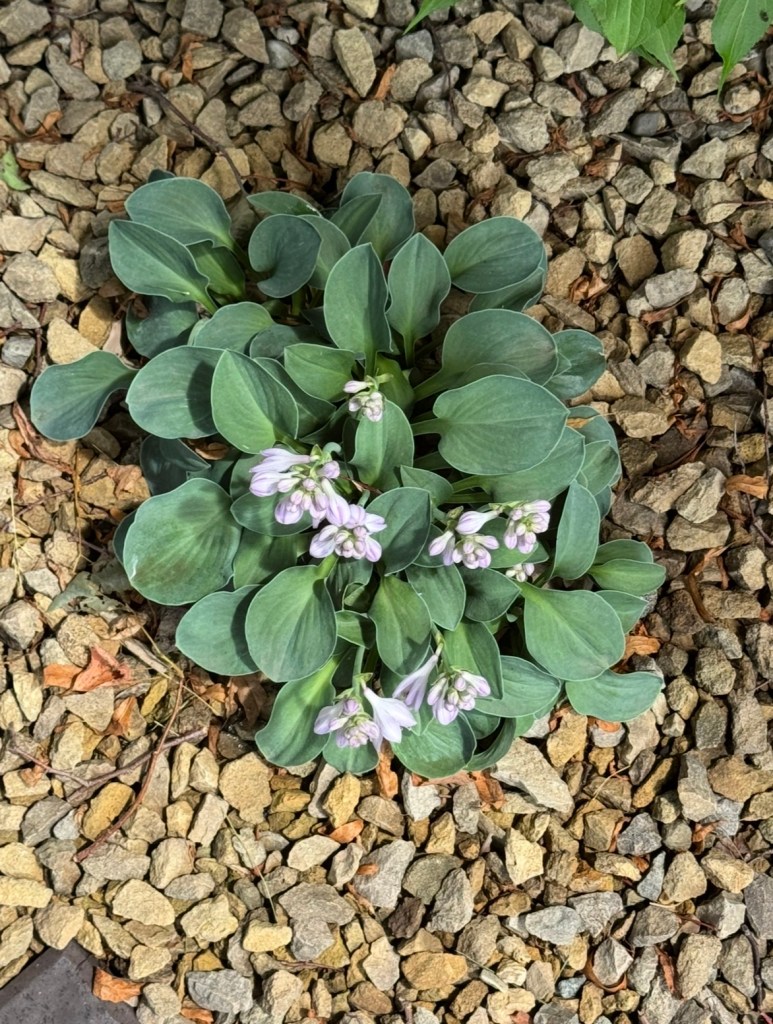
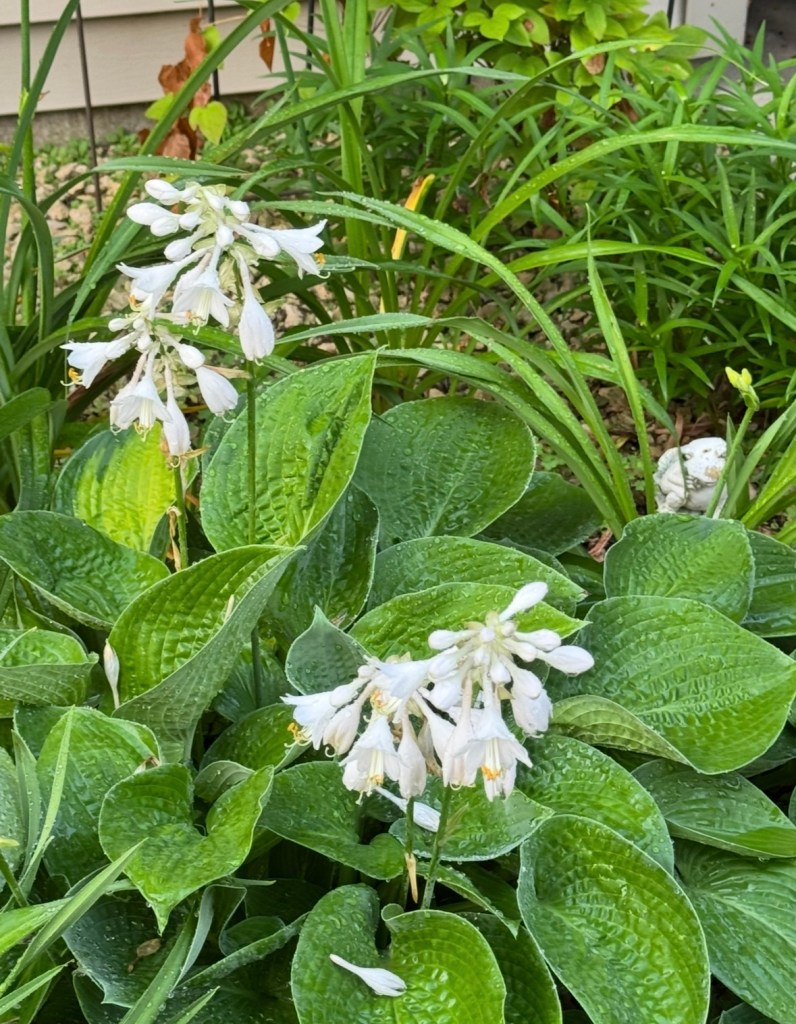
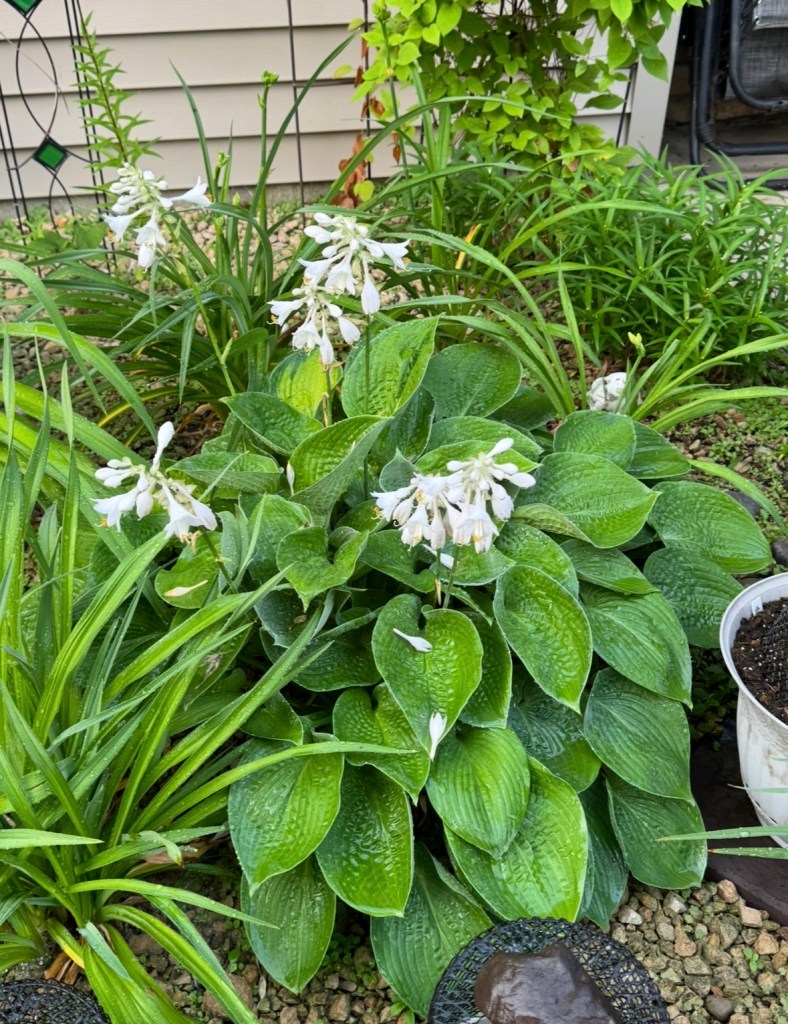
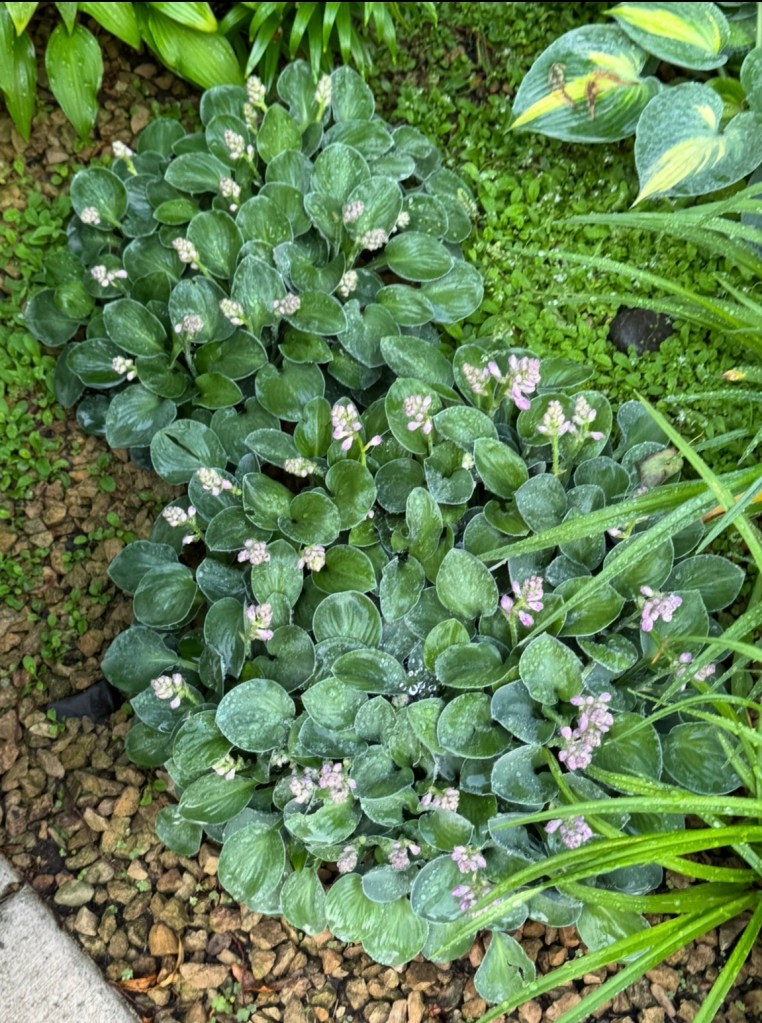
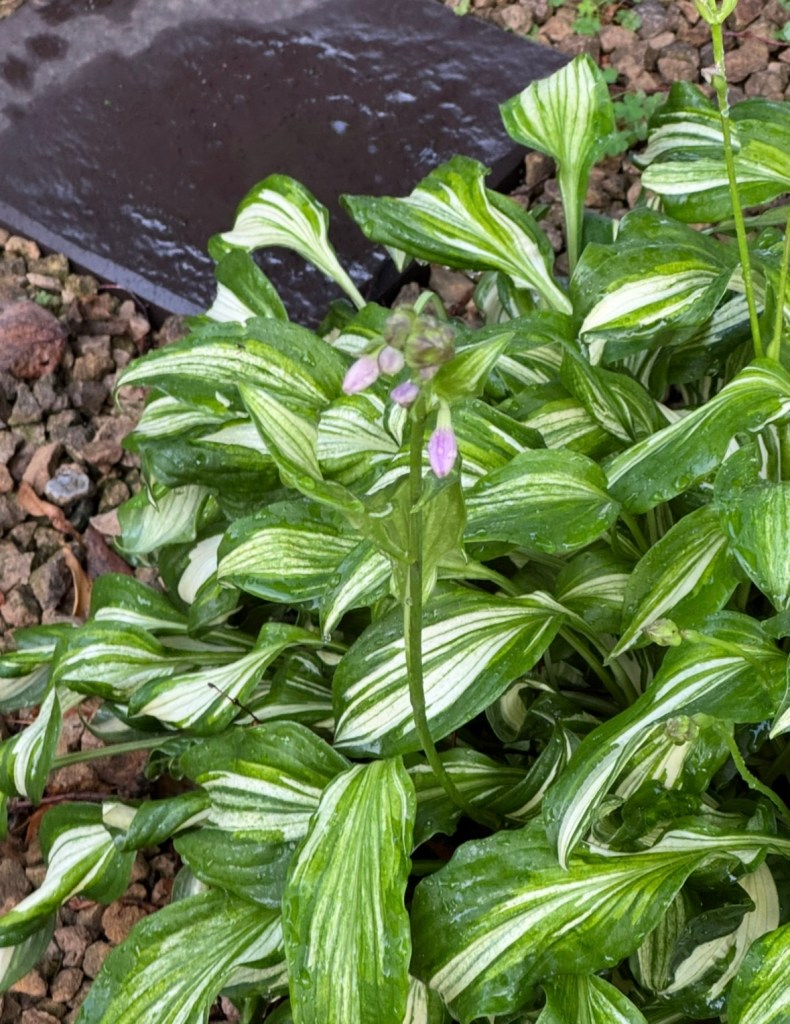
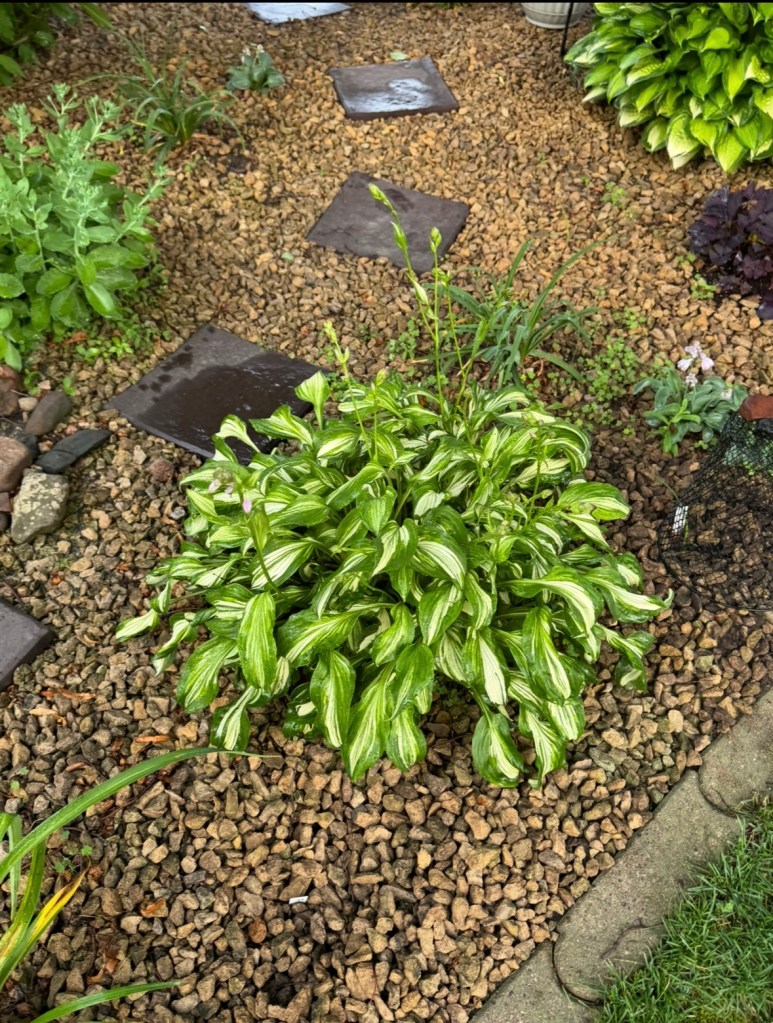
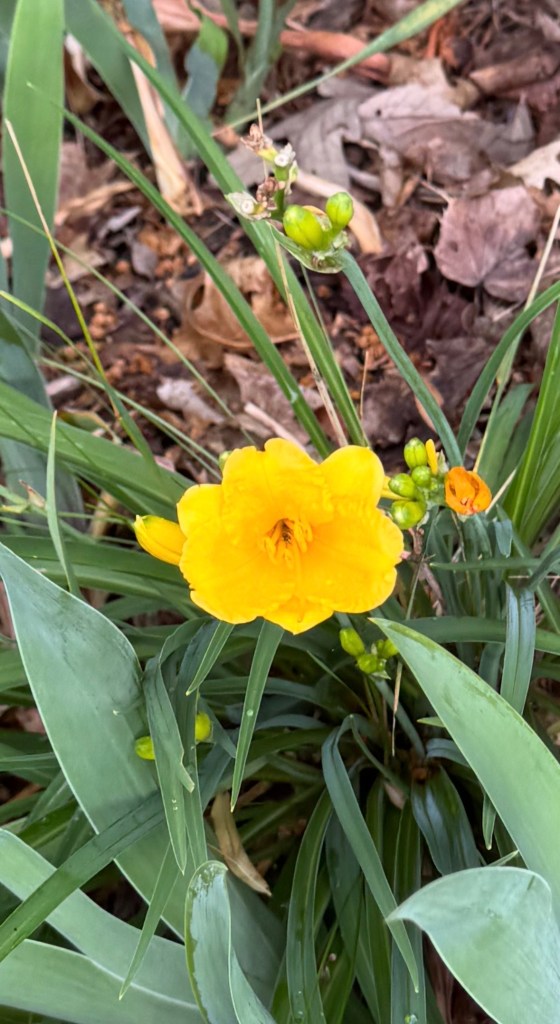
As for the hostas, they are also scaping out now, both here in the townhome gardens and at the historic cemetery. The hosta below and the Blue Mouse Ears are already starting to show the start of color.


While I do not propagate hostas, I do divide and transplant them when needed. And here comes story time 🙂
A few years ago I began to move some of the Blue Mouse Ears hostas out of the sun (in what is now “Sandy’s Corner”) and into the shade along the path by the Linden. I also planted some Blue Mouse Ears divisions at the historic cemetery. The divisions did very well in both locations.
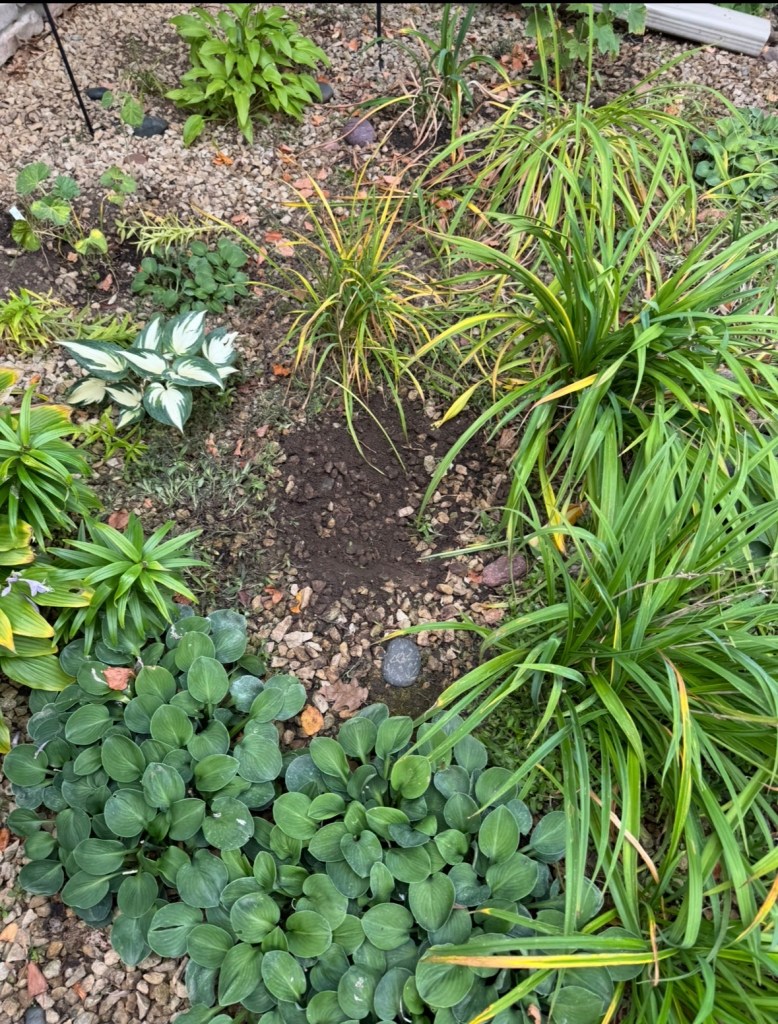
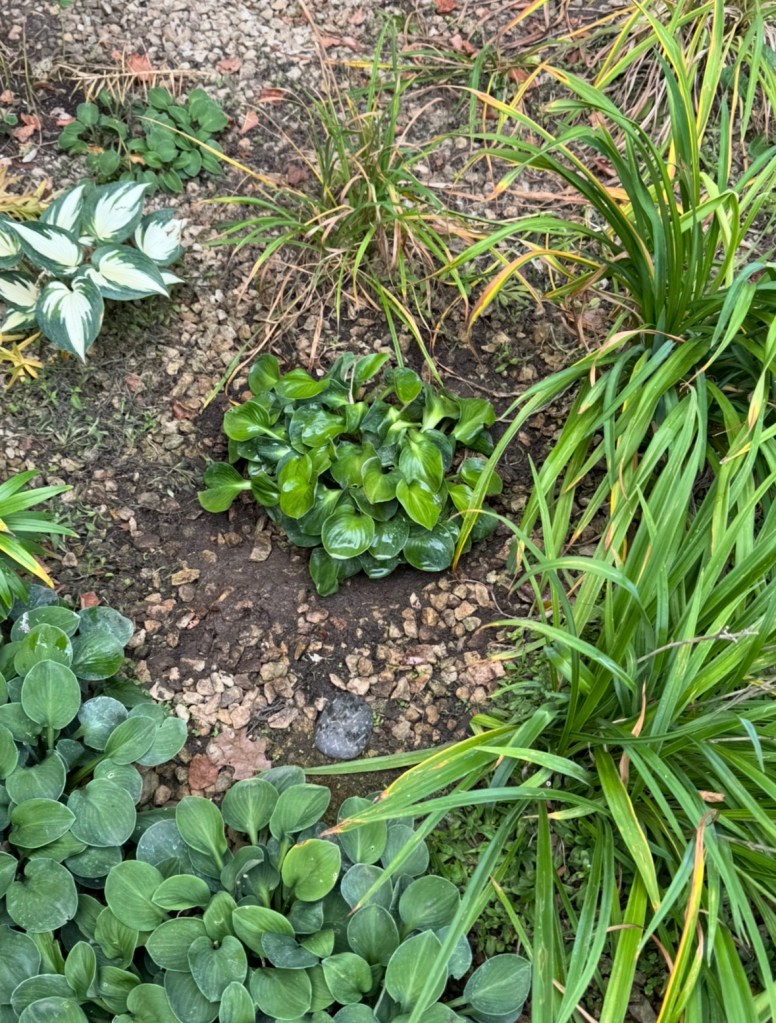
This year I need to do more division of the Blue Mouse Ears hostas. I am considering planting those divisions under the Linden where we lost so many hostas last spring. The look will be much different than the large hostas we lost last spring, but I actually think they will be an improvement. Regarding aesthetics, they are very compact, and bloom beautifully for weeks. Regarding maintenance they are a dream. In the fall if I wait until the leaves turn deep yellow, the leaves pull right off.
On to more story time.
At the historic cemetery:
The Asclepias (milkweed) are blooming. Full disclosure, they are not my favorite. I know, gasp, even blasphemous! What kind human, much less a pollinator loving gardener would not want to help out the Monarchs. Well … They get very tall and then start to fall over in a not so wonderful way, and, even though the main reason to have Asclepias is to provide a home for Monarchs to propagate, I have never seen eggs, let alone chrysalis on the Asclepias there. But they are a popular plant amongst the walkers and visitors, and they garner a fair amount of support, so they stay – in moderation. (They are invasive, so I do pull judiciously.)


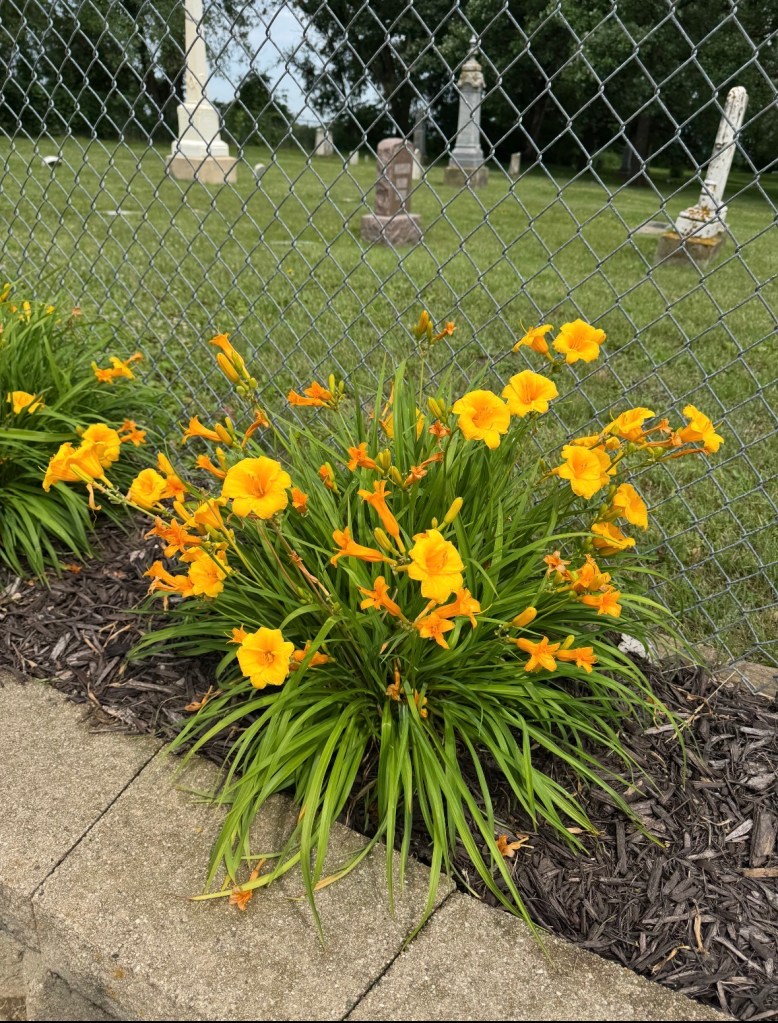
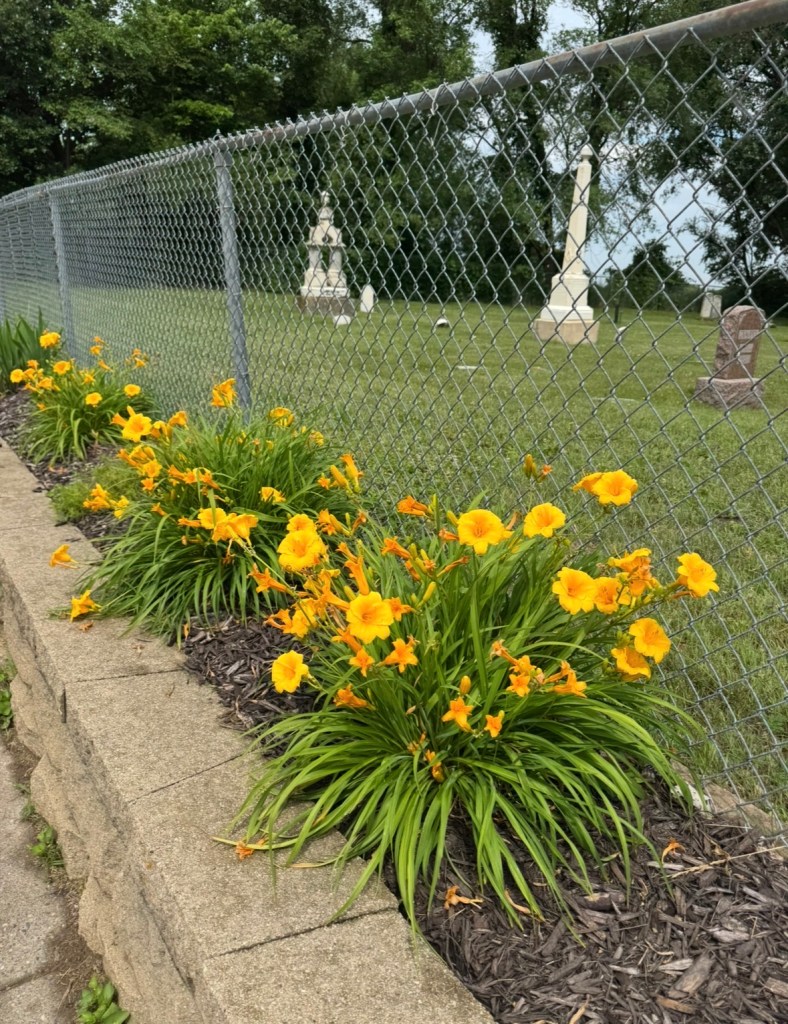
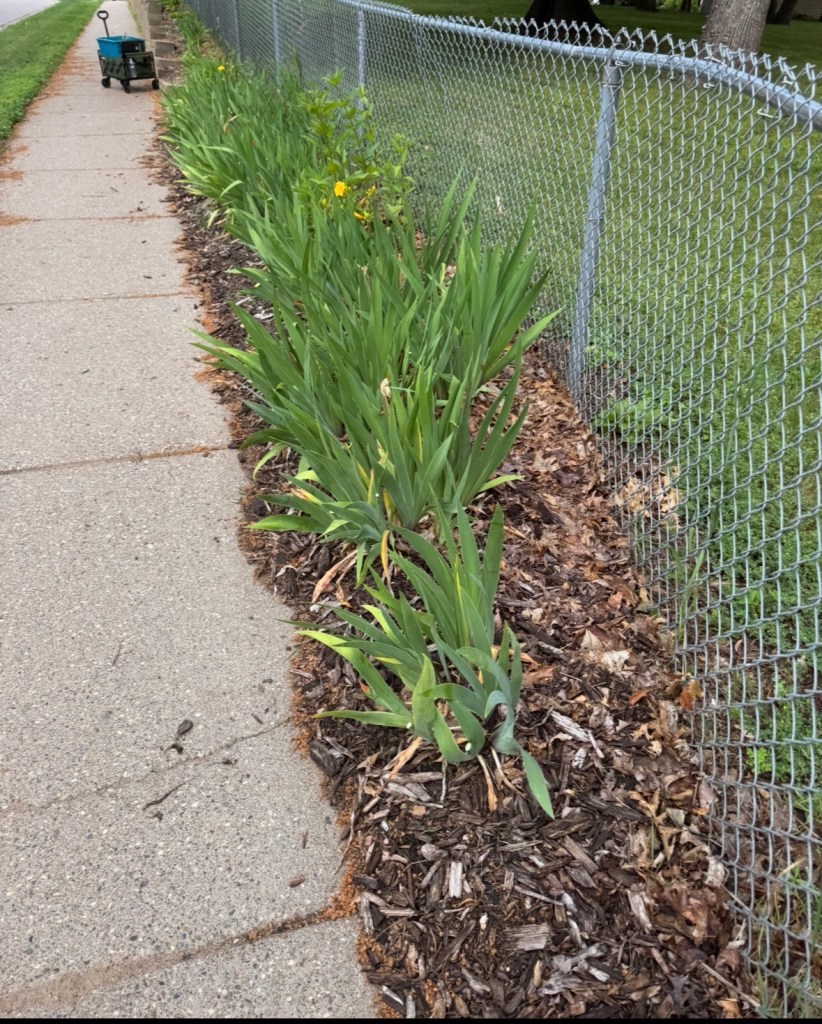
The Stella De Oros are looking very healthy again this year, and their 2025 self-seed has germinated 20 seedlings so far this spring. Those will eventually get planted right back at the historic cemetery gardens. I was doubtful the seeds would do anything, but now that I see those beautiful seedlings popping up, I am hopeful to see those blooms in the years to come.
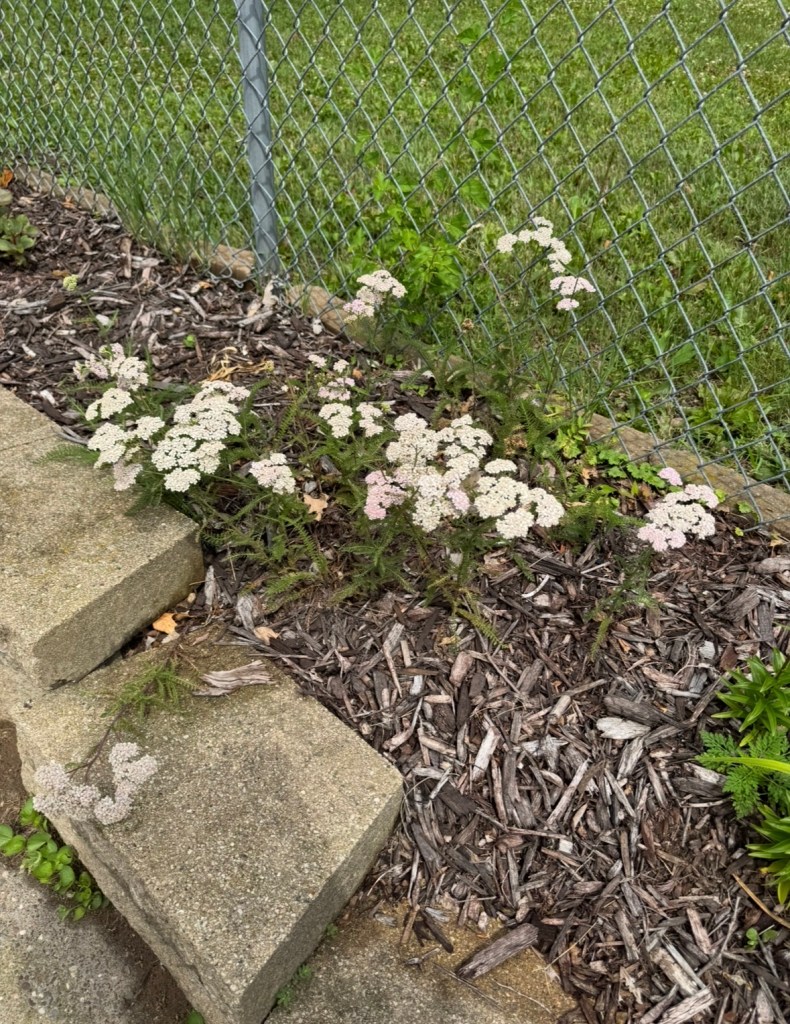
The Yarrow is hitting full bloom, and that brings me to the topic of the uniqueness of public gardens, and how the historic cemetery gardens continue to surprise me.
For the Yarrow in the historic cemetery gardens, I am seeing some fairly decent stands of a new color (pink) this year. Wild, white yarrow, which we have at the historic cemetery, blooms true from seed, which I have direct-sown, and it readily spreads as well. Meaning, the Yarrow we have had would not produce pastel pink blooms. I am wondering if we had some pink Yarrow plops (anonymous gifts that got planted).
I used to be a bit thrown by plops, but now they bring a smile. You see, the historic cemetery is a public place, and the fence garden is a public garden. And it is becoming quite loved 🙂 Yes, there are some things like wrapper and beverage tops that show up, but, at the same time, it is my absolute pleasure every time I am there to hear thanks over and over again for the transformation from 4 years ago.
I also know the community contributes as they walk by. We definitely have some consistent phantom weeders 🙂 I have witnessed their work as I arrived, talked with them, and in turn thanked them for all they are doing.
All of that makes my heart incredibly happy.
That being said, back to plops, if a plop fails, I have no problem pulling it and putting it in compost, and if a plop gets invasive it also goes out.
But the vast majority of plops become a loved part of that very public garden, for all to enjoy. In fact, we have a couple daylily plops that went to self-seed last year, which I harvested, and planted to germinate this spring. The seed did germinate, and when those seedlings get big enough to be easily recognizable as daylilies, so they do not get accidentally weeded, they will go right back into the historic cemetery gardens. In addition, one of those daylily plops already has a plethora of scapes again this year, so we all will be treated to its beautiful blooms again soon.
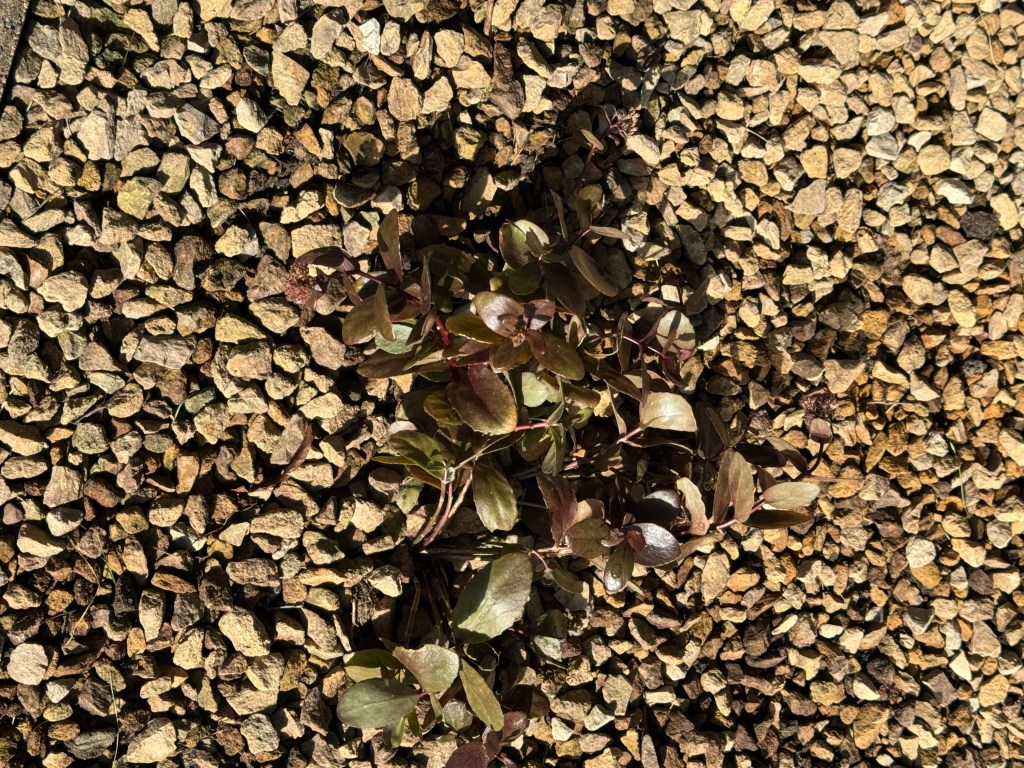
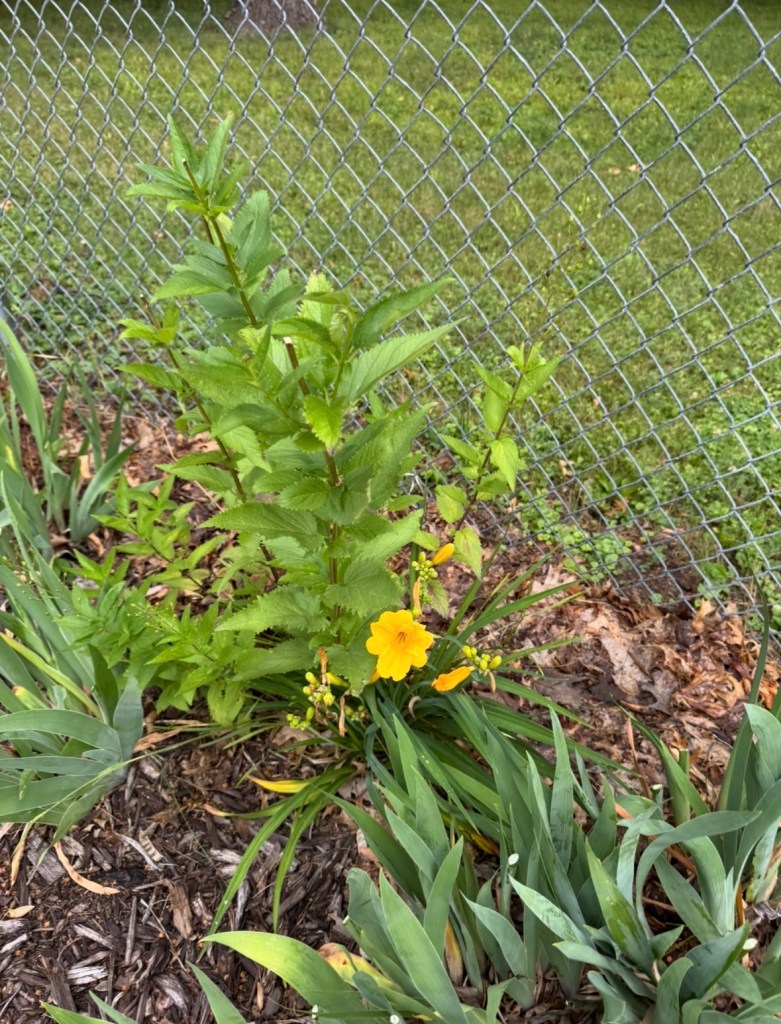
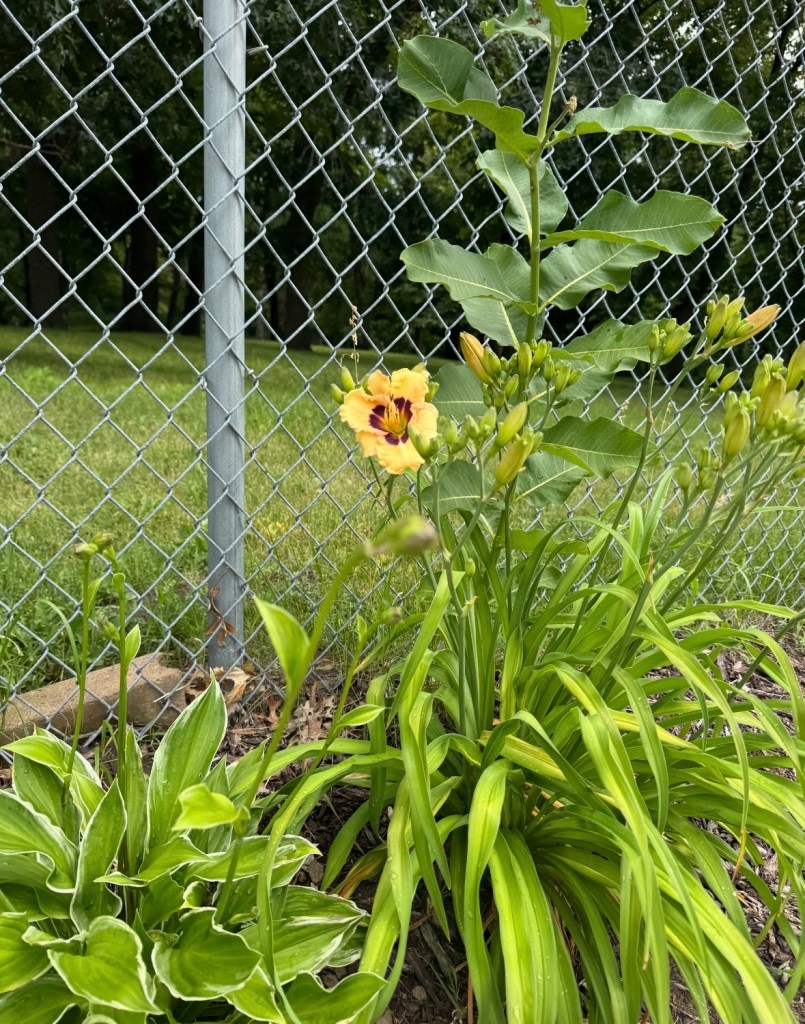
And finally, the plant below (tall stems coming from very green leaves) at the historic cemetery was either a plop or a bird drop. I think it is a Figwort.
Full disclosure, I do not love it. But a few other people do. One sweet walker even carried a bottle of water every afternoon to sustain it when it looked droopy a couple years ago after I moved it.
What do you all think of it?
For now, it stays, but it may go into a new area this fall where the look will be more toward wildflower. Probably right along with the Stella De Oro it is overtaking 😉

I believe that is it for this What’s Up Wednesday.
Blessings on the rest of your week!!