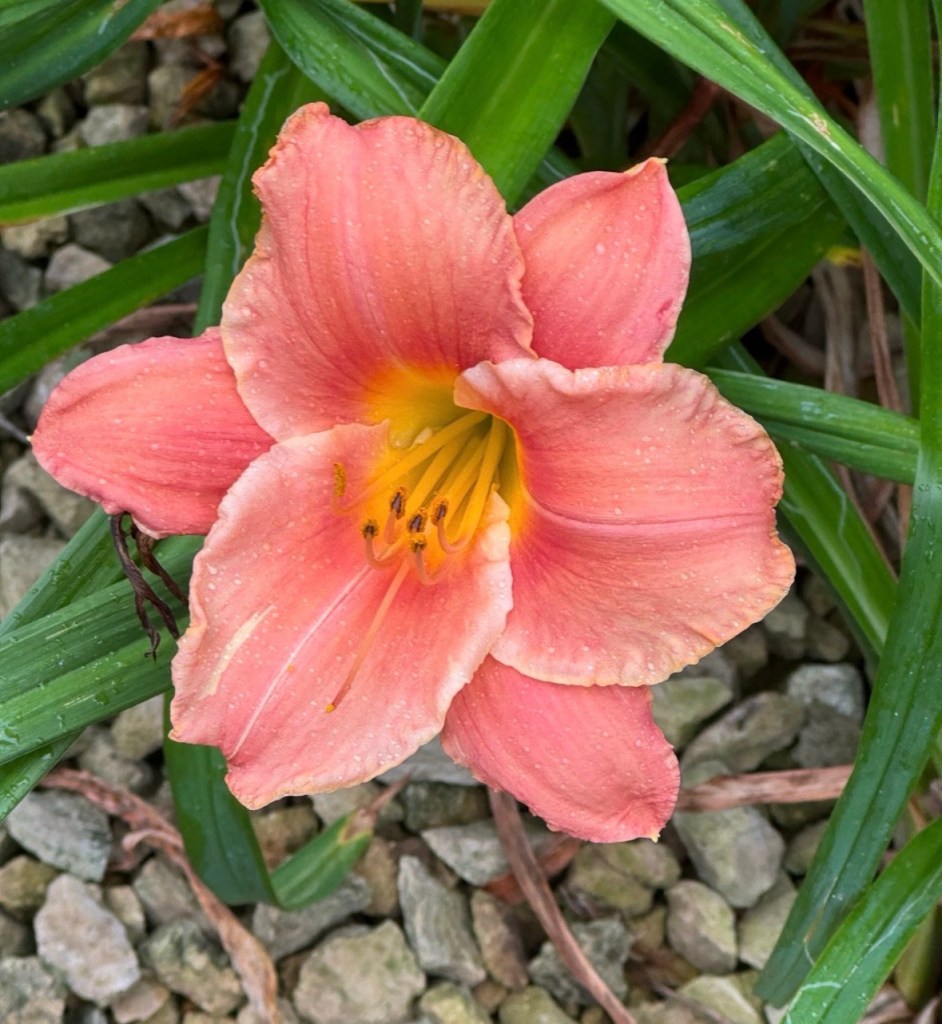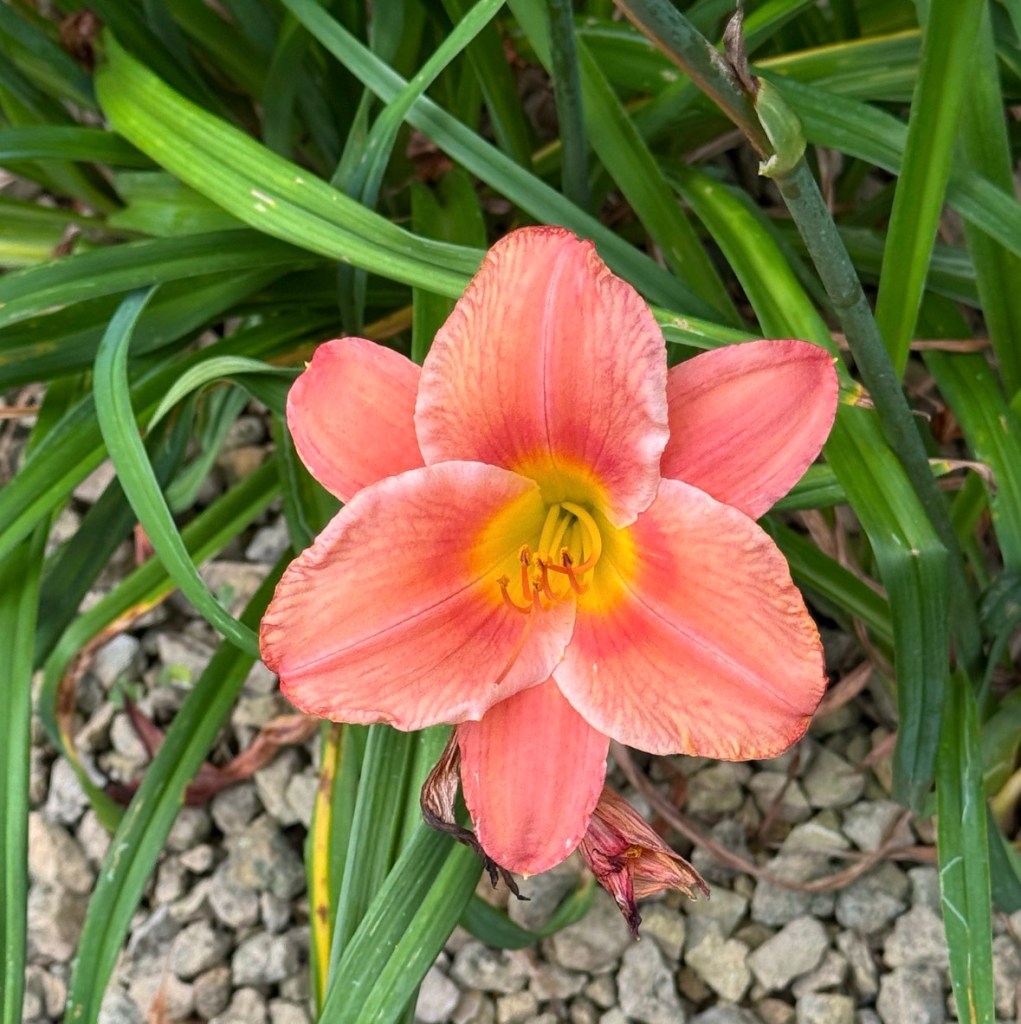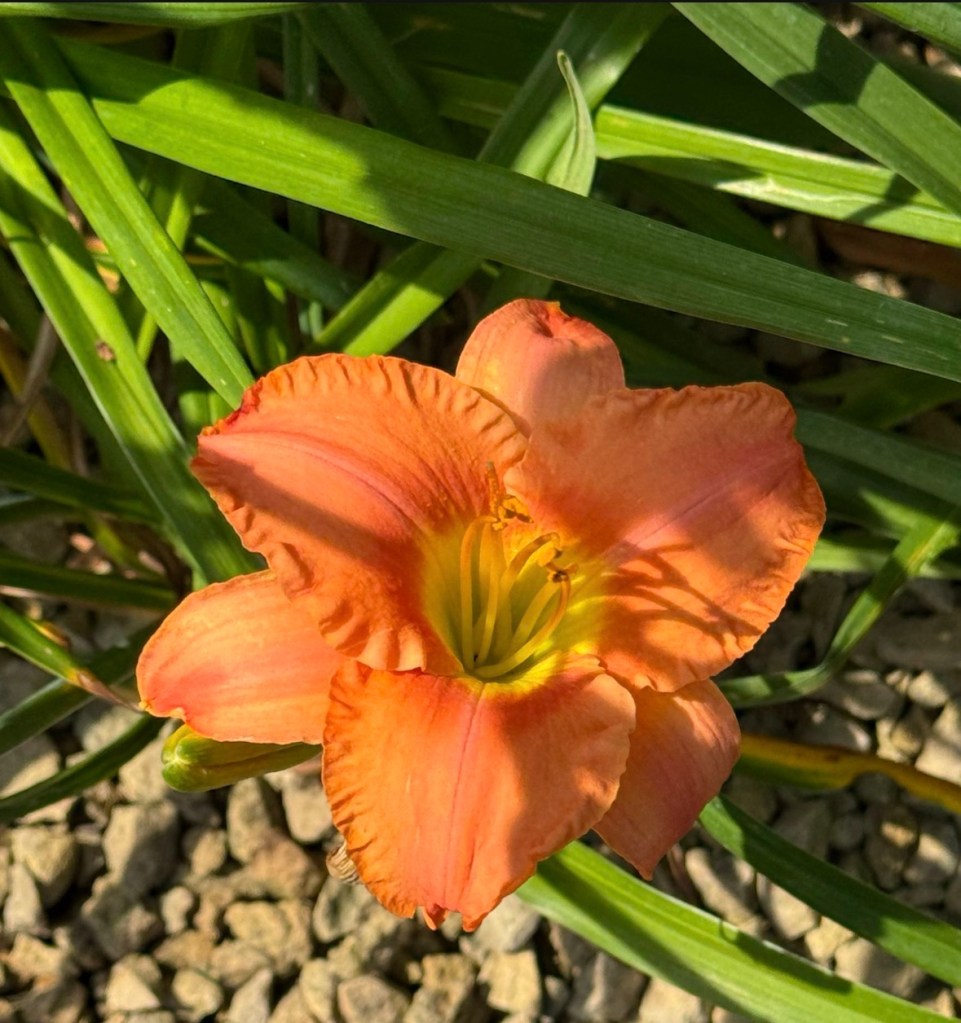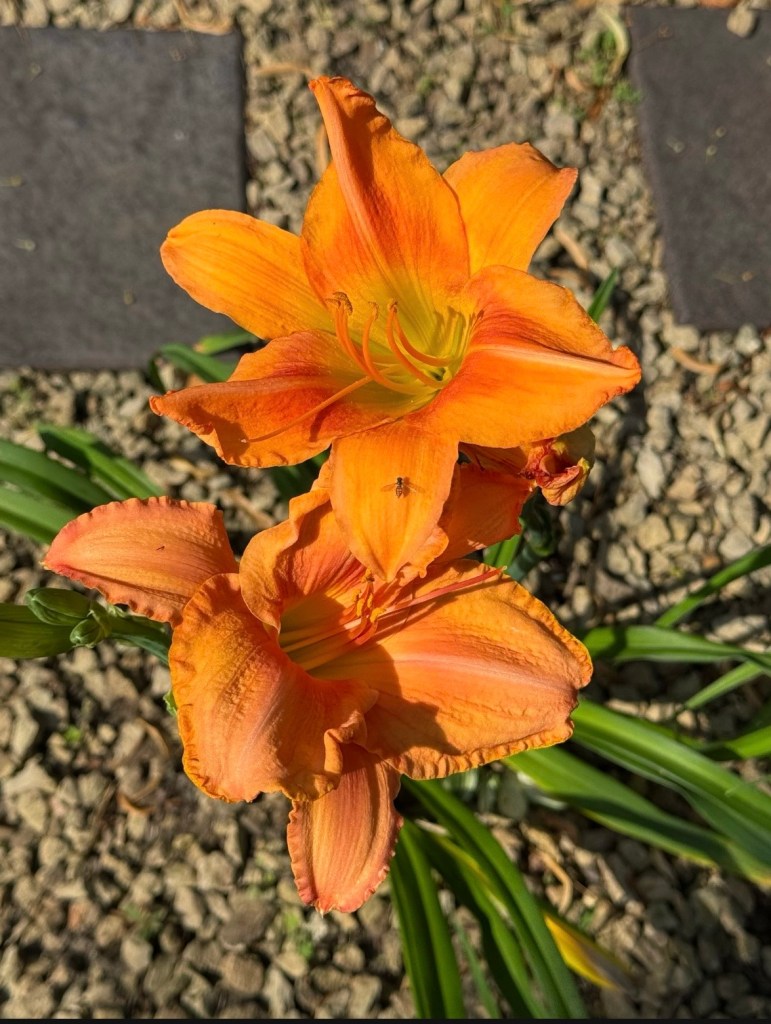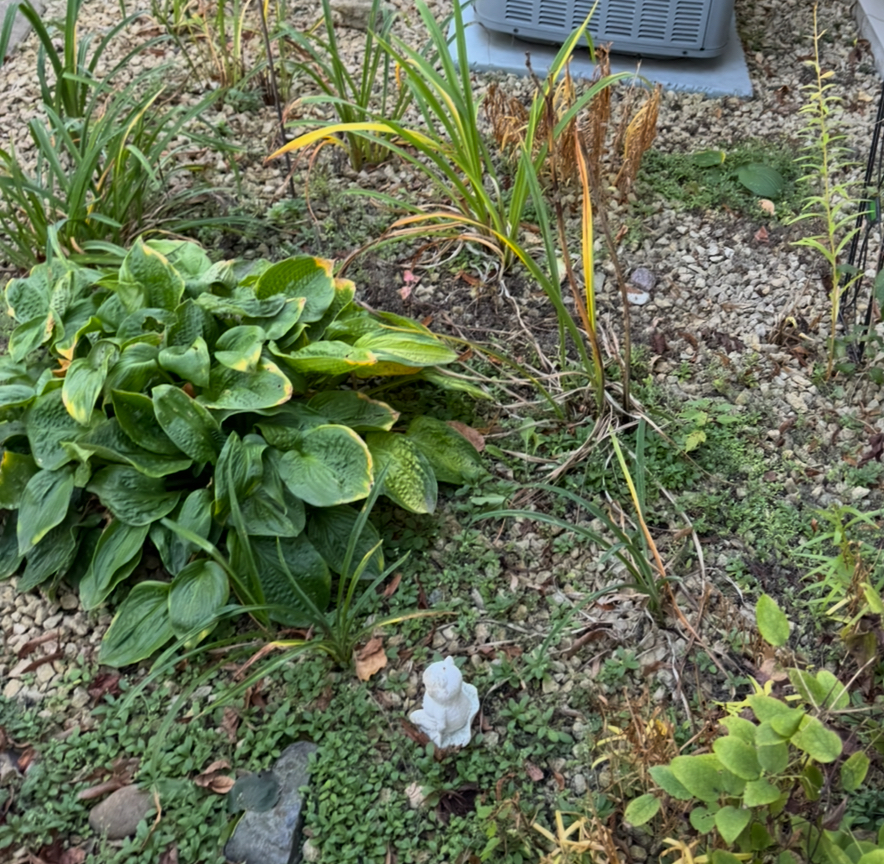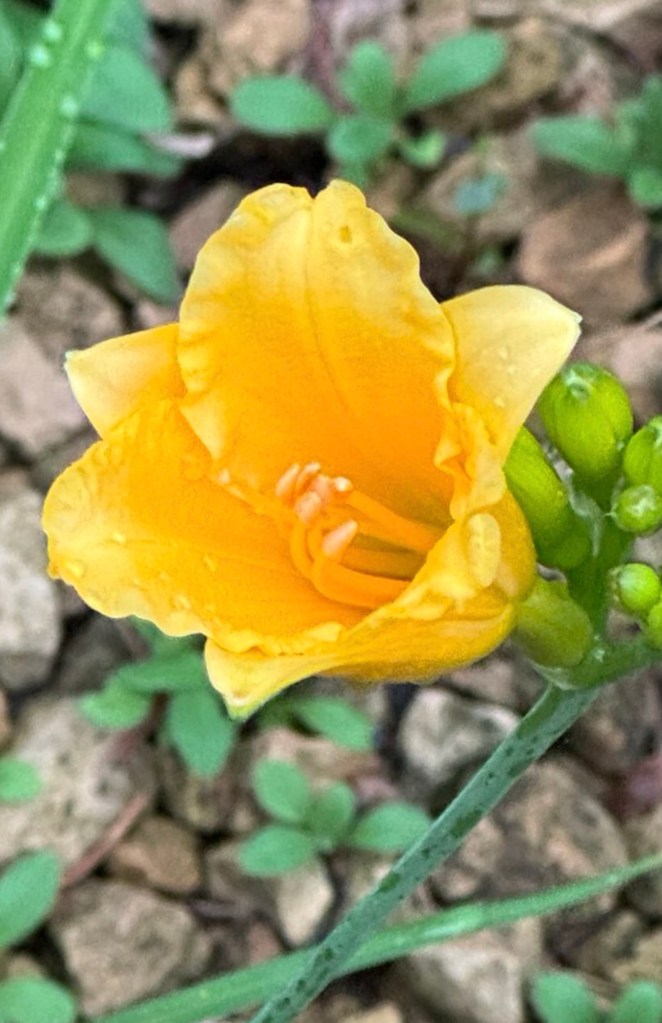
What about Hello Yellow in 2026?

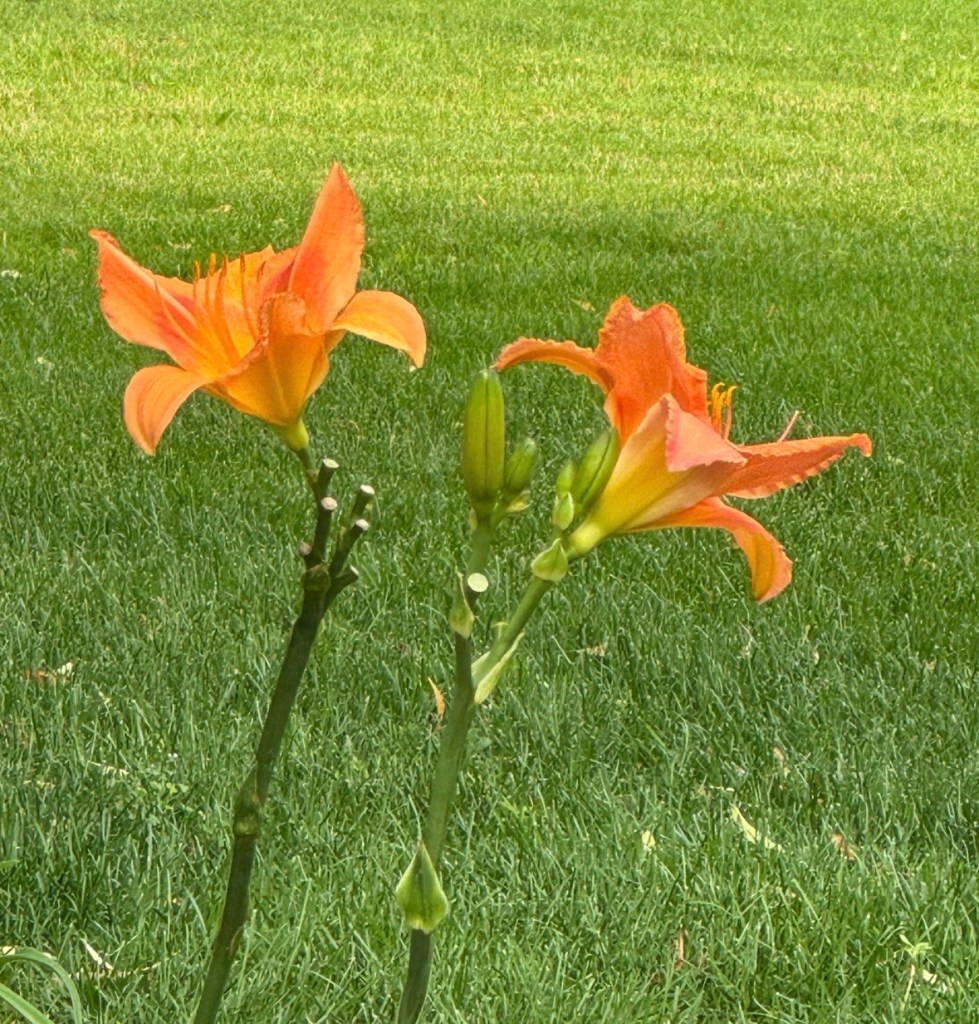
Hello Yellow is a daylily that has bloomed the past few years in our garden at the townhouse. It is from seed I harvested but suspect I mislabeled. Despite multiple attempts to replicate that cross, I have been unsuccessful. I may continue to try to do that in the future, but I need to move forward. Hello Yellow will become ‘sdlg’ (for seedling) for now.

The Hello Yellow daylilies are the first to bloom in our gardens, and the last. It will stay. Absolutely will stay. And it needs some “puppies”. Hopefully 5. And a “Mom” for those puppies. You know where this is going, right? South Seas self-seed anyone? And a little story time.

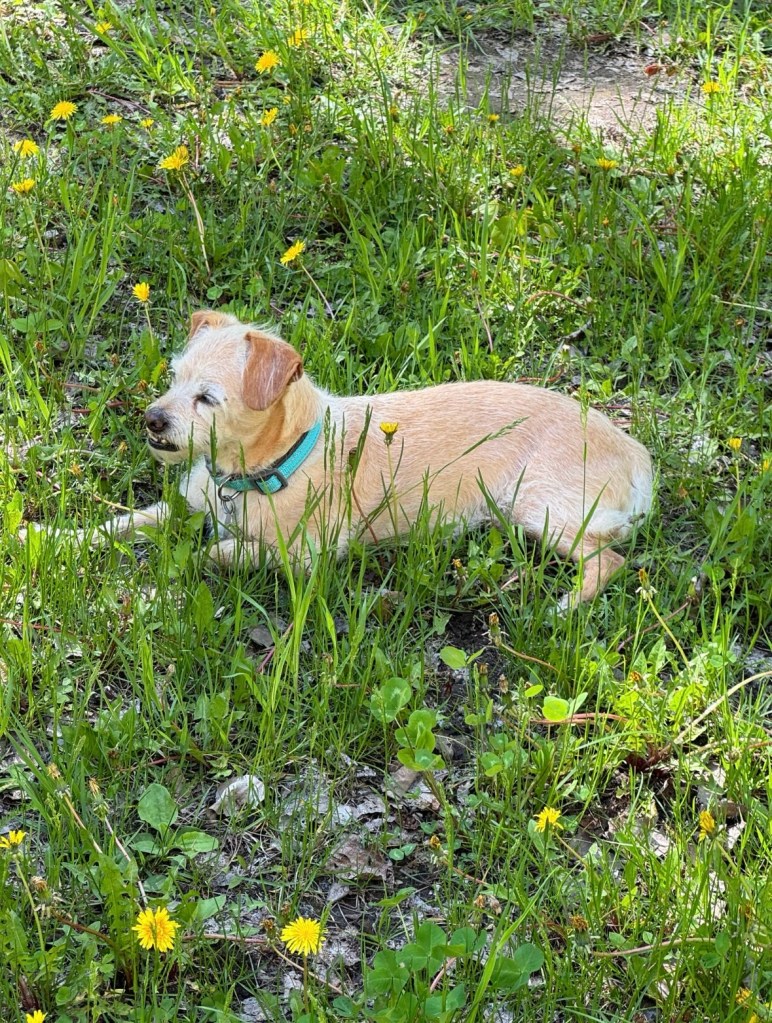
Alert – Now this gets sentimental. In January we lost our last dog, Sandy. He was a terrier mix, probably mostly with chihuahua. We adopted him at 1 1/2 years old as a rescue. We were told someone(s) moved and left him and his girlfriend (April), who was a couple weeks away from delivering 5 of their puppies, roaming around the halls of the apartment. They were picked up by animal control and put into a foster facility with the intention of making them available as rescues. I had worked with someone who also worked with that rescue and told her that if they ever got a border terrier to let me know. I kid you not, we had a planned trip to go adopt another dog, and I got an email from my colleague about Sandy. Sandy came home with me the next day. He was very sad to leave April and the pups, but they were also ready for adoption and went very quickly. And Sandy bonded with me within hours of bringing him to our home. We had Sandy for 14 years. He was 15 1/2 when he passed. He had a very good, interesting life where he was very loved, and, of course, pampered.

Sandy was a very endearing dog. Super cuddly to his peeps, but very spunky with other dogs. It took a bit to get him socialized with our Irish Terrier mix. I ended up between them one day and got a tetanus shot booster as a reward. They eventually made peace, and when our Irish Terrier mix passed, Sandy became an “only”. Sandy had a short stay with our son and DIL where he regained his doggy manners through being reminded of normal doggy protocol by living with their dogs. Eventually he came back to our home and was our beloved constant companion until he passed this January. He spent a lot of time in the gardens with me, and I am certain this Spring I will feel that loss intensely for a while. Time does heal, but it is a bit rocky.

Sandy was a blond dog with Apricot ears. Recently when I was looking through my latest daylily catalogue, I was oh so tempted to order at least one ‘Apricot Sparkles’ daylily and plant it where he used to fall asleep in the sun. I have had ‘Apricot Sparkles’ on and off my wish list for a while. But I held off, not quite sure. And it finally came to me. I want to work with what we have here, from when he was here, and see what I can get with crosses between Hello Yellow and all the South Seas self-seed (peach/apricot) blooms.

I fully realize this is risky. Hello Yellow is an extended bloom daylily, and the pollen is often not cooperative. The blooms open in the evening. But this is a rest and heal year. 2025 was very intense and pivotal. A nothing burger year for hybridizing would be fine. So, I am going to give it a try, crossing Hello Yellow with our apricot/peach blooms from South Seas self-seed. With any luck, in 3-7 years, we will have an area called “Sandy’s garden” where he used to sunbathe – and maybe have 5 new yellow and apricot/peach crosses in that garden. THAT would be fun! And, if not, ‘Apricot Sparkles’ will probably still be around in the daylily catalogues.

Now, about that Hyperion? Historical. Fragrant. Matching the aesthetic I am more and more drawn to. Do we have a peach diploid to cross to? Why yes. Yes, we do! Hmmm. Getting closer to making that call. Setting the components for 2027 and beyond.

Have I mentioned daylily propagation is a long game? I think so 😉

Be Blessed!
The data doesn’t lie

As I wait on spring, and as I garden plan, I am looking at my data. Lots of data. Enough that I did a pivot table last fall.

The pivot table tells me diploids do exceptionally well here at quantity to seedling from hybridization. And specifically, intentional crosses with the Red daylilies and the Pink Tirzah daylilies account for 61% of the diploid seed harvest in 2025 alone. Since I have a fair amount of the same type of seedlings already in the ground from 2024 and since daylily hybridization is a long game, and I am not sure if I will even like the results when they do bloom, if they bloom, I think I can make some data driven decisions there.

  1. I will not do intentional crosses with the Red daylilies in 2026. I will, however, continue to allow self-seed.
  2. Since Pink Tirzah has not produced viable self-seed in our gardens, I want to test that out in 2026. Pink Tirzah will still be a planned pollen parent in 2026, but any viable seed Pink Tirzah pods produce in 2026 would be self-seed.

Those two diploid decisions alone should get me to my goal of simplifying to something more manageable at seed harvest time. Those decisions do not give me pause at all.

With the tetraploids, however, I am going to do something I may regret in future years. I am only going to do crosses with South Seas self-seed blooms in 2026. Egads. I know. But logically, I doubt I will regret that, as I really like the South Seas self-seed blooms I am seeing so far, and there are quite a few more I am expecting to bloom this year.

So that’s it. A simplified 2026, and one that pulls me farther down the self-seed path.

We shall see how it goes 😉

Kind of miss these, kind of not. Let’s stick with the South Seas self-seed blooms :)

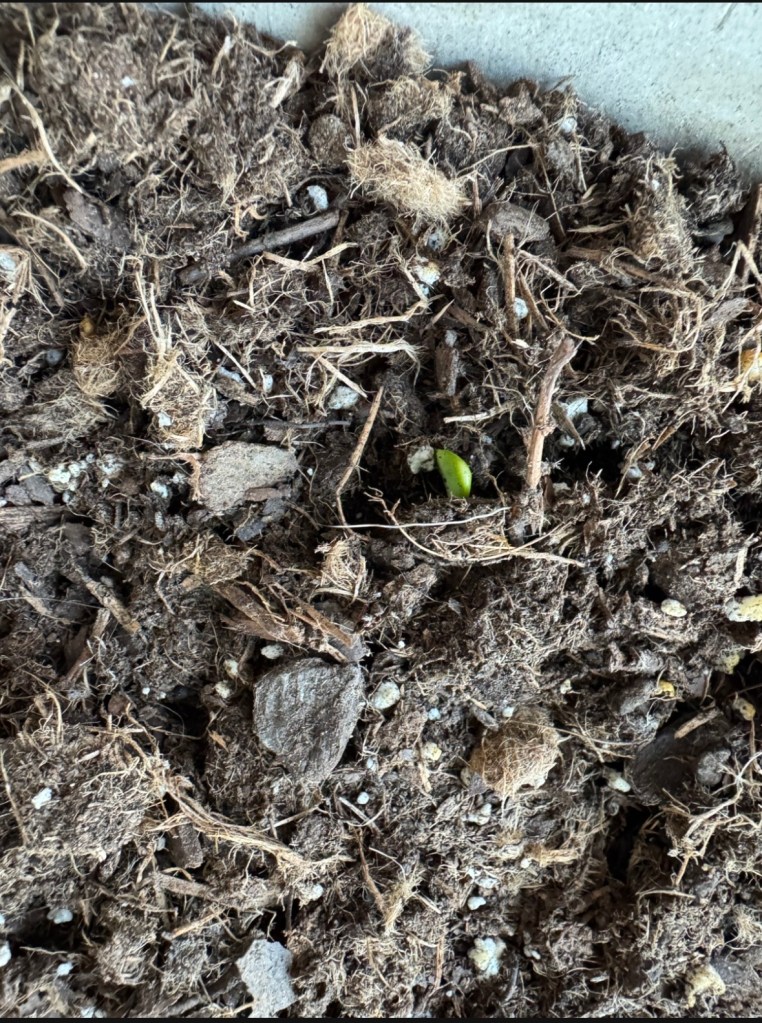
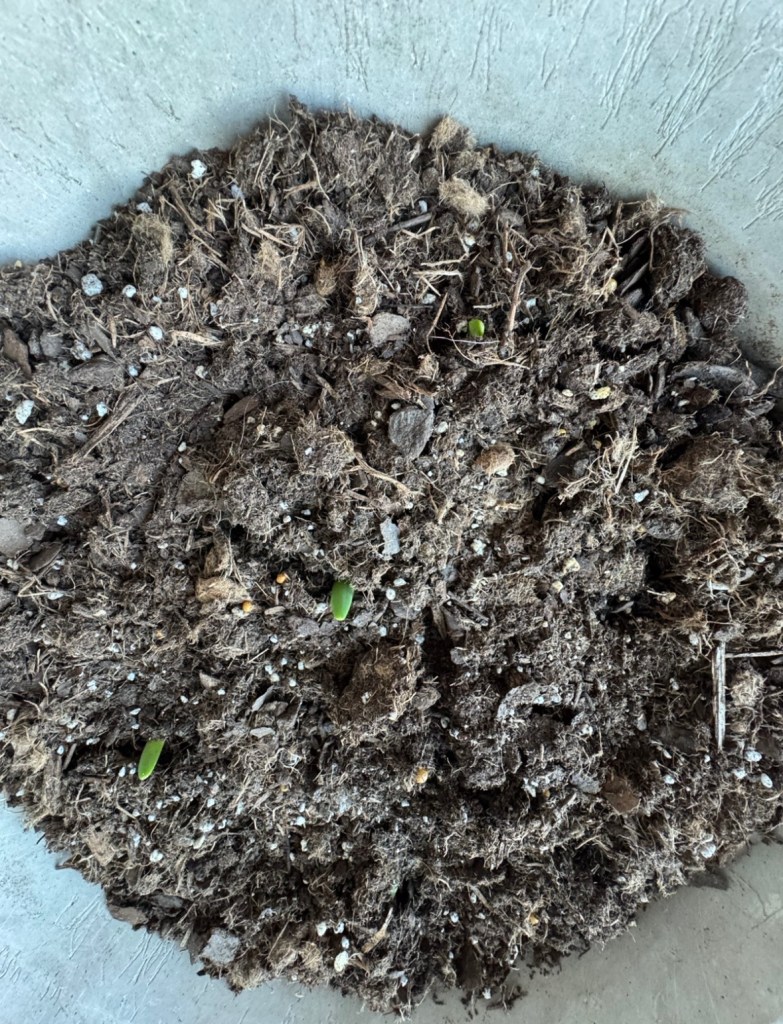
Yesterday when I was reviewing February 16 pics, I had to do a double take at this one. What was it? Green in February in Minnesota?

The next pic brought more clarity.

That was not cement. It was the inside of a plant pot. And then I remembered. It was the annual big pot of forced daffodils. Here’s the story.

Forcing daffodils was super fun for quite a few years. Eventually, however, I “decluttered” that practice. And to be fully transparent, the progression was not solely with daffodils. I started with buying Watch ‘Em Grow gardens. That was kind of spendy, and the containers were cute but hard to repurpose. I decided to DIY and plant a variety of bulbs in large and medium pots for forcing. After the first few years I went to only daffodils because I was planting jumbo bags full of daffodils at the historic cemetery to repel moles. The leftovers went to the forcing pots and then got planted back at the historic garden in Spring when the ground thawed. But forced bulb stems often fall over in pots and don’t look so awesome. Last year they looked pretty bad in pots. As I planted them at the historic cemetery I decided – that was an era, and that era is done.

A few weeks ago, I was kind of missing the forced bulbs. I saw the pretty arrangements of forced tulips in a vase with the jute cord around the glass container at the warehouse store. So cute! I love that look! But rewind the tape – that jute cord is a mess when trying to wash the vase, AND I know I will never reuse that setup. I gathered my strength and discipline, reminded myself I can look, and enjoy, but also that I had already made a decision, last fall, at that same warehouse store, that I am done with forcing bulbs. To start buying forced bulbs in a glass container with jute around it that I will never reuse is a step backwards. Roll the cart forward.

Yesterday I enjoyed the pics from prior years, just like I enjoyed looking at the creations at the warehouse, AND I successfully stayed in my “now” wheelhouse. Where bulbs go into the ground, if I even buy them (rare anymore), and where worms clean the “containers” (dirt) hahaha!

The wheelhouse nowadays is mostly daylilies. And did you think I would pass up a daylily picture today? Not a chance 😉

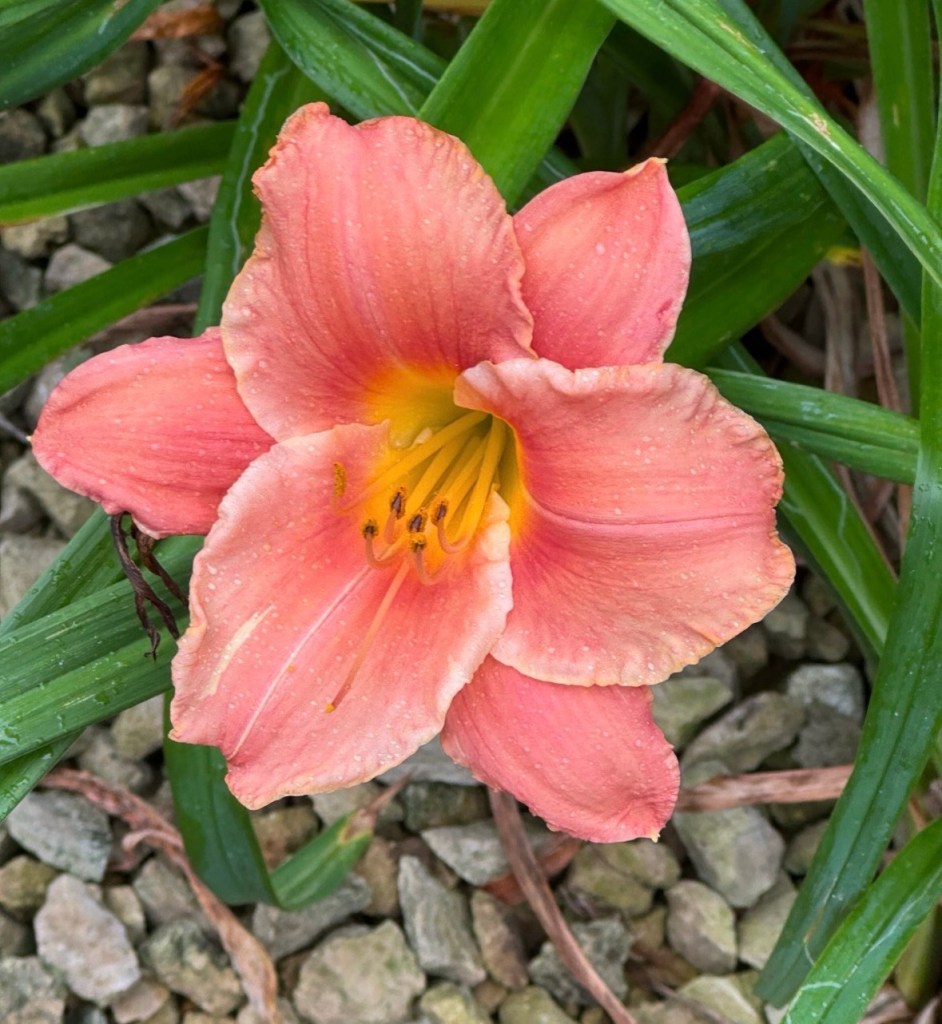
Today’s South Seas self-seed daylily is another beauty. For my garden and tracking purposes I named it SS Light. South Seas is SS but SS is also Steamship (historical reference to ships that were prevalent during the time our area was settled). And when SS Light first bloomed, it looked to me like a light version of South Seas. I was ready to steamship ahead. It would definitely stay.

Here are three blooms from the same bunch (SS Light). I decided from the first bloom to also see if SS Light would agree to be a pod parent. Coral Majority was also blooming that day, and I could not resist. That established the cross with SS Light as the pod parent, at least for 2025. Two out of three crosses produced seed. I have a total of 10 seeds from those crosses. We will see if the seeds germinate this Spring. Fingers crossed.

Enjoy!

SS Light x Coral Majority (0 seeds)
SS Light x Coral Majority (3 seeds)
SS Light x Coral Majority (7 seeds)

South Seas self-seed blooms Part 2

Screenshot

The farther I go down the daylily propagation path, the more curious I get. That is how scope creeps, but also how experience grows. It is a balance. I am finding my parameters.

As I have shared, daylily self-seed harvesting, planting, and growing to bloom is really appealing to me. I worked lots of years with large amounts of data, and am pretty comfortable with analysis, but nowadays I like a little bit closer to granny rocking chair patio relaxing. Thinking, always thinking, but closer to appreciation, and reflection. Specifically, closer to releasing things with volume or timing stress. Creative? Yes. Absolutely, but lower key creative. Helper creative.

The South Seas self-seed blooms pictured above are super interesting. Notice that the coloring is quite similar, but the features are quite different. They are from the same year’s harvest, but, because I previously stored self-seed all together by daylily type, not individual pod, the pollinator efforts and the conditions may have been different (or not). The resulting two blooms pictured above could have come from the same pod, different seed. They could be different pods, same day. They could be same day, different pods, different pollinators (butterfly, bee …). They could be same day but different weather throughout the day. They could also be different pollinators, different conditions, days apart. Oy! And I could track some of that, but why?

For hybridizing, I do much more tracking. And going forward, how much I am willing to track will depend on how narrow I bring the scope. 5-7 various types of crosses sounds really good to me now, but if I start to try to replicate certain features, or eliminate them, more data may be helpful. However, for self-seed, I am not the pollinator (gasp!). And doggone it, the pollinators are notoriously bad at entering their contributions into my spreadsheet. They do not identify who stopped by, when, or to which bloom(s).

A little more relaxing and just enjoying for these is the message and the theme. That balance sounds good to me this year.

I hope you enjoy today’s pic, and I hope you have a wonderful day!

While we Wait

While we wait for Spring to arrive, above is a pic of some of our oldest surviving Asian lilies in the garden. They bloom in June. They are fading each year, and I won’t replace them, but we enjoy what does bloom each year 🙂

The same day I took the pic of the Asian lilies (above), the first daylily of 2025 bloomed – Hello Yellow (below).

Hello Yellow is a mystery. It is from seedlings I planted from seed I harvested from our garden, but it does not match up with my (admittedly rookie at that time) documentation. If I didn’t know better, I would have thought it was a Stella de Oro volunteer, but I planted the seedlings myself, from our harvested seed, and I do not have any Stella de Oros in our townhouse gardens. Additionally, Stella de Oro is a diploid, and, based on how Hello Yellow is typing out with crosses that make pods that go to seed, Hello Yellow is a tetraploid. A very picky tetraploid, only making seed from a cross to one specific type of tetraploid, but failing to make seed from crosses from many diploids. Seed being the delineator. It does make pods from crosses from diploids, and they do well for sometimes quite a while, but eventually the diploid cross pods fail. To my great disappointment I might say, because if they did succeed, I would say Hello Yellow was a one in a million cross between what my rookie documentation said – a cross between a diploid and a tetraploid. But alas! Highly unlikely successful cross. And you can bet I have tried to replicate it. But nope. Hasn’t worked.

Compounding my attempts to resolve the mystery, a bunny and/or a squirrel ate the only Hello Yellow pods that were kind of making it in 2024. But there is hope – I have two seeds from the Hello Yellow crosses. We shall see. And you can bet Hello Yellow will get priority for the few crosses I do in 2026. Already in the plan.

Even if I cannot reproduce Hello Yellow, it will stay in the garden. It is quite unique – it is an extended bloom daylily (blooms in the evening and stays blooming until the next evening), and it is the longest blooming daylily in the garden. In 2025 it was the first daylily to bloom, and it also ended up being the last.

Enjoy!

Reassess

Screenshot

At the end of January, after almost a year of significant health challenges, we lost our 15 1/2-year-old dog. We knew that outcome was coming, and we were pretty aware of how much we would miss him. But it has been hard. He was our constant sidekick, and that included in the gardens. He was also our last dog. We have had dogs for 30 years as a family, and we do rescue, so they often come from tough past care and experiences. We loved every dog, dearly, but it is time to wrap up that part of our life.

2025 year was a pivotal year in other ways as well, and we are assessing other things now too.

In 2025 I went a tad much on daylily crosses. It is a lot of creative fun to plan the crosses, to see what blooms each day and do the available crosses, to see the crosses form pods and mature to harvest readiness. But mid-September last year it switched to “too much”. Last year I harvested 521 seeds, with 19 successful intentional (not pollinator) cross types, 17 of which were new. There was a lot of harvest related work, including storage work that went way too far into fall for my preference. And now, in Spring, I have 521 seeds in dry cold stratification. (More on that below.) Every single one of those seeds will require planting, monitoring to seedling, hopefully making it to seedling, and then planting in its 3-year home (to bloom). I loved previous years when I did much less. Last year was too much. So, we reassess.

As part of the assessment, I considered that, yes, gardening is my primary hobby, but it is my – hobby. And true, I added garden blogging 8 years ago, and last year I added historical research, but those are also hobbies. To keep at that scope, I am solidifying my decision, for 2026, to pare way back on doing daylily crosses. I will probably do 5-7 intentional cross types, as I did in pre-2025 years, but I want to spend a boatload of time just enjoying the gardens, including watching the pollinators enjoy the gardens. From there we will see where it goes. I do want to head farther down the historic path of daylily gardening, and I am still working on getting Flava (historic) daylilies, but if I can’t get them this year, that’s ok too.

Now for actionable info – As I mentioned above. I do dry cold stratification for my harvested daylily seeds. Yes, I am seeing that is not the currently documented best practice, but again, I am a hobbyist, and I am aiming for minimal complexity. Here’s my timing this year. On Feb 7 I put the 521 harvested (stored by cross, type and date) daylily seeds, in envelopes, in plastic bags, into the side door of our refrigerator. Super high-tech stratification 😉 In April I will plant some seeds indoors in trays, just because in April I get impatient for garden activity. However, the vast majority of my harvested daylily seeds will get planted in May, in multiples, by type, into medium pots, and the medium pots will go into protected seedling boxes where they will “sink or swim” outside. I know. Blasphemy! But this is the method I arrived at quite a few years back, and how I do this every year. Last year I had about an 80% seed to seedling success ratio.

More to come. As always, I will share as we go along 🙂

A White Squirrel, Our Dog Having Fun, Very Full Hosta Garden, and Asian Lillies in Bud

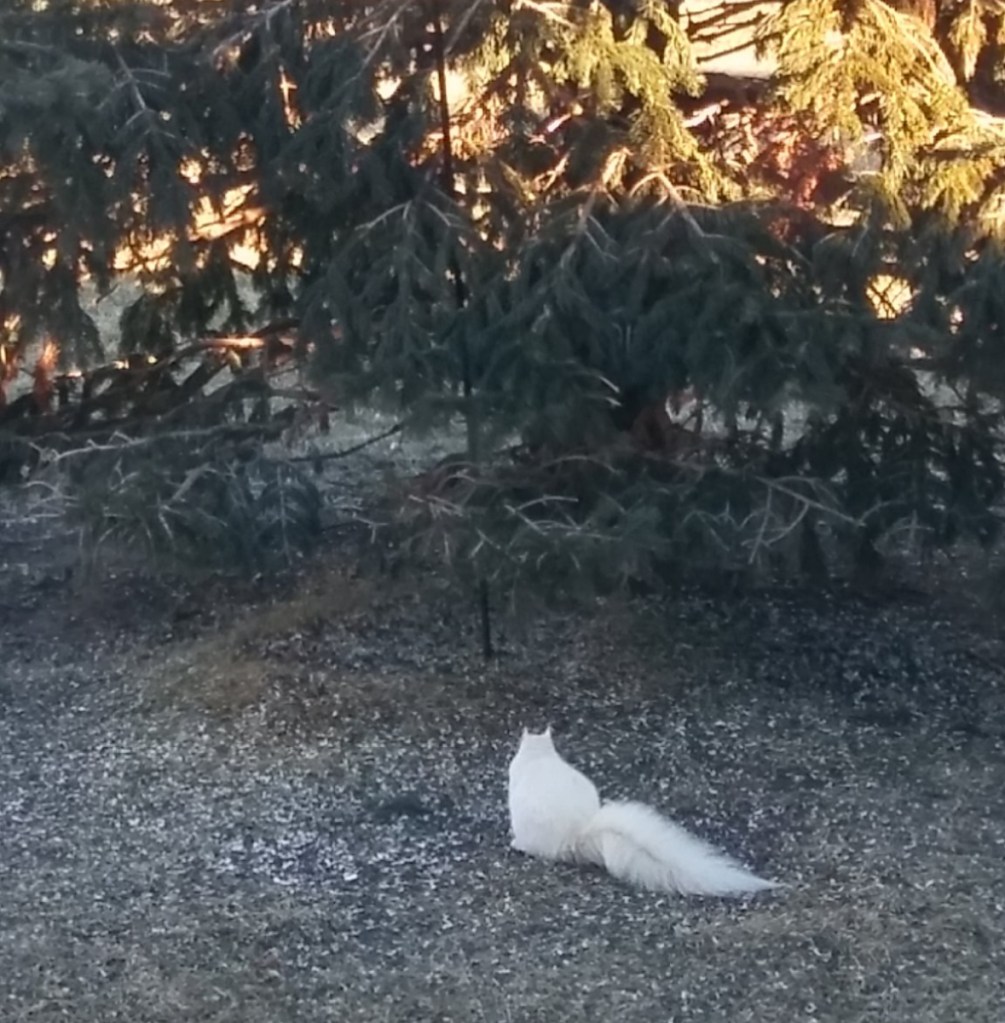
For many years we have had white squirrels in our neighborhood. True albino. We even took pics in the beginning and sent them in to some sort of tracking site.

This pic dates back to Jan 9, 2019


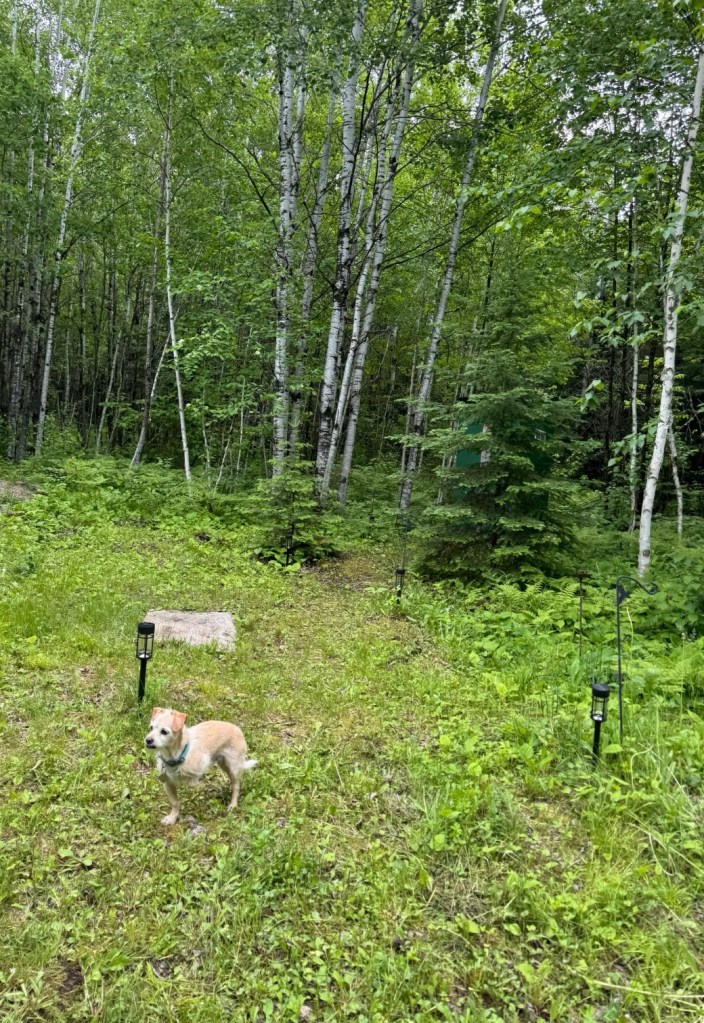
And for our June in January pics today I have a few. The first is our dog mid-stride, front paw tucked, up north last June 9. WAY in the back is the outhouse. The lanterns mark the way at night 😉

Screenshot

This next pic will not be a view we see again. It was the very full hosta garden under the linden on June 9, 2024. Mysteriously we lost 18 hostas between fall of 2024 and spring of 2025. We shall not focus on theories, but rather, enjoy the picture, and know that the empty spaces, where the hostas were, found new occupants in 2025.

Screenshot

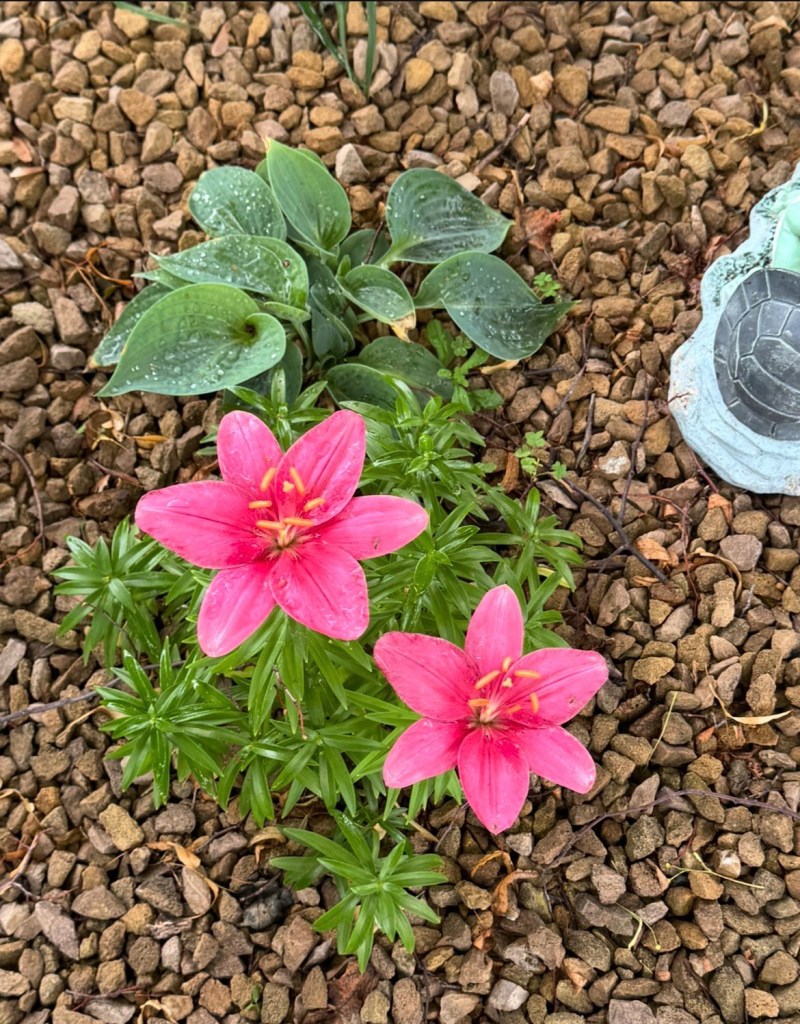
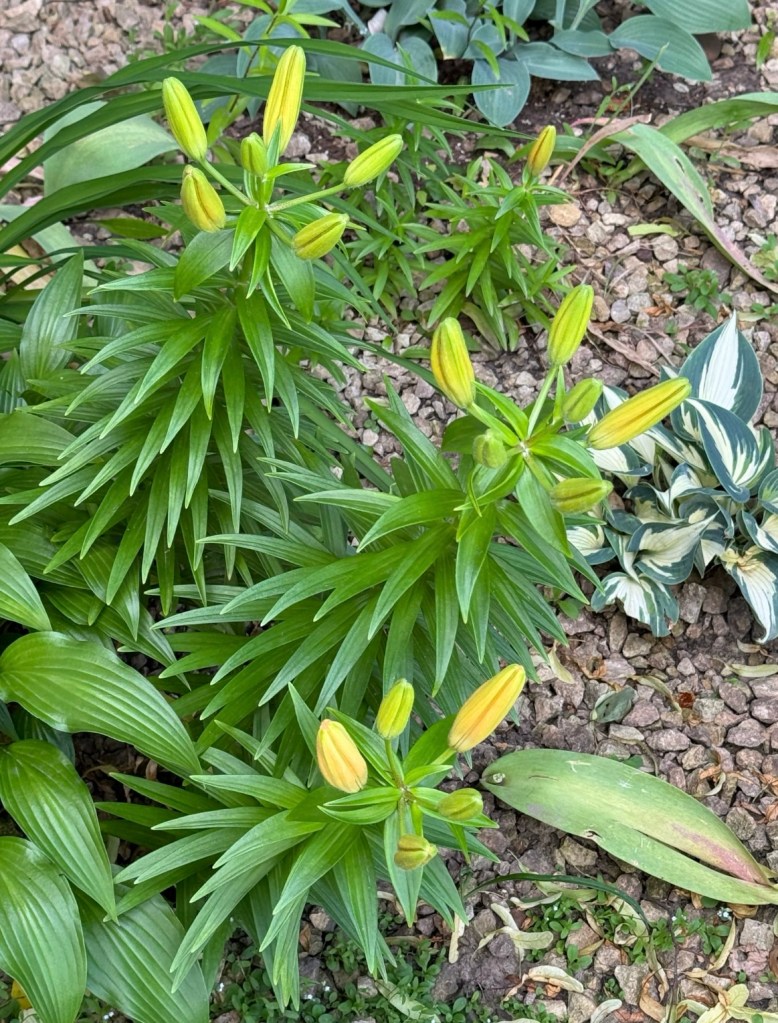
And this pic is quintessential early June (June 9, 2024) in our back townhome garden – the peach Asian lilies still in bud, a set of tulip leaves fading (one looks like it may have provided a bunny meal at one point – nothing left where the tulip bloom was), and I also remember that hosta, where a leaf looks a bit eaten, was actually from being stepped on and crushed. Stuff happens.

Screenshot

Enjoy!

I hope you have a good evening!

Be Blessed!

Hard Frost, Garden Cutback, Decision on daylily scope

Well … the gardens are done for the year. I knew it was coming. Our DIL had the end of their harvest up north, and I knew our second hard frost was coming here.

It did. Late last week we dipped to 28F.

The next morning, I saw the frost. I watched as the trees rained leaves. I enjoyed the beauty, the crisp air … and eventually I started at the cutback work. I have a 60 degree-ish high temperature threshold for the cutback timing. When I see the extended forecast high temperatures start to dip below that, it is time. A little can remain, things that aren’t quite ready, but it is not my favorite thing to cut the gardens back with freezing fingers. So with that, I hit it hard.

It’s a bummer that we are done for 2025.

At the same time, however, there is a “happy” bubbling up. My winter activities ideas list is full – enough that I have a comfort level I will have both fun and challenging things to keep me good. And I have started to bring out the hygge for the next six months. The (battery operated) window candles with timers are up, the few strong scented (windows open) candles are being replaced with my favorite white unscented candles, and we have already enjoyed the gentle scent of few rauchers (German incense “smokers”). Bratapfelduft (baked apple) is my personal favorite.

I have also made a pivotal daylily scope decision. I reached out to a provider of the 1762 daylily I want, and they ship in late April/May. I am adding that daylily in 2026 and starting to pivot toward the intersection of historical with my daylilies. This will be a significant change in my daylily work. I think it will be a fun challenge.

To be fully transparent, this decision all started this year with falling in love with a number of daylilies I grew from self-seed to flowering. I loved their form and simplicity. I seriously started to wonder what might happen if I ditched all the busy-ness of hybrid crossing and noting and tracking and giving up early fall freedom due to late harvesting. What would happen if I went back to just letting the pollinators and the wind and the daylilies anatomical tendencies create seeds? I analyzed my spreadsheet for exactly what space my 2025 hybridized seedlings will need in 2026 and what the 2025 seeds would need as 2026 seedlings. A LOT! I listened while my family started to call the cabin up north the hunting shack. (By now I was grumpy.) My idea of a daylily “farm” up north was fading. And I saw the tide turn. What exactly was I doing expanding my daylily work so exponentially? I was already pretty sure I didn’t want to do farmer’s markets to sell my excess plants. I knew for sure I didn’t want to ship stuff around. And the fam was increasingly sending “not really that interested in the daylily farm idea, but hey, if you want to do it, good luck” vibes. 😉 Love them!
My conclusion – my life could be so much simpler!

I slowly, and yes sadly, and sometimes crankily (is that a word?), but rationally assessed the scope of daylily hobby work I LIKE to do, year-round, and I decided – “2026 goes to a historic daylily focus” – researching, gardening, and planning included.

Now, I am not trashing the work I have already started. I think that will be fun to see unfold. These things take years. The 2025 seeds, if they germinate, if they go to full seedling, if they survive the first winter, will, at earliest, here in Minnesota USA, bloom for the first time in 2027, probably longer. But I am shaping, refining, what I already have as I weave things together between the seasons and our reality. I am part of a family. And in a marriage. And hobby daylilies were starting to suck planned time and create problems. Not cool. No desire to repeat.

So that’s it. That’s why I’ve been quiet. I was enjoying early fall after the extended seed harvest debacle pushed our fall plans way too close to our family’s hunting season. I was delaying the garden cutback. And I was ultimately deciding how to move forward with the daylilies.

Here’s some fun cloud pictures to words.
I was figuring out how to work with the volcano, ‘er fountain 😉

and I was deciding what needed to move out.

To trim or not to trim daylily scapes

Last year I had a bit of an issue with daylily scapes being pulled down and eaten by something. Probably something with four paws, but you never know, right? I used quite a few deterrents, all safe, and it was minimally effective. Minimally.

When I put all my 2024 notes and daylily crosses info onto my 2025 daylily tracking spreadsheet, I was reminded again about how much of an issue it was in 2024 – and how much it wasn’t in 2025. At least at the townhome. The historic cemetery, well, I have shared what happened with the Mahala Felton daylily seedlings that I planted by the gate. But that is a bit different, I think. And for this post we are focusing on daylily scapes.

As the 2025 daylily season was starting to produce spent scapes, I began to have the urge to tidy up. I did not, however, do that. This year it occurred to me to me that perhaps my habit of trimming spent scapes was actually attracting playful snackers. Against my preference to clean as the garden matures, I left all scapes on all daylilies until the pod harvest season was complete for that full area.

I also introduced another deterrent this year, and that is lemongrass essential oil (diluted and sprayed on the pavers). And, of course, there are the forget-me-nots, which are also a deterrent.

We are to the end of the daylily seed harvesting season, and I can report – no daylily scapes were pulled down and eaten by critters this year, even the shorter daylilies. All pods made it maturity and were harvested by … me 🙂

I also discovered something new. Spent daylily scapes, when completely dried in place, are very easy to pull. I have a few things in the garden that share that feature, and it is very welcome. Not all of the scapes had dried when the pod harvest wrapped up, so some were cut back when I started the daylily cutback out front, but in the true garden, out back, almost all the scapes were able to just be pulled. There remains just a few from the very last pod harvests.

And with that, the greens are getting another week or so of photosynthesis before I come through and cut everything back. And trim the shrubs. And say sweet dreams. And call it a wrap.

For now, cheers to not trimming spent daylily scapes, to lemongrass essential oil, and to forget-me-nots. I am thankful for no critter interference in the seed maturing process this year.

So Where Did We Land?

I have now had time to sit with the data on the 2025 daylily crosses. I am a bit shocked, but not totally. I harvested 422 seeds from our gardens here. 277 seeds are from diploids. That is not surprising, as I know what Pink Tirza does. There is a reason Pink Tirza is my diploid line. This year Pink Tirza was an incredible pod parent. Last year it was the opposite – Pink Tirzah was our top pollen producer in 2024. Naomi Ruth and Pink Tirzah don’t do fantastically well together, but Naomi Ruth was a top pollen producer this year, as well. Peach also typed out as a diploid (which did surprise me – a lot), and we have seeds from Peach. And with the Red daylilies in the mix and at an overwhelming quantity of 8 clumps, red boosted the diploid numbers.

Then there are 111 tetraploid seeds. Not surprisingly, South Seas took the prize for tetraploids. South Seas is my tetraploid line for a reason. South Seas is a powerhouse. And Coral Majority, one of her children (which I did not know when I purchased Coral Majority, but bonus!) continues to amaze. In fact, South Seas may have daylily grandbabies in the next few years in our garden due to Coral Majority. Fingers crossed. We have seed. It would be kind of cool. We shall see.

And then we have 34 self-seed from our gardens. Mostly – South Seas and Coral Majority, but a few Red and Just Plum Happy.

Not in the above numbers are 99 seeds harvested from Oakwood – 78 of which are Stella De Oro and look kind of iffy, but maybe they will do something for those gardens. I will try. There are 2 Red Volunteer seeds I harvested from a Red Volunteer I planted there last fall, and then 17 seeds from some new daylilies I don’t remember from last year, but they did very well this year.

So – 521 seeds. Oof! Yah. But I have my thinking cap on. I will figure it out. Lots of other people do this, at a much bigger scale. We shall be creative. There are 4 large success crosses. The rest can go in little seedling pots. Maybe direct sow the self-seed.

Definitely scaling back next year. Oy!