Wonderful!

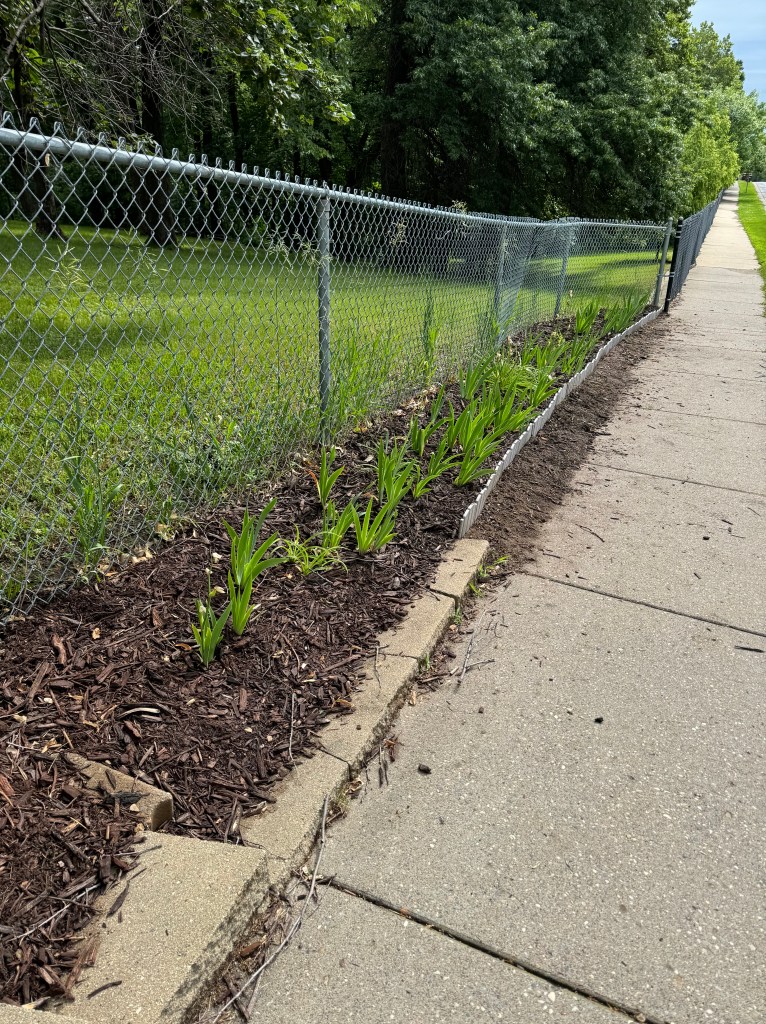
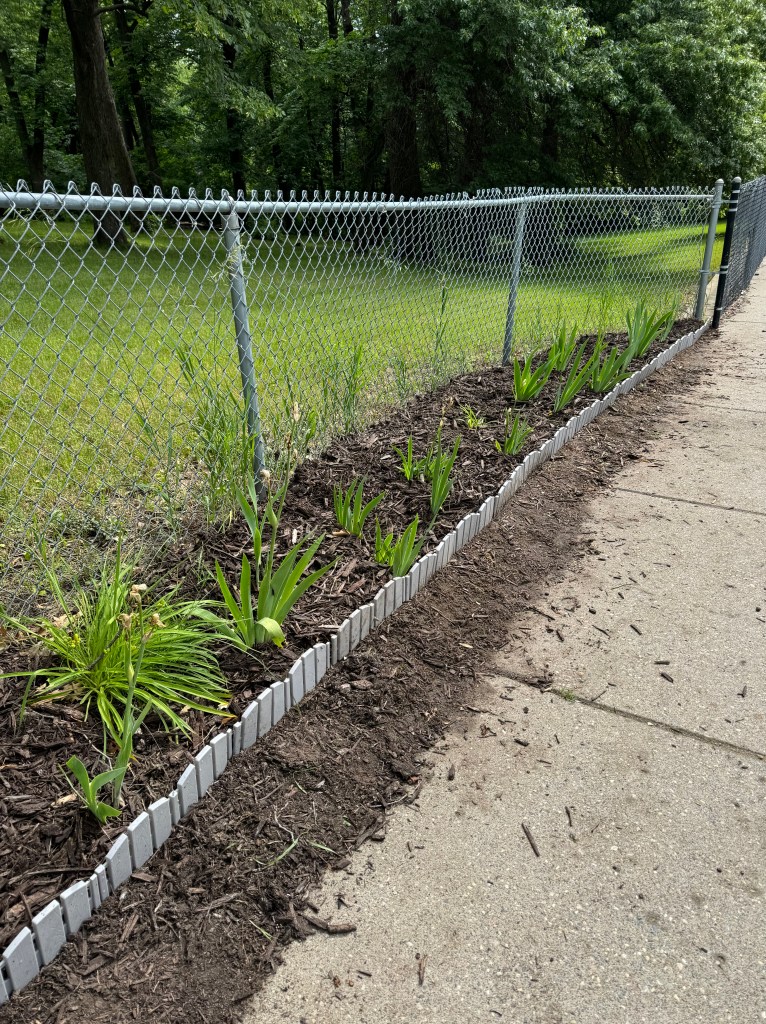
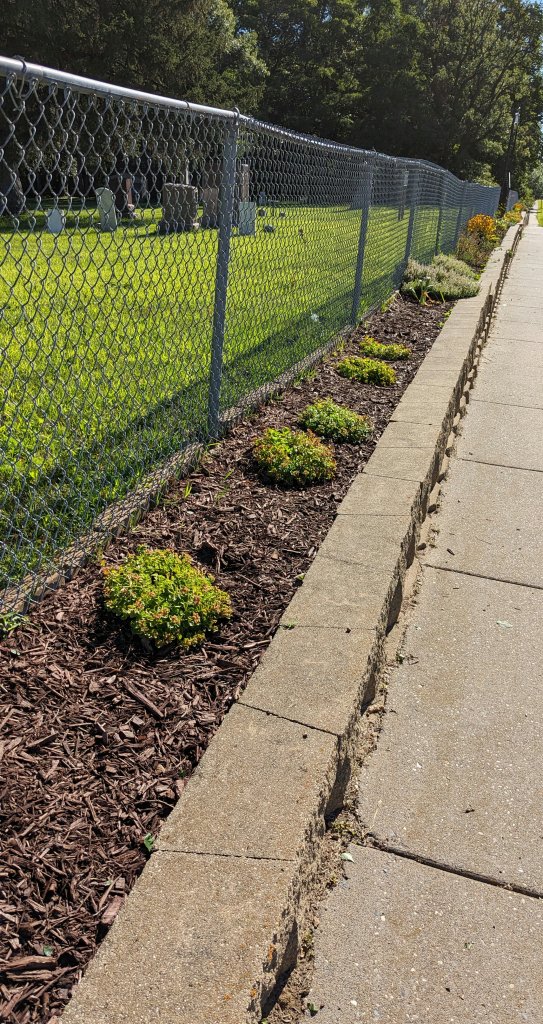
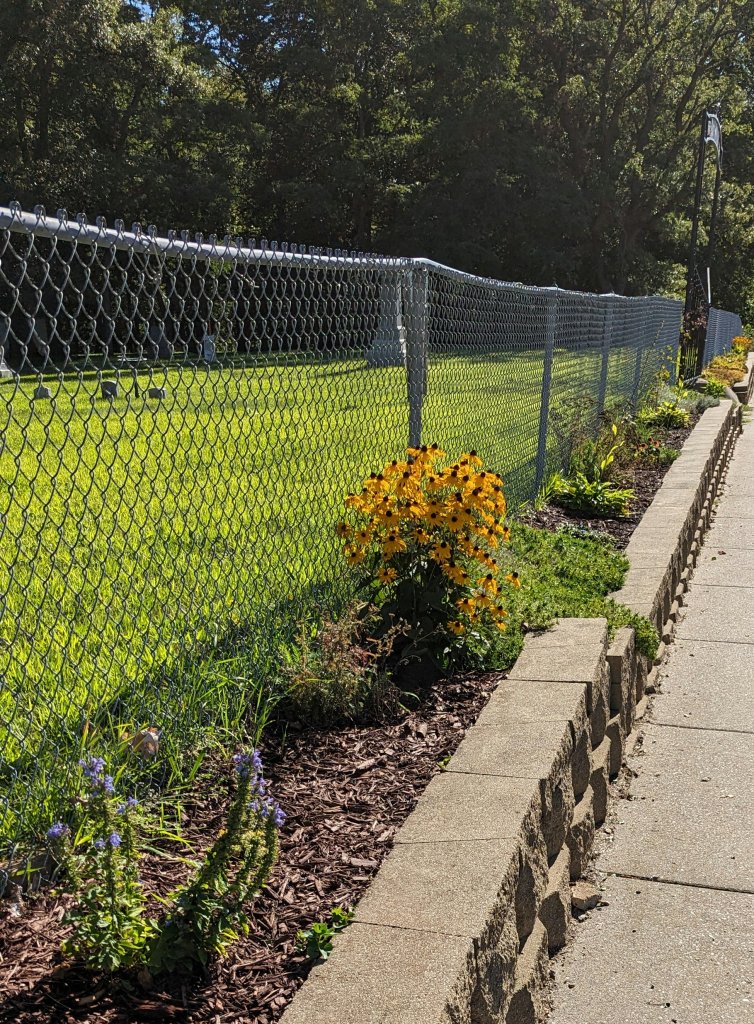
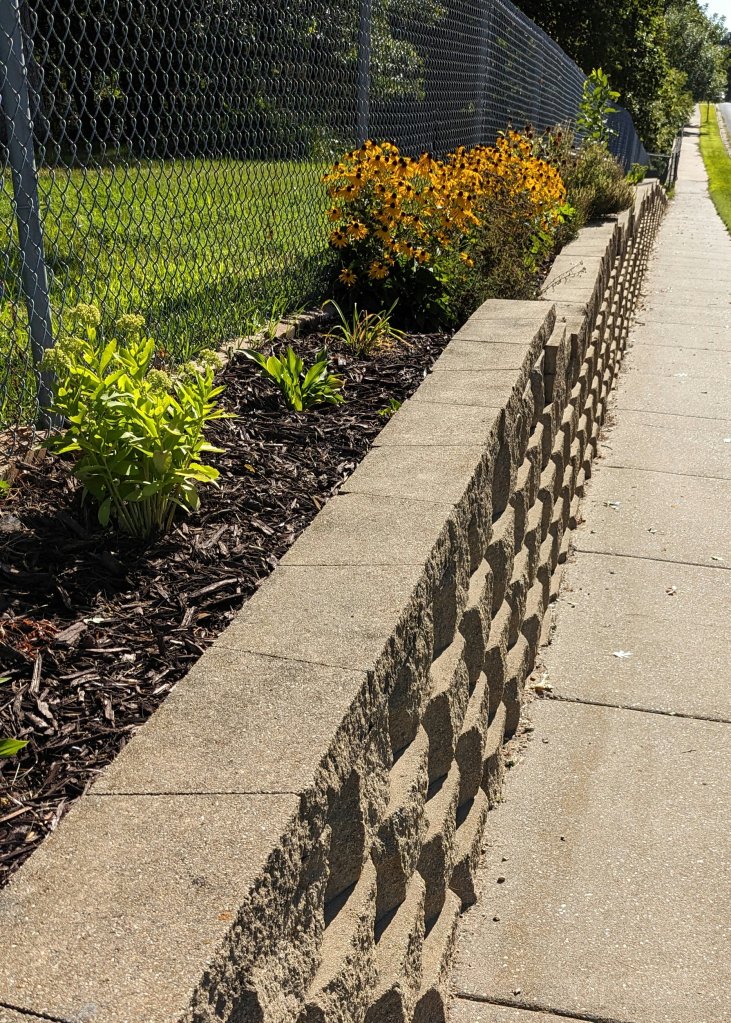
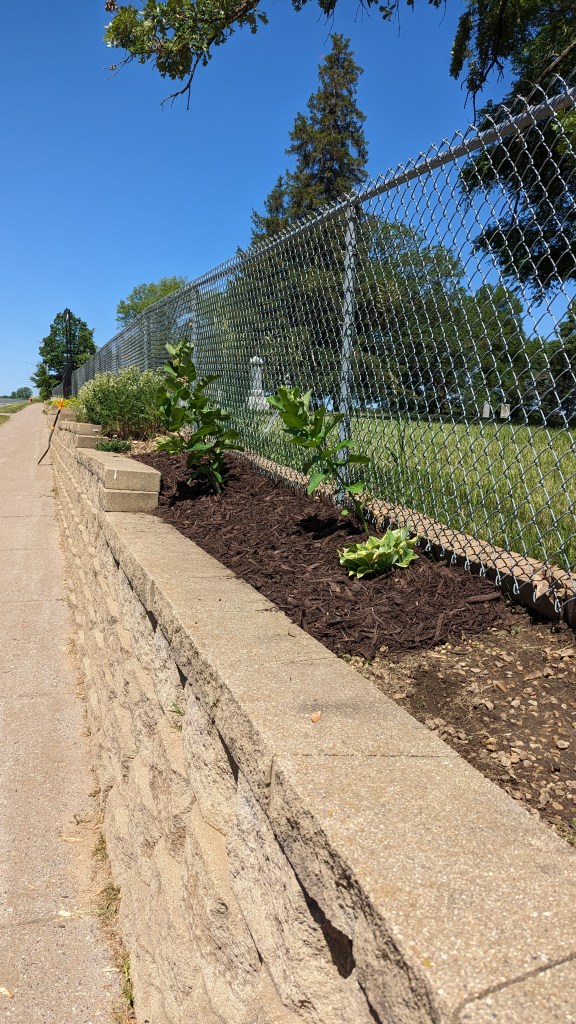
The rock to mulch conversion is complete at the historic cemetery! I lost count at 80 bags of mulch. I think it was in the high 80s.

What began as my (crazy, maybe 😂) brain child soon became an incredible team experience, and there is still more to be done – filling in with transplants and donations – but the rock to mulch conversion is done, and now we can play a bit. And maintain.

The neighbors, to a person, say it is so nice, a huge enhancement, and very enjoyable to walk by. Very rewarding to hear!

I hope you enjoy the view too!

And that is only one side, the shortest side at that! But first, a view of the resident turkeys

And now, the gates and the other side.

Almost there!

Still some more weeding and then fall trimming to be done, but the initial bedrock of mulch is laid, and now we can play.

I hear some more sun loving plants donations are on the way, and also ground plaques for every soldier.

What a treat to work at this site, along with so many others before and during, and Lord willing, to come!

Seedlings, hosta haircuts, the historic garden, and more daylilies bloom

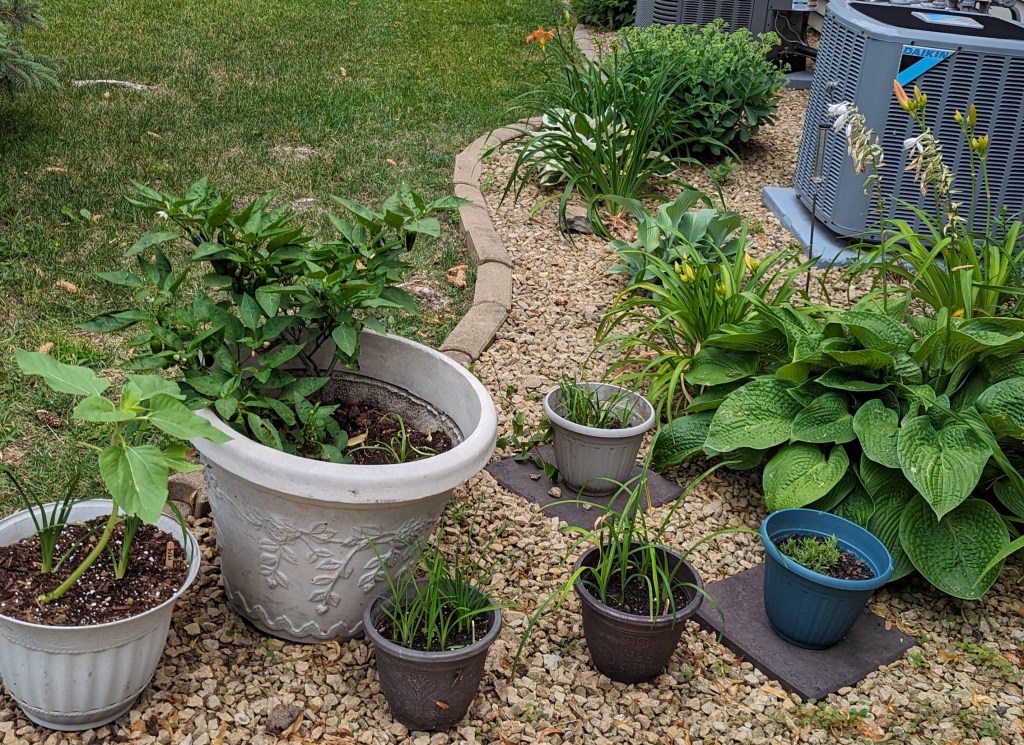
The seedling planter is off the patio. It will soon go back into the garage until next spring. The seedlings are looking more and more like daylilies and are in pots in the “pepper garden” area, with the lavender. Oh yes, and a stray sunflower. Doggone bird seed! 🙂

They will stay there until fall and then find their new home. Their new home will probably not be the seedling garden from last year, as that does not get as much sun as it seems they may need. Hubs got a bigger grill that casts a larger shadow, and I need that area for hostas that are burning – with the tree gone in front and the clematis removed in back. Change, change.

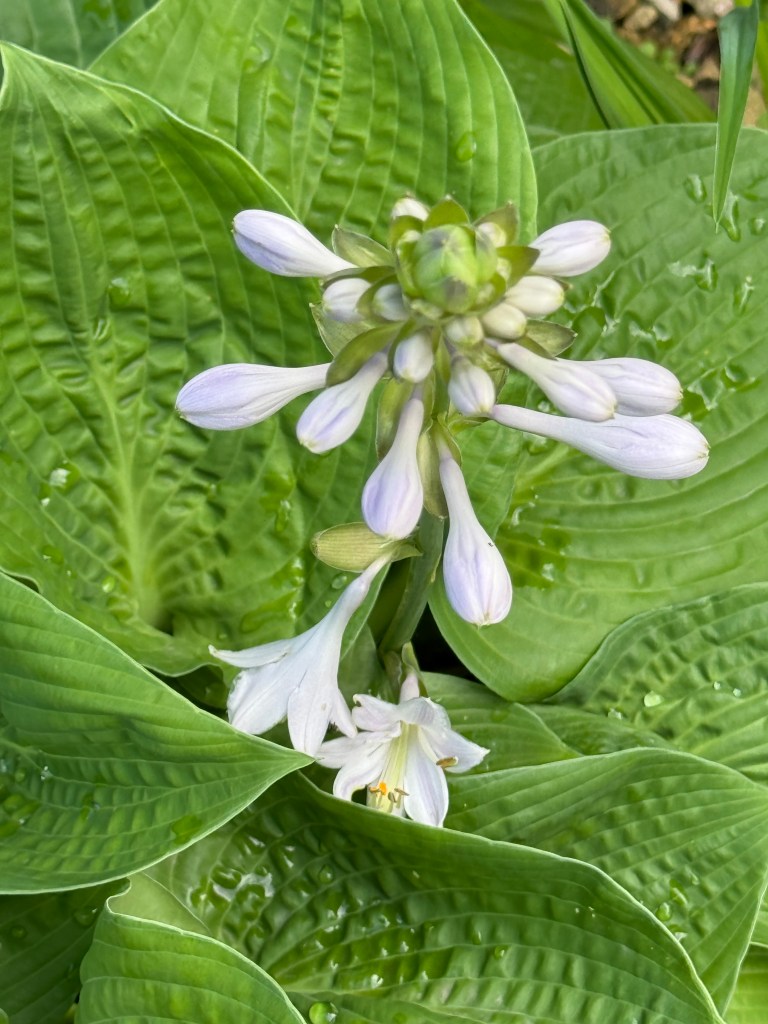
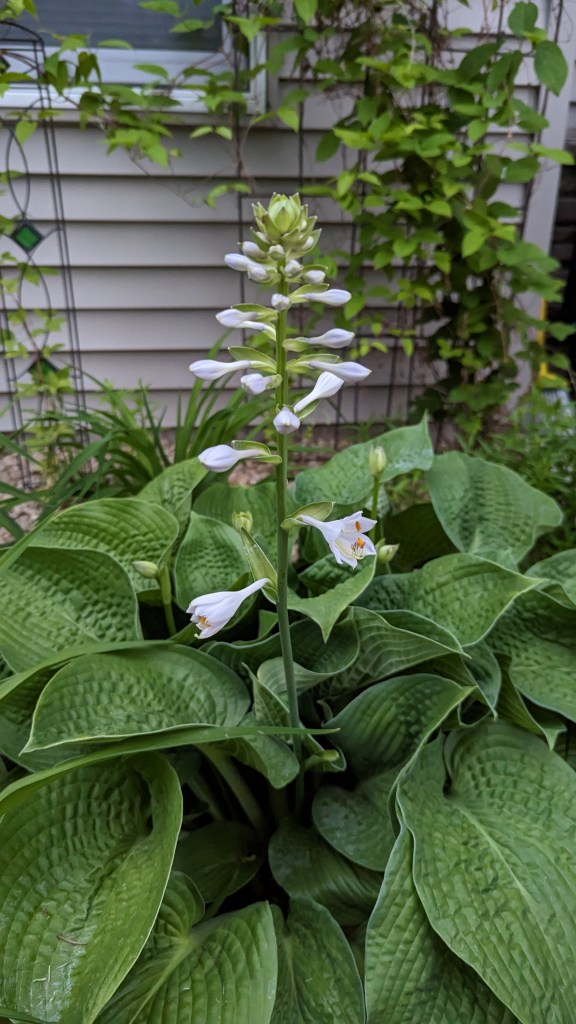
The hostas are also getting love this weekend. I have made the decision not to harvest any hosta seed pods this year, so the ones that are done blooming got a haircut. Here’s an example.

The bees so love the blooms, so I left the few that were still in that category. But soon.

Trimming the hosta scapes as they go to seed will help them preserve energy for the plant. Not sure that is needed – hahaha – as they are getting huge, but just in case. And I may divide a few, if energy allows. We shall see.

The second side of the historic cemetery fence garden also got lots of love this weekend – 32 bags of mulch. Lots of love from way more than me – WAY more!

Removing rock, pulling plastic, laying landscape fabric, sourcing mulch, which is rapidly disappearing. Incredible effort!!! It looks SOOOOO good!!! This picture doesn’t even do it justice. It just goes on and on and on down the hilly slope.

7 more bags of mulch are in storage – in the back of my husband’s truck, which he wants back haha – to go on that side, and then quits for the season there. Mulch is getting harder and harder to find, and $5/bag is not my jam. Hopefully, fingers crossed, the 7 bags will do it.

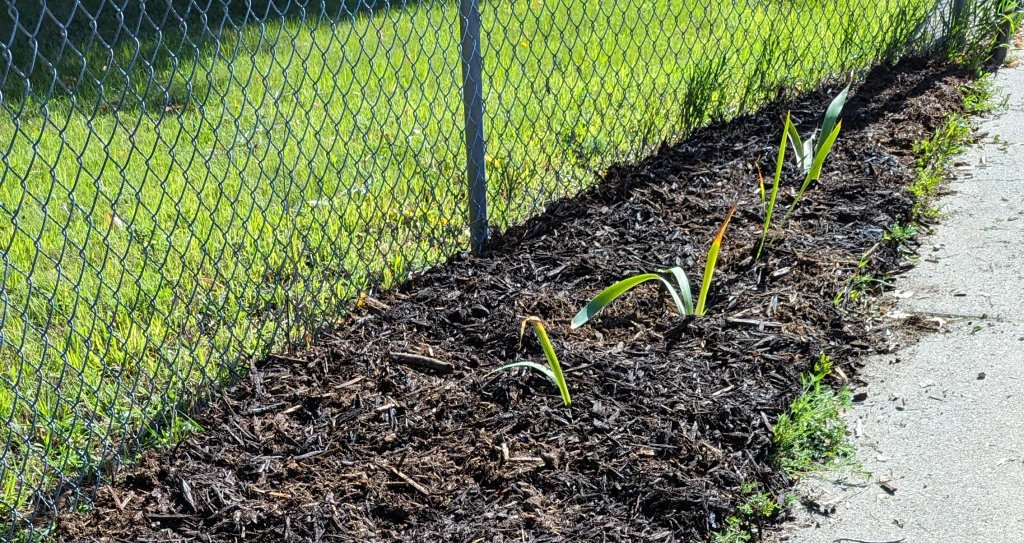
Next up for the cemetery garden is iris transplanting. But talk is not do, so I will wait to share on that til I have pics of the completed pieces.

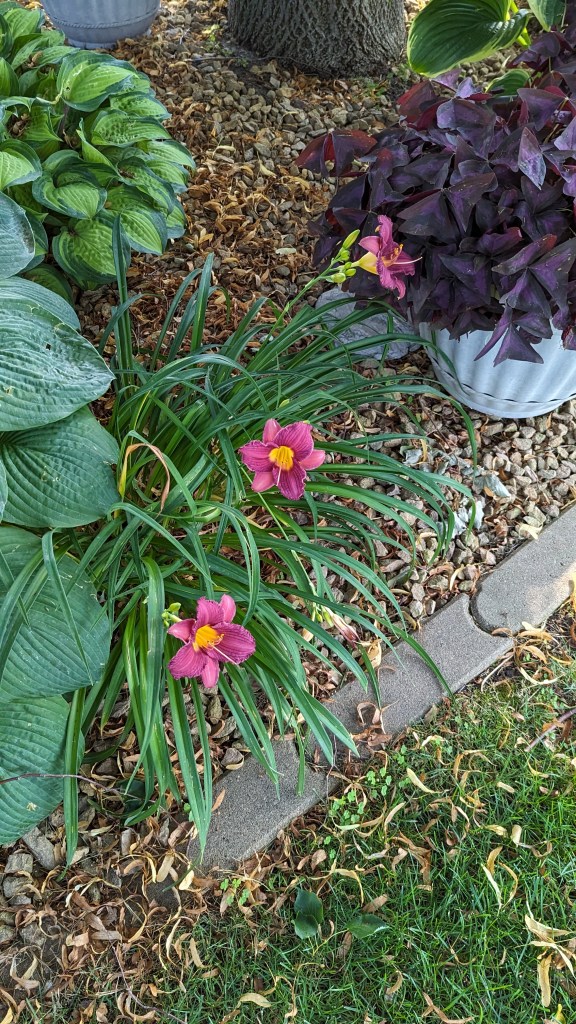
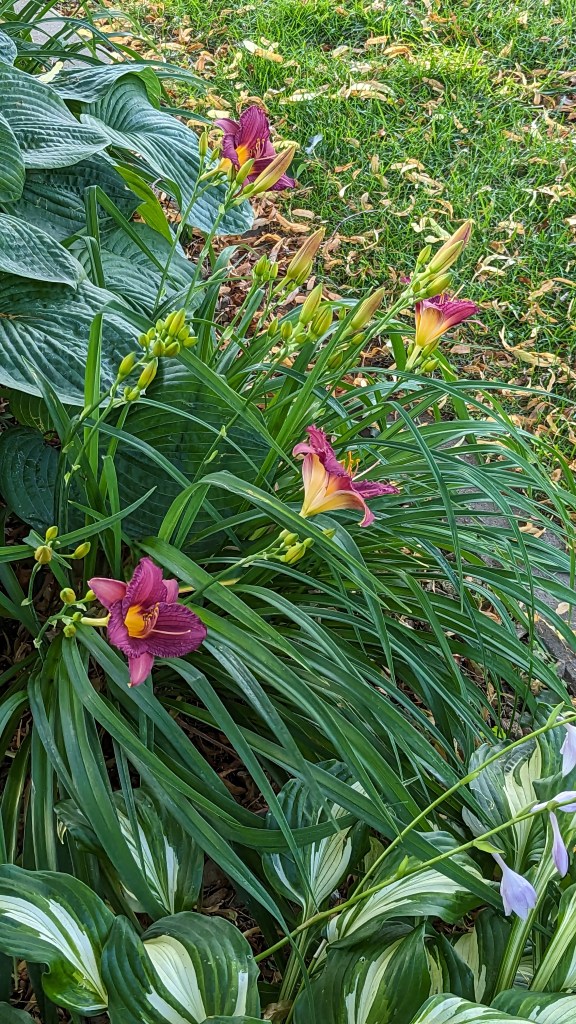
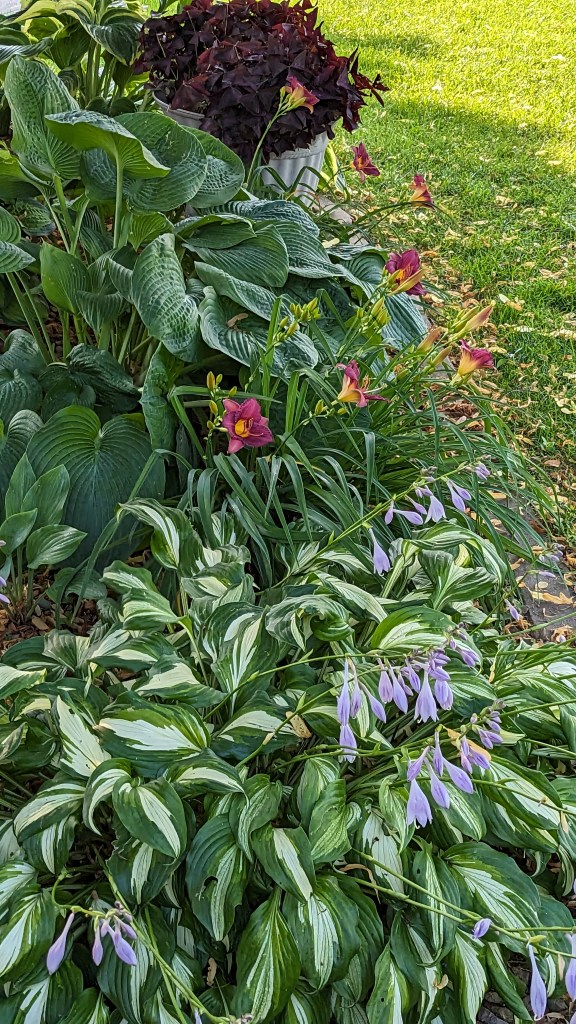
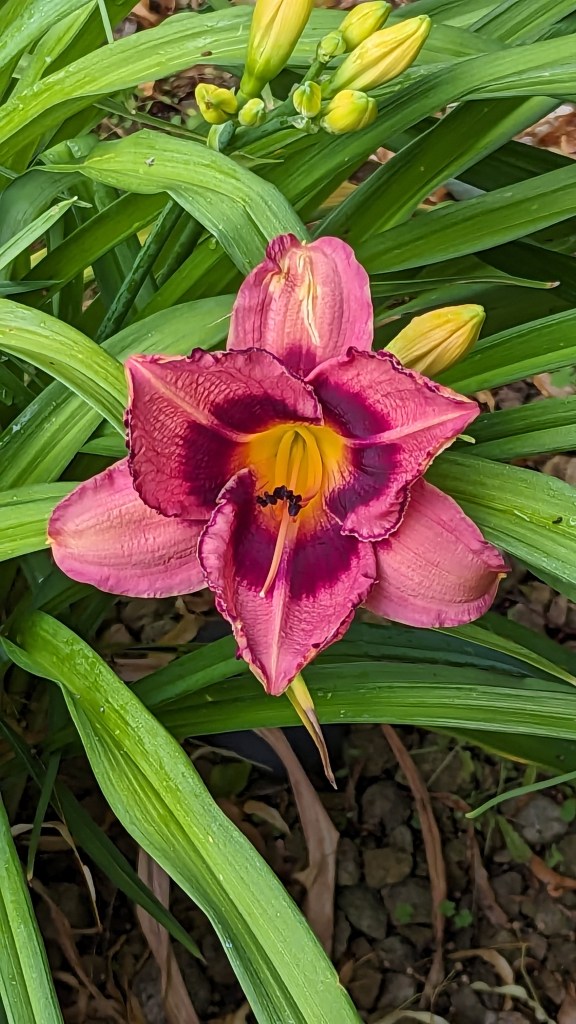
I will wrap up with more daylily love. Yesterday the Purple D’Oro had 7 (!) blooms.

Today 3

Today South Seas is also blooming.

Yesterday morning also brought early morning bloom pretties Tirzah and South Seas.

And Just Plum Happy was, well, Just Plum Happy!

The historic cemetery fence garden

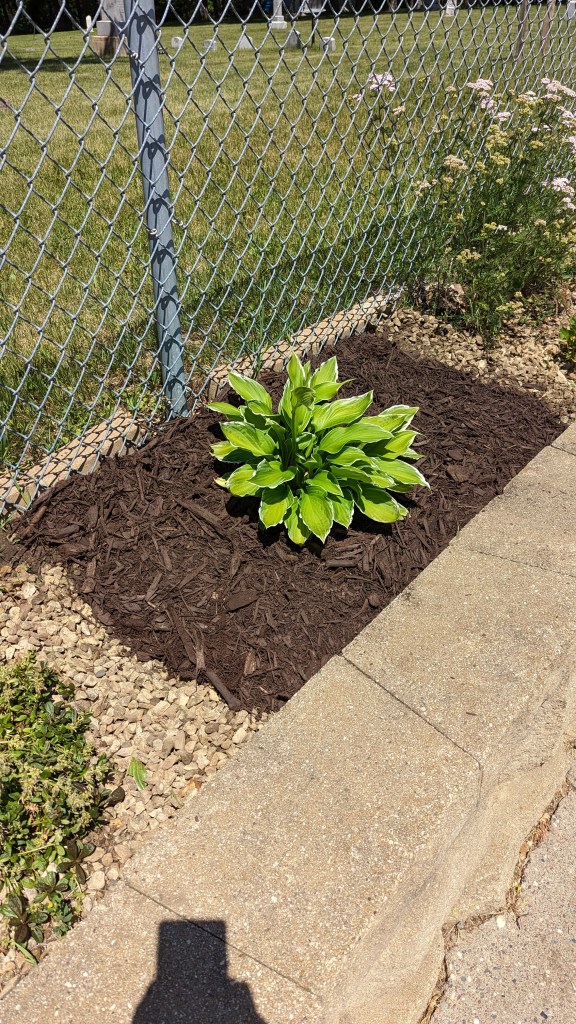
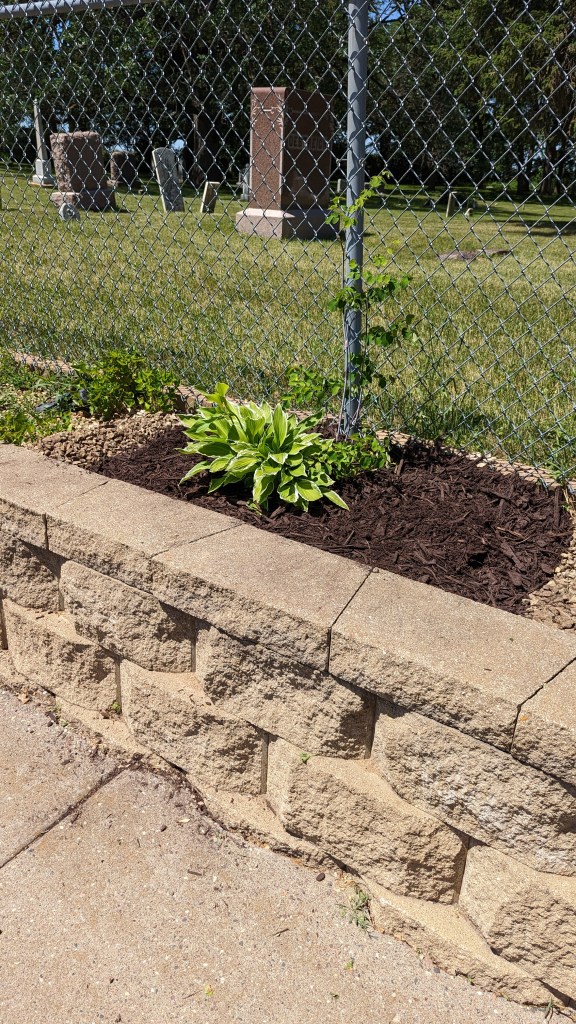
The historical cemetery fence garden continues to come along. As you look into the entrance, the right side of the rock to mulch conversion of the fence garden is done – as far as we are going to take it, until fall. That is the longest side, and will eventually also be, at the farthest end, the home of some iris transplants from the shaded garden that is inside the fence. The shaded garden inside the fence is high maintenance due to it’s location – in the grass, with no border, lots of weeding, and very low hanging tree branches.

It would be a fair assessment to say I have pretty much decided that historic cemetery site is where I feel most called as a volunteer. I do so love the historic mansion site as well, but I am so much more drawn to what can be done for the historic cemetery, how the neighborhood is appreciating it, how other volunteers for the historic society are contributing, and the long-term impact and potential for slow, thoughtful preservative, sustainable projects and improvements. I am NOT a high maintenance girl, in any area of my life, and that is how I like to garden too. There is good (reasonably healthy plants, ok view), better (robust plants, clean view), and best (thriving, blooming plants, tidy well cared for view). Any of those is fully achievable long term with the updates being done at the historic cemetery gardens. And people on daily walks are also contributing by weeding. Community! Love!

There has also been no shortage of plant donations for the site. The communication is that if you plant it, you water it. And the fence garden is filling in beautifully!

It will be a week and a half until I can start on the left side, and it will be in more of the heat because it is all day full sun. (The leadership for the site calls that the “field side”.) I envision lots of daylilies there, a particular joy for me to imagine! But first it needs the rock to mulch conversion.

Updates download

It has been a bonanza time for me in the various gardens. I have an oft-used saying – “Talk is not do”. I have soooo been in the flow of “do” I had no momentum to “talk” much. On the blog at least – lol.

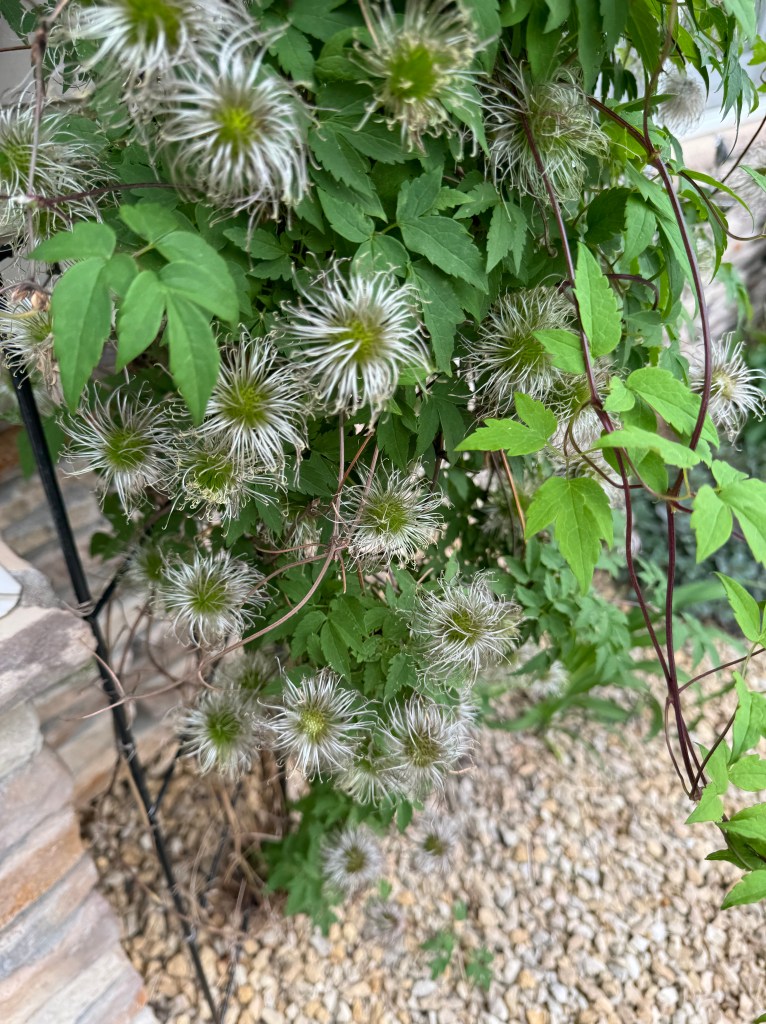
The gardens at the townhouse are starting to approach their very full time. The spring blooms, even including the clematis, have wrapped up. The pine trees candled out, the linden is about to bloom, the weigelia is blooming, and the first hosta is blooming.

The “clover”, which I think is Yellow Wood Sorrel, has lived it’s usefulness as blooms for the bees, and has been plucked for the season. The bunnies do not eat those flowers like they do the white clover.

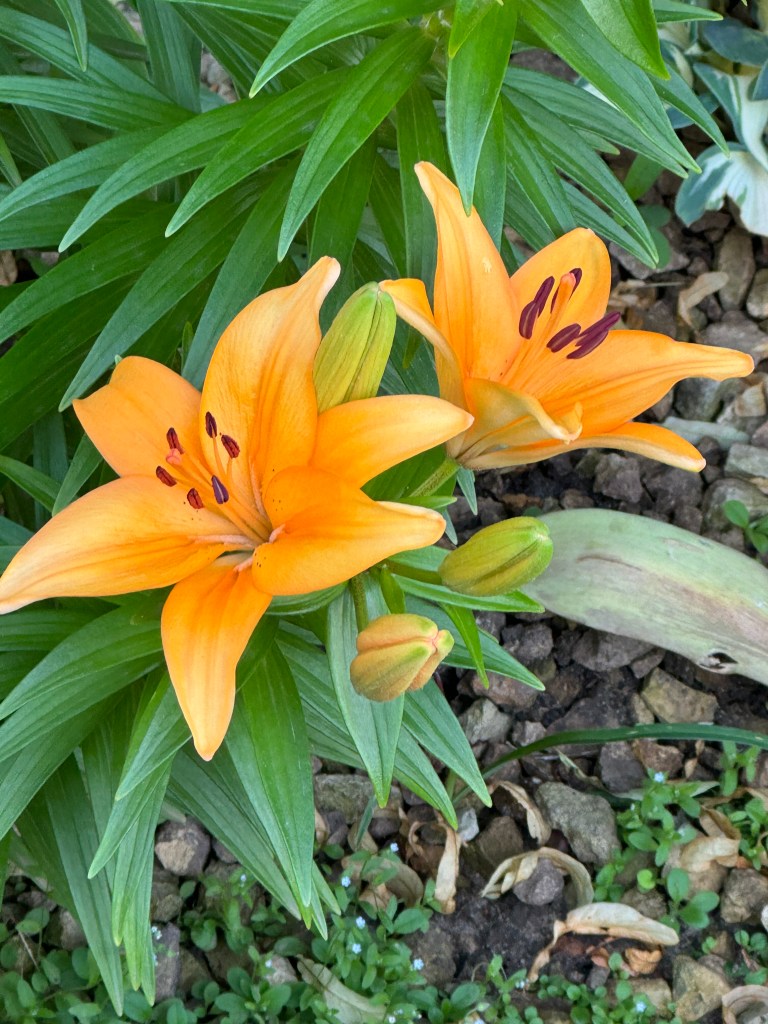
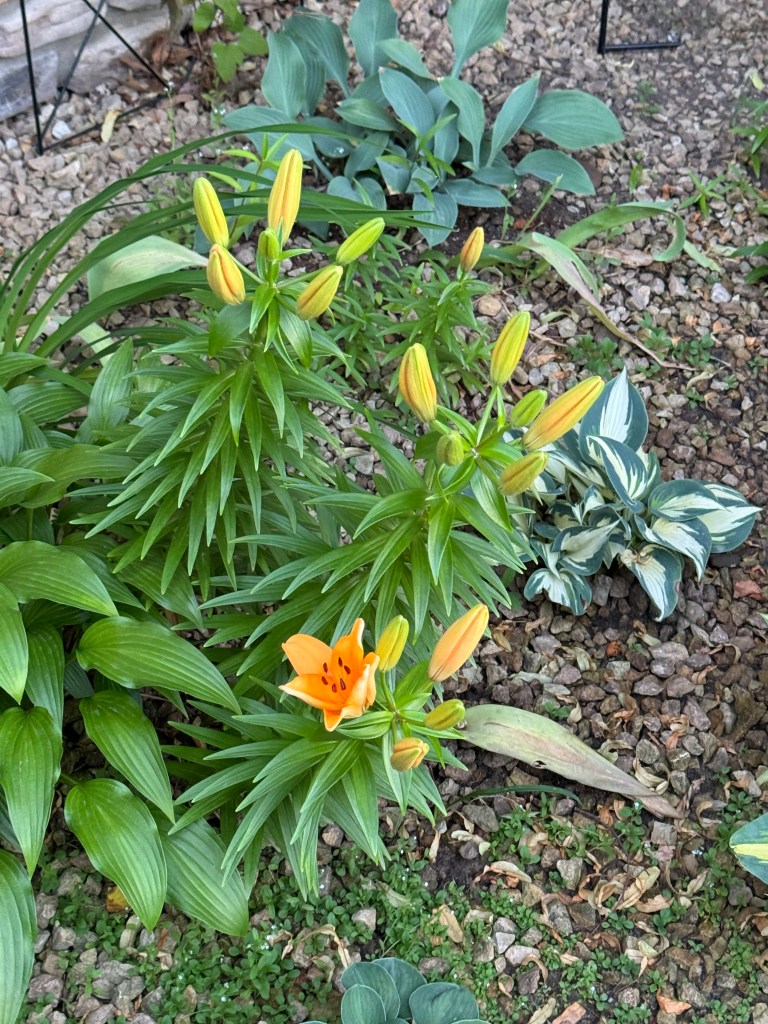
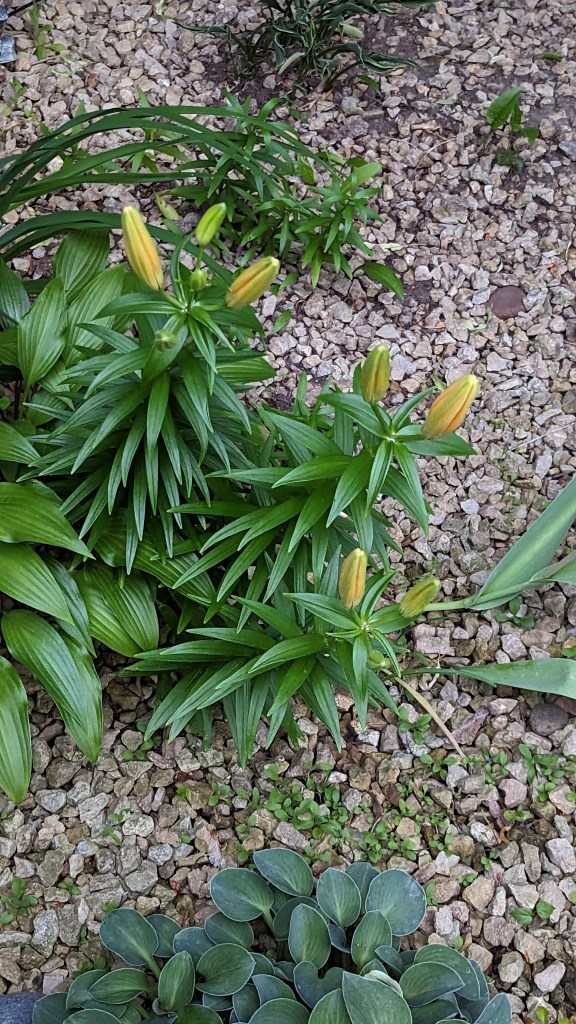
The Asian lilies are about to bloom.

There are now 20 daylily seedlings sprouted from last year’s pollinator created seed, all of which will need a home in the seedling bed this fall. The daylily seedlings from last year are all growing, and the 2-5 year daylily seedlings (that didn’t go to the little house up north we owned for a couple years) all need to go to the (camping/hunting) land up north, or to the historic cemetery fence garden. (The daylilies in the iris bed appear to be bunny food there.).

At the land up north, the camper will be moved next weekend to make way for trees to be cut, ground to be levelled, class 5 to be laid down, and the incoming shed to cabin conversion to be moved into place. Yikes! Here we go again with a build out. I am told that from the (shed) cabin I will have the view to the garden that I requested. I may have some thinking to do on a strategy to keep the ferns out. Plastic may be deployed. We shall see. One thing is for certain – the “I wish I had that money back” steel raised bed gardens with expensive black dirt on top of hugelculture turned to ferns 😂 is out. It has to be, as that is where the camper will be for a year or two while retired hubs builds out the interior of the (shed) cabin.

What else is going on?

The long fence garden at the historic cemetary is getting a rock to mulch makeover. The old rock is slowly being hand-picked and removed to a pile for donation, and bags and bags of beautiful mulch are replacing the rock. Sweaty work for all, and no lawn chair relaxing like at the townhouse, but wow! Looks awesome! Many hands are at that work through the week, which is absolutely heartwarming! We garden for fun, but also for our neighbors, and I seriously have lost track of the number of people who are complementing as they walk by. The other ladies have exactly the same types of stories.

Little by little. The hostas are all now protected, as well, and the work is beginning to finish and fill in the remainder of one side.

The iris bed at the historic cemetary will be a fall “stretch” opportunity. Those can go into the fence garden too, little by little. And we keep getting offers of divisions as donations. All in good time and proper sun/shade planting. That garden has such potential, with all the offers of divisions donations, to be a wall of beautiful season-long perennials.

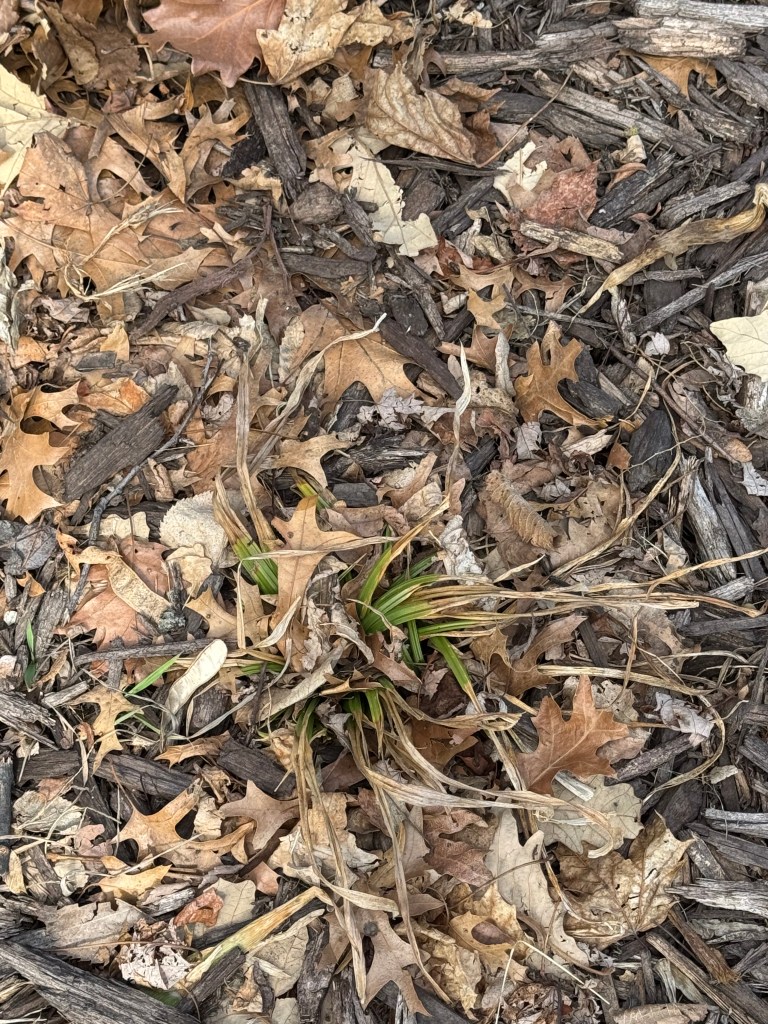
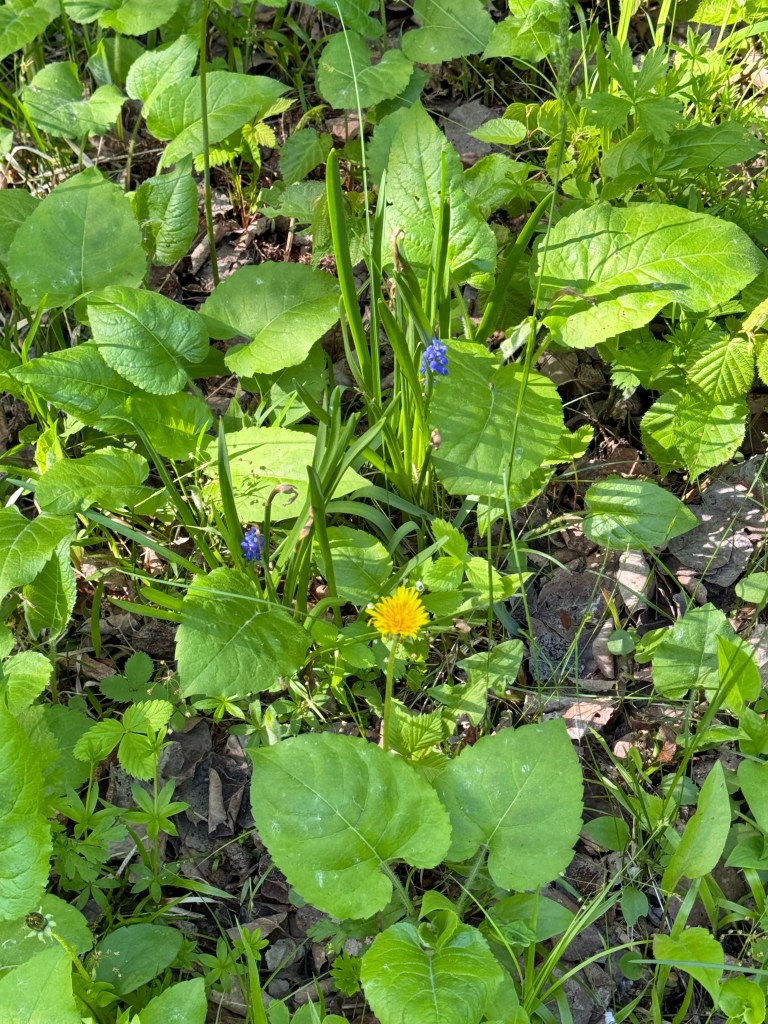
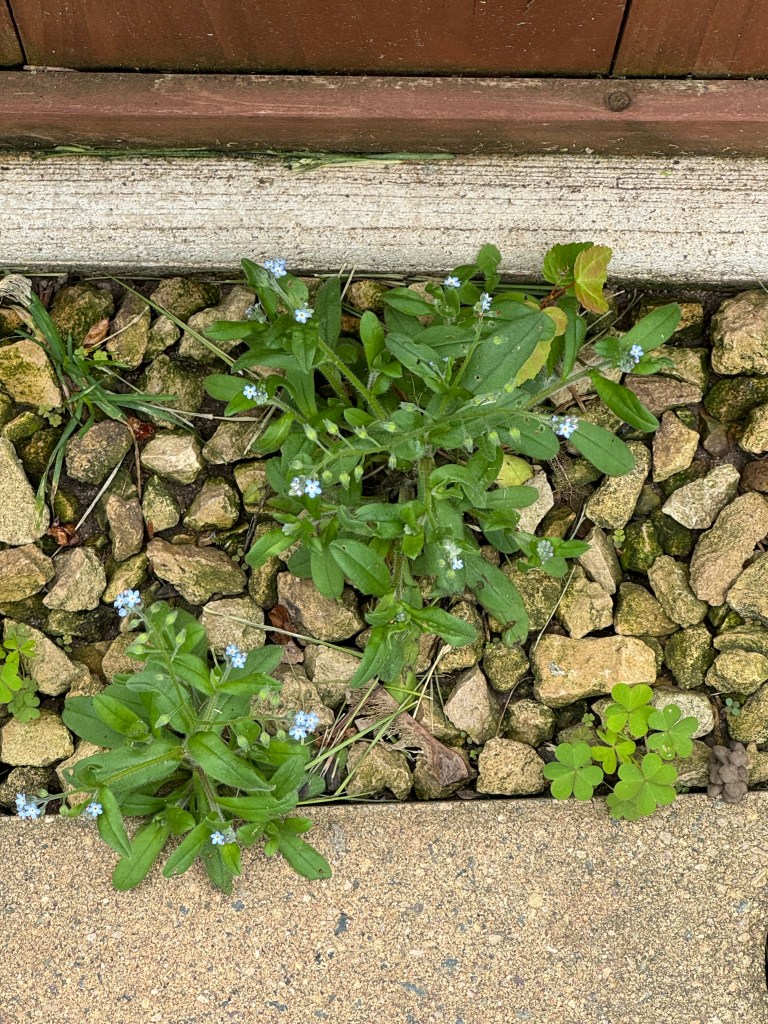
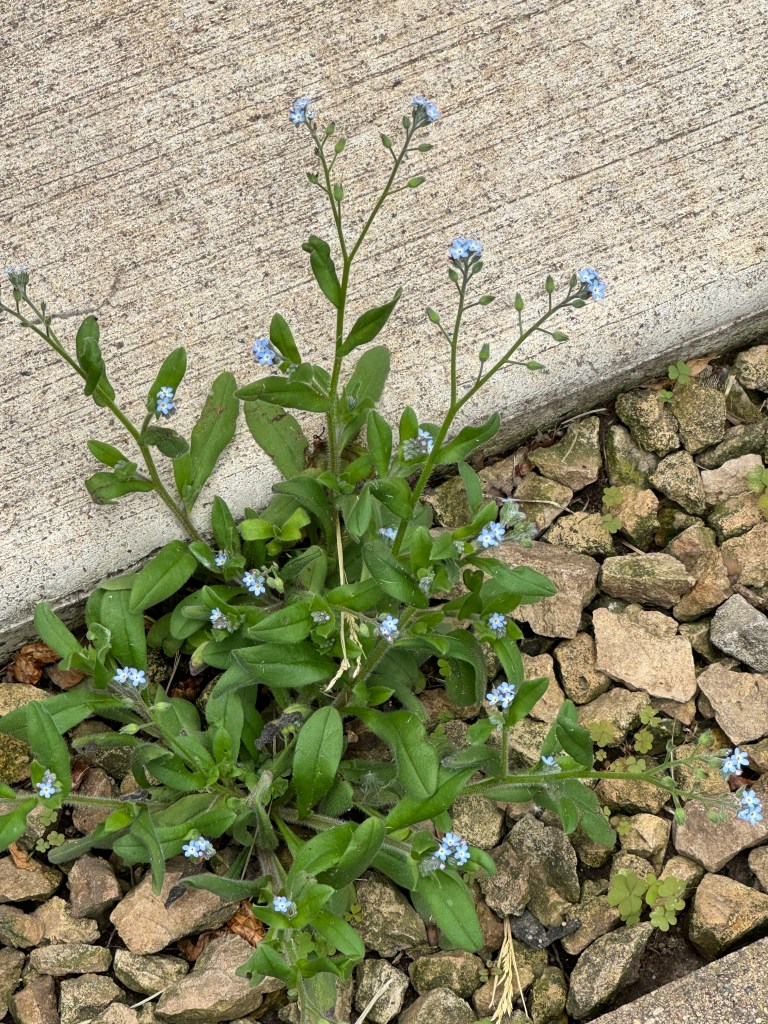
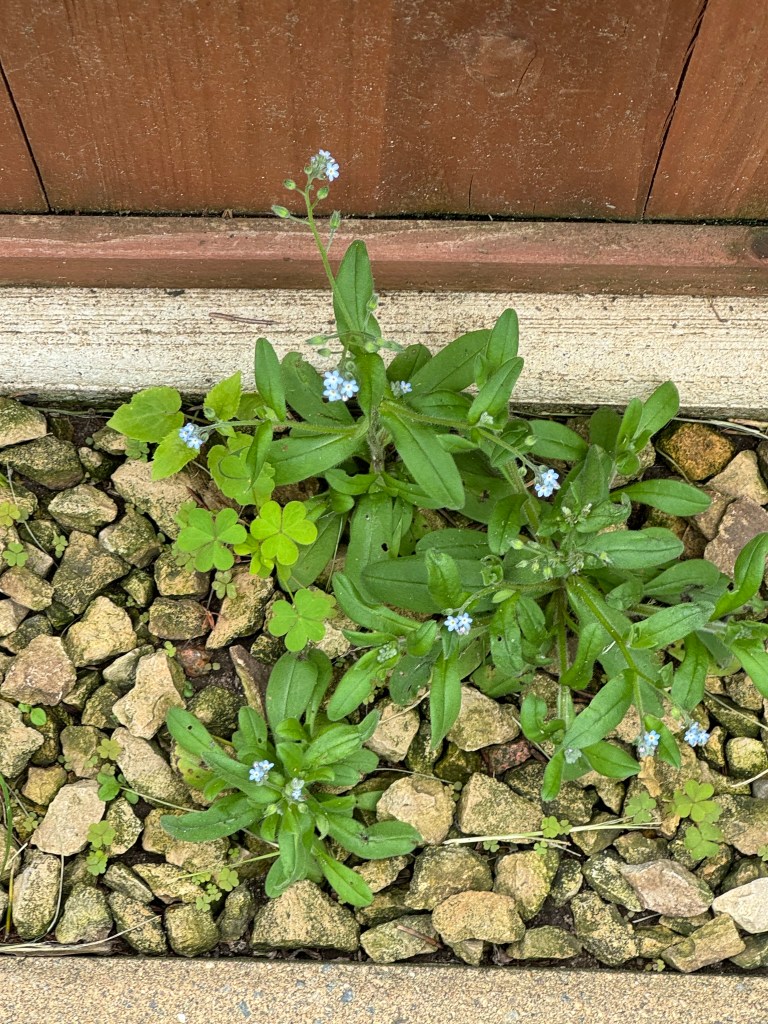
We do have an unfamiliar to me weed there. I downloaded an app to try to identify it, but what the app is returning doesn’t seem right. It is a clumpy upright weed with bulblets. This coming week, on Juneteenth, a plant expert is coming to the historic mansion for the annual rain garden consultation, and I hear they can identify weeds. I plan to ask them. For now, we are plucking that harvest. I doubt they were intentional. See below for my rationale – this dandy is growing between the sidewalk and the base of the retaining wall.

What else?

We miss the front tree, kind of. The daylilies we transplanted from the shade to the sun last year are loving the full sun. We will wait to see what the association does – replace the tree or not.

And the rain gardens at the historic mansion are so full I have just put that on hold while I work on the fence garden at the historic cemetery. All that really can be done there right now is weed the perimeter, which a few of the ladies are doing when they have time. Those will be a next year and following deeper dive. They do have potential, but will be on more of a late fall and very early spring cadence for those opportunities.

The jalapenos at the townhouse had a bit of a squirrel issue which is being resolved, and I am rooting 3 wiegelia cuttings and some clematis cuttings just for kicks. We’ll see if they take.

So that is the “gardens all over” catch up.

Things may be a bit spotty as we are also on the one month watch and hang close to town ask before grandbaby two arrives. You know how that goes – grandbabies trump gardens for sure! Gotta keep our priorities straight 💓

Iris

At the historic cemetery there is what I have been calling “the iris bed”. It is an area that I understand was planted a while back by another volunteer. It is more of a naturalized garden, with grass within and no specific border except the line around it where the grass is cut. Right next to it, except separate, is another small area with another grouping of irises.

I absolutely love irises! I have the most fond memory of my mother and father-in- law coming to our first (owned) house, a new home, with no grass on the sides or back of the house yet. They arrived with a large tin bucket of 40 iris rhysomes they had dig out of their garden, which I love and admired each time we visited.

It was past October 1st because that was our closing date, so planting, everyone agreed, was a close call. We got down on our knees on the west side of the house, dug 40 holes, and planted those irises. The irises thrived there, I put in trim and wood chips the next year, and proceeded to build out my first garden area at that house. 3 years later there were almost 400 iris rhizomes in that garden! I dug out a bunch of those and put them along the whole back fence, I traded some with neighbors, and I even gave some away.

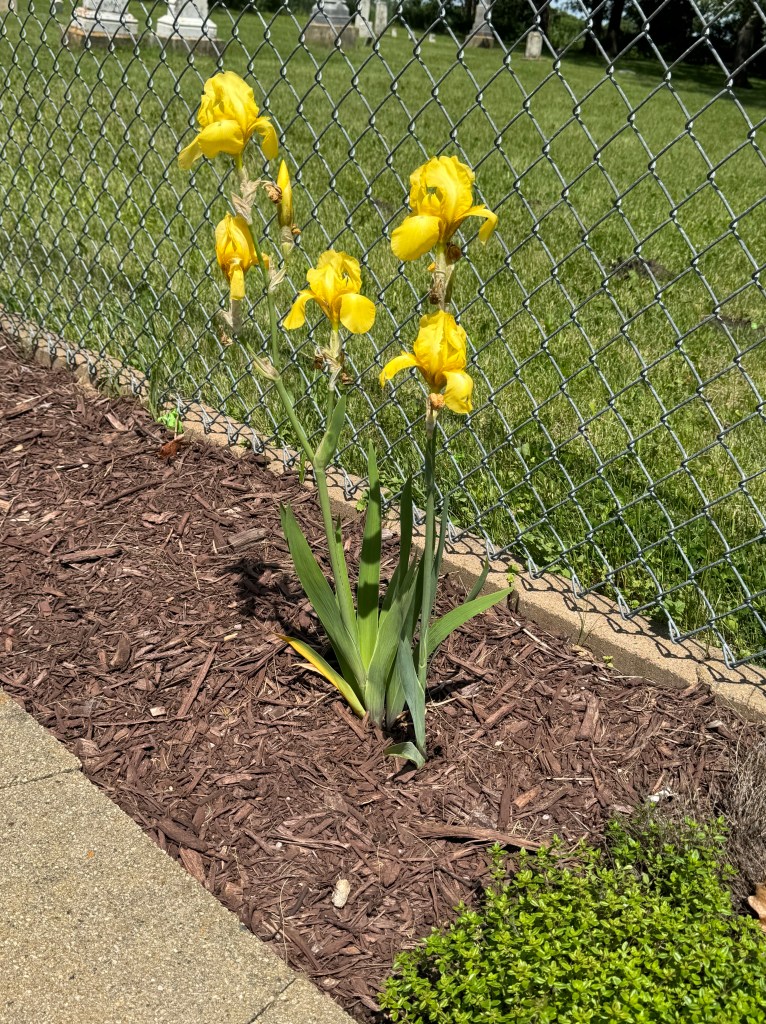
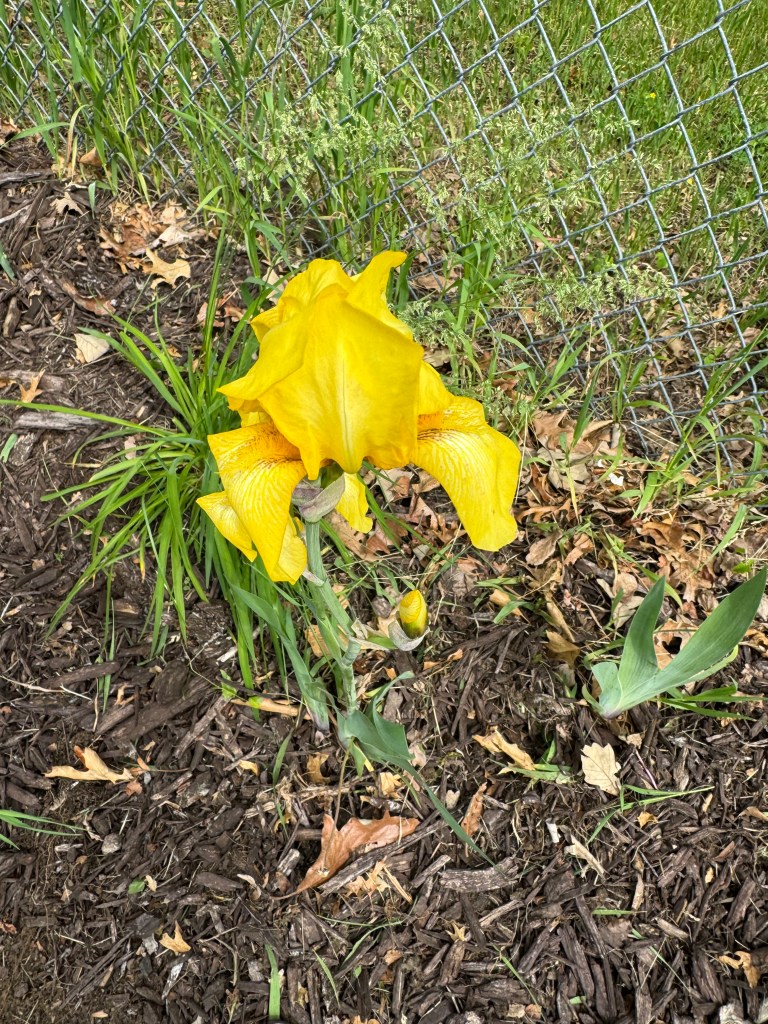
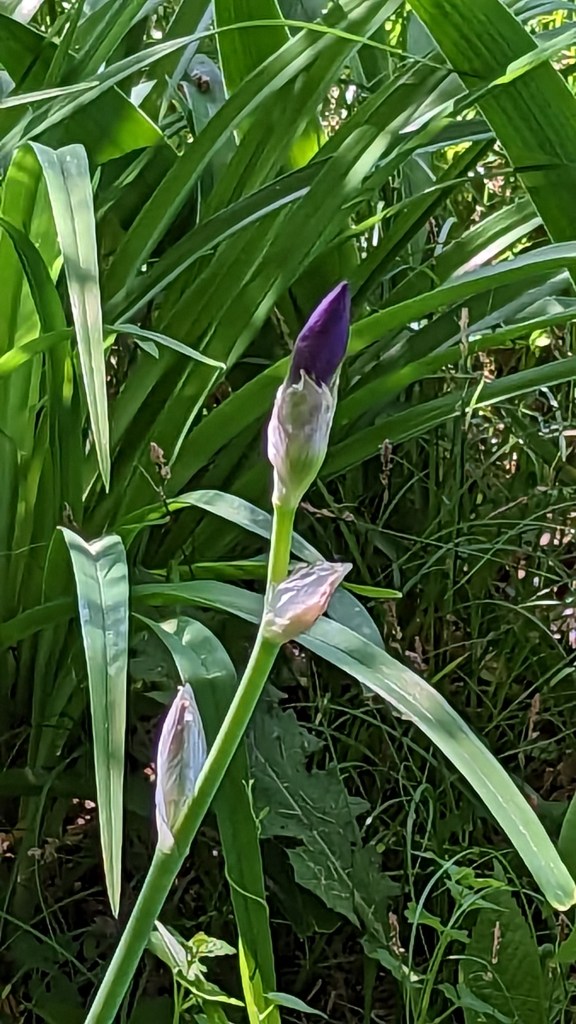
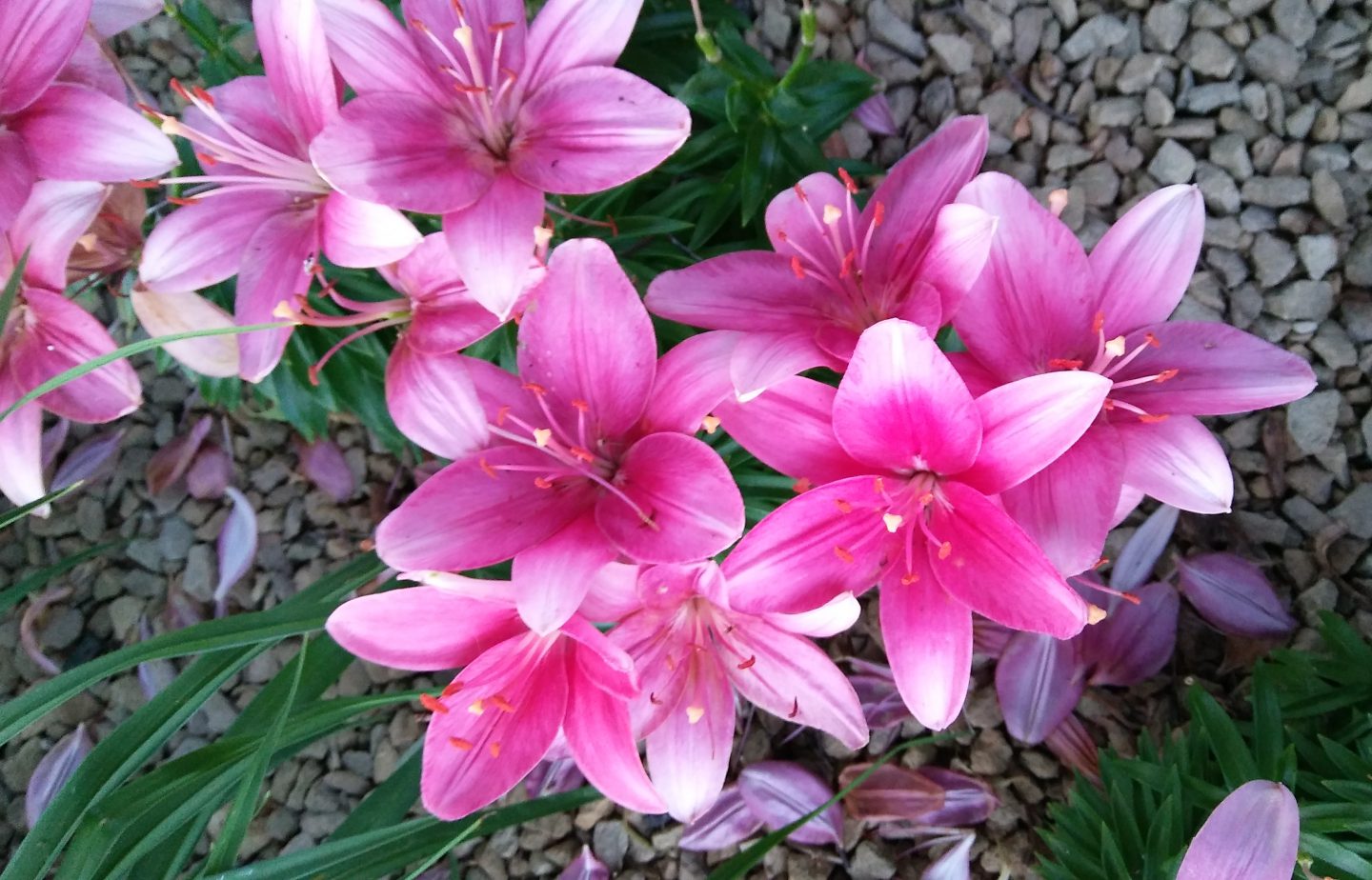
I have wonderful memories of those purple irises. But yet they do not grow here at the townhouse. And they also do not seem to grow consistently up north. You can probably imagine my delight yesterday, when I saw this in the “iris bed” at the historic cemetery.

I was doubtful they would bloom. They do not get much sun, do not look like they have been divided in quite a few years, and have a lot of competition for nutrients. But bud there is. Just one so far. We shall watch.

A day of gardening

Today was a full day of gardening.

The rain gardens at the historic mansion are coming alive! The main work so far has been clean-up. There are a plethora of black capped raspberry vines, not part of the original plantings. The birds must have “gifted” them. They were scattered throughout both rain gardens. Last week and today the primary job was to cut them back to a contained area.

Other jobs today were putting mulch around transplanted shrubs, and cutting back ornamental grass.

At the historic cemetery, this week’s work was minimal – digging out a 2 year old clematis volunteer from my garden and planting it at the fence garden. Daily watering checks are showing it is doing well.

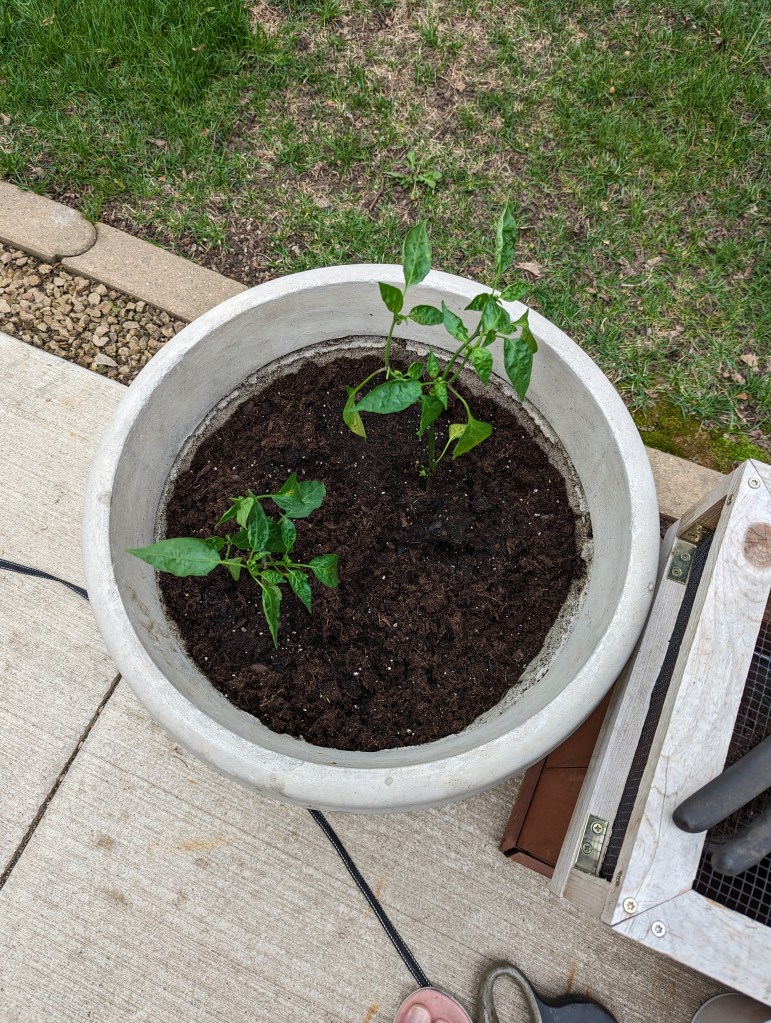
Back at the townhouse, planting our veggie garden – two jalapeno plants – lol – was job #1.

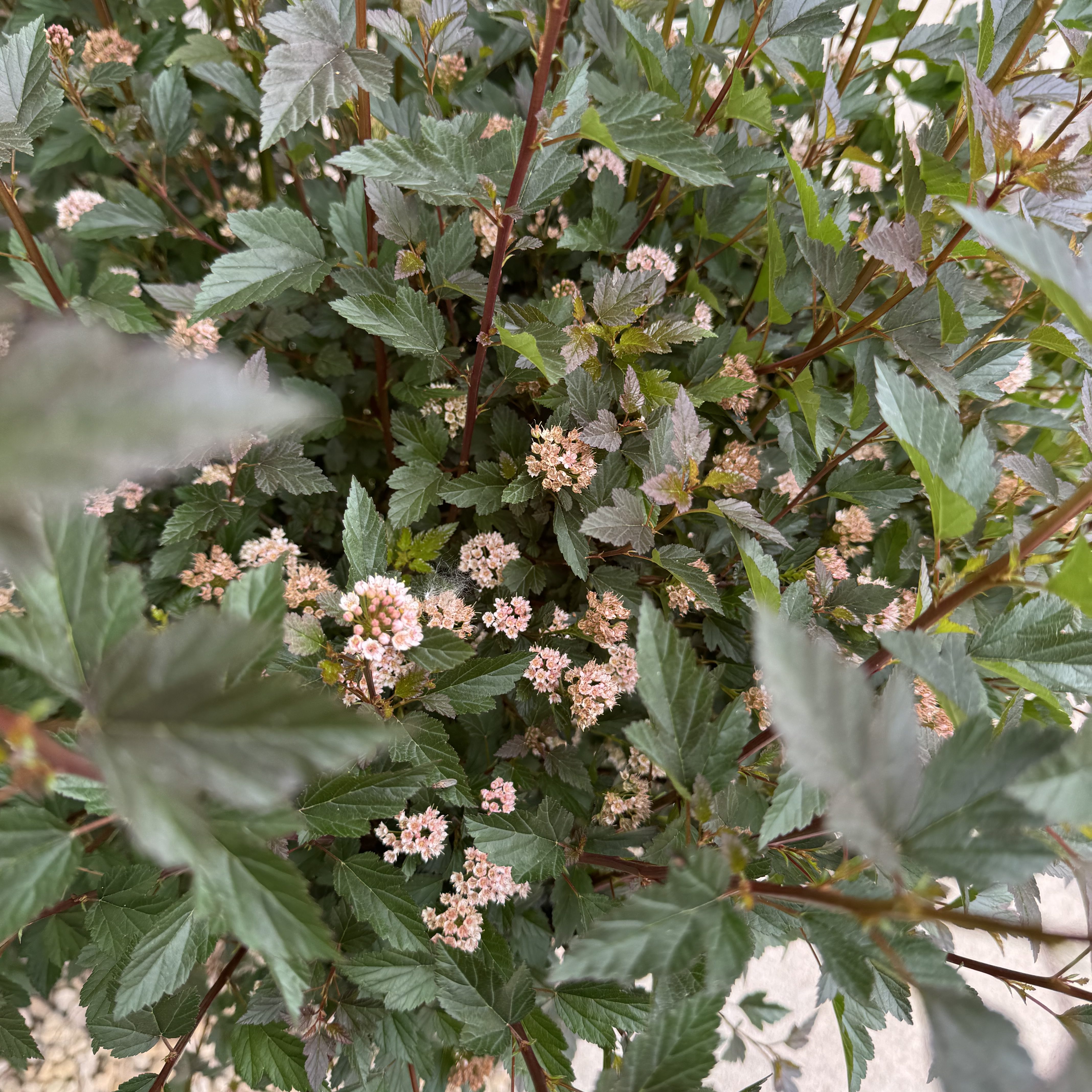
Then trimming the weigela, and trimming the ninebarks.

Time to relax, eat dinner, and watch a movie.

The clematis, and trimming the historic cemetery garden

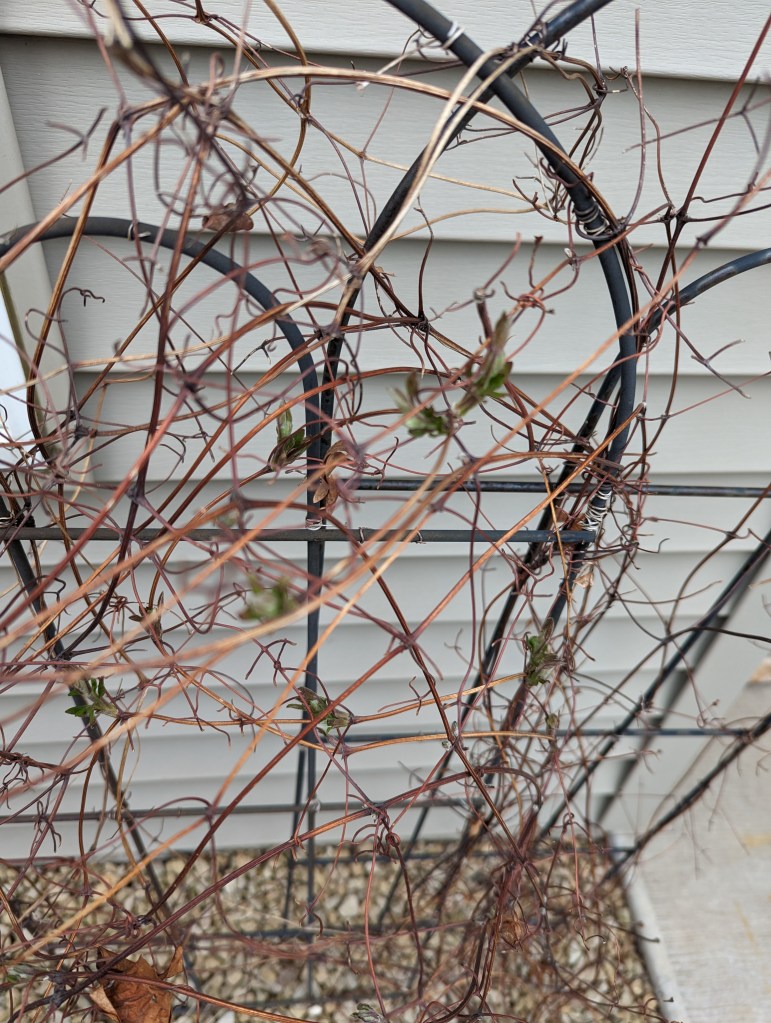
The Bluebells clematis is budding out in front. This is one I learned needs to not be cut back. The new growth buds out of last year’s vines.

Out back the clematis is just waking up.

It was a super windy day today, so not much gardening.

Yesterday was much more fun. I went to the historic cemetery and worked on spring trimming the fence garden. Like at the historic mansion, I am just learning what all is in there. So far I can see tall sedum, stonecrop, phlox, some hostas, black-eyed Susan’s, and yarrow. I trimmed all except some stonecrop. I will go over some night this week and trim those, and also put some coffee grounds along the base of the hostas.

I am exceptionally happy to see there are some hostas. To be sure, they are small, but if they survive, yahoo! They can meet some new “friends”! (I can then divide some hostas here this fall and see if they do well over there.)

The second rain garden

At the historic mansion site, the second rain garden is also a registered butterfly sanctuary. I had seen it on my personal walk-through a week ago. Yesterday it was confirmed as both the south rain garden and the butterfly sanctuary.

I spent hours yesterday evening pouring over a treasure – the schematics from the initial planting of the rain gardens, as well as the initial inventory/buy list. That was done in 2005, when the city took over the site, a new roof was put on the mansion, and the parking lot was put in. Makes sense – add a parking lot, offset runoff of that hard surface and potential chemicals, with rain gardens.

What went into the rain gardens was, as I expected, a lot of sedge and grasses. Other things too – honeysuckle, daylilies … From outward appearances it looks like the sedge and grasses have been very successful. Some research on sedge and other grasses yielded information that it is not just nectar that is needed in a butterfly garden. Caterpillars use the sedge and grasses environment. I need to dive a bit deeper on that to understand – should I then trim the sedge and grasses? They do seem a bit voluminous, but then maybe that is exactly what the caterpillars thrive on.

I fought myself on where to start, as the south rain garden/butterfly sanctuary is the closest to the entrance, but I really do want to see what survived in there for the butterflies before I start trimming there. It also looks like a lot of daylilies might be in there.

So the north rain garden gets a haircut first. The goal will be to start on the edges and gradually move in.

This will be a long-haul project, with layers of understanding and discovery. Perfect!