The Sedum

Many years, probably decades ago, we received a few Autumn Joy sedum from my Dad. He overbought and we were the lucky recipients. Those Autumn Joy sedum far outperform all our other sedum, and for almost two decades I have rooted collateral damage, divided them, and used them to fill in for plants that died out. When our Irish Terrier used to attack the bees on them, in the potting soil the broken stems would go to be rooted. When bunnies and squirrels get a little crazy, in the potting soil the broken stems go to be rooted. When I make a weeding or trimming error, in the potting soil the affected stems go to be rooted.

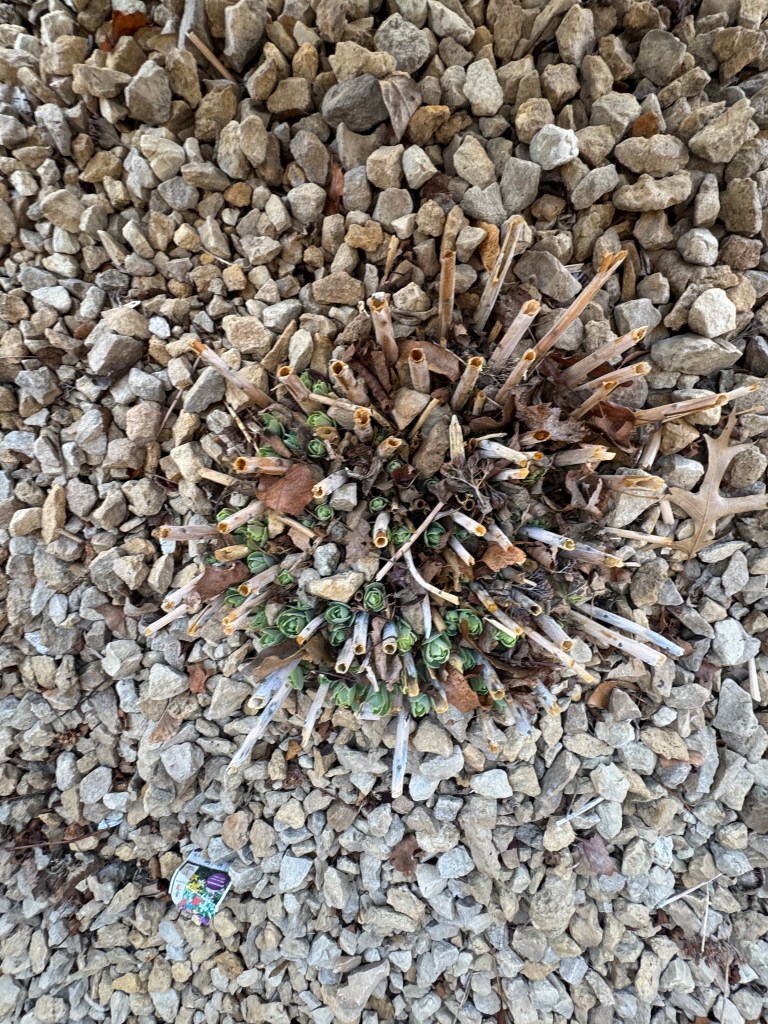
However, when I cut the sedum back in the fall, as much as I try to keep the stems close to the rootball, in the spring it always looks like the picture below. And I, in cleanup mode in the spring, have learned to leave those alone. Because if I don’t, I will have an early spring need to reroot stems, usually when all my dirt is still neatly in bags in the garage.

Not to worry. Soon the new growth will cover them. And in the fall the old stems will be easily removed, when I cut the sedum back again, and create next spring’s cut stems … that I will leave alone 😊
A good week

Spring garden cleanup is done.
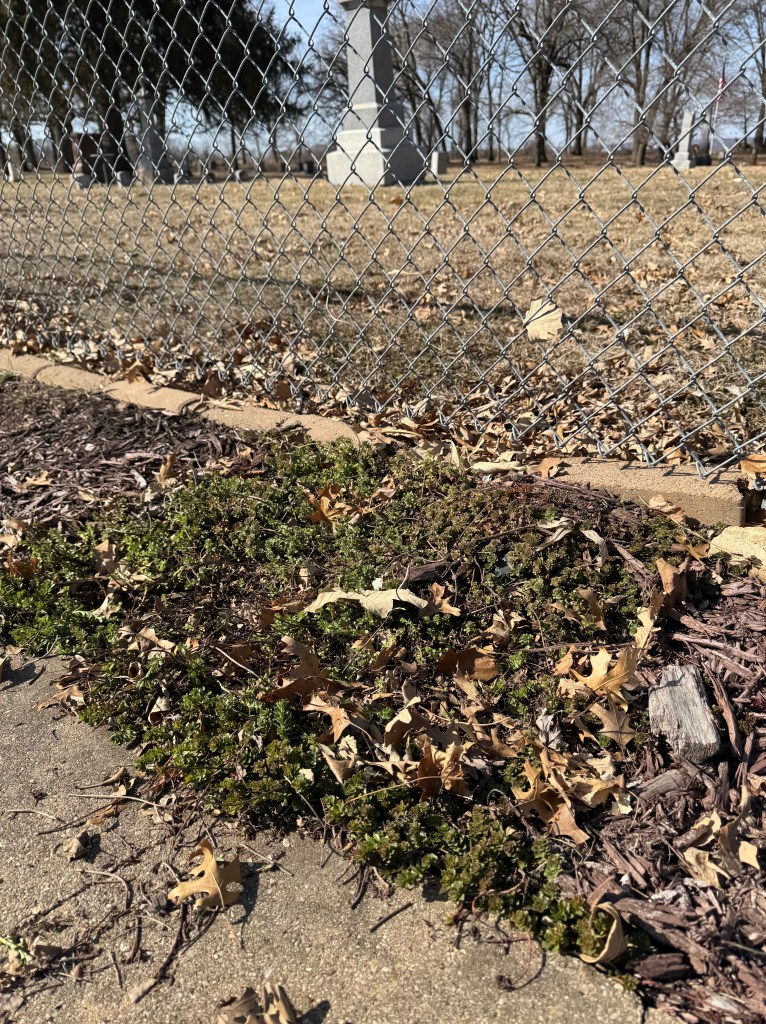
At the historic cemetery, everything that needed cutting back and cleaning up is done. There were a lot of oak leaves on the ground cover, and it needed serious trimming, but it is looking very healthy with all of that done.

Instead of bringing the forced daffodils up north, I planted them at the cemetery where it looks like moles are trying to make inroads.


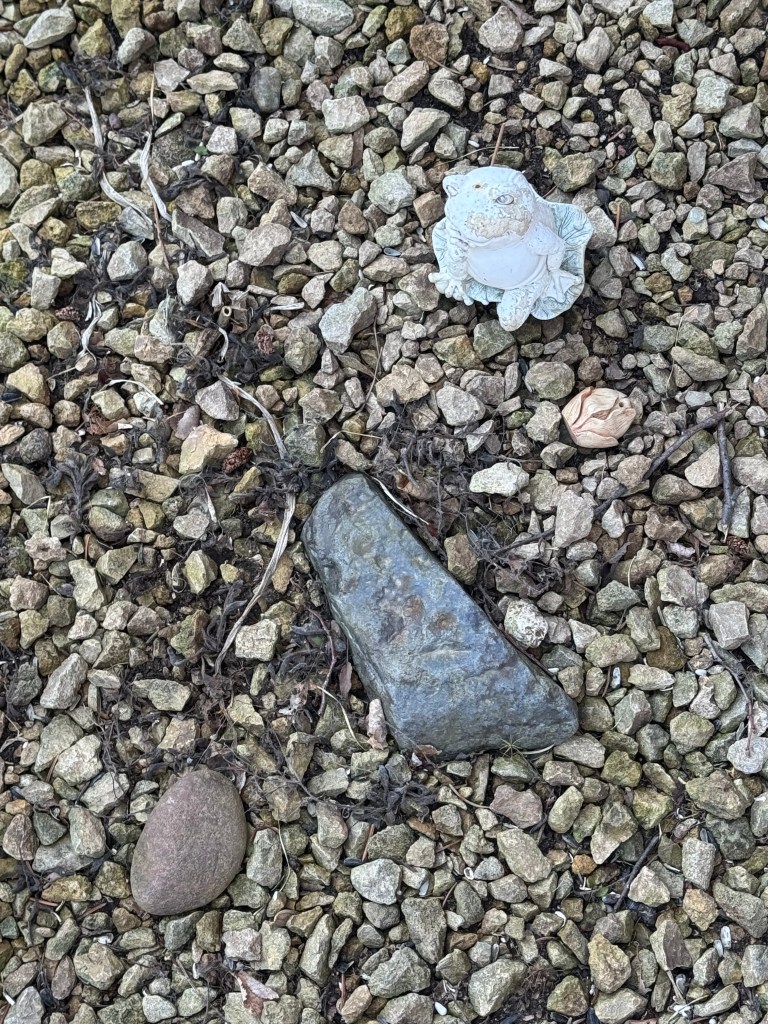
At the townhouse, the linden had shed a lot over the winter. The sticks from the linden that were in the grass are now either to compost or in the rock for the birds to find for nesting.

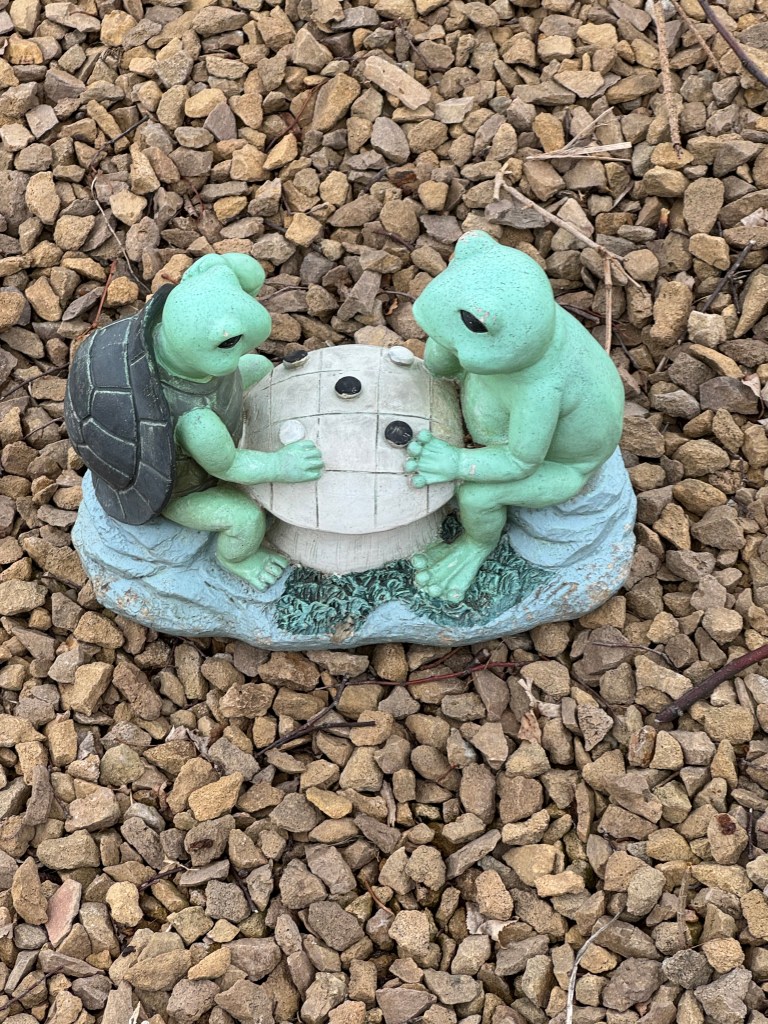
The rocks that moved out of the trim are back in, the winter lanterns are back in storage, the spring and summer garden decorations are back out,

the bird bath has been filled for the first time,

the forget-me-not foliage has been pulled (and trashed, not composted, so any leftover seeds can’t germinate in unwanted areas),

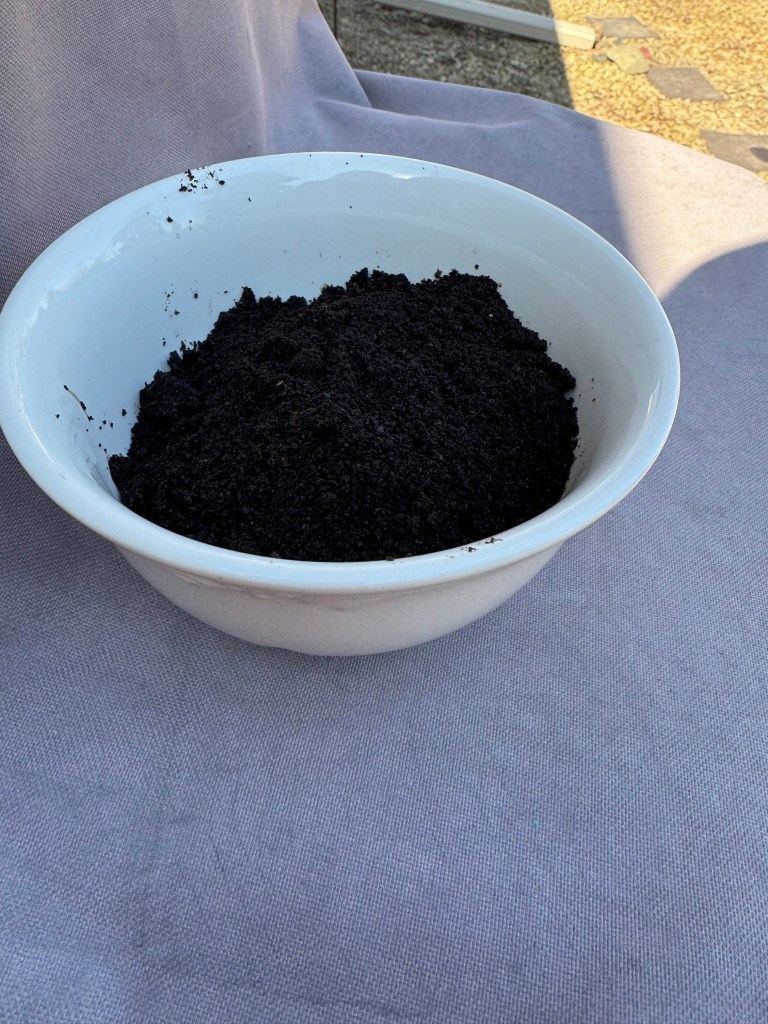
and I have started to put coffee grounds on the perimeter of the plants (in the rock, to slowly settle in).

This is always such a fun time of year – getting back in the gardens, cleaning them up, getting ready for the season ahead.

Next up is mulch at the cemetery garden. Just a topper.

Bonus! Free nail filing!

Gardeners worldwide know that we don’t need a gym during the tending season.  But did you know that Amur Maples come complete with free spring nail filing?

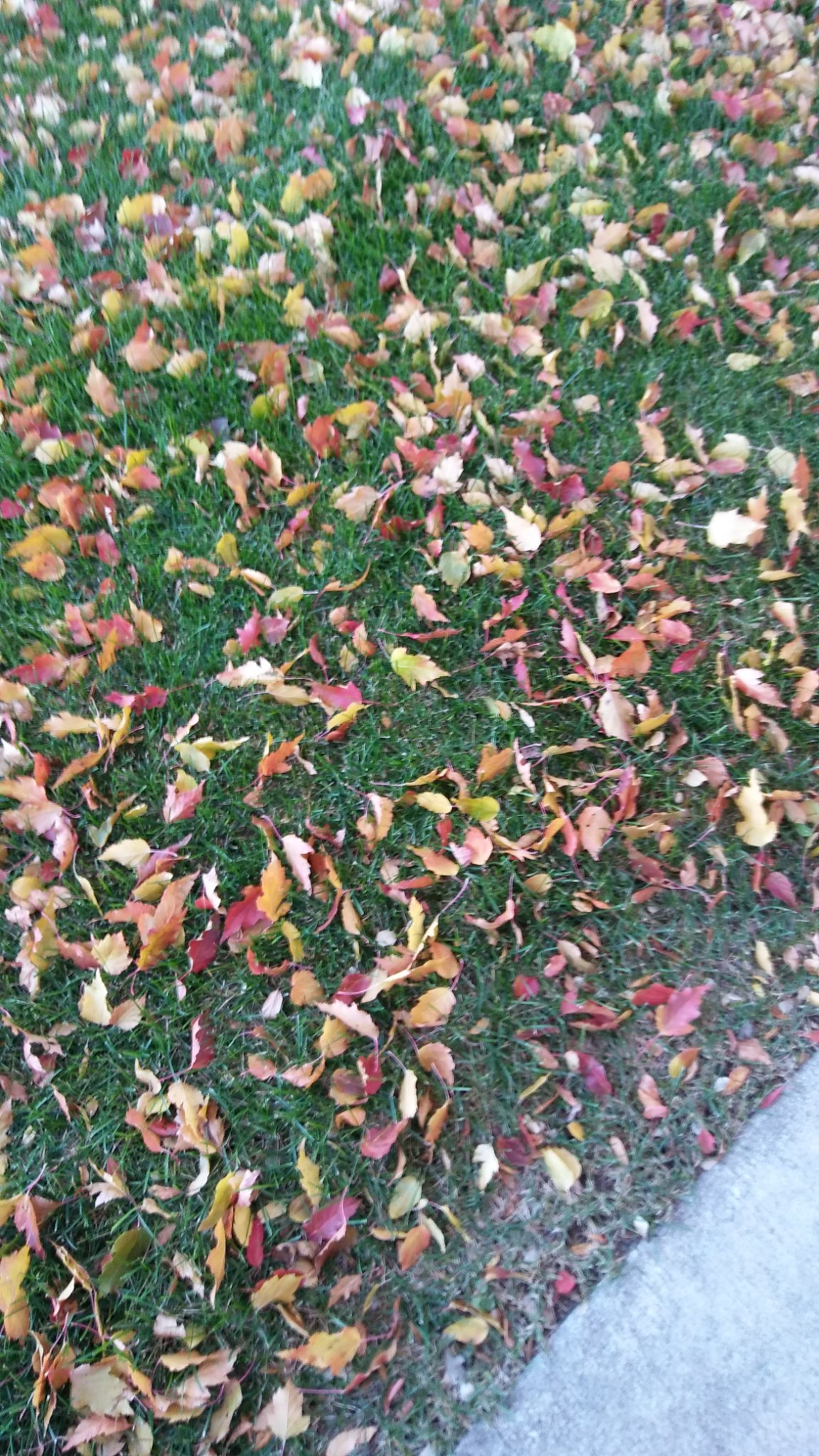
Let me explain.  Our Amur Maple out front is delightful.  When it blooms it is heavenly.  No scent like it.  In the fall, the seed pods turn a lovely pink color, and the leaves form a multi-colored carpet.

20181015_175010

Then the seed pods fall and blow all over.  Helped by our squirrel friends, in the spring the seedlings can be found by the hundreds in the rock gardens and the lawn.  The pines have nothing on these guys.  Left to mature we could start a forest.

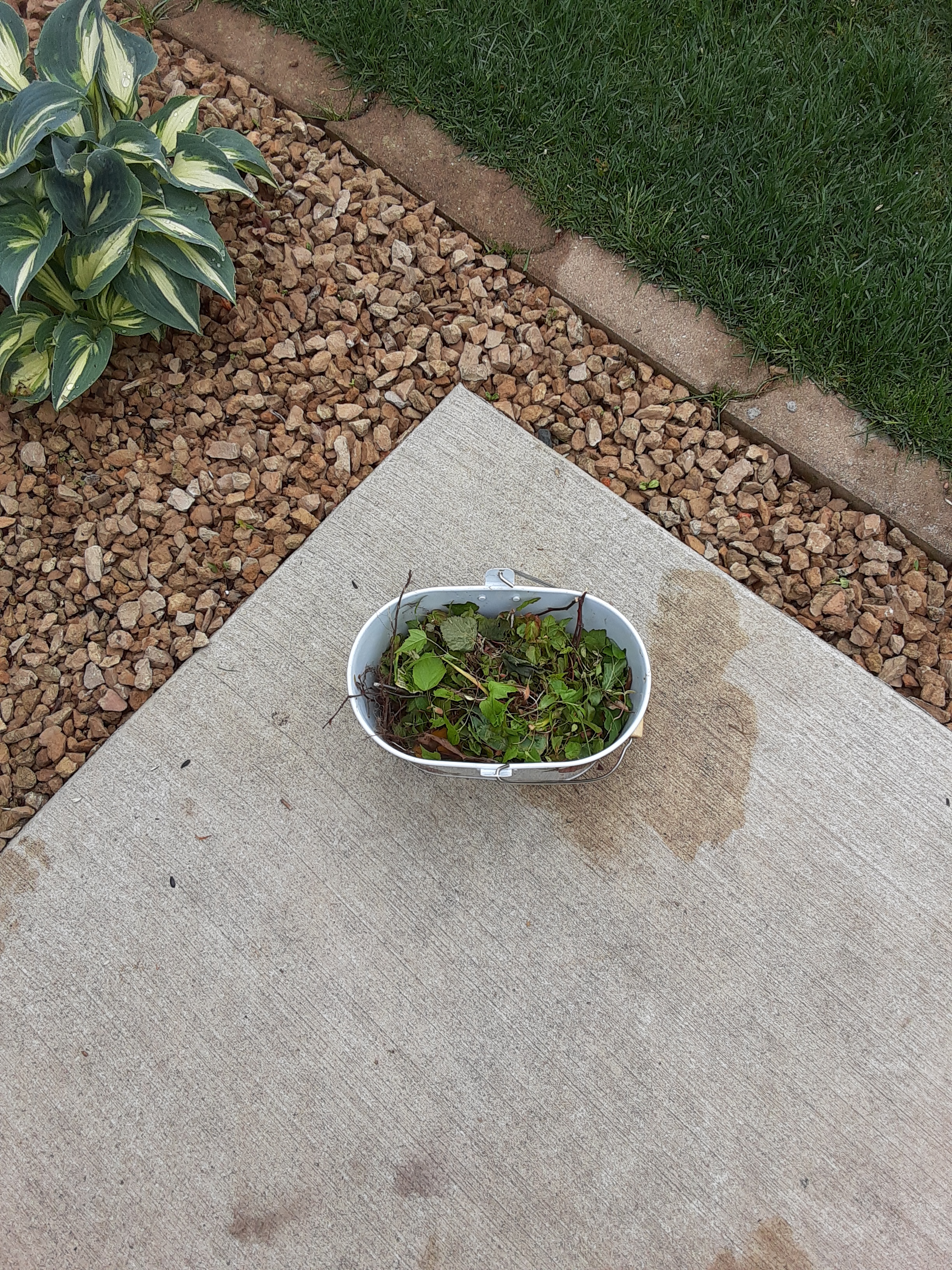
So every spring I get in garden shape, and also get a free nail filing, by going around and plucking out hundreds and hundreds of Amur Maple seedlings.  Bucketfuls.

20200524_082947

What the hey – may as well grab linden sticks and the occasional pine or cherry volunteer too.  But mostly Amur Maple seedlings.  Like these

20200524_082957

Is it a pain?  Yep.  If the Amur Maple had to be replaced, would I hope the replacement would be something less invasive?  Yep.  But I’m used to it.  I love the spring blooms, the fall color, watching the squirrels “harvest” the seeds, and the spring tradition of getting back in shape and getting a “plucking” nail filing!