Why I Go Slow

When creating gardens, I, most often, go slow. Yes, part of that is age, and energy. But a much more impactful reason is collaboration and testing.

Many years ago, a friend told me that we grow gardens for others. I had to think about that a while because I enjoy my gardens so much. It is, however, somewhat true. For the most part, the gardens we grow are enjoyed by many more people, and pollinators, than the gardener. In public gardens that is especially true. And so it is with the Oakwood (historic cemetery) gardens.

In both the Mahala Felton garden and the Shirley D garden, we inherited donations. For years, well before I came as a volunteer, people would find spots for their donations and come and plant them. When I took on the Oakwood garden, I did radically change the aesthetic and the maintenance, but I tried to leave the plants, especially those that were doing well. That took time to observe. 3 years of time.

Now I have a pretty good idea of what will do well in those gardens, and they both have a different feel. Against all odds, Shirley’s garden has quite a few hostas. The hostas I went on and on about needing to move, are thriving. In a full sun garden with no irrigation. Go figure. And the Asclepias a bird planted (or so the story goes ;)) survived despite my secret desire to pull them out. Yes, I know they are essential to the monarch population. Other things have also showed up in both the Mahala and the Shirley gardens that I know weren’t there the previous year. And they got to stay. Well, almost all of them got to stay. Lovingly, Oakwood is not an irrigated site, and I am not an irrigation system. I go to volunteer when I can. So, rules of nature – If you plop, you water. If plops fail, I am not heartless. Things that don’t make it still contribute to our compost pile, so they do not go to waste.

All of those learnings were part of a process – a 3-year process, including things I personally planted that did not make it. Nature (or others) sometimes also make those choices. But 3 years in, we have two beautiful gardens we ALL enjoy, for various reasons, and indeed, have taken an ownership stake in. I know for sure neighbors are weeding. Thank you :):):) Someone may have even weeded the Mahala Felton daylily seedlings at the gate, even though it had a marker. You just never know what will work, for a variety of reasons. The Oakwood gardens are a joint endeavor, and, so far, as a whole, it is working. We are growing a garden for each other.

So it will be with the Fischer garden. It will be of the two existing gardens, AND a standalone. It has its own needs, it will be unique to the site, and it may not ever even be seen by many who see the Mahala and the Shirley gardens. So far, for sure, we know it will not have any potted plants – those get inexplicably tipped over. For sure it will not have daylily seedlings – deer and turkeys may think they are appetizers, and they do kind of look like grass so others may think they should be weeded. For sure there will be no hostas – I already tried to make a woodland garden at Oakwood, and it got very “eaten” very quickly. Very sad. In my mind all the hostas from the Mahala and Shirley gardens were eventually going there. But alas! Nature chose.

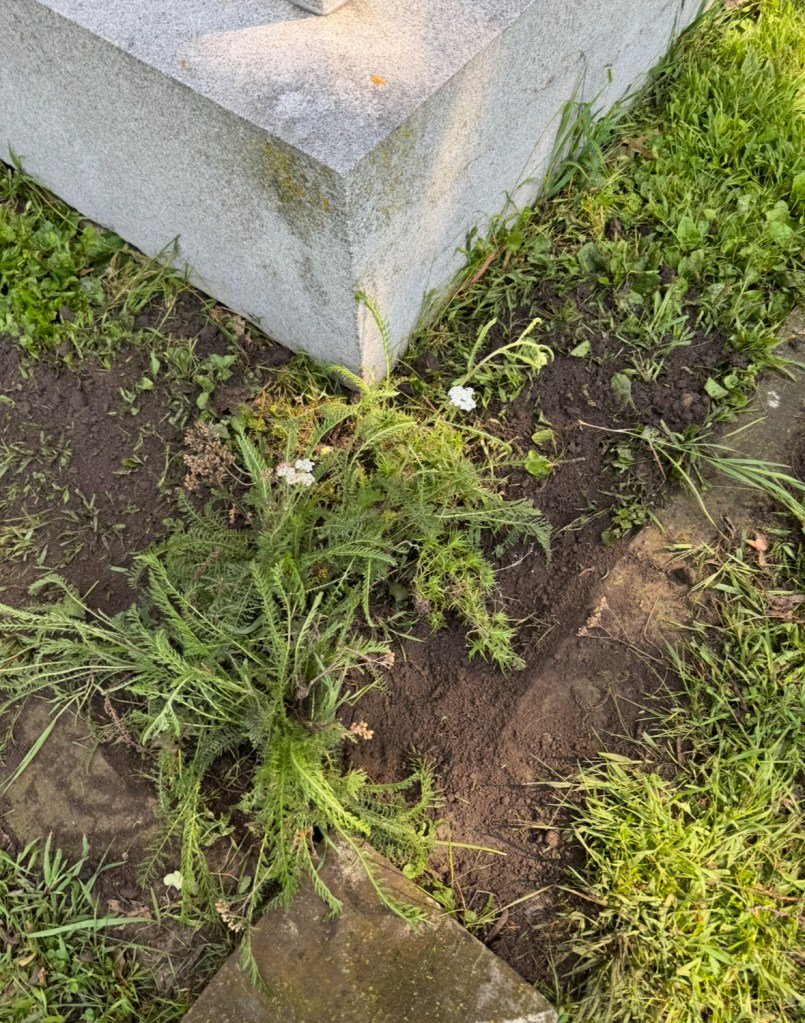
So what will the Fischer garden have? Rules of engagement are: no spend, critter resistant, full sun, no ongoing irrigation – so, drought resistant. So far the Fischer garden will start with yarrow transplants, because, well, we have already started it, and we know, so far, they are working. But we shall see when we stop watering the test plantings. Beyond that, in my mind I see tall purple accents throughout, and ground cover around the babies’ markers. But nature will ultimately decide what truly works. We honor the site, we go slow, and we listen to nature.

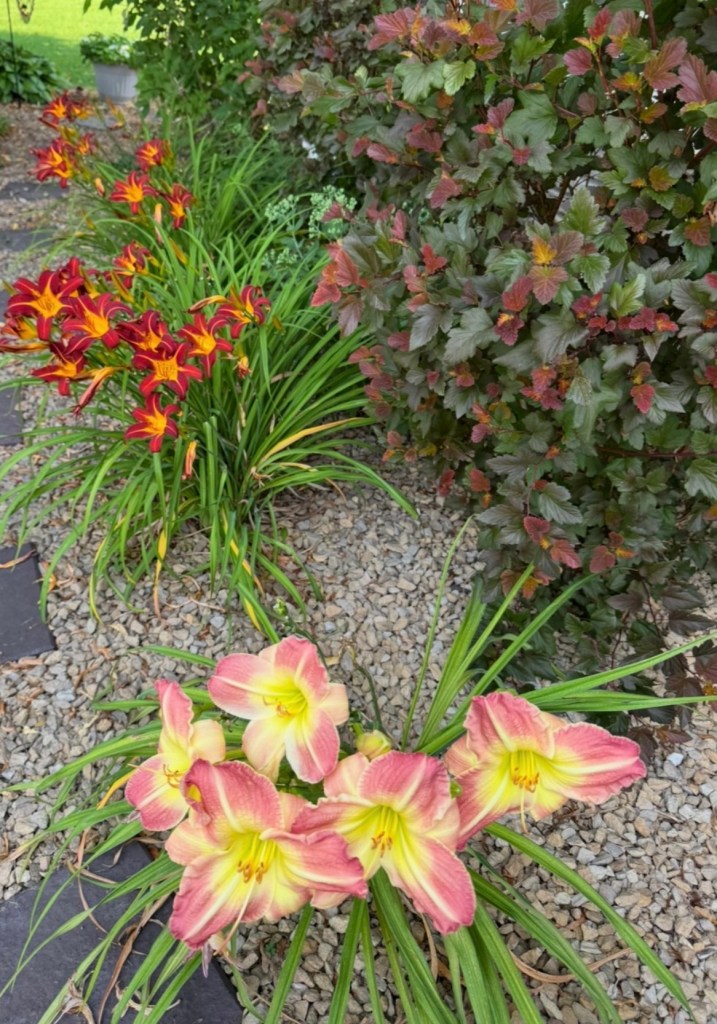
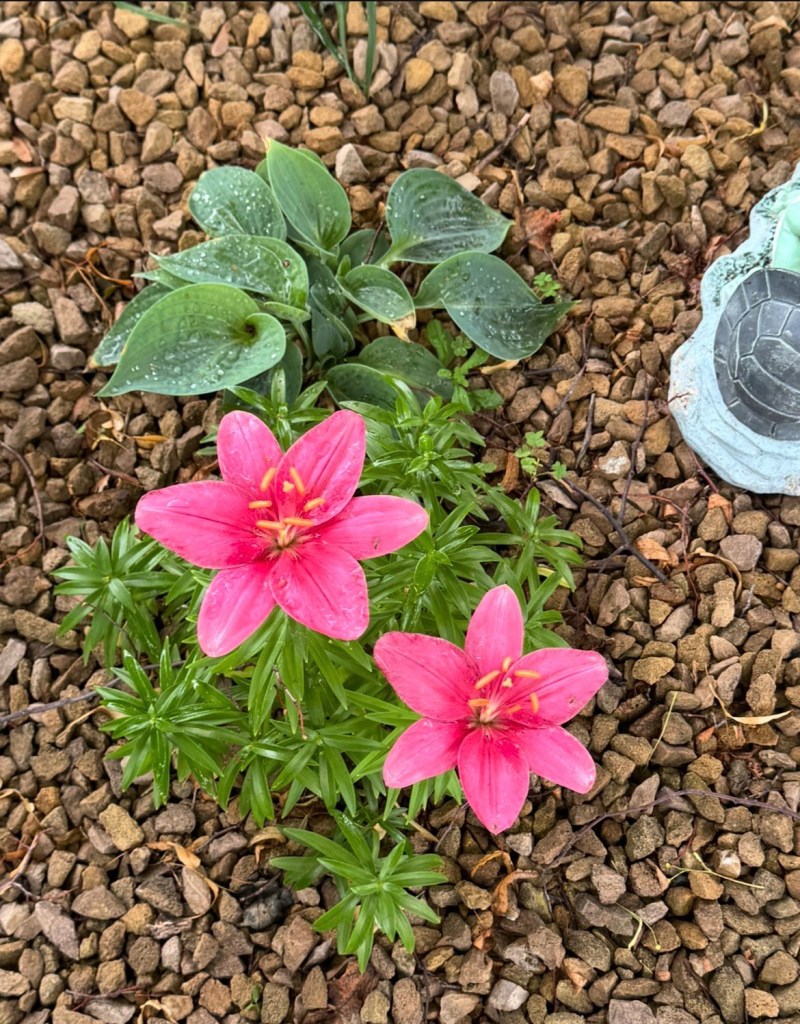
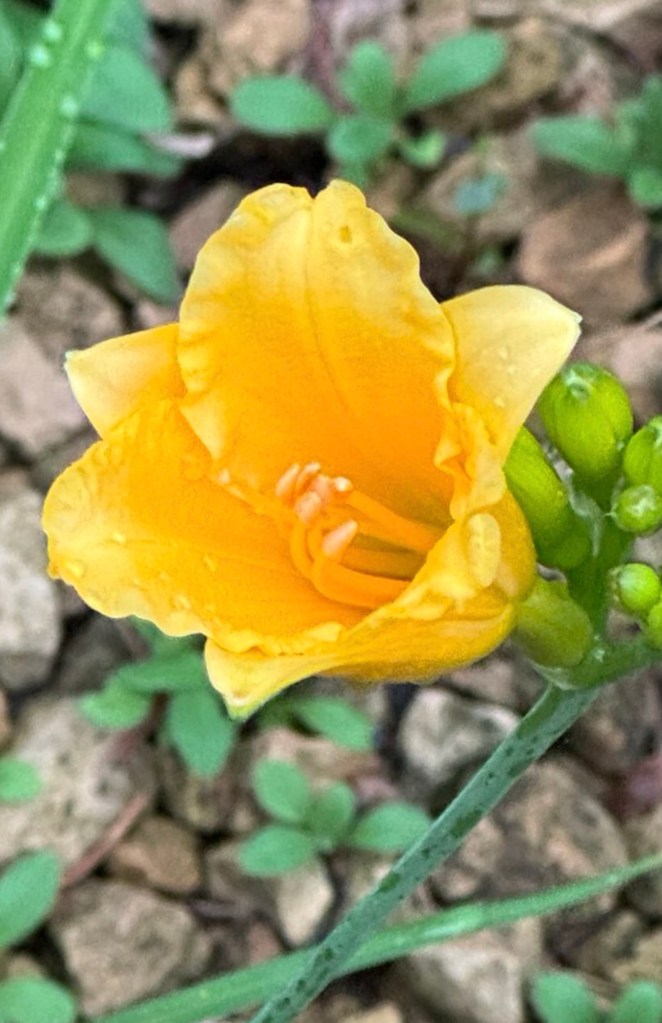
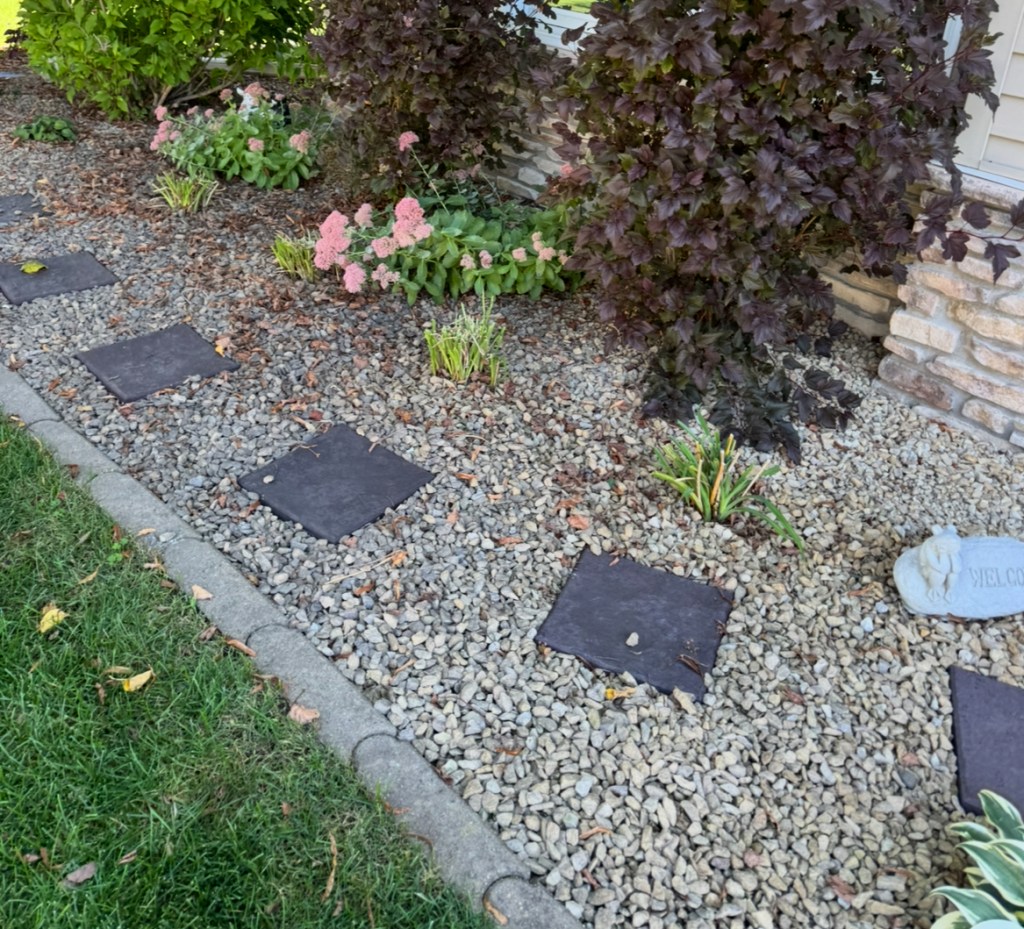
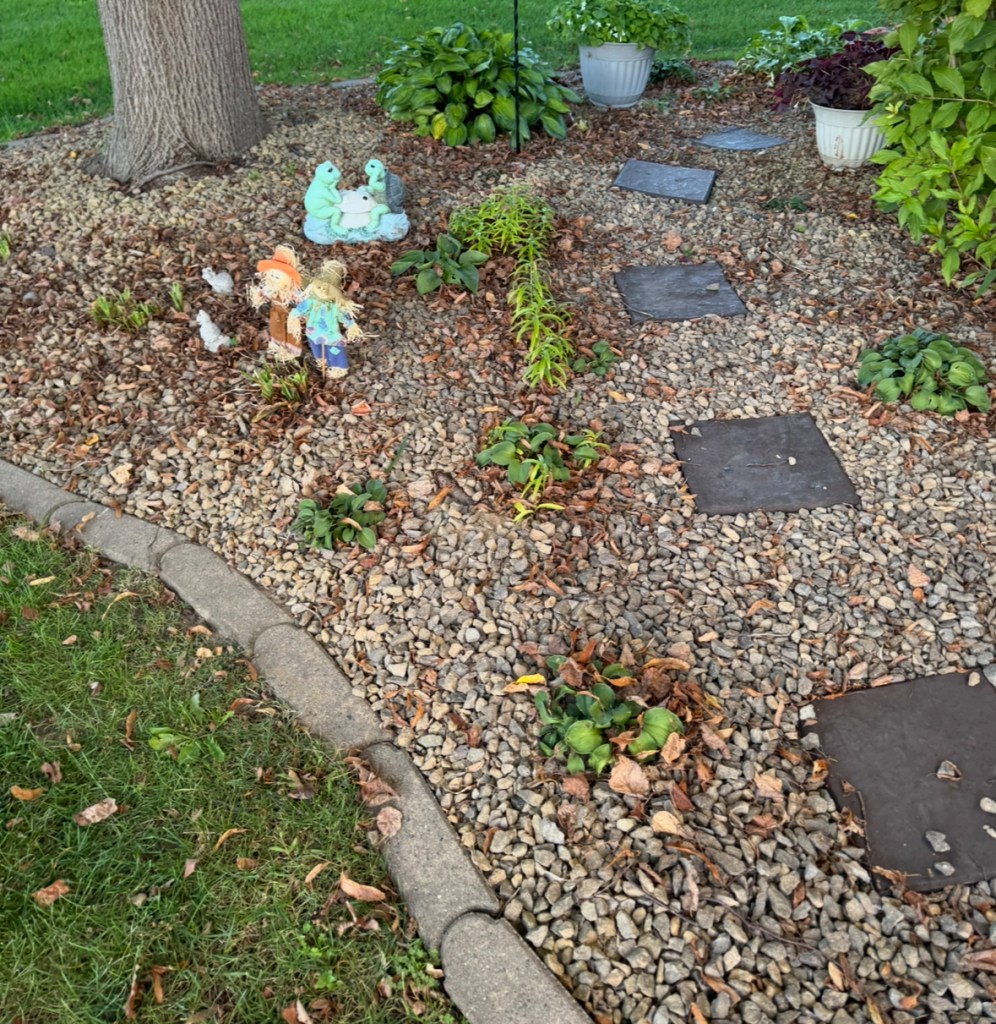
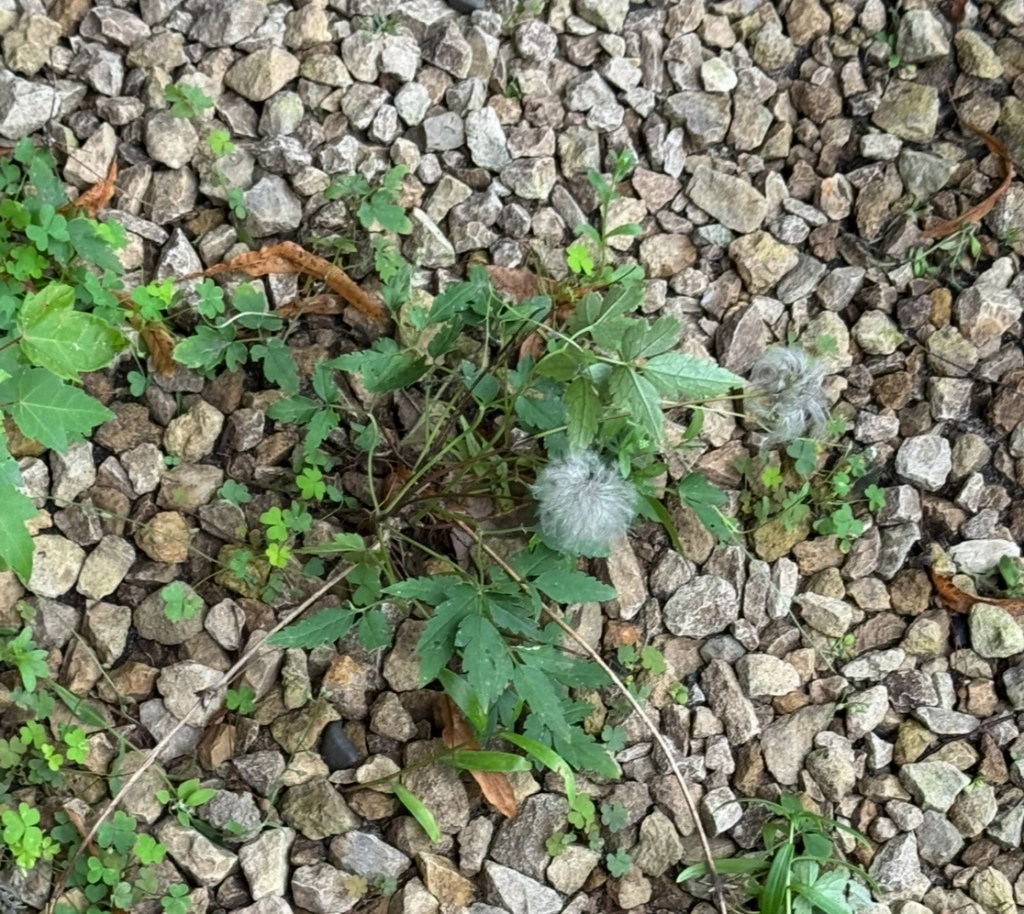
Here are pics of the tall purple and the ground cover options I am envisioning. I am going to try seedlings and transplants. We will go slow and see what nature decides.

Wrap Up, Start It Up

Today is the last day for 2025 daylily blooms in our townhome gardens. Hello Yellow opened the 2025 daylily bloom season, and she is closing it out as well. She is AMAZING! And she is a mystery. I would be tempted to say a bird brought in a Stella De Oro seed, but a) she has repeatedly now typed out as a tetraploid, and today I harvested seed from one of those crosses, b) I planted her as a seedling from seed I harvested (I don’t own any Stella De Oros) and c) I haven’t been able to replicate her. So, she remains “Hello Yellow” with parentage as “sdlg” Her seedlings, if we are so blessed, will be fun – partially because she is not at all scientifically supportable. She is a gift. A reminder that I cannot support everything beautiful with data 🥰

And as the daylily bloom season at the townhome comes to a close, of course I have interwoven that eventuality with something new. Why wouldn’t I? And not something small like weeding or tossing worn out garden gloves or taking cloches off seedlings or moving rock that keeps overflowing into the grass or onto the sidewalk when it rains. No, no, nope. I need something much bigger. Multi-year, very challenging, requiring no money investment, but rather just repurposing and harvesting for new – exclusively, you guessed it – from and to the historic cemetery garden. How did I arrive at this set of requirements? Well funny you should ask. It has to do with 3 years of work there, studying, observing, seeing weird stuff (like things disappearing – ahem – Mahala Felton seedlings and purchased and planted daylilies), and a love for solving reasonable needs. Enter the Fischer project.

The Fischer project was born out of me not being able to keep my joy to myself and sharing that it only now takes one hour per week to weed the entire historic cemetery garden. And, by the way, since we are adding another garden, we need some refining nomenclature. Going forward, for my blogging purposes only, the left side of the wall garden at the historic cemetery will be referred to as the Mahala Felton garden. The right side of the historic cemetery garden will be referred to as the Shirley D garden. And the new garden will be the Fischer garden. So, I was sharing that I felt a bit guilty, not too bad, but a bit, that the historic cemetery garden in year 3 now only takes one hour per week to weed. Or one hour per side every two weeks, or, well you get the gist. And Shirley’s husband, who is an absolute rock star, who helps Shirley keep up the cemetery, said something to the effect of “Do you know the Fischer site?” Yep, kind of, I said. And off the project started. The Fischer site is definitely a long-term project. It will for sure take a couple years to turn into a garden that replaces grass with plants, that does not require mowing. And that is the need.

So, the challenge is a garden at the site that is deer, squirrel, bunny, and other critter – two and four legged – resistant, drought tolerant, very low maintenance (like cut it down at year end), no mulch, does not obscure markers (so ground cover in some areas), and (my requirement) feels healing, and peaceful, and, well, quiet. The Fischer site is the site of early settlers to this area, but their story was very different from the Feltons story.

And that is where this blog ends. But I (with the help of Shirley’s historical research) will share more as time goes on. About the Fischer story (history), about the new garden plant choices, about the new garden successes, and I’m sure failures, and about how things look as we go. Shirley just texted to say they are at Oakwood, and she will water the new plantings. They don’t look like much – a few bunches of transplanted yarrow from the Mahala Felton garden – but it’s our new work in progress. Now that the Mahala Felton garden and the Shirley Dalaska garden take so little effort, their gardens are going to fill the new Fischer garden. That I LOVE 🙂

And then there was one, but lots of Decisions Made for 2026

It has been a bit since my last blog. The daylily blooms have all wrapped up, except Hello Yellow, which is re-blooming. As I watch the bees, the hummingbirds, and the butterflies enjoying their journey through the hosta blooms in the garden, it occurs to me I ought to be doing the same thing – enjoying the late summer garden.

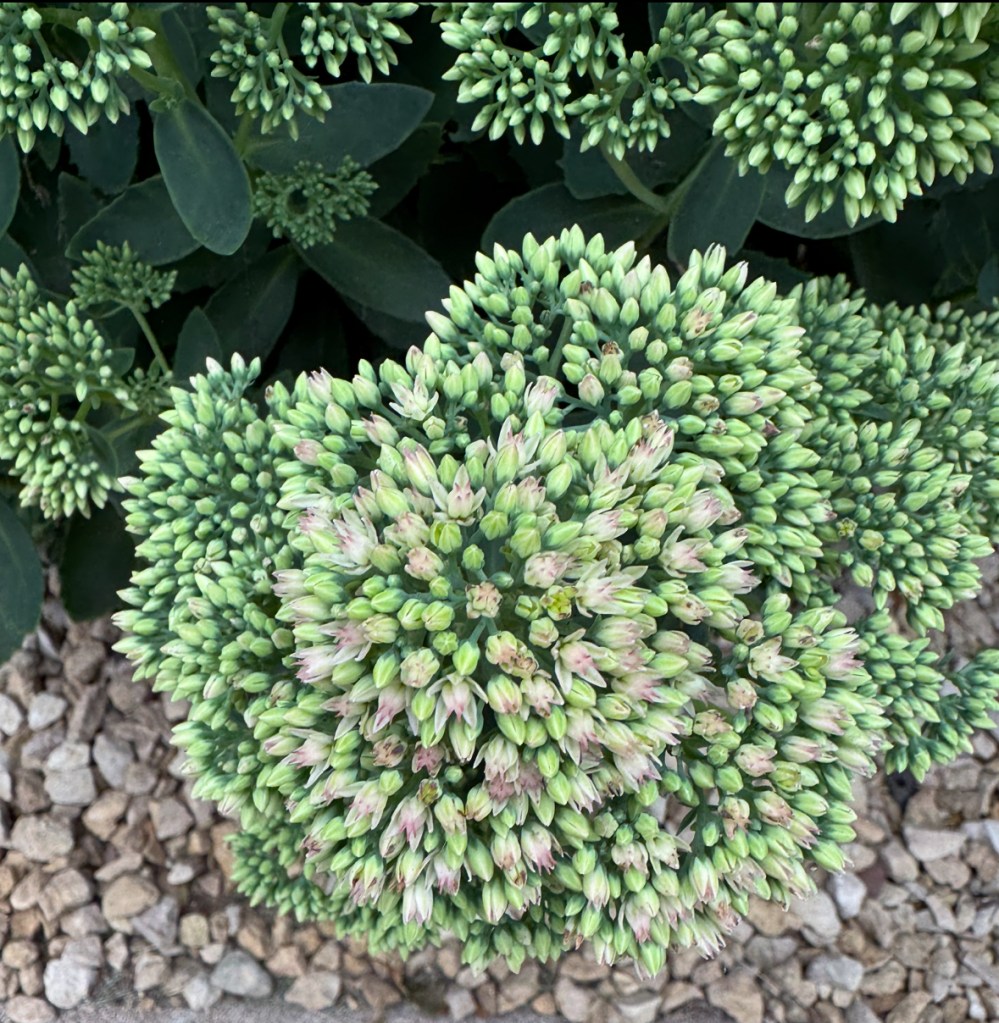
Yes, I miss the daylily blooms, but the beautiful hosta blooms and the very start of the Autumn Joy sedum color is also now on.

Since I last blogged, I have planted all of the seedlings except the seedlings that will go to the historic cemetery. The gardens are a sea of pods, very fall-ish. There are 55 pods maturing. Well, 53 as of yesterday when I harvested 2. I expect we will not have any true need to buy daylilies – for the townhome, for the historic cemetery, for anywhere – go forward. I may buy one here and there that I want for crossing, but even that is to be determined. When I was looking at my wish list from spring, I went ahead and deleted it because everything on that list was very similar to what I saw come up in our self-seed seedlings this year. I think I am good for now.

Full disclosure, another part of my decision to delete my buy list is because, sadly, a good portion of the daylilies and daffodils I bought and planted last year did not come up at all this year. It was a much worse scenario at the historic cemetery, but even in the townhome gardens I had a few “no shows”. That is very unusual for me. But so is losing 18 hostas this spring. It remains a mystery. We may never know for sure what the reason(s) were. But, I am re-doing the look of the townhome gardens due to the unplanned changes, and we are moving on. It might have been meant to be.

The new garden “look” includes continuing to transplant the Blue Mouse Ears hostas. I dug, divided, and transplanted a large clump of those hostas into their new spots, and I really like it. If there is time, I have one more clump of Blue Mouse Ears to move, but if I don’t, it can stay as is until next year. I also am seeing some purple shamrocks come up from this spring’s, shall we say, squirrel curiosity, ahem.

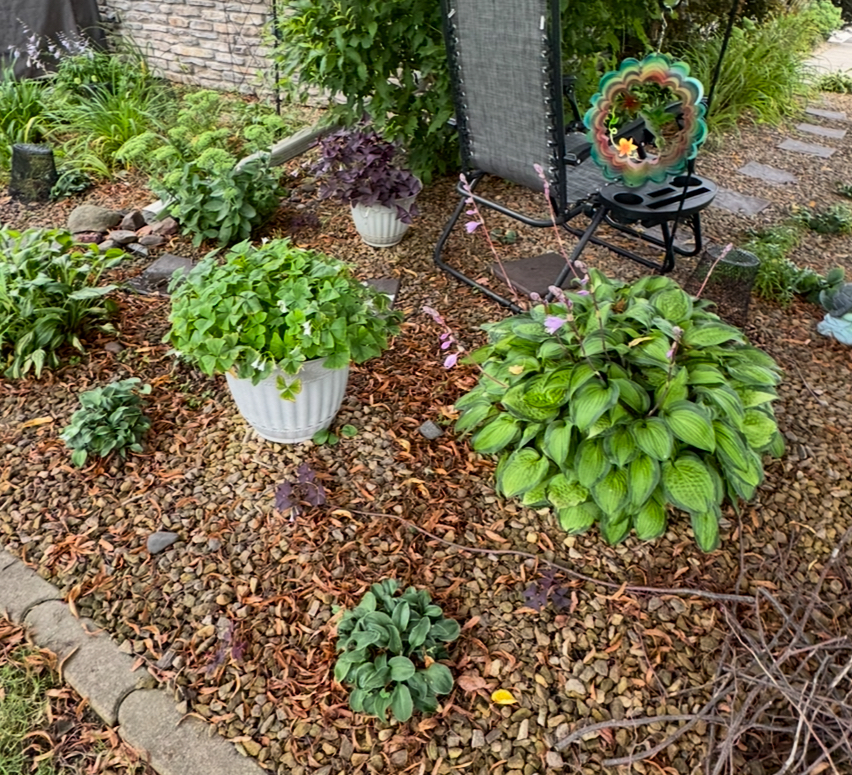
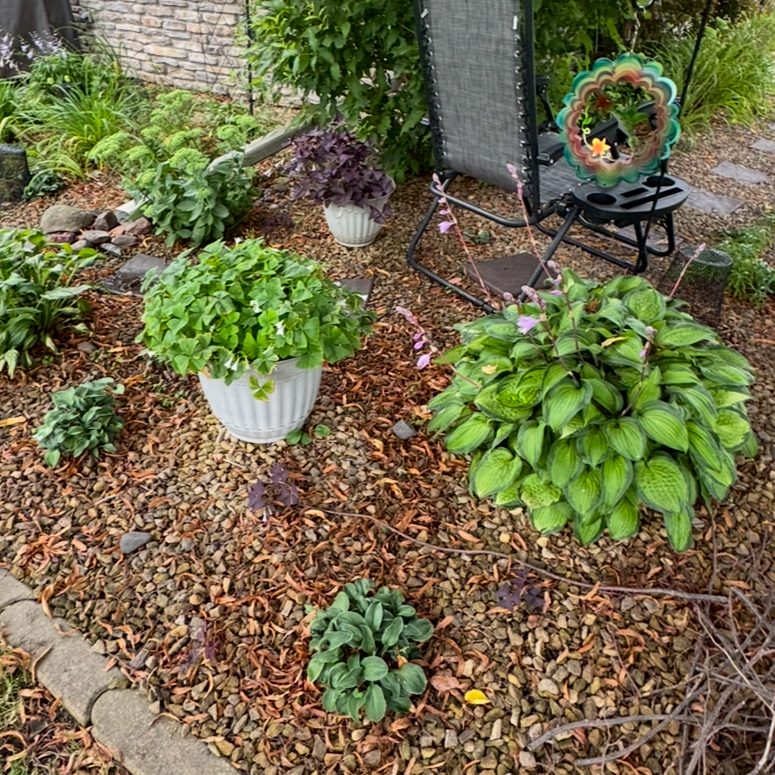
See purple shamrocks in the front

There are also a few daylily moves in scope. “Unknown Yellow Daylily Freebie with Order” out front does not like her current location and has only bloomed one out of the past three years. I have a spot for her out back. Yellow is not a large part of the front daylily palate, so moving it is a good decision on the color scheme, as well.

Which brings me to the Bluebells clematis out front – it is re-blooming. The hummingbirds and butterflies are loving it. I am very glad I saved the Bluebells clematis volunteers this spring and planted them out back. They are doing very well there, and I am guessing by next year the hummingbird will find those blooms too. The bees already did.

Which leads me to the changing color scheme out back.

This year with the “surprise!” of the red daylily seedling out back, I had some considering to do. I have thought a lot this year about the color scheme going forward – about what I primarily see from my favorite rocking chair on the patio, about how different times of the day are spent on the patio, and about what I want to head towards with future years of daylily crosses. These past two years of so much success with crossing the reds has been fun, and some of those, when they mature, will even be moved up front, but it was this year’s self-seed colors, and form, that was on my mind for the future of the gardens out back. The self-seed seedlings were tall, many were trumpet shaped, substantial, and I really like the colors of the ones with South Seas lineage. The front landscaping has a wave of red, but it has been on my mind to find a transition color from the front to the back gardens, where I want minimal red. I knew that one red daylily seedling surprise was part of the story. I just wasn’t coming up with the answer.

Then one recent night I was relaxing out in the back, for a while – sitting on my favorite rocker, watching the dragonflies, and a bunny, and the sunset, hearing the crickets and the tree frogs start up, and seeing the bats come for the mosquitos (farther out from the patio 🙂 ) while watching all the fireflies close to the ground. The word “quiet” popped in my head. Not the hearing sort of quiet, as the crickets and the tree frogs were singing themselves (and me) very happy. The “quiet” was a feeling. After I came in for the night, I looked up quiet gardens. Indeed, there was some good stuff, but not really a match for what was floating around in my mind – quiet color.

Over the next couple days it occurred to me – lavender is the transition color from front to back. It will soften the red impact. We have some lavender already, as part of different daylilies, and we have the Purple D’Oros that we can let self-seed again. The forget-me-nots and the Blue Mouse Ears both have the blue early on, but mid-July that color starts to fade. We need a touch of lavender that will transition the red in front, past the Marque Moons to the South Seas line out back. And with that, a lot of other decisions are now made as to where I want to go with crosses going forward.

For now, last night I harvested the first two seed pods. They were opening up quickly, and I am guessing I lost a few into the ground before I noticed. It’s OK. They are the reds, and crossed with Naomi Ruth, which did not germinate this year from last year’s seeds. I am guessing these won’t either as the seeds are only 34 days. Yes, it’s a bummer and yes, I will plant them next spring and see what happens, but decision made – next year I will trim down the number of crosses I do. I don’t need to cross the few reds out back. I already do red crosses out front. South Seas will be the dominant line out back, with both crosses and self-seed. Pink Tirzah will be the secondary line, and where I expect the lavender to come from, but we shall see. And if I just so happen to come across a Paul Voth, I might add it. Just one. I had one at the little house up north, and they draw the eye, for sure. But it would be my delight to do a cross that results in lavender.

So, what’s next, besides seed collection, enjoying the late season hosta blooms, and the Autumn Joy sedum colors? After Labor Day (US), I will plant the Mahala Felton daylily seedlings over at the historic cemetery and watch them for a week or so for water need. After that I will begin the seasonal cleanup there.

Lots of garden time left 🙂


A very fun weekend

It was a very fun weekend. After thinking and thinkng, and watching sun patterns, and watching how the Blue Mouse Ears hostas had done in new locations this summer, moving day arrived on Saturday. I started with moving a potful of the Molly Cowles seedlings into their home until bloom – 2+ years out. By then sweat was dripping down my forehead onto my nose, and I thought I may as well keep going. I really do need to invest in a headband lol. I took a hydration moment, and I made the choice – it was time to divide and transplant more fairy-ringed Blue Mouse Ears. According to my plan. Out came a huge clump. More sweat, glasses slipping, thankfully pony tail keeping my hair away from my face, the first division went into the “for sure” spot I had envisioned since May. Then another, and another. And then I dipped into more seedlings – the Coral Majority self-seed, and planted those. And a final baby Blue Mouse Ears division found a home. On went the cloches, on went the water, and then it was, for sure, time to stop. But I knew that already. I was feeling both exhilarated, and whooped.

This morning dawned more motivation, but for working at the historic cemetery garden. The yarrow needed a serious haircut, there were more hosta scapes to trim, and the milkweed was bending over. Plus some weeds. Not much. Our neighborhood weeders are awesome!!! And the mulch is rocking it.
I fight myself getting over there in the summer heat and air quality alerts, as I don’t have the luxury of the conditions of home, but every single time I go, I am mega invigorated by the people who walk by and chat and say thanks, and by the way the garden looks when I do my finishing walk around.

Tonight there was no dinner out with our newest grandson and the family and inlaws there, like last night, but there was corn on the cob from our other DIL, a burger on the Traeger, a beverage, and a very nice chat with a friend while the sunset faded and the fireflies continued their nightly show and the stars started to make an appearance. A very good weekend indeed.

Been Kind of Spoiled

All the 2025 crosses are now recorded in the excel spreadsheet, and I am starting to wrap that up for the record. I thought about doing a cool graphic, but that will need to wait until much later. There are garden areas to plant with seedlings.

Yesterday morning I took a fair amount of time to enjoy the day’s blooms. I was tempted to do just a few more crosses, but I stuck with the plan. Eventually I started to make decisions on locations for the remaining 2025 seedlings, and then began day 1 of the tucking in. They will not bloom for at least 2 more years while they establish, and by then I will be dividing their neighbors. The first decision was easy – the second (and final) set of 3 Mahala seedlings that will live in our garden went in today. The rest of the Mahala seedlings will go to the historic cemetery in September.
Next week half of the Molly Cowles seedlings will go into their 3 year space. And then the Coral Majority self-seed seedlings, and on it will go. Some seedlings will go up north. Definitely half of the Molly Cowles seedlings. My DIL is giving me landscaping fabric, we have boatloads of boulders to secure it, and we are a go. More on that this fall.

The past six weeks have been so full of daylily color that I got kind of spoiled. Daylily season is like having fresh flowers delivered every single day, and not having to deal with changing the water in vases lol Up front the ninebarks are putting on quite the show, but out back there is increasingly a sea of green staring back at me. I want to solve for that. Short term I think I will bring more purple shamrocks out, but as I am tucking seedlings in, I am planning (hopefully) for more late season soothing color from the crosses in the next few years. I could also propagate more Autumn Joy sedum and plant them around the bend in the path (the bees love them). We shall see.

Calm Garden Activity Day, 2026 Garden Prep

We are having a “calm” garden activity day again today. The daylily wind down has begun, and we are also having an on and off, sometimes very heavy rain day. No crosses were done today, but full disclosure, yesterday I kicked off the “wacky cross” period. I did an intentional “should not work” cross. It was probably good to take a break today haha.

I did that cross yesterday because I wanted to try a cross between two daylilies I really like. One is a diploid and one is a tetraploid that has a diploid in its parentage. What is the worst that can happen – it could fail? I took the chance. And I enjoyed the two daylilies all day. And more full disclosure, there will probably be a few more wacky tests in the weeks to come 😉 It is getting to be that time of year when I am willing to try those things. You never know. It could work. Last year, on a wind down season whim, I did the somewhat wacky color combo cross that got us the 28 Mahala Felton seeds. 24 are now seedlings. Yes, the parents were both tetraploids, so it was much more likely to succeed, but it was definitely on a whim. A very bold color cross that does not match the color palette I usually aim for. I am now very excited to see just how much it reflects the very bold Mahala Felton that I discovered in my historical research last winter.

We are also starting to approach the seed maturity window. After months of watching and tending the gardens pretty intensely, I like a little more freedom in fall when the bugs are down and the weather is getting nicer. I have learned from experience that I sometimes miss seed pod maturity when I get busy like that in the fall, so any seed pods I really really really want to catch need to be crosses done in the next couple weeks. The rest need to be ones I am ok potentially going to direct sow, or the squirrels or bunnies or birds 😉

On the bloom scene, we had one “first time seedling bloom” today. It was the last seedling scape of the season that was still pending bloom, and the reveal was a bit unexpected. It was a seedling I moved more into the sun last year. For expectation, I was going on my early years style of documentation. I was hoping for the Purple D’Oro that was in my documentation of the area I moved it from, but as the scape matured and the buds began to move to bloom, I began to suspect it was not going to be much like a Purple D’Oro. It was too tall and started to show red on the bud a few days ago. Still, I held onto hope that it was a very cool pollinator cross. Alas, today when it bloomed it looked exactly like the red daylilies we have en masse out front. It even has the signature curls at the end of the petals. That I absolutely love.

Seedling red daylily is definitely pretty, but not new. The red daylilies used to be in the area where the Purple D’Oro seedling was. I am guessing the Purple d’Oro seedling I documented did not survive and the red daylilies had a direct sow self-seed in that same area. Stuff happens. It will probably go up north as one of our “parents”.

And that leads to a further discussion on the plan that is forming for next year. It does go a few years back, for sure. Back to the years when I moved at least part of the garden to the little house up north (that we sold). In those years, we were moving toward a more “structured” look at the townhouse. At least in the front of the townhouse. We moved the red daylilies at the townhouse out of a more shady area in back to the front of the house and into much more sun. We had started with just a few big box bare roots and had grown them to the point where we had a lot of them. I wanted to further the development of our “red, white, and blue waves” theme out front. That was an awesome decision. And we are now “there”. In Spring the Bluebells clematis starts the wave. Then the red daylilies start blooming. For colorful interest, once they get going, we have at least a dozen and around peak two, even three dozen red daylily blooms each day. That wave gradually moves toward the less sunny area, and the red daylily blooms continue well into August. Just about that time the Marque Moon buds start to mature, and by the time the red daylilies start to wind down, the Marque Moon (creamy shimmery white) start to bloom. Even though they are old now and in the Linden roots, they still make a show. And the whole pattern ends at the Linden changing colors. There also used to be quite a few big hostas there, but I digress. The blue flowering hostas that are now in that area are earlier blooming, the Blue Mouse Ears divisions.

As I gradually move the daylily propagation to our land up north, the wave pattern will become de facto at the townhouse and will start to wrap around the back. Probably a different color scheme. Probably keeping more pastels. Simplified as I stop planting seedlings here. And with that decision made, now I can also start to look at what needs to be divided this fall and use that as my starting template to also bring mature daylily divisions up north. I want them to self-seed up north. I have pretty much fallen in love with self-seed, and I am thinking it will be quite a bit of my go forward approach. We have soooooo many pollinators up north. If the deer can be kept away from the daylilies, I am so excited to see what self-seeds we get. The daylily divisions we bring up can be our mature daylily test subjects, to see how the deer react to a few unprotected daylilies. Unlike the seedlings, in the spring, when the mature daylilies start to grow, I will need to remove the cloches. We shall see how that goes. It will definitely be a determining factor in the fencing approach. Step by step. This is a long game.

For today, before it rained, I worked on maintenance. One of those things was beginning to remove the scapes from the Blue Mouse Ears hostas. They are done blooming and I do not want them to spend any energy producing seed. I will be dividing more of the Blue Mouse Ears this fall, so I want to preserve their energy to help them handle division as well as possible.

And I did grab some pics to share before the rain started.

The South Seas only have five buds left after today. In our garden, 2025 is, without a doubt, the year of South Seas and family, and I am so excited to continue that as one of my focus lines.


The Coral Majority looked way less “wild child, tie dye” today. She and South Seas are the pollen rock stars this year.

And Pink Tirza wrapped up bloom out back today. I got two “wish list” crosses from her this year.

Naomi Ruth also continues to delight.


I am fully enjoying the 2025 blooms and even having a little extra creativity. And little by little we are moving into the staging for next year’s gardens and the start of the seedling garden up north.

I heard it again this week, and it is absolutely true: A garden is never done. Thank goodness 🙂

Shirley D

We are deep into daylily season now, and I am seeing patterns regarding daylily crosses that will work this year. For instance, the cross that made the Mahala Felton dedication daylily will not have a repeat seed creation season this particular year. One of the parent daylilies is not sending up scapes right now. That happens. It is a healthy daylily, not crowded. It could be that I just overworked it last year. For this year, the Mahala Felton daylily seedlings are doing well and will start to be be planted this fall in various locations in the Oakwood Cemetery garden where Mahala Felton is interred.

I am also having challenges this year with getting the Molly Cowles dedication daylily cross to replicate. 60 seeds last year, and not a single success with that same cross this year. But that, too, is OK. I have so many Molly Cowles seedlings that some will probably even go up north. I will continue to try to replicate those crosses this year. There is still lots of runway ahead. And some things happen for a reason.

Those daylily seedlings are wonderful, and I hope they will bloom absolutely beautifully, but I knew there was more to come. It was forming in my mind. Something a bit different.

We were “getting there” when one of the daylilies I purchased and planted at Oakwood last fall began to bloom a few weeks ago. That daylily’s name is Red Volunteer.

“Volunteer” has layers of meaning. What a cool daylily to be at Oakwood. And it is stunning. I am hoping for way more blooms next year. I only caught two this year.

But something was still in my mind. It just was still in a “waiting” state. Something with ties to meaning. It finally arrived.

Dedication daylily “Shirley D” is a dedication to my good friend, long time historian and author, and fellow volunteer at Oakwood Cemetery. Shirley puts up with my relentless garden talk, endlessly long texts, and ridiculously ambitious ideas. And Shirley and her husband Mike dedicate uncounted hours of personal labor as well as their substantial leadership to Oakwood Cemetery. They are, in my humble opinion, the primary reason Oakwood Cemetery is in the renovated state it is in today.

Dedication daylily “Shirley D” is from 2022 harvested seed. 2022 was a tough year for me. It was the year my husband and I decided that the little home up in the mining town in northern Minnesota (that we had renovated and planned as our retirement home) was not truly a match. Our plans were upended. We were back to the townhome plan, and I was gutted. I wanted a yard to renovate into a garden. I wanted to be in that area. But it was just too small. My friend Shirley was a dear sweet comfort as I greatly grieved selling that house.

The following year, as I was looking for something I could pour myself into through gardening, Shirley, once again, reminded me of opportunities at our local historical society. While dedication daylily “Shirley Dalaska” was slowly putting roots down where I had planted her the previous fall, I joined the historical society, intending to mainly garden. I took a meandering route, but eventually I found my way (back) over to Oakwood, where I, once again, saw the old, abandoned garden I had seen before. Volunteers are not in plentiful supply, and no one had felt both a calling and the time to address it. And honestly, I too had no interest in that garden. The goats that had been at Oakwood to eat the buckthorn a few years before might have enjoyed it had they had access to it, but it did not really speak to me at all. I was looking at the huge expanse of a raised bed fence garden that so needed love. The old, abandoned garden had stuff that would look great in the fence garden, but the fence garden needed way more than weeding and transplants. What happened next is a testament to Shirley’s absolute genious. While I was working through what I was feeling called to do, Shirley didn’t give me her plan. She let me come up with a “Susan plan”. An impossibly ambitious plan to move the heaving rock and exposed plastic out and go to a mulched garden. I went to the store, bought three bags of mulch, put some in, took a picture and asked what she thought, and pretty soon Shirley and Mike were there doing garden days, sometimes even when I wasn’t there – moving rock, pouring out bags of mulch, putting up with my insistence that hostas would never survive there and that people who were increasingly plopping hosta donations in the newly renovated garden were going to be sorely disappointed when their hostas died. It was, after all, I said, a full sun garden, for goodness sakes 🙂 (Those hostas are thriving – lol) Shirley has stood beside me, even talked me out of really bad ideas, and still encouraged me in my efforts. She soooo gets me. She gets my intensity. She gets that I primarily want to make gardens. She gets that I am so pleased seeing the community appreciate the completed renovation. (Is a garden ever truly completed though? I don’t think so.) Shirley gets that I was pretty driven about getting the garden renovated but now am thrilled that I only need 1 hour per week to weed it because neighbors are weeding as they walk by. So cool!!! And she puts up with me saying, for the 900th time, that I am not going there every day to water plopped plants, which still happens lol. It’s OK, she says. Shirley really is a saint. I think she may be watering plops. I’m pretty sure she is 😉

This year, as the daylilies in my townhouse gardens started to come up and then show scapes and buds, dedication daylily “Shirley D” took her sweet time. Other South Seas self-seed creations were coming up, making it onto my blogs. Still created by our mutual neighborhood pollinators but looking “not Shirley”. And then the first bloom. Does “Shirley D” not have the “it” factor? Understated, yet undeniable presence. Like Shirley D the person, my dear friend.

Among Shirley’s many contributions, Shirley does stained glass work.

Back at you, my friend, with another floral beauty.

It’s the year

Looking the past few days at the space I have at the townhouse, what we can reasonably use at the historic cemetery, and all the seedlings, I decided I would buy a 3rd seedling box. It is on its way.

And my husband and I agreed – this is the critical mass year. This is the year daylilies need to start going up north.

Now, for newcomers, we have land up in far northern Minnesota USA. Along with black bears, bobcats, coyotes, wolves, foxes, of course deer, and a veritable plethora of small game – rabbits, grouse, some squirrels … oh, and a porcupine who seems to have moved on, thank goodness, and a woodchuck who was moved on. Plus a variety of very cool birds including owls. This earth mama, with all the tenderhearted earth and creature loving kindness just oozing out of me in our first year up there, tried a raised bed hugelculture set of gardens (money I sincerely regret spending). They were a wreck within months and such a loss by year two that we pulled them in year three and set the camper over the top of the beds when we built out our shed to cabin. And that was that. Except that I kept propagating daylilies here.

I am now solidly in year seven of this daylily propagation journey, and things are maturing to bloom all over the place. There is no more room after this year, and, truth be told, I now have 38 Molly Cowles seedlings in one seedling box, 14 Mahala Felton seedlings between two seedling boxes, and more coming up every day. We have reached our limit here, and we have perfectly good land for daylilies up north. So … I have picked out a spot on our land where we have good groundwater. I have been bringing my forced bulbs up north and planting them there for a few years. It’s just that when June comes and we are literally awash in in a sea of 4 foot tall ferns, my husband gets out the brush cutter and mows it all down there. Or we get awash in a sea of wood ticks as we walk around camp and to the outhouse. We have both gotten tick born illnesses. Not cool. So the brush cutter rules. Kind of like mouse poison rules after you spend a few sleepless nights listening to the mice skitch in the camper walls and run across your camper counter. Ugghhh.

What I need to do is get on my real world panties and get over my objection to landscape fabric, and lay a swath of it down up north and tack it to the ground and make holes for each daylily, and put a cloche over the top of each planting until we get it deer fenced, and let the leaves and pine straw and whatever wood chips and mulch I can harvest from sawing and splitting days cover the landscape fabric … and see what happens. Yep. Right here.

That’s it. Hard stop. Or I can stop propagating daylilies – and “that ain’t happenin’”. 😂

Donuts, Bouquets, and lots of daylily seedlings scaping all over the garden!

For the past few weeks the Asian lilies have been blooming, the remaining hostas have been scaping out, and every day I have seen more daylily scapes. The spots where we lost all the hostas have been reassigned to match our new phase of gardening here, clover has increasingly been removed, and bunny deterrents are in place.

Did you know that forget-me-nots don’t even need to bloom to deter bunnies? It is the leaves that emit a scent that the bunnies don’t like. So I am plucking away on blooms as the stems start to fall over. The flowers are pretty, and make nice little bouquets with the daylilies, but the leaves are what deter snacking bunnies.

That being said, I am also judiciously pulling the forget-me-nots where I want paths to legacy daylilies I want to use for crosses. Lots of transition in place, and the forget-me-nots are at the very top of that list. They will definitely stay, just more strategically placed.

Another fun fact – Did you know that gardens also bake donuts? Yes indeedio! Here is proof.

I have a number of layering (bouquets) in the garden, and I am embracing them more and more as I move into this next phase of the townhome gardens. Maybe the donut will get some friends. We shall see.

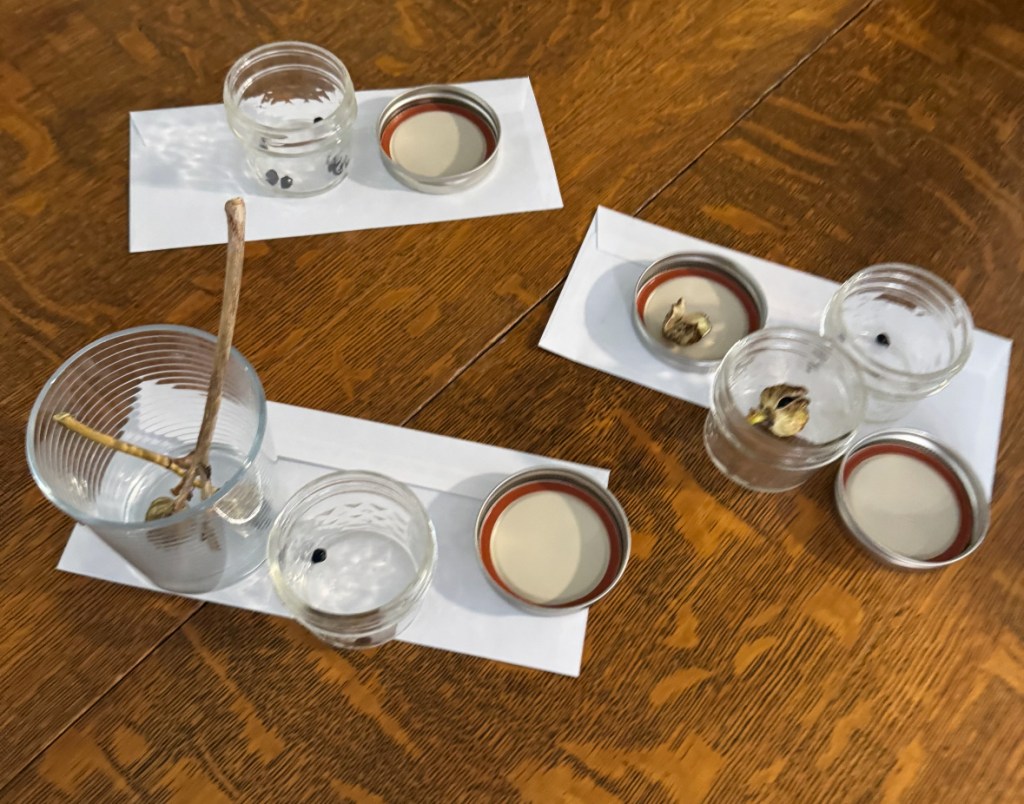
On the daylily scene, all daylily seeds harvested here in 2024 are now planted, and the seedling boxes are full, protecting them from the squirrels. I also still have a tray of planted seeds inside. I could make room in the current seedling boxes, but I want to give the Mahala seeds that haven’t germinated just a little more time. You never know.

Sadly, a few of our legacy daylilies don’t seem to be scaping out this year. That means it is division time for them this fall. More shifting. More adjusting to this next phase. And as the garden ages out on legacy plants and adds more daylily seedlings, eventually there will be a whole new look. Free as far as buying plants. And neat to see what is created. Kinda fun.

Forget-me-Nots

We are in the middle of rain, rain, rain here for the past week or so and now we are heading into almost another whole week of rain lol. But Saturday I got a bunch of work done on the garden. That felt great!

Recently I shared that we lost a bunch of hostas. Those losses have spurred on change. Those losses made me rethink a lot about our garden set up. We lost those hostas because of of a number of reasons – fertilizer and herbicide overspray and then a few of them were expected because I knew tree roots were getting quite close. And because those reasons will not be going away, I am not replacing any of what was lost.

But that was not the end of the story. The space did not look “right”, and because there had been so many hostas there, other things that were previously minor parts of the garden – the forget-me-nots and the clover – began to flourish. Think no barriers like plastic underlayment under the rock …

Saturday I spent time paring back the forget-me-nots and the clover (and quite a few bunny planted raspberry seedlings) in prep for where I want to go with my next garden phase – expanding my daylily propagation work, needing more planter space. Just like anything, times are changing. I am in a new phase of my gardening, just like we all get to new phases of our life, and I need to have a little bit of reassessment of what will work for this.

Saturday I cleared all clover and forget-me-nots out of the front, left very little of it in the corner where the linden is, and cleared it away from the path out back.

I was unsure of what I wanted to do in the area that sustained the largest number of hosta losses, so I left just a little patch of clover and forget-me-nots there. This morning I decided. I moved the green shamrock into that area, and I like it, so the remaining clover and forget-me-not patch in that round of the corner will go.

And then I will tackle this.

I planted the forget-me-nots the year my father-in-law and a sweet neighbor friend passed weeks apart. The forget-me-nots are sentimental. And I have kept them inside the paver trim. Inside 😊 But I hardly think that stepping on forget-me-nots is a great way to remember those we have lost, and stepping on forget-me-not is definitely not part of my daylily propagation “vision ”, so, as they bloom and begin to fade, they will be pared way back. A heartwarming sprinklng that enhances the daylilies and remaining hostas out back.