Seeds are started

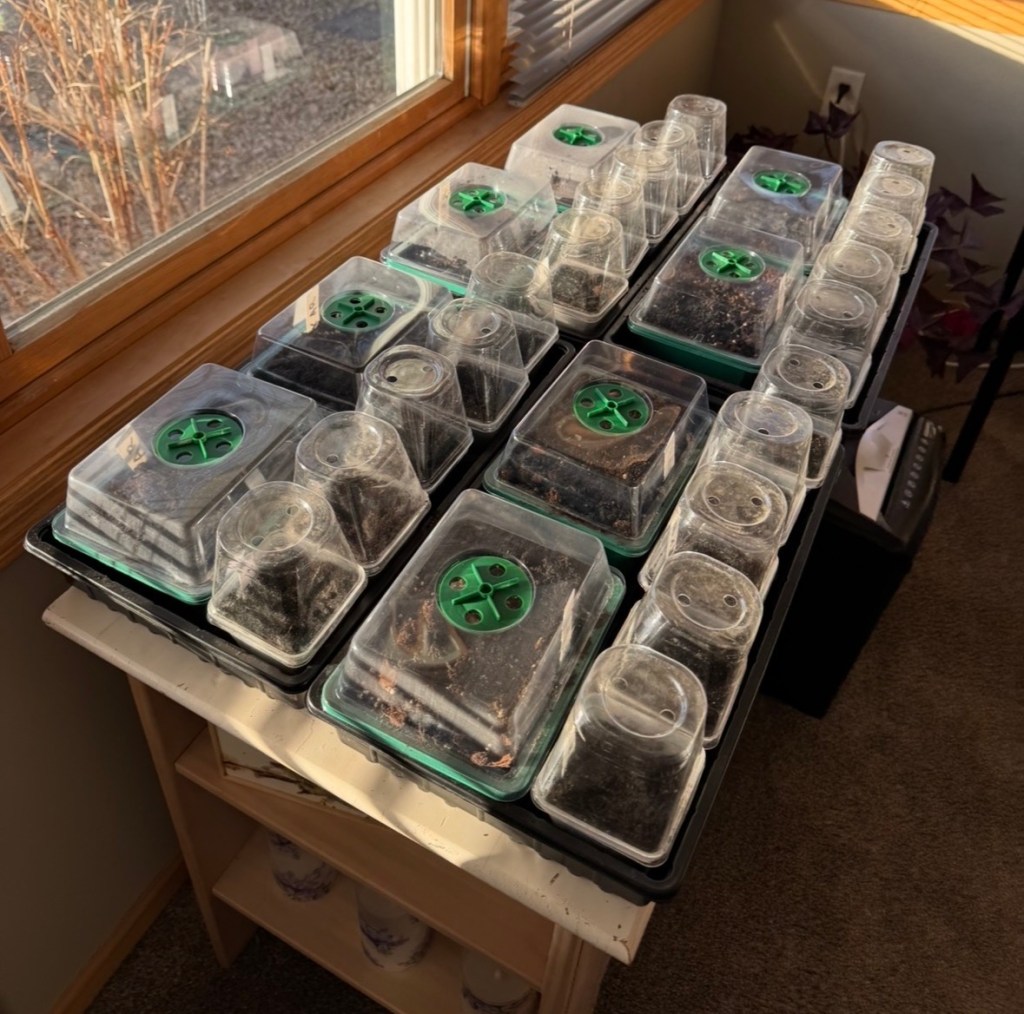
Well, I was going to plant just a few 6 cell seedling trays and put on the greenhouse covers but I got a tad ambitious today. 84 of the daylily seeds are now planted. Still a lot to go, but it’s a start.

Today’s planting work was exclusively with the Autumn Red crosses. And 3 Autumn Red self-seeds 😉 I will stop there until last frost has passed. The bulk of the daylily seeds always get planted then, and that is my favorite way to handle the seeds. Then they go directly into the seedling boxes outside and get way more sun 🙂

It definitely was a fun day. An accomplishment day. It was also a very confirming day. Every priority and decision I have been sharing regarding the daylilies was reinforced.

My best decision, hands down, was all the research and documentation work I tackled over the past year. It saved me from a lot of stress today. Throughout the day I found myself thinking that if I had not done all that work, I would have been sunk. It was just way too much to go on memory and pictures and a few journal notes like I used to. The practice of ongoing research and documentation will be a keeper, even though it is extra work. The payoff is huge.

Secondly, I absolutely confirmed today that both the scope and the volume of what I did for crosses last year was too far for my ongoing comfort level. A stretch year, ok. I was still toying at that point with a number of ideas I have now counted out. I am not going to start a daylily farm lol. I am not going to ship daylilies around. I am not going to grow volume and sell at farmers markets – egads! No! Just No! Not at all me. So today as I was planting dozens of seeds from the same daylily cross, those activities went even further to confirm my decisions are right-sized and me appropriate. I now have a pretty good idea of what I can do with crosses between what we have – what consistently makes seed, which daylilies play well together … Now I am looking to see what I can do with specific crosses at low volume and then working with the results of those crosses and also the self-seed. I like to putz, and putz I shall do going forward 😉

Third, after I researched more on historic daylilies, and the intersection of what I like for form and color, I am super comfortable with where I am with the historic idea at this point. If I can get some daylilies older than Hyperion, that would be great, but I’m still also good if I don’t.

So, indeed, putzing is a great word to describe what I envision going forward. That, and seeing if I can finally get a garden going up north. I think if anything will make it, the older daylilies should. The Autumn Red seeds are planted. If they come up, some will go up. Little by little.

I hope you have a great week. We have plans with one of the grands tomorrow, so no Tuesday post. My next post will probably be Friday 🙂

Be Blessed!
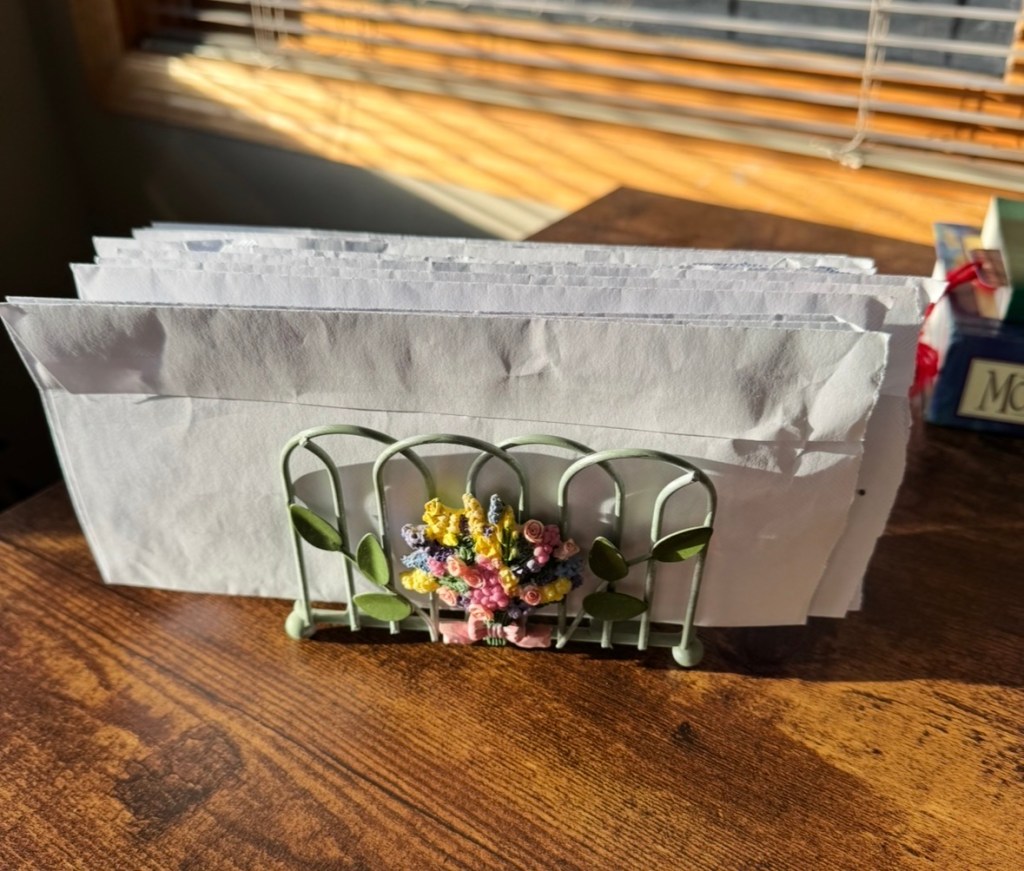
Empty seed envelopes!

Happy Spring!

The temperatures are rising, the snow from the blizzard is melting big time, and soon, very soon, seeds will start to get planted. Sadly, I don’t think the old Malva Zebrina Hollyhock seeds are going to germinate, but that’s ok. I supected they were too old.

For now, we wait. But not much longer. And then we will be very busy indeed.

Have a wonderful weekend!

Be blessed!

Historic Abundance

We are past our most recent blizzard, past our sub-zero weather last night, and now we are starting to see larger numbers of Robins. It is a wonderful moment on this St. Patrick’s Day, and I am hoping that Spring truly is beginning.

And so, after the long wait, with lots of computer time to keep my mind “garden happy”, we will soon be starting to plant daylily seeds. A few weeks yet, but soon.

While I waited for this time to arrive, I continued to work on the Historic part of what I want to do with the daylilies. I recently took the time to look up the introduction dates of our daylily inventory, spurred on by the discovery that Autumn Red is 85 years old. I found that many of our daylilies are technically considered historic. The AHS (American Daylily Society) classifies a daylily as historic if it is 30 years old or older. Most (all but four) of our daylilies are older than that, and some are quite a bit older. A large portion of our inventory has been crossed, which, of course means that my work with historic daylilies is technically much farther along than I thought. I still want to work with old, old, old daylilies, but wow! Now my mind is full. And I needed to know more. So, I dug deeper.

Along the way, researching parentage of the older of the historic daylilies, I also discovered that ploidy was often changed with a thing called colchicine. What in the world!!! Yah, I can write on that in another blog, but colchicine is responsible for getting us tetraploids, and since South Seas (a tetraploid) is my best self-seeder, and the entire focus of my 2026 planned daylily crosses, I then started to wonder – do tetraploid self-seed daylilies ever go back to their farther back parentage and then change ploidy, back to diploid? I know some of our South Seas self-seed results are pod fertile, and that they cross with tetraploids, because I did crosses and got seed. Whether that seed goes to seedling will be seen in a few months, and bloom years out. But this year I only plan to add four daylily crosses, and they are all from South Seas self-seed. Two of them are with Hello Yellow (whose parentage is unknown) gasp! And one is with two South Seas self-seed. Oy! What am I doing? And will I start creating situations where ploidy changes? I need more research! 😉

And that is what I have been up to.

There is so much to learn! I think I will probably be very busy researching until the daylilies start to bloom. That is a very good thing.

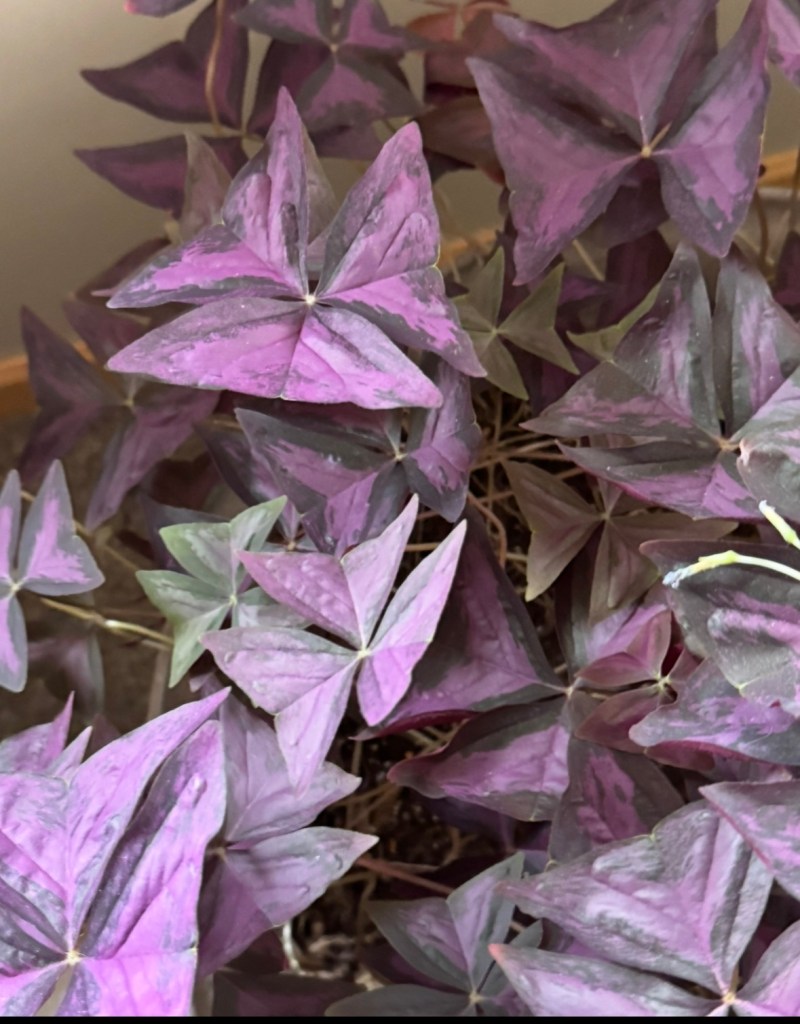
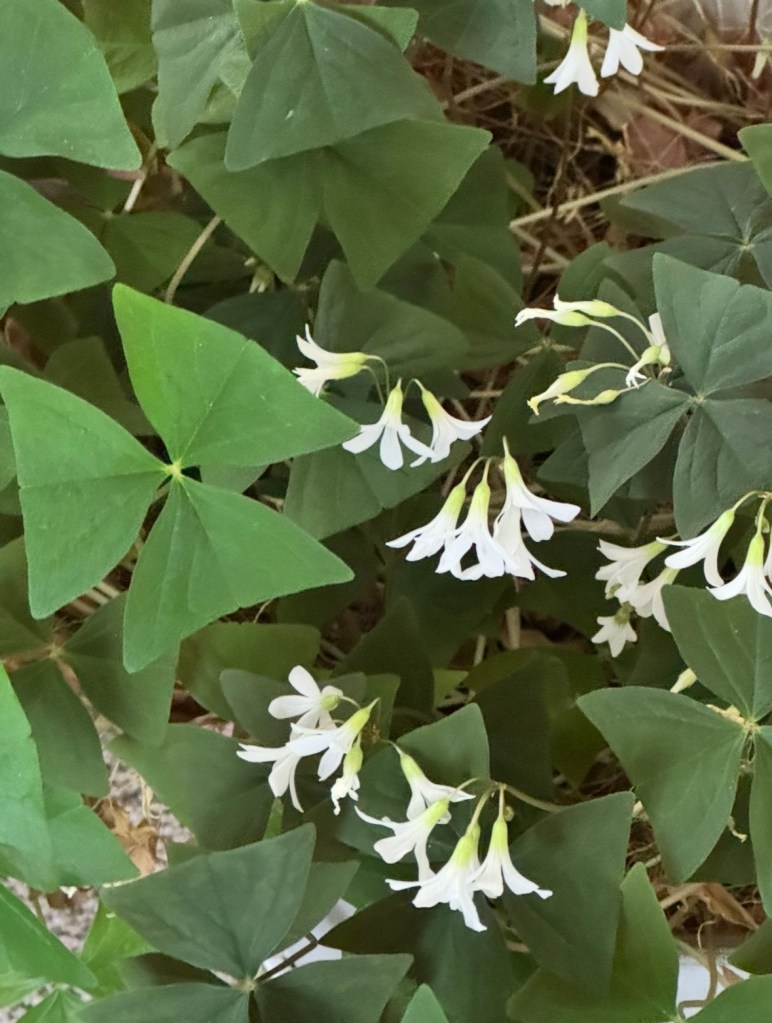
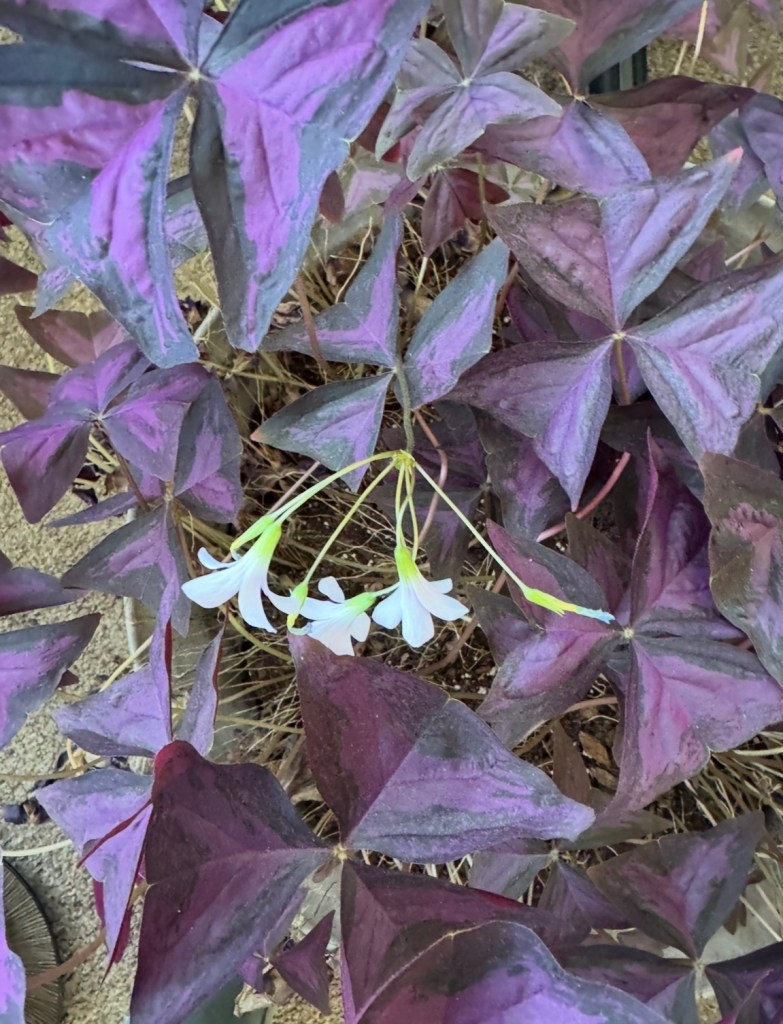
In the meantime, todays pics are holiday appropriate – shamrocks that I over-winter.

Be Blessed!

Screenshot

Good belly laugh

The topic of decluttering and use it or lose it is always something I give attention to. Simplifying is very freeing. In addition to physical space, it also frees up mind space.

As I look back at old garden pictures and documentation it is fun to remember the different things we have had in our gardens AND it is nice to be where we are. I remember the days of fighting aphids on huge hibiscus, trying to get forced bulbs to keep from falling over, starting shipments of seeds that looked awesome in catalogues and never gave us one single vegetable, and worse, some flower seeds never even germinated. I am glad to have simplified and to be done with all of that. And I will be comfortable to finally make the call after Easter that the Malva Zebrina Hollyhock seeds were stored too long and were not viable. It is time to get to just daylily seeds. Not just this year but going forward.

I am also very happy I had time this week to make a totally new, much more simplified configuration of my garden tracking spreadsheet. Everything that needs action is in there and I can pull from the one data sheet to make pivots for specific views. That is nice, and a long time coming. Lots of data, lots of iterations.

And after a dozen hours poring over old notes and old labels and packets and photos, the only unknown left is the parentage of Hello Yellow. Something tells me that Hello Yellow is having a good belly laugh and that I will ultimately find out it was a Purple D’Oro self-seed that went to its parentage of … Stella De Oro. We shall see. That would not make sense, as it has created seed with a cross with Just Plum Happy, a tetraploid. But, I guess, it would be belly laugh funny. Given that I am not a Stella gardener.

We are forecasted to have a pretty substantial snowfall this weekend. I am thankful it seems the mass arrival of robins has not yet occurred, and I am thankful I disciplined myself to not start daylily seeds in trays. It’s not time yet.

Screenshot

Have a wonderful weekend!

Skip ahead

Happy Tuesday! I hope you are having a good week so far!

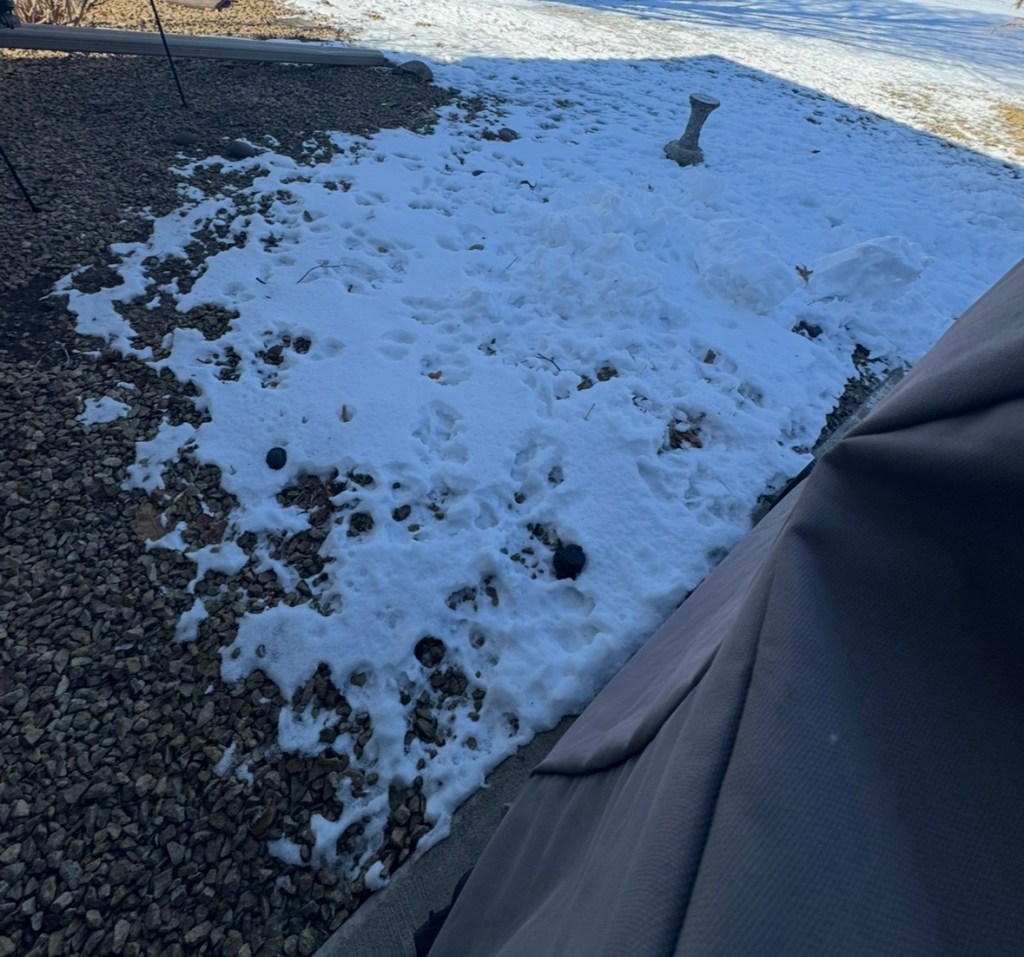
We are definitely in the march to Spring. Last Friday night we had a good ’ole thunderstorm. Early Saturday morning we had a snow globe snow fall. Saturday afternoon the snowfall was well on its way to melted, and by Sunday morning it was gone. The snowplow pile from the whole winter is just a shadow of what it was a few days ago. And although we will have cooler days mixed in, and even some snow, Winter 2025-2026’s time is coming to an end.

Saturday was the perfect time to knock out some remaining garden questions I was hoping to resolve.

Over the years I have saved a lot of info from older versions of the gardens, along with lots of daylily tags (dozens). Saturday as the snow swirled around, I pulled out those saved treasures and started to sort through them. By midafternoon, everything I no longer wanted to retain was in the trash, and I was researching my remaining daylily identification questions.

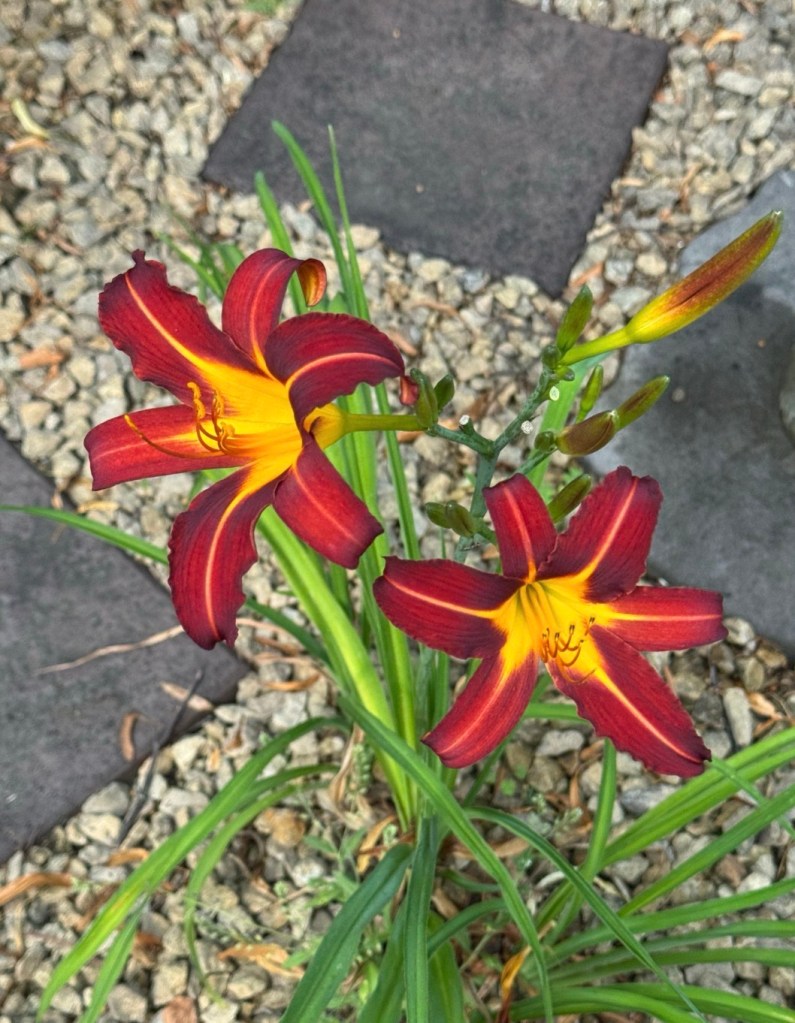
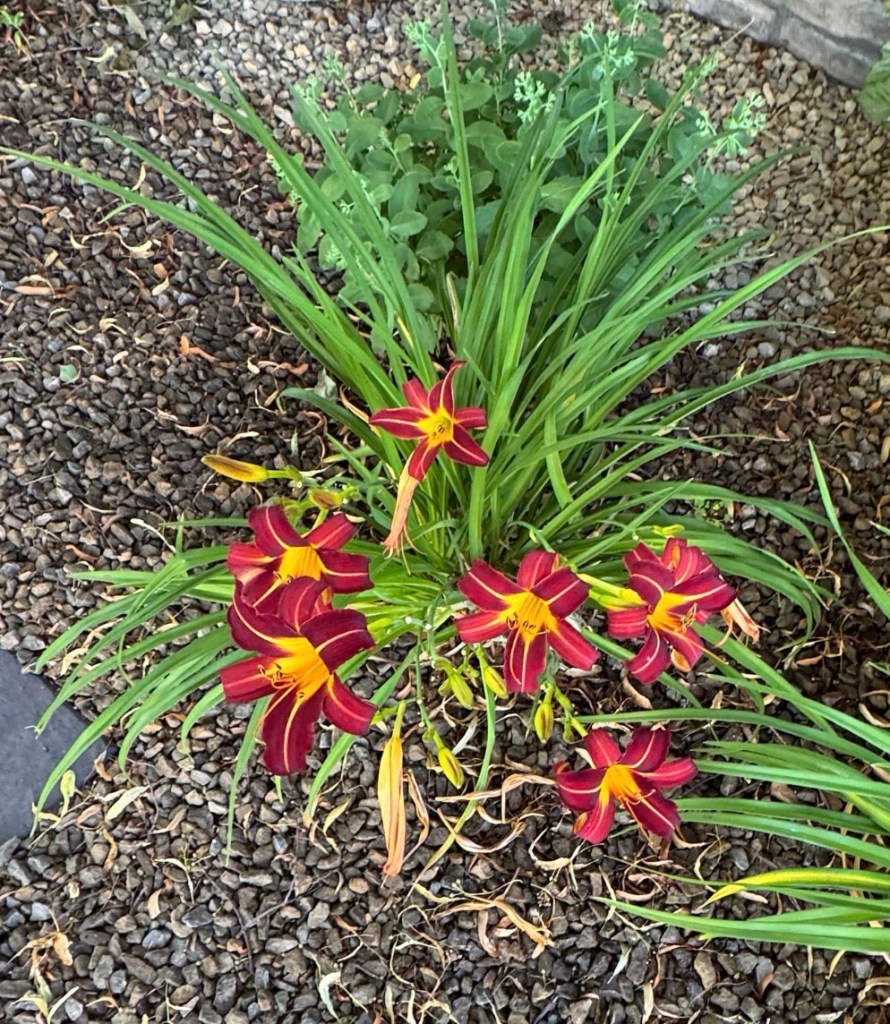
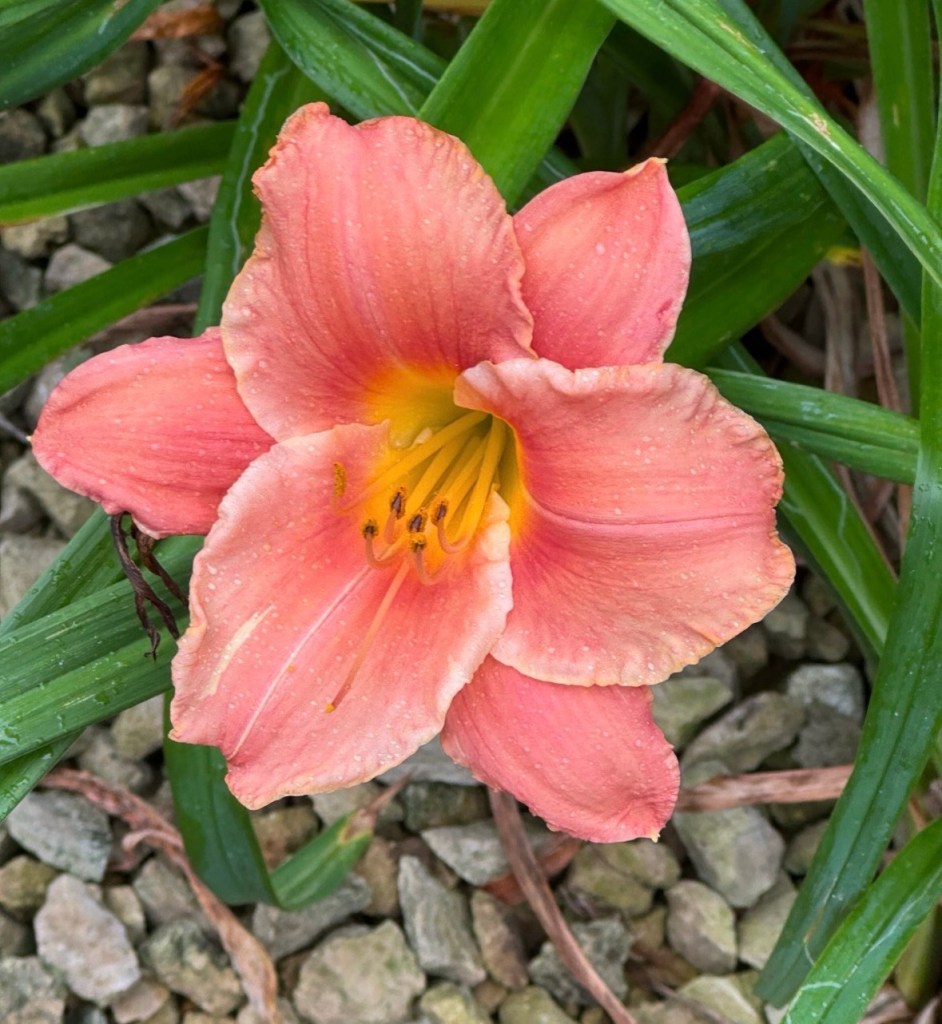
As I went along, I realized some pretty great patterns were already established in our gardens. Things I had been doing for years started coming forward as additional pieces of the future plan. First up, the daylily I have been calling “Red” is actually ‘Autumn Red’. I bought and planted them, oh, probably 20 years ago. The packaging is long gone, but at one time I did a search by pictures alone and pretty much figured that is what they are. Saturday afternoon, after I had excluded all other options from my saved tags and data, I went on a deep dive of online sources and finally made the call. Going forward “Red” shall be referred to as ‘Autumn Red’. The curled petal tips, the yellow mid-ribs, confirmed a diploid, confirmed pod and pollen fertile, bloom size and scape height match, along with mid-season, diurnal, and rebloom. And it looks exactly like the pictures. Exactly.

What caught me off guard, and was kind of a delightful find, is that ‘Autumn Red’ is quite old. It was registered in 1941. It is 85 years old this year. Not hundreds of years back, but ‘Autumn Red’ is definitely not a modern hybrid. And, I am already a few years into hybridizing with ‘Autumn Red’, with 5 successful crosses to seed, as both pod and pollen parent in 2025, and a set of seedlings from a 2024 cross with ‘Autumn Red’ that I planted in our gardens last year. Now we wait to see those blooms.

I did those crosses on a whim a few years ago, proving out ploidy. That work turned into a pattern, and now it looks like hybridization with ‘Autumn Red’ is going to be the only path. Self-seed is most likely not a go. It is stingy on producing self-seed and I do not have any “Autumn Red’ self-seed that has gone to seedling. It does reestablish well from division, and I even have a note that I re-planted a single fan. I forgot about that, but it kept on doing its daylily stuff, and it bloomed last year. It seems “Autumn Red’ is great at making seed from intentional crosses and great at going to seedling from that seed if I stratify, bring the germinated seeds to seedling, and plant those seedlings into the ground in late summer. And so, that will be the ‘Autumn Red’ daylily scope.

Unfortunately, with that. I am now back to working to bring all of the ‘Autumn Red’ seeds to seedling before they go up north. Maybe I should dedicate the little 6-cell greenhouse trays I just bought to the “Autumn Red’ seeds. More likely, though, I will plant 20 same cross seeds per medium pot and whatever goes to seedling will go up north – minus a small sample for here.

As for additional results of culling through all that old daylily data, I realized “Unidentified Yellow Freebie” is most likely the ‘Schnickel Fritz’ I bought in 2020, and quickly planted, amidst a lot of other activity in our life at that time. Unfortunately, it is not at all what I was looking for, and also unfortunately, it did poorly last year. I think it is failing in its current location. Poor ‘Schnickel Fritz’ may say goodbye. I wish I had that money back lol.

As for “Peach”, I saved packaging from ‘Romantic Rose’, and that may be a match, but although ‘Romantic Rose’ meets a lot of the criteria of “Peach”, “Peach” is quite a bit lighter in color. That can happen, but I am not quite ready to make that call. We’ll see what the color looks like this year.

And, also unfortunately, Hello Yellow’s parentage will continue to remain a mystery. I definitely planted those seeds. I just have not been able to replicate it from my less than stellar retained data. But Hello Yellow stays. For sure. If need be, it can just be its pretty self.

20,000 foot view – We learn as we go. I have shipping lists and a plethora of tags that reflect my exuberant anticipation of a delightful daylily garden. And I got it. I just didn’t initially realize the documentation needs for the scope of the auxiliary hobby that evolved. Hybridizing daylilies definitely crept up on me. And daylilies plopped into the ground are great for enjoying. Not so great when life was super busy when you planted them, and your notes were hasty and sketchy.

I hope these shares are helpful, or at least fun to read 🙂

In the meantime, I am now only allowing myself 4 (not 5-7) new crosses in 2026 – until I get the scope of this daylily hybridizing thing stabilized. You guessed it – all of the new crosses this year will be with South Seas self-seed blooms. So, no new ‘Autumn Red’ crosses. And, in fact, no new diploid crosses at all.

I hope you have a good week!

Be Blessed 🙂

The year to start some daylilies up north

I have a lot of harvested daylily seeds from 2025. If even half of them germinate and go to seedling I will be in trouble in a few years when they start to mature. I have run out of room.

But I knew that last fall. I knew I had harvested 521 daylily seeds and did not have room for them. I knew I didn’t even have enough seedling boxes to germinate and bring them to seedling properly. I have been slowly, steadily, chipping away at a plan.

99 of the 521 seeds were self-seed from the historic cemetery, to be added back this summer. 78 of those seeds were from the existing Stella De Oros there. The Stella De Oro seeds will be direct sown in groups in that garden. I just don’t have capacity in the squirrel protected seedling boxes to germinate those. The other seeds I will attempt to bring to seedling in the seedling boxes, and then transplant them in late summer, as is my cadence. There are already other daylily seedlings I have added at the historic cemetery in past years, and they did pretty well with that method, considering that garden survives on just rainfall for watering. I have hope for another successful set of additions.

In a perennial garden a plan is needed to keep the plants healthy, not overgrown, and also always have a variety of interesting blooms throughout spring-fall each year. We are going into year 4 with the historic cemetery garden and year 23 at the townhome. As always, some dividing will be needed this year. The seedlings from years past should help to keep things interesting while the divisions reestablish. And the rotation will continue each year.

Just as I love working on the townhome gardens, I love working on the historic cemetery garden. It is a great pleasure to have made a beautiful garden to honor those who are interred at the cemetery, as well as delight the neighbors and passersby. But the historic cemetery is not either of our family’s history. We are invested in this community, but we are the first generation in our family with history here. We don’t own that land. We are not even community property owners there as we are at the townhome. Those gardens could be, or may need to be, moved at any time. They are part of my hobby for this snippet of time. A lovely hobby and a lovely snippet of time. AND, at the same time … it is time to plant our own garden. On our own land. Even separate from the townhome gardens.

It will not be smooth sailing. I failed before at a garden up north. It was a colossal weed patch ending fail from an over $300 investment. Back in the day. But quite a few years have passed. I have been studying the topography. I know the area that has decent groundwater. I know the deer have far more nummies elsewhere. A fence will be needed, for sure, and I already have some heavy-duty landscape fabric from my DIL to keep the weeds at bay. I am telling myself, “These are daylilies. They are hardy. This is the year.” Hopefully they survive. The other option is to feed the seeds to the birds lol.

Up north I will start with 80 seeds from the 116 that I have of the cross between the red daylilies and Pink Tirzah. It is the opposite cross of what worked to make seed for the seedlings I named Molly Cowles in 2025. I have a name in mind for the new cross already but first they have to succeed up north. It will not be easy. I am going to do direct sow just like with the Stella De Oro seeds at the historic garden. But I will grow the other 36 seeds (of that same cross) here at the townhouse, just in case. (Seedlings can be grouped until they crowd.)

And we will see. It just takes one to get a field full in the years ahead.

And with that, the rest of the 2025 harvested seeds will have room in our seedling boxes at the townhouse. We are a go. I have the pots, I have the soil, I have some chicken wire to cover the open seedling boxes and can easily get more. We’re set.

Time for spring!!! Yah, I know. Not quite yet.

Screenshot

For now it is the shamrocks.

Screenshot

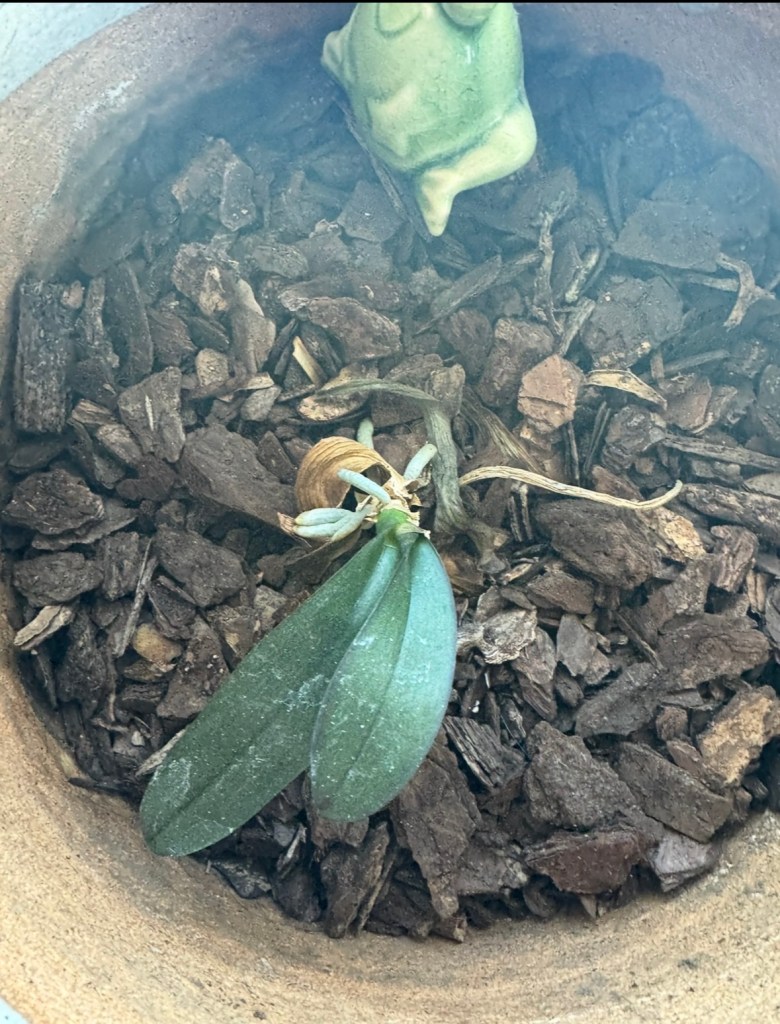
And maybe I can bring this poor orchid back to life.

Screenshot

Be Blessed!

What about Hello Yellow in 2026?

Hello Yellow is a daylily that has bloomed the past few years in our garden at the townhouse. It is from seed I harvested but suspect I mislabeled. Despite multiple attempts to replicate that cross, I have been unsuccessful. I may continue to try to do that in the future, but I need to move forward. Hello Yellow will become ‘sdlg’ (for seedling) for now.

The Hello Yellow daylilies are the first to bloom in our gardens, and the last. It will stay. Absolutely will stay. And it needs some “puppies”. Hopefully 5. And a “Mom” for those puppies. You know where this is going, right? South Seas self-seed anyone? And a little story time.

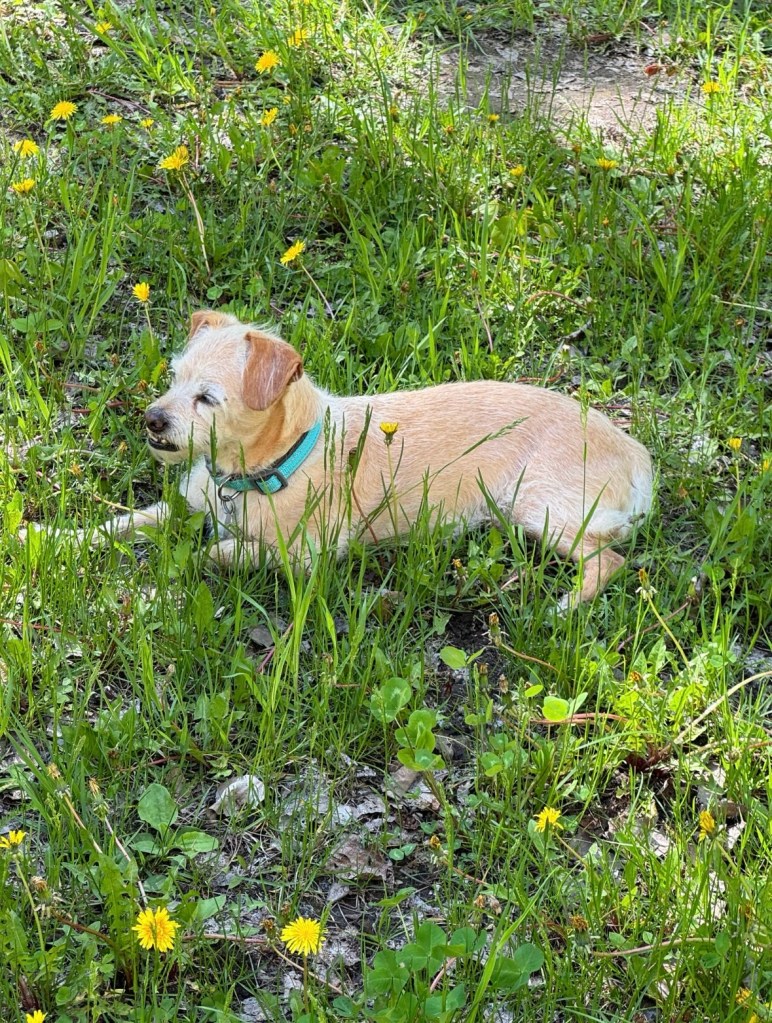
Alert – Now this gets sentimental. In January we lost our last dog, Sandy. He was a terrier mix, probably mostly with chihuahua. We adopted him at 1 1/2 years old as a rescue. We were told someone(s) moved and left him and his girlfriend (April), who was a couple weeks away from delivering 5 of their puppies, roaming around the halls of the apartment. They were picked up by animal control and put into a foster facility with the intention of making them available as rescues. I had worked with someone who also worked with that rescue and told her that if they ever got a border terrier to let me know. I kid you not, we had a planned trip to go adopt another dog, and I got an email from my colleague about Sandy. Sandy came home with me the next day. He was very sad to leave April and the pups, but they were also ready for adoption and went very quickly. And Sandy bonded with me within hours of bringing him to our home. We had Sandy for 14 years. He was 15 1/2 when he passed. He had a very good, interesting life where he was very loved, and, of course, pampered.

Sandy was a very endearing dog. Super cuddly to his peeps, but very spunky with other dogs. It took a bit to get him socialized with our Irish Terrier mix. I ended up between them one day and got a tetanus shot booster as a reward. They eventually made peace, and when our Irish Terrier mix passed, Sandy became an “only”. Sandy had a short stay with our son and DIL where he regained his doggy manners through being reminded of normal doggy protocol by living with their dogs. Eventually he came back to our home and was our beloved constant companion until he passed this January. He spent a lot of time in the gardens with me, and I am certain this Spring I will feel that loss intensely for a while. Time does heal, but it is a bit rocky.

Sandy was a blond dog with Apricot ears. Recently when I was looking through my latest daylily catalogue, I was oh so tempted to order at least one ‘Apricot Sparkles’ daylily and plant it where he used to fall asleep in the sun. I have had ‘Apricot Sparkles’ on and off my wish list for a while. But I held off, not quite sure. And it finally came to me. I want to work with what we have here, from when he was here, and see what I can get with crosses between Hello Yellow and all the South Seas self-seed (peach/apricot) blooms.

I fully realize this is risky. Hello Yellow is an extended bloom daylily, and the pollen is often not cooperative. The blooms open in the evening. But this is a rest and heal year. 2025 was very intense and pivotal. A nothing burger year for hybridizing would be fine. So, I am going to give it a try, crossing Hello Yellow with our apricot/peach blooms from South Seas self-seed. With any luck, in 3-7 years, we will have an area called “Sandy’s garden” where he used to sunbathe – and maybe have 5 new yellow and apricot/peach crosses in that garden. THAT would be fun! And, if not, ‘Apricot Sparkles’ will probably still be around in the daylily catalogues.

Now, about that Hyperion? Historical. Fragrant. Matching the aesthetic I am more and more drawn to. Do we have a peach diploid to cross to? Why yes. Yes, we do! Hmmm. Getting closer to making that call. Setting the components for 2027 and beyond.

Have I mentioned daylily propagation is a long game? I think so 😉

Be Blessed!

The data doesn’t lie

As I wait on spring, and as I garden plan, I am looking at my data. Lots of data. Enough that I did a pivot table last fall.

The pivot table tells me diploids do exceptionally well here at quantity to seedling from hybridization. And specifically, intentional crosses with the Red daylilies and the Pink Tirzah daylilies account for 61% of the diploid seed harvest in 2025 alone. Since I have a fair amount of the same type of seedlings already in the ground from 2024 and since daylily hybridization is a long game, and I am not sure if I will even like the results when they do bloom, if they bloom, I think I can make some data driven decisions there.

  1. I will not do intentional crosses with the Red daylilies in 2026. I will, however, continue to allow self-seed.
  2. Since Pink Tirzah has not produced viable self-seed in our gardens, I want to test that out in 2026. Pink Tirzah will still be a planned pollen parent in 2026, but any viable seed Pink Tirzah pods produce in 2026 would be self-seed.

Those two diploid decisions alone should get me to my goal of simplifying to something more manageable at seed harvest time. Those decisions do not give me pause at all.

With the tetraploids, however, I am going to do something I may regret in future years. I am only going to do crosses with South Seas self-seed blooms in 2026. Egads. I know. But logically, I doubt I will regret that, as I really like the South Seas self-seed blooms I am seeing so far, and there are quite a few more I am expecting to bloom this year.

So that’s it. A simplified 2026, and one that pulls me farther down the self-seed path.

We shall see how it goes 😉

South Seas self-seed blooms Part 2

Screenshot

The farther I go down the daylily propagation path, the more curious I get. That is how scope creeps, but also how experience grows. It is a balance. I am finding my parameters.

As I have shared, daylily self-seed harvesting, planting, and growing to bloom is really appealing to me. I worked lots of years with large amounts of data, and am pretty comfortable with analysis, but nowadays I like a little bit closer to granny rocking chair patio relaxing. Thinking, always thinking, but closer to appreciation, and reflection. Specifically, closer to releasing things with volume or timing stress. Creative? Yes. Absolutely, but lower key creative. Helper creative.

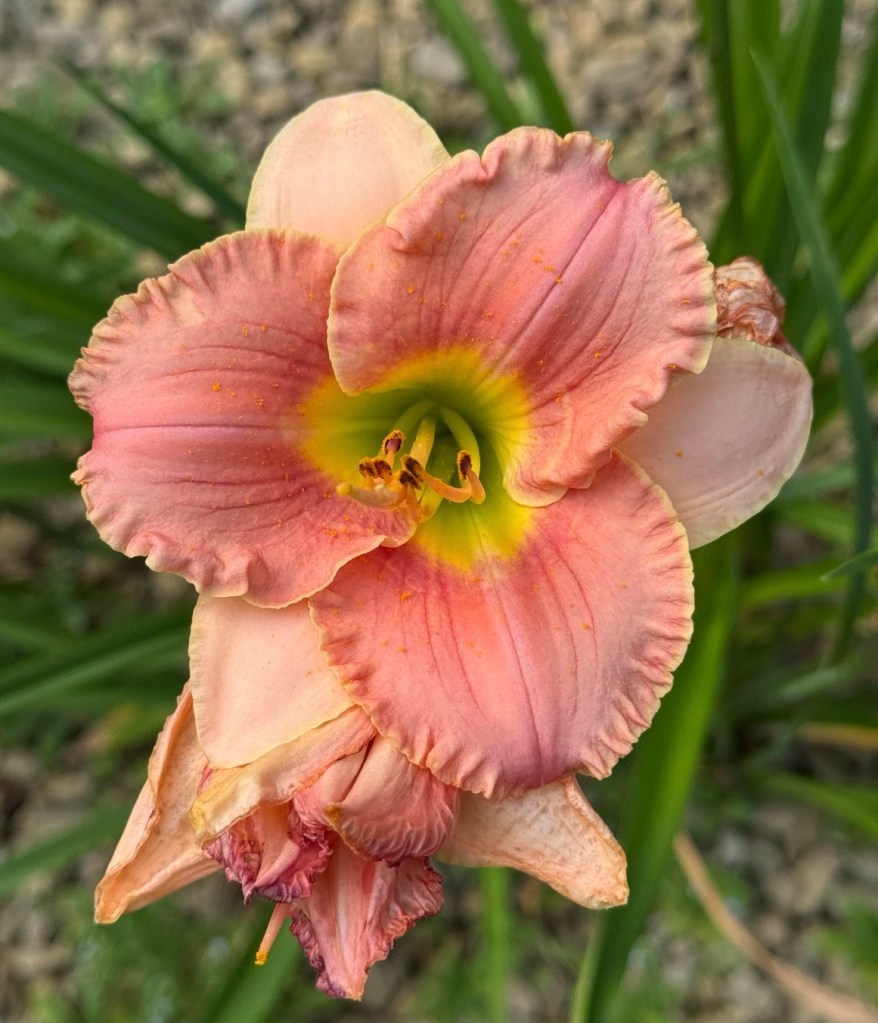
The South Seas self-seed blooms pictured above are super interesting. Notice that the coloring is quite similar, but the features are quite different. They are from the same year’s harvest, but, because I previously stored self-seed all together by daylily type, not individual pod, the pollinator efforts and the conditions may have been different (or not). The resulting two blooms pictured above could have come from the same pod, different seed. They could be different pods, same day. They could be same day, different pods, different pollinators (butterfly, bee …). They could be same day but different weather throughout the day. They could also be different pollinators, different conditions, days apart. Oy! And I could track some of that, but why?

For hybridizing, I do much more tracking. And going forward, how much I am willing to track will depend on how narrow I bring the scope. 5-7 various types of crosses sounds really good to me now, but if I start to try to replicate certain features, or eliminate them, more data may be helpful. However, for self-seed, I am not the pollinator (gasp!). And doggone it, the pollinators are notoriously bad at entering their contributions into my spreadsheet. They do not identify who stopped by, when, or to which bloom(s).

A little more relaxing and just enjoying for these is the message and the theme. That balance sounds good to me this year.

I hope you enjoy today’s pic, and I hope you have a wonderful day!

While we Wait

While we wait for Spring to arrive, above is a pic of some of our oldest surviving Asian lilies in the garden. They bloom in June. They are fading each year, and I won’t replace them, but we enjoy what does bloom each year 🙂

The same day I took the pic of the Asian lilies (above), the first daylily of 2025 bloomed – Hello Yellow (below).

Hello Yellow is a mystery. It is from seedlings I planted from seed I harvested from our garden, but it does not match up with my (admittedly rookie at that time) documentation. If I didn’t know better, I would have thought it was a Stella de Oro volunteer, but I planted the seedlings myself, from our harvested seed, and I do not have any Stella de Oros in our townhouse gardens. Additionally, Stella de Oro is a diploid, and, based on how Hello Yellow is typing out with crosses that make pods that go to seed, Hello Yellow is a tetraploid. A very picky tetraploid, only making seed from a cross to one specific type of tetraploid, but failing to make seed from crosses from many diploids. Seed being the delineator. It does make pods from crosses from diploids, and they do well for sometimes quite a while, but eventually the diploid cross pods fail. To my great disappointment I might say, because if they did succeed, I would say Hello Yellow was a one in a million cross between what my rookie documentation said – a cross between a diploid and a tetraploid. But alas! Highly unlikely successful cross. And you can bet I have tried to replicate it. But nope. Hasn’t worked.

Compounding my attempts to resolve the mystery, a bunny and/or a squirrel ate the only Hello Yellow pods that were kind of making it in 2024. But there is hope – I have two seeds from the Hello Yellow crosses. We shall see. And you can bet Hello Yellow will get priority for the few crosses I do in 2026. Already in the plan.

Even if I cannot reproduce Hello Yellow, it will stay in the garden. It is quite unique – it is an extended bloom daylily (blooms in the evening and stays blooming until the next evening), and it is the longest blooming daylily in the garden. In 2025 it was the first daylily to bloom, and it also ended up being the last.

Enjoy!