Today’s pic is of my husband’s favorite daylily – Just Plum Happy. It is so close to blooming. Probably tomorrow. And when it starts the garden is super-alive for a whole month.
The buckets and plant pots that protected the daylilies, hostas, and sedum during the roofing project are off, but will have one more appearance in the next couple weeks when the gutter and fascia work is going on.
After that very long, hard to wait but dreading the potential collateral damage May, it was great to get back in the garden.
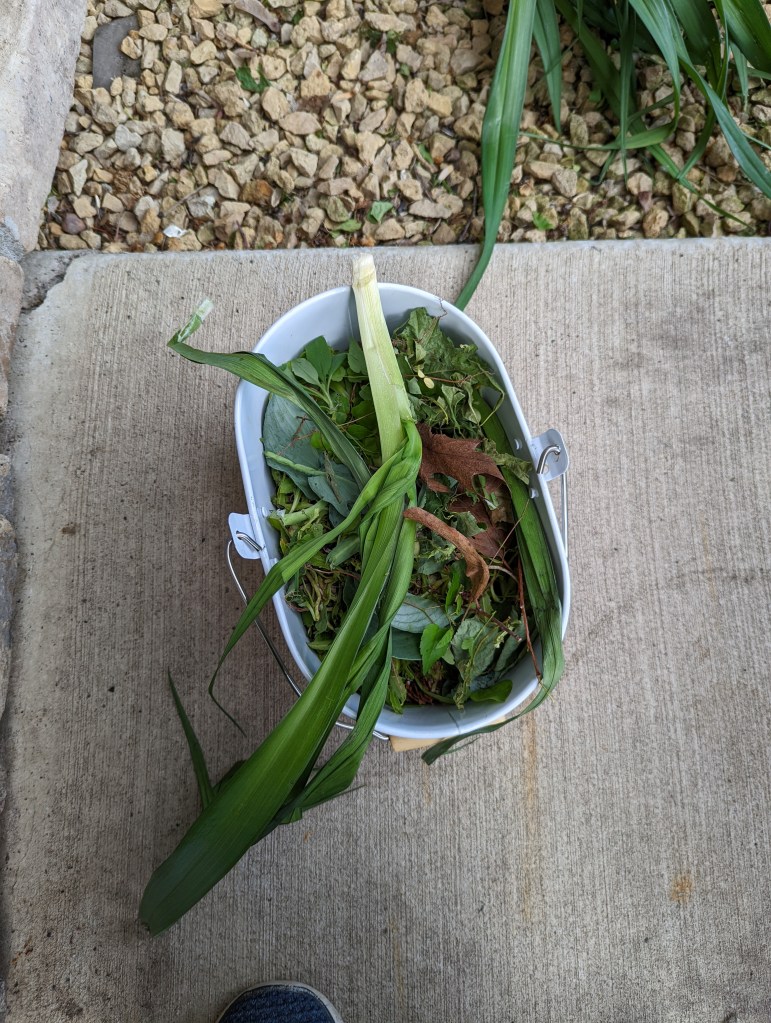
First up was removing the remainder of the tree seedlings. That got done yesterday. The total of buckets this year was down from the past few years – 5, compared to the usual 7. Hurray!
The dying tulip greens that got smooshd also got pulled. They were done anyway. sadly, also a daylily piece from the project smoosh, but next year …
Then the pollinator created, harvested daylily seeds from 2021 finally got planted. Another post on that coming soon.
The sunflower seedlings also all got pulled. They were an experiment, but the rolling roofing dumpster made that decision for me. My husband was very happy – hahaha!!!
Today my thoughts turned to the front entry garden. It needs love.
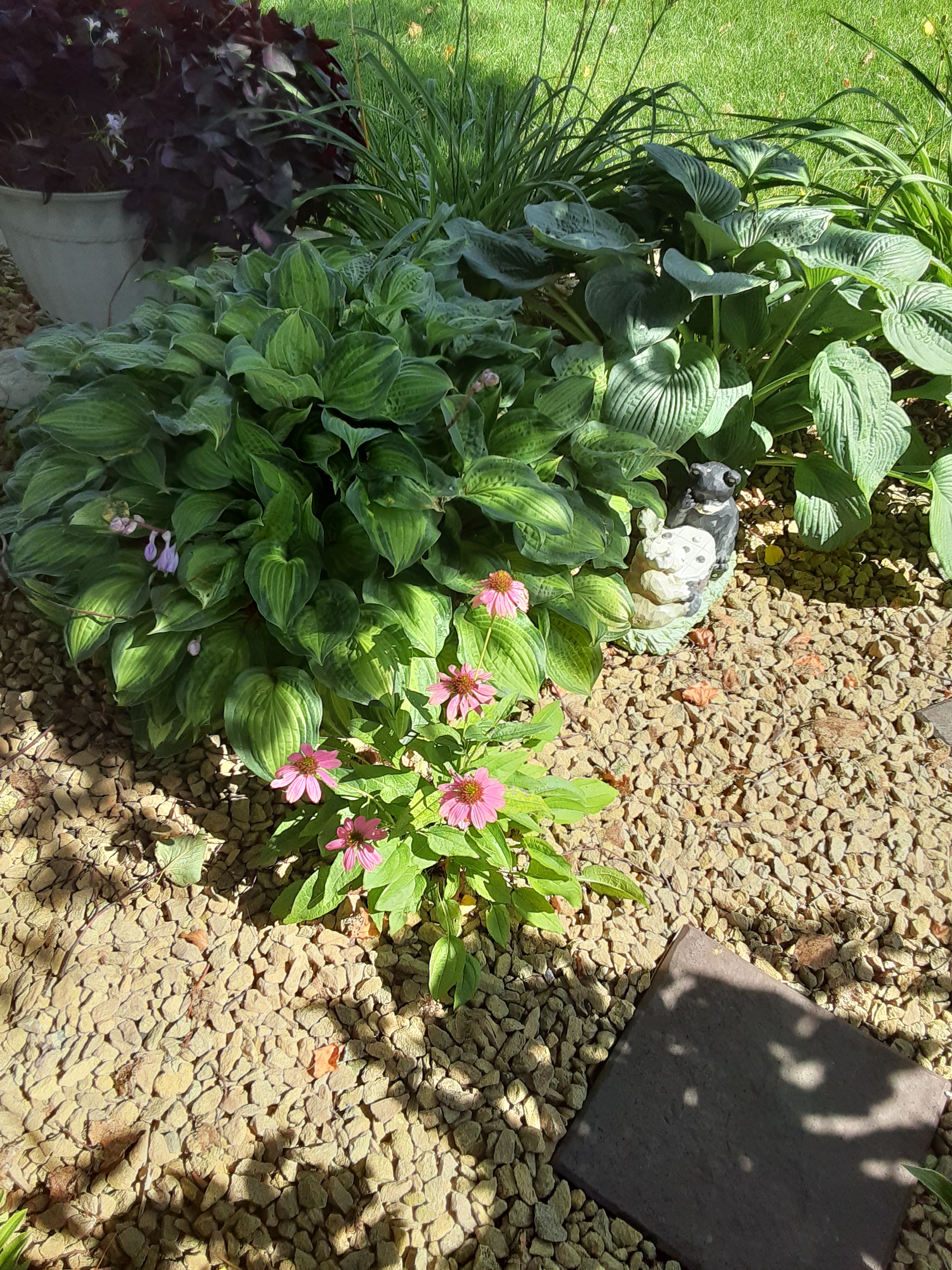
One of the Blue Mouse Ears hostas out back also got a little smooshed with the roofing project. That was ok because it needed to be divided anyway, and the flowers get hit by the sprinkler, so moving the whole plant is probably a good idea. Blue Mouse Ears are the perfect size for the entryway area, and with dappled sun due to the Amur Maple they will look great for years to come. That area also had the remnant of a Rainforest Sunrise hosta I mostly moved up north, but it got a bit smooshed too so this will not be it’s shining year. I had to cut away the smooshed leaves. No worries, it will pop back next year. But besides a center hosta and the few Blue Mouse Ears divisions, and the low growing sedum, what to put in that area for color? No to annuals I think. Daily watering – ugghhh. That is for bird baths – haha! No to sedum divisions – the two low growing sedum are enough. Asian lilies seem to die out there, and the stems are not great after bloom either. They require layering to cover those up. So it may be daylilies. I am concerned about the dappled sun, but maybe. Still contemplating.
Finally, the center of one of the back garden areas was pretty bare. Plenty of baby forget-me-nots that will bloom next year, but it needs something additional. I pulled a nice daylily from there to go up north last year, and right afterward I saw how bare that area was and regretted it. Bummer. So that area needs love. But low investment. Trying out the green shamrock. Not sure. Might need a trip to the garden store.
So that was the weekend garden fun. Super enjoyed it.
As a student, I was definitely not drawn to history. Seemed like an awful lot of talk that may or may not be factual. Math, now there you have something! My love of math turned into a love of data. I am an analyst at heart, and by trade, with a whole lot of love for data driven project planning and implementation (“DO”) in the mix. Analysis is for a purpose – to inform on a course for future “DO”. And, yes, at the root, we analyze data based on history.
I fell in love with a history and political science guy, oh so many years ago. What a pair we have made all these years. Me wanting to dig deeper, find patterns, analyze trends, and him exposing me to things in history and politics which, to me, often make absolutely no logical sense.
Along the way I got interested in gardening and was particularly interested in the gardens at historic forts we visited. Those made sense – food, beauty, for the family, for the community. I used my love of data to study what would work in different areas of our yard. I started building out gardens. I found I liked plants with history, plants with a story to tell.
Alas! The kids grew up, we made the bumpy transition to townhome living, and my sprawling, sometimes out of control gardens came to an end. Townhome bylaws. But my analytical mind said why not petition the board to put in our own landscaping? What’s the worst they can say? No? They said yes – three times – initial plantings to augment the shrubs, and two expansions.
I have pretty decent gardens now at the townhouse – ones that kept my gardening mind busy for 18 years, gave me 9 months per year of exercise, and one that neighbors and friends say they enjoy. Remember we garden as much for others as ourselves. Wherever we may be.
We have also spent a couple decades now of time in northern Minnesota, and it is me who digs into the history there. It gives me perspective, appreciation of a much more rugged, challenging time, and really makes me appreciate all the incredibly hard work, personal sacrifice, and an attitude of resourcefulness that was exemplified in that time. It is a thing of beauty that explorers can come to areas that are maintained for them, purely enjoy, spend little to no money, experience time away from the stress of the city, and then drive away with no committment to better, or even maintain it. The “right” to enjoy all that now is because of all the “DO” respecting nature, yet making that beauty accessible, that was forged by those before us, and is done on a continual basis on our behalf . I am grateful.
And now we come to my latest thoughts. On my micro scale, I always wonder what positive, lasting, move forward “DO” I can contribute to continue what others before us have accomplished. I like to do that through gardening. I love to leave tiny trails of garden love and share abundance. I am reasonable with what can be used, and cognizant of what I can physically accomplish, but I still love to share and “DO”.
So I have a friend who quietly goes about this. She researches history, she shares her findings, and she and her husband have maintained the grounds of a historic cemetary when others walked away, when there is little money for “DO”. There is money for supplies, but “DO”, like cut the grass, trim the trees – that is volunteer. They fight for preservation of that history in a beautiful way that honors those interred there. Those that gave their lives to country, those that gave generously and served community selflessly, those whose place of interment would be left unmaintained because there is no money attached. And those whose contributions and life lessons would be lost as part of history informing further “DO”.
My friend and her husband challenge me. I have things to give. I have more plants to divide. Plants I won’t use at the little house gardens up north. They might look nice at the cemetary. A little trail of positive contributions. We garden just as much for others as ourselves.
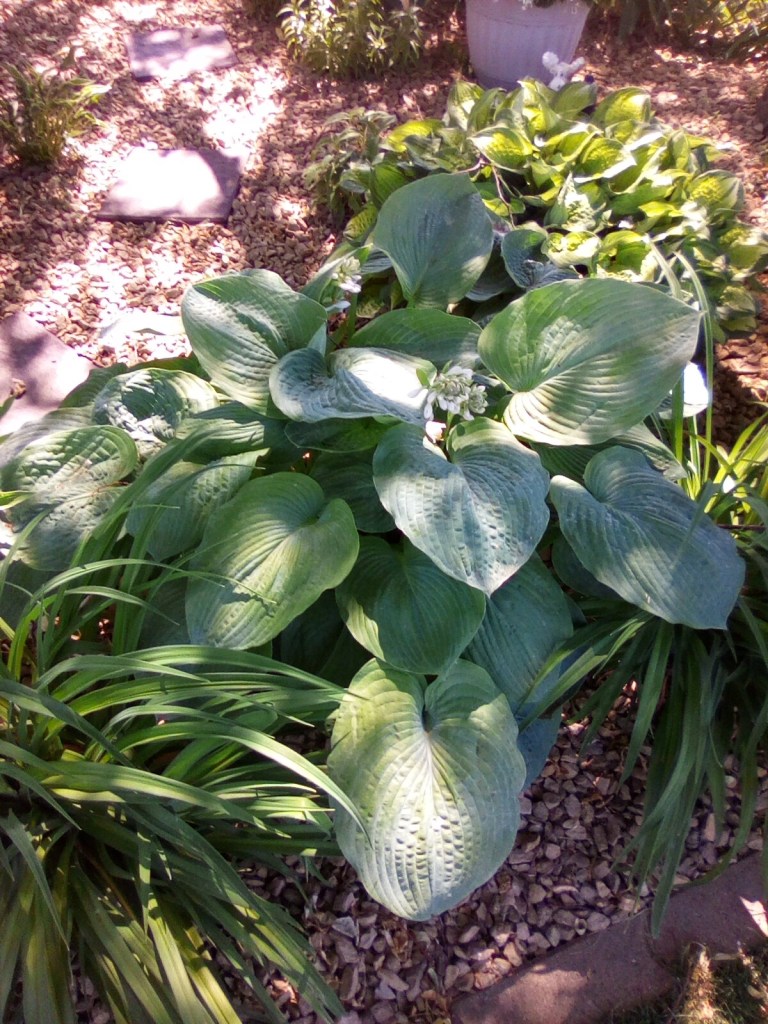
The hosta pictured below can go to the cemetary in the spring, if they want it. It is an “Elegans” hosta. It could be divided into 3 pieces and form a lovely start to a woodland edge garden, away from the beaten path and not adding to any mowing complexity. Some cardboard, three hostas, some mulch. A little “DO”. We’ll see what spring brings as far as additional ideas and “DO”.
It’s the second week of August. The Marque Moon is still blooming, one other daylily, and the hostas. Things are slowing down.
Today I sat outside and looked. What goes to the new gardens up north? What is crowded here? What is overdue for division?
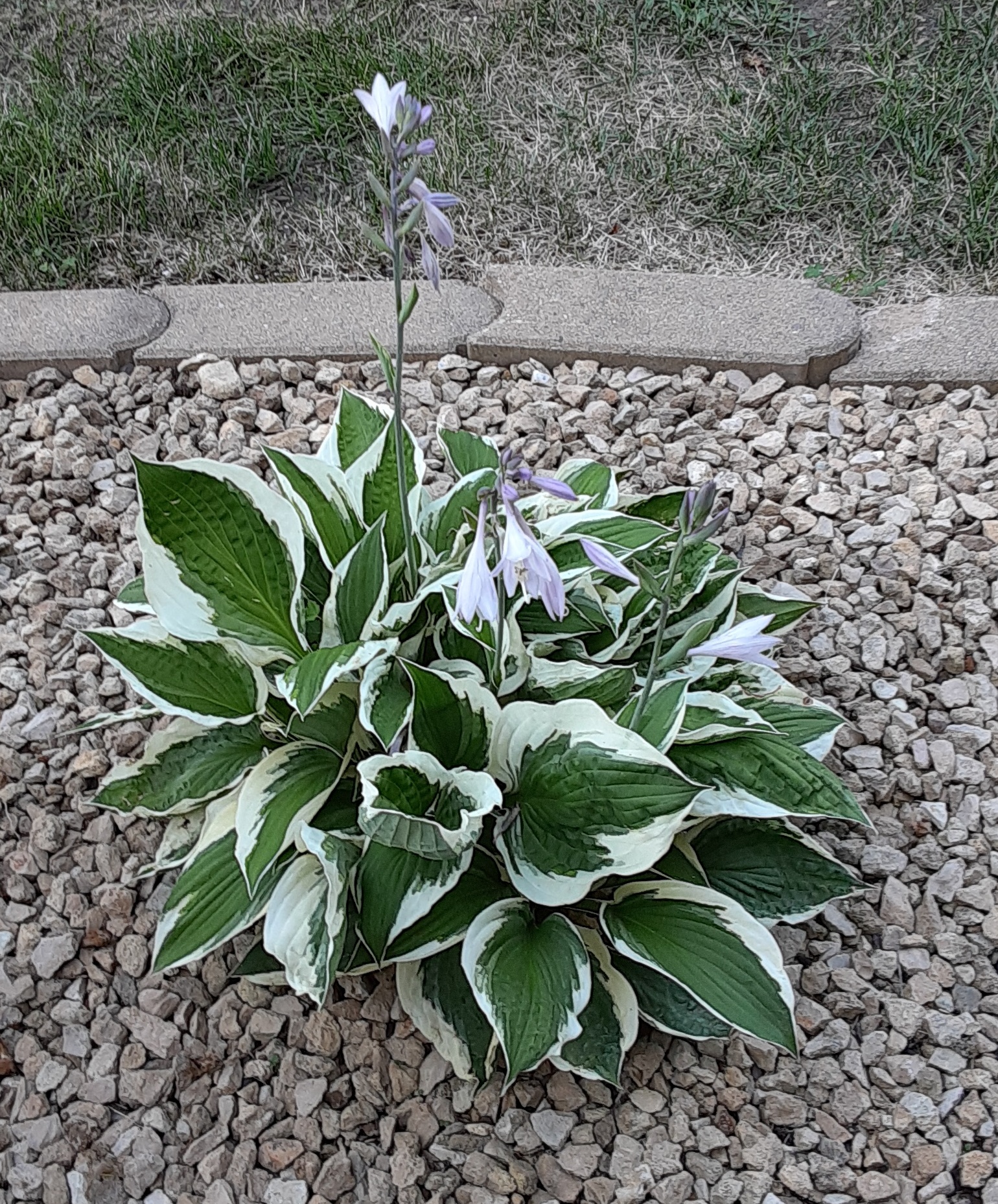
#1 is one of the Patriot hostas. Poor guy. It got too much sun, it was a drought year, and I suspect the lawncare provider oversprayed weed killer – hint the grass is also dead along the pavers.
He needs some love. He needs a change. Maybe somewhere where there’s no need for weed killer. Somewhere where the yards are old and full of mini strawberries and wild daisies – if we let them grow. He might just prefer mulch to rock. We’ll see.
Pack your soil Patriot hosta. You’re moving north.
It was a season of daylily abundance here. Day after day there were 30+ daylilies blooming everywhere I looked. An incredible treat coming out of a now mature daylily garden.
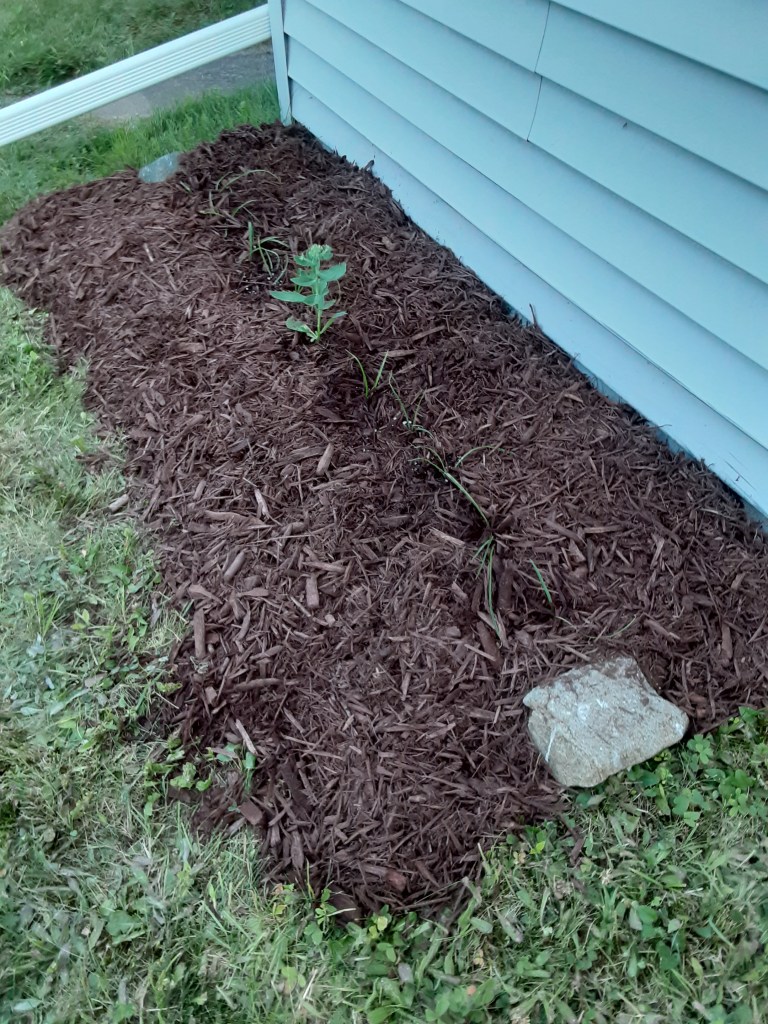
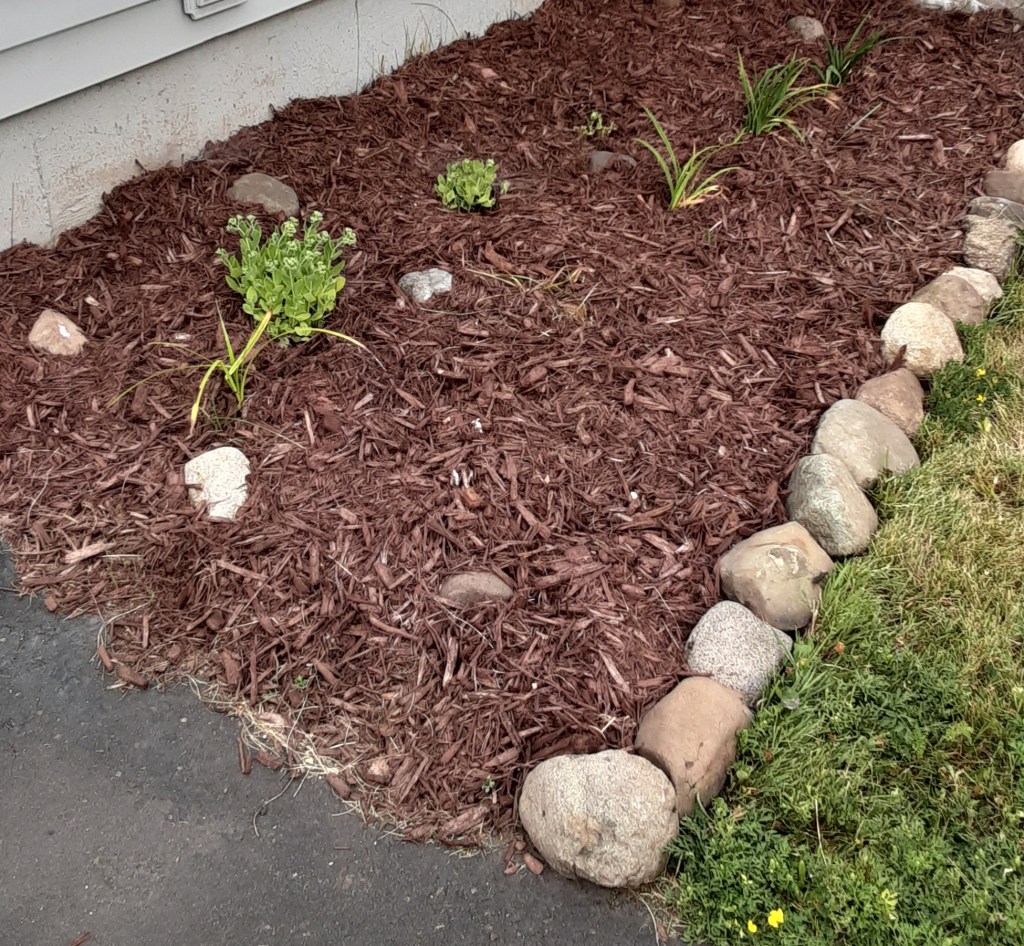
Up north at the little reno house, success! It doesn’t look like much in pictures, the front porch needs love, and the old shed needs paint, but the deer are now staying away from the new plantings. What worked? It could be that our dog likes to “leave his calling card” right outside the “entrance” to the two areas, or it could be the mulch. Time will tell.
So after so much trial and error with up north gardens in the past 3 years, how did I settle on what to do? It was actually a “happy accident”.
The association board at the townhouse (from which I am now retired), decided to have all rock gardens between the garages pulled out and replaced with asphalt. In the rock garden between our garage and the neighbor’s garage there was some history I decided to preserve. There were rocks from a previous neighbor’s parents’ farm that we had used to keep the landscape rock somewhat contained, and there was an alpine current bush that my father had given me 15 years ago that had thrived there, providing many a happy day for our neighborhood birds. The rocks went up north in two batches in big bins (which are now quite beat up from the weight but oh well, it’s for the new garden!).
For the foundation, because the soil at that little house is rocky and needs some gardening love, I chose to do a modified lasagne garden, putting a layer of heavy cardboard down on the very old lawn, adding soil where needed, securing the cardboard in place with the rocks, and putting a good 6″ of mulch on top of that. I worked the cardboard around the plantings. Then I trimmed the areas with the smaller rocks.
Because I was tentative on how well things would work, and because the results of my previous up north gardens were less than optimal, I built in sections. I brought up plants from things that needed dividing or saving from the townhouse gardens. The Rainforest Sunrise hosta needed to come out of one of the areas in the townhouse garden because it was getting crowded. The shrub start was from rootings off the alpine currant that was removed. The sedum were cuttings and divisions. The daylilies were from last year’s purchases and plantings, and the daylily seedlings were from last year’s Purple D’Oro seed harvest.
The plants I put in before I decided on the modified lasagne method took a bit of a hit from the deer, but since I put the mulch in the deer have left everything alone. Fingers crossed.
There is so much more that needs to go up in the next 8 weeks. Two trellises went up because we had to replace the ac at the townhouse. The new ac unit was bigger, necessitating the removal of the trellises. I cut back that clematis, and it will be moved next. Beyond that, the Blue Mouse Ears desperately need dividing, a Patriot Hosta has really burned this year in the landscape rock and drought and needs moving, and I should move some crowded hostas out of the area across the path from the weigelia. That will probably fill the current garden up at the little house, and then I will finish putting the rest of the mulch in. After that, sleep new little garden. Rest up for next year.
As part of deciding to let our gardening “start” up north naturalize, I am trying to decide if we should pull the steel raised bed garden frames and use them in the garden at the new (to us) house.
There is currently no garden or landscaping at all at the new house. It is unusual for me to consider a no garden yard, but I’m excited at the possibilities. There are both sunny and shade covered areas so my current style of sticking mostly to hostas, daylilies and sedum is the plan. Some grading will be needed, as there are gutters but no downspouts – another unusual idea for me – but I have read that some folks think it is better to even forego any gutters and just grade and rock away from the house. For us, the gutters will stay, but whether or not downspouts will be part of the long-term plan is not certain.
During this interesting year, it is very hard to find contractors who are not swamped. People are apparently keeping quite busy with home projects. The earliest we can get a contractor out to grade and rock is mid-October. That means … no landscaping up by the house this year. What to do?
I have already ordered 9 distinctly different daylilies for the new house (couldn’t resist, and I want them in the ground this fall …). They are all ones I don’t have in our current gardens. My pending decision? I’m thinking of pulling the raised bed garden frames from the overgrown – ahem “naturalized” – gardens up north in September, and starting a border garden along the back edge of the lawn at the new house. Last year we also bought recycled tin (from an old barn roof) for projects up north, and I could continue the metal vibe in the new house garden next spring if I still like it.
So, being true to us, potentially reusing the unneeded frames, testing on a smaller scale before going wider, and using the recycled tin if we like the metal look down the road are all wins. Now we’ll see exactly how much work it is to implement. Maybe there could even be a “take 2” on the hugelkulture test?
All just on paper right now. Implementation is a month out. Lots of time to consider all options.
Meanwhile, here, the Rainforest Sunrise hostas (some of my faves) are starting to get their scapes, a lovely red with purple flowers. Out front they are overcrowded. They need to come out of there this fall and be divided. Maybe go in the corner of the yard at the new house, where it gets afternoon shade?
August is one of those months – the daylilies wrap up, but the hostas are super full. The days are shortening, but the morning air is right on the edge of crisp – perfect! The crickets sing and the monarchs start showing up much more, but the robins are scarce again. The feeling starts to turn the corner into fall, but with plenty of warm days still on the horizon.
I have noticed once again I don’t have a lot of mid to late August blooms in the garden. I need to do something about that. I have also noticed I have plenty of weeding and trimming to do in the garden after a couple very busy past weekends, and I need to do something about that.
A few weeks ago I accepted a more challenging role at work, and at the same time we started to really think about how we want to downsize again and work on some more bucket list items. This whole year and all its events have brought priorities into sharper focus. So my thoughts are turning again to simplifying the things we can so we are able to amplify the things that nurture us. It is once again a time of both weeding out and filling in.
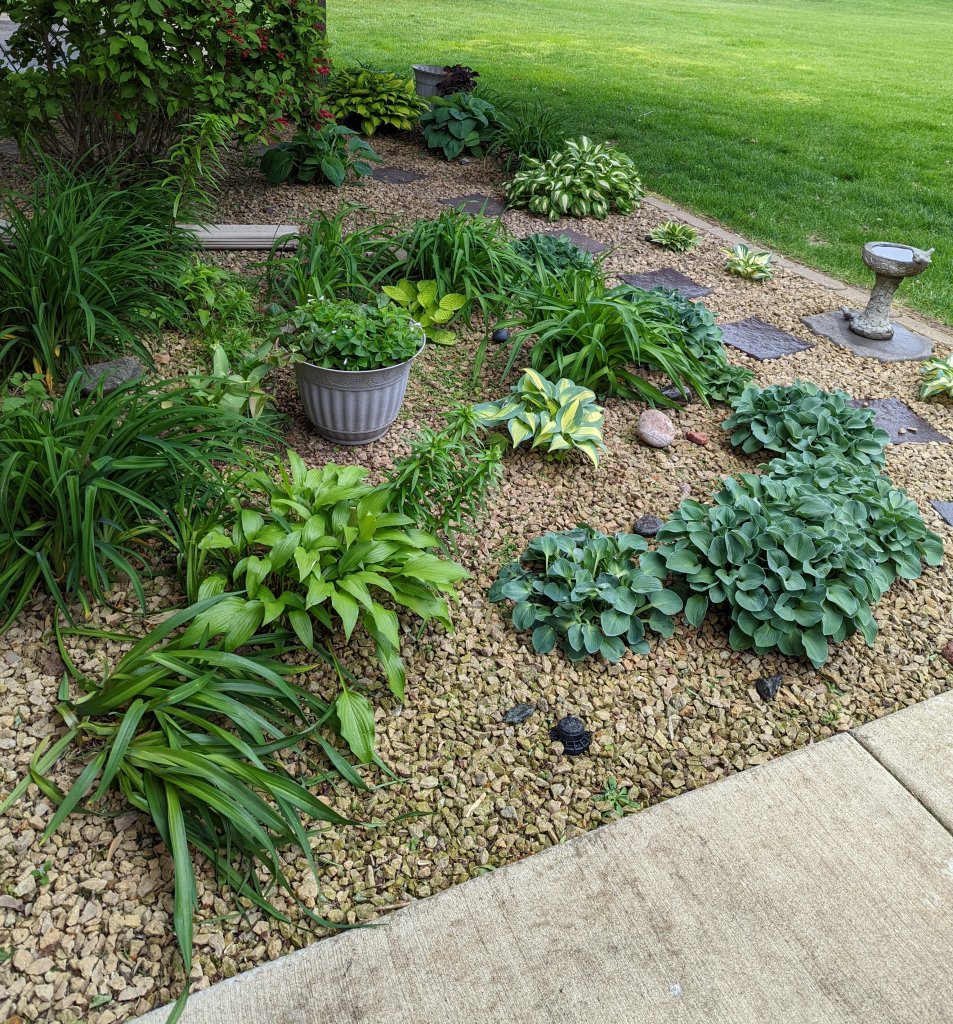
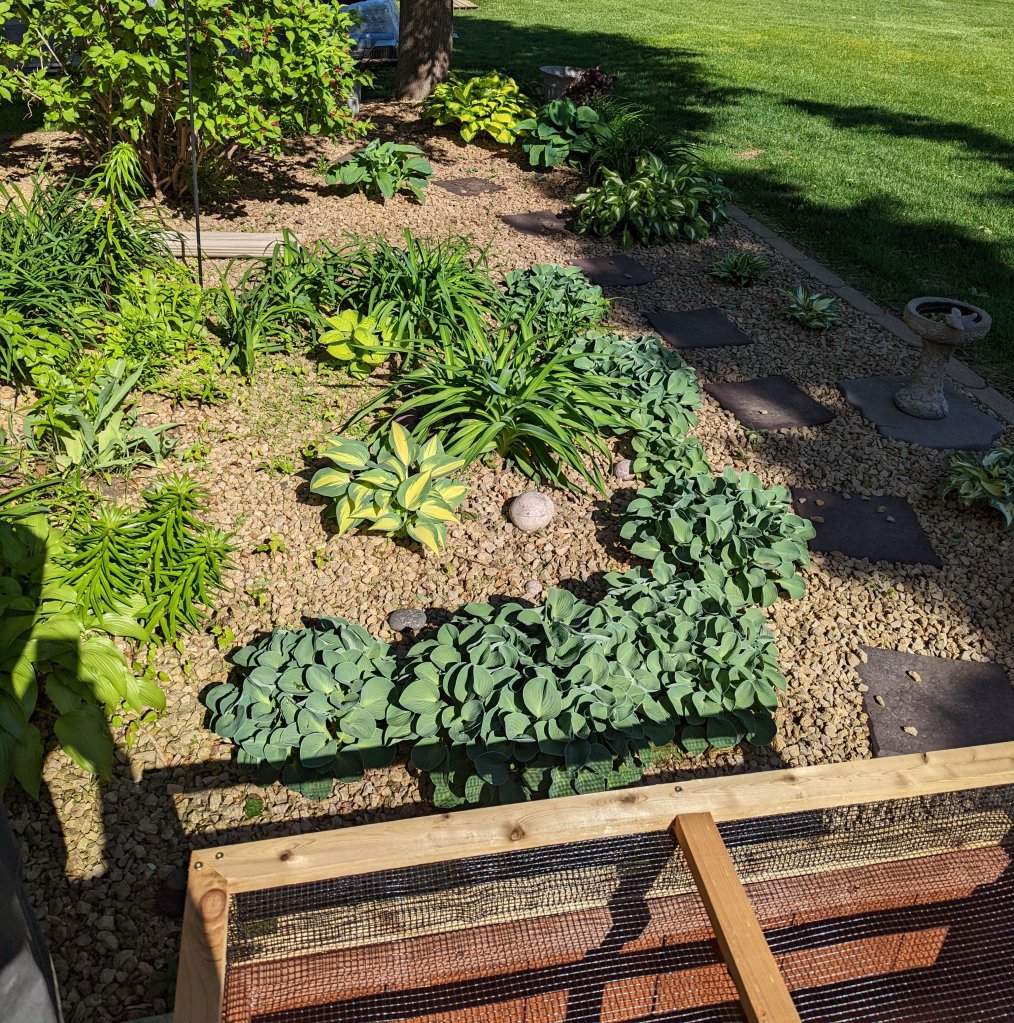
About this time of year I start to assess fall moves to optimize next year’s garden. Last fall we moved out two large Aureomarginata hostas from our garden. They found new homes around the association where they weren’t crowded and could really shine, and did really well this year in their new locations (yeay!). My repurpose for that newly empty space in our garden, unfortunately, did not go as planned. The tulips did “meh” and the asian lilies gifted to me did not do well at all. Reason? Mr. and Mrs. Squirrel and friends thought they were their food. I have since purchased repellent, and that seems to be working. There is still, however, a large empty space in two areas of the garden.
Meanwhile, in another area of the garden, a delightful Ivory Queen hosta gets overexposure to the sun each year.
Time to give it a new home, in the more shaded area where one of the Aureomarginata hostas was. It will fit that space well, and look nice amongst the other “blue” hostas.
Maybe I should move this Patriot hosta too – to the more shaded spot where the other Aureomarginata hosta was.
It will fit in well and brighten up an area that gets pretty unremarkable after the asian lilies bloom.
With two hostas moved out of sunnier areas, does that mean that I now have spots for two new sunshine loving daylilies? Possibly … Hard to say …
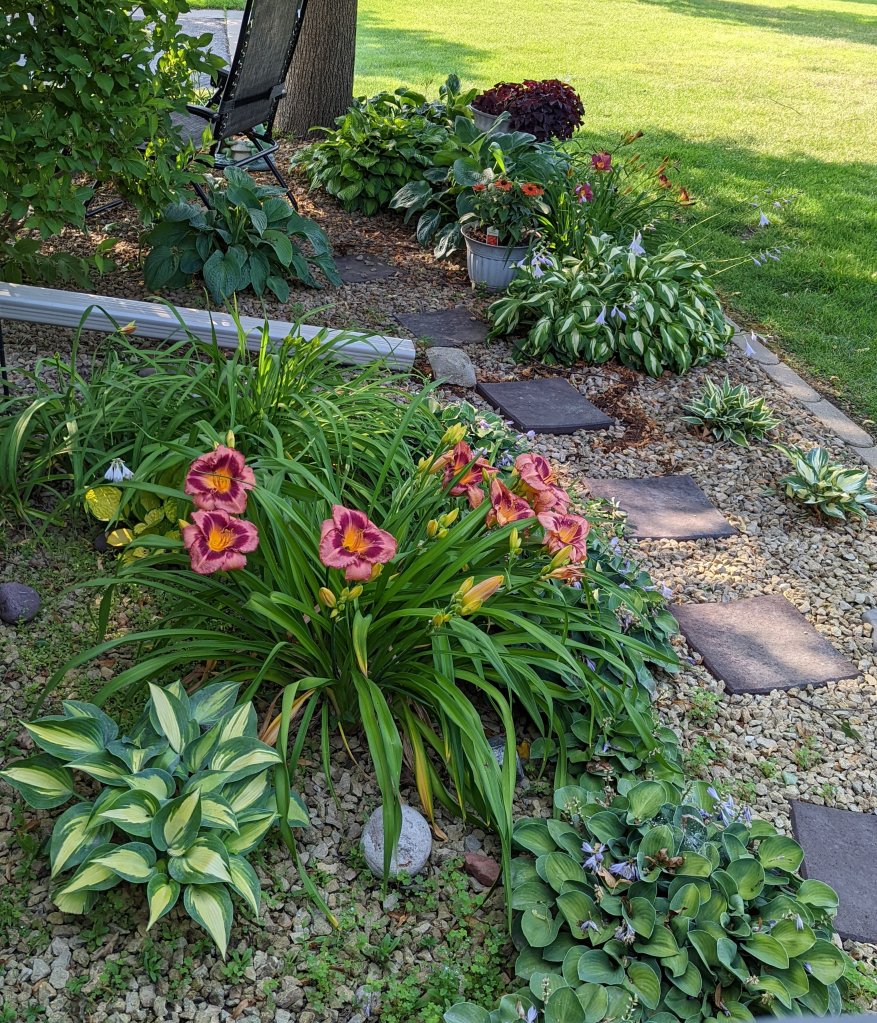
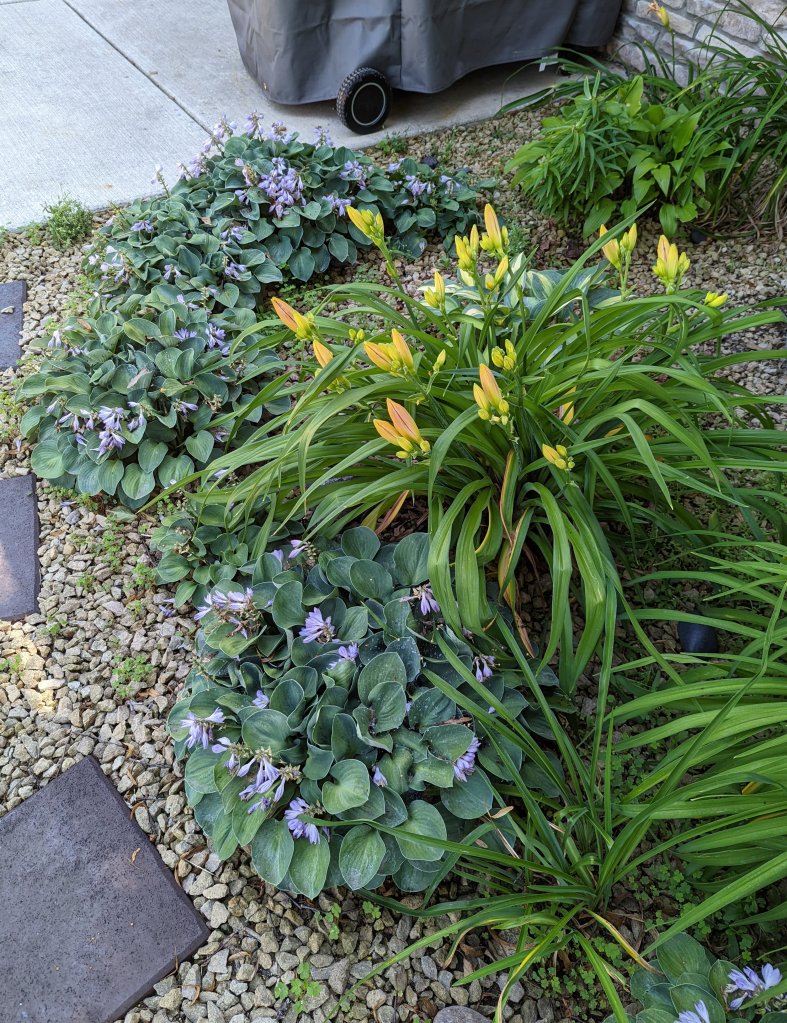
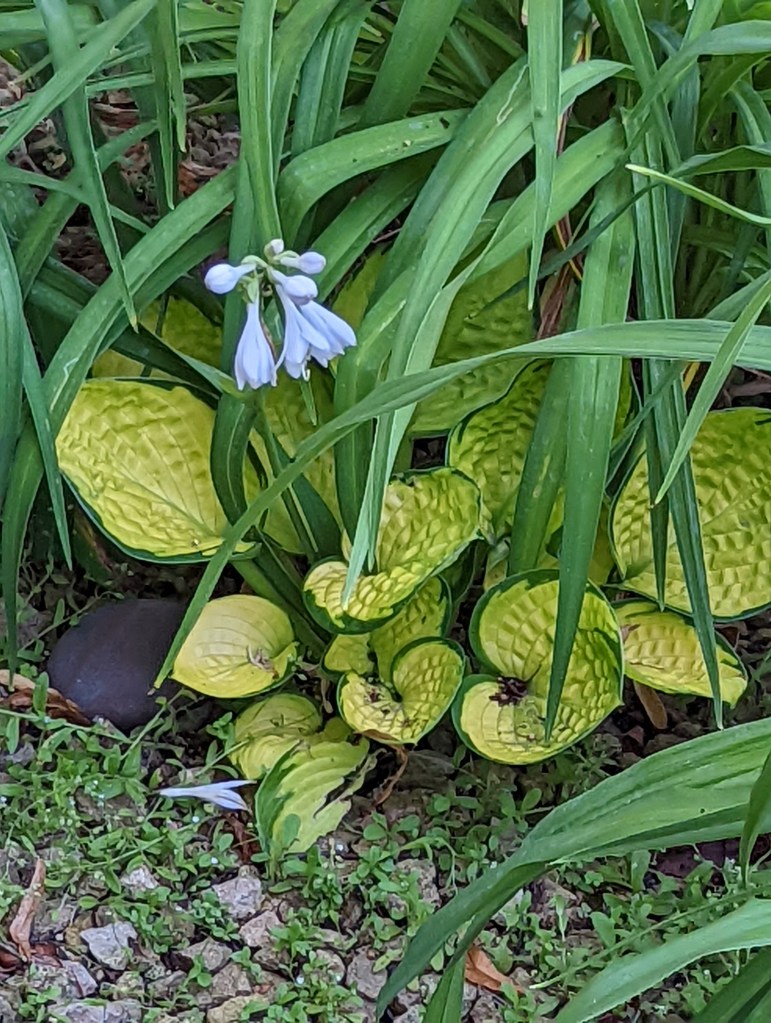
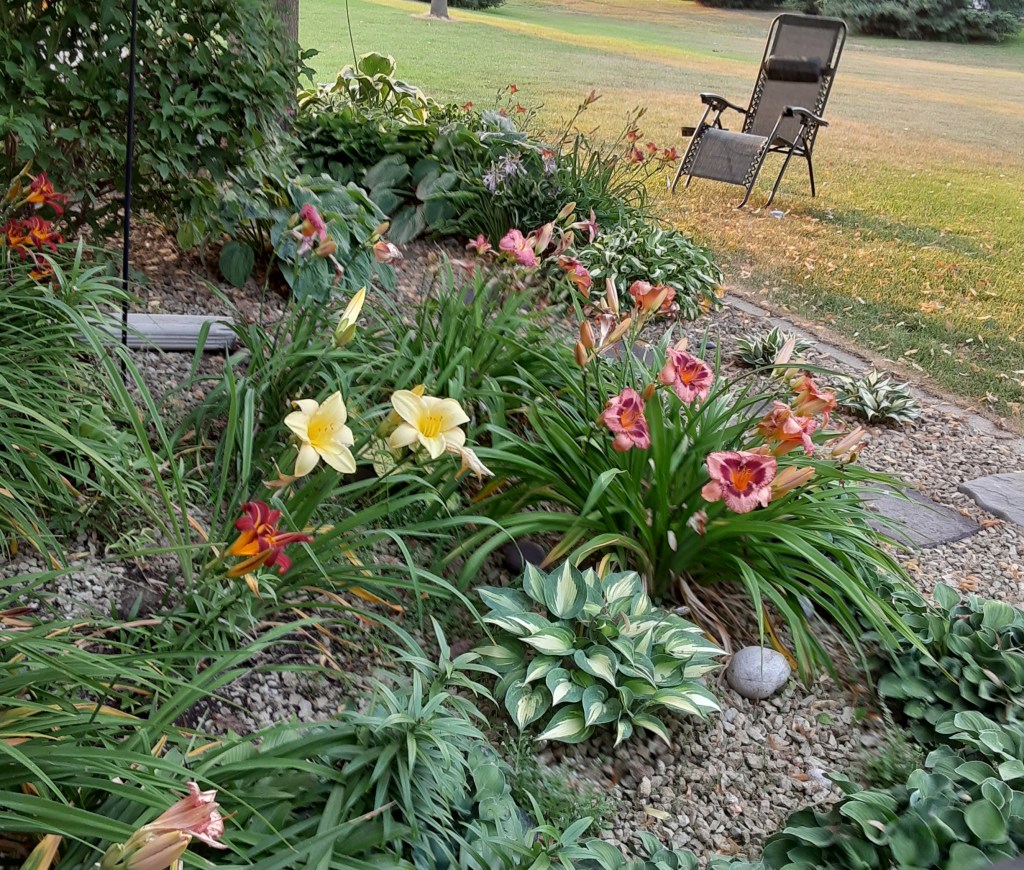
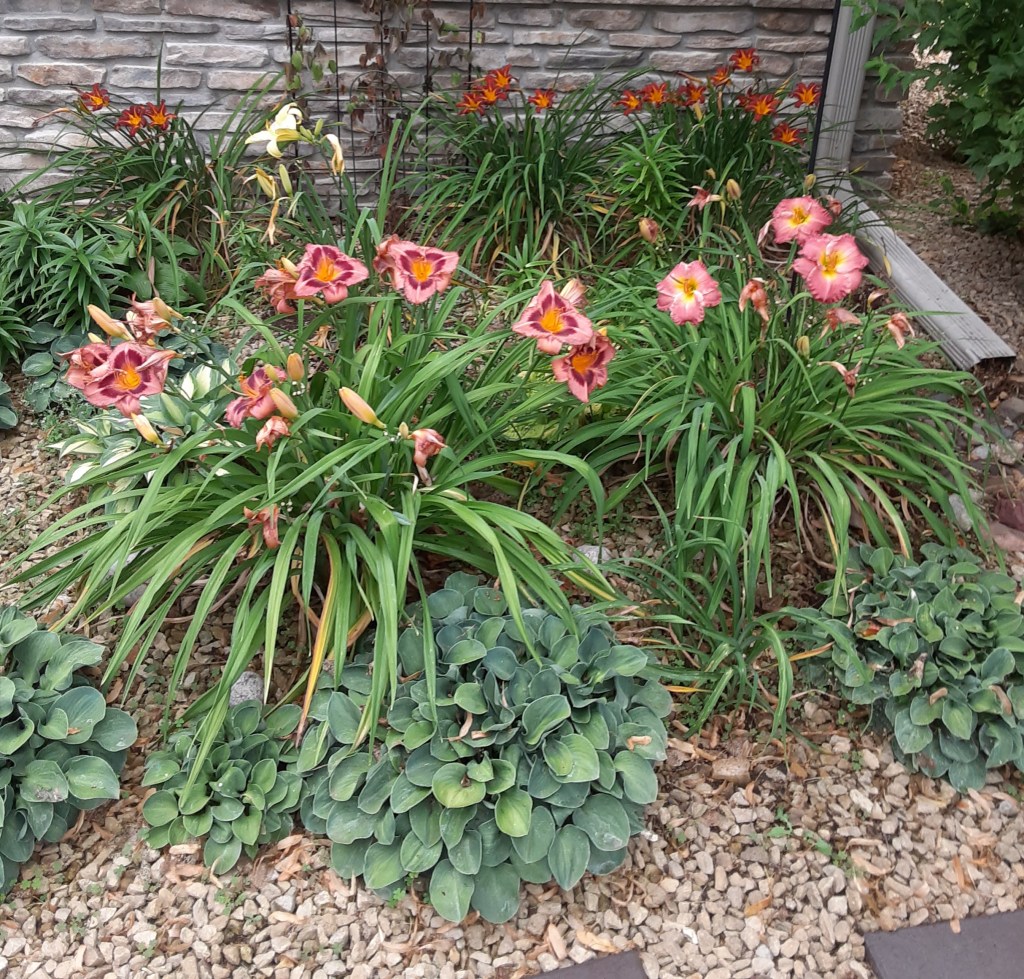
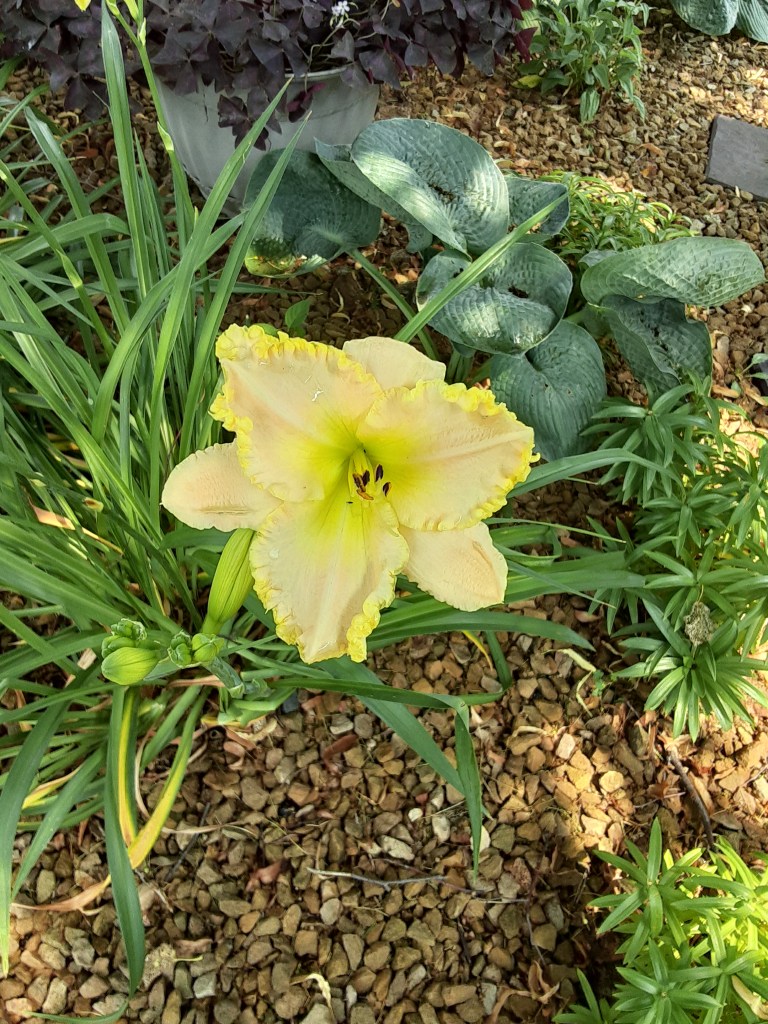
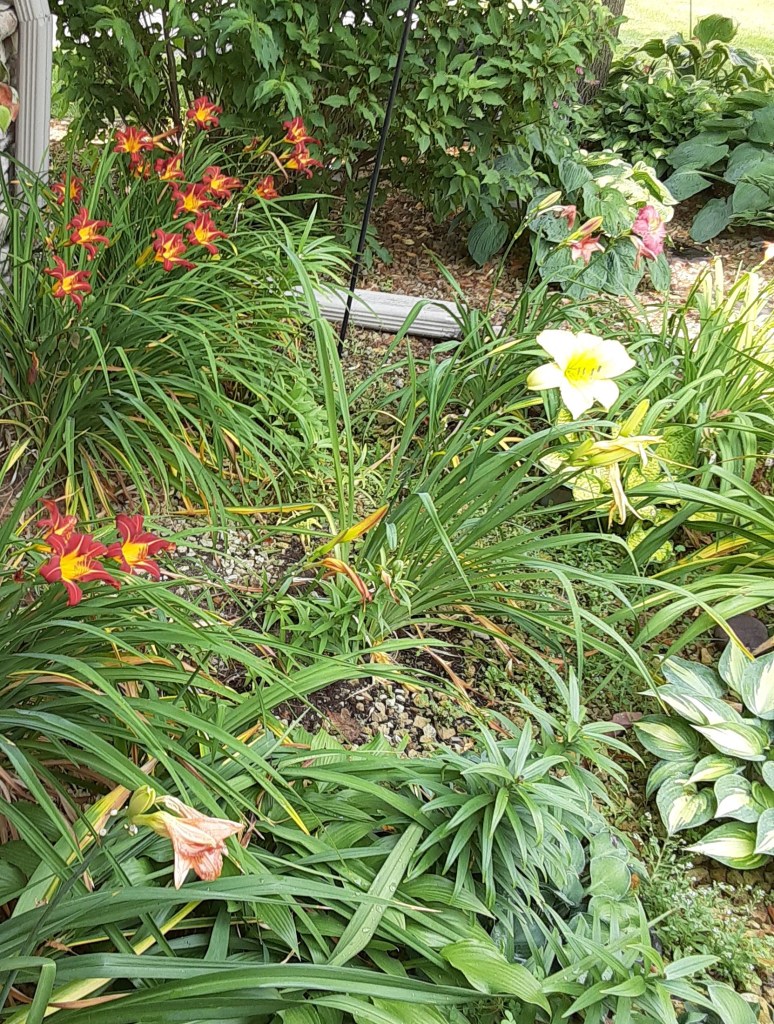
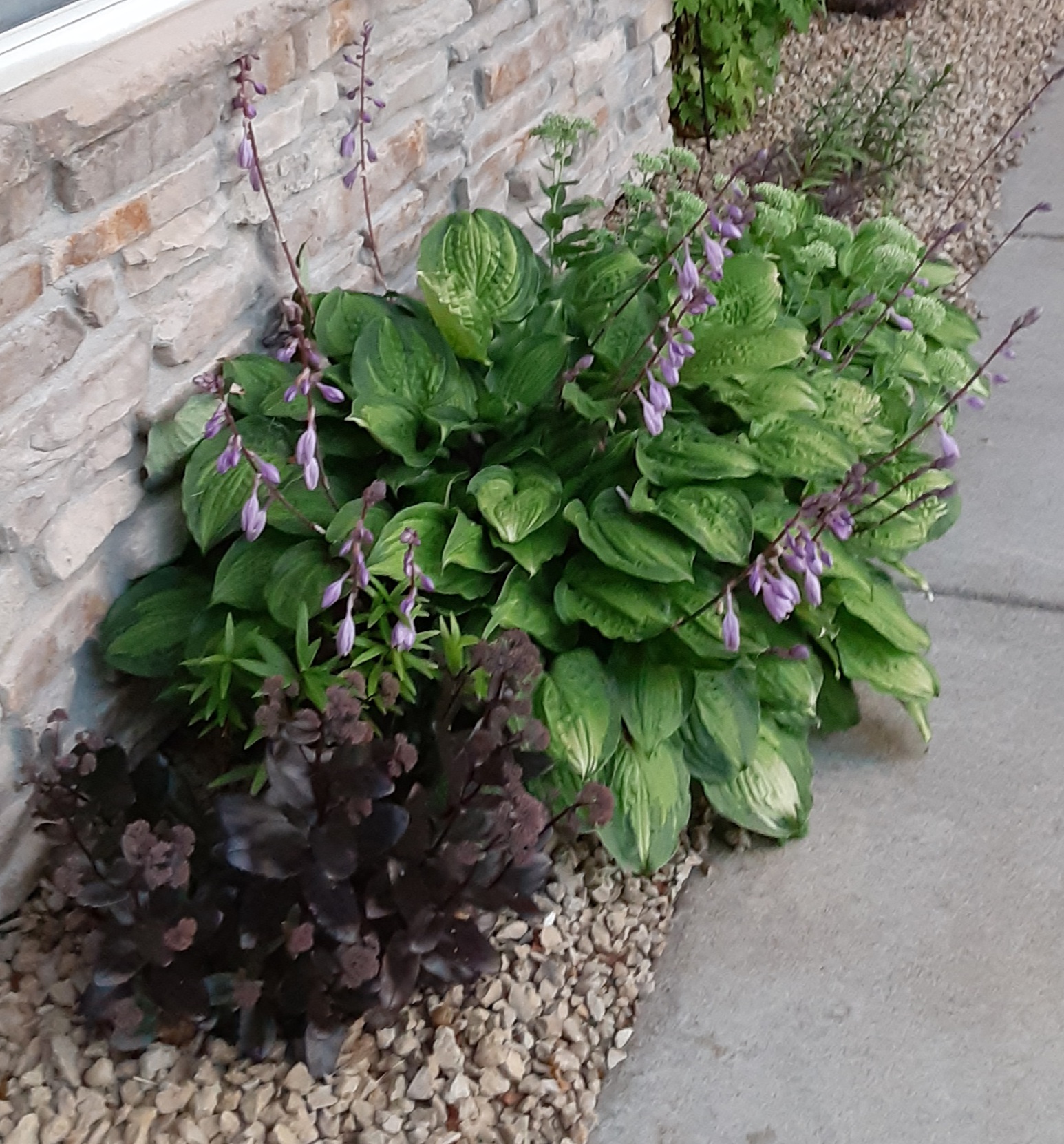
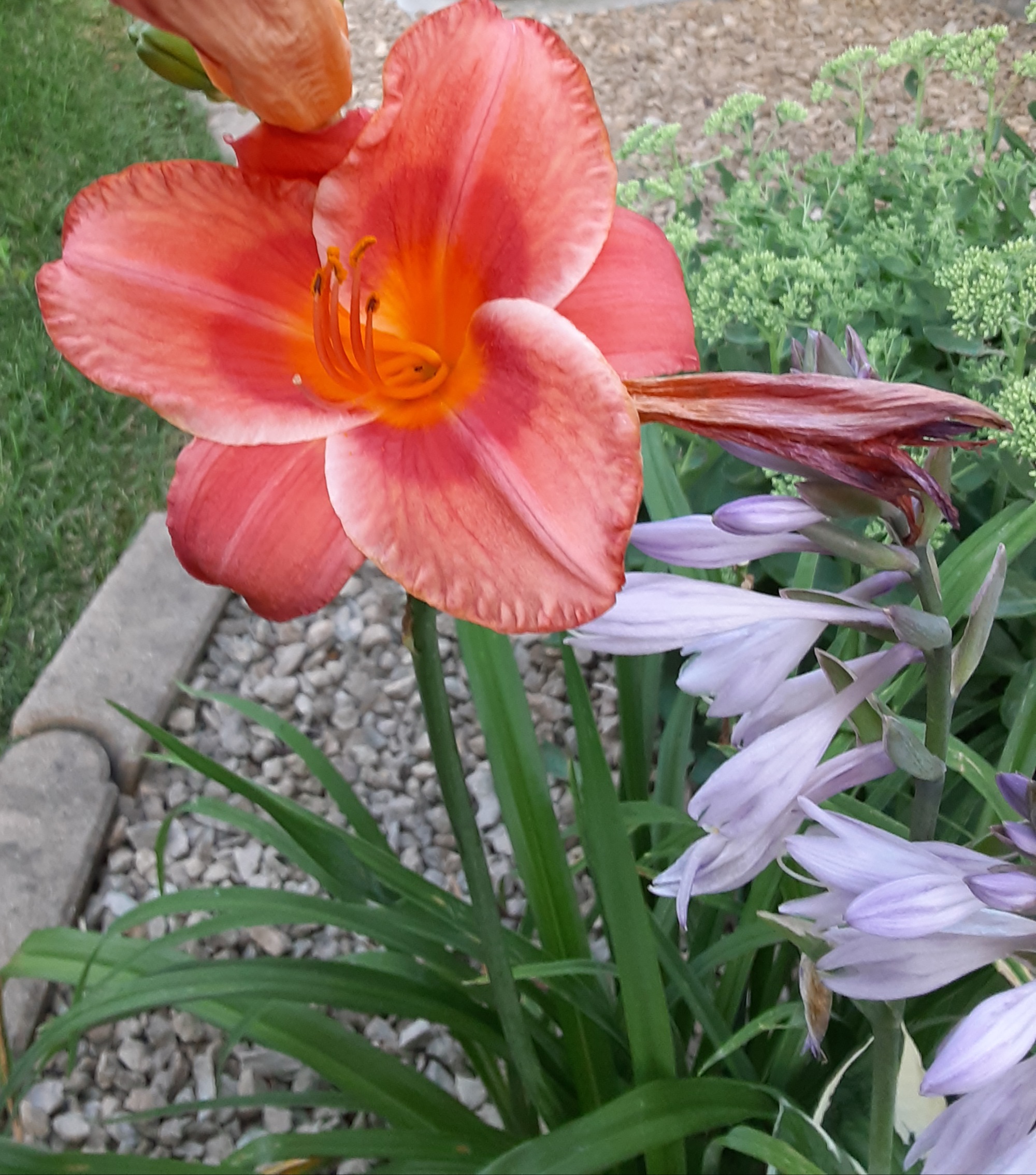
And now for a few last pics of the mid-July daylily blooms.















 Susan's Daily Garden
