The hibiscus is still here

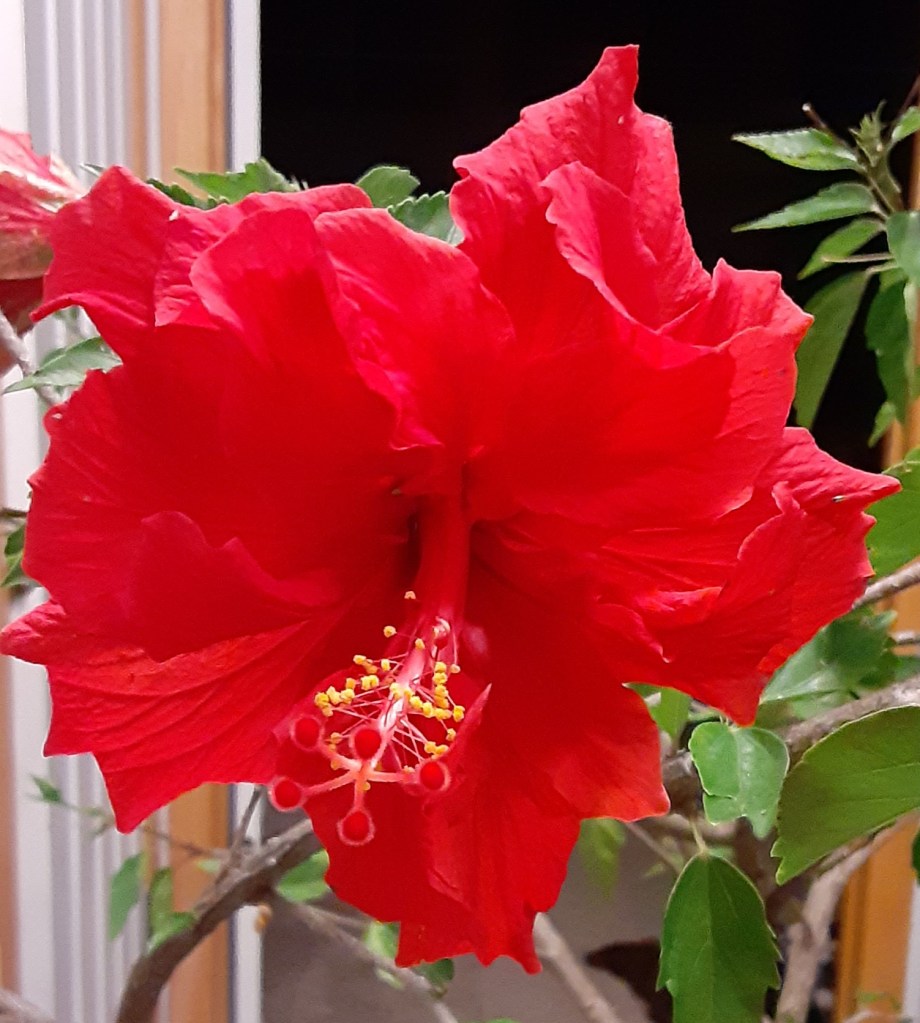
Well, the hibiscus is still here. Sunday, it almost went. Our little ladybug is not taking care of the aphids, so I’m spraying it – indoors – in our tiny entry – so it doesn’t get all over the carpet. But that means we have to squeeze out the door to take Sandy (our dog) for his walk. This is not sustainable. But for now, while we are not able to have visitors, and while it is still blooming, the 4′ x 4′ hibiscus stays. One day at a time.

It will definitely get cut back after blooming.

Oh the joys of small home living.

BUSY days

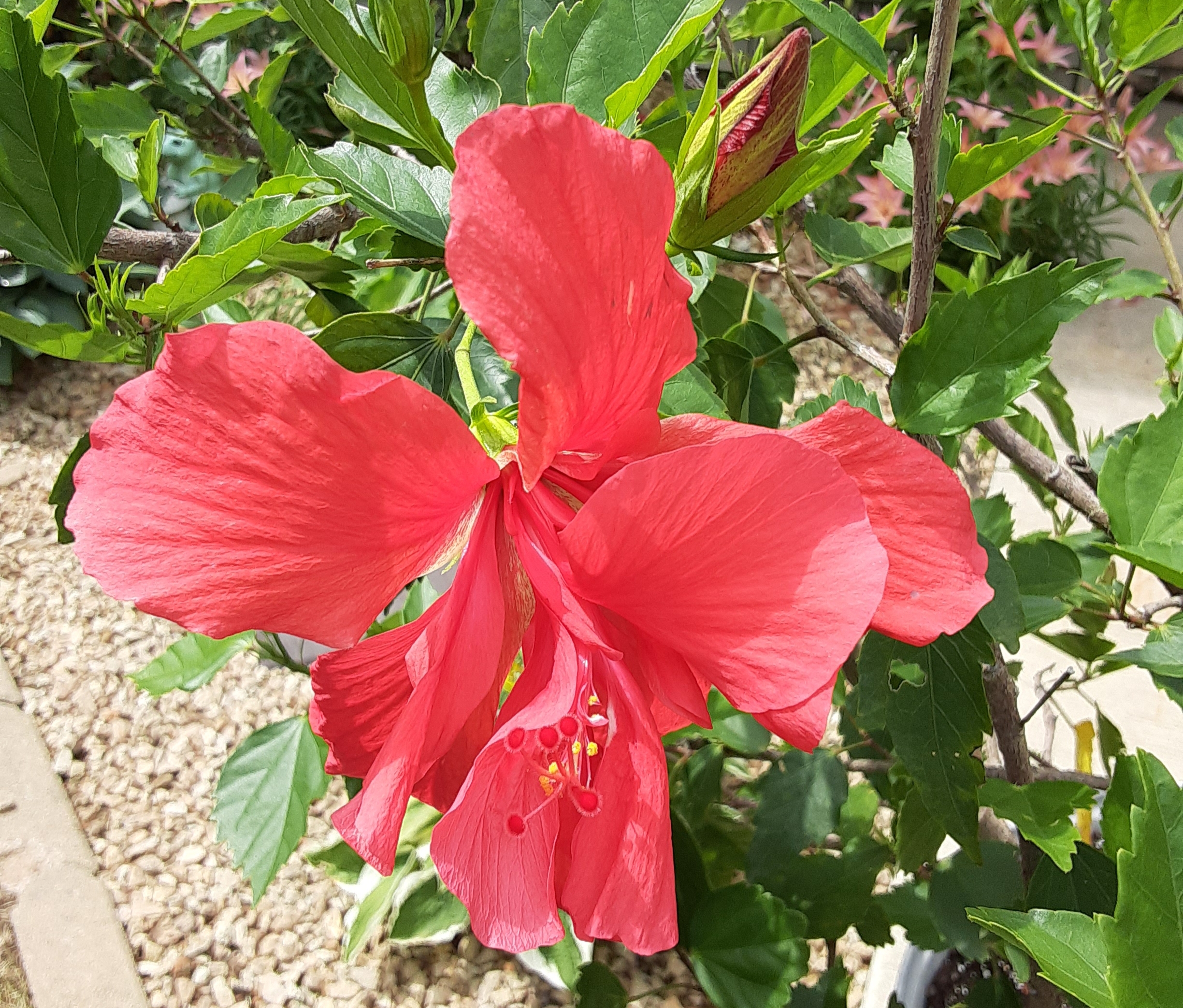
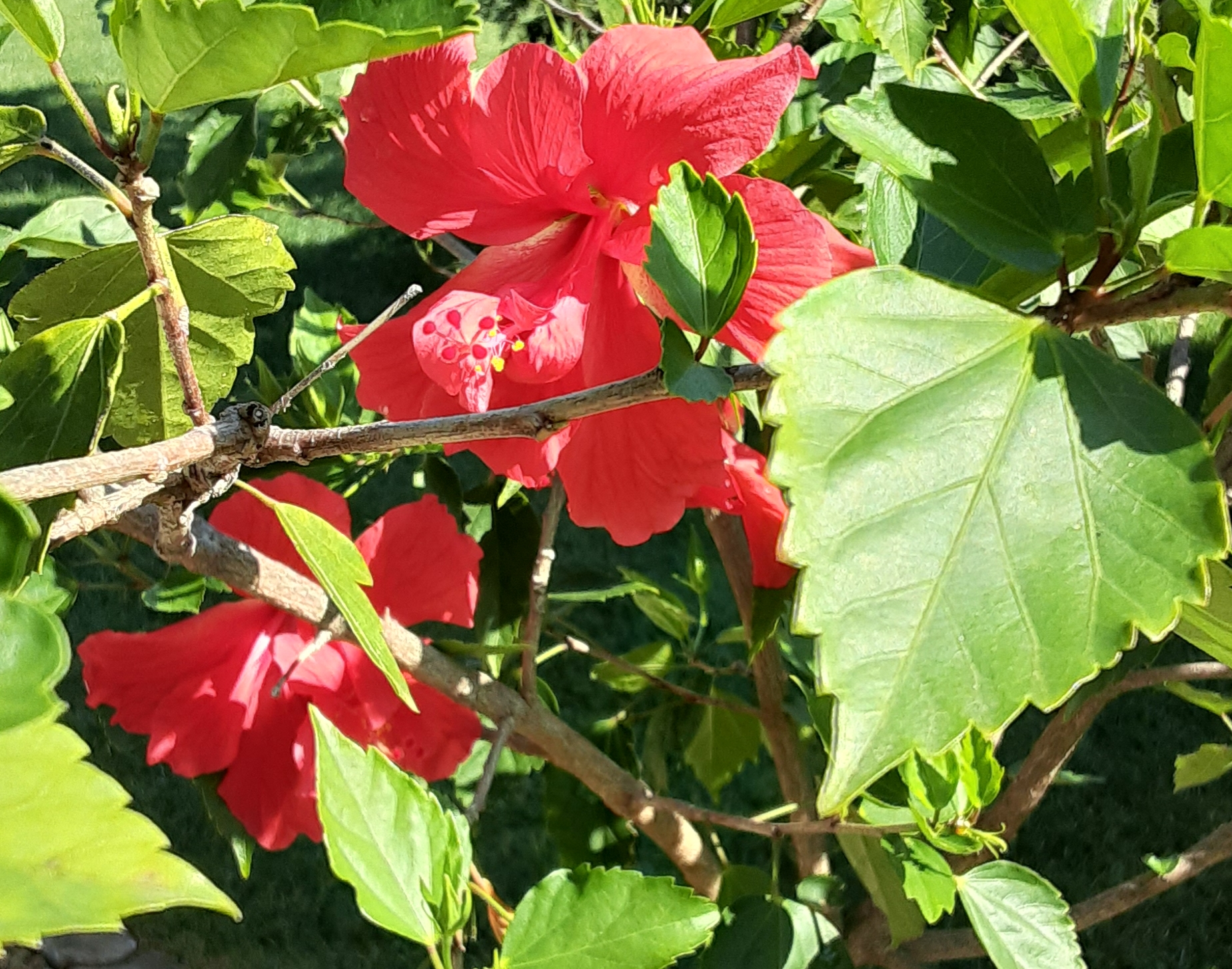
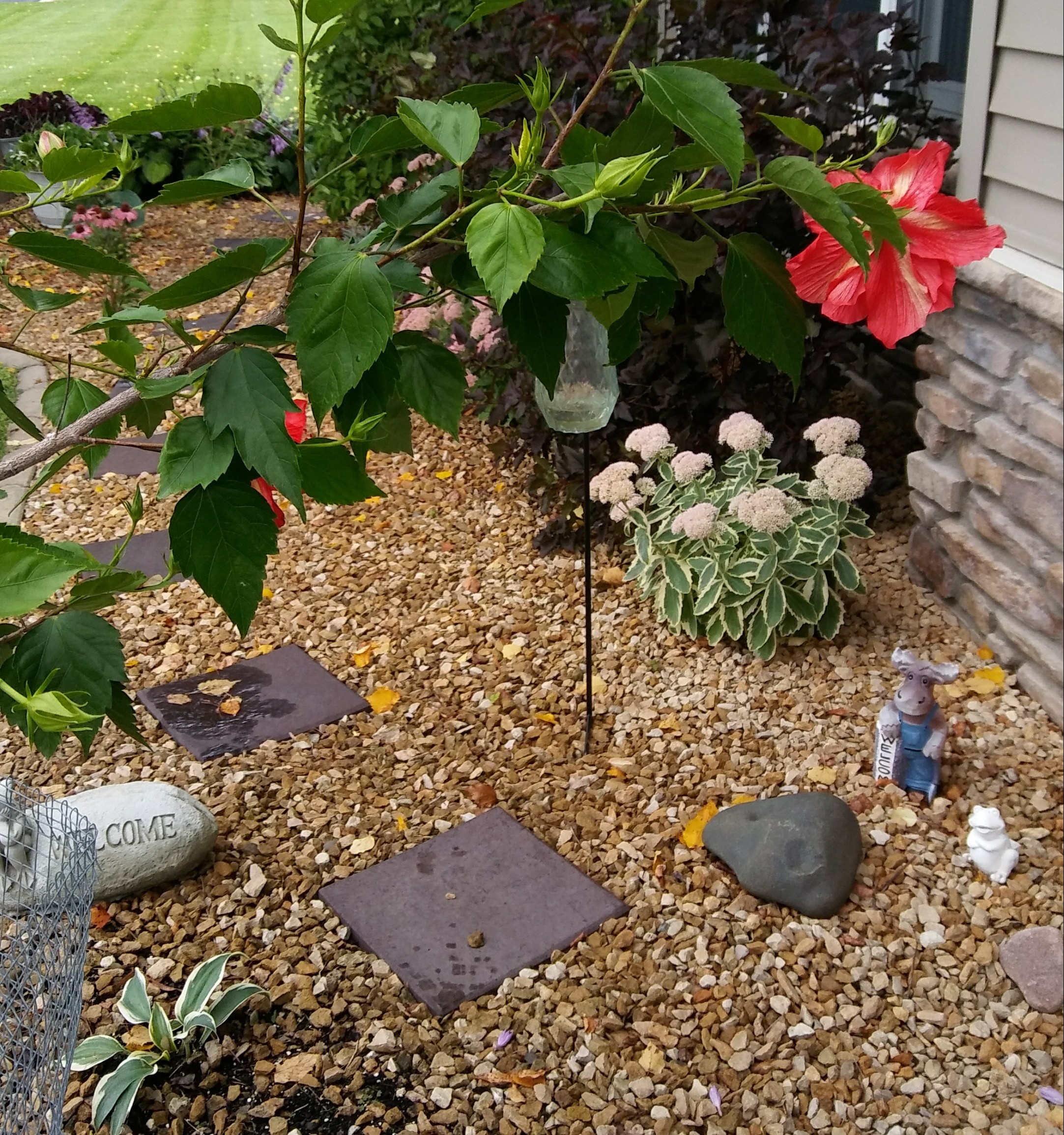
Over a week has gone by and we are enjoying beautiful days in the garden.  The hibiscus had over 30 buds about a week ago and day after day we are getting treated to multiple blooms.

20190913_120635-1.jpg

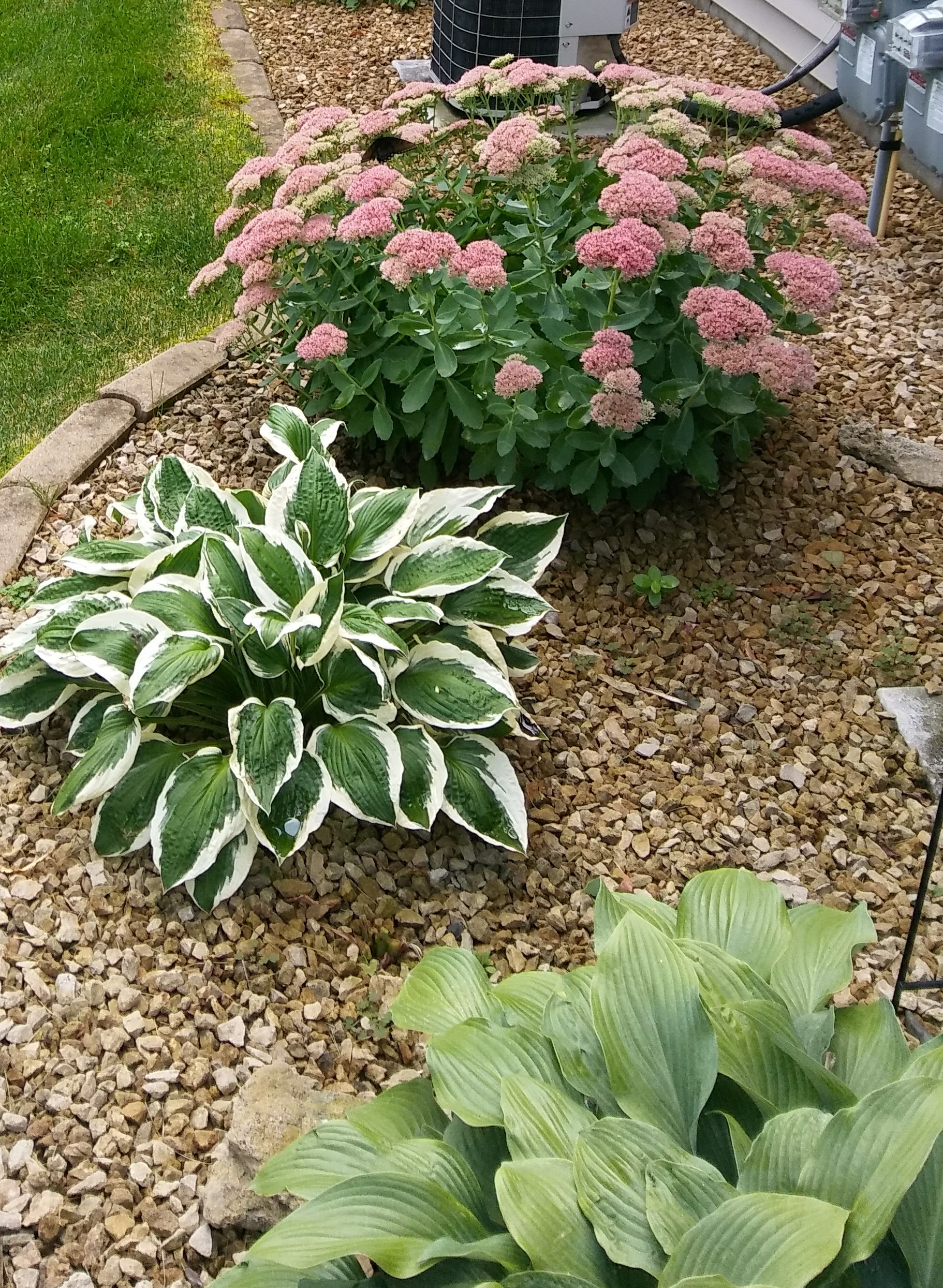
The sedum are really getting beautiful.

Even our butterfly friends cannot resist a visit.

20190910_115823-1.jpgwhile many parts of the garden begin their resting time.

20190913_113222-1

Not me, though.  Not a lot of resting here.  I went on the association landscaping committee, then volunteered to fill an open spot on the board.  If you’ve never served on a board, give it a try!  You will not be bored – lol!

This coming weekend will be more garden trimming – probably starting to trim back some of the hostas that are starting to turn.


We’re running now – here and up north

As I enjoyed my “putz and pamper” time this past weekend, I had time to reflect on the gardens so far this year.

After a very long winter, and months of feeling like a horse at the gate, we are running quite fast now – both here and up north.

The cherry trees wrapped up their bloom here quite a while ago, but a pleasant surprise was that we got a  glorious “re-do” during one of our trips up north.  Such a treat to get multiple blooming schedules.

At the townhouse, sadly, my favorite long-lived bunch of purple tulips has faded.  They were an icon each spring.  I will try to find something just as iconic, but maybe a different species.  Not sure what yet, but it might be harvested daylily seeds.  Just thinking at this point.

The new tulips I planted here last fall were glorious this spring.

Now the blooming season of early clematis has also passed and the weigelia has hit it’s peak bloom.  Soon the asian lilies will start blooming.

What I did not expect was a hosta bloom so early – yet here it is, beginning to form.  And on the ground in that garden the forget-me-nots are beginning to pop up.

20190621_200745-1.jpg

To watch here this year – two plants from 2017 harvested daylily seeds – both from ‘South Seas’ – one of my favorites.  We’ll hopefully see a bloom or two on them this year, and discover what we got with the help of our pollinator friends. What I know for sure is that daylilies are deer munchies, so I have decided they will not be making the trip up north, as divisions or as seedlings.

In pots, the hibiscus and the gladiolas here are squirrel favorites.  I have put chicken wire around a number of the potted plants and bulbs – not a flattering look – but needed.

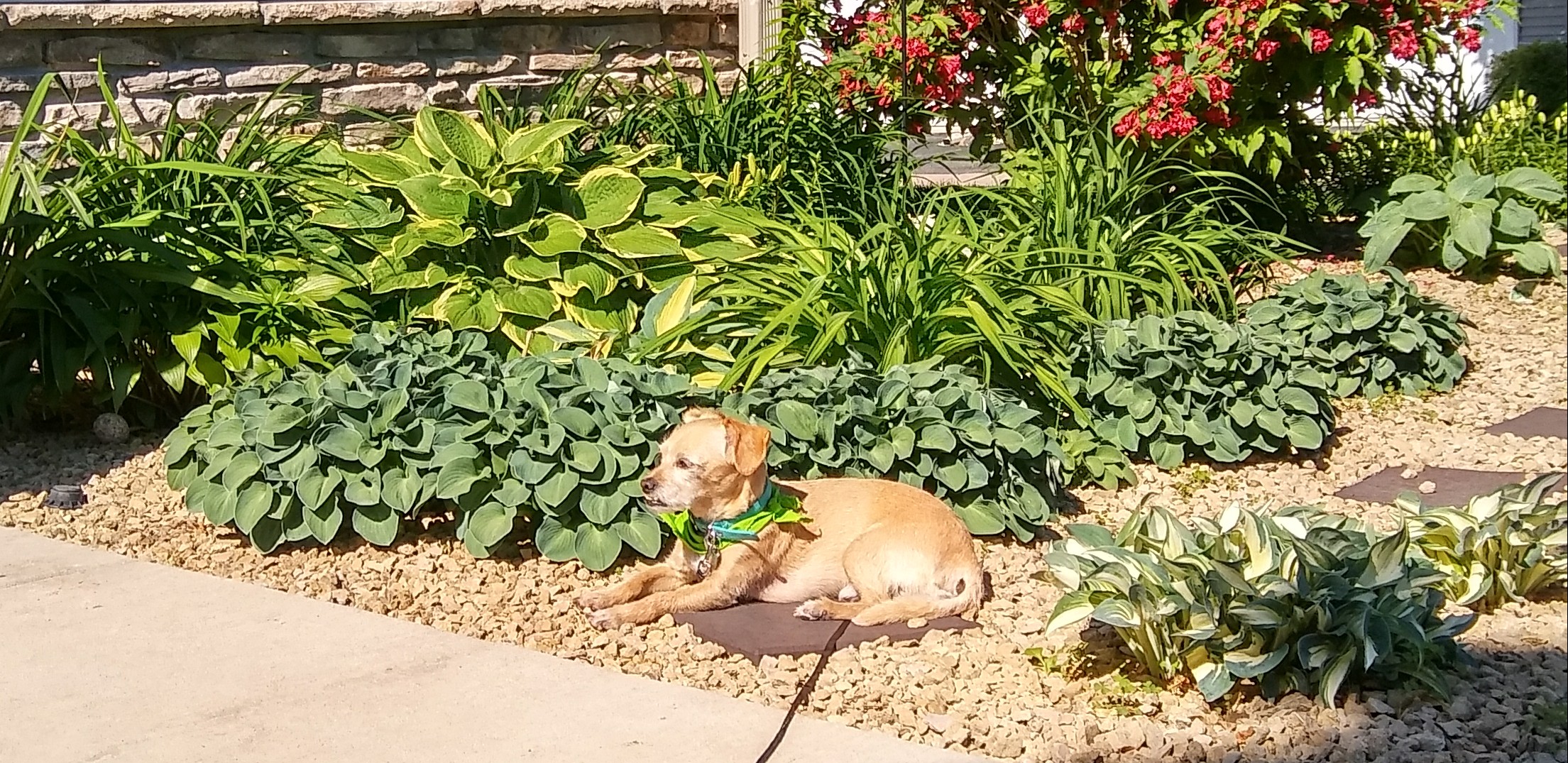
The Aureomarginata hostas here are gigantic again this year, the daylilies I added last year are looking good, and the Blue Mouse Ears are more full than ever.
20190622_093931-3

Which leads me to options.  Up north, the trail cams are showing us oodles of deer, a coyote, lots of bunnies, and a bear.  Makes sense – there’s lots to eat, including wild strawberries all over the property that just wrapped up their season.  I wanted to divide the Aureomarginata hostas and bring them up there but it’s probably not the smartest.  I will be fighting a munching battle that will only make me sad.

There’s also a sedum that has been crowded here for a couple years.  I wanted to bring it up north and put it in the sunny garden to let it shine.  But despite web lists that say sedum is on the list of “deer-resistant” plants, I am hearing reports that they too are tasty morsels up north.

What did work in the year one test garden up north is two types of seeds directly sown into the raised beds – malva zebrina hollyhock, and cinnamon mint.  Some free carrot seeds are also sprouting, and two asclepias plants have survived, so far. Coneflower seeds did not sprout, asclepias seeds did not sprout, and all of the kale and asparagus died back.  I think it needs more water than we can provide.  We are just depending on watering when we are up there, and rain.

And, after much deliberation, and my husband mentioning he doesn’t think he’d like the look, I have given up the idea of using a dog kennel as a critter-proof option.   Alas, I don’t like the look of chicken wire here.  I probably wouldn’t really like a dog kennel asthetic up north.

So the lesson so far is – some things will stay townhouse garden plants, and we will embrace what’s already on the land up north, plus seed sown additions that can survive with just rain, and that are not attractive to critters.

I heard lupines may be an option.  They do naturalize beautifully …

Out they go

Living in Minnesota, there are certain non-hardy plants that we bring in for the winter.  We have two large shamrock plants and a very large, over 10 year old hibiscus.

About a month ago I got an inquiry – is it time to put out the shamrocks?  The answer now is yes.  When it is consistently above 40°F at night we put the hibiscus and both the shamrocks out.  It will be sad this year because they are so full and nice indoors, and as you will see from the pictures below, the wind and sun beats them up almost immediately.  We do keep them close to the house at first, but they have to make the transition.  We have a small home, and everything has its season.  And they do fine.  As a bonus, the birds make good use of the dried stems and leaves for their nests.  When they are done, the pots are very clean for the new growth.  It is the circle of life, and nothing goes to waste.

With the large plants now outdoors I have space to start our seedlings for up north.  Everything in its time.

Managing pests on the hibiscus and shamrocks

Managing pests on the hibiscus, amaryllis and shamrocks is an annual battle.  I love those plants so I have made much effort to protect them from heading to compost.  The birds pretty much handle pests during the spring and summer, but it is a bit of work when the plants come in for fall and winter.

I transition the plants from outdoors to the tile to the carpet over about a week. They stay on the tile a few days to get their initial acclimation to the indoor weather.  During that time they do shed leaves (and some ladybugs, gnats, etc.)  During that time I also spray the hibiscus and the amaryllis dirt with a mild solution of Sol-U-Mel.  The shamrocks are still quite full so they get that treatment later.

Once the plants are ready to go to their indoor location for fall/winter, I put them on a plastic bag or thick piece of cardboard for a while.  During that time they are kind of messy.  The hibiscus drops leaves and buds and the shamrock stems begin to die back.

20181010_115516-1

All of that needs to be pulled off the plants, picked up and thrown away.  Leaving that on and around the plants invites issues.

Throughout the fall and winter I also add one drop of dish detergent to a quart of water and use that on the soil to keep pests at bay.

By spring I am tired of the routine, and inevitably gnats are starting to appear.  At first sign of frosty nights being gone, the plants go back outside.  They die back a bit (the birds pluck the shamrock material for their nests) but then they come back stronger.

Not without a bloom

When I started our gardens here, I wanted to create a place where one set of blooming plants rolled into the next.  Crocus to daffodils to hyacinth to tulips to asian lilies to irises to … It was a great idea but my husband was not crazy about the look, especially as things died off and we were left with a few … sunflowers!  It was also busy, and it looked like a giant mess as the siberian irises gradually took over a large part of the garden.  So I dug them out and gave them to my mother-in-law who had space, along with, regrettably, some daylilies that I had put in front and didn’t look so good there.  Then I started to build the gardens we have today.

Along the way I also discovered that no matter how many crocus, daffodils, and hyacinth I planted here, they would only come back one, maybe two years.  Believe me, I planted hundreds, en masse, and they just don’t thrive here.  Some don’t even come in one time!  So, I decided tulips are enough.  Some stay (I have one patch of purple tulips that has come back 14 years)

and some come back every year as greens (not too exciting).  Once again this fall I bought a bag of tulips, and have already picked out the spot for them.

After the tulips come the clematis (from the original garden).  Then come the asian lilies (some original, some newer) and then the hostas, the weigelia (original) and the ninebarks (newer).  Then come the daylilies for months, followed by the sedum, with the hostas blooming throughout.  Continuously blooming are the shamrocks and the hibiscus.

They bloom even when they are brought in mid-October, and go well into December.

In January I head off to the garden store and get a watch ’em grow garden, which blooms into March, and somewhere in Feb the amaryllis blooms.  In late Feb the hibiscus starts up again along with a little bit on the shamrocks.  And then in April, as the hibiscus and shamrocks are lightly blooming, we are moving outside again.

This progression has run through my mind lately.  Yes, I am sad the daylilies are done and the hostas are wrapping up, but truly we are never long without blooms in our “garden”.