
“We love you, and you are fun, but out you go. Time to go out and meet your fellow peeps.” says the garden mama to the forced daffodil greens.

“We love you, and you are fun, but out you go. Time to go out and meet your fellow peeps.” says the garden mama to the forced daffodil greens.
I use daffodils as a digger deterrent. Yes, they are very pretty, but even if they don’t bloom, diggers don’t like them, so they stay away from the daylilies and sedum and hostas I plant with daffodils.
Bulb forcing is pretty easy, and you can save a boatload of money by doing it yourself. Buying forced bulbs in a container like a plant pot or a glass forcing vase – oh so expensive. And I remember those days, driving to the garden store, maybe they aren’t out yet, …. Nowadays, I force daffodils, because I have them. If you are wondering about other spring bulbs, I don’t force tulips or hyacinth because I don’t have leftovers because they don’t do well enough to plant them here. But, suffice to say, experience from a while back has validated for me:
* tulips and hyacinth seldom bloom after forcing.
* grape hyacinth and daffodils, on the other hand, do quite well.
What to do when forced daffodils bloom? At first they look very nice ~ for a day or so ~ and then they start to fall over like this:
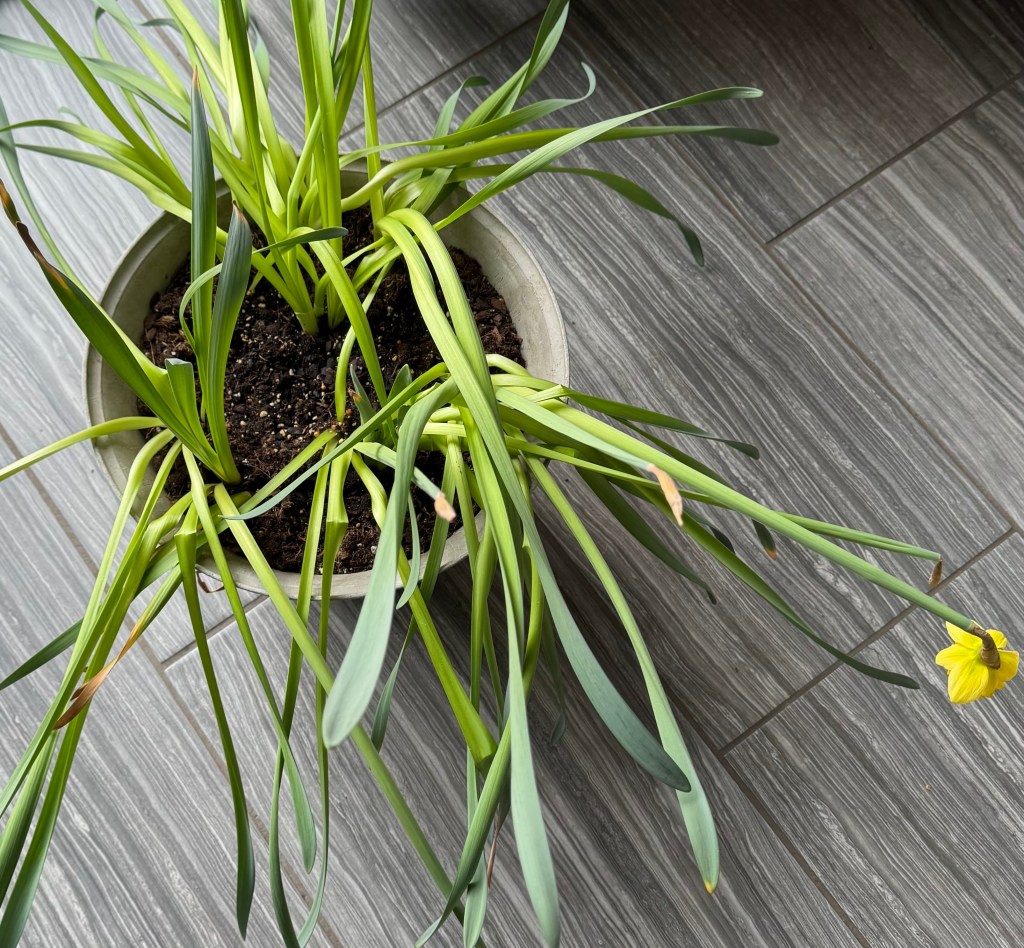
At that point, it is super tempting to cut them. Which is exactly what I do a lot of the time. There is an art to when to cut the stems with the blooms. The best time to cut the stems is when it still is in a gooseneck position like this:
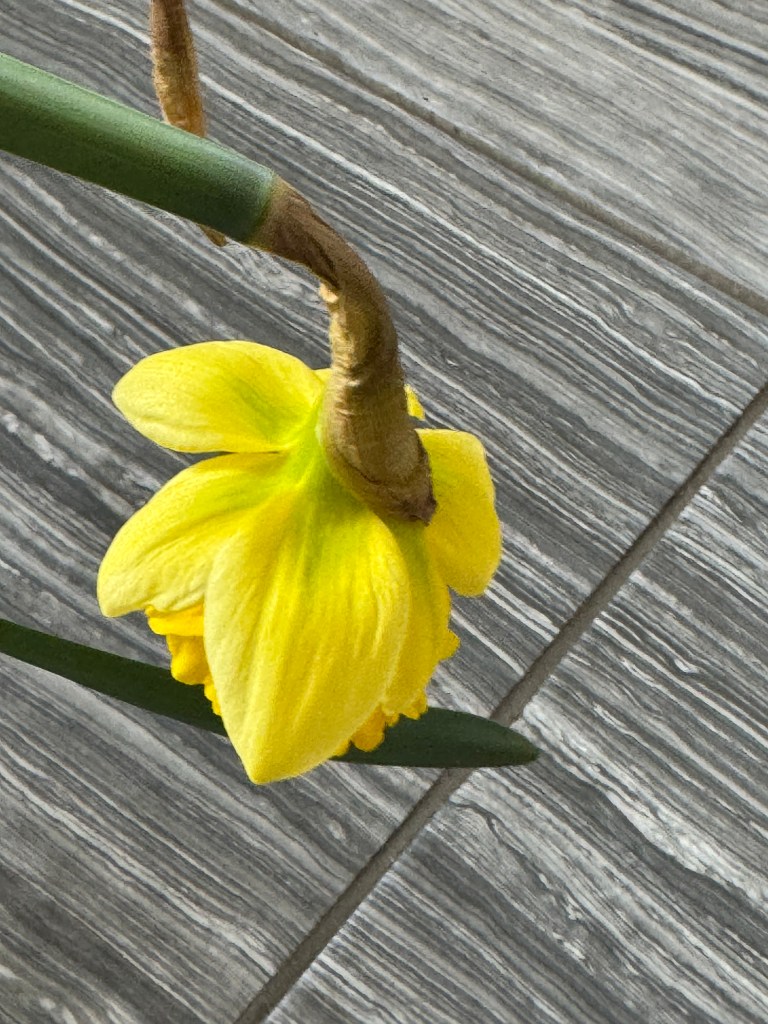
After all the blooms are cut and spent, the bulbs can go outside. And then they can be planted as soon as the ground is thawed. They will not bloom again that year, but they should bloom the next. I bring them up north, and plant them in an area where all of our forest daffodils get planted. They do pretty well, even with the deer. No guarantees, of course, but if they don’t survive, then they add to the soil of that garden.
So, there you have it ~ daffodils as a digger deterrent around new plantings and for early indoor blooms when the ground is still frozen or thawing.
 Susan's Daily Garden