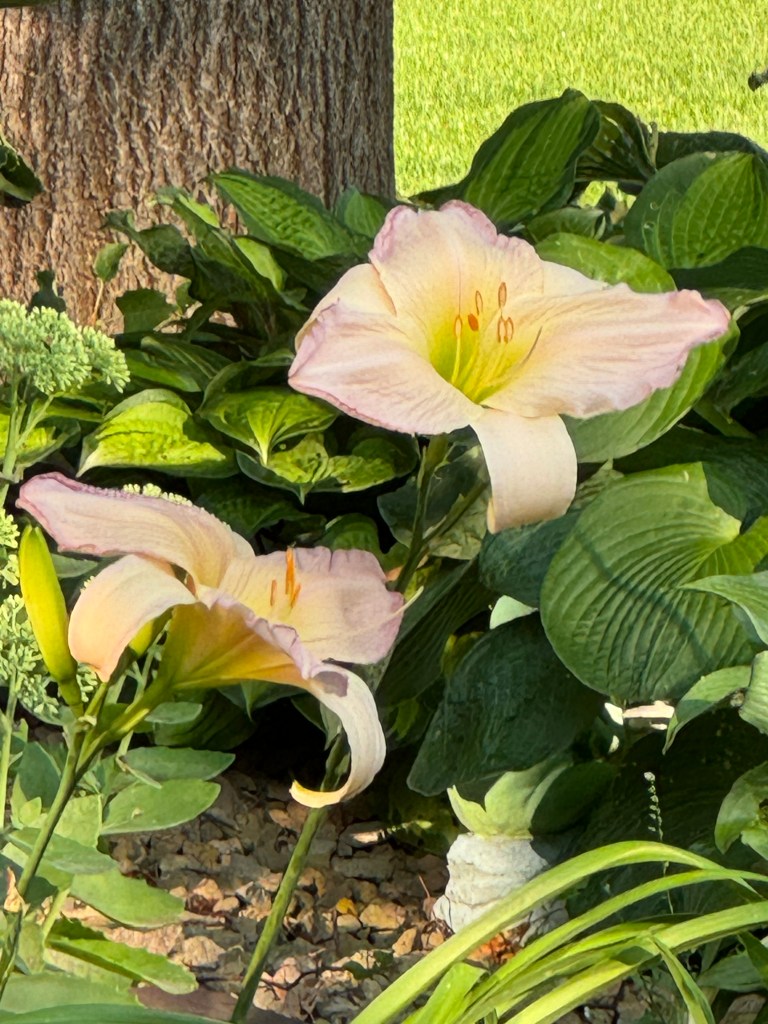
We have multiple Just Plum Happy daylilies in our gardens. Not once have we had a seedling from Just Plum Happy, much less a flowering seedling. In fact, the self seed pods usually fail. If any self seed pods open and the seed doesn’t look good, I just put it back into the area of the daylily, food for birds or whatever. But somehow either one of the pods let a self seed out before I saw the open pod, or one of the seeds I didn’t think was viable actually was. Or maybe a bunny or squirrel or sprinkler got the pod before I did and it made a seedling some time in the past few years and now this year it bloomed. In late September. What??? Crazy pants!!!
I seriously doubt it is a rebloom, as I don’t deadhead them, our Just Plum Happy daylilies have never rebloomed, and – it looks so different from Just Plum Happy.
It looks like a grandparent of Just Plum Happy, named Panache. So it shall be called Panache in our garden. And it shall stay, and be the new latest bloomer. Panache is a late bloomer, so …
I am a (relevant) data junkie. And I admit, yes, I am one of those people that have to bite my tongue when I need answers and I am being fed baloney sausage. Thankfully, there is no baloney sausage in the garden. Oh I love it so 😊
The data from 2024 is telling me the hostas under the linden are healthier than ever. They are giving me that woodland garden backdrop I so love, with mostly shade and dappled sun.
They are a bit affected by the Japanese beetle bugs about this time of year, but I can’t do anything about that.
The data is telling me the Purple D’Oro daylilies under the linden don’t have enough sun any more. The ones that can be dug out are on the 10 week countdown.
The data is telling me the Blue Mouse Ears hostas need dividing, and they would probably be happier with more shade. They will start to do a swap-a-roo with the daylilies under the linden and are on the 10 week countdown.
The data is telling me that, although some daylily crosses were initially looking successful, some daylily type’s pods consistently failed. I soooo feel a delightful spreadsheet coming on to identify all the patterns. Notes and verbiage are great, but this girlfriend likes to plan intelligently too. All those crosses deserve analysis. For sure, I know I can can cross Marque Moon X South Seas and Marque Moon X Just Plum Happy off the list. The pods get to a point, and then start to deteriorate, and it is like a beacon to whatever is eating the pods to pull the whole scape down. But the healthy pods seem more chomp safe. Go figure. Still, the data says so.
The data says I need to put chicken wire around shorter, late season bloomers. Because the data says the baby squirrels seem to think they are gourmet. And the data says Pink Tirza and Coral Majority (yes, intense Coral Majority) have crazy good pollen. And the data says, even though I thought I had successfully typed Hello Yellow, it started to look a bit like it was dying off after a couple weeks, and then something got the pod. I tell you, failing pods are like a munchie beacon.
So, the data also says I need to buy myself some reference info that gives me a deeper dive, and maybe join an organization to knowledge share. Nothing too intense. But better than unfruitful internet searches.
It’s all good. Next July will bring another level. Who knows what crazy crosses I might try in 2025. Hello Yellow x Coral Majority? Egads!!!
Albeit fun, and a great challenge, it has been a multi-year process to get the first daylily seedling to produce scapes in our townhome gardens. And even so, it is pollinator created, from Marque Moon, not an intentional cross. But I am very C C pleased. It is progress. And I have learned a bunch that should help get our intentional crosses from 2023 on better footing than their predecessors.
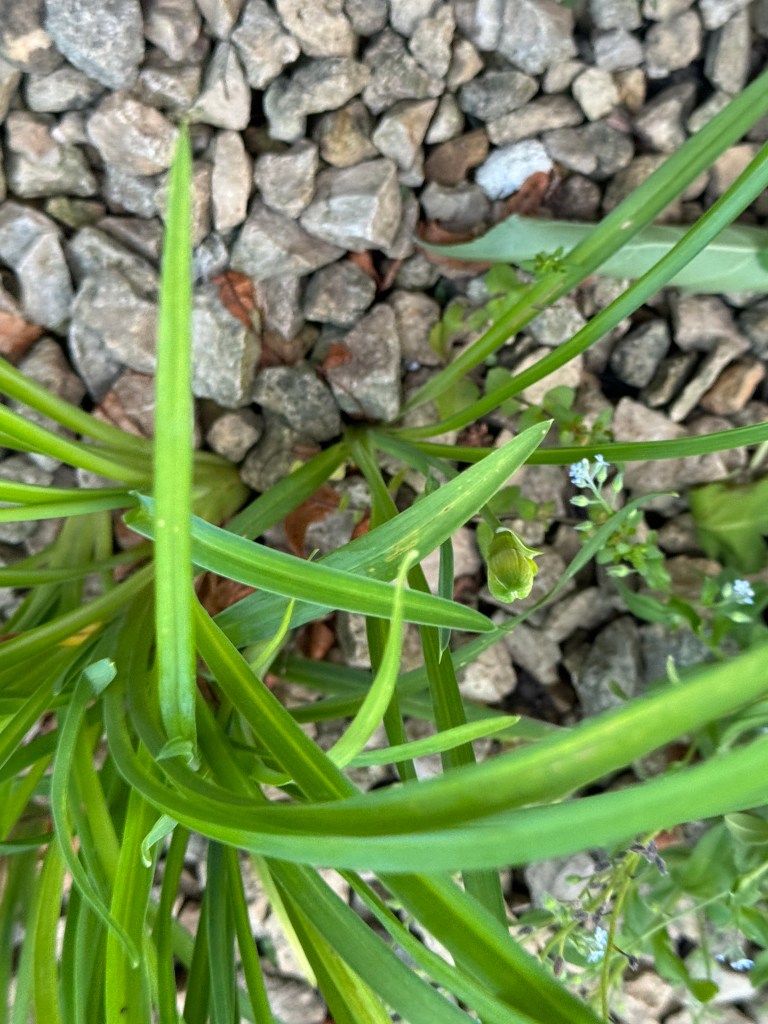
Here was my happy discovery today
I am expecting blooms that look like Enchanted April or Admiral’s Braid, the parentage, but we shall see.
I have taken a bit of a meandering path to get to today’s happy discovery. Here is a bit of history and my personal experience so far:
Planting direct sow, into the ground, is a slow boat. My first daylily seedling attempt was doing that with pollinator created seeds from our South Seas daylily 5 years ago. Those seeds were viable, but produced a very slow growing daylily clump. Less than 6 hours/day of sun exposure probably also had a small impact. I moved it into more sun last fall and it now looks more robust, but still no scapes.
Planting daylily seedlings in a raised bed, in a sunny location, without watering beyond rain, even if it is hugelculture, does not work. Also not protecting from deer does not work. I did that combo 4 years ago. None survived. I wish I had that money back! Those frames are now disassembled and what was remaining of the hugelculture decomposing has been smoothed out.
Planting daylily seedlings in a sunny, perpetually somewhat moist area probably did work, but we sold that little house so I cannot say for certain. It looked successful when we were there.
Planting daylily seedlings into a well watered garden with less than 6 hours of sun produced slow growing seedlings that are now only turning around because they were transplanted into more sun this spring.
Transplanting daylily seedlings into a well watered and well drained very sunny location produced very robust 2nd year plants this season so far. One of those is the daylily with scapes, year 2.
Trying intentional crosses without planning and looking up ploidy doesn’t work. Nuf said there.
I stratify in Feb/March, and then after Easter, I plant the same type/species/crosses seeds together in a pot, indoors, covered with plastic. Yah, I know, unconventional. I have tried all the conventional methods without success. Can you say gross, mold, dead seeds? In May I usually put the pots out in the outdoor seedling box, covered loosely in plastic, with the screened cover over top. I have been fooled, and put them out too early (think late snow), but the seeds and seedlings seem to be smart. They just take their good sweet time, and commence growing when it is consistently warmer again.
I do need to get back to being much more diligent with my labeling and record keeping (diagrams). For labeling, I was careless this year and tucked the empty envelopes with the seed info into the seedling box. The ones written in pencil washed off in the rain. That I do regret. I also need to keep diagrams of where I plant in the garden. My record keeping workaround is going to be a printed out photo with labeling. My planting is in clumps, so that should be a satisfactorily resurrected method from my past to re-employ 😊
Hopefully more of the seedlings will produce scapes this year.
Happy Labor Day! (In the US) The unofficial end of summer. Soon school buses will be picking kids up again, harvest activities will be planned, and gardens will pick up speed toward eventual winterizing.
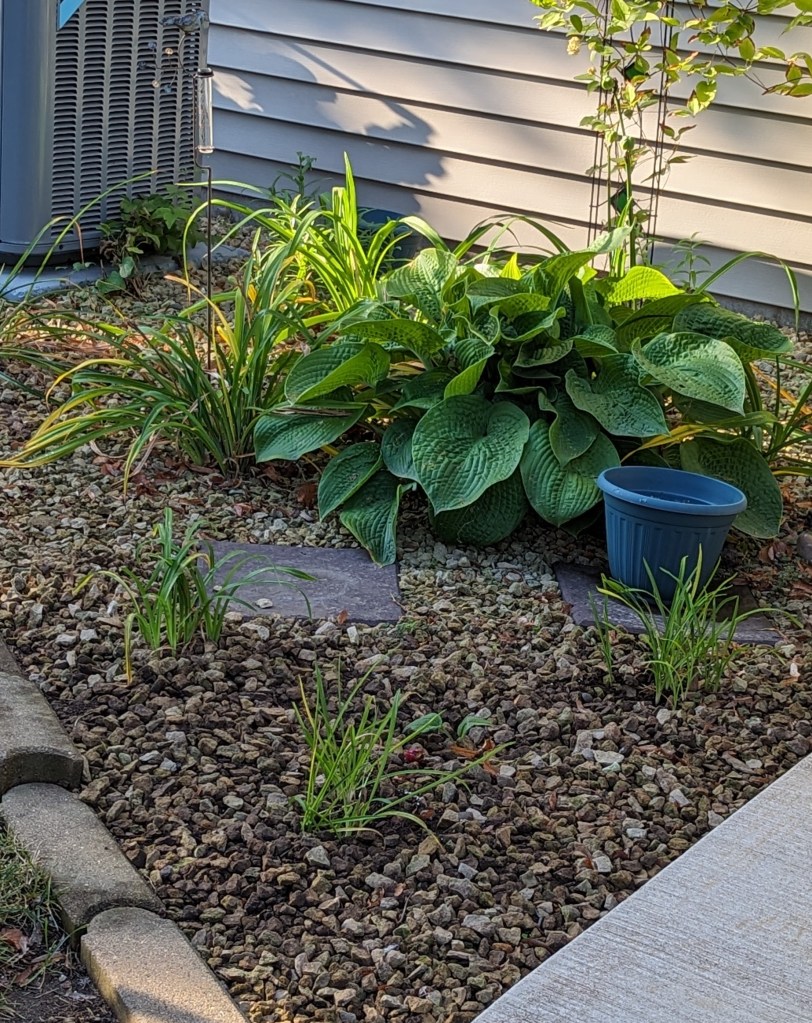
But for today, we are enjoying some early morning time outside and I am increasingly enjoying the new daylily seedling bed. It is holding up well and encouraging me to get the hostas out of the other side with very similar exposure.
I took a couple weeks off garden work when our 2nd grandson was born. Yesterday was “get back to it” day. 4 1/2 buckets of clover and forget-me-nots left the gardens and it looks great again.
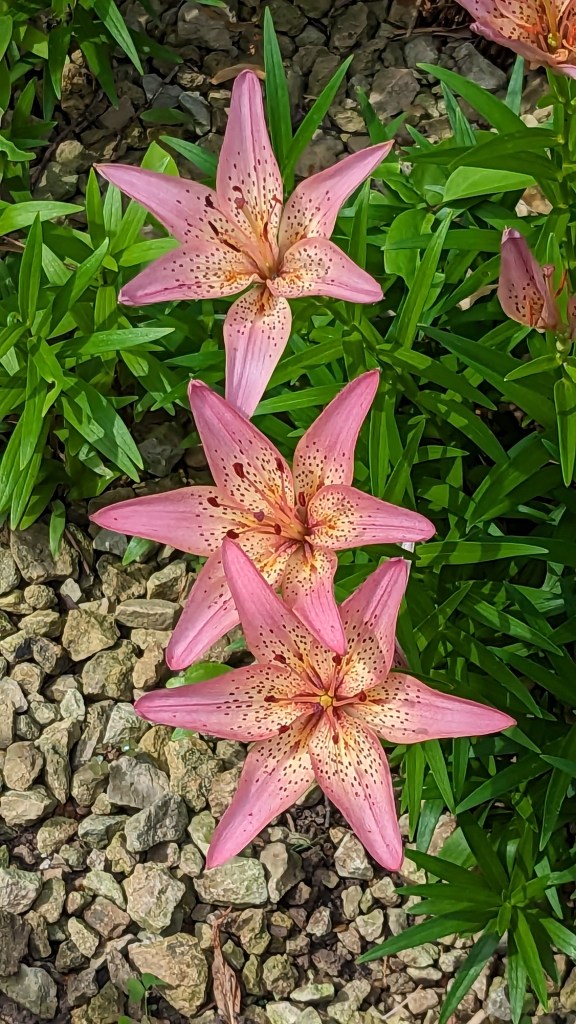
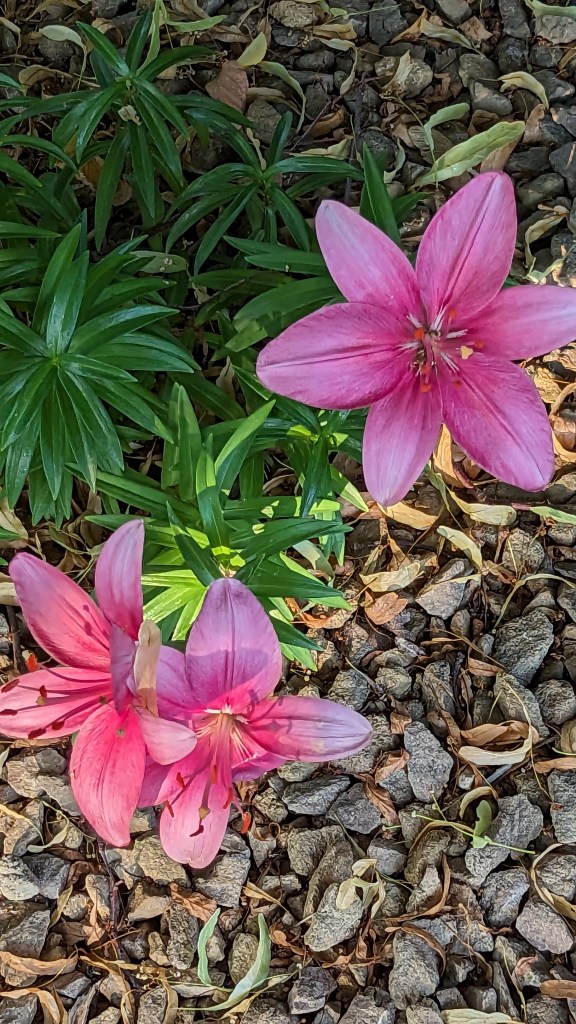
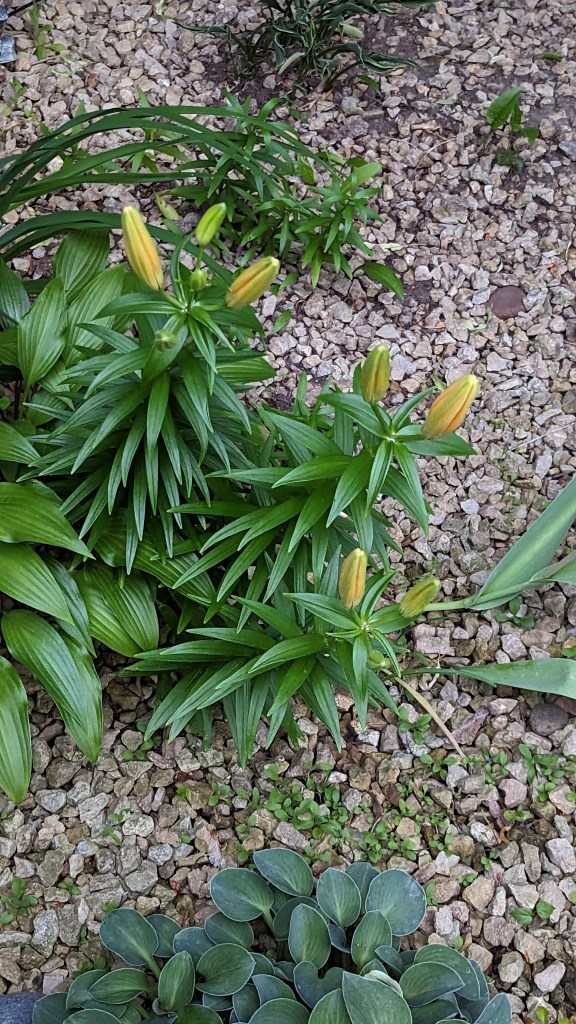
As the Asian lilies wrap up
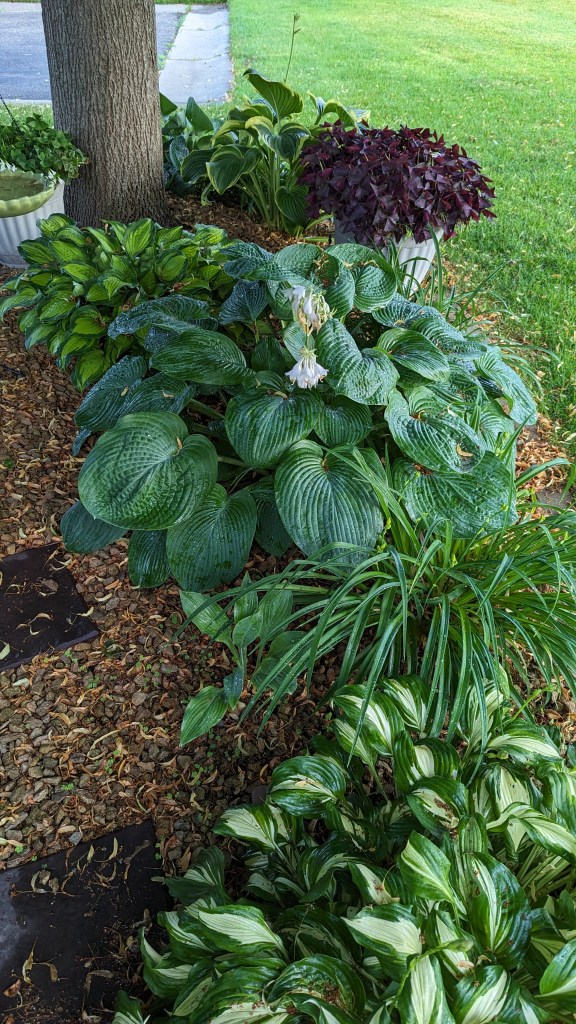
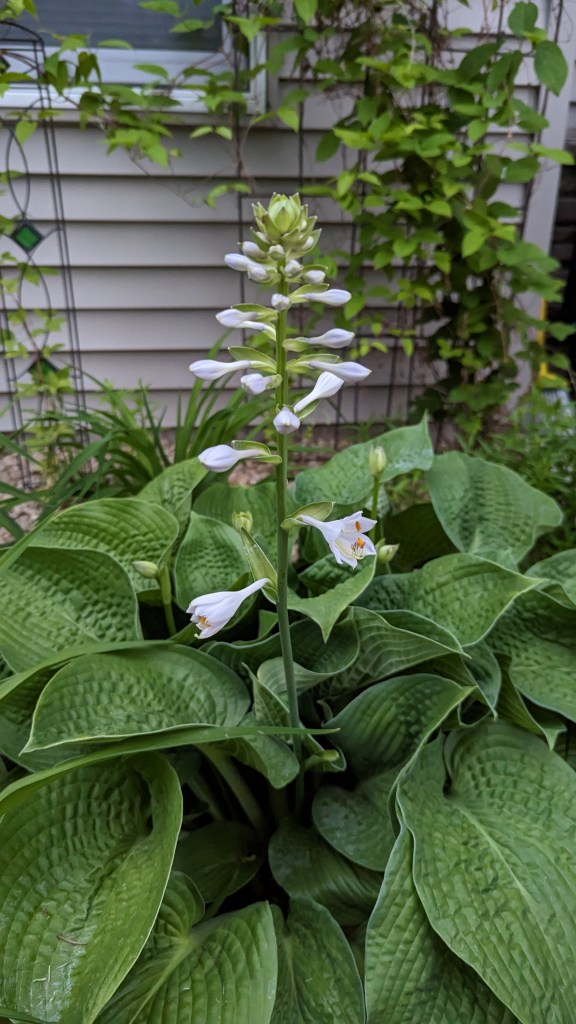
and the Elegans hostas stand in the background
The Blue Mouse Ears are starting to steal the show
The big Just Plum Happy daylily is getting it’s scapes
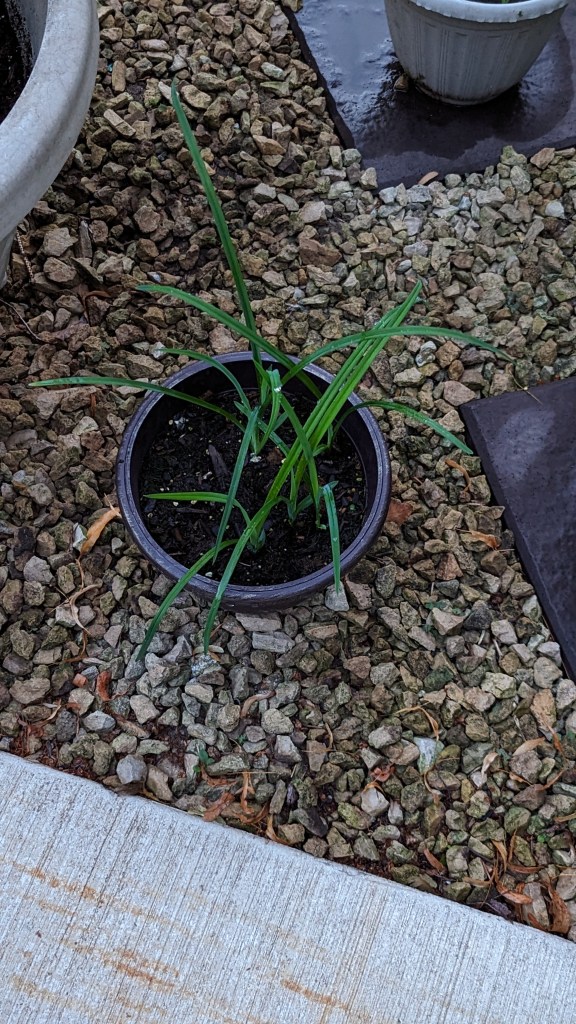
The daylily seedlings are starting to outgrow the seedling box and are gradually getting exposed to the wider world
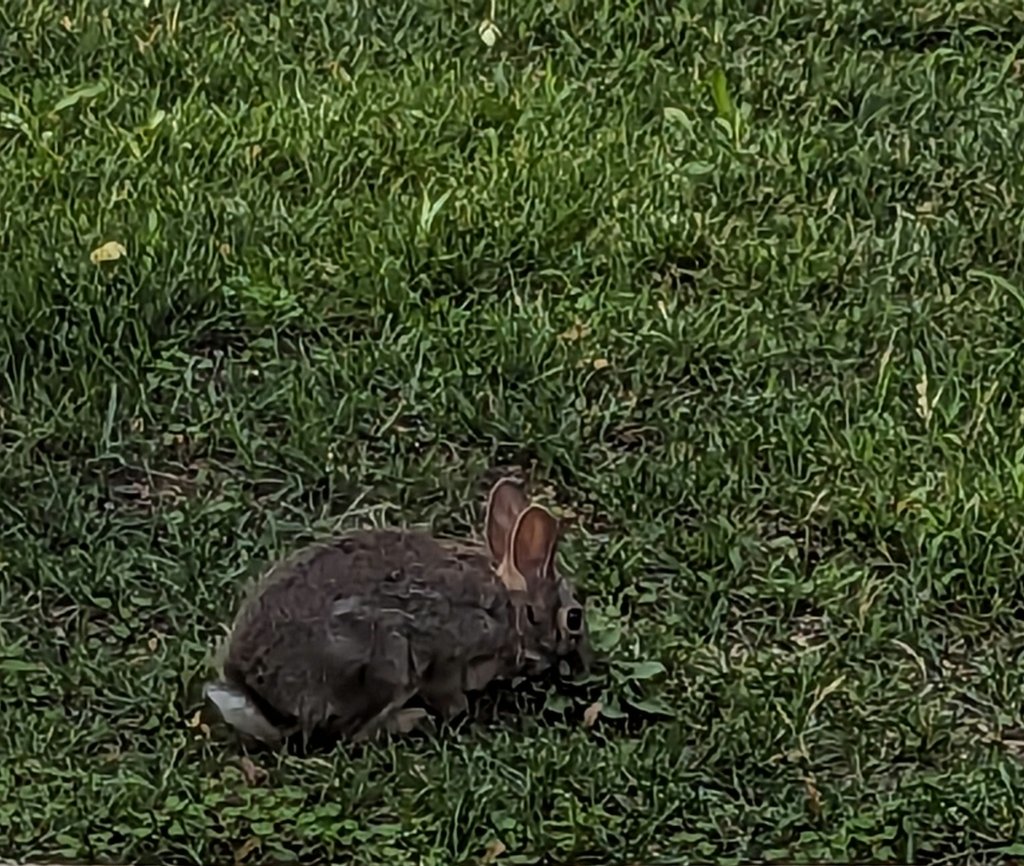
And the lavender from the old seeds is standing guard as a deterrent to bunny munching
Oh yes, it’s a thing
The coneflower in the back is completely gone, and this is what remains of the one in front.
It has been a bonanza time for me in the various gardens. I have an oft-used saying – “Talk is not do”. I have soooo been in the flow of “do” I had no momentum to “talk” much. On the blog at least – lol.
The gardens at the townhouse are starting to approach their very full time. The spring blooms, even including the clematis, have wrapped up. The pine trees candled out, the linden is about to bloom, the weigelia is blooming, and the first hosta is blooming.
The “clover”, which I think is Yellow Wood Sorrel, has lived it’s usefulness as blooms for the bees, and has been plucked for the season. The bunnies do not eat those flowers like they do the white clover.
The Asian lilies are about to bloom.
There are now 20 daylily seedlings sprouted from last year’s pollinator created seed, all of which will need a home in the seedling bed this fall. The daylily seedlings from last year are all growing, and the 2-5 year daylily seedlings (that didn’t go to the little house up north we owned for a couple years) all need to go to the (camping/hunting) land up north, or to the historic cemetery fence garden. (The daylilies in the iris bed appear to be bunny food there.).
At the land up north, the camper will be moved next weekend to make way for trees to be cut, ground to be levelled, class 5 to be laid down, and the incoming shed to cabin conversion to be moved into place. Yikes! Here we go again with a build out. I am told that from the (shed) cabin I will have the view to the garden that I requested. I may have some thinking to do on a strategy to keep the ferns out. Plastic may be deployed. We shall see. One thing is for certain – the “I wish I had that money back” steel raised bed gardens with expensive black dirt on top of hugelculture turned to ferns 😂 is out. It has to be, as that is where the camper will be for a year or two while retired hubs builds out the interior of the (shed) cabin.
What else is going on?
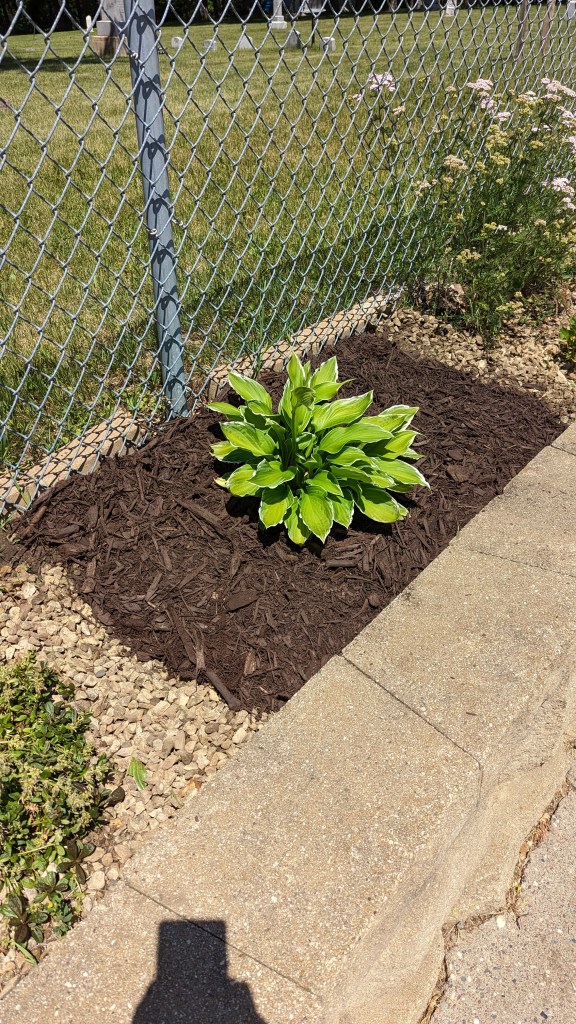
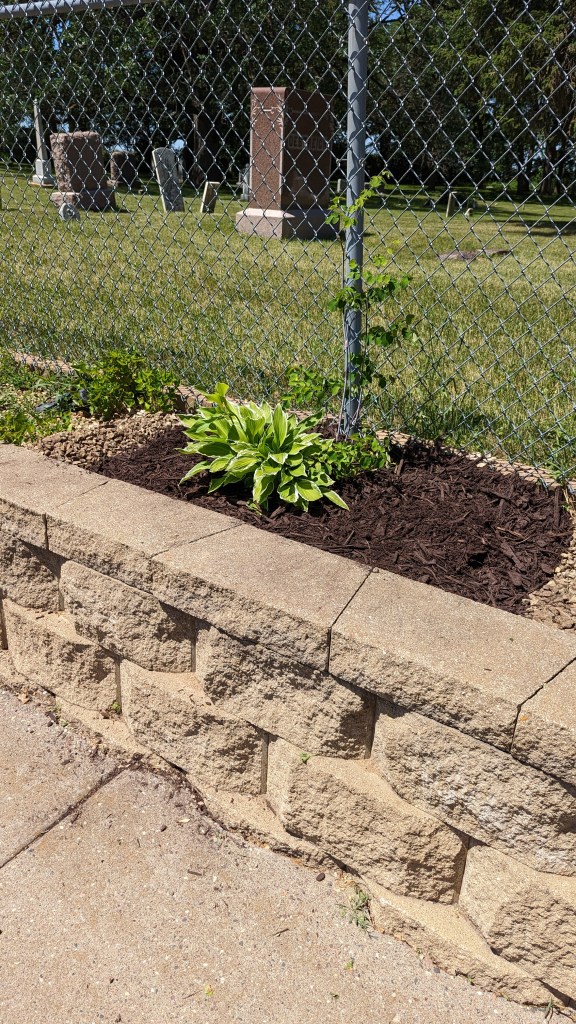
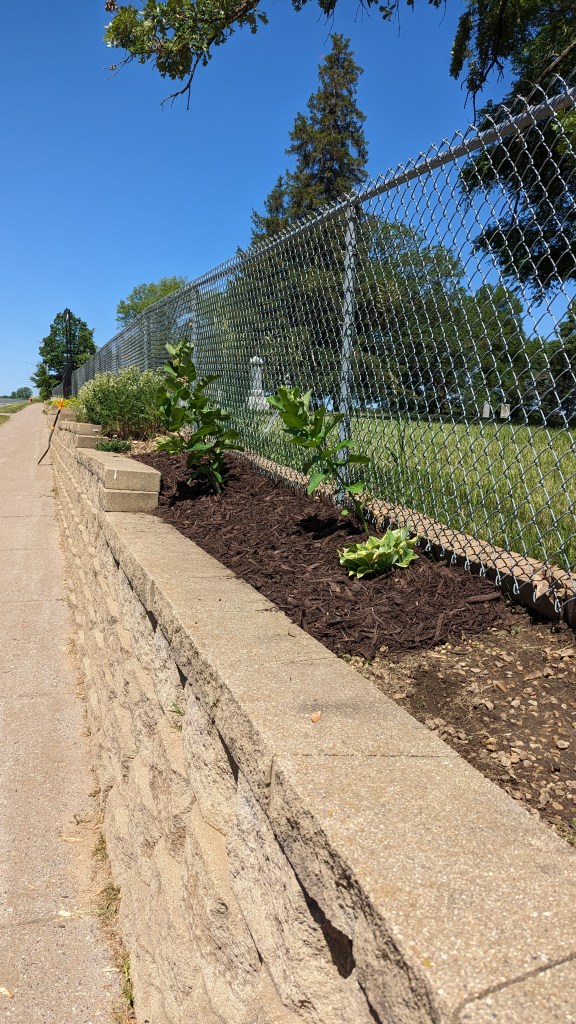
The long fence garden at the historic cemetary is getting a rock to mulch makeover. The old rock is slowly being hand-picked and removed to a pile for donation, and bags and bags of beautiful mulch are replacing the rock. Sweaty work for all, and no lawn chair relaxing like at the townhouse, but wow! Looks awesome! Many hands are at that work through the week, which is absolutely heartwarming! We garden for fun, but also for our neighbors, and I seriously have lost track of the number of people who are complementing as they walk by. The other ladies have exactly the same types of stories.
Little by little. The hostas are all now protected, as well, and the work is beginning to finish and fill in the remainder of one side.
The iris bed at the historic cemetary will be a fall “stretch” opportunity. Those can go into the fence garden too, little by little. And we keep getting offers of divisions as donations. All in good time and proper sun/shade planting. That garden has such potential, with all the offers of divisions donations, to be a wall of beautiful season-long perennials.
We do have an unfamiliar to me weed there. I downloaded an app to try to identify it, but what the app is returning doesn’t seem right. It is a clumpy upright weed with bulblets. This coming week, on Juneteenth, a plant expert is coming to the historic mansion for the annual rain garden consultation, and I hear they can identify weeds. I plan to ask them. For now, we are plucking that harvest. I doubt they were intentional. See below for my rationale – this dandy is growing between the sidewalk and the base of the retaining wall.
What else?
We miss the front tree, kind of. The daylilies we transplanted from the shade to the sun last year are loving the full sun. We will wait to see what the association does – replace the tree or not.
And the rain gardens at the historic mansion are so full I have just put that on hold while I work on the fence garden at the historic cemetery. All that really can be done there right now is weed the perimeter, which a few of the ladies are doing when they have time. Those will be a next year and following deeper dive. They do have potential, but will be on more of a late fall and very early spring cadence for those opportunities.
The jalapenos at the townhouse had a bit of a squirrel issue which is being resolved, and I am rooting 3 wiegelia cuttings and some clematis cuttings just for kicks. We’ll see if they take.
So that is the “gardens all over” catch up.
Things may be a bit spotty as we are also on the one month watch and hang close to town ask before grandbaby two arrives. You know how that goes – grandbabies trump gardens for sure! Gotta keep our priorities straight 💓
With the initial year’s build out of the little house gardens wrapped up, thoughts turn to fall monitoring and clean up. The new gardens now just need continual weeding as the mulch bed settles in.
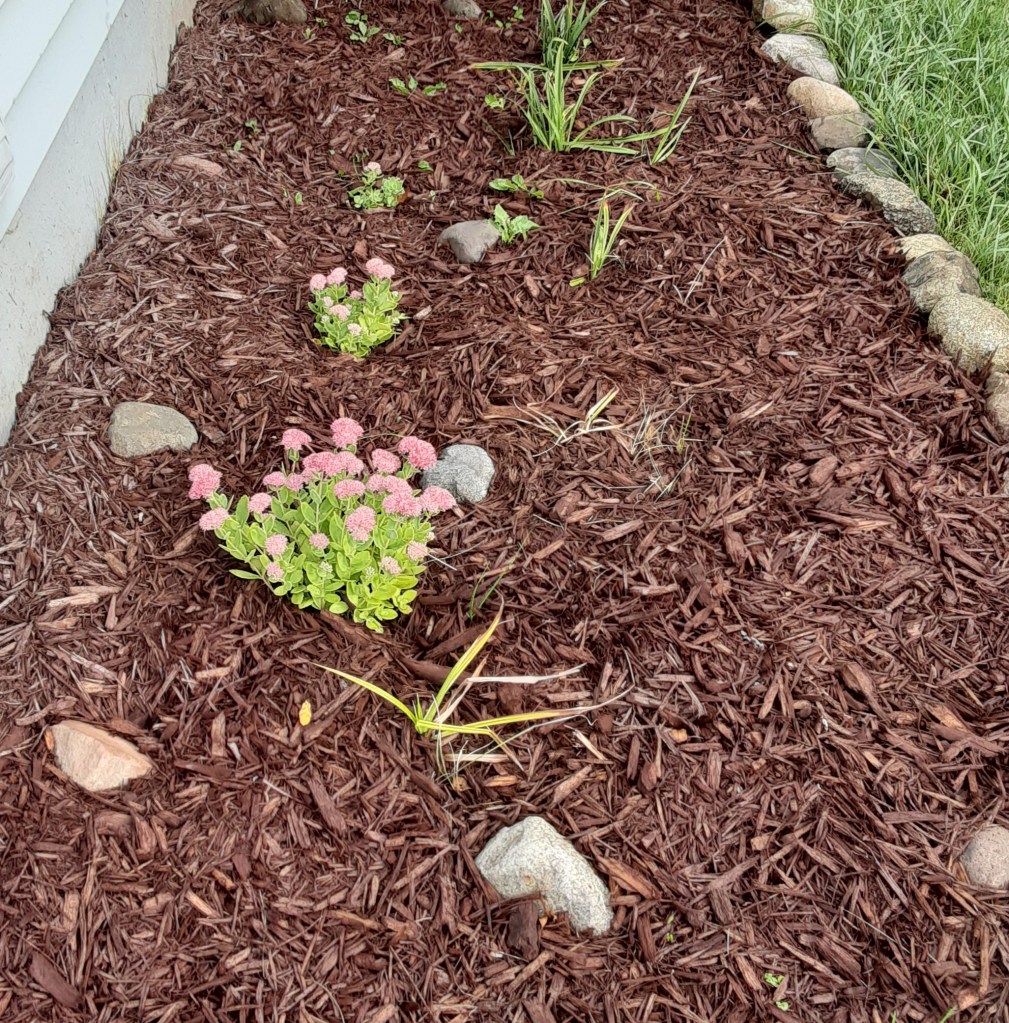
There were no gardens at the little house when we bought it, only grass and trees. Year 1 (last fall), while we were doing the reno on the inside, my husband put 5 daylilies in a front grassy area by the sidewalk. That’s where I began the build out this spring, using sedum transplants from an overgrown area in the townhouse gardens. Here’s what that front area looks like now.
It looks like all five daylilies survived, and the three sedum divisions are doing well. I can’t do much more there until we decide on next step home improvements – front porch, siding …
Putting mulch in all the garden areas somehow stopped the deer from munching. I don’t understand that, but my latest theory is that the deer might not care for the smell. I’m just thankful. As long as that continues to work I will stay that course.
I had considered hiring for the landscape build out, but I kept running into roadblocks. I’m happy now that happened. I am enjoying a new process I hadn’t even considered before – the lasagne style build out. Cardboard right on top of the grass, plants in soil, cover with 3-4″ mulch. The transplants, rootings, and cuttings all seem to be doing well with that method. I make sure to give them a good initial watering, and then follow up with watering as needed.
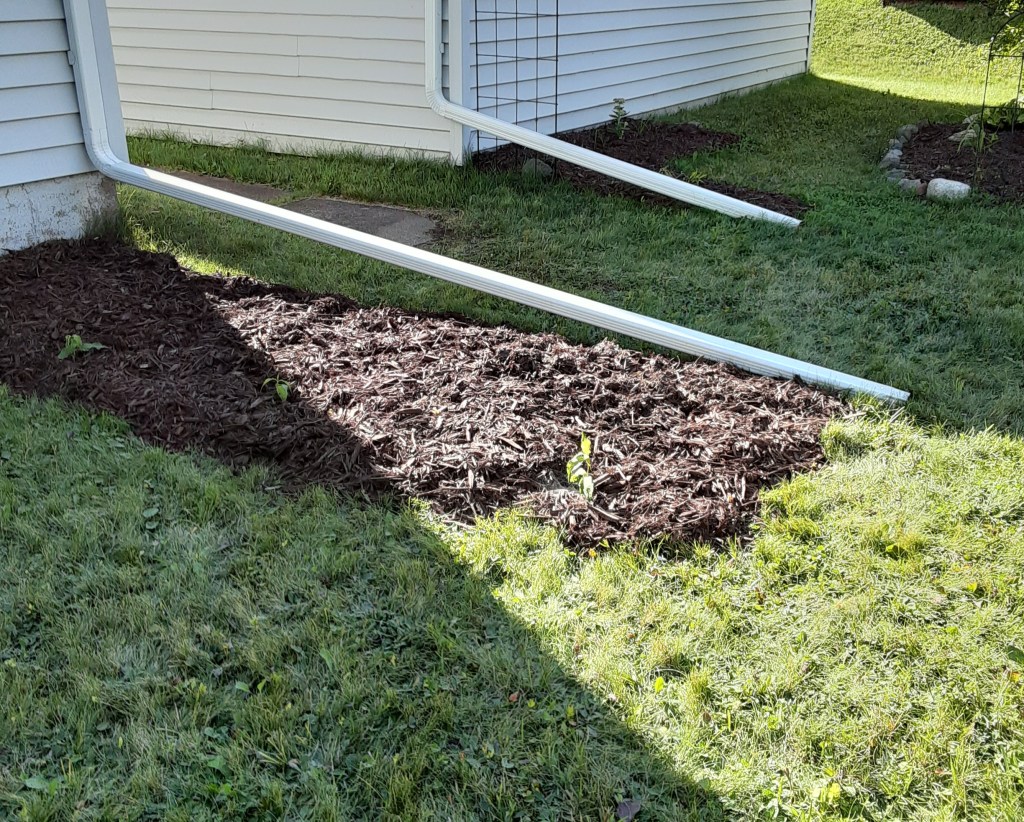
Yesterday’s post showed the completion of the garage to shed area build out for the year. There is a tree that needs to come out yet, and then the rest of the shed side can be finished next year.
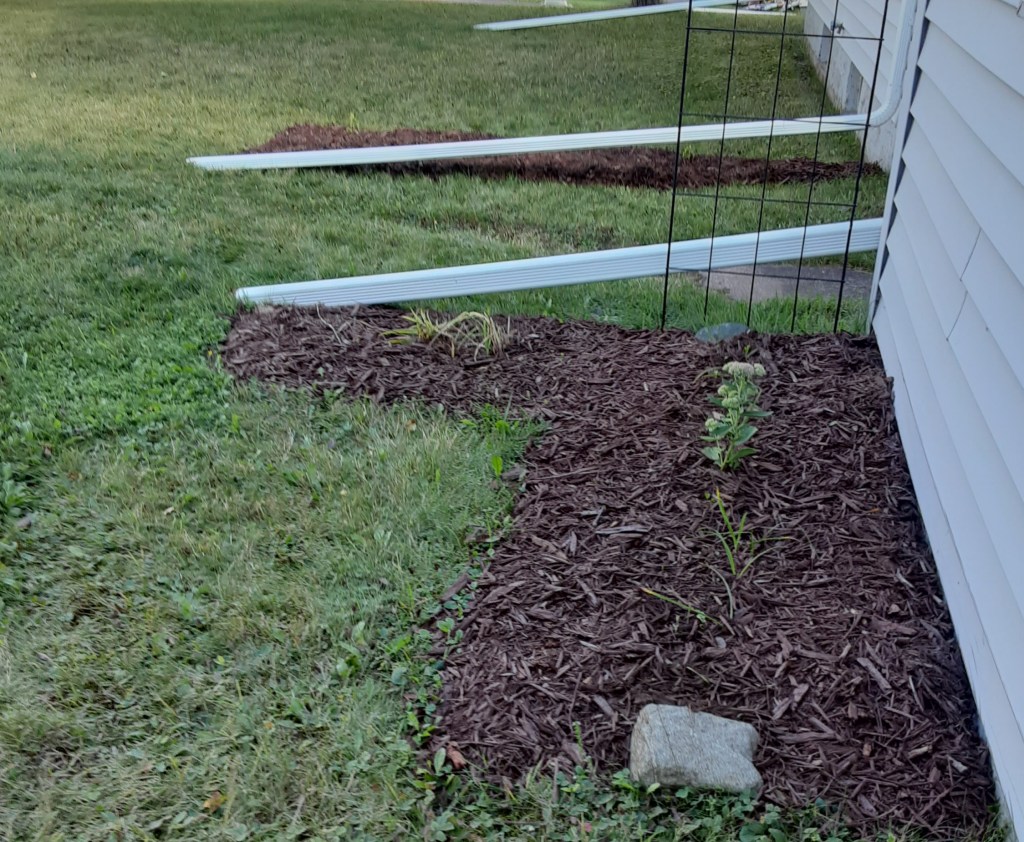
As is my nature in projects, I do a test, observe results, and build in layers. That’s what happened on a larger scale in the back gardens. It went from all grass, to a 4′ x 5′ area on the shed side, to a 2′ addition on that side, to a 4′ x 8′ start on the garage side, then hopped the sidewalk to the back of the house where I put in 3 weigelia rootings, and then back to the garage side where I finished up yesterday. Here’s a few pics of the progression.
In the little house gardens, I decided to use grass paths. That will be way less maintenance, and we can just do one mower pass through there. Plus, call me daring, but the lawn at the little house is old, and full of up north flowering weedy things I actually like, so a bit of that along the path is something I liked the look of this year. Reminds me of the wildflower nature areas along the shore, in miniature.
Next year’s plans are to start a garden at the back of the yard and move the alpine currant and the weigelia rootings there. That will free up the current weigelia garden area. If I then make a parallel garden up by the house along the second long downspout, those two garden areas would flank the area where we sit out. I envision hosta and daylily tiered hedges there. I love that combo, and there is just enough, but not too much sun there to nurture both. The mulch should also help.
There is also a thought floating around in my brain to start a sedum hedge on the side of the house, but that might have to be a “slow to go” project. I am no spring chicken, and a couple advil were needed after yesterday’s build out work.
All this depends on the deer continuing to leave the mulched gardens alone. They do seem to be eating the apples from the apple trees, and that’s great. Less for me to clean up.
So at the little house, year 2, initial build out, there is now monitoring left this fall, and at some point, daylily and hosta greens cutback. I plan to leave the sedum standing until spring, as a test, to see if the birds and bunnies enjoy that winter snack.















 Susan's Daily Garden