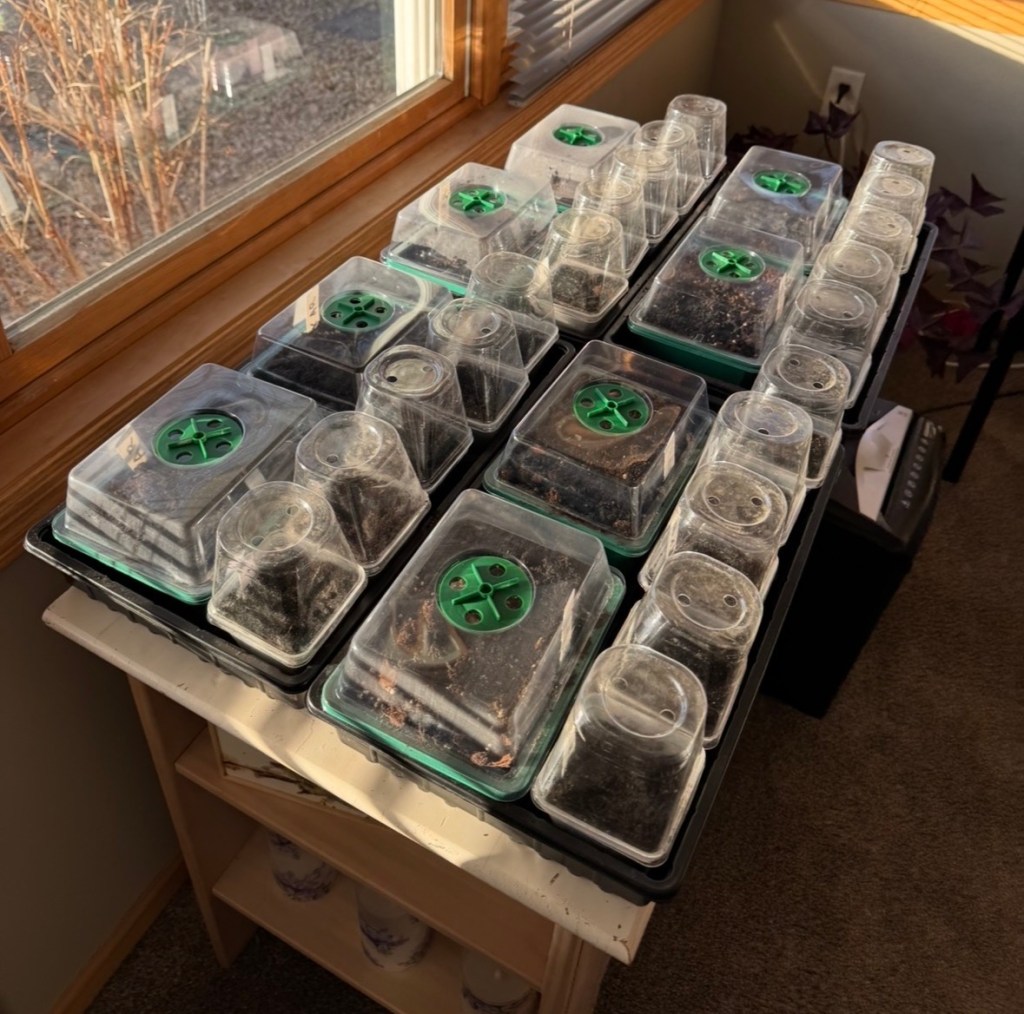
Well, I was going to plant just a few 6 cell seedling trays and put on the greenhouse covers but I got a tad ambitious today. 84 of the daylily seeds are now planted. Still a lot to go, but it’s a start.
Today’s planting work was exclusively with the Autumn Red crosses. And 3 Autumn Red self-seeds 😉 I will stop there until last frost has passed. The bulk of the daylily seeds always get planted then, and that is my favorite way to handle the seeds. Then they go directly into the seedling boxes outside and get way more sun 🙂
It definitely was a fun day. An accomplishment day. It was also a very confirming day. Every priority and decision I have been sharing regarding the daylilies was reinforced.
My best decision, hands down, was all the research and documentation work I tackled over the past year. It saved me from a lot of stress today. Throughout the day I found myself thinking that if I had not done all that work, I would have been sunk. It was just way too much to go on memory and pictures and a few journal notes like I used to. The practice of ongoing research and documentation will be a keeper, even though it is extra work. The payoff is huge.
Secondly, I absolutely confirmed today that both the scope and the volume of what I did for crosses last year was too far for my ongoing comfort level. A stretch year, ok. I was still toying at that point with a number of ideas I have now counted out. I am not going to start a daylily farm lol. I am not going to ship daylilies around. I am not going to grow volume and sell at farmers markets – egads! No! Just No! Not at all me. So today as I was planting dozens of seeds from the same daylily cross, those activities went even further to confirm my decisions are right-sized and me appropriate. I now have a pretty good idea of what I can do with crosses between what we have – what consistently makes seed, which daylilies play well together … Now I am looking to see what I can do with specific crosses at low volume and then working with the results of those crosses and also the self-seed. I like to putz, and putz I shall do going forward 😉
Third, after I researched more on historic daylilies, and the intersection of what I like for form and color, I am super comfortable with where I am with the historic idea at this point. If I can get some daylilies older than Hyperion, that would be great, but I’m still also good if I don’t.
So, indeed, putzing is a great word to describe what I envision going forward. That, and seeing if I can finally get a garden going up north. I think if anything will make it, the older daylilies should. The Autumn Red seeds are planted. If they come up, some will go up. Little by little.
I hope you have a great week. We have plans with one of the grands tomorrow, so no Tuesday post. My next post will probably be Friday 🙂
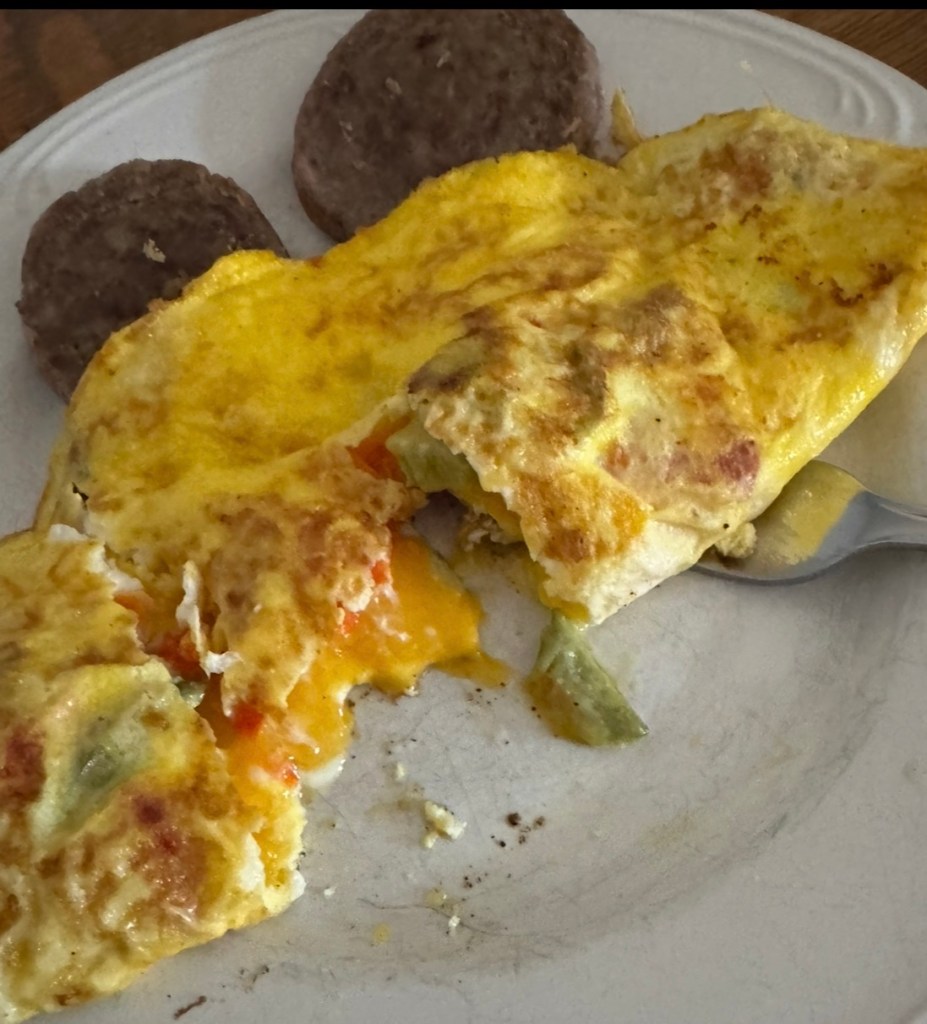
It is time to start getting ready to plant daylily seeds. But first, the chef made brunch. Lots of vegies, and cheese, of course.
Screenshot
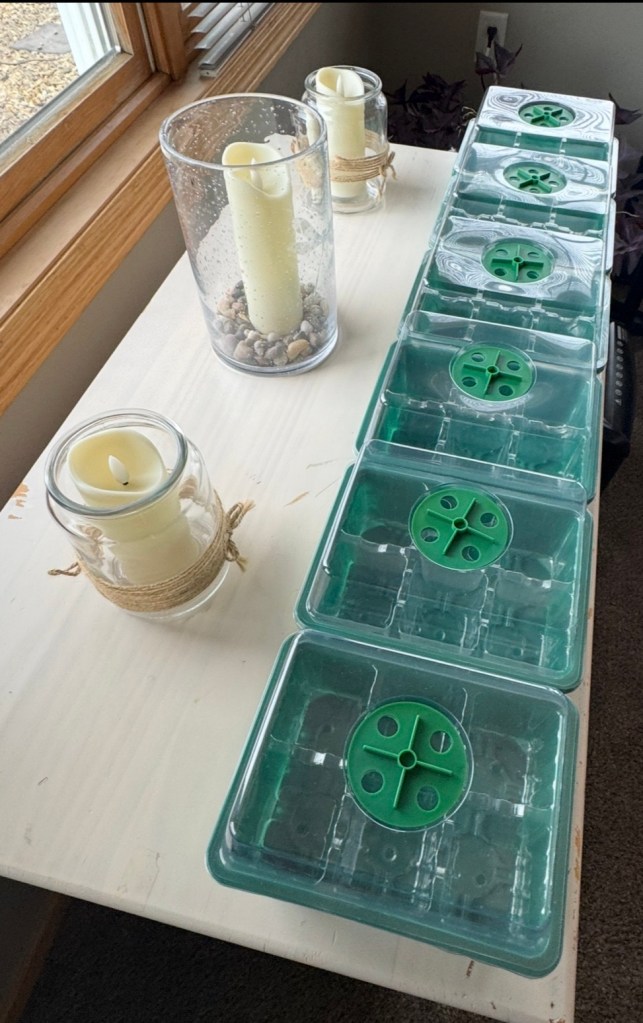
After that delicious sustenance, it was time to start putting the new seedling mini greenhouses together.
I have decided to decorate lightly for Easter this year. I remember all the work it was to put away the full “everything out” Christmas decorations in January, and I am just not in the mood for an Easter version repeat. Seedling trays will make an early appearance this year, where the ceramic Easter eggs would normally go. But don’t worry, we still celebrate the actual meaning of Easter, every day, in our hearts 🙂
One last look before planting wave one of the daylily seeds. These seedling planters will never be this clean again 😉
We are past our most recent blizzard, past our sub-zero weather last night, and now we are starting to see larger numbers of Robins. It is a wonderful moment on this St. Patrick’s Day, and I am hoping that Spring truly is beginning.
And so, after the long wait, with lots of computer time to keep my mind “garden happy”, we will soon be starting to plant daylily seeds. A few weeks yet, but soon.
While I waited for this time to arrive, I continued to work on the Historic part of what I want to do with the daylilies. I recently took the time to look up the introduction dates of our daylily inventory, spurred on by the discovery that Autumn Red is 85 years old. I found that many of our daylilies are technically considered historic. The AHS (American Daylily Society) classifies a daylily as historic if it is 30 years old or older. Most (all but four) of our daylilies are older than that, and some are quite a bit older. A large portion of our inventory has been crossed, which, of course means that my work with historic daylilies is technically much farther along than I thought. I still want to work with old, old, old daylilies, but wow! Now my mind is full. And I needed to know more. So, I dug deeper.
Along the way, researching parentage of the older of the historic daylilies, I also discovered that ploidy was often changed with a thing called colchicine. What in the world!!! Yah, I can write on that in another blog, but colchicine is responsible for getting us tetraploids, and since South Seas (a tetraploid) is my best self-seeder, and the entire focus of my 2026 planned daylily crosses, I then started to wonder – do tetraploid self-seed daylilies ever go back to their farther back parentage and then change ploidy, back to diploid? I know some of our South Seas self-seed results are pod fertile, and that they cross with tetraploids, because I did crosses and got seed. Whether that seed goes to seedling will be seen in a few months, and bloom years out. But this year I only plan to add four daylily crosses, and they are all from South Seas self-seed. Two of them are with Hello Yellow (whose parentage is unknown) gasp! And one is with two South Seas self-seed. Oy! What am I doing? And will I start creating situations where ploidy changes? I need more research! 😉
And that is what I have been up to.
There is so much to learn! I think I will probably be very busy researching until the daylilies start to bloom. That is a very good thing.
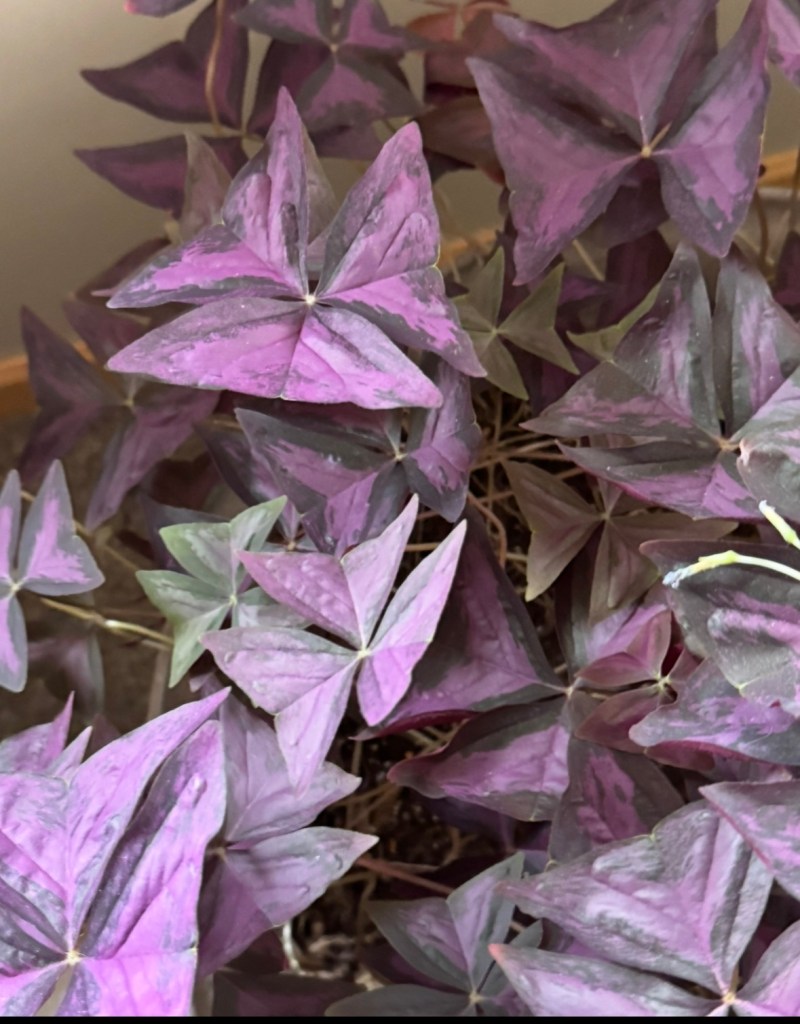
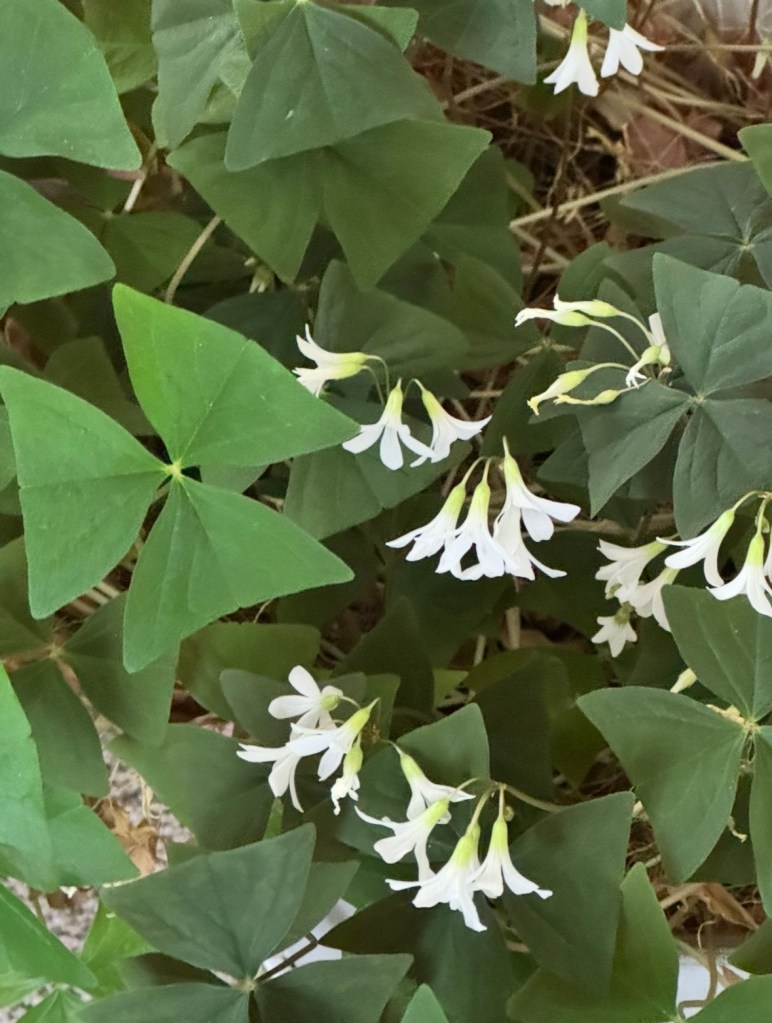
In the meantime, todays pics are holiday appropriate – shamrocks that I over-winter.
I have now had time to sit with the data on the 2025 daylily crosses. I am a bit shocked, but not totally. I harvested 422 seeds from our gardens here. 277 seeds are from diploids. That is not surprising, as I know what Pink Tirza does. There is a reason Pink Tirza is my diploid line. This year Pink Tirza was an incredible pod parent. Last year it was the opposite – Pink Tirzah was our top pollen producer in 2024. Naomi Ruth and Pink Tirzah don’t do fantastically well together, but Naomi Ruth was a top pollen producer this year, as well. Peach also typed out as a diploid (which did surprise me – a lot), and we have seeds from Peach. And with the Red daylilies in the mix and at an overwhelming quantity of 8 clumps, red boosted the diploid numbers.
Then there are 111 tetraploid seeds. Not surprisingly, South Seas took the prize for tetraploids. South Seas is my tetraploid line for a reason. South Seas is a powerhouse. And Coral Majority, one of her children (which I did not know when I purchased Coral Majority, but bonus!) continues to amaze. In fact, South Seas may have daylily grandbabies in the next few years in our garden due to Coral Majority. Fingers crossed. We have seed. It would be kind of cool. We shall see.
And then we have 34 self-seed from our gardens. Mostly – South Seas and Coral Majority, but a few Red and Just Plum Happy.
Not in the above numbers are 99 seeds harvested from Oakwood – 78 of which are Stella De Oro and look kind of iffy, but maybe they will do something for those gardens. I will try. There are 2 Red Volunteer seeds I harvested from a Red Volunteer I planted there last fall, and then 17 seeds from some new daylilies I don’t remember from last year, but they did very well this year.
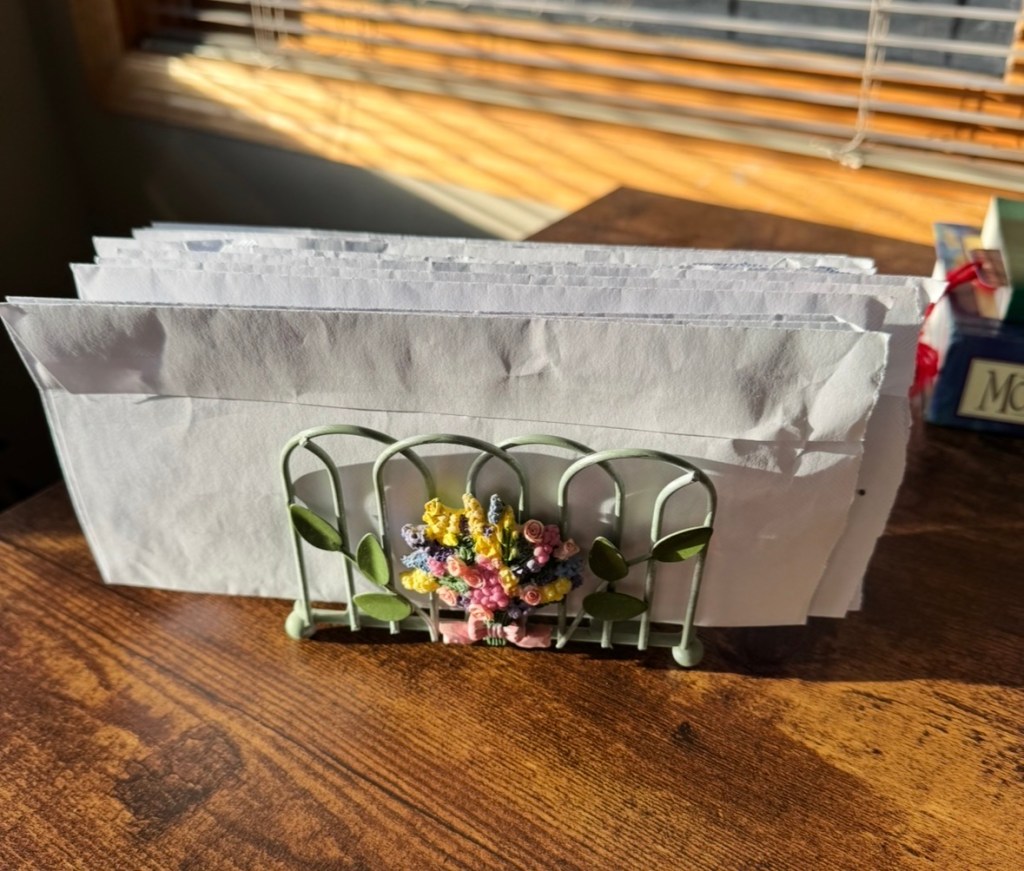
So – 521 seeds. Oof! Yah. But I have my thinking cap on. I will figure it out. Lots of other people do this, at a much bigger scale. We shall be creative. There are 4 large success crosses. The rest can go in little seedling pots. Maybe direct sow the self-seed.
The past few day I have finally felt like I have entered the land of fall in Minnesota. It has been a while coming. And there is a reason. But first –
The 2025 gardening season started out a bit tough, but ended very well – in a significantly different direction.
Earlier this year I shared that we lost 18 hostas sometime between last fall when I cut them back and when they should have been up this spring. Some were huge and all were very healthy the previous year (2023). In fact, I had offered two in particular to my Dad, and he was excited to get them. It was a bit disconcerting to have them vanish.
We have had a full spring/summer now to watch for any sign of the hostas to return. What can I surmise? The vast majority are gone. We will probably never know for sure what happened, but they are definitely gone. There was one that did somewhat recover. And there were two that sent up baby leaves that have endured. The consolation was they were from the ones I was planning to bring to my Dad. So that’s good.
The hosta losses were sad, but the daylilies were crazy good this year, both in bud and flower production, and in pod success. There are quite a few seed pods from self-seed but the vast majority are from crosses I did – hybridization. My tracking spreadsheet tells me I was successful in getting 21 different cross types to seed pod. That is a lot. And I have been feeling it all of September. I have come to the conclusion that the scope of what I did this year is not where I want to land next year. Here’s why:
I absolutely love daylily season. Head over heals, in my very happy place. But I also really love late summer and early fall in Minnesota. I like freedom to enjoy it outdoors. I don’t want to be spending a lot of time sitting indoors during that time, documenting daylily info and storing seeds, and I try to plan for that preference. Knowing that, and suspecting I had gone a bit far with making daylily crosses by mid-July, I made a conscious decision to stop doing crosses on the last day of July. I knew I already had a lot of pods, and that very few were failing, so I knew I would be busy, but I don’t think I fully understood the implications. On September 28, I am still harvesting, labelling, documenting, and storing seeds. And here is the twist – I have discovered it is not my favorite of favorite activities at the scope at which I am now doing daylily crosses. Additionally, based on what I have read over the past year, left to my own very curious and daylily loving devices, the work will only mushroom from here. Think exponential since I literally have already produced hundreds of daylily seedlings and if even 50% of the seeds I am harvesting this season go to seedling, I will be in a sea of daylilies. And 50% is not unrealistic. My success ratio from 2024 seeds to 2025 seedlings was much higher than 50%.
I have thought about this situation ad infinitum. I have even hinted at some ideas in my posts. The most appealing option to me at this point is to take 2026 as a self-seed only year. So let’s get the self-seed discussion out of the way first. I could harvest daylily self-seed for the rest of my life and still keep my fall seasons free for anything I want to do. Yahoo! Self-seed harvesting is very easy. There is no documenting until I harvest. I just enjoy the progression – the scapes to buds to gorgeous blooms. I watch the pollinators come to visit and imagine the wonderful work they are doing. The wind blows, different daylilies make their own crosses easily… There are lots of factors at work. None require anything but admiration from me. No planning, no overheating my brain with what pollen fertile daylilies are blooming that day that could be crosses with compatible pod fertile daylilies that are blooming that day. No documenting endlessly, first on my notes on my phone and then into a spreadsheet with 13 columns of data. The pollinators or the wind or whatever, do their thing, I see what pods mature, collect the seed, put them in an envelope marked xyz daylily breed-year, and I’m done. Maybe I add the count (how many seeds from that daylily type) to refresh my mind when I put them in the refrigerator to stratify and start planning for planting. I keep some and I plant some in other gardens. However, I do not have a say in what goes into that seed. But, so far, I have been delighted.
Hybridizing is a lot more work. A lot. I’m not talking just doing the crosses. Oh no! There is documenting, documenting, documenting from that point on, and then more documenting and labelling for storage. And even crosses of the exact same pollen to the exact same breed of daylily on the exact same day in the exact same bunch (just different blooms) can mature on very different days. Sometimes a week apart, sometimes more. And then when I do 8 identical crosses on one day, 6 on another, four on another, oh yah. The spreadsheet gets longer and longer with more and more of those red corner notes, where I try to put into words something that will make sense six months from now, when I have a question on what I harvested. I am not teasing when I say all that collecting and documenting and storing ate up a lot of my freedom in September. (I made 21 different crosses this year with multiple pods each.). But if I don’t do that documentation work, I get the mysterious “maybe” cross between Pink Tirza (a diploid) and Marque Moon (a tetraploid) that created something that looks pretty close to a Stella De Oro. And I, on purpose, do not have any Stella De Oros here, so … What’s worse, I can’t duplicate it and my other suspected crosses for that outcome produced no pods. Soooo. Document I do. For Hybridizing.
So, where have I landed? I have come to the conclusion that unless I go for a scope where I am selling what I produce, hybridizing is interesting work in small batches, but “not for me” at the scope I expanded to this year.
I know. Sad. But I will still do a few intentional (hybrid) crosses each year. Just at a much smaller scale. The scale I have enjoyed in previous years. And I still will have all the daylilies created up to this point. I just need to stop the mushroom effect.
The other option is to start a real daylily farm, like a business. And then I would be sitting at farmers markets, because I am not going to start mailing things around. The fact is, I am a gardener, not a marketer 😉
One thing is for certain, spreadsheet documentation is worth continuing:
Since I am keeping a spreadsheet for all of this documenting, and the beauty of spreadsheets is you can slice and dice data a lot of ways, eventually optimal options will start to come forward. Without adding new daylily breeds to my garden, there is a finite amount of crosses – diploid to diploid, tetraploid to tetraploid, early, mid, late season. I also have a certain palate I am looking for so that narrows things, which is helpful. Where I could get in trouble is the infinite number of crosses with new seedlings that bloom. That is where I will need to discipline myself.
So back to the start of the blog. The past few days I pulled myself together, and I allowed myself to get into “I am going to enjoy fall” mode. I spent a huge chunk of the days outside. I did some garden cutback, and I did some fall projects. I even took an old bird feeder and made a lantern using a battery operated votive. And I harvested the 6th to last daylily pod yesterday. The others have to be harvested by Sept 30th because the furnace and AC annual maintenance person is coming that day, and they will need the space where the pods are still maturing to be clear. It will be tight. Those pods may be a loss. No, I will not reschedule the maintenance appointment to save 5 daylily pods. I know. Sad.
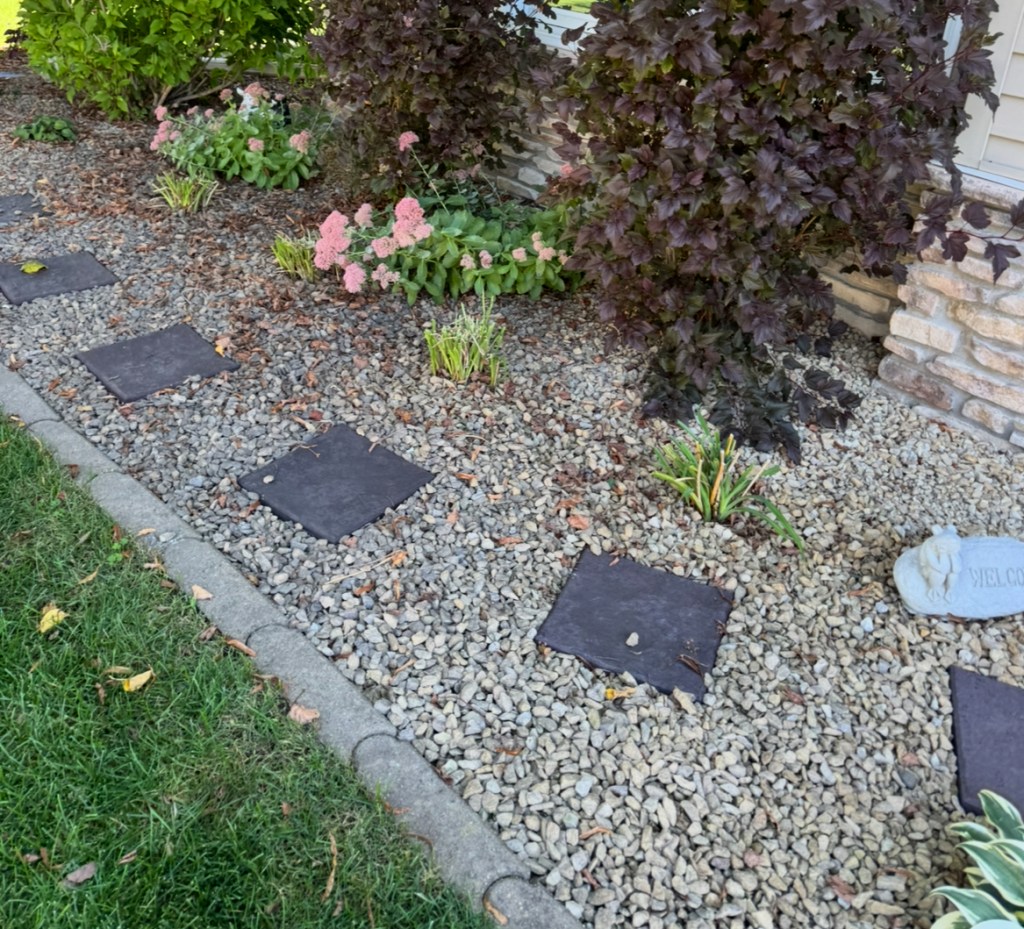
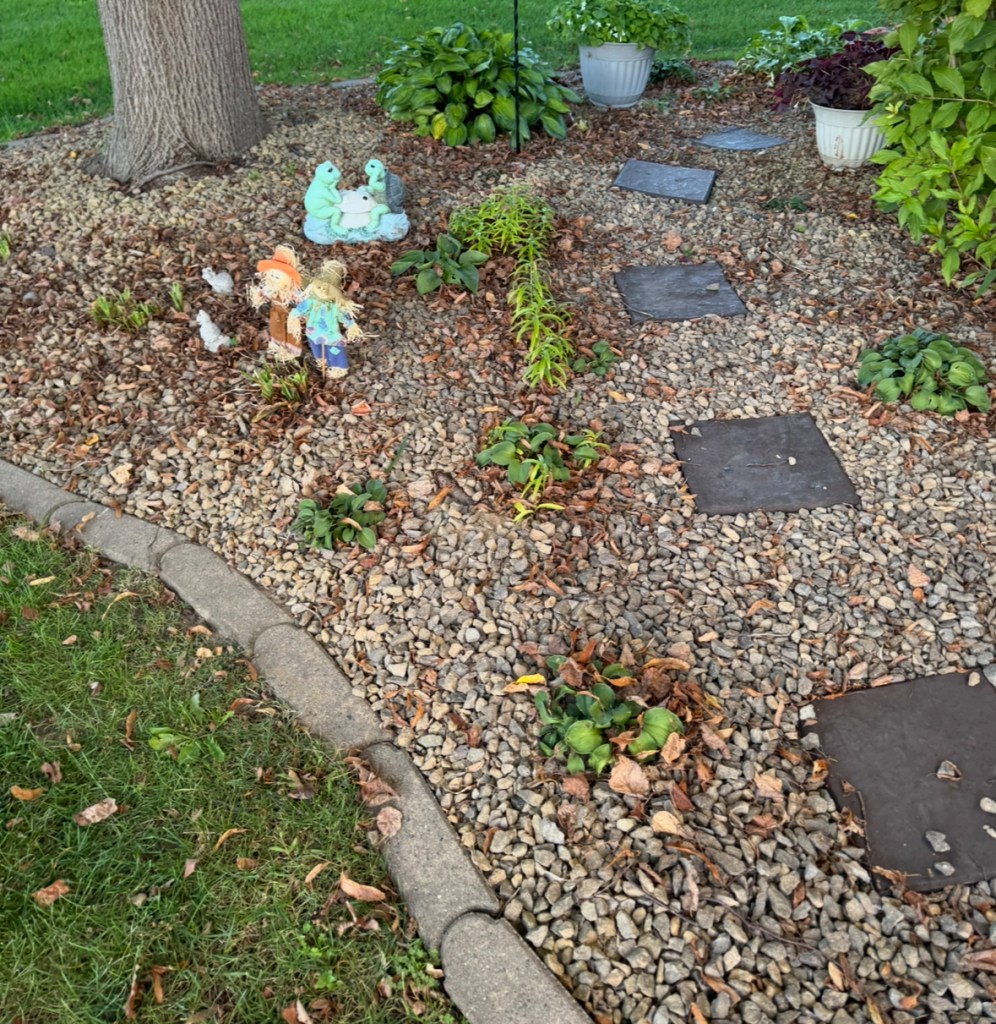
For today’s pics, I cut my “landscaping” daylilies back yesterday. They were dying back, and they were obscuring the Autumn Joy sedum. Can’t have that.
Before
After
Oh, there you are beautiful Autumn Joy sedum! That I can propagate in weeks with cuttings and no documentation whatsoever. And have. A lot 🙂




 Susan's Daily Garden