
Happy Tuesday! I hope you are having a good week so far!
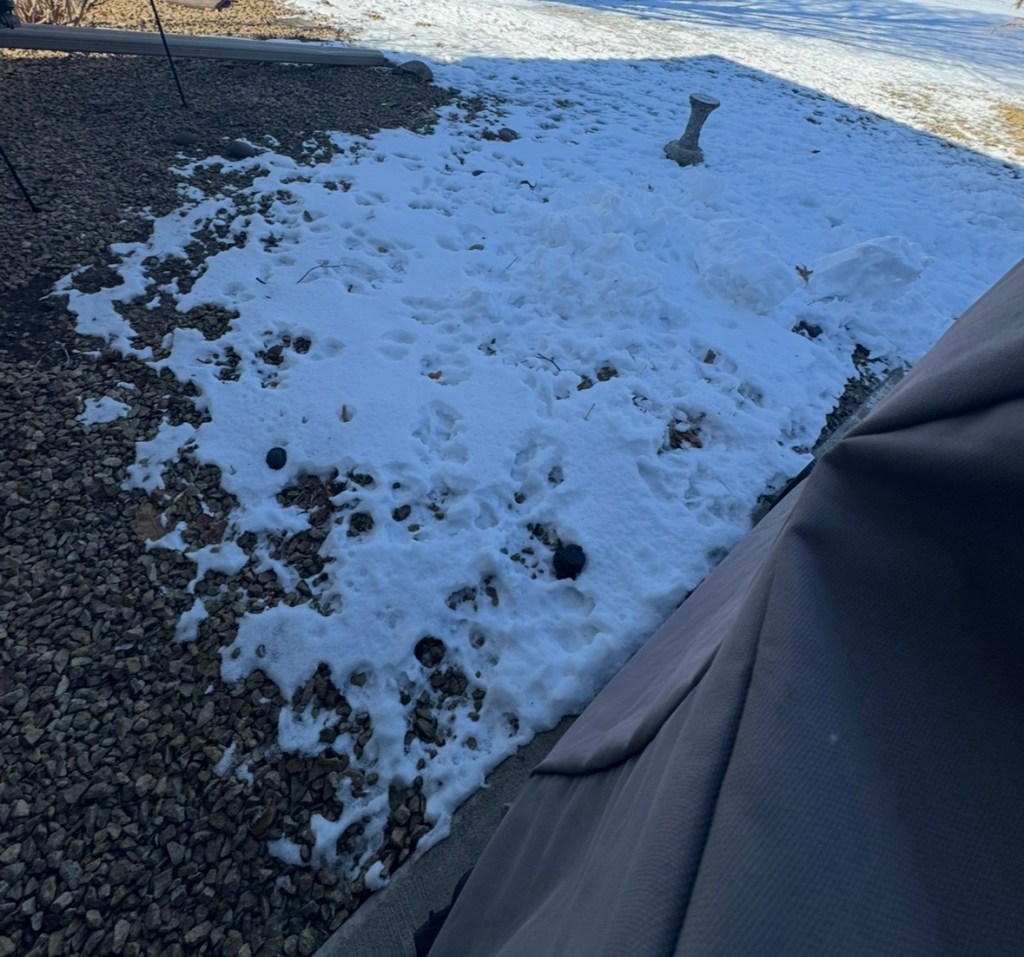
We are definitely in the march to Spring. Last Friday night we had a good ’ole thunderstorm. Early Saturday morning we had a snow globe snow fall. Saturday afternoon the snowfall was well on its way to melted, and by Sunday morning it was gone. The snowplow pile from the whole winter is just a shadow of what it was a few days ago. And although we will have cooler days mixed in, and even some snow, Winter 2025-2026’s time is coming to an end.
Saturday was the perfect time to knock out some remaining garden questions I was hoping to resolve.
Over the years I have saved a lot of info from older versions of the gardens, along with lots of daylily tags (dozens). Saturday as the snow swirled around, I pulled out those saved treasures and started to sort through them. By midafternoon, everything I no longer wanted to retain was in the trash, and I was researching my remaining daylily identification questions.
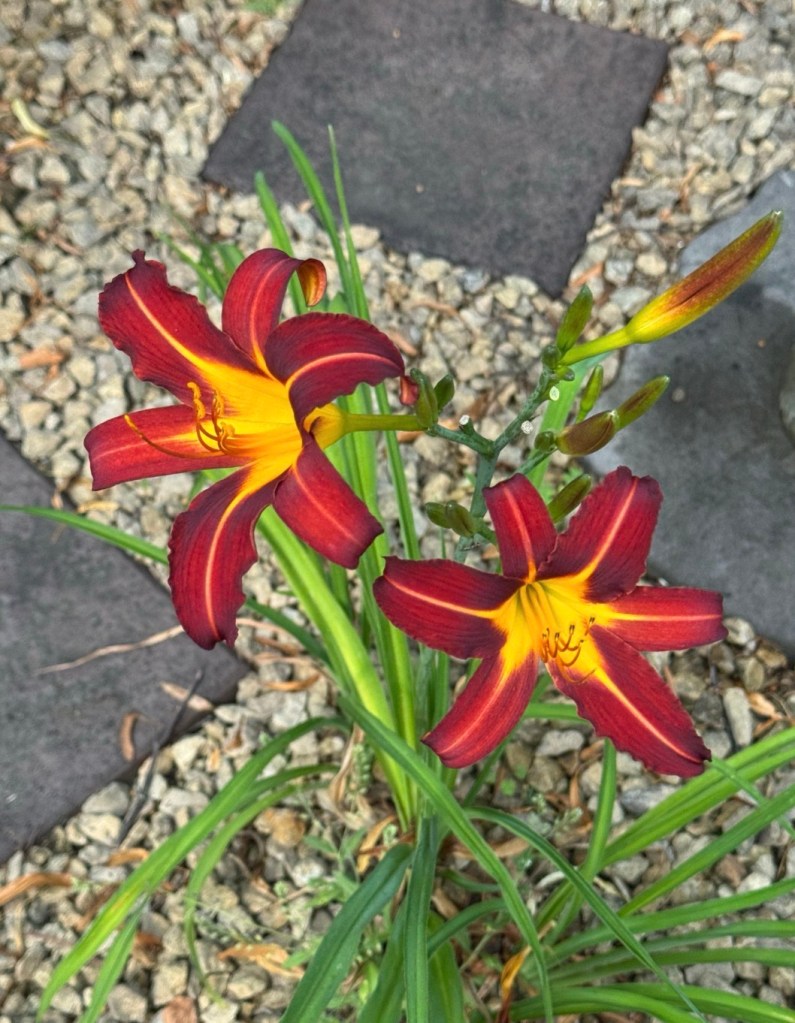
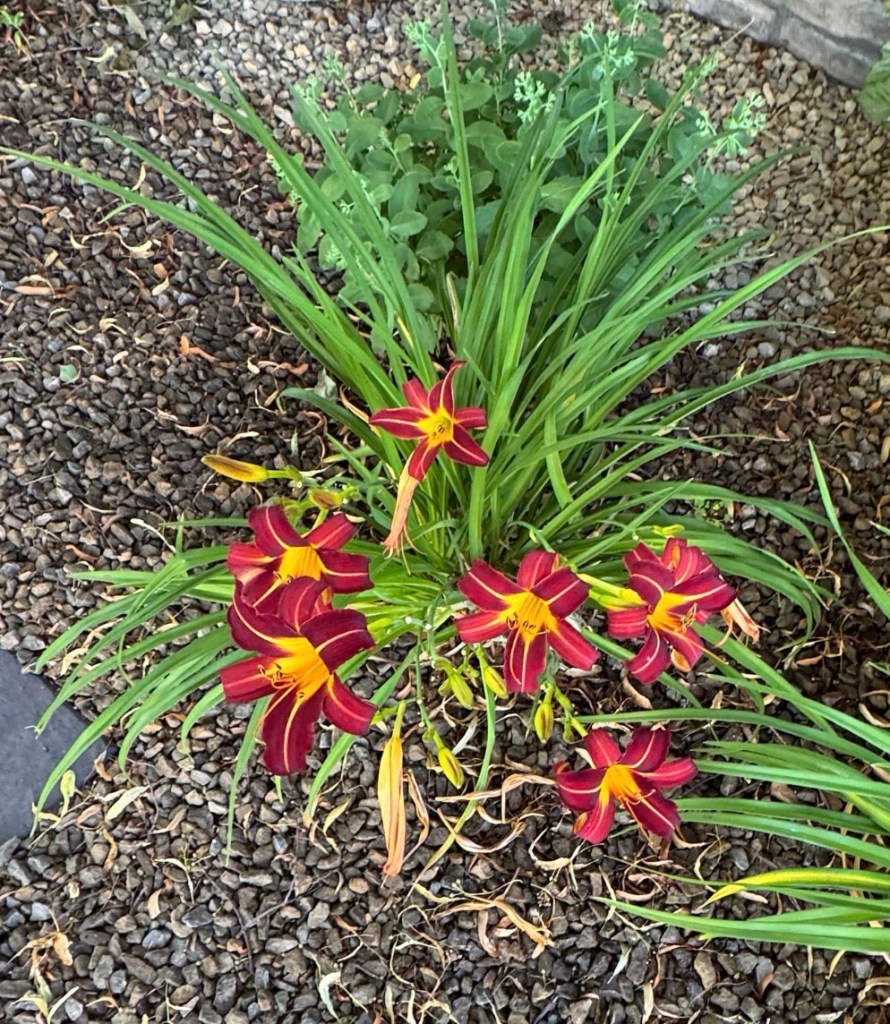
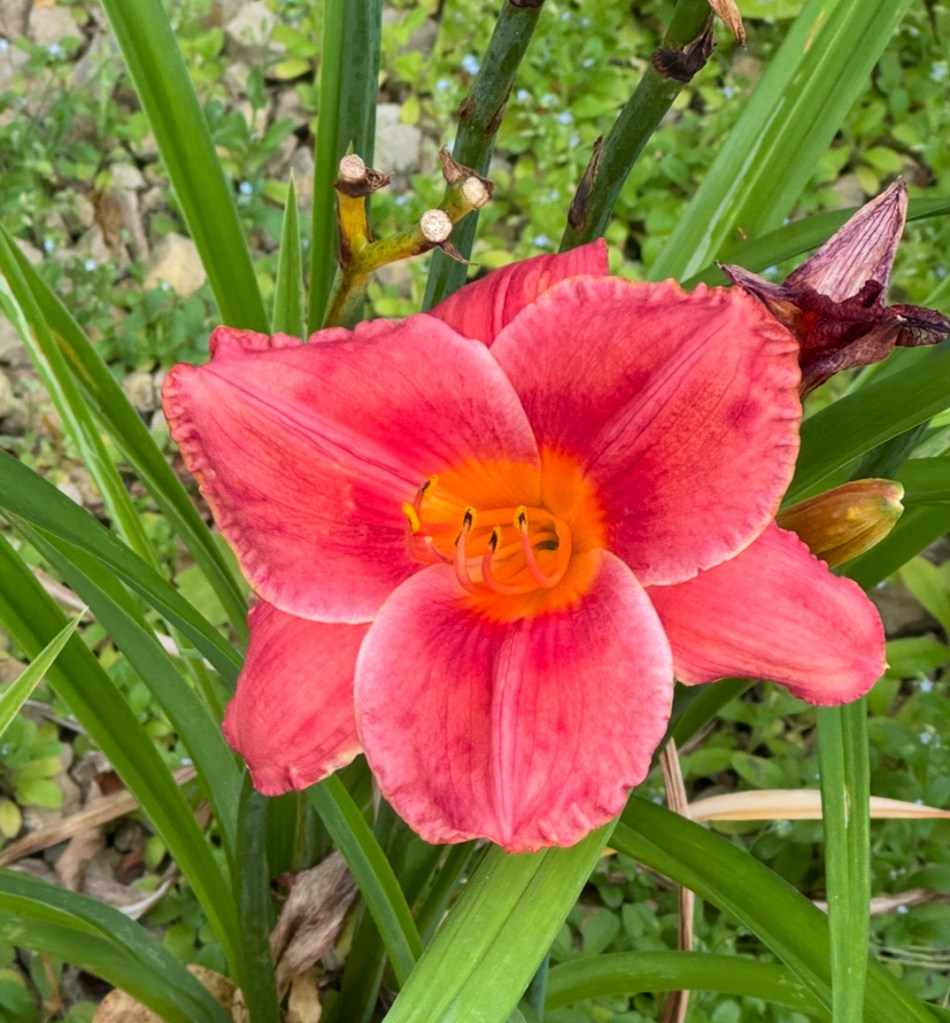
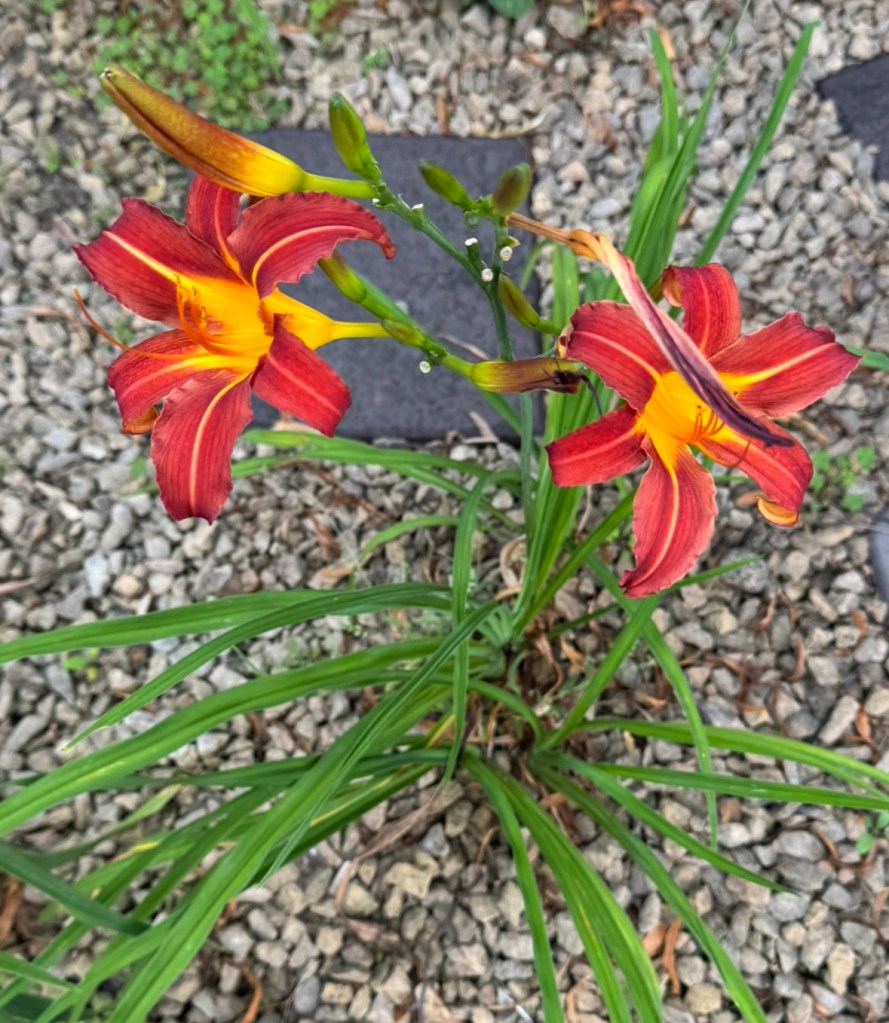
As I went along, I realized some pretty great patterns were already established in our gardens. Things I had been doing for years started coming forward as additional pieces of the future plan. First up, the daylily I have been calling “Red” is actually ‘Autumn Red’. I bought and planted them, oh, probably 20 years ago. The packaging is long gone, but at one time I did a search by pictures alone and pretty much figured that is what they are. Saturday afternoon, after I had excluded all other options from my saved tags and data, I went on a deep dive of online sources and finally made the call. Going forward “Red” shall be referred to as ‘Autumn Red’. The curled petal tips, the yellow mid-ribs, confirmed a diploid, confirmed pod and pollen fertile, bloom size and scape height match, along with mid-season, diurnal, and rebloom. And it looks exactly like the pictures. Exactly.
What caught me off guard, and was kind of a delightful find, is that ‘Autumn Red’ is quite old. It was registered in 1941. It is 85 years old this year. Not hundreds of years back, but ‘Autumn Red’ is definitely not a modern hybrid. And, I am already a few years into hybridizing with ‘Autumn Red’, with 5 successful crosses to seed, as both pod and pollen parent in 2025, and a set of seedlings from a 2024 cross with ‘Autumn Red’ that I planted in our gardens last year. Now we wait to see those blooms.
I did those crosses on a whim a few years ago, proving out ploidy. That work turned into a pattern, and now it looks like hybridization with ‘Autumn Red’ is going to be the only path. Self-seed is most likely not a go. It is stingy on producing self-seed and I do not have any “Autumn Red’ self-seed that has gone to seedling. It does reestablish well from division, and I even have a note that I re-planted a single fan. I forgot about that, but it kept on doing its daylily stuff, and it bloomed last year. It seems “Autumn Red’ is great at making seed from intentional crosses and great at going to seedling from that seed if I stratify, bring the germinated seeds to seedling, and plant those seedlings into the ground in late summer. And so, that will be the ‘Autumn Red’ daylily scope.
Unfortunately, with that. I am now back to working to bring all of the ‘Autumn Red’ seeds to seedling before they go up north. Maybe I should dedicate the little 6-cell greenhouse trays I just bought to the “Autumn Red’ seeds. More likely, though, I will plant 20 same cross seeds per medium pot and whatever goes to seedling will go up north – minus a small sample for here.
As for additional results of culling through all that old daylily data, I realized “Unidentified Yellow Freebie” is most likely the ‘Schnickel Fritz’ I bought in 2020, and quickly planted, amidst a lot of other activity in our life at that time. Unfortunately, it is not at all what I was looking for, and also unfortunately, it did poorly last year. I think it is failing in its current location. Poor ‘Schnickel Fritz’ may say goodbye. I wish I had that money back lol.
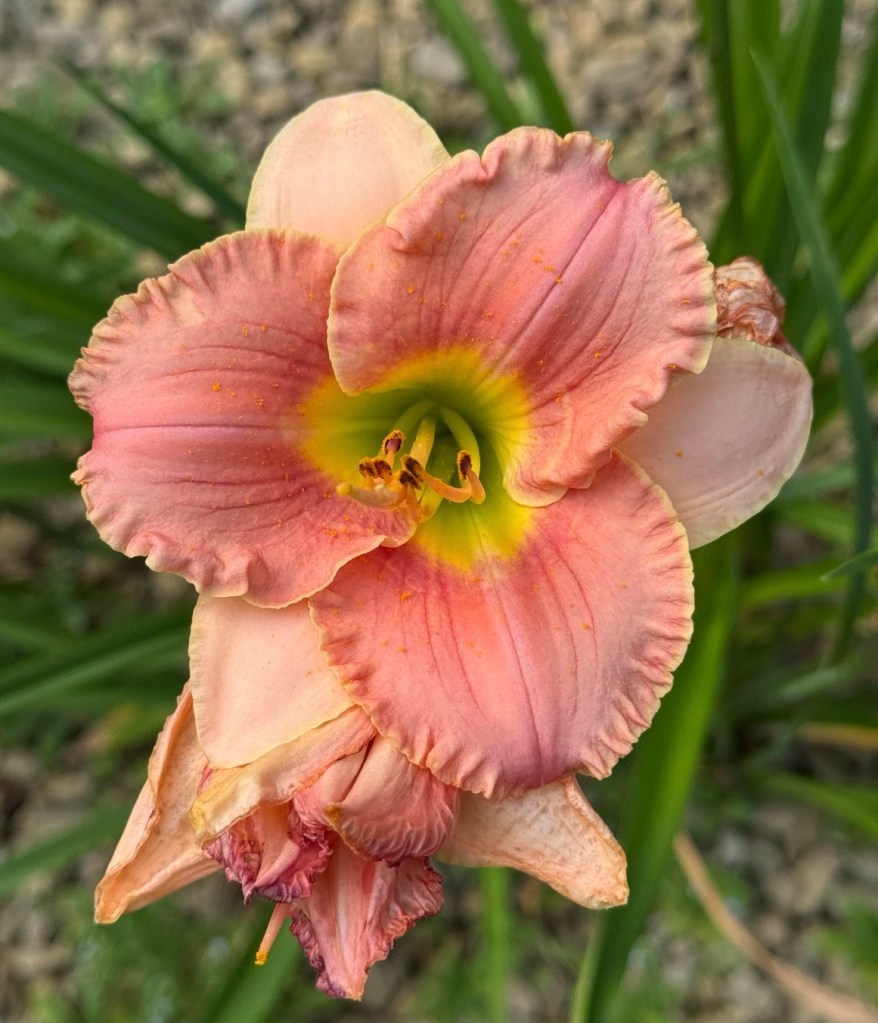
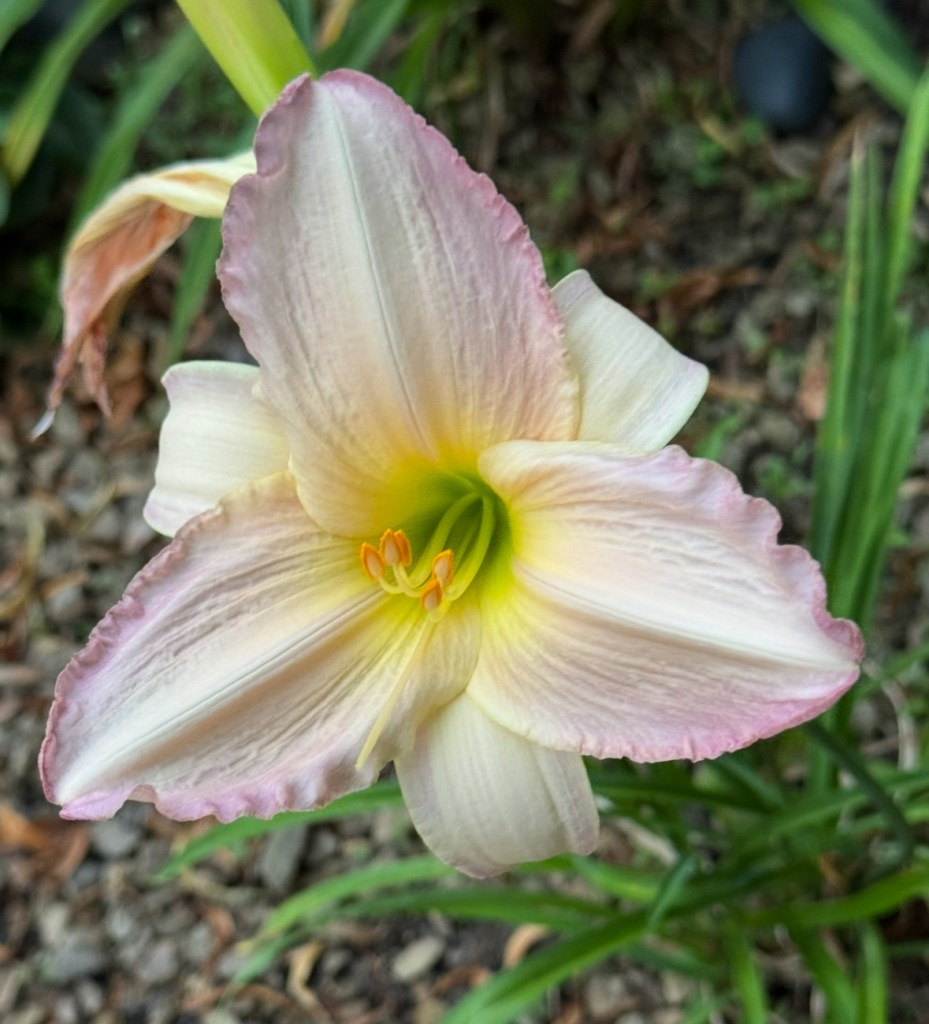
As for “Peach”, I saved packaging from ‘Romantic Rose’, and that may be a match, but although ‘Romantic Rose’ meets a lot of the criteria of “Peach”, “Peach” is quite a bit lighter in color. That can happen, but I am not quite ready to make that call. We’ll see what the color looks like this year.
And, also unfortunately, Hello Yellow’s parentage will continue to remain a mystery. I definitely planted those seeds. I just have not been able to replicate it from my less than stellar retained data. But Hello Yellow stays. For sure. If need be, it can just be its pretty self.
20,000 foot view – We learn as we go. I have shipping lists and a plethora of tags that reflect my exuberant anticipation of a delightful daylily garden. And I got it. I just didn’t initially realize the documentation needs for the scope of the auxiliary hobby that evolved. Hybridizing daylilies definitely crept up on me. And daylilies plopped into the ground are great for enjoying. Not so great when life was super busy when you planted them, and your notes were hasty and sketchy.
I hope these shares are helpful, or at least fun to read 🙂
In the meantime, I am now only allowing myself 4 (not 5-7) new crosses in 2026 – until I get the scope of this daylily hybridizing thing stabilized. You guessed it – all of the new crosses this year will be with South Seas self-seed blooms. So, no new ‘Autumn Red’ crosses. And, in fact, no new diploid crosses at all.
I hope you have a good week!
Be Blessed 🙂

 Susan's Daily Garden