The clematis, and trimming the historic cemetery garden

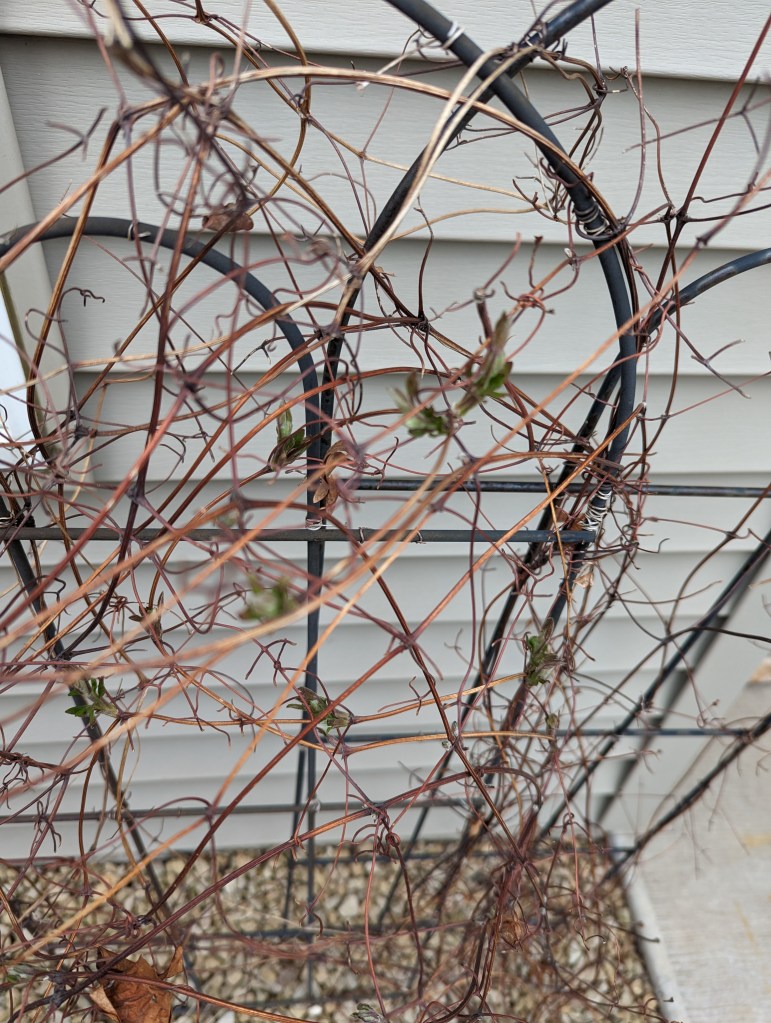
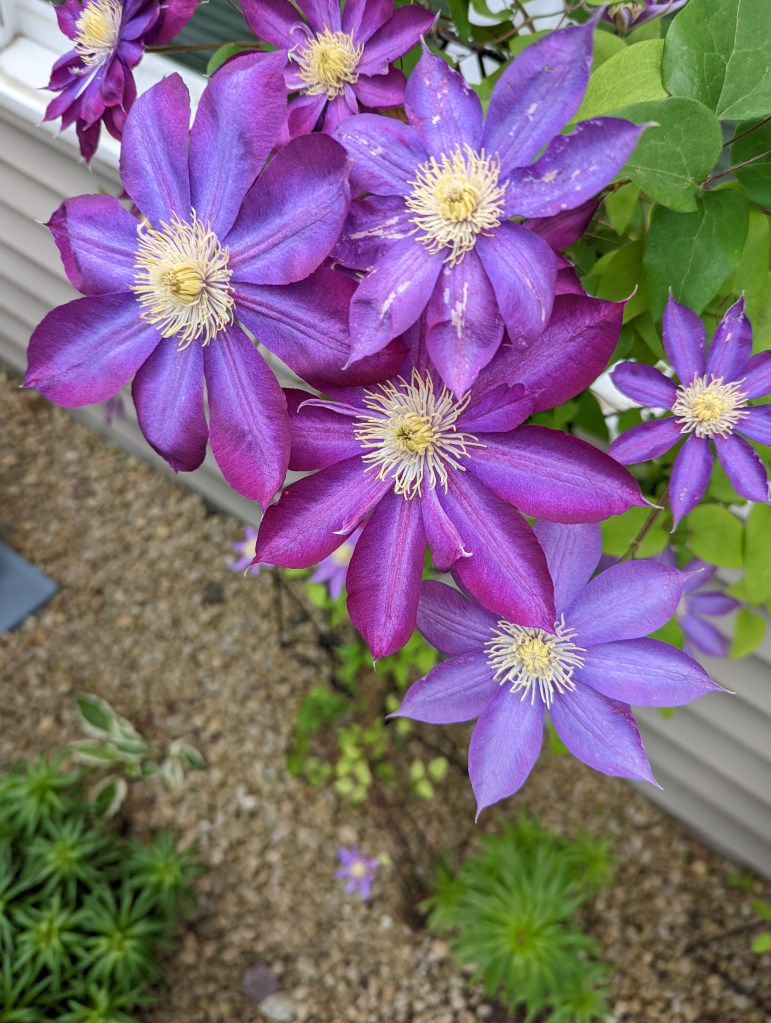
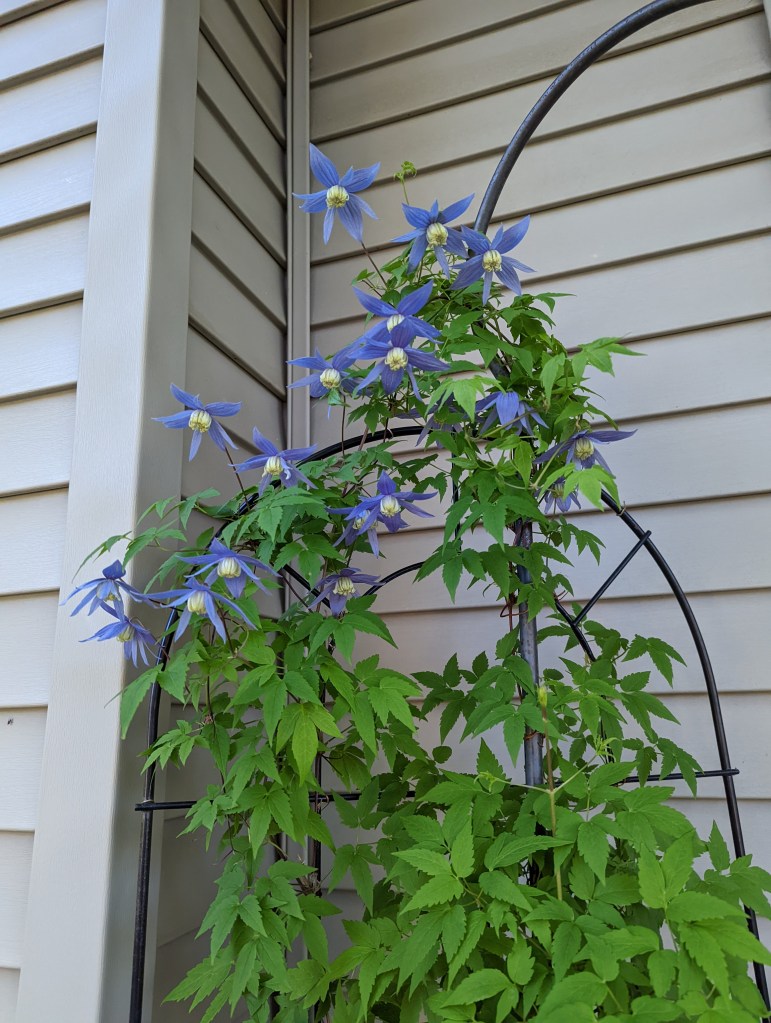
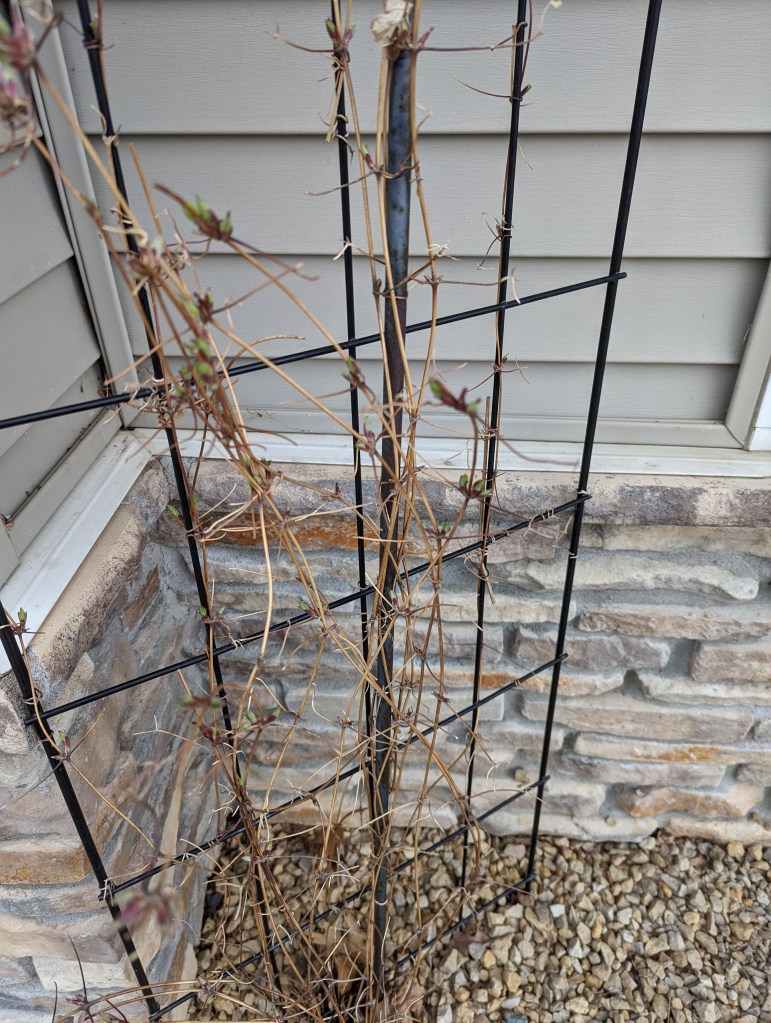
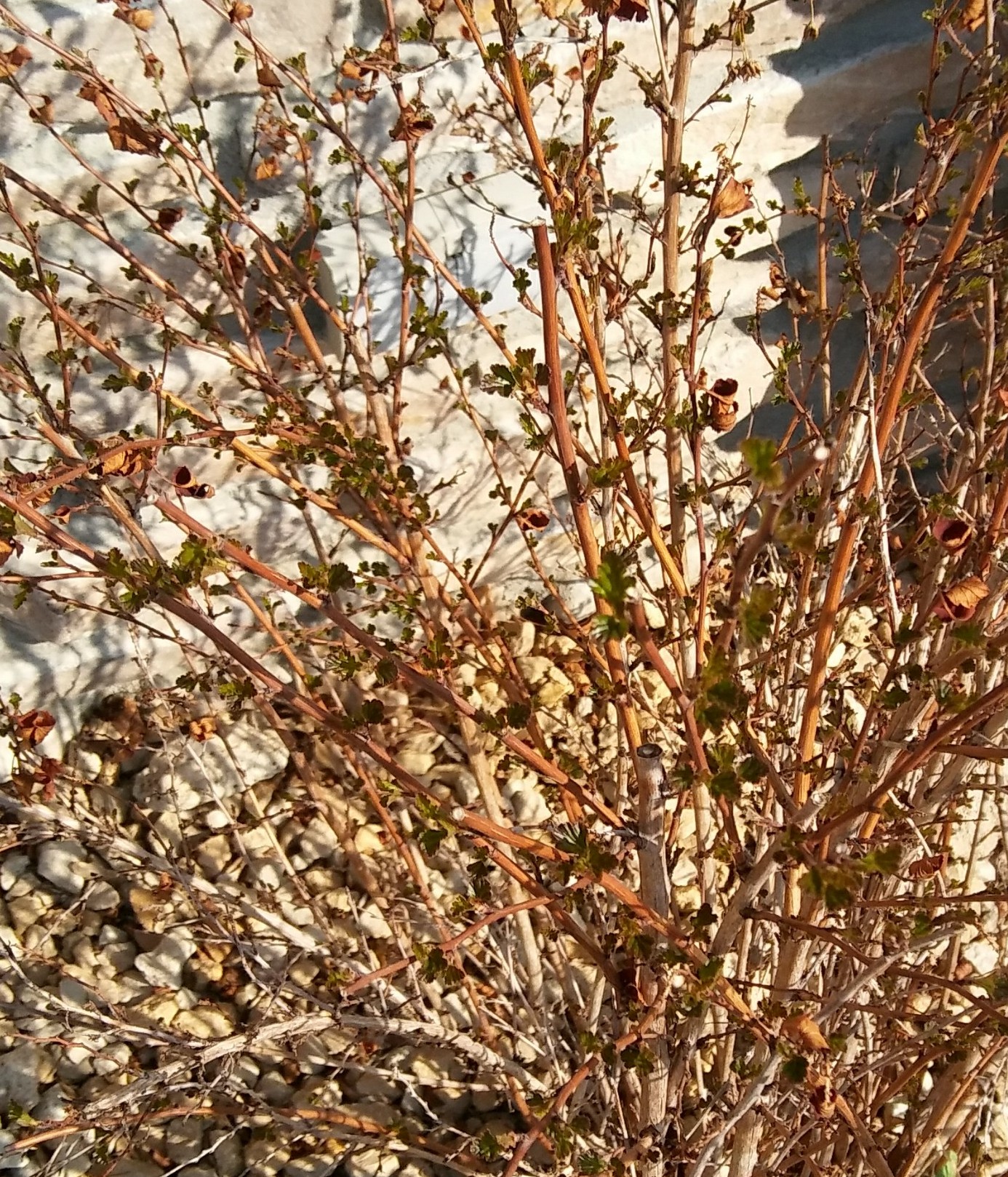
The Bluebells clematis is budding out in front. This is one I learned needs to not be cut back. The new growth buds out of last year’s vines.

Out back the clematis is just waking up.

It was a super windy day today, so not much gardening.

Yesterday was much more fun. I went to the historic cemetery and worked on spring trimming the fence garden. Like at the historic mansion, I am just learning what all is in there. So far I can see tall sedum, stonecrop, phlox, some hostas, black-eyed Susan’s, and yarrow. I trimmed all except some stonecrop. I will go over some night this week and trim those, and also put some coffee grounds along the base of the hostas.

I am exceptionally happy to see there are some hostas. To be sure, they are small, but if they survive, yahoo! They can meet some new “friends”! (I can then divide some hostas here this fall and see if they do well over there.)

Bunimous has decided

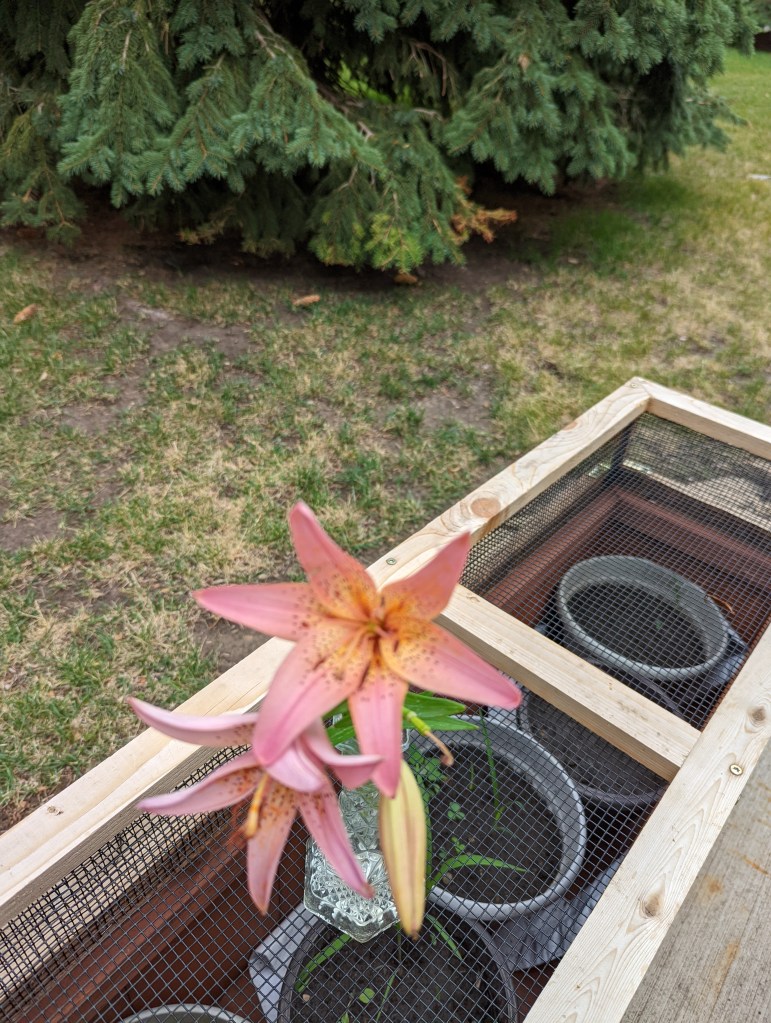
Bunimous (named because he is dinosaur sized as rabbits go – haha 😂) decided which Asian lily blooms I should have in a vase. He must have started his munching but then left a broken stalk for me. Thanks Bunimous!

In the background is the daylily seeds result for this year – one for sure. I think the other two are grass – I think. Those two will go up to the camping land in a spot that gets enough sun and does not totally dry out. If they surprise me, AWESOME! If not, they will be in good company. More to come on that and change of seed soil in future blogs.

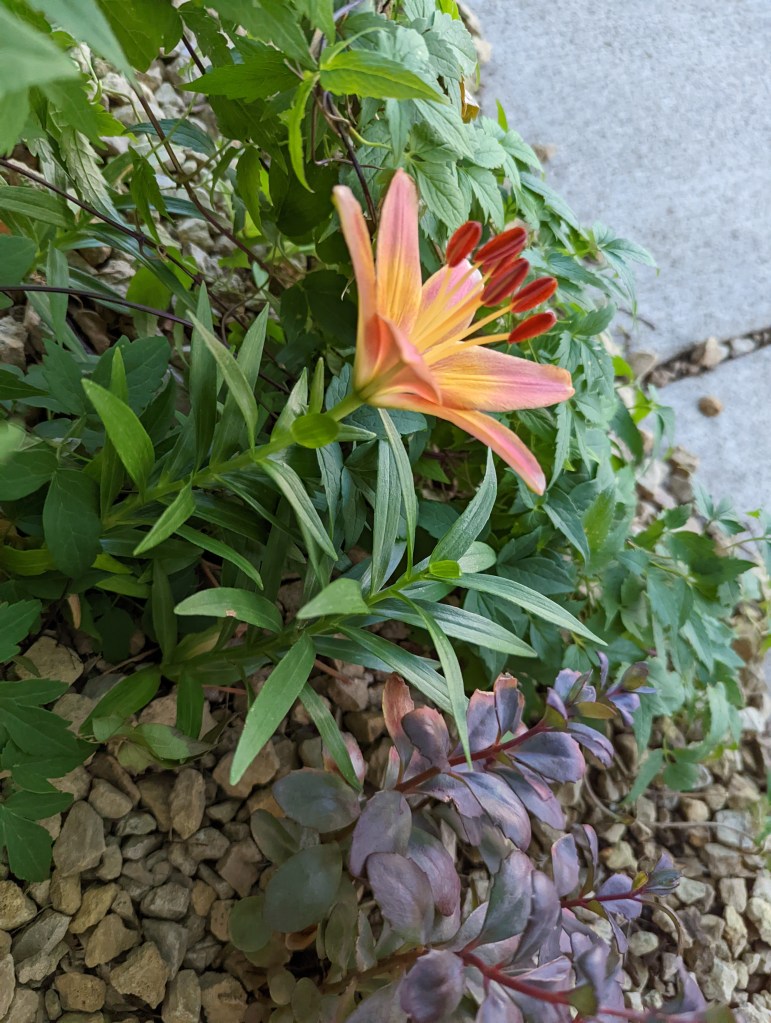
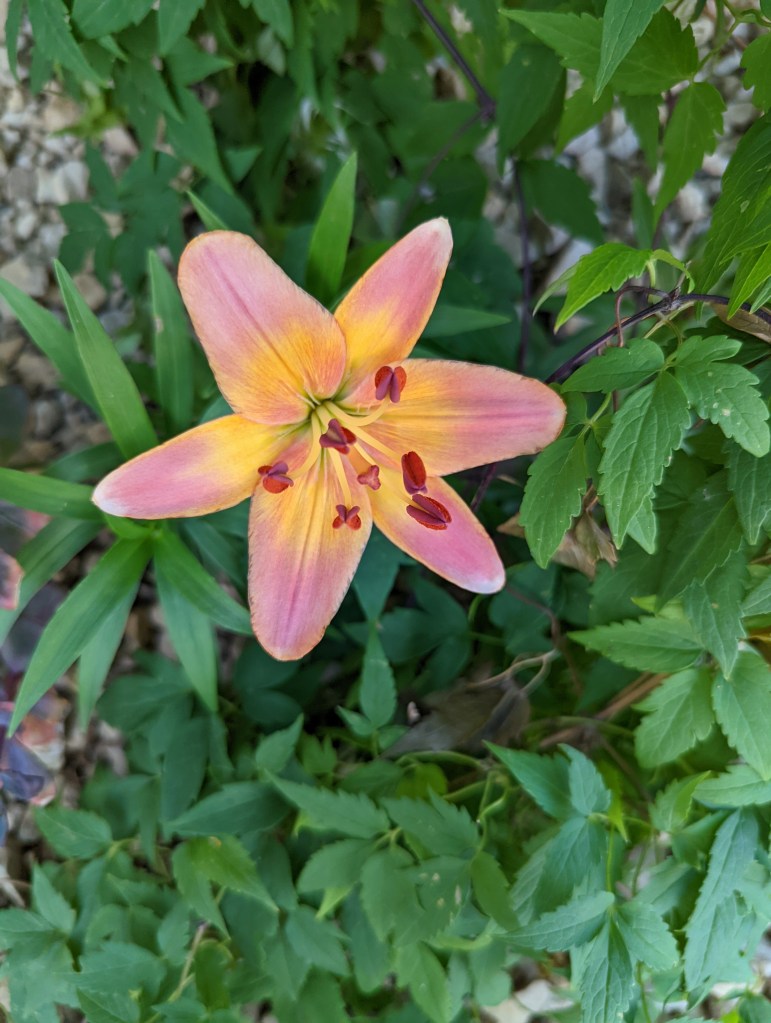
The asian lily below just bloomed. That plant is one that fell in the category of “tulip” syndrome. It bloomed strong year one, faded year two, and is now “iffy,” for blooming each year. Like the faded tulips, I leave it in the ground just to see if it will do anything. And it provides early greens when the garden is first coming up in spring.

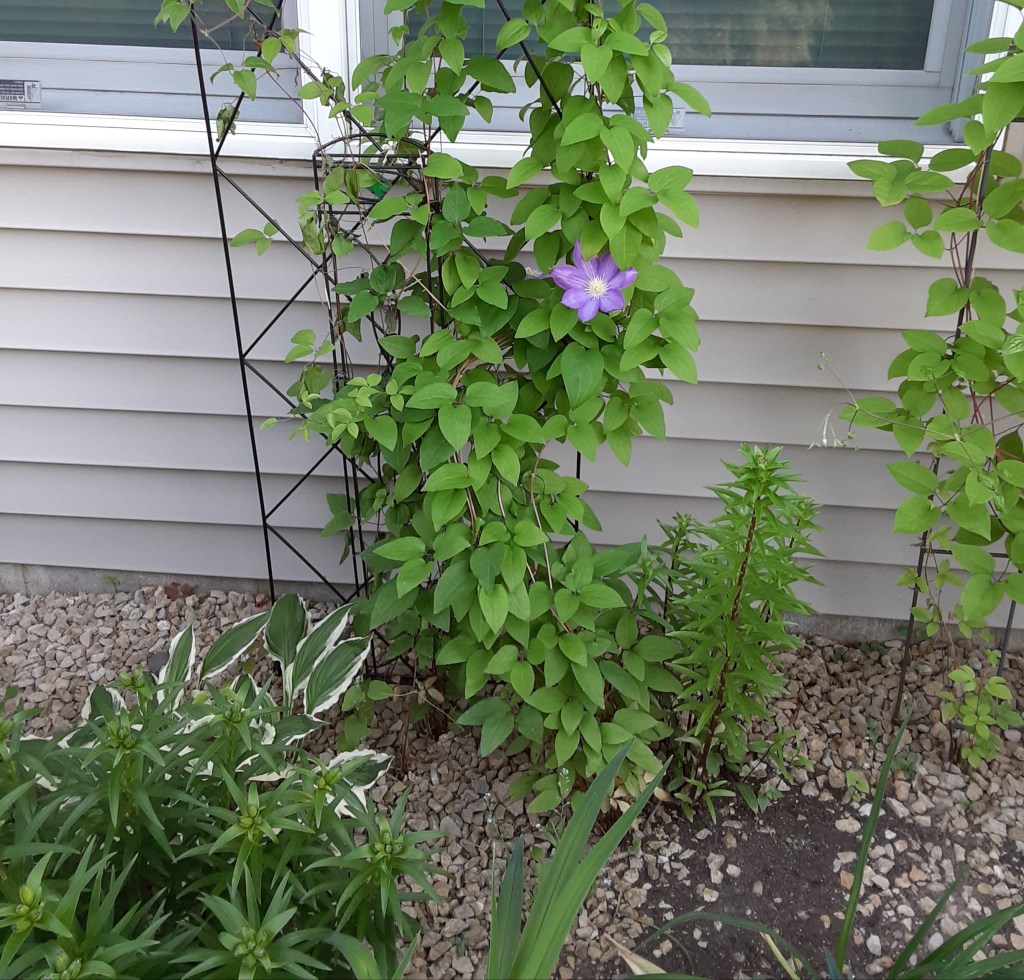
The clematis could be trimmed, but hey! It covers the boring bare rock 🙂

Clematis update

I shared earlier this spring that we did a test with the Bluebells clematis. We left some of last year’s growth on the trellis to see if we could get it to bloom. If it didn’t work I was going to remove that clematis. But …

It stays!

We are hoping all the clematis survive the upcoming roofing/gutter/fascia work, many of which will bloom next week, but, at least for this past couple weeks, we have enjoyed the Bluebells clematis.

Speeding up

We have a Bluebells clematis out front. It never has bloomed very well, which has been a surprise, as I bought it from an online seller that has always sent me very well producing bulbs, tubers, and plants. It is supposed to bloom on both old and new growth. Maybe I have been limiting it. The vine and leaf growth is very proliferous so every fall it has gotten a pretty good trim. Last fall I was tempted to remove it, but instead we left half of the 2021 growth as a test. I am hoping it blooms more this year. It is a nice cover up for the shepherd’s hook where we hang one of the two hummingbird feeders.

A few days ago it had just leaf buds. Now it has “sprung”. Besides the very sparce blooms, it is a healthy plant and holds up well in the wind, so I am hoping this is the year we see it’s true bloom potential.

What goes – #2

This summer our ac went out.  The footprint of the new ac unit was a bit larger, necessitating the removal of a couple trellises and the corresponding clematis.

Truthfully, that poor clematis was traumatized long before.  It bloomed late spring.  Some years it was spared the wrath of the previous ac’s wind, but many years I had to make a decision – humans fade from the heat, or the clematis fade from the wind off the ac.  Believe me, I held out many years.  Every year I thought, “I need to move that.”

Continue reading “What goes – #2”

It’s hot! Best to get out early.

For anyone who may think Minnesotans escape the heat in summer, I can without a doubt say, we don’t. Summers are prone to heat spells like winter is prone to long cold spells. We are in a heat spell right now.

During those times, I like to get out early to enjoy garden tending. This morning I did just that. It was time to pull the tulip leaves, along with the few stalks from this spring’s blooms. In that few minutes outside, carefully pulling dried tulip leaves (that didn’t bloom) in the back center of one of the gardens, I found myself thinking, “Why did I donate those big Aureomarginata hostas again? They used to cover up the drying tulip leaves so well!”

Today’s picture is from a few days ago when the heat first arrived. The clematis looked much fresher then. But all’s well. The first blooms on hostas are about to open, and the asian lily buds are starting to pink up. Soon we will have more blooms.

We’re running now – here and up north

As I enjoyed my “putz and pamper” time this past weekend, I had time to reflect on the gardens so far this year.

After a very long winter, and months of feeling like a horse at the gate, we are running quite fast now – both here and up north.

The cherry trees wrapped up their bloom here quite a while ago, but a pleasant surprise was that we got a  glorious “re-do” during one of our trips up north.  Such a treat to get multiple blooming schedules.

At the townhouse, sadly, my favorite long-lived bunch of purple tulips has faded.  They were an icon each spring.  I will try to find something just as iconic, but maybe a different species.  Not sure what yet, but it might be harvested daylily seeds.  Just thinking at this point.

The new tulips I planted here last fall were glorious this spring.

Now the blooming season of early clematis has also passed and the weigelia has hit it’s peak bloom.  Soon the asian lilies will start blooming.

What I did not expect was a hosta bloom so early – yet here it is, beginning to form.  And on the ground in that garden the forget-me-nots are beginning to pop up.

20190621_200745-1.jpg

To watch here this year – two plants from 2017 harvested daylily seeds – both from ‘South Seas’ – one of my favorites.  We’ll hopefully see a bloom or two on them this year, and discover what we got with the help of our pollinator friends. What I know for sure is that daylilies are deer munchies, so I have decided they will not be making the trip up north, as divisions or as seedlings.

In pots, the hibiscus and the gladiolas here are squirrel favorites.  I have put chicken wire around a number of the potted plants and bulbs – not a flattering look – but needed.

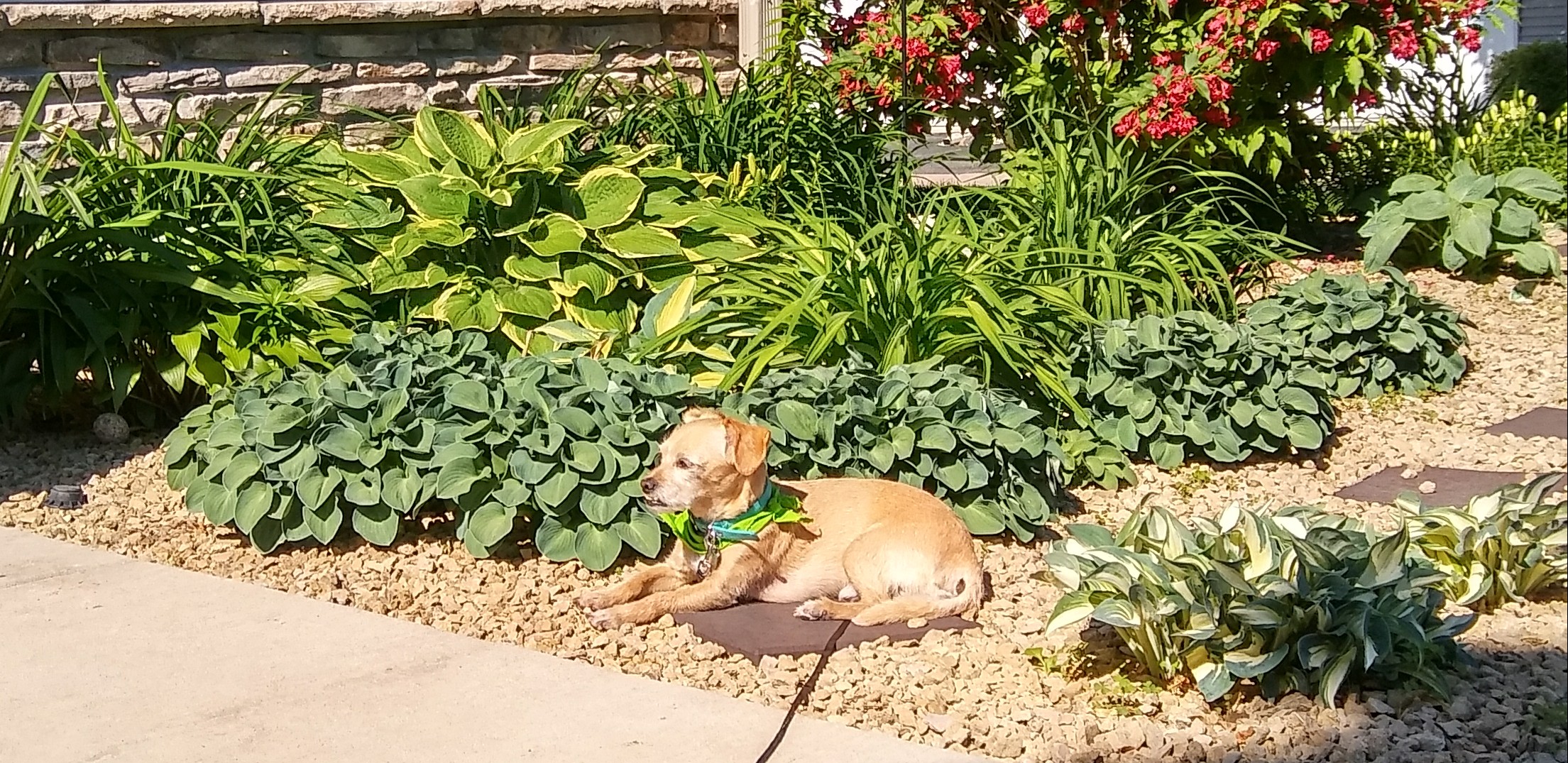
The Aureomarginata hostas here are gigantic again this year, the daylilies I added last year are looking good, and the Blue Mouse Ears are more full than ever.
20190622_093931-3

Which leads me to options.  Up north, the trail cams are showing us oodles of deer, a coyote, lots of bunnies, and a bear.  Makes sense – there’s lots to eat, including wild strawberries all over the property that just wrapped up their season.  I wanted to divide the Aureomarginata hostas and bring them up there but it’s probably not the smartest.  I will be fighting a munching battle that will only make me sad.

There’s also a sedum that has been crowded here for a couple years.  I wanted to bring it up north and put it in the sunny garden to let it shine.  But despite web lists that say sedum is on the list of “deer-resistant” plants, I am hearing reports that they too are tasty morsels up north.

What did work in the year one test garden up north is two types of seeds directly sown into the raised beds – malva zebrina hollyhock, and cinnamon mint.  Some free carrot seeds are also sprouting, and two asclepias plants have survived, so far. Coneflower seeds did not sprout, asclepias seeds did not sprout, and all of the kale and asparagus died back.  I think it needs more water than we can provide.  We are just depending on watering when we are up there, and rain.

And, after much deliberation, and my husband mentioning he doesn’t think he’d like the look, I have given up the idea of using a dog kennel as a critter-proof option.   Alas, I don’t like the look of chicken wire here.  I probably wouldn’t really like a dog kennel asthetic up north.

So the lesson so far is – some things will stay townhouse garden plants, and we will embrace what’s already on the land up north, plus seed sown additions that can survive with just rain, and that are not attractive to critters.

I heard lupines may be an option.  They do naturalize beautifully …

A day’s difference

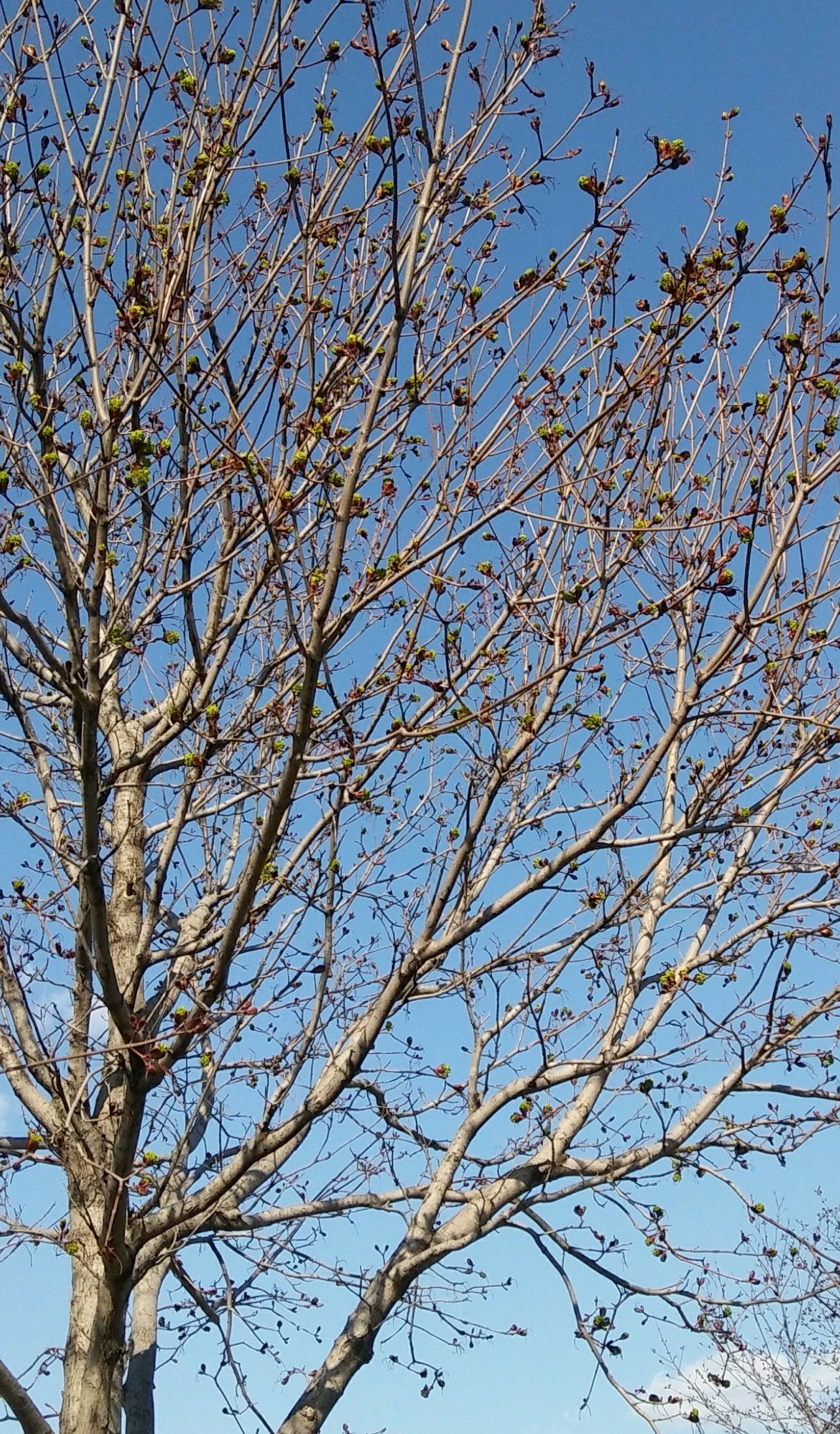
What a difference a day, and especially two, make at this time of year.  Two days ago only the cherry trees had leafed out.  Today this site was common.

20190425_164737-1-1

Yesterday our ninebarks hadn’t leafed out.  Today they looked like this.

20190425_170721-1-1.jpg

Two days ago the clematis was inches closer to the ground.  Today it looked like this.

20190425_170709-1

The tulip are starting to show buds.  The sedum are starting to round out.  The daylilies are up 4-6″.   The asian lilies are popping up in back.  Even the new red asian lilies I planted in front popped up overnight.  And a few hostas are starting to come up.  Not as many as I’m used to this time of year, and that slightly concerns me.  We lost some very healthy full hostas during the 2017-2018  winter and I was at a loss as to what happened.  I’m hoping it doesn’t happen again.

But almost all the daylilies are up, including one from last year’s seedlings.  And THAT is very exciting.