


On a beautiful fall day, the dark-eyed junkos are back.
The Big Lake (Lake Superior)
There is no lake for me like the Big Lake (Lake Superior). She is so majestic, and her personalities are awe inspiring. Some days her water looks like diamonds. Some days she is deep blue. Some days she has striations. Some day days she is angry, and crashes up on the shore with awe inspiring power. She carries huge ships with unbelievable weight in cargo. The ship’s honks can be heard at various ports – long, strong sounds of greeting.
I grew up knowing Lake Michigan. I have been to the Atlantic and Pacific oceans, and lakes all over the U.S. and Europe and nothing quite awes me like Lake Superior. I can’t get her out of my system. I feel so much joy when we reach our first view of her, and I crane my neck until I can’t see her anymore when we leave.
On this day she was exceptionally beautiful and the clouds were agreeing. There is an island on the shore of Lake Superior at Grand Marais. I cannot tell you how many times we have been on the shore at Grand Marais – 40? 50? Every once in a while we traverse the island. Entering is like going into an ancient forest. It is dense. And then you come out at the lake again, with a view back to Grand Marais. It is so stunning, and awe inspiring. The rocks ARE ancient – some of the oldest in the world.
Here’s a few pics I caught of her that day.



Afterward we stopped for a couple donuts (again, incredible!) and then stopped at the co-op to get our favorite – dark chocolate covered almonds. 1 pound. Being reasonable – hahaha!
Then up the Gunflint Trail we went. But that share is for another day.
Talk is not DO
As a student, I was definitely not drawn to history. Seemed like an awful lot of talk that may or may not be factual. Math, now there you have something! My love of math turned into a love of data. I am an analyst at heart, and by trade, with a whole lot of love for data driven project planning and implementation (“DO”) in the mix. Analysis is for a purpose – to inform on a course for future “DO”. And, yes, at the root, we analyze data based on history.
I fell in love with a history and political science guy, oh so many years ago. What a pair we have made all these years. Me wanting to dig deeper, find patterns, analyze trends, and him exposing me to things in history and politics which, to me, often make absolutely no logical sense.
Along the way I got interested in gardening and was particularly interested in the gardens at historic forts we visited. Those made sense – food, beauty, for the family, for the community. I used my love of data to study what would work in different areas of our yard. I started building out gardens. I found I liked plants with history, plants with a story to tell.
Alas! The kids grew up, we made the bumpy transition to townhome living, and my sprawling, sometimes out of control gardens came to an end. Townhome bylaws. But my analytical mind said why not petition the board to put in our own landscaping? What’s the worst they can say? No? They said yes – three times – initial plantings to augment the shrubs, and two expansions.
I have pretty decent gardens now at the townhouse – ones that kept my gardening mind busy for 18 years, gave me 9 months per year of exercise, and one that neighbors and friends say they enjoy. Remember we garden as much for others as ourselves. Wherever we may be.
We have also spent a couple decades now of time in northern Minnesota, and it is me who digs into the history there. It gives me perspective, appreciation of a much more rugged, challenging time, and really makes me appreciate all the incredibly hard work, personal sacrifice, and an attitude of resourcefulness that was exemplified in that time. It is a thing of beauty that explorers can come to areas that are maintained for them, purely enjoy, spend little to no money, experience time away from the stress of the city, and then drive away with no committment to better, or even maintain it. The “right” to enjoy all that now is because of all the “DO” respecting nature, yet making that beauty accessible, that was forged by those before us, and is done on a continual basis on our behalf . I am grateful.
And now we come to my latest thoughts. On my micro scale, I always wonder what positive, lasting, move forward “DO” I can contribute to continue what others before us have accomplished. I like to do that through gardening. I love to leave tiny trails of garden love and share abundance. I am reasonable with what can be used, and cognizant of what I can physically accomplish, but I still love to share and “DO”.
So I have a friend who quietly goes about this. She researches history, she shares her findings, and she and her husband have maintained the grounds of a historic cemetary when others walked away, when there is little money for “DO”. There is money for supplies, but “DO”, like cut the grass, trim the trees – that is volunteer. They fight for preservation of that history in a beautiful way that honors those interred there. Those that gave their lives to country, those that gave generously and served community selflessly, those whose place of interment would be left unmaintained because there is no money attached. And those whose contributions and life lessons would be lost as part of history informing further “DO”.
My friend and her husband challenge me. I have things to give. I have more plants to divide. Plants I won’t use at the little house gardens up north. They might look nice at the cemetary. A little trail of positive contributions. We garden just as much for others as ourselves.
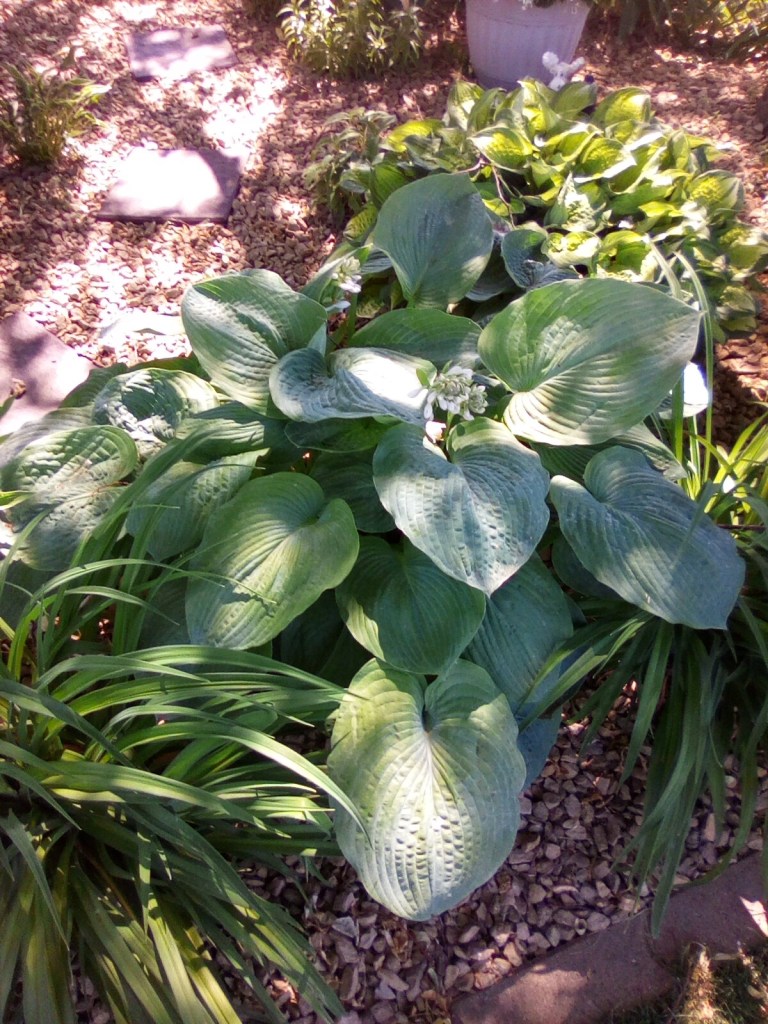
The hosta pictured below can go to the cemetary in the spring, if they want it. It is an “Elegans” hosta. It could be divided into 3 pieces and form a lovely start to a woodland edge garden, away from the beaten path and not adding to any mowing complexity. Some cardboard, three hostas, some mulch. A little “DO”. We’ll see what spring brings as far as additional ideas and “DO”.
More seeds 2021
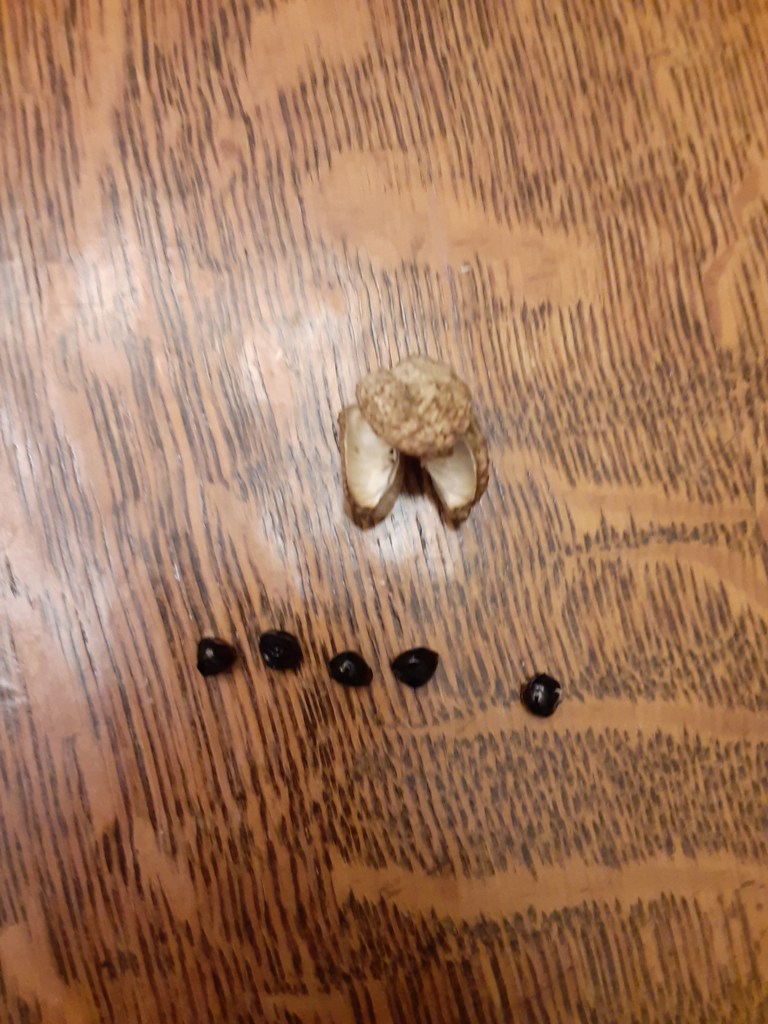
One of the 2021 Hush Little Baby daylilies had a successful seed pod with 5 seeds in it. I was very happy to see that. I wonder what the pollinators accomplished? It will be a few years until we find out, but hopefully it is something wonderful!
Stretch!
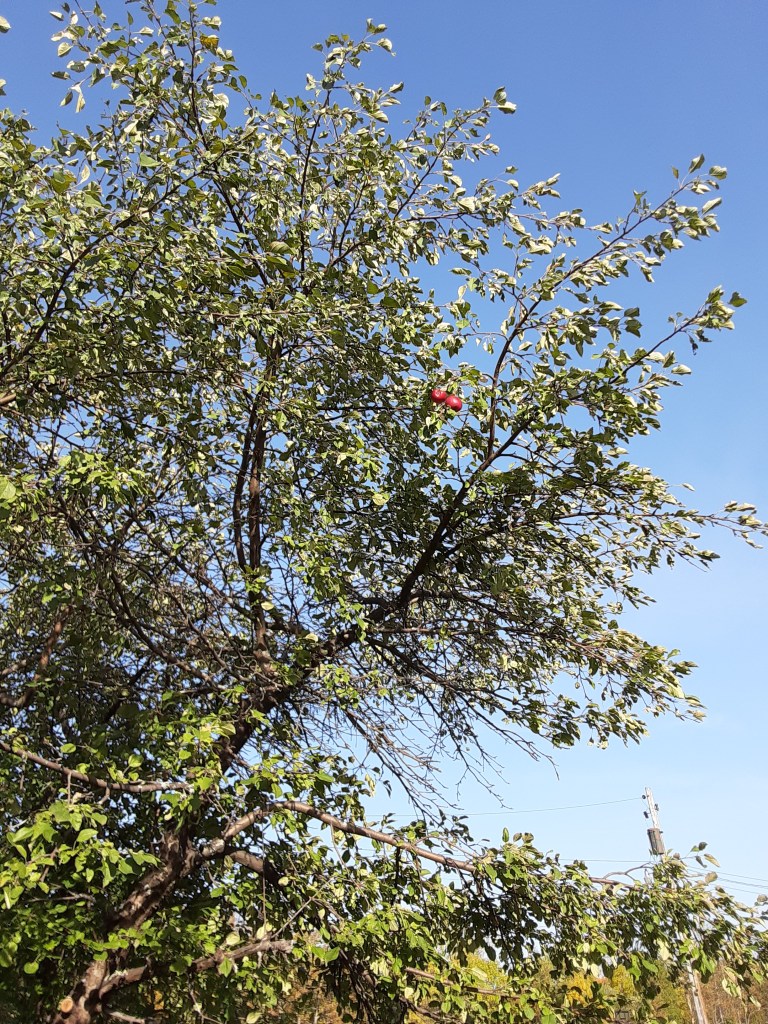
There are two apples left on the apple trees. It will take some stretching for the deer to get these.
Quiet spaces
A few years ago I read an online article about quiet spaces. It was talking about indoor spaces – you know, with comfy seating, and cozy throws, and a stack of books, a candle, a good view. Yep, yep, and yep. For me, that type of quiet space at the time was outdoors in the townhouse gardens, and on our livingroom couch planning more things for the townhouse gardens. It was a different time. It was around the time when my work life was very stressful, yet I could feel changes coming. I fiercely guarded my Saturday mornings in the garden, sometimes starting at 3:30 am with a cup of coffee and a sit in the lawn chair right before the birds began to wake up.
Sometimes outward appearances of activity are not the “whole story”, and I “knew” I was entering one of those times. I knew there was a tide coming in and it wasn’t feeling like it was going to be a gentle one. We had been there a few times before. It felt “familiar”. I was “pondering” things in my heart. Praying. Seeking advice. It was about the time right before we turned the corner into the era we are in now.
The tide did roll in, changes did begin.
Sometimes years of waiting and watching and listening are needed before the next “do” time starts. When the “do” starts and the wind blows and props get kicked out, deep roots are essential. Those quiet times in those quiet spaces pay maximum dividends. Continue reading “Quiet spaces”
Planning time – a rookery?

In response to me describing attempting to grow daylilies from seed and growing sedum from cuttings, I once had someone tell me I had “a rookery going on”. I wasn’t quite sure about a rookery. I thought that was for birds. I thought they meant nursery. I just smiled. Looking it up, I saw it also meant crowded, not so nice housing areas. Well, la-ti-dah! But you know how it is – things come back to mind and bring a smile. That comment comes back to mind this morning, as I am fondly, now that I have the freedom to do it, considering a nursery garden. But where?
Here’s the idea.
In the summer next year, if I have the energy – lol – start the build out of a hedge on the side of the house. Sedum rootings at first. Make maybe a 4′ x 5′ strip, plant 3 or so sedum cuttings, and see what happens. I know it is risky, that is on the apple tree side, the “deer highway” part of the lot, but it could work, maybe. If the deer leave them alone, I could add some pollinator created daylily seedlings from the 2021 starts that need to be moved, and maybe some coneflowers, which are supposed to be deer resistant.
Worth a try …
My own little “rookery”.
Next
With the initial year’s build out of the little house gardens wrapped up, thoughts turn to fall monitoring and clean up. The new gardens now just need continual weeding as the mulch bed settles in.
There were no gardens at the little house when we bought it, only grass and trees. Year 1 (last fall), while we were doing the reno on the inside, my husband put 5 daylilies in a front grassy area by the sidewalk. That’s where I began the build out this spring, using sedum transplants from an overgrown area in the townhouse gardens. Here’s what that front area looks like now.
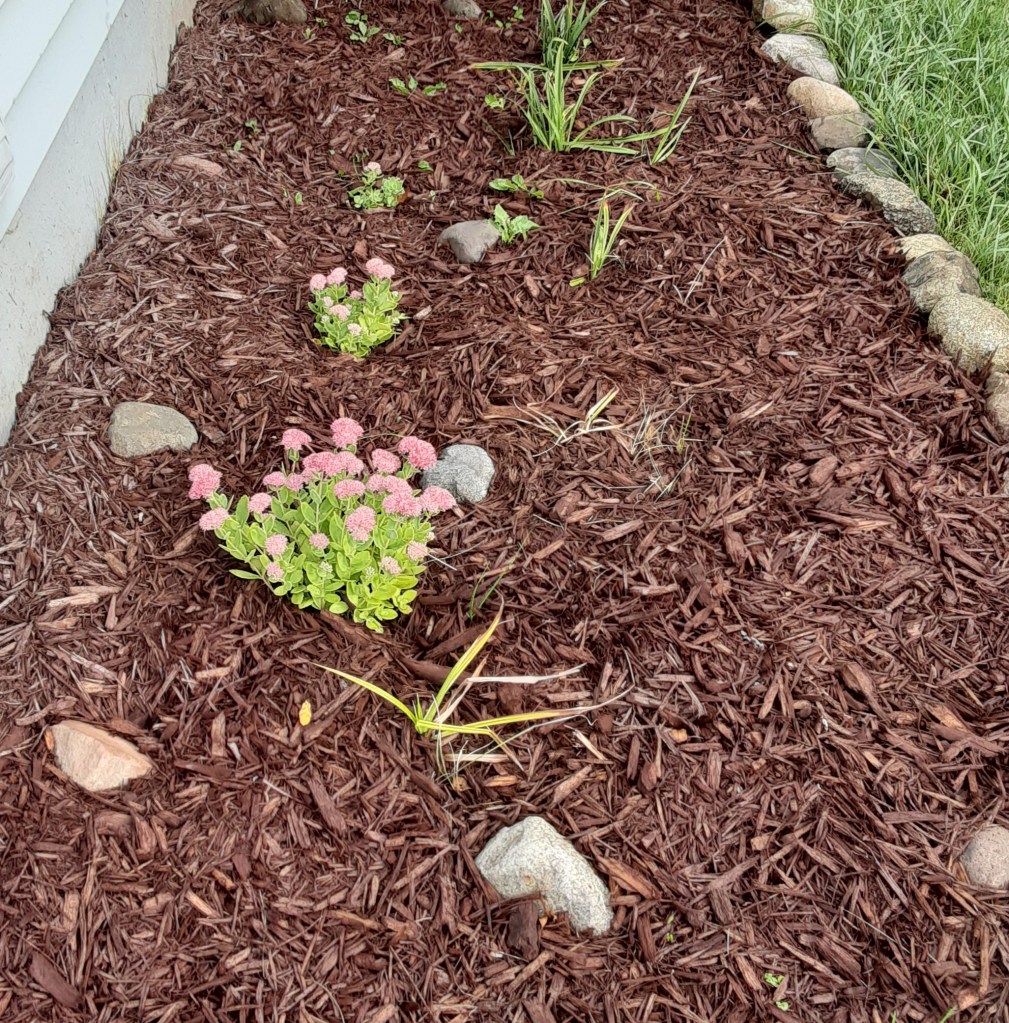
It looks like all five daylilies survived, and the three sedum divisions are doing well. I can’t do much more there until we decide on next step home improvements – front porch, siding …
Putting mulch in all the garden areas somehow stopped the deer from munching. I don’t understand that, but my latest theory is that the deer might not care for the smell. I’m just thankful. As long as that continues to work I will stay that course.
I had considered hiring for the landscape build out, but I kept running into roadblocks. I’m happy now that happened. I am enjoying a new process I hadn’t even considered before – the lasagne style build out. Cardboard right on top of the grass, plants in soil, cover with 3-4″ mulch. The transplants, rootings, and cuttings all seem to be doing well with that method. I make sure to give them a good initial watering, and then follow up with watering as needed.
Yesterday’s post showed the completion of the garage to shed area build out for the year. There is a tree that needs to come out yet, and then the rest of the shed side can be finished next year.
As is my nature in projects, I do a test, observe results, and build in layers. That’s what happened on a larger scale in the back gardens. It went from all grass, to a 4′ x 5′ area on the shed side, to a 2′ addition on that side, to a 4′ x 8′ start on the garage side, then hopped the sidewalk to the back of the house where I put in 3 weigelia rootings, and then back to the garage side where I finished up yesterday. Here’s a few pics of the progression.

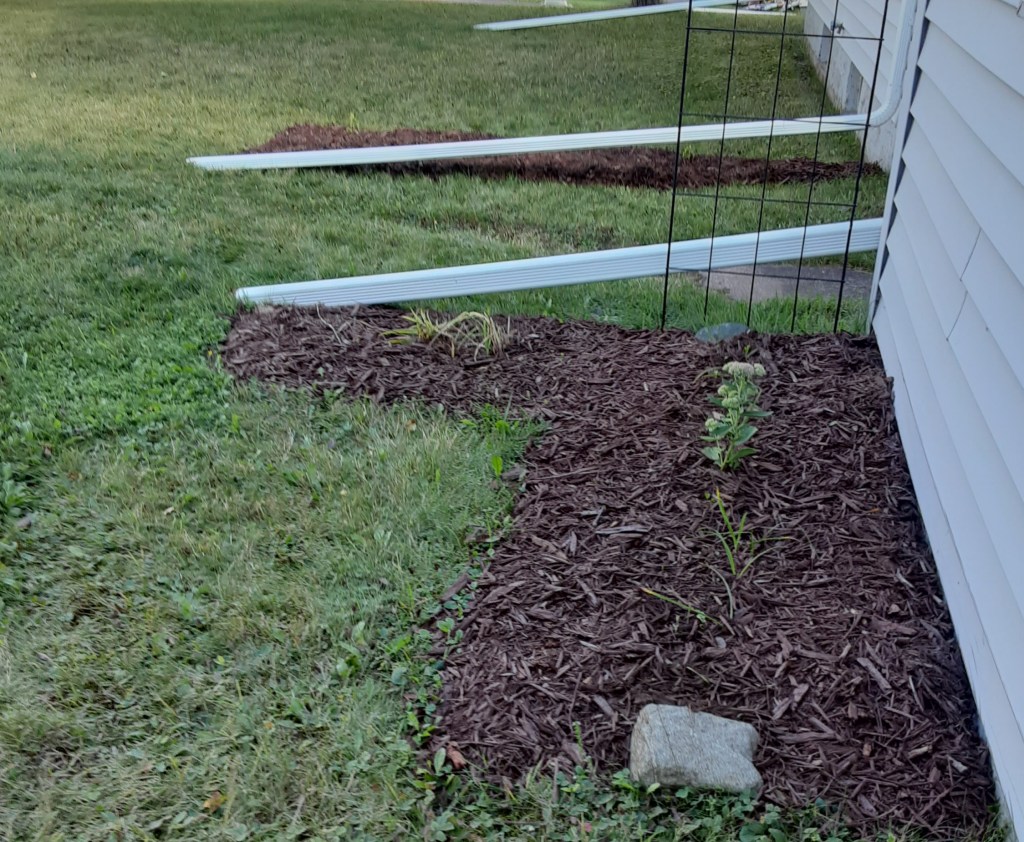
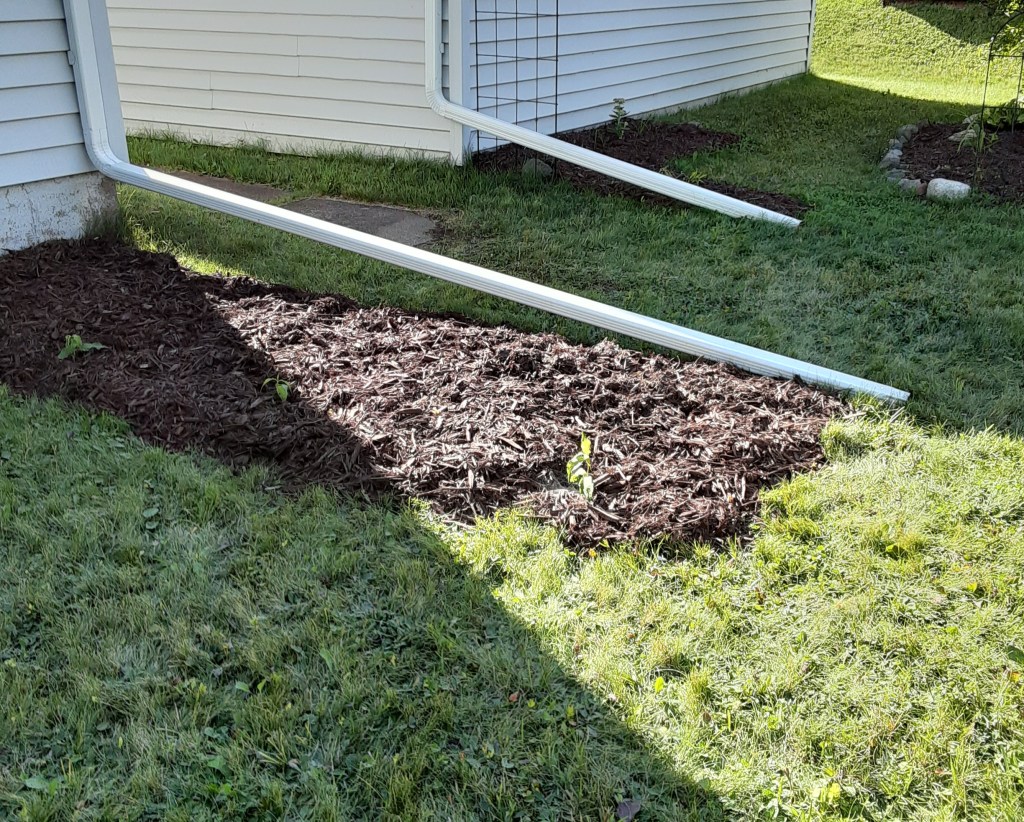


In the little house gardens, I decided to use grass paths. That will be way less maintenance, and we can just do one mower pass through there. Plus, call me daring, but the lawn at the little house is old, and full of up north flowering weedy things I actually like, so a bit of that along the path is something I liked the look of this year. Reminds me of the wildflower nature areas along the shore, in miniature.
Next year’s plans are to start a garden at the back of the yard and move the alpine currant and the weigelia rootings there. That will free up the current weigelia garden area. If I then make a parallel garden up by the house along the second long downspout, those two garden areas would flank the area where we sit out. I envision hosta and daylily tiered hedges there. I love that combo, and there is just enough, but not too much sun there to nurture both. The mulch should also help.
There is also a thought floating around in my brain to start a sedum hedge on the side of the house, but that might have to be a “slow to go” project. I am no spring chicken, and a couple advil were needed after yesterday’s build out work.
All this depends on the deer continuing to leave the mulched gardens alone. They do seem to be eating the apples from the apple trees, and that’s great. Less for me to clean up.
So at the little house, year 2, initial build out, there is now monitoring left this fall, and at some point, daylily and hosta greens cutback. I plan to leave the sedum standing until spring, as a test, to see if the birds and bunnies enjoy that winter snack.
7 bags of mulch later
The weather up north is getting chilly. Fall is here. The window for transplanting is not very far out.
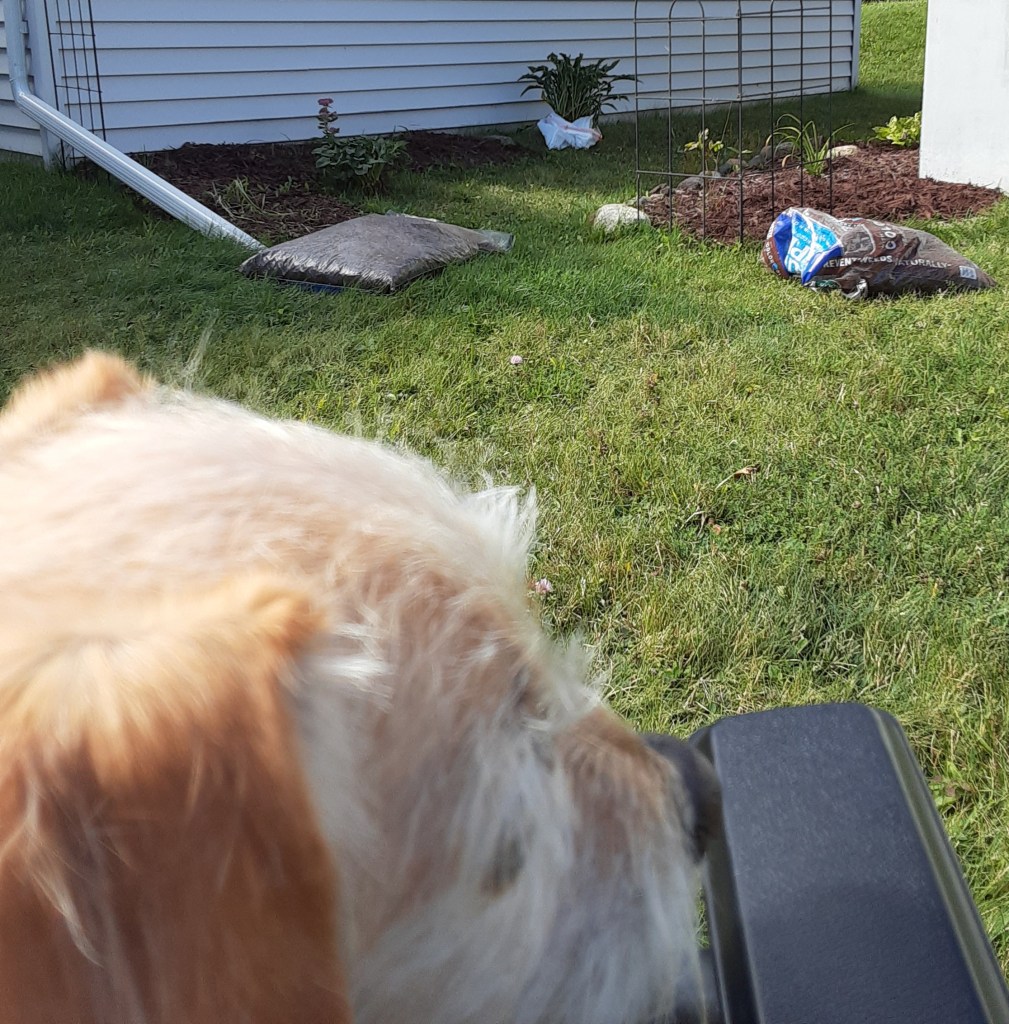
Before (Sandy, our dog, was supervising)
After
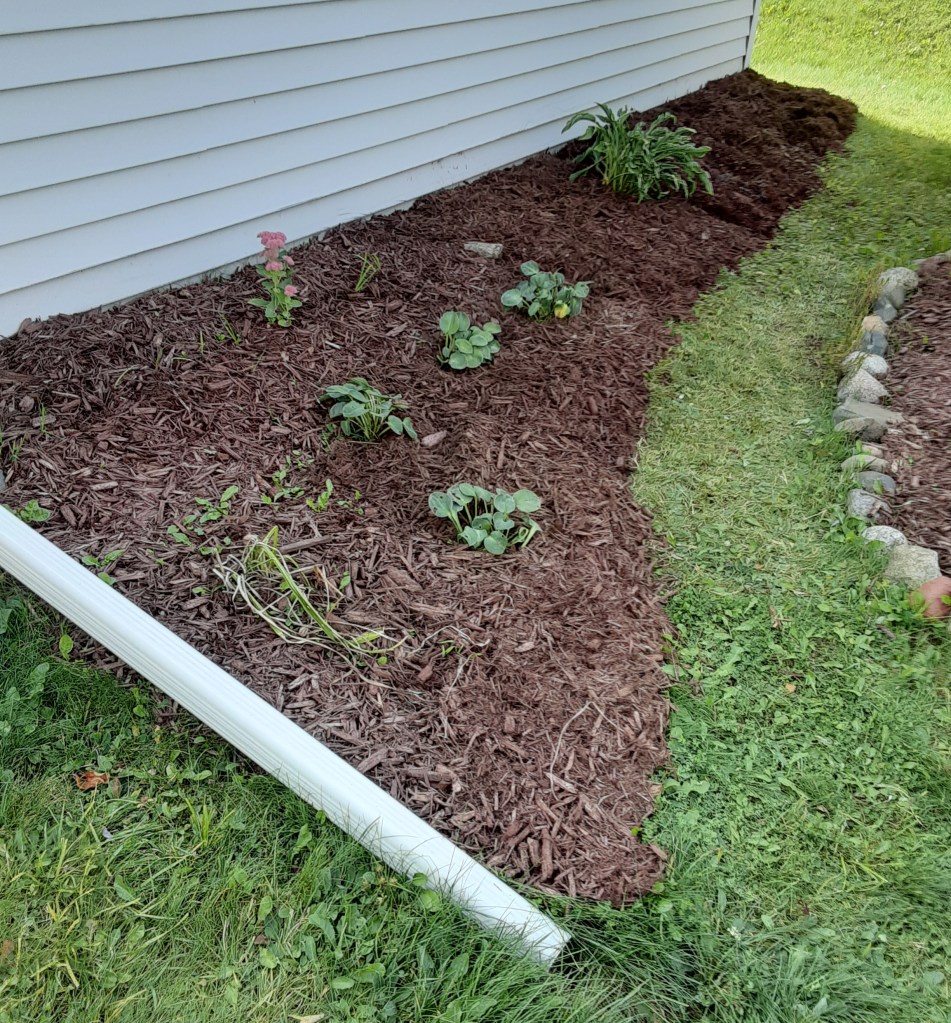
The additions were four Blue Mouse Ears hosta divisions (left front), one large Praying Hands hosta (center), a lot of cardboard underlayment, and seven bags of mulch.
The garden build out up north is for all purposes now done for the year, as well as prepped to receive 2022 daylily seedlings (pollinator creations) and sedum cuttings (propagation) next year. I may bring up a few more daylilies, a sedum or two, and another clump of Blue Mouse Ears to divide over the right side of the Praying Hands hosta yet this fall, but I’m happy as is if I don’t.
My husband is not keen on transplanting the clematis, so those are still at the townhouse. We’ll see if they make the shift.
The alpine currant is still by the shed. It’s a bit too late to move it now, so next spring that will move to the back of the yard.
The weigelia rootings are doing awesome! If they survive the winter, they may also get moved to the back of the yard. I’m now dreaming of daylilies and hostas along both long gutter extensions.
I honestly never thought the gardens would be this far, but I am very pleased the foundations are now in place to build on.
Rest well, new gardens.
Fall decorating – Sedum style
The Autumn Joy sedum are exceeding expectations at the little house up north, and to my amazement, the deer are leaving them alone. I’m more seriously considering a sedum hedge now. In my mind I can see it along a mostly sunny side of the house, where bees on the sedum would not affect much. I could do a test run with sedum rootings alternating with irises. Deer do not like irises, so that could be a deterrent.
Pondering.

 Susan's Daily Garden
