
It has been a bonanza time for me in the various gardens. I have an oft-used saying – “Talk is not do”. I have soooo been in the flow of “do” I had no momentum to “talk” much. On the blog at least – lol.
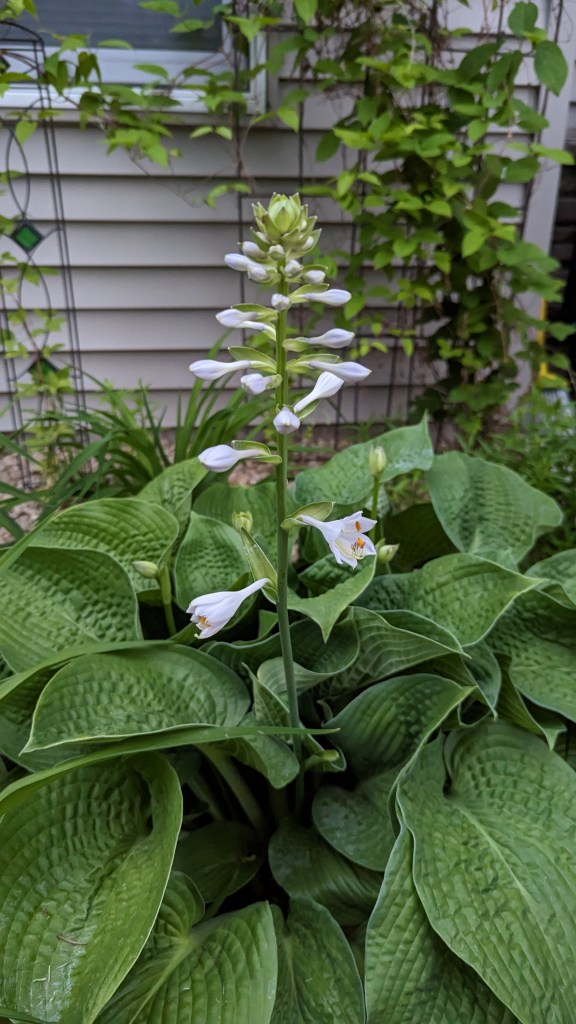
The gardens at the townhouse are starting to approach their very full time. The spring blooms, even including the clematis, have wrapped up. The pine trees candled out, the linden is about to bloom, the weigelia is blooming, and the first hosta is blooming.
The “clover”, which I think is Yellow Wood Sorrel, has lived it’s usefulness as blooms for the bees, and has been plucked for the season. The bunnies do not eat those flowers like they do the white clover.

The Asian lilies are about to bloom.
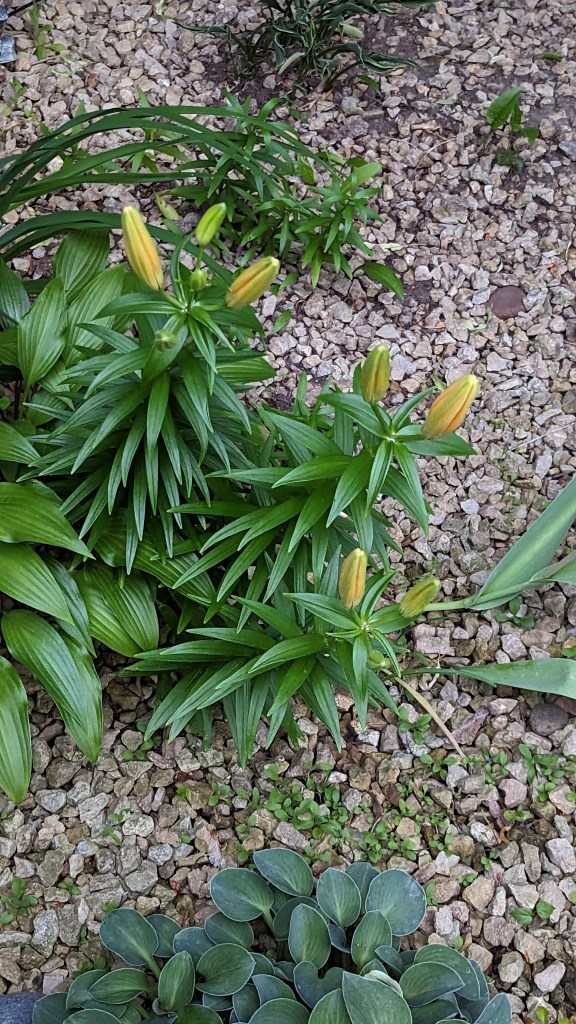
There are now 20 daylily seedlings sprouted from last year’s pollinator created seed, all of which will need a home in the seedling bed this fall. The daylily seedlings from last year are all growing, and the 2-5 year daylily seedlings (that didn’t go to the little house up north we owned for a couple years) all need to go to the (camping/hunting) land up north, or to the historic cemetery fence garden. (The daylilies in the iris bed appear to be bunny food there.).
At the land up north, the camper will be moved next weekend to make way for trees to be cut, ground to be levelled, class 5 to be laid down, and the incoming shed to cabin conversion to be moved into place. Yikes! Here we go again with a build out. I am told that from the (shed) cabin I will have the view to the garden that I requested. I may have some thinking to do on a strategy to keep the ferns out. Plastic may be deployed. We shall see. One thing is for certain – the “I wish I had that money back” steel raised bed gardens with expensive black dirt on top of hugelculture turned to ferns 😂 is out. It has to be, as that is where the camper will be for a year or two while retired hubs builds out the interior of the (shed) cabin.
What else is going on?
The long fence garden at the historic cemetary is getting a rock to mulch makeover. The old rock is slowly being hand-picked and removed to a pile for donation, and bags and bags of beautiful mulch are replacing the rock. Sweaty work for all, and no lawn chair relaxing like at the townhouse, but wow! Looks awesome! Many hands are at that work through the week, which is absolutely heartwarming! We garden for fun, but also for our neighbors, and I seriously have lost track of the number of people who are complementing as they walk by. The other ladies have exactly the same types of stories.
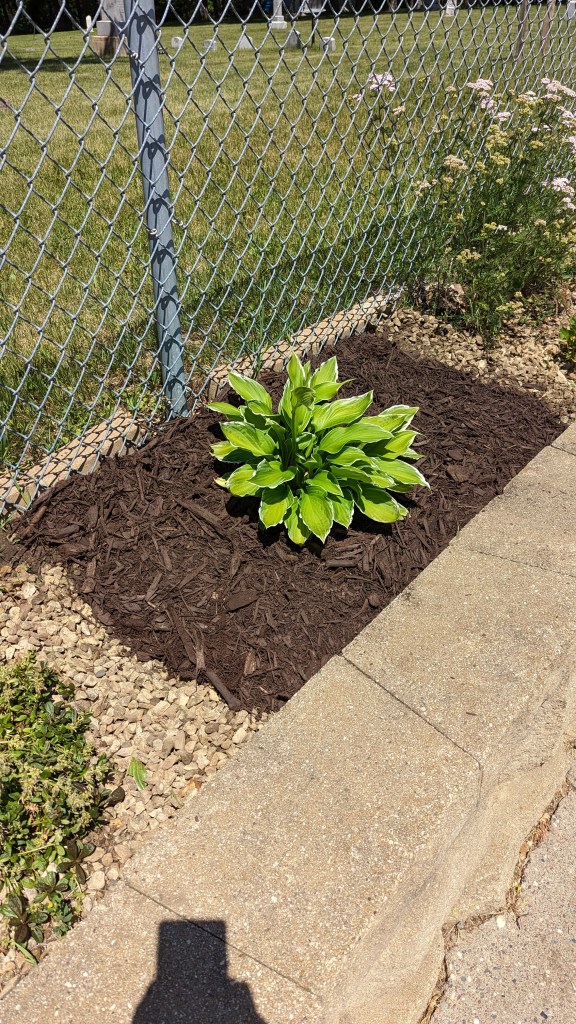

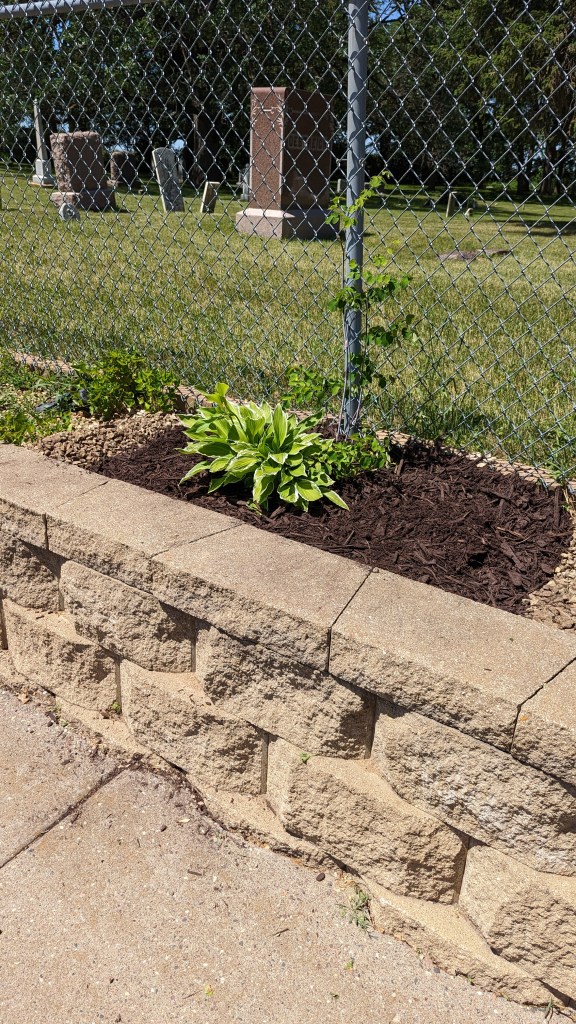
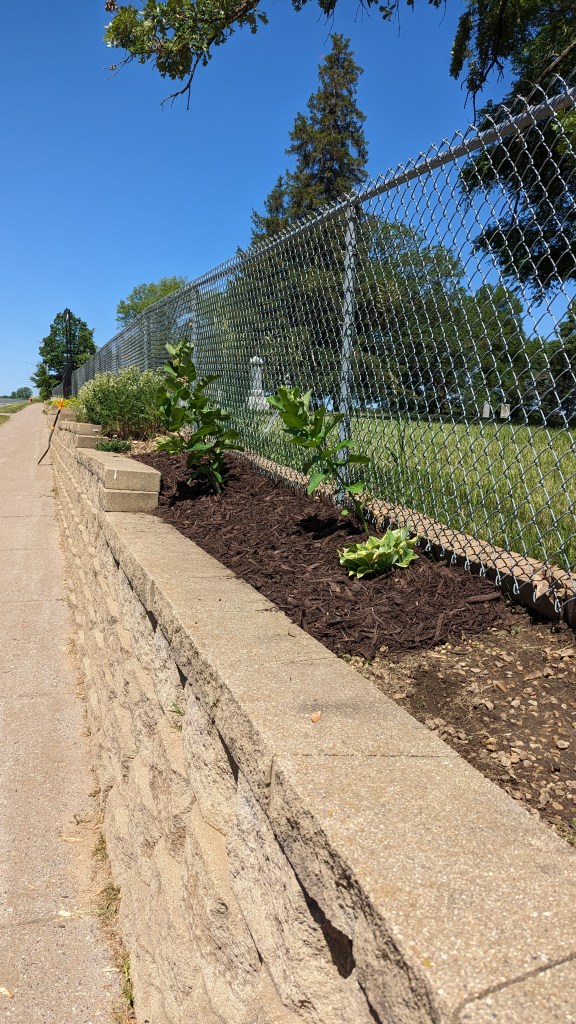
Little by little. The hostas are all now protected, as well, and the work is beginning to finish and fill in the remainder of one side.
The iris bed at the historic cemetary will be a fall “stretch” opportunity. Those can go into the fence garden too, little by little. And we keep getting offers of divisions as donations. All in good time and proper sun/shade planting. That garden has such potential, with all the offers of divisions donations, to be a wall of beautiful season-long perennials.
We do have an unfamiliar to me weed there. I downloaded an app to try to identify it, but what the app is returning doesn’t seem right. It is a clumpy upright weed with bulblets. This coming week, on Juneteenth, a plant expert is coming to the historic mansion for the annual rain garden consultation, and I hear they can identify weeds. I plan to ask them. For now, we are plucking that harvest. I doubt they were intentional. See below for my rationale – this dandy is growing between the sidewalk and the base of the retaining wall.

What else?
We miss the front tree, kind of. The daylilies we transplanted from the shade to the sun last year are loving the full sun. We will wait to see what the association does – replace the tree or not.
And the rain gardens at the historic mansion are so full I have just put that on hold while I work on the fence garden at the historic cemetery. All that really can be done there right now is weed the perimeter, which a few of the ladies are doing when they have time. Those will be a next year and following deeper dive. They do have potential, but will be on more of a late fall and very early spring cadence for those opportunities.
The jalapenos at the townhouse had a bit of a squirrel issue which is being resolved, and I am rooting 3 wiegelia cuttings and some clematis cuttings just for kicks. We’ll see if they take.
So that is the “gardens all over” catch up.
Things may be a bit spotty as we are also on the one month watch and hang close to town ask before grandbaby two arrives. You know how that goes – grandbabies trump gardens for sure! Gotta keep our priorities straight 💓


 Susan's Daily Garden