
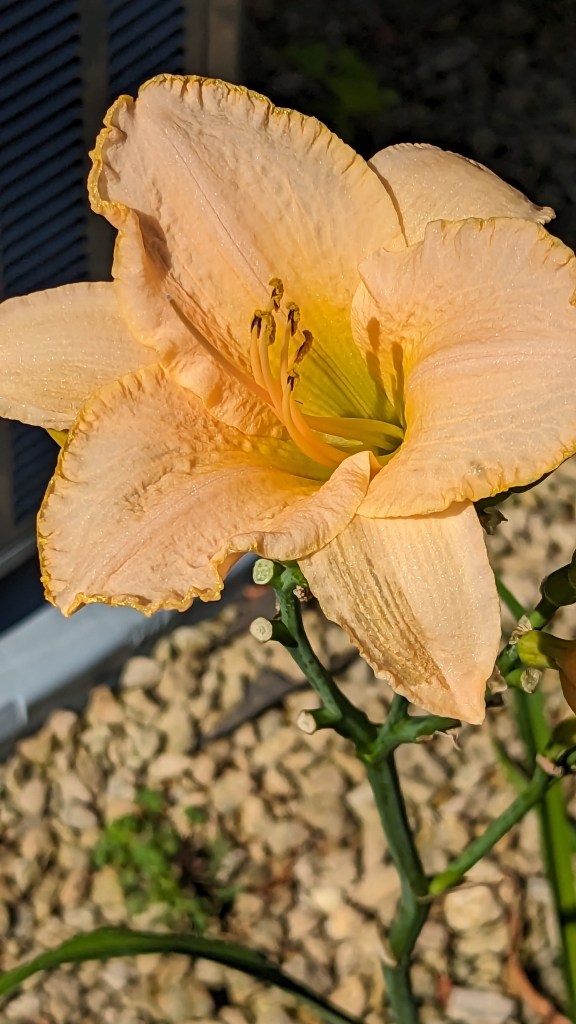


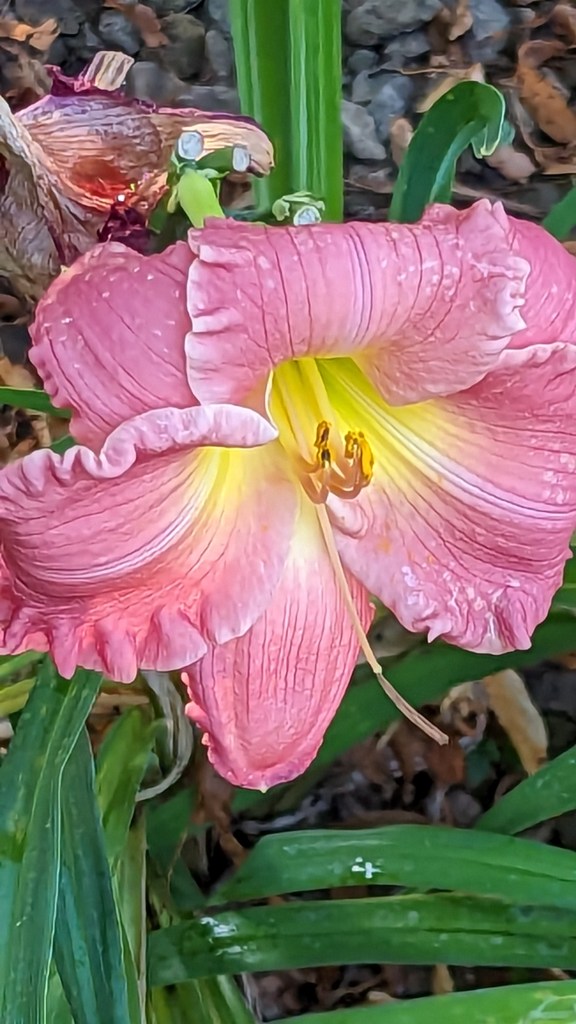


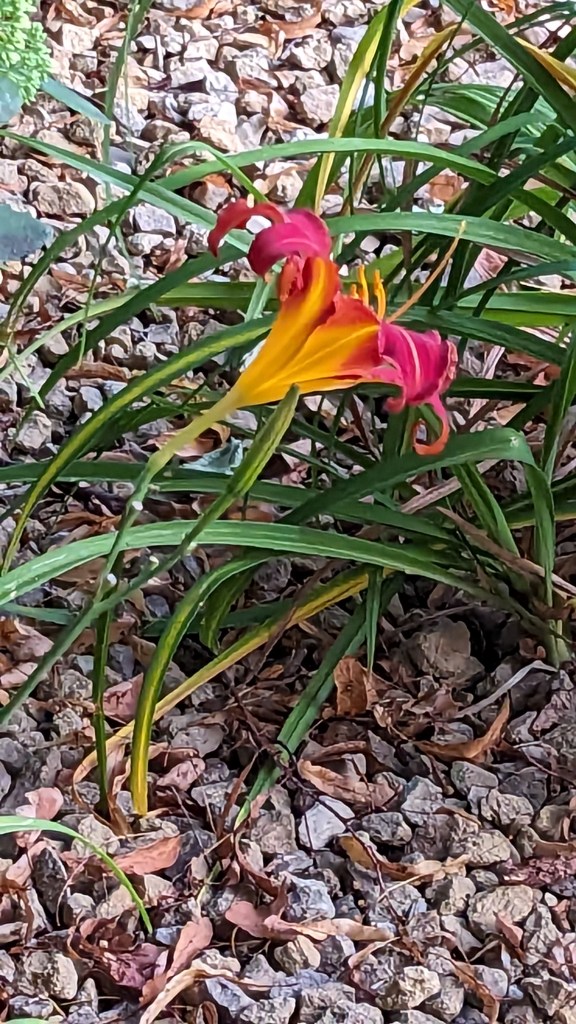
A few pics from the last couple days. The daylilies are winding down. The hostas are continuing to flower, and the sedum are getting ready for their showtime.
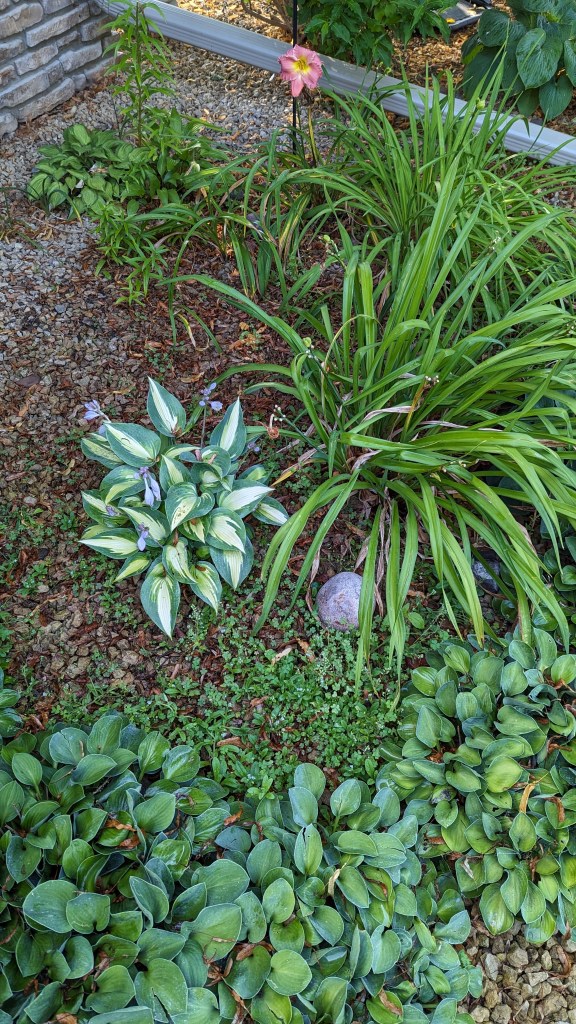
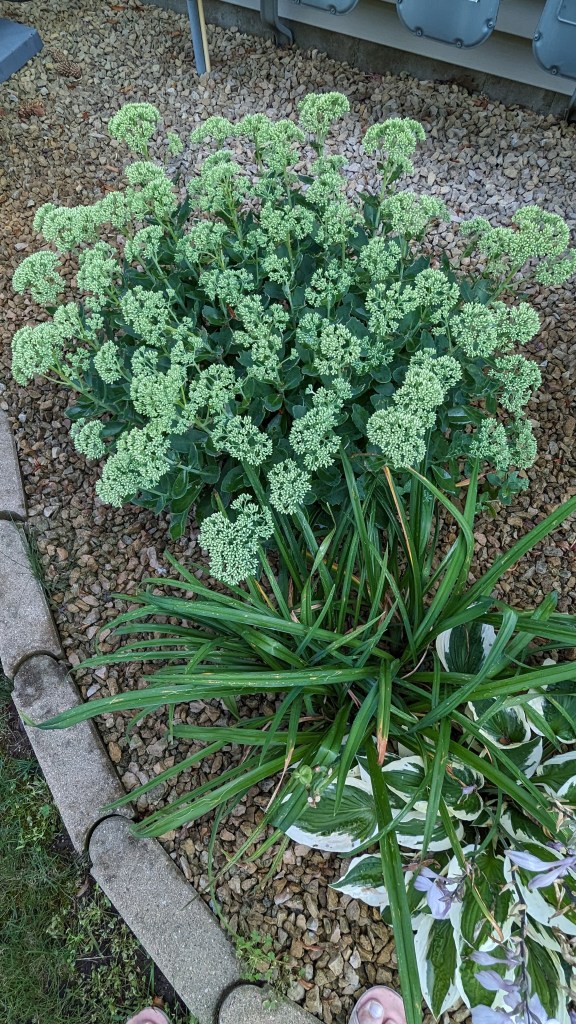
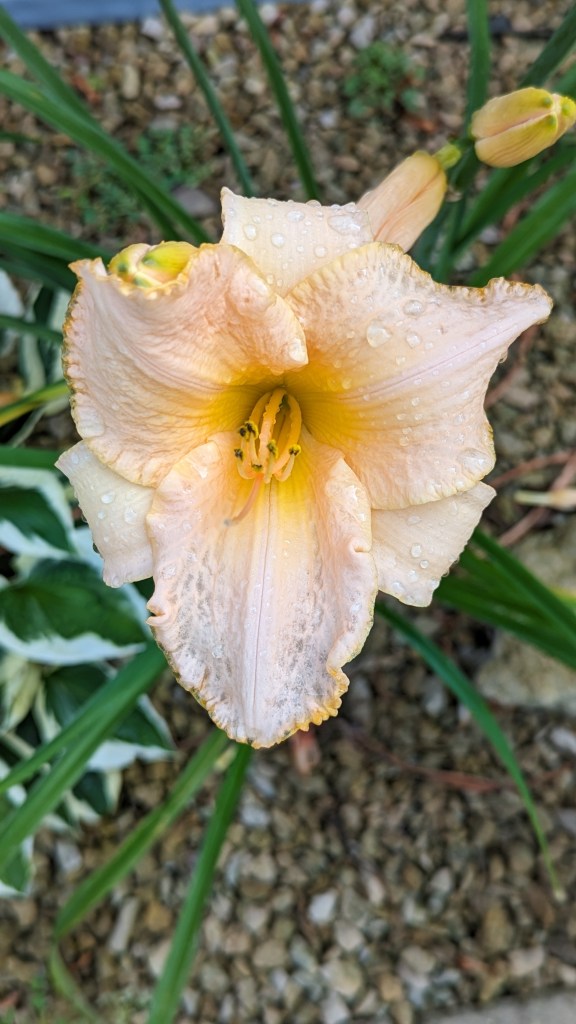
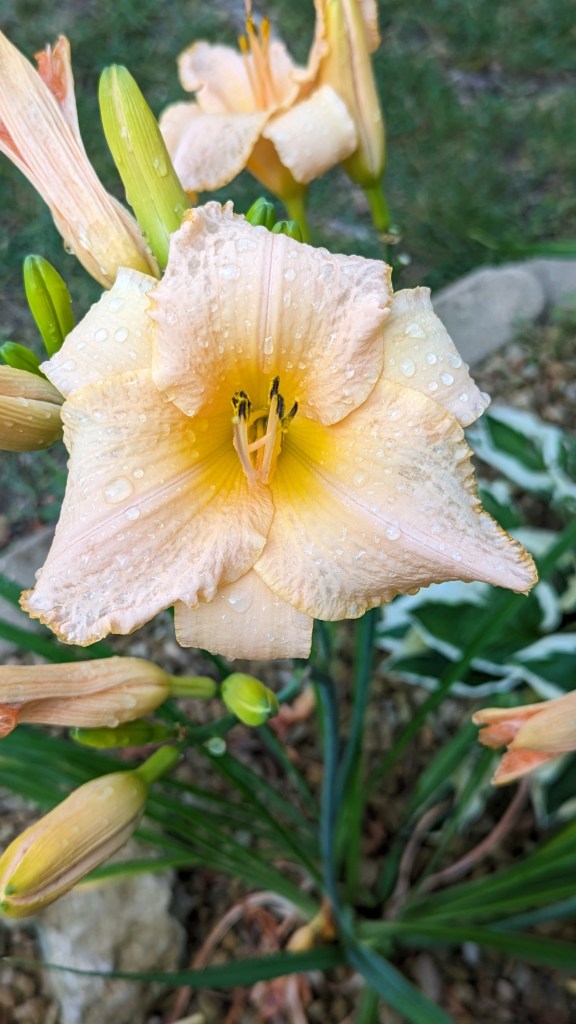
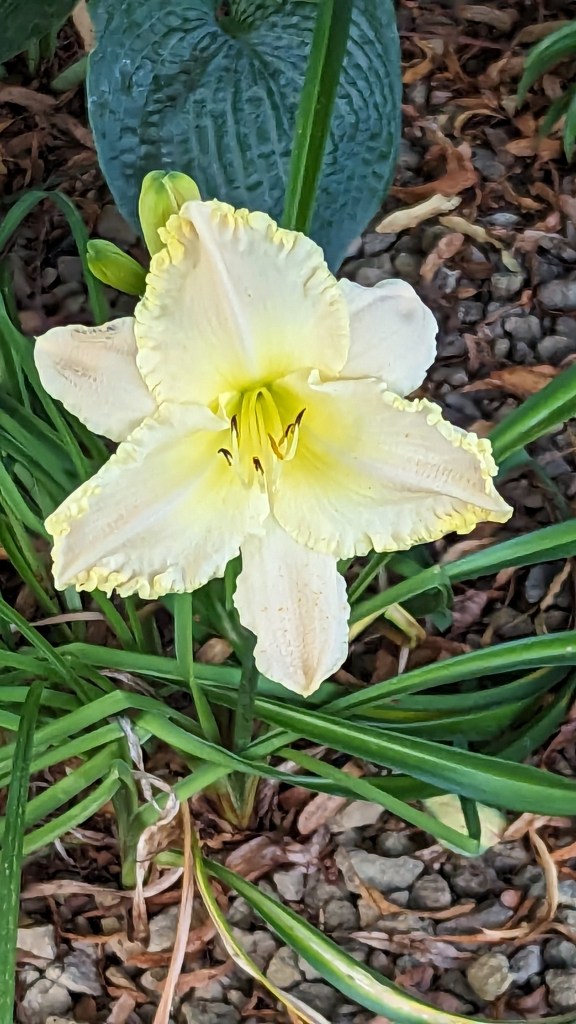
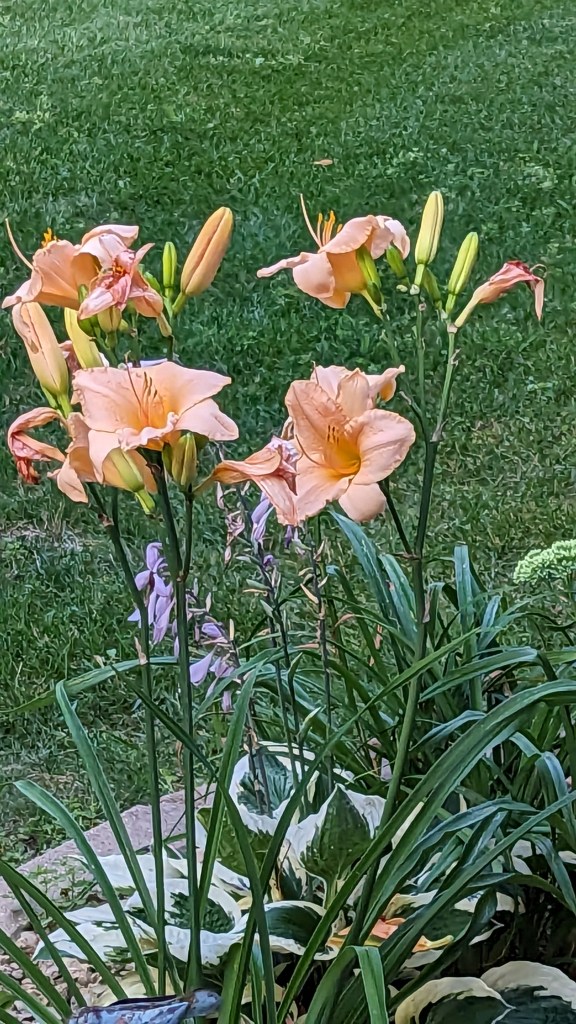
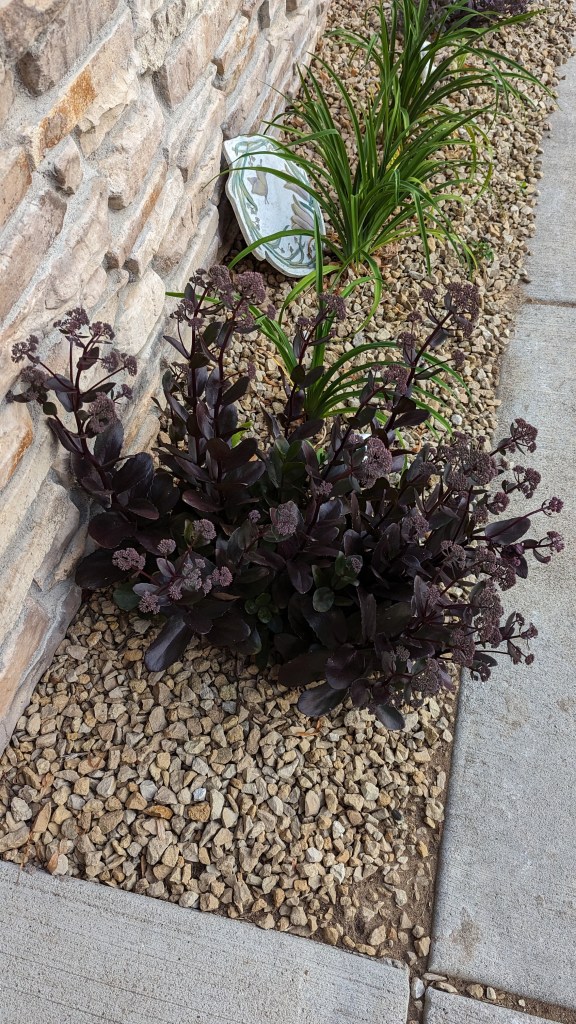


A few pics from the last couple days. The daylilies are winding down. The hostas are continuing to flower, and the sedum are getting ready for their showtime.

The First Frost hosta has formed seed pods. I am so tempted to harvest them. But knowledge tells me that if I want more First Frost hostas, I need to divide it. And I have no more room for hostas. And the deer just eat hostas to the stem up north.
I will give First Frost a haircut, and let the seed pods go.
If I could have 100 Rainforest Sunrise hostas, I would be delighted.
Gorgeous all season, and late summer lavender blooms on red scapes.
Yes, please.

I don’t remember the Chocolate Drop sedum and the Sundazzle sedum stretching so much toward the sun in prior years. Maybe. I suppose that will be another research project for the winter.
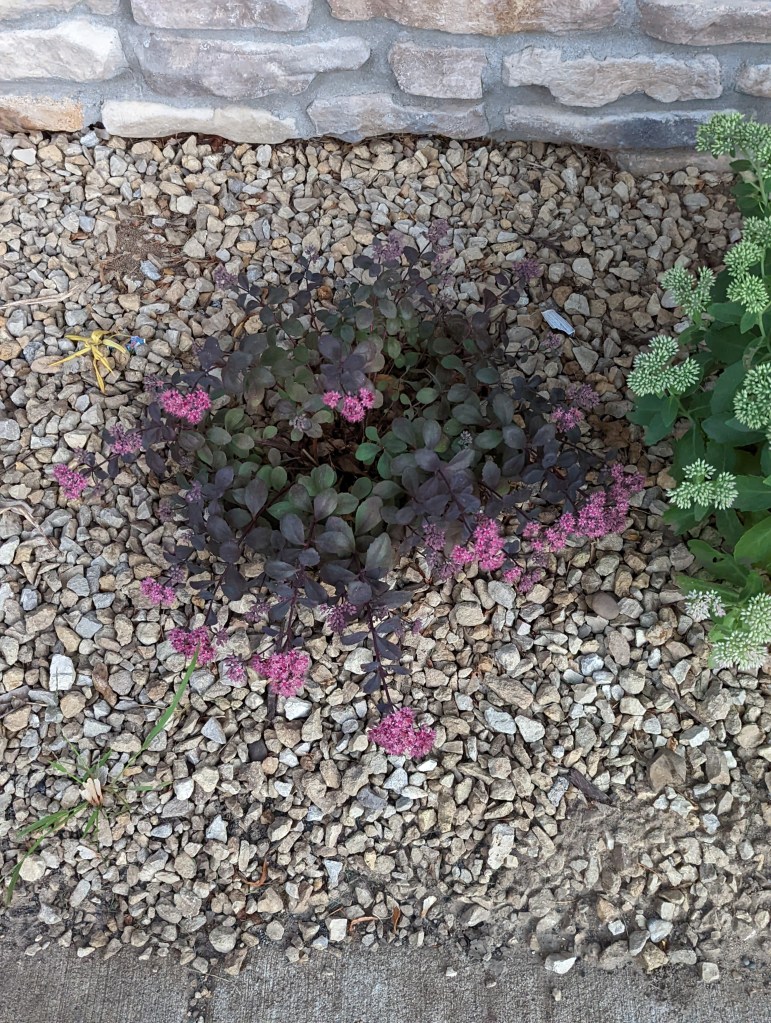

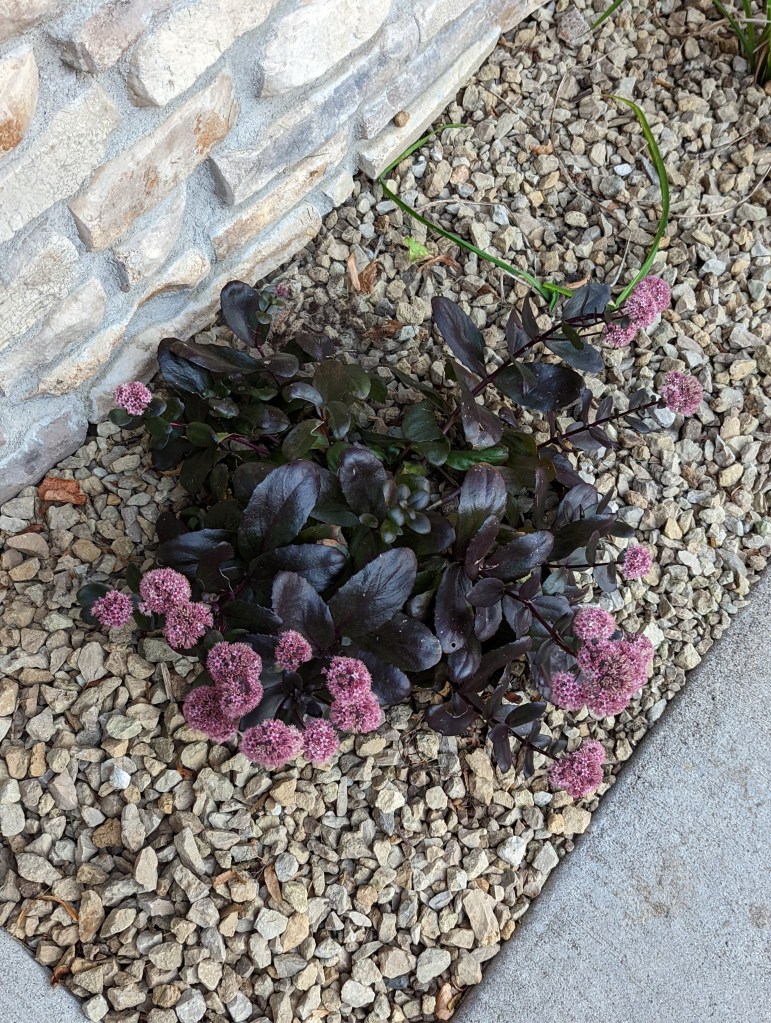
My daughter-in-law puts the shorter sedum in the front of the taller sedum. I have a couple rootings in the seedling box. I may try that.

It was a slow return for the purple shamrock this year. At the beginning of the season I was preparing myself for the end of that era. But it came back by June, and it remains in its usual spot.

The purple shamrock is one of two summer garden plants that come inside in mid-fall. They go in my office – all four feet wide – and greet me every morning with their year-round blooms.
Up north this past weekend, we had a 38°F night. When that starts further down south here, I start to watch the lows. Nights consistently below 40°F and time for them to come in.
I’m hoping that is still a while 🙂
We were up at the top of Minnesota for just a couple days. When we arrived, no color. Two days later …

And the ferns are in tandem with the birch and aspens.
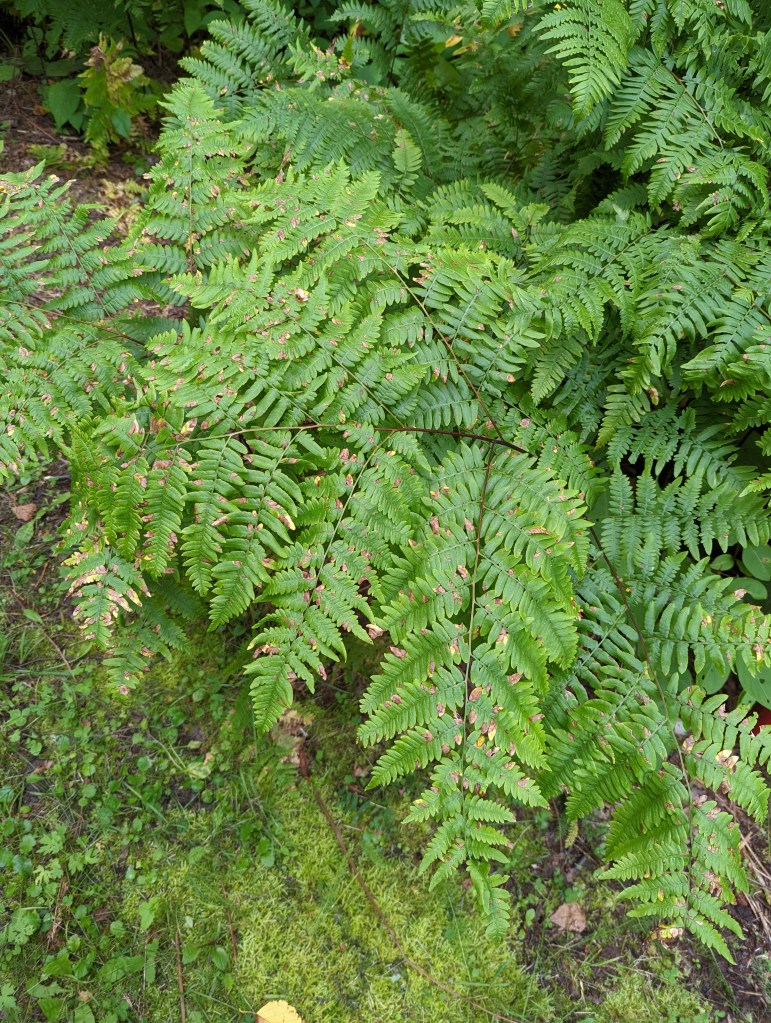
It will be at least a few more weeks before we see fall color seriously arrive further south in Minnesota, but sure enough, fall is heading our way.
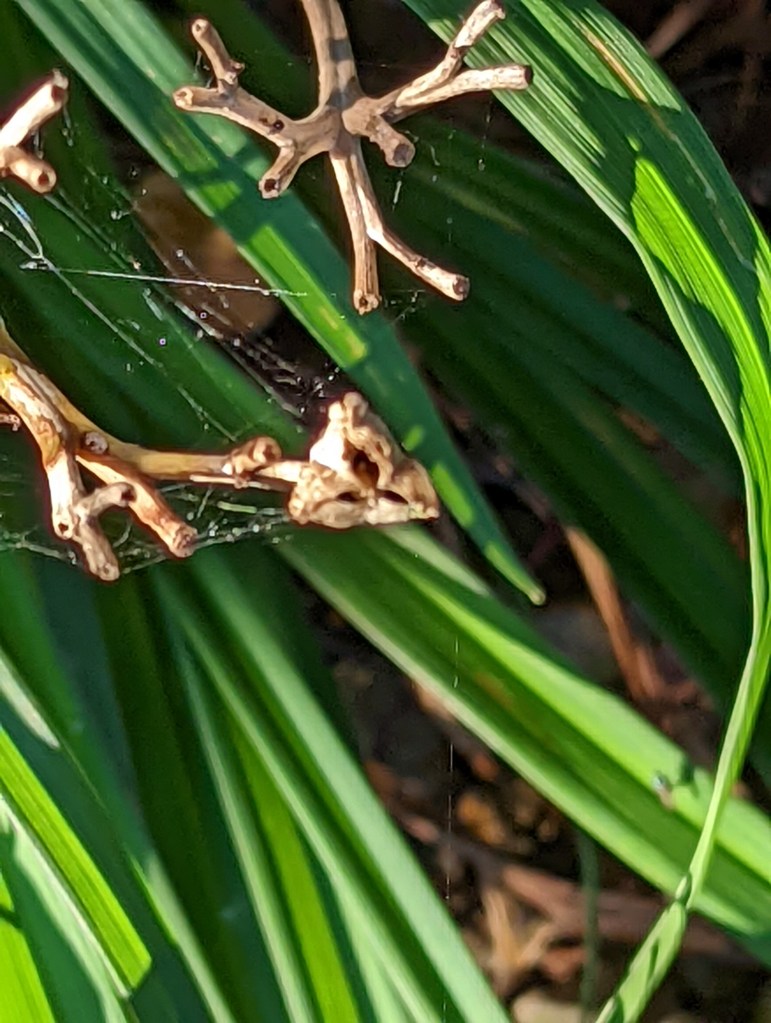
A beautiful sight – a ripened daylily seed pod. The spiders seem to like it too. Hopefully, the seeds are viable.
Ever so slowly, the Autumn Joy sedum are starting to pink up.

A couple interesting things I noticed in the garden this year –
This very healthy hosta has a small area of variegation. I have seen this in years past pictures too. i’m wondering if one of our bee or bird friends accomplished something new next to the existing hosta, or if it has to do with sun exposure. It looks very healthy. That puckering has always been like that. It also easily gets things trapped on the leaves – but that has always been that way too. Some snowy day in January I will have to do more research.

This past week I also noticed the Ivory Queen hosta has a few white blooms with purple veining this year. Usually they are all purple. My husband even pointed it out.
Interesting. I don’t mind white blooms but I am curious.

I’m guessing sun exposure may play into that one as well. That hosta gets a lot of sun exposure, most intensely in mid June to mid July. I try to shield it with lawn chair placement during that time but eventually I will swap it out. Just not sure with what. A daylily would be too vulnerable there.
Maybe a low growing sedum would do well there. Maybe one of the breakage rootings.
 Susan's Daily Garden