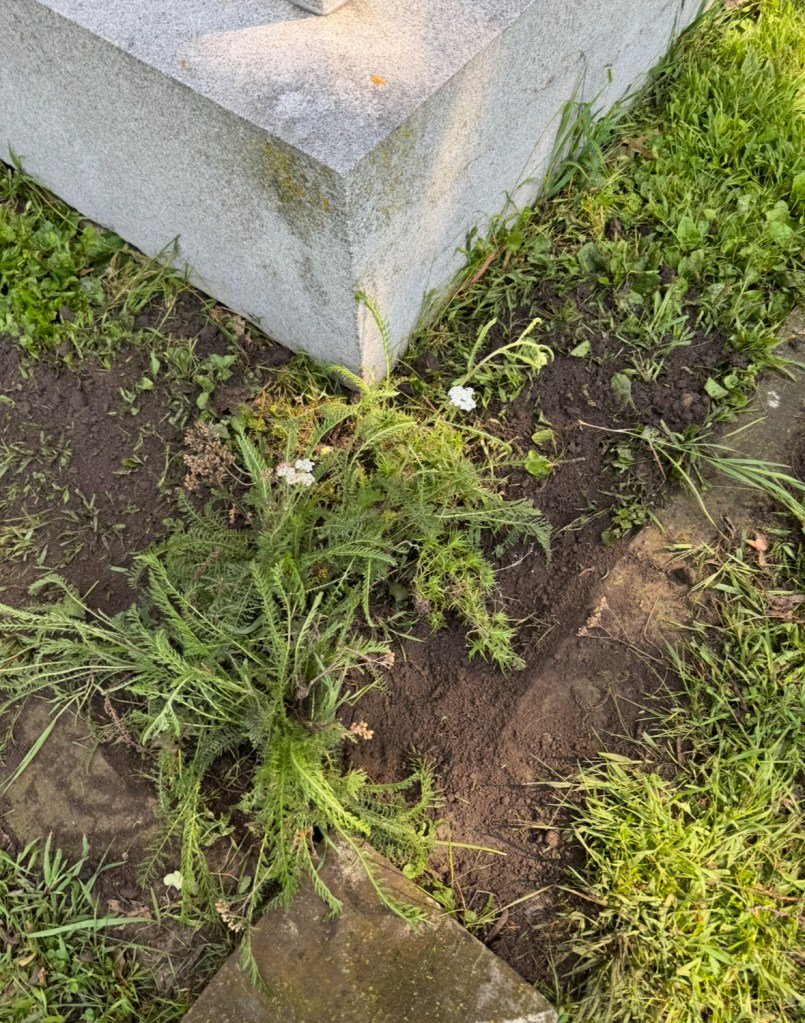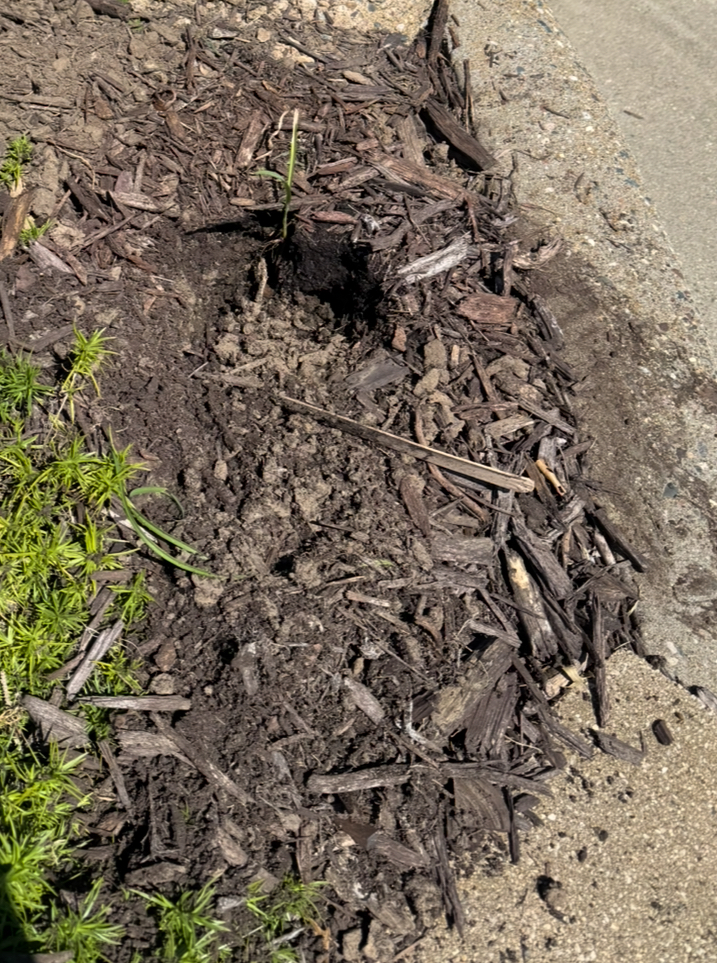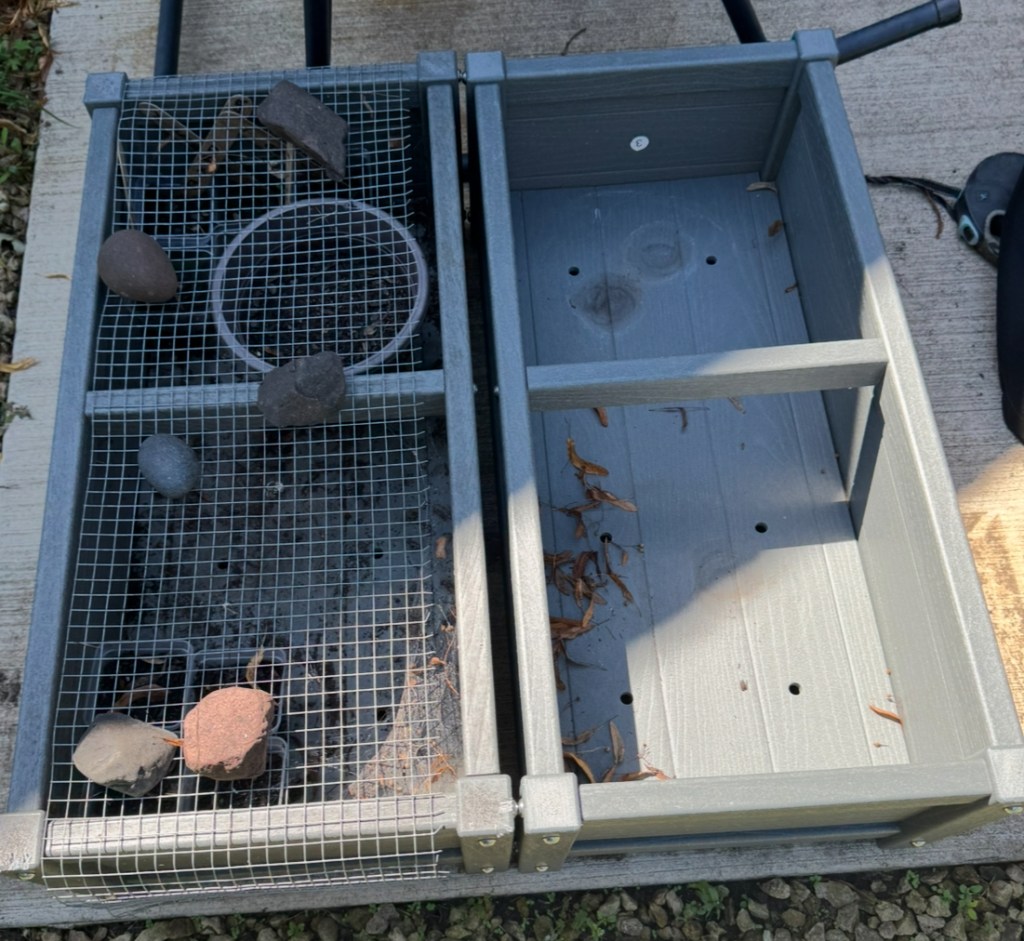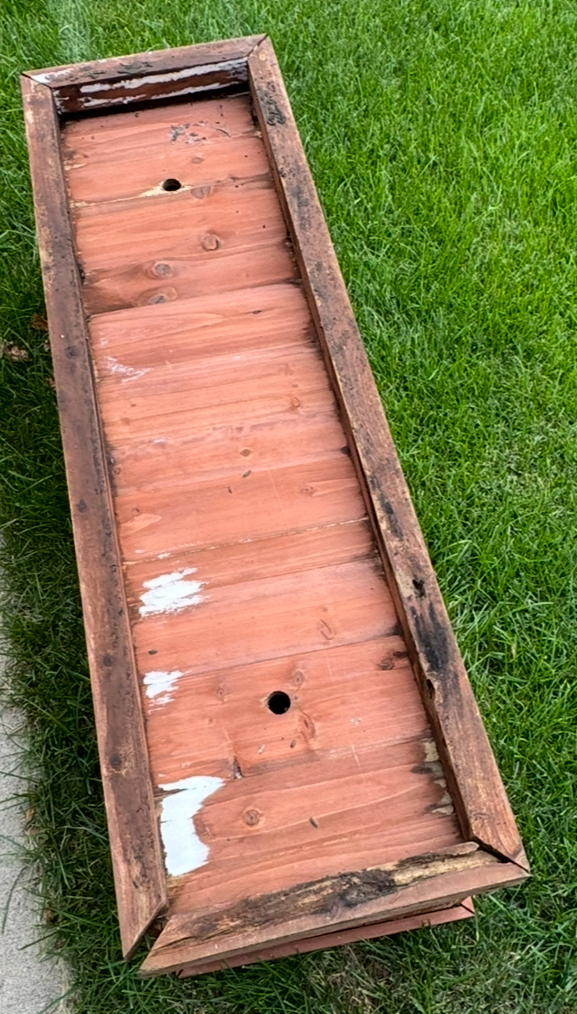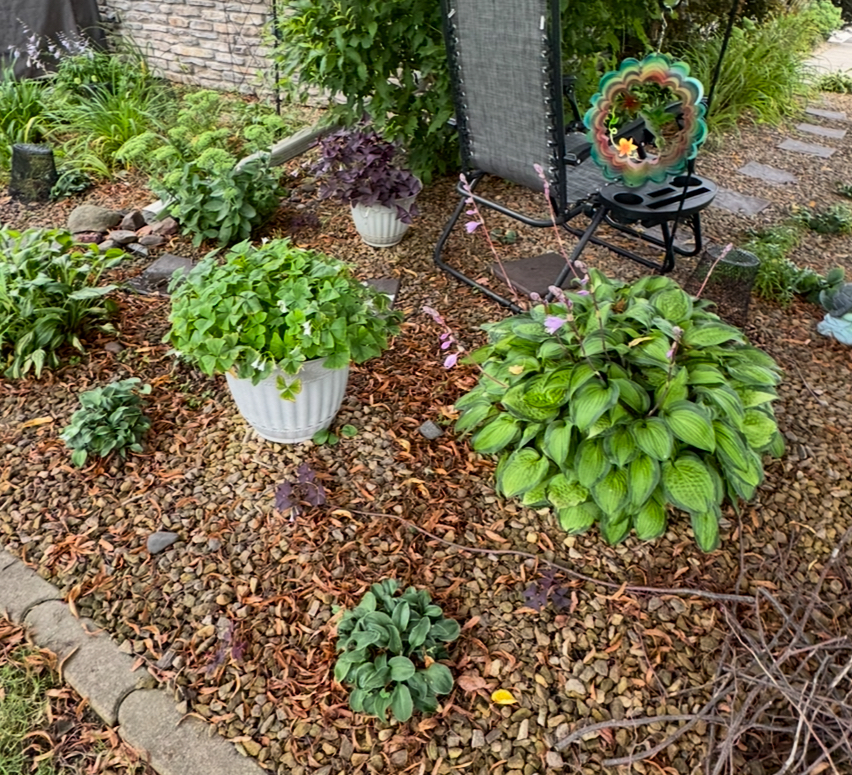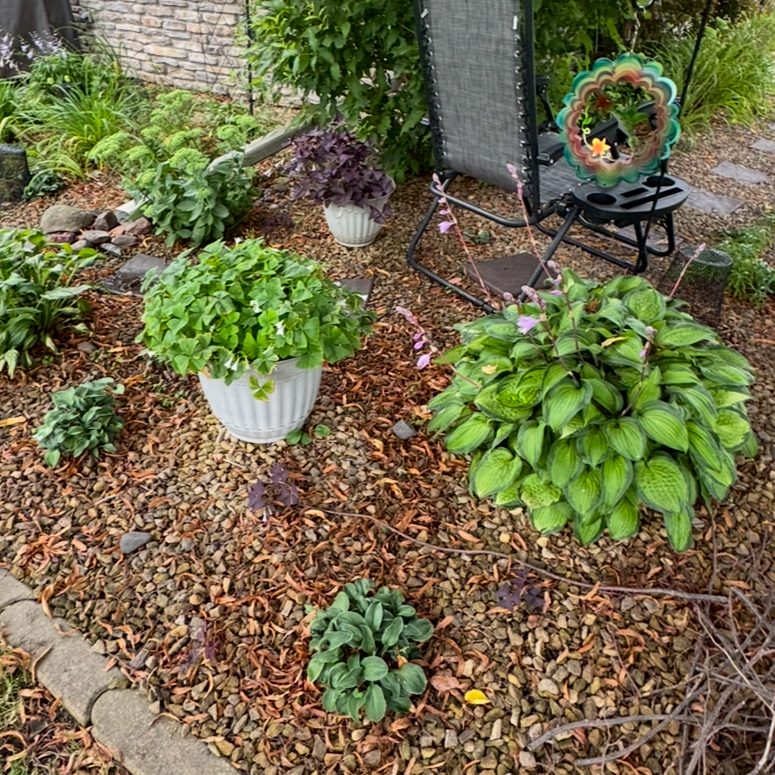
The shamrocks are starting to go outside

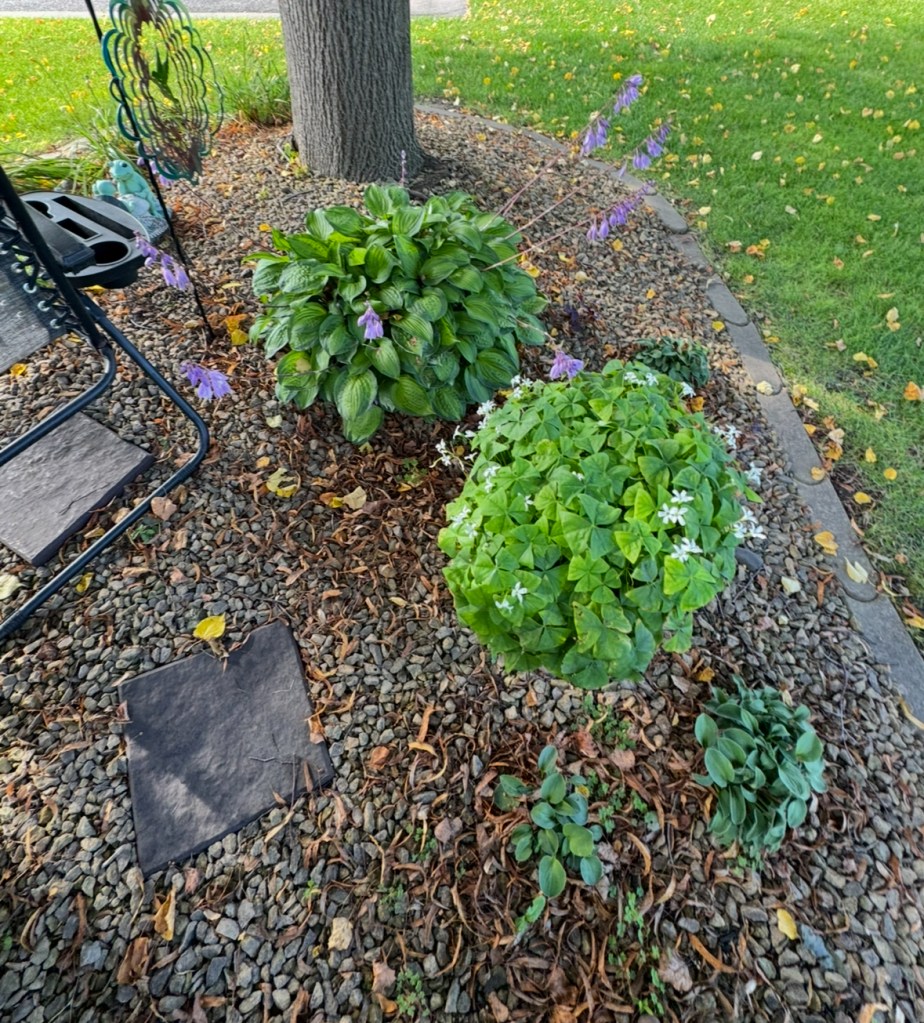
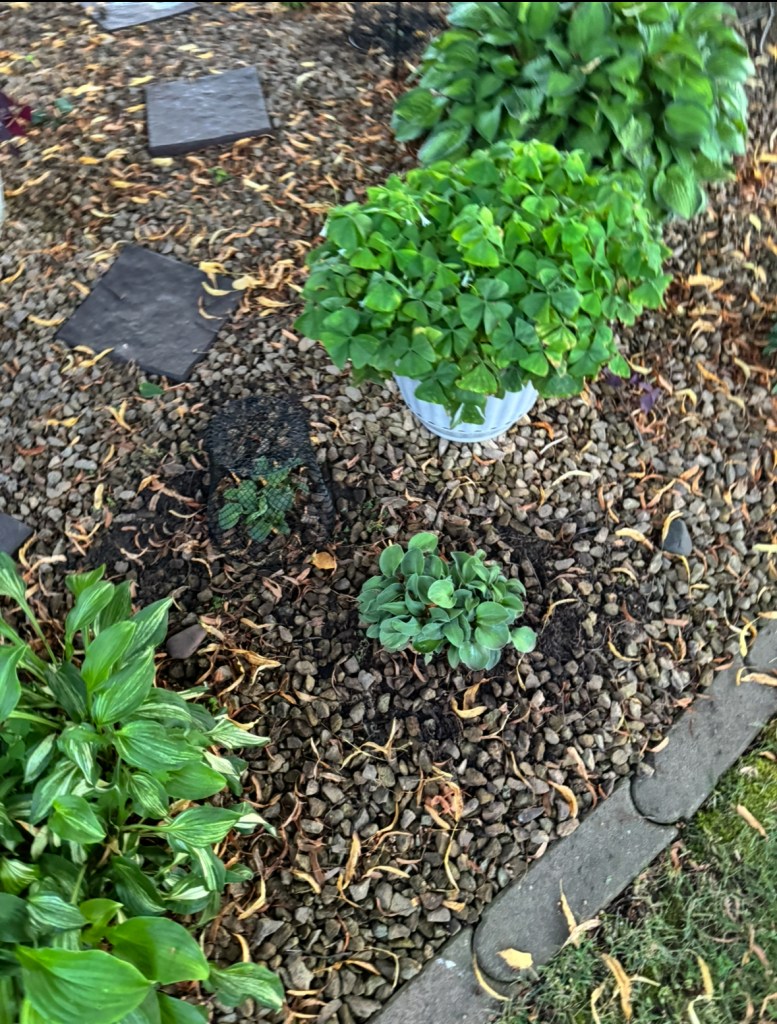
The robins are starting to build their nests. And it is consistently around 40 F or above now for lows. It is time for the shamrocks to go back outside. The robins will clean them up and use the dead material for their nests.

This is always a tough call for me. The shamrocks have been inside all winter and have good form, but their leaves are also forming a mat in the middle. To pluck that all out without bending the tender stems is tough. Plus, dead leaves encourage gnats – ugghhh.

When I look out and see their new “outdoor transition” state, I remind myself it is all good. Soon they will be all cleaned up and growing new leaves and flower stems and will be in a much better state.

The good, the sad, and the work to do

The long wait is now over. Things are popping all over the gardens, and I am starting to see what made it, what didn’t, and what work there is to do.

At the townhome gardens, sadly, it looks like we lost two sedum. How that happened for one of them is a mystery to me. That one was our only variegated sedum, and I will miss it. It had been there for a long time, maybe over 10 years, so I am a bit surprised. I won’t replace it with another sedum, but I may put a daylily there this fall. Potentially a seedling. But first I want to refresh my memory on how strongly the sprinklers hit that area. I don’t think the variegated sedum died from sprinkler damage, but I want to make sure it is a safe place.
The other sedum that didn’t come back was under the linden. That one never did well. It just never took off. I won’t put anything in that spot to replace it because the daylilies are also starting to underperform there. There are a lot of linden roots. It is a spot I will leave as “rock only” as things fail.

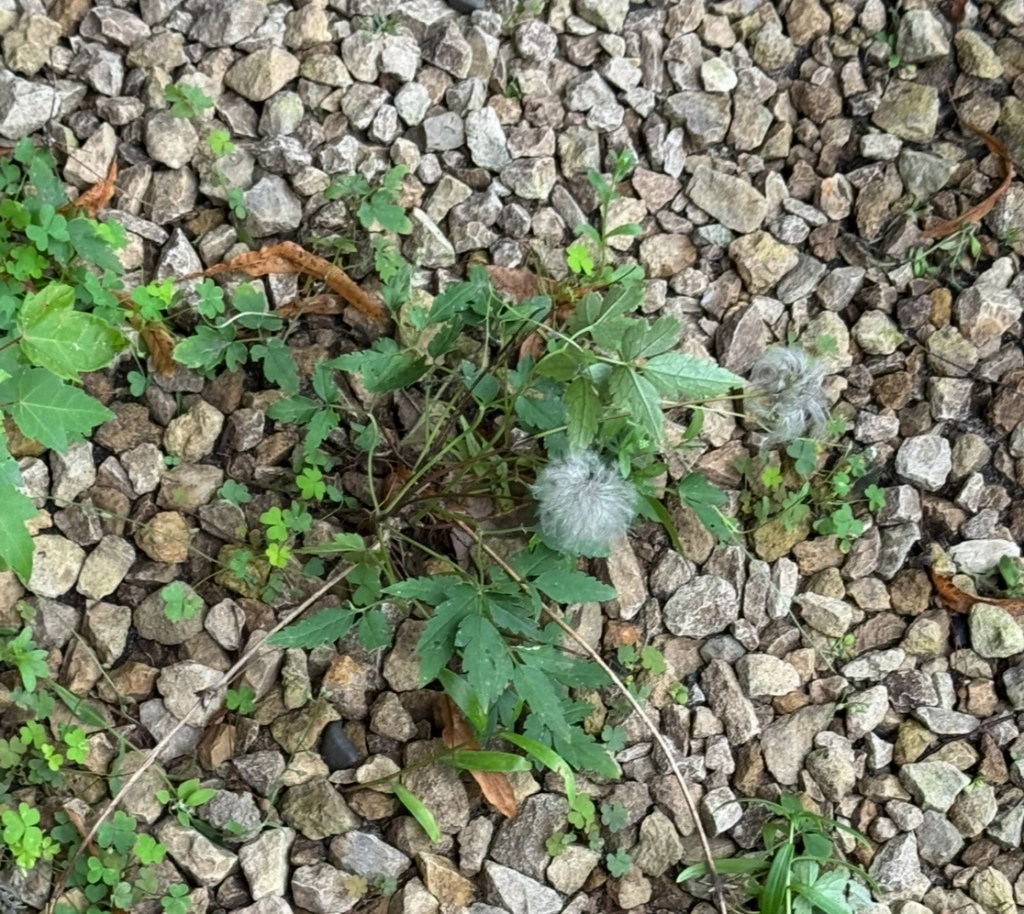
On the flip side, we have a bumper crop of Bluebells clematis volunteers, and those are in the “work” category. I need to transplant them to another area. This area is not optimal 😂

The volunteers are from our large Bluebells clematis that always performs very well, and I suspect I will continue to have volunteers over the years now that it is well established. Last year I allowed one to grow around the red daylilies, and this past weekend I dug that out and transplanted it into the spot where another clematis volunteer (different type) was way underperforming. Hopefully this volunteer does well. So far so good.

And then there are the missing hostas. There are three in particular that have no sign of anything, and that is a bit concerning. Two I was going to give to my Dad, but the third was one of my long-time faves, and if it doesn’t come back, I will miss it. BUT I have made a decision. If it doesn’t come back, I will convert that real estate to daylily space. That hosta really always amazed me because it should never have done so well there for so many years. That spot really is more of a … daylily sunny spot. But I put it there in my early years of creating our gardens, and it went to town for well over a decade. Probably 15 years. So if that hosta is gone, I will greatly miss it, but it will be replaced by a purchased daylily this fall. (Yes, I have my sites on a few candidates.) Then that entire area will be daylilies, with a few remaining Asian lilies, a few remaining tulips, and a legacy Autumn Joy Sedum.
For the other two “missing” hostas, if they do not come back, I will not replace them. The area where they were was getting way overcrowded, hence why they were going to find a new home with my Dad. And, my Dad just had a bunch of trees removed so they may have not done well there anyway.

Which leads me to story time. When I started our gardens at the townhouse many many years ago, I was head over heels in love with hostas. I planted boatloads of different hostas. I visited hosta gardens. I bought “hosta of the year” varieties I liked. I was gifted hostas. My Dad even bought me hostas from a neighborhood gardener he called the “hosta masta” (master, that is 😊). I have grown and divided all kinds of hostas for over two decades. I even tried my hand at harvesting hosta seeds and seeing if I could grow hostas from seed. (Not for me.) I love hostas. And I will keep the hostas I have that are still doing well. But that era was that era, and the garden “container” is the garden “container” (not getting any larger), and I am not getting any younger. So … in a finite space garden … hosta attrition makes way for daylilies, if the space is sunny. (Amazingly, I did have some huge hostas that did very well in relatively sunny spots. Go figure).
In this new era, I have my daylily seedling beds, and they are doing well. Those were solidified as the plan last fall. I also have one 6th year non-blooming daylily seedling in a different area, and I just can’t seem to move that one out, but we shan’t dwell on that. I figure at some point when the garden “container” is full, I will know it is time to stop doing daylily crosses, and then I will sit in my patio rocker, with a beverage of choice, and just enjoy. Haha, I can hear family and friends alike laughing uproariously. But that will be a few years yet. Hopefully quite a few. Because goodness! I have 60 “same cross”seeds I still need to get into pots in the seedling planter, and if even half of those go to seedling, oof! Realistically, experience tells me “probably not” and I will most likely end up with optimistically, 10 seedlings from that 60, to be planted in the 2025 seedling bed this fall, and watched for bloom starting next year.

At the historic cemetery, I am gonzo in love with what I see so far – legacy plants are doing so much better in year 3 of the mulch bed. The iris bed is in year 3 now, year 2 for watch to bloom, and I already see multiplication. Daylily seedlings I planted last year from here look great. Daylily purchases I planted last fall are coming up. Even the Blue Mouse Ears hostas made it.

Overall, so far, so very good.

Weeding time at the historic cemetery is down to an hour per week – amazing what the mulch bed tamps down. The only thing I want to work on is the aging creeping thyme. It needs some cleanup, and I may grab some irises from the old garden bed and do some fill in there. Otherwise, one hour per week weeding, watch for the garden to do its thing, and maybe, optimistically, try a few crosses.

Waiting, waiting, anticipating

Is it my imagination, or have the bird picked the majority of the small twigs leaving only the larger pieces?

I have seen the cardinals carrying pieces up into the big pine, but the robins don’t seem to be interested in the twigs. They prefer the bird bath.

I should get the shamrocks out. The birds pluck the dead shamrock stems for their nest materials. But the temperatures still are a bit shy of the minimum temperatures. I could keep them up to the house, but I think I’ll wait just a tad more. They always go through a bit of shock, and they are still doing well inside. They can stay in for a bit longer.

Additionally, I am waiting on the new daylilies I planted last fall to show up. I found one has come up when I did my walk about today. It is right next to the parents of prospective “Mahala”. Coincidence?

While I wait, I am seeing daily progress. Not only are the Purple D’Oro transplants up, but so are the Purple D’Oro 3 year seedlings. They appear eager to get going. And fingers crossed, bloom this year.


Coffee Time

It is coffee time at the townhouse gardens. They don’t get mulch love, and I try not to use a lot of chemicals, so they get just a dash of used coffee grounds. I started this practice many years ago to fend off slugs on hostas and now I (sparingly) give each plant a sprinkling. There is the thing about acidic levels and certain plants, but so far this practice has been just fine.
As for timing, I start when the plants are popping up, but about this time of year, when so much starts to come up each day, I move to just doing sections. This year I started in front, but other years I have started in back.
At the historic cemetery I will only put used coffee grounds around the hostas, to ward off slugs. The rest of the plants don’t need any boost. They have that beautiful mulch 🥰

Figuring Stuff Out


Any perennial gardener will tell you that we are an interesting bunch this time of year.  We are raring to go, but the weather teaches us patience.  I am soooo there these past few months.  And compounding that is a not so little journey I have been on to get ready to retire. 

So this story goes back a few years.  I have known I needed a plan to successfully retire for quite a few years.  I have watched various female family members “fail” at retirement, and return to work.  I didn’t want to have that scenario, so I started to consider options.  I started to look at my bucket list.  We had done the camper on land up north.  But to do a garden up north we needed a well. That was tbd.  Our getaway, but potentially a retirement location to build out.  If I could handle not being in a neighborhood. We had also renovated a little house in a mining town off Lake Superior.  I could have turned the whole back yard into a garden and spent winters on lots of seed projects. It also had a neighborhood. All of that would have been a success from my viewpoint but my husband was very unhappy.  Not with the location, but with the house.  After we sold that house, I needed to do more definition of the items on my bucket list.  I kind of stalled out there.  More like gave up for a while.  But eventually I got back into gear and came up with next steps.

I had started to volunteer garden for a local historic cemetery. I knew I could stay very content from the beginning of May to the end of October, gardening between the townhouse and the historic cemetery.  I had bumped up against my energy limit last fall while planting all those new daylilies and divisions, but I knew that was a big season finale.  With everything planted and the historic cemetery garden switched over from rock to mulch, I knew 2025 and forward were right-sized – enough challenge but not too much either.  Where the problem came in was November through April.  I simply didn’t have room for big seed projects, and I needed something to do in our long cold winters, preferably with a neighborhood or some type of consistent socialization.

Now admittedly, I am not a spring chicken with unlimited energy, and I also have some health stuff.  But our house is pretty clutter free, so it stays pretty easy to clean, and the garage only takes a day in spring and a day in fall to get into maintenance shape.  There is just not enough to keep me busy November – April in retirement.  But I came up with a plan for that too.  I would work toward going back to contracting, and look for 6 month contracts November through April, when I was ready, and see how that went.  

Simultaneously, as part of my volunteering, I had a plan to do posts for our local historical society to keep me busy this past winter and to bring more proactive attention to the historic cemetery.  Between contracting and writing, I knew I could keep a good level of challenge.  And, of course, normal life has normal family and friend activities.  All was in hand.  

What I did not expect was the level of historical research I got interested in.  I wrote a few high level, season appropriate posts and then I started on a deep dive.  And that, my friends, was how the Mahala project was born.  That project has kept me very busy, through the deep of winter, past a layoff I suspected was coming but may have shortened my runway to retirement, and now almost a month into spring.  The research is now done, and I need to start writing. And I need to get what I hope are the “Mahala” seeds to go to seedling and, hopefully bloom.  But before I plant those 28 seeds there is a second baby shower to attend for our third grandson, and then Easter.  And it would help if I could get the shamrocks outside so I can have that indoor space for seed planting, but it needs to be consistently 40 degrees Fahrenheit at night before that can happen.  Oh, bother 😘

I am applying for jobs that really look super interesting, as they come up, but my guess is this is either retirement time, or a winter contract will pop up in due time.  We shall see.  There is a lot that is out of my hands.

Yesterday was cool. All that got done, garden-wise, was a walk over at the historic cemetery. My husband showed me some new things in the woods – a buck rub,

and I noticed a bird has a very nice nest in a tree along the edge of the adjacent corn field.

I also noticed the old garden has turned into a food plot for the deer lol


More to come. 

My trusty side kick is here to spur me on.  I guess when you are a centenarian in dog years you can nap on a pillow, on blankets, on a recliner 😂

Hello Yellow

Hello Yellow, our first seedling from harvested seed to bloom in our garden, is up for the third year. Year one she was a seedling, year two (last year) she bloomed – amazing for year two! And now she is up a third year.

My notes are she successfully crossed with Just Plum Happy to form a seed pod (so as a tetraploid) but then the pod started to fail and then a bunny got it.

Hello Yellow is of unknown parentage. Nevertheless, she has a special place in my heart, and will remain in our garden.

The Sedum

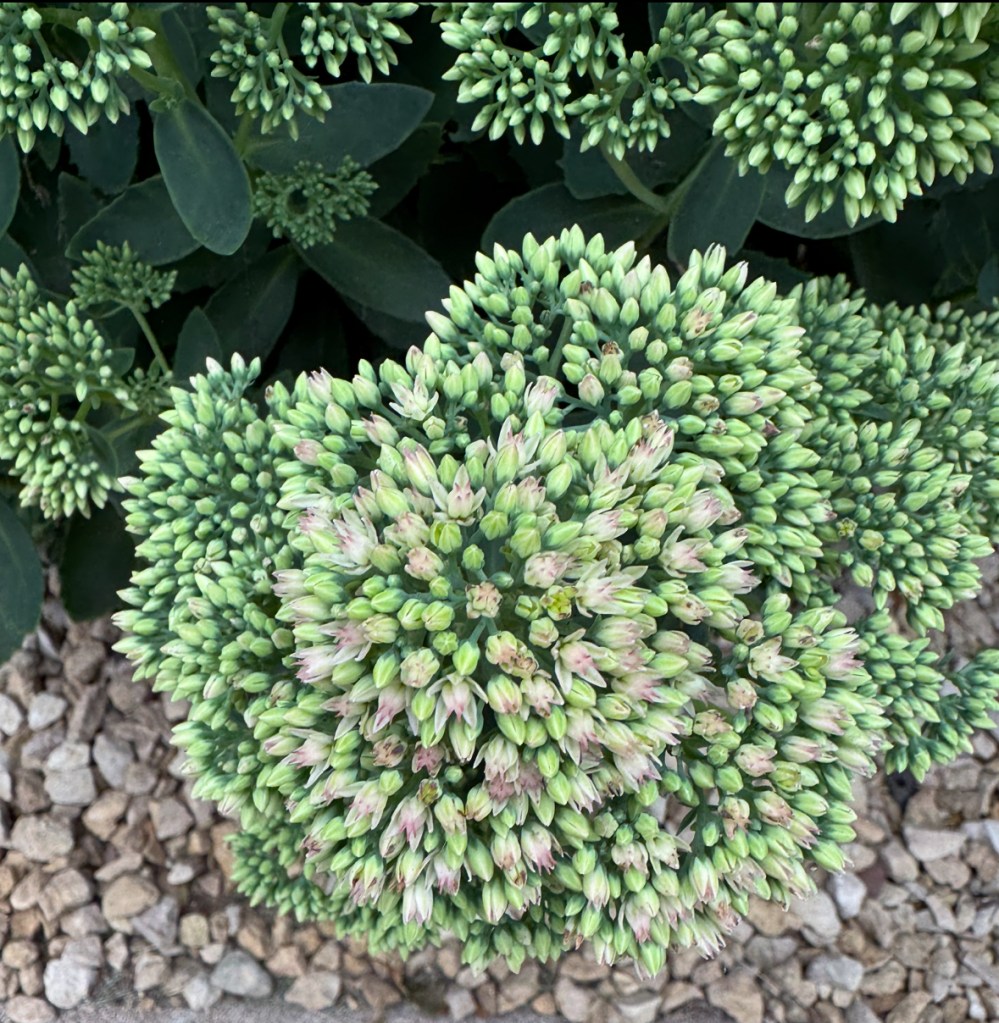
Many years, probably decades ago, we received a few Autumn Joy sedum from my Dad. He overbought and we were the lucky recipients. Those Autumn Joy sedum far outperform all our other sedum, and for almost two decades I have rooted collateral damage, divided them, and used them to fill in for plants that died out. When our Irish Terrier used to attack the bees on them, in the potting soil the broken stems would go to be rooted. When bunnies and squirrels get a little crazy, in the potting soil the broken stems go to be rooted. When I make a weeding or trimming error, in the potting soil the affected stems go to be rooted.

However, when I cut the sedum back in the fall, as much as I try to keep the stems close to the rootball, in the spring it always looks like the picture below. And I, in cleanup mode in the spring, have learned to leave those alone. Because if I don’t, I will have an early spring need to reroot stems, usually when all my dirt is still neatly in bags in the garage.

Not to worry. Soon the new growth will cover them. And in the fall the old stems will be easily removed, when I cut the sedum back again, and create next spring’s cut stems … that I will leave alone 😊

BITA, kinda


It’s that time of year again – Butt (kinda) In The Air, looking really close at the ground – are we there, are we there? I am looking for daylilies.

So far, the Purple D’Oro were up first, then the Tender Love, then the red Daylilies in the sunniest area, and today … dadadadahhh … potential future “Mahala”s parents are now both popping up.  So there is potential for more “Mahala” seeds to be made this year if the seeds from last year germinate.  An encouraging development for this gardener on this cool and windy April day. 

In addition, Pink Tirza, South Seas, Marque Moon, and unidentified Yellow Double freebie are all also popping up (I did look it up last year.  I just don’t remember it.  And I am too lazy to go back and look right now  haha). Unidentified Yellow Freebie Double was, I am certain, an error in freebie-ness.  I don’t buy doubles, or choose them as freebies, and it was not particularly encouraging for crosses, but it is yellow. It can stay.  

So, so far, I know I will be crossing for “Mahala” seeds, and I will be crossing for “Red Tirza” seeds.  They were both great seed makers last year.  Unless I don’t get blooms from the parents (highly unlikely) I will do a repeat.  Probably even if the seeds don’t germinate super well.  But I know they will, I just know they will 😉

South Seas gets to rest this year.  I crossed her hard last year and the bunnies got most of those results.

I am also looking for a cross for our oldest grandson.  He already loves to garden, and if that continues I will be thrilled, and teaching him to do crosses.  Hey, my favorites daylily source comes from three generations of guy daylily gardeners!  

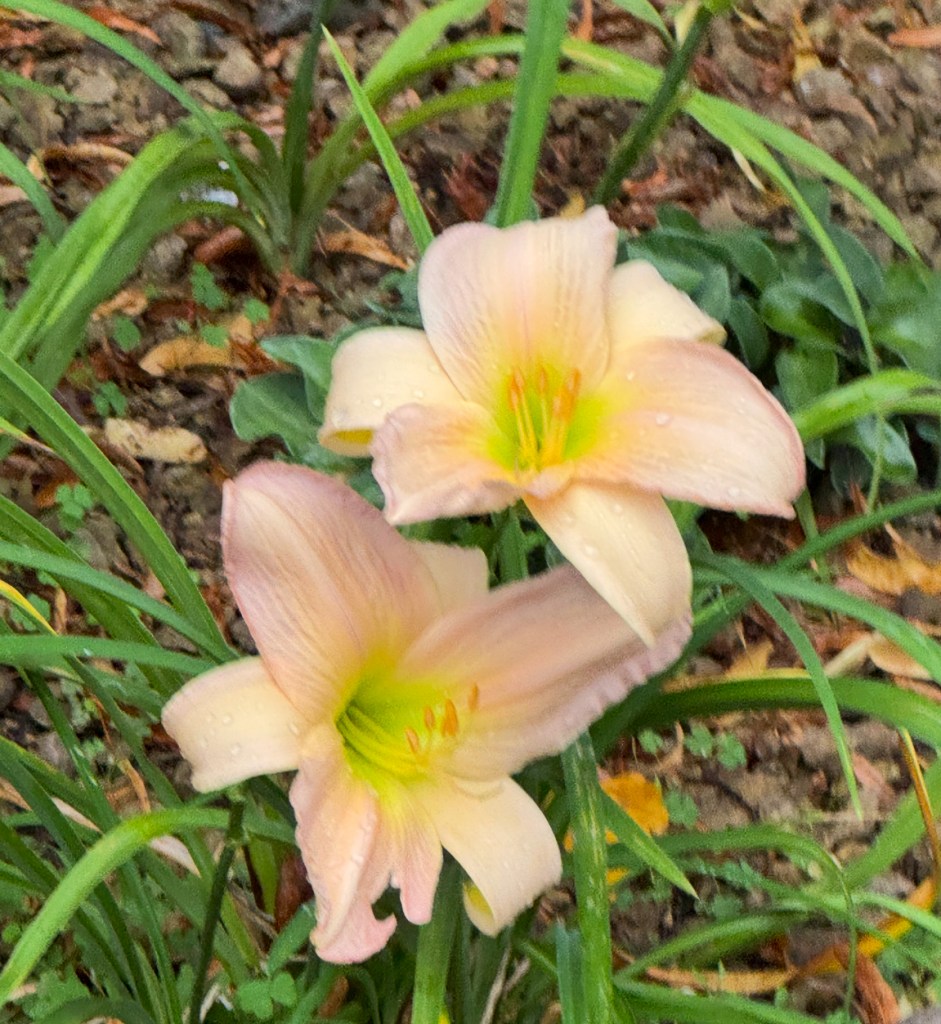
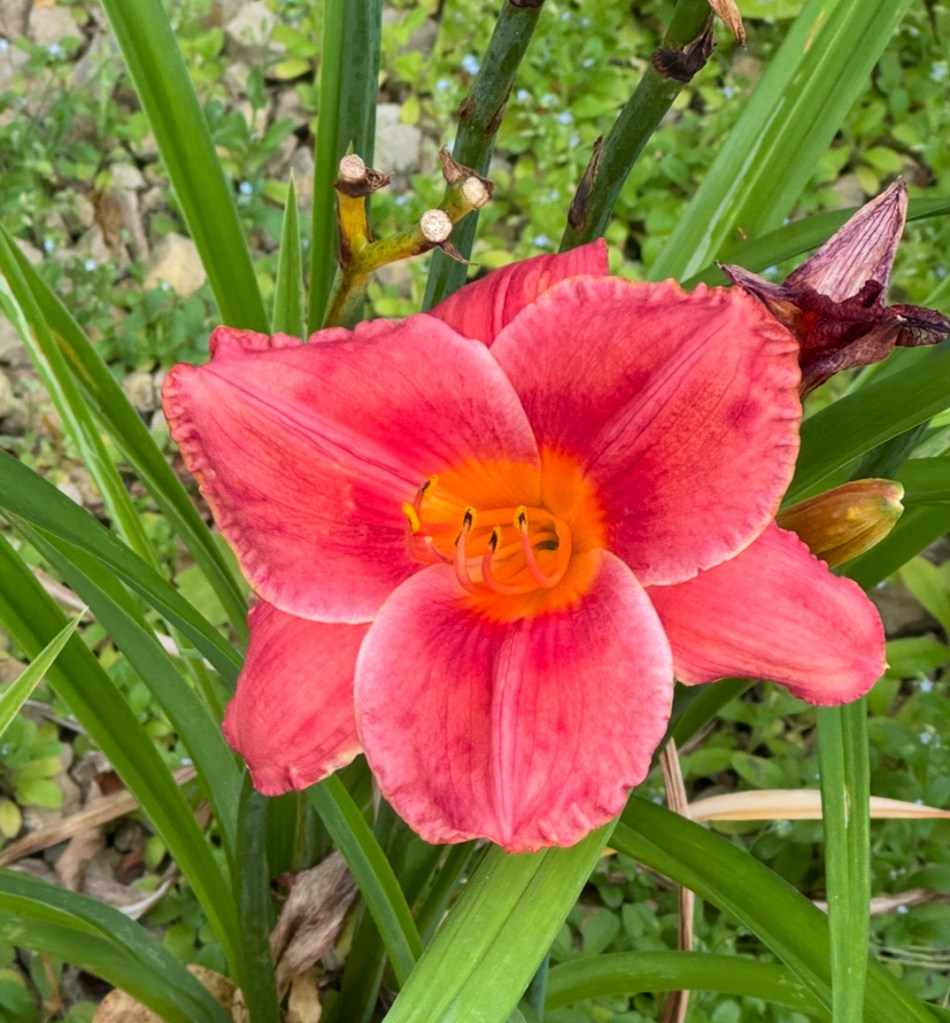
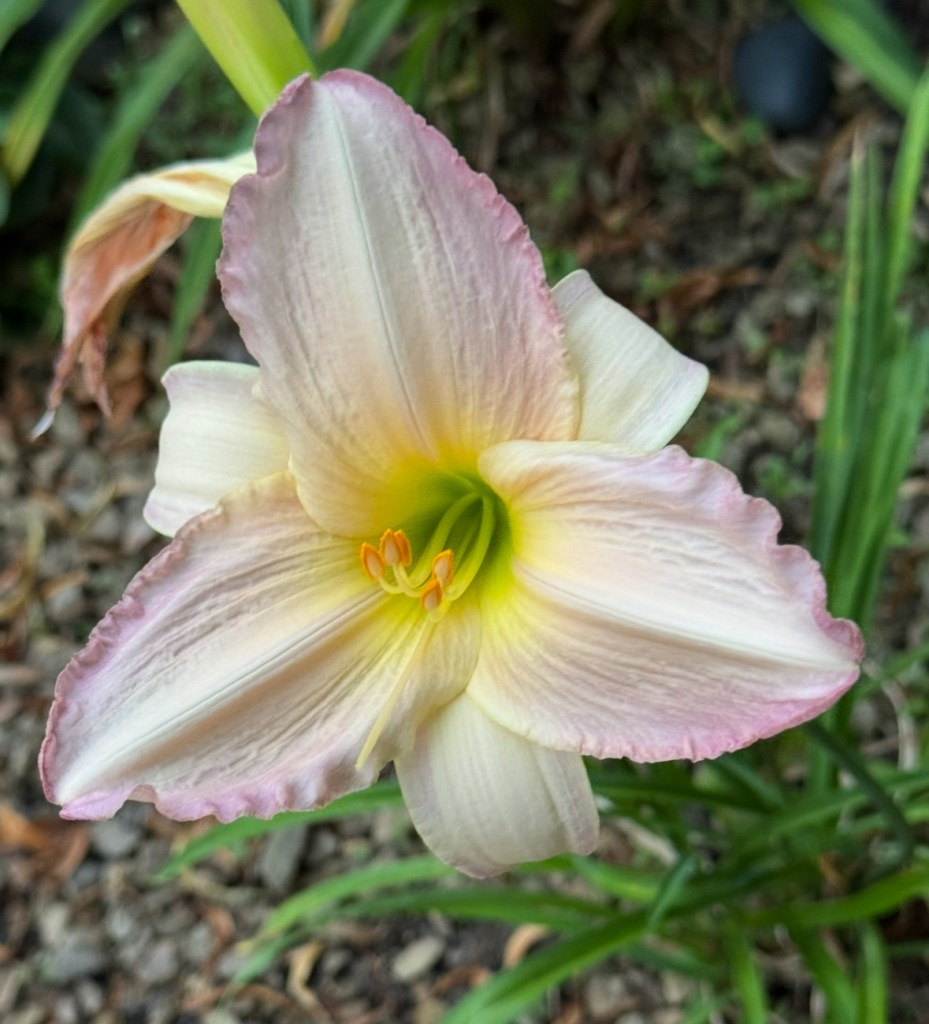
For now, an example of a beautiful sight.

Change – inevitable

On April 1, 2023, we lost our Amur maple due to irreparable damage from a heavy snowstorm. I was sad. But there was no saving it. The tree was removed, and the stump was ground out.
Later that season a small red maple was planted to replace it. I was, admittedly, astonished at how small it was. But it has survived two winters and this morning we realized the cardinals now approve. (The robins must have set the way 😉)