Last year I had a bit of an issue with daylily scapes being pulled down and eaten by something. Probably something with four paws, but you never know, right? I used quite a few deterrents, all safe, and it was minimally effective. Minimally.
When I put all my 2024 notes and daylily crosses info onto my 2025 daylily tracking spreadsheet, I was reminded again about how much of an issue it was in 2024 – and how much it wasn’t in 2025. At least at the townhome. The historic cemetery, well, I have shared what happened with the Mahala Felton daylily seedlings that I planted by the gate. But that is a bit different, I think. And for this post we are focusing on daylily scapes.
As the 2025 daylily season was starting to produce spent scapes, I began to have the urge to tidy up. I did not, however, do that. This year it occurred to me to me that perhaps my habit of trimming spent scapes was actually attracting playful snackers. Against my preference to clean as the garden matures, I left all scapes on all daylilies until the pod harvest season was complete for that full area.
I also introduced another deterrent this year, and that is lemongrass essential oil (diluted and sprayed on the pavers). And, of course, there are the forget-me-nots, which are also a deterrent.
We are to the end of the daylily seed harvesting season, and I can report – no daylily scapes were pulled down and eaten by critters this year, even the shorter daylilies. All pods made it maturity and were harvested by … me 🙂
I also discovered something new. Spent daylily scapes, when completely dried in place, are very easy to pull. I have a few things in the garden that share that feature, and it is very welcome. Not all of the scapes had dried when the pod harvest wrapped up, so some were cut back when I started the daylily cutback out front, but in the true garden, out back, almost all the scapes were able to just be pulled. There remains just a few from the very last pod harvests.
And with that, the greens are getting another week or so of photosynthesis before I come through and cut everything back. And trim the shrubs. And say sweet dreams. And call it a wrap.
For now, cheers to not trimming spent daylily scapes, to lemongrass essential oil, and to forget-me-nots. I am thankful for no critter interference in the seed maturing process this year.
The past few day I have finally felt like I have entered the land of fall in Minnesota. It has been a while coming. And there is a reason. But first –
The 2025 gardening season started out a bit tough, but ended very well – in a significantly different direction.
Earlier this year I shared that we lost 18 hostas sometime between last fall when I cut them back and when they should have been up this spring. Some were huge and all were very healthy the previous year (2023). In fact, I had offered two in particular to my Dad, and he was excited to get them. It was a bit disconcerting to have them vanish.
We have had a full spring/summer now to watch for any sign of the hostas to return. What can I surmise? The vast majority are gone. We will probably never know for sure what happened, but they are definitely gone. There was one that did somewhat recover. And there were two that sent up baby leaves that have endured. The consolation was they were from the ones I was planning to bring to my Dad. So that’s good.
The hosta losses were sad, but the daylilies were crazy good this year, both in bud and flower production, and in pod success. There are quite a few seed pods from self-seed but the vast majority are from crosses I did – hybridization. My tracking spreadsheet tells me I was successful in getting 21 different cross types to seed pod. That is a lot. And I have been feeling it all of September. I have come to the conclusion that the scope of what I did this year is not where I want to land next year. Here’s why:
I absolutely love daylily season. Head over heals, in my very happy place. But I also really love late summer and early fall in Minnesota. I like freedom to enjoy it outdoors. I don’t want to be spending a lot of time sitting indoors during that time, documenting daylily info and storing seeds, and I try to plan for that preference. Knowing that, and suspecting I had gone a bit far with making daylily crosses by mid-July, I made a conscious decision to stop doing crosses on the last day of July. I knew I already had a lot of pods, and that very few were failing, so I knew I would be busy, but I don’t think I fully understood the implications. On September 28, I am still harvesting, labelling, documenting, and storing seeds. And here is the twist – I have discovered it is not my favorite of favorite activities at the scope at which I am now doing daylily crosses. Additionally, based on what I have read over the past year, left to my own very curious and daylily loving devices, the work will only mushroom from here. Think exponential since I literally have already produced hundreds of daylily seedlings and if even 50% of the seeds I am harvesting this season go to seedling, I will be in a sea of daylilies. And 50% is not unrealistic. My success ratio from 2024 seeds to 2025 seedlings was much higher than 50%.
I have thought about this situation ad infinitum. I have even hinted at some ideas in my posts. The most appealing option to me at this point is to take 2026 as a self-seed only year. So let’s get the self-seed discussion out of the way first. I could harvest daylily self-seed for the rest of my life and still keep my fall seasons free for anything I want to do. Yahoo! Self-seed harvesting is very easy. There is no documenting until I harvest. I just enjoy the progression – the scapes to buds to gorgeous blooms. I watch the pollinators come to visit and imagine the wonderful work they are doing. The wind blows, different daylilies make their own crosses easily… There are lots of factors at work. None require anything but admiration from me. No planning, no overheating my brain with what pollen fertile daylilies are blooming that day that could be crosses with compatible pod fertile daylilies that are blooming that day. No documenting endlessly, first on my notes on my phone and then into a spreadsheet with 13 columns of data. The pollinators or the wind or whatever, do their thing, I see what pods mature, collect the seed, put them in an envelope marked xyz daylily breed-year, and I’m done. Maybe I add the count (how many seeds from that daylily type) to refresh my mind when I put them in the refrigerator to stratify and start planning for planting. I keep some and I plant some in other gardens. However, I do not have a say in what goes into that seed. But, so far, I have been delighted.
Hybridizing is a lot more work. A lot. I’m not talking just doing the crosses. Oh no! There is documenting, documenting, documenting from that point on, and then more documenting and labelling for storage. And even crosses of the exact same pollen to the exact same breed of daylily on the exact same day in the exact same bunch (just different blooms) can mature on very different days. Sometimes a week apart, sometimes more. And then when I do 8 identical crosses on one day, 6 on another, four on another, oh yah. The spreadsheet gets longer and longer with more and more of those red corner notes, where I try to put into words something that will make sense six months from now, when I have a question on what I harvested. I am not teasing when I say all that collecting and documenting and storing ate up a lot of my freedom in September. (I made 21 different crosses this year with multiple pods each.). But if I don’t do that documentation work, I get the mysterious “maybe” cross between Pink Tirza (a diploid) and Marque Moon (a tetraploid) that created something that looks pretty close to a Stella De Oro. And I, on purpose, do not have any Stella De Oros here, so … What’s worse, I can’t duplicate it and my other suspected crosses for that outcome produced no pods. Soooo. Document I do. For Hybridizing.
So, where have I landed? I have come to the conclusion that unless I go for a scope where I am selling what I produce, hybridizing is interesting work in small batches, but “not for me” at the scope I expanded to this year.
I know. Sad. But I will still do a few intentional (hybrid) crosses each year. Just at a much smaller scale. The scale I have enjoyed in previous years. And I still will have all the daylilies created up to this point. I just need to stop the mushroom effect.
The other option is to start a real daylily farm, like a business. And then I would be sitting at farmers markets, because I am not going to start mailing things around. The fact is, I am a gardener, not a marketer 😉
One thing is for certain, spreadsheet documentation is worth continuing:
Since I am keeping a spreadsheet for all of this documenting, and the beauty of spreadsheets is you can slice and dice data a lot of ways, eventually optimal options will start to come forward. Without adding new daylily breeds to my garden, there is a finite amount of crosses – diploid to diploid, tetraploid to tetraploid, early, mid, late season. I also have a certain palate I am looking for so that narrows things, which is helpful. Where I could get in trouble is the infinite number of crosses with new seedlings that bloom. That is where I will need to discipline myself.
So back to the start of the blog. The past few days I pulled myself together, and I allowed myself to get into “I am going to enjoy fall” mode. I spent a huge chunk of the days outside. I did some garden cutback, and I did some fall projects. I even took an old bird feeder and made a lantern using a battery operated votive. And I harvested the 6th to last daylily pod yesterday. The others have to be harvested by Sept 30th because the furnace and AC annual maintenance person is coming that day, and they will need the space where the pods are still maturing to be clear. It will be tight. Those pods may be a loss. No, I will not reschedule the maintenance appointment to save 5 daylily pods. I know. Sad.
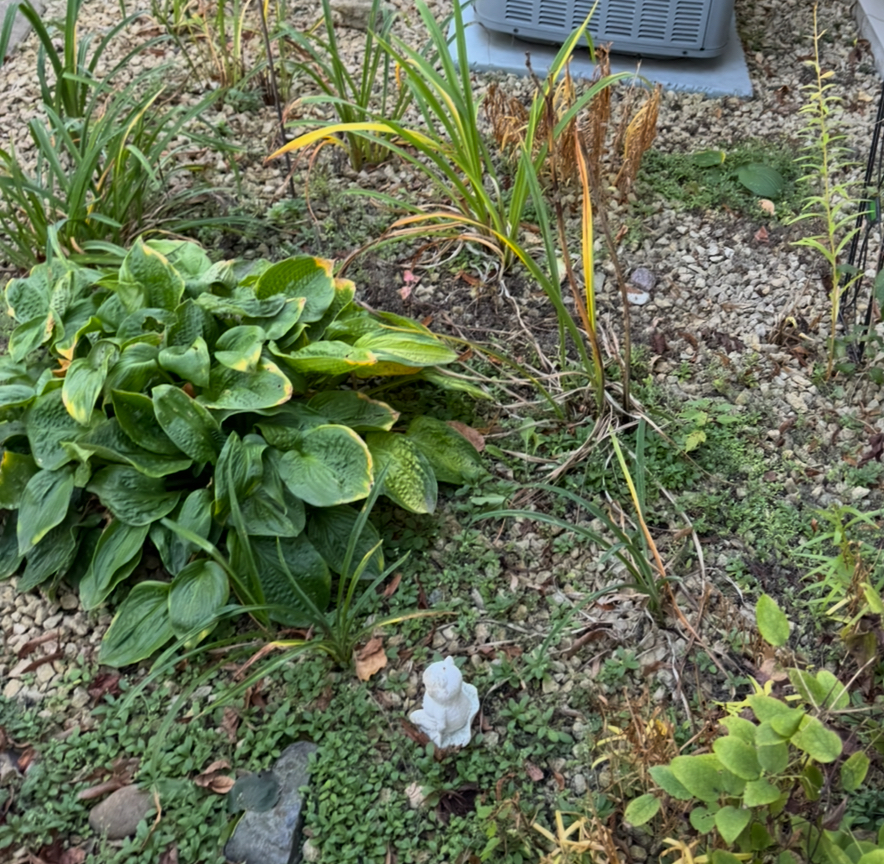
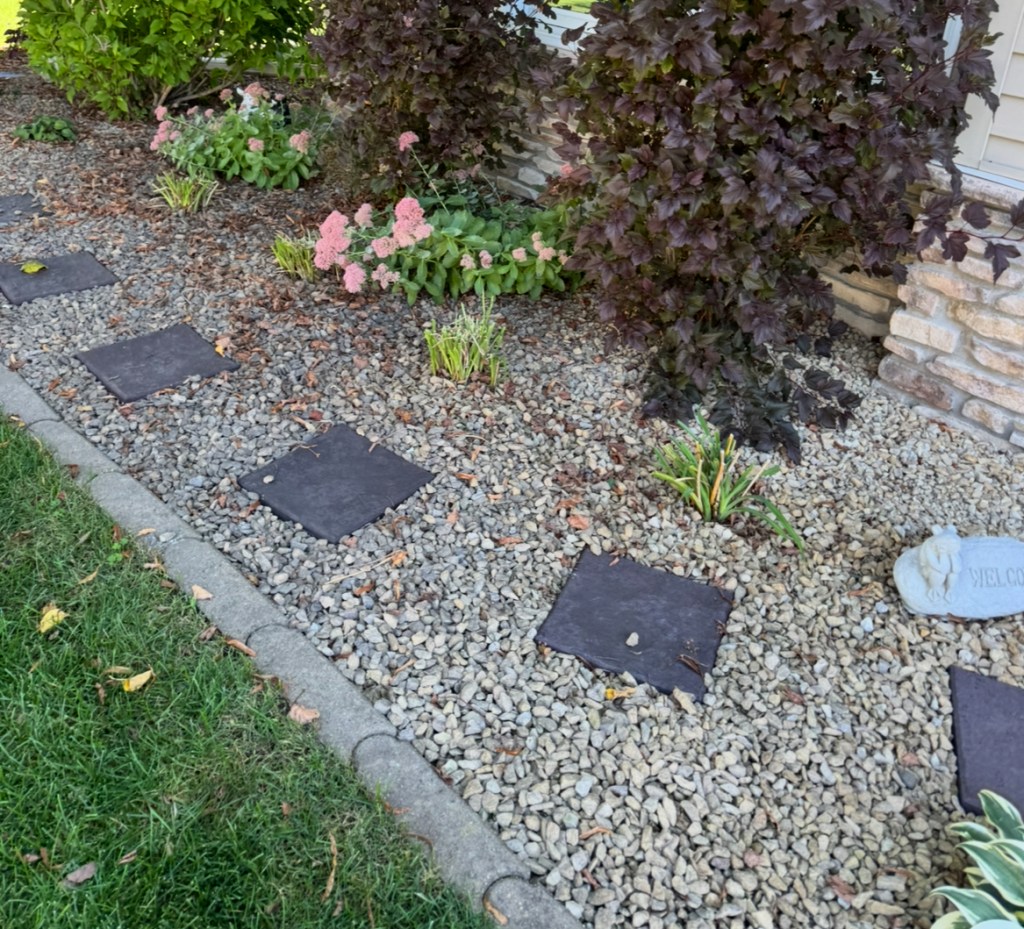
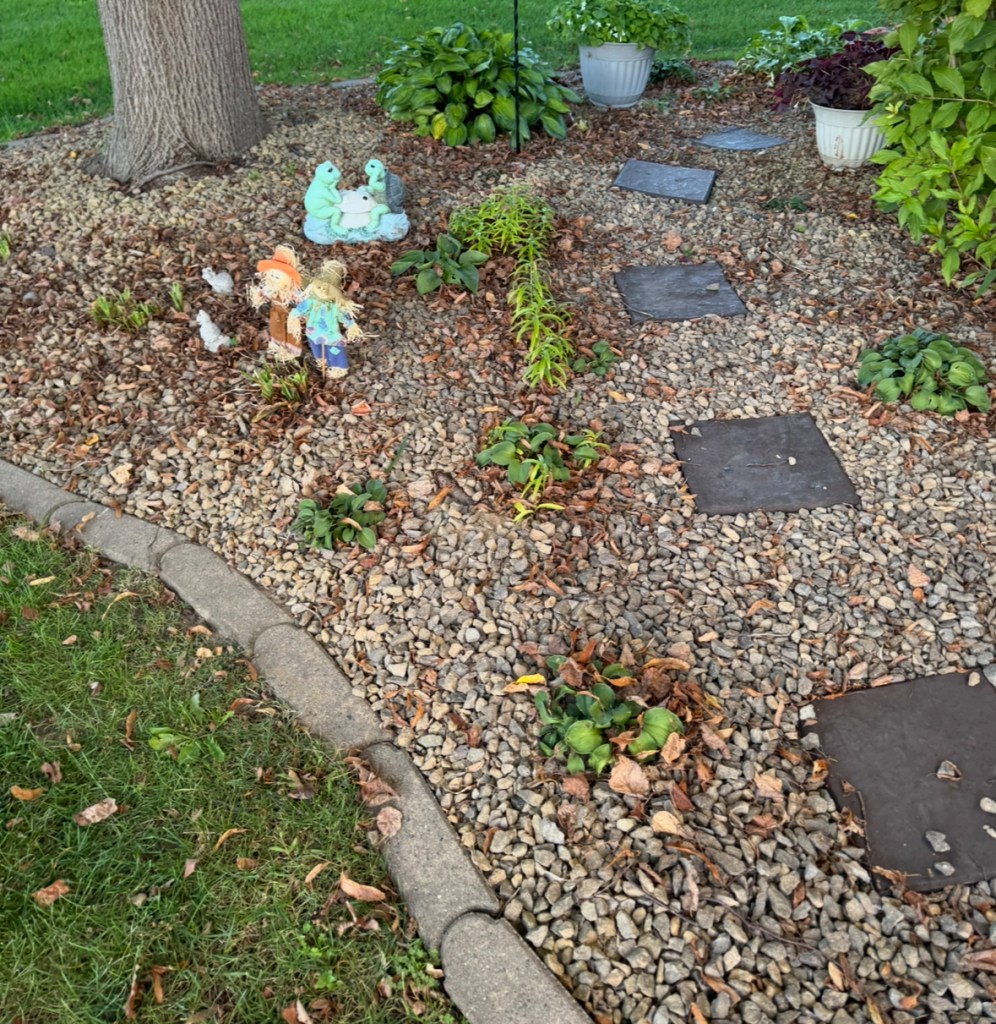
For today’s pics, I cut my “landscaping” daylilies back yesterday. They were dying back, and they were obscuring the Autumn Joy sedum. Can’t have that.
Before
After
Oh, there you are beautiful Autumn Joy sedum! That I can propagate in weeks with cuttings and no documentation whatsoever. And have. A lot 🙂
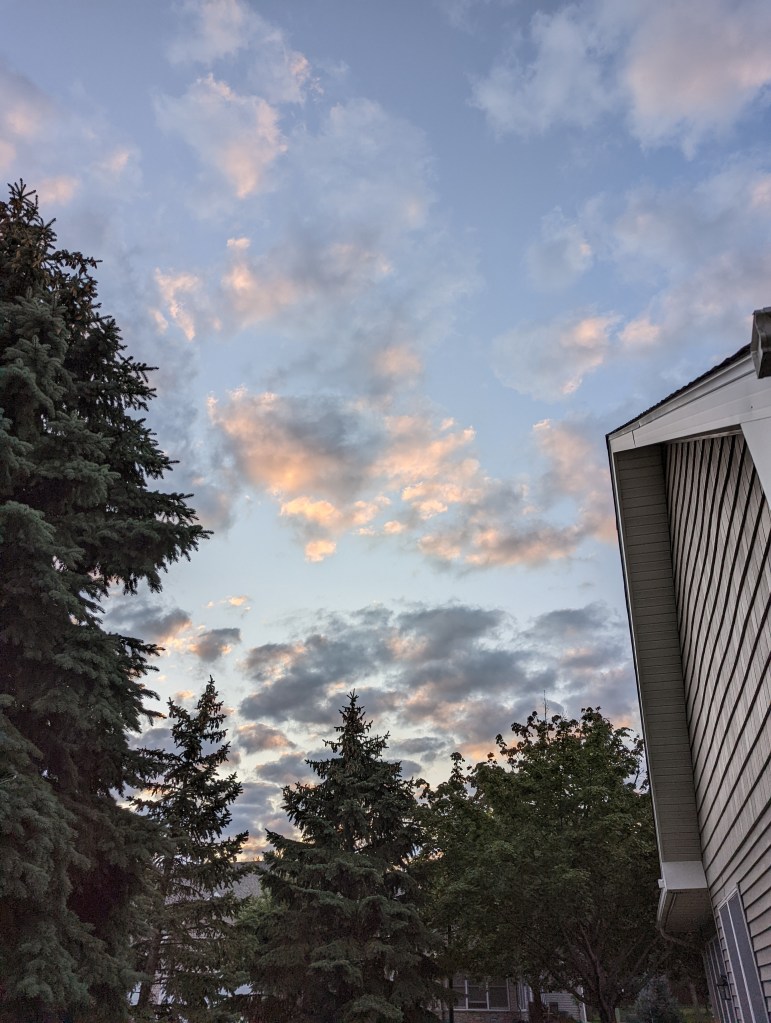
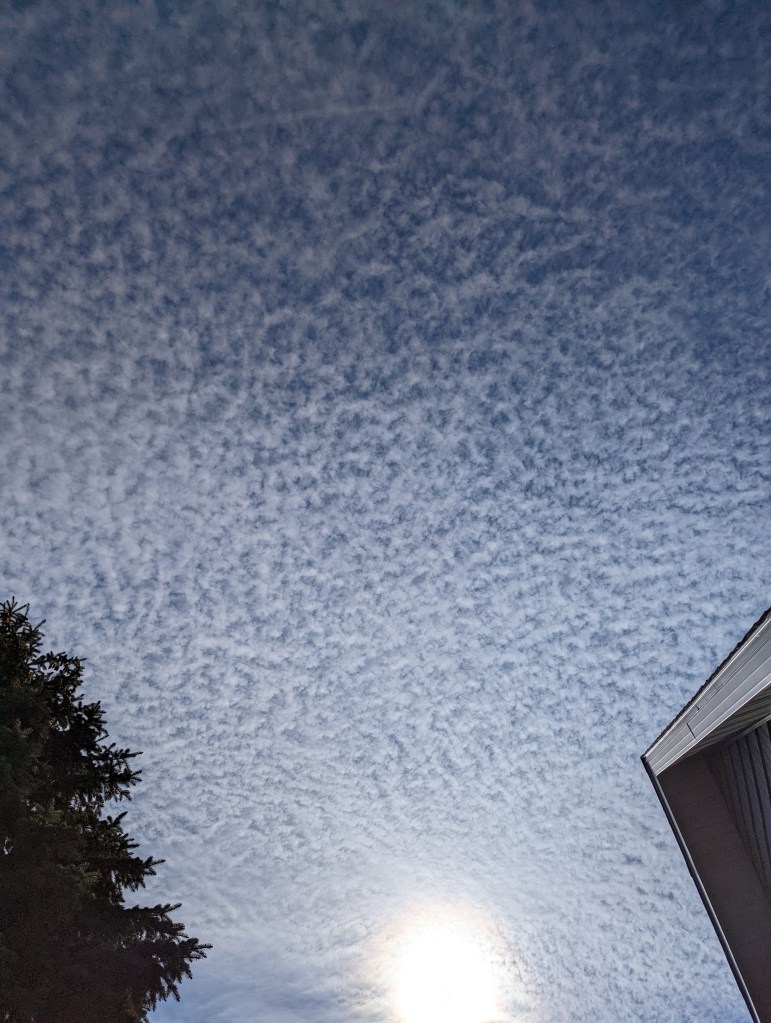
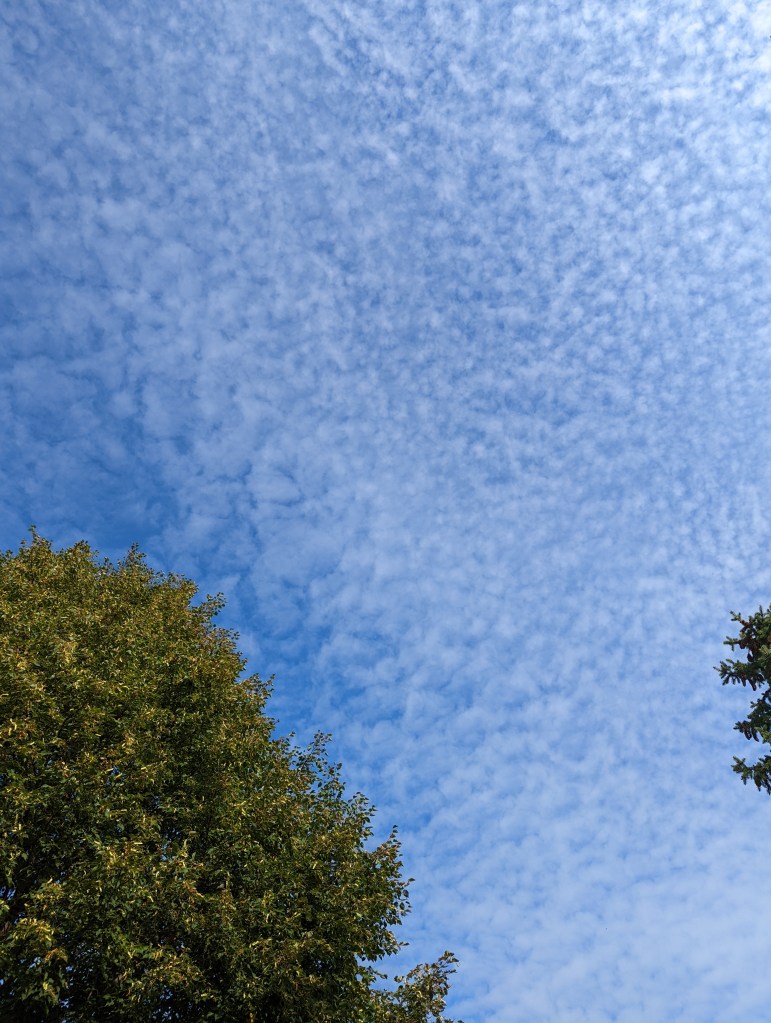
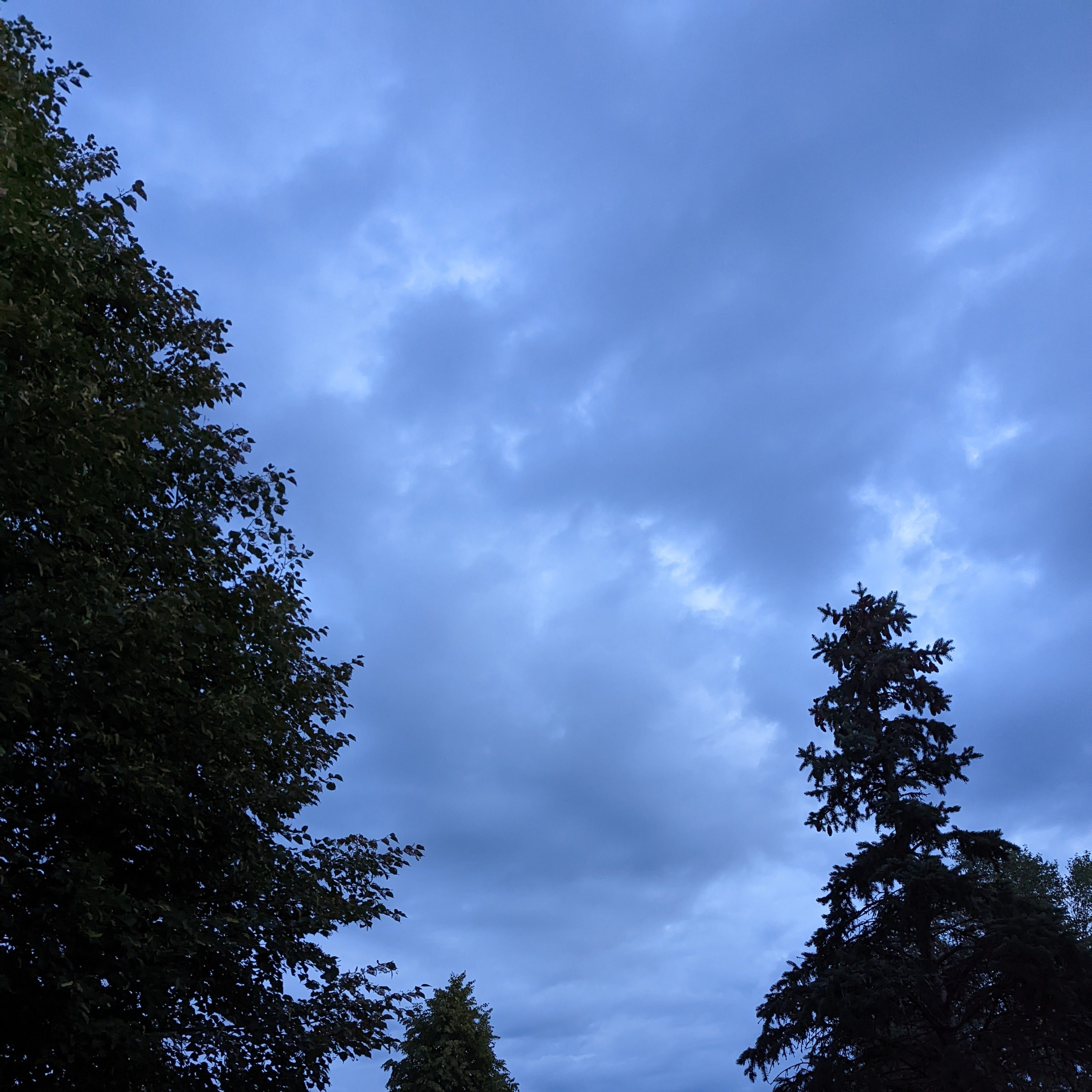
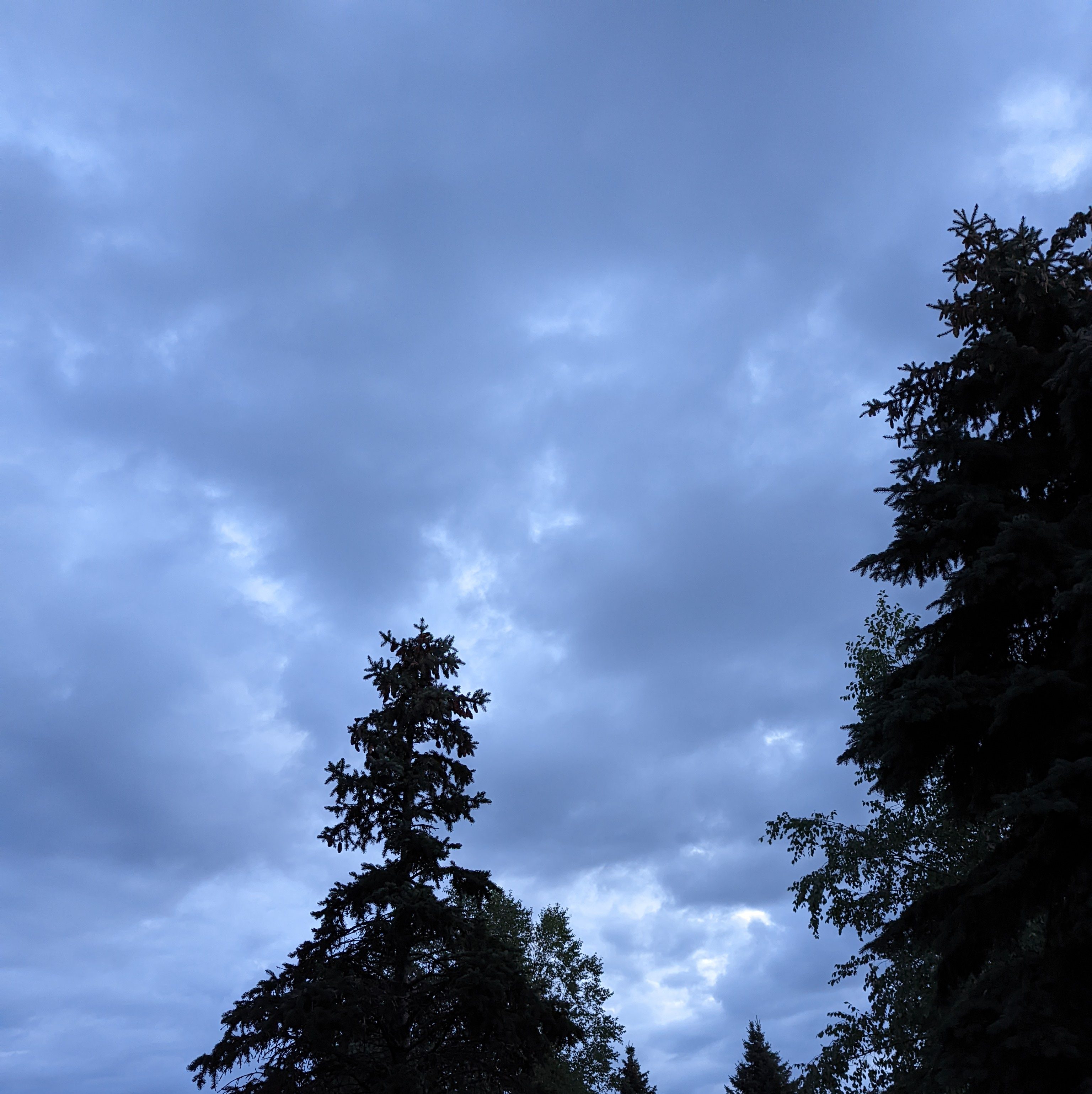
The daylilies are all done blooming. I miss the morning discoveries. I am reminding myself to look up – to the joy of the gorgeous sky, even on, no wait, especially on, cloudy days.
Last fall when my husband planted the five daylilies in the front of the little house up north, he put the dirt and grass he removed into a plant pot in the garage. Today I was doing the final weeding of the year, and needed a plant pot to throw the weeds in. I dumped the dirt and dry grass into an even larger pot, and went about weeding. When I was done weeding I realized there was a fair amount of mulch I had pulled with the weeds.
Before I had even started weeding I had moved two earthworms from the driveway to the grass. They would have died. They were drying out. I like earthworms. They are great for the soil.
So I had saved a couple earthworms and they were now on their way back to do what they do, I had half a plant pot of weeds and mulch, and some dirt and dry grass in another plant pot. Where did my mind go? Compost.
I put everything together, minus the two worms of course :), put it in an area where I am going to finish a lasagna style garden next year, and walked away knowing I didn’t end up putting all that into the garbage. It’s not official compost, but the weeds and the mulch and the dry grass will mix together with the dirt and the rain that is coming and it will decompose. Go forth and make a good foundation for next year’s completion!
(That tree you see by the base of the shed is coming out. It was there when we bought the house, I didn’t get on that, and my husband knew I was wavering. But that’s no place for a tree, so … )



 Susan's Daily Garden