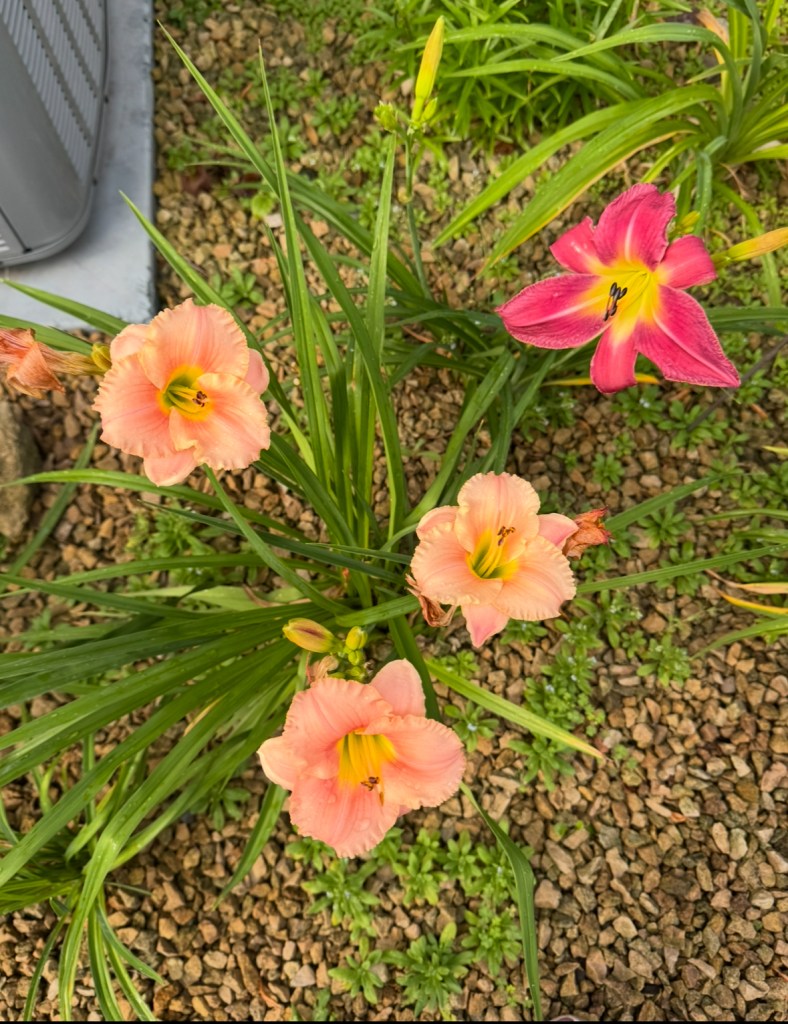
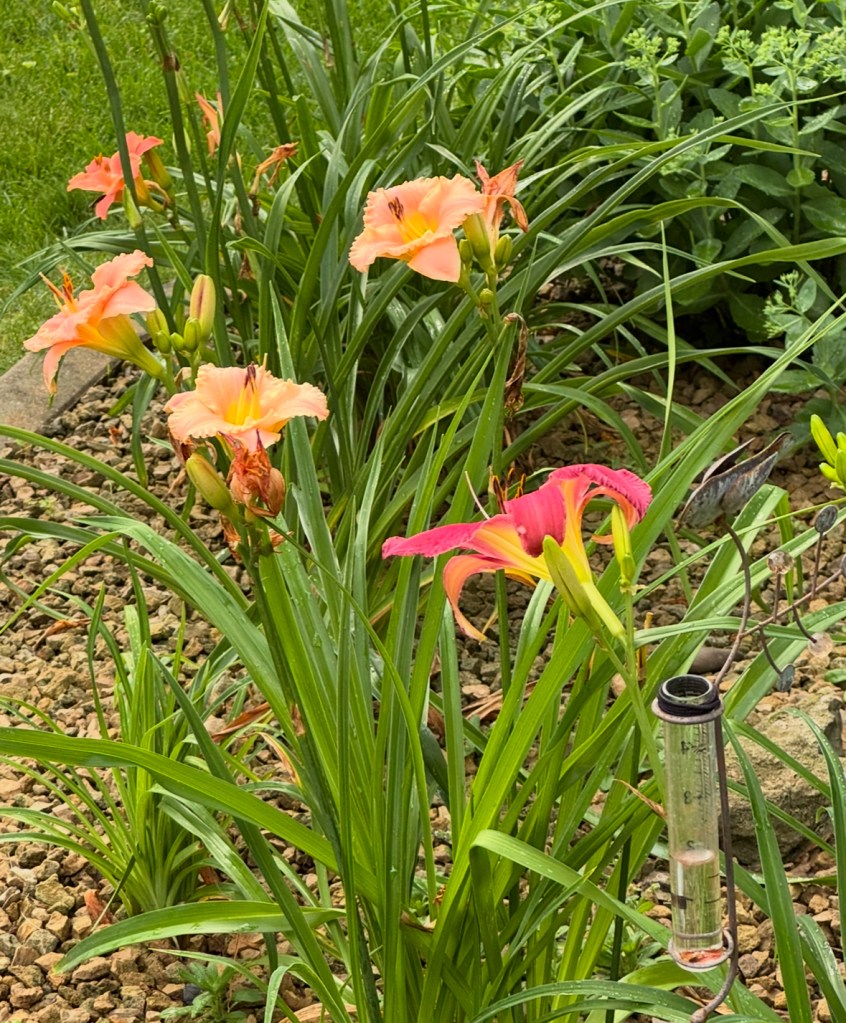
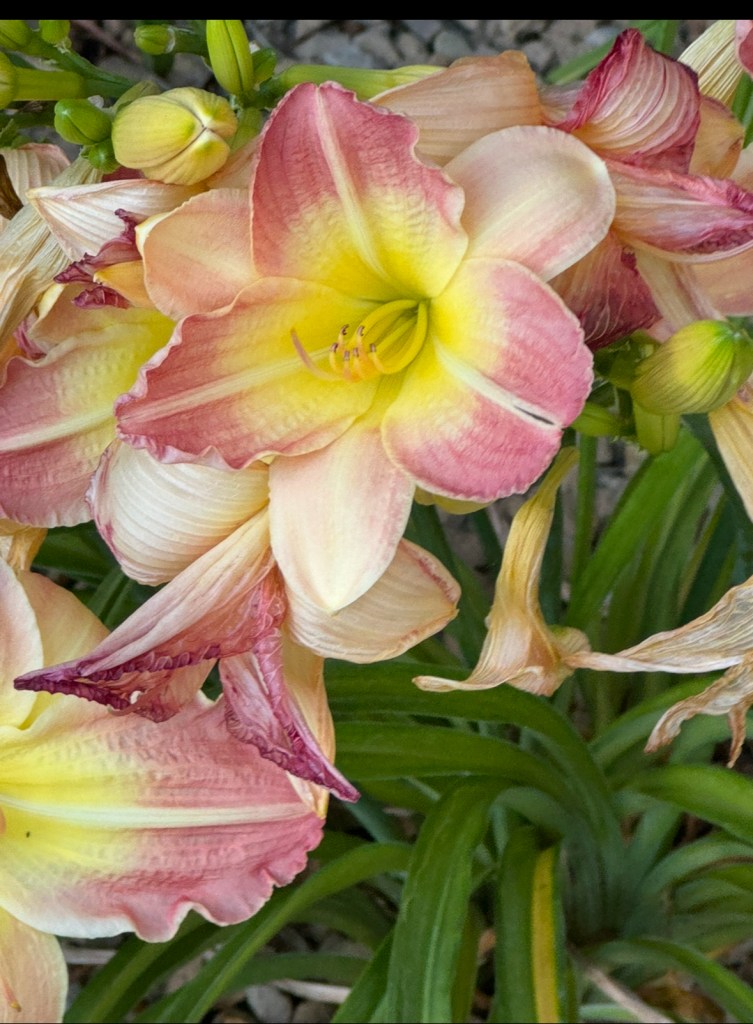
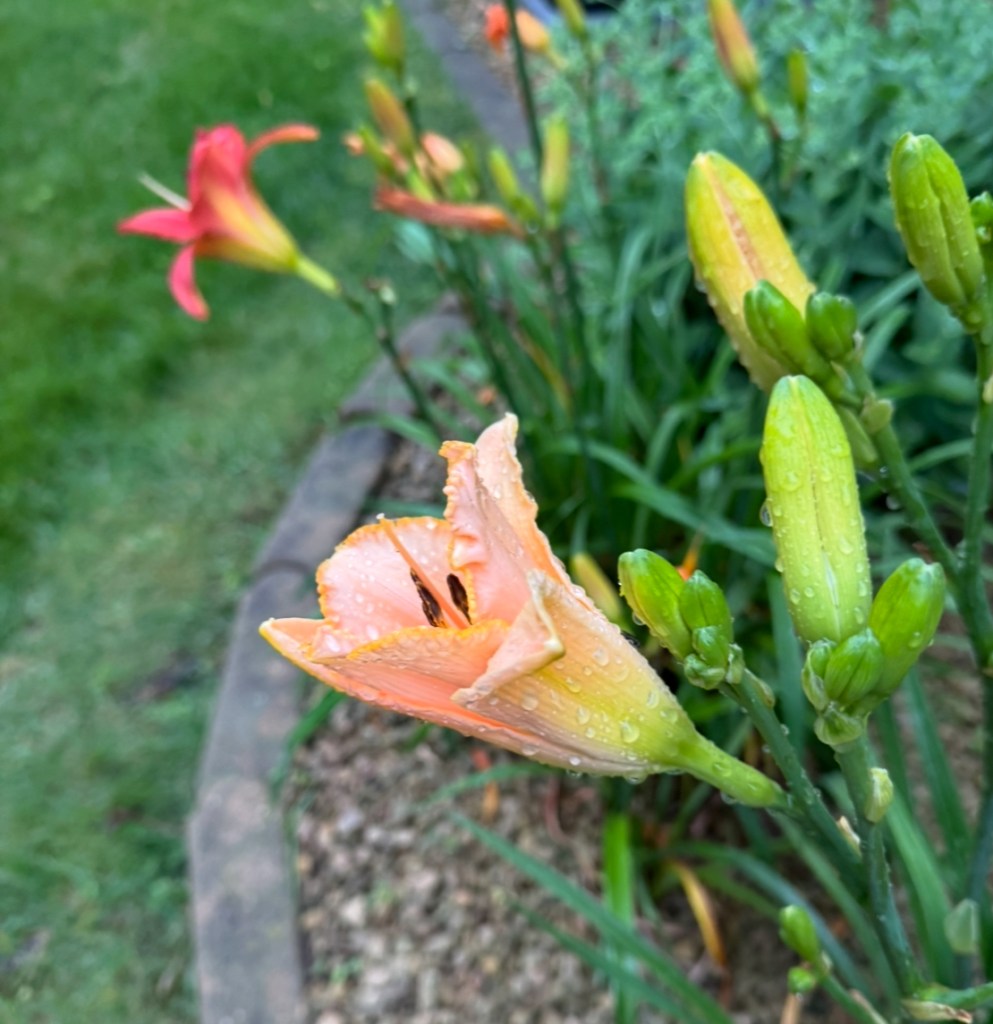
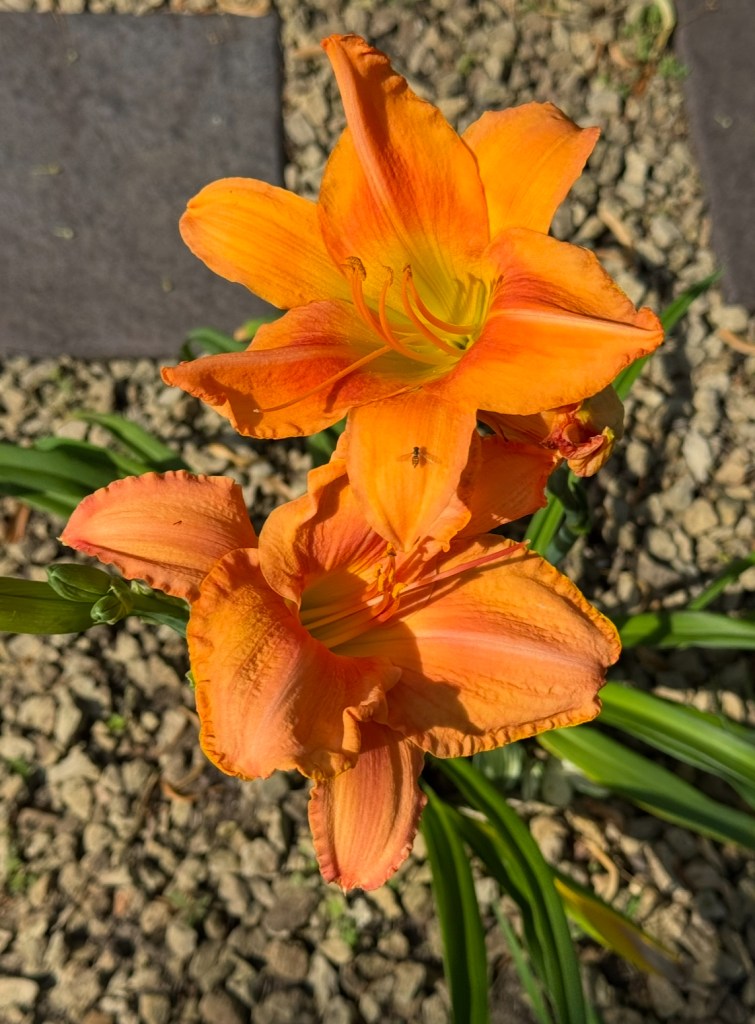
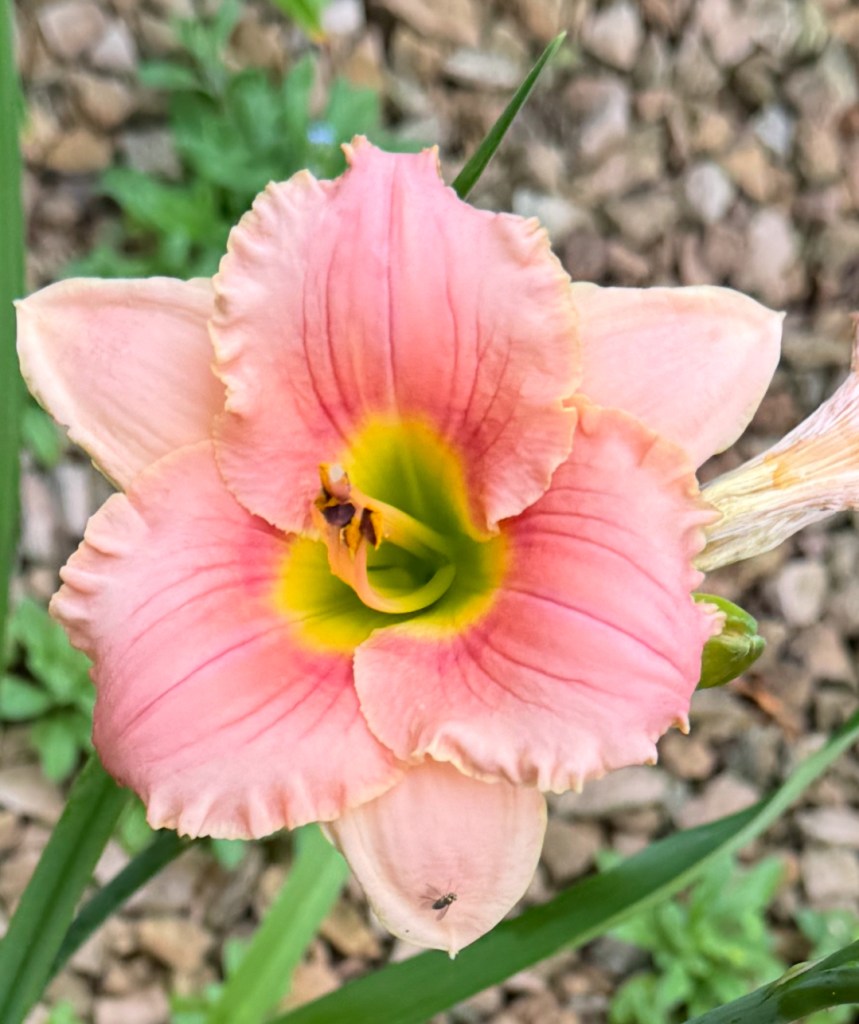
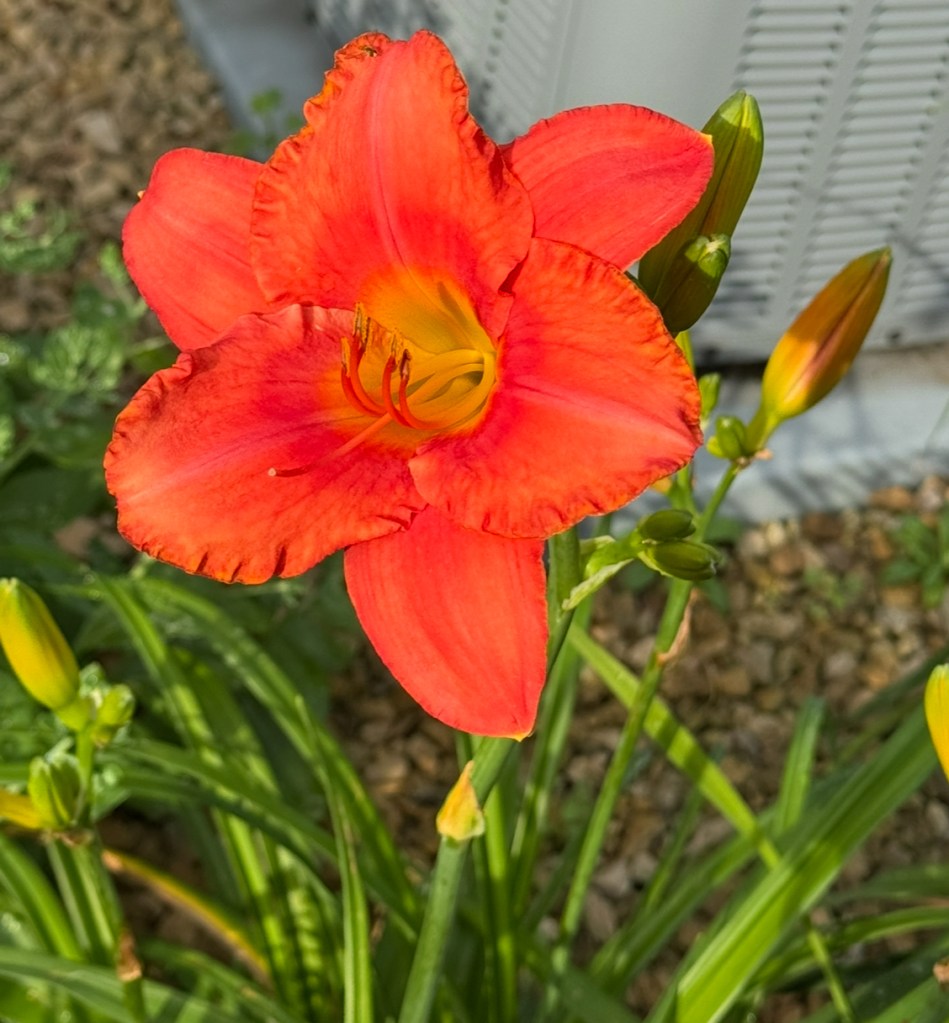
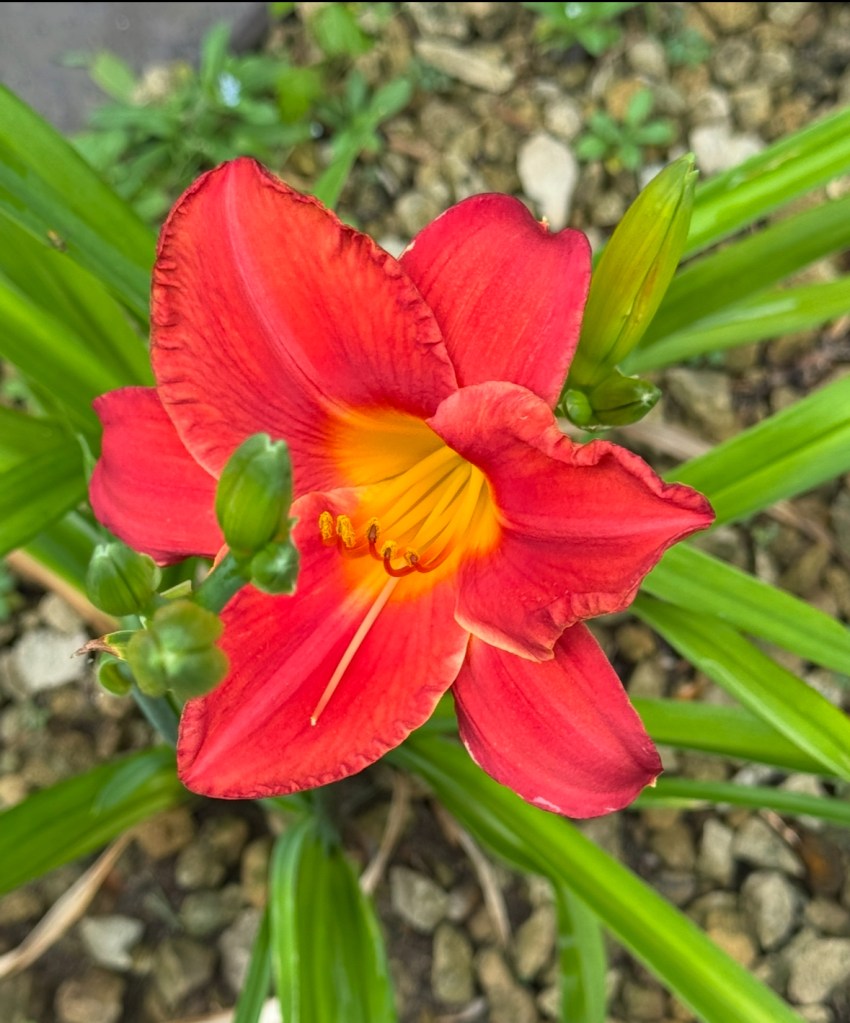
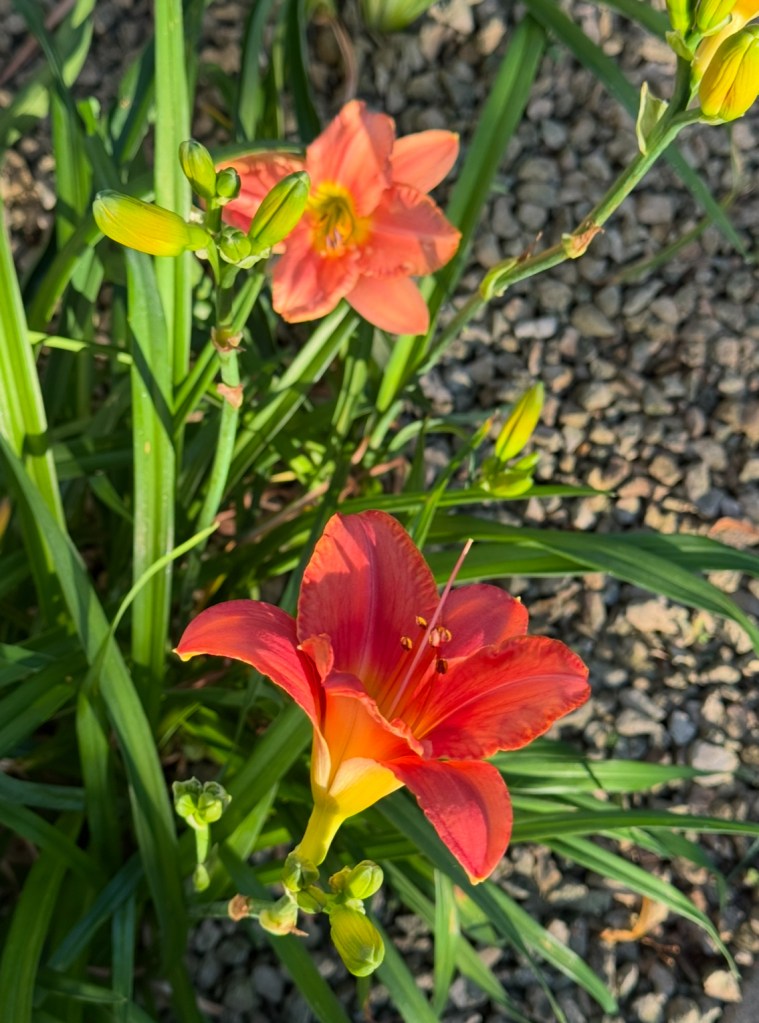
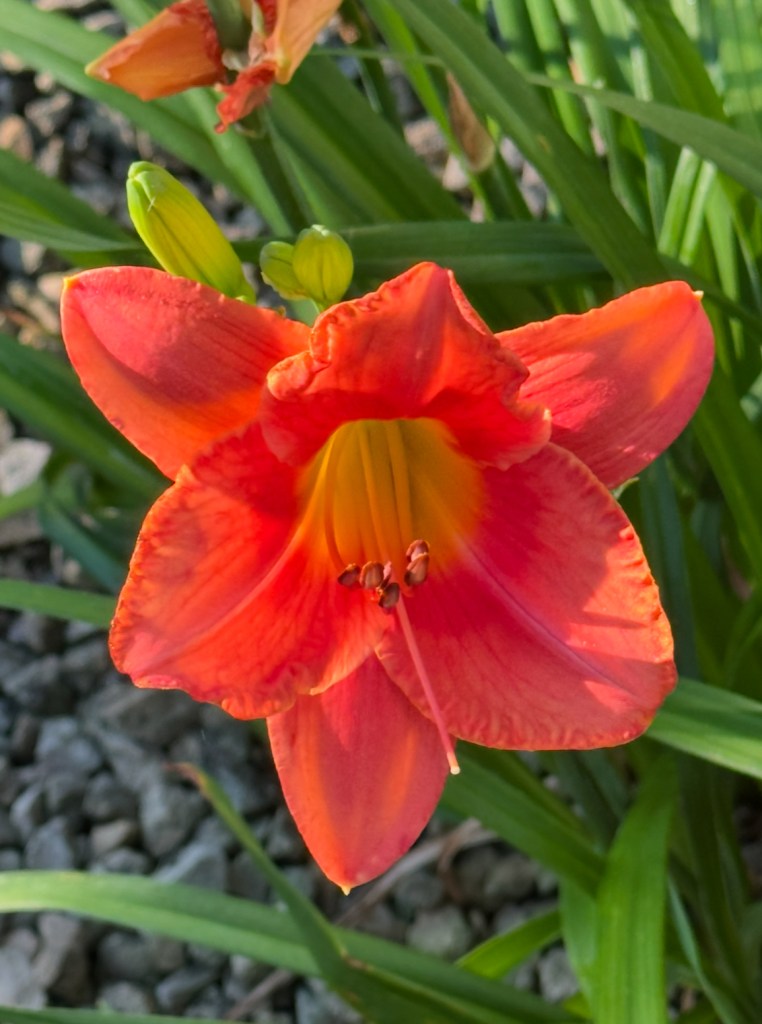
The first asian lily here this year bloomed yesterday.

The first asian lily here this year bloomed yesterday.

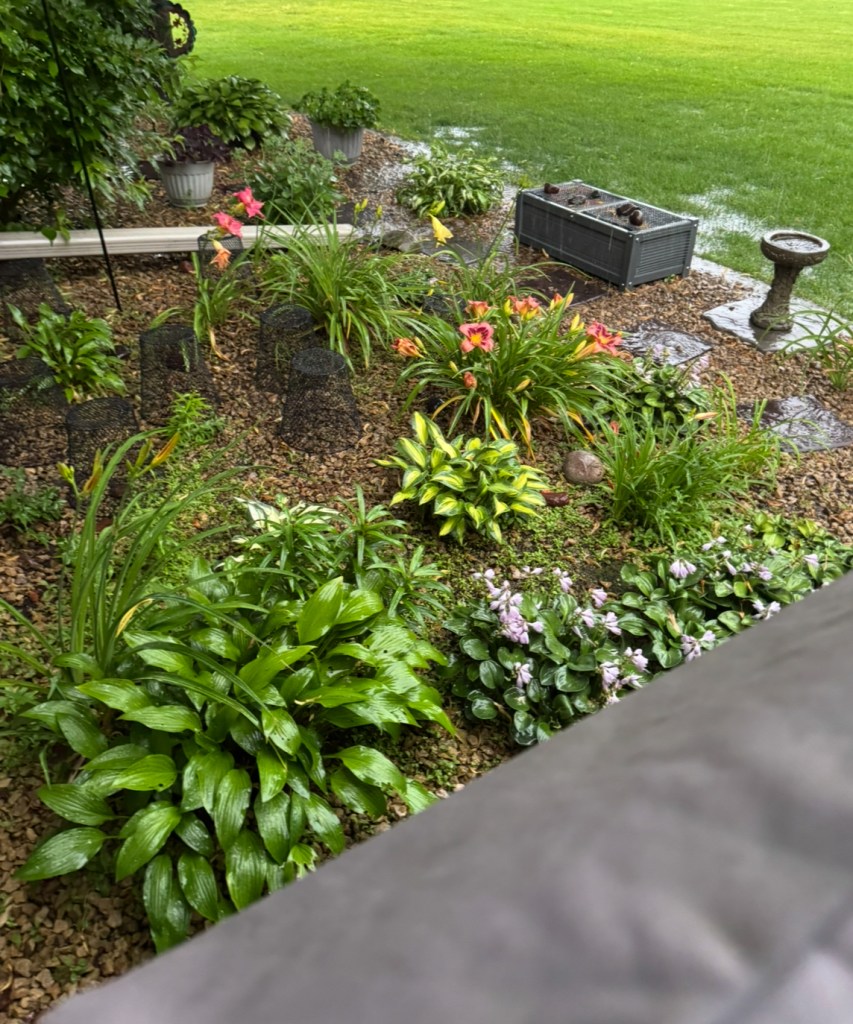
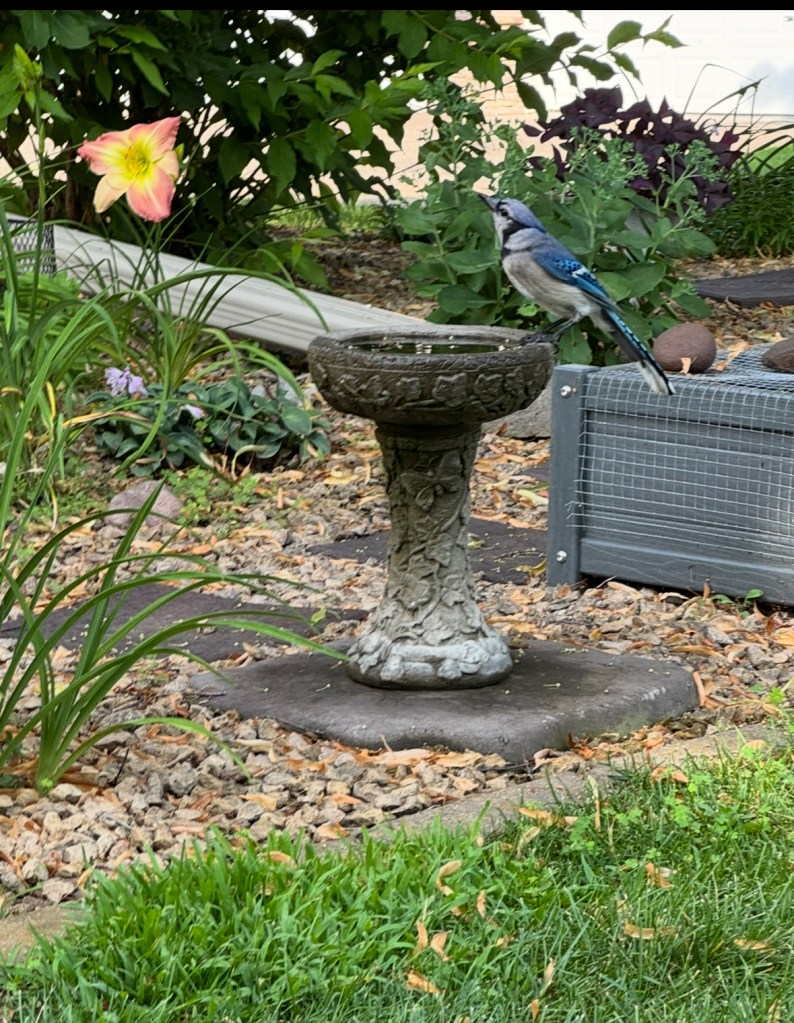
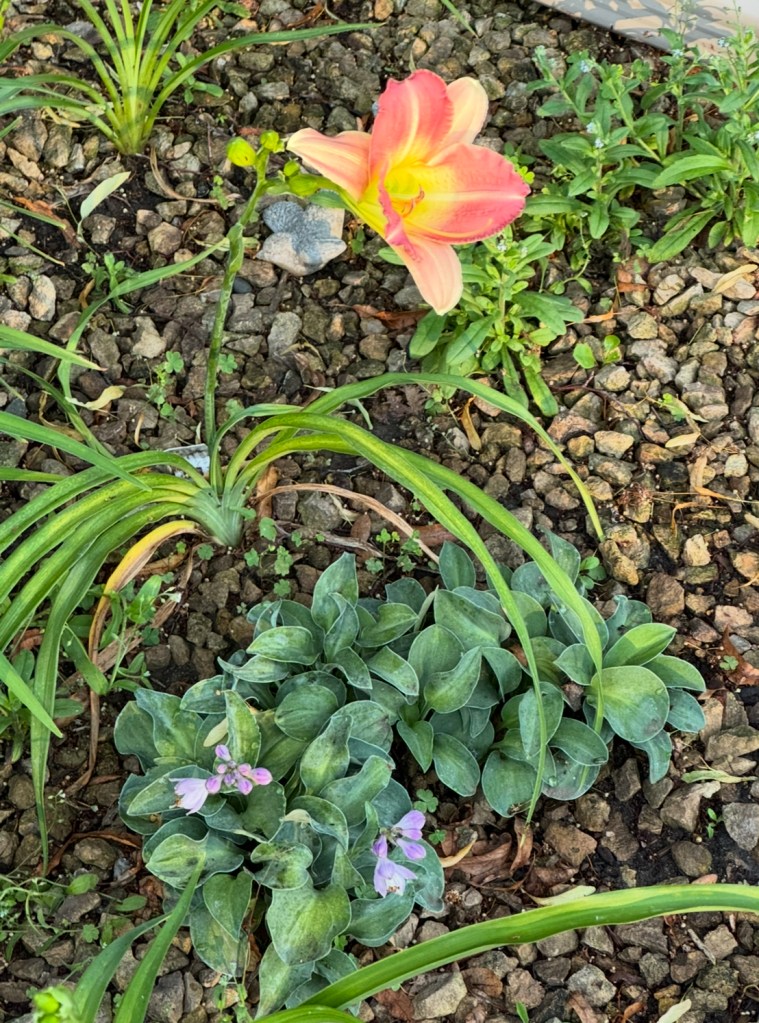
With the loss of so many hostas and the daylily, the area that was most affected looks pretty open. I will not replace those plants, and potted plants are not a good option with the bunnies and squirrels and some of the birds. But nature is kind of taking care of things.
I see that where the hostas used to be there is clover growing (plus some forget-me-nots). And I realize the new empty space is perhaps destined to become named “Bunnyville”. Where the bunnies occasionally munch on the sedum, there are three raspberry plants growing – that I for sure did not plant there. I think we can figure what happened lol.
I am tempted to let them grow, but I probably won’t.

This final post in the Mahala Felton series will discuss the arrival of the Felton children (adults and a baby), the end of the Buckhorn era, and the start of the farm claim.
Last time we left off with the most plausible account of what happened to the Buckhorn. We talked about how the Buckhorn was serving as a very multi-purpose building, that eventually the demand outgrew the reasonable use, and that new hotels began to be built.
In an earlier post we discussed how Mahala had written a very polite protest letter at having been overlooked as early settlers, when in fact she and William were some of the earliest, and that she did all the cooking for the earliest families to come through the Buckhorn because she left her daughters behind.
Now think about this for a moment when I tell you their oldest daughter had just welcomed a baby. William and Mahala left behind a baby grandson, to journey west, on a vessel on its first journey, to an unknown destination, and with not even a place to live. They did not arrive to a pre-started town, they welcomed families to the hotel they were running for the earliest settlers, and they themselves, were renters of that space.
The log trading house stood near the Mississippi, in the centre of Vermillion street, near its junction with Second street, and was long ago pulled down, but not until it had become quite famous to immigrants for the pleasant hospitality displayed there by Mr. and Mrs. William Felton, who now live on a farm a little west of the town. The first house, after this, was my own, as I have stated, next the store of the Baillys was erected, and soon afterward the hotel of the town, long known as the “New England House,” on Second street, was built, both by the town proprietors. The first white man to settle on the town site after the treaty was made, was myself. Mr. Felton was the next and his good lady was the first white woman settler.
http://genealogytrails.com/minn/dakota/townshiphistory.html
By 1853, however, we see the Felton children began to arrive, themselves becoming pioneers.
Wm. Felton was born in 1802, June 15th, in Luzerne county, Pennsylvania, and was educated as a farmer. In 1825, August 18th, he married Miss Mahala Dana, who was born October 15th, 1805, in Dutchess county, New York, and who had removed in 1812 to Susquehanna county, in Pennsylvania. There have been born to this now aged couple two sons and four daughters. One of the sons is at present in the south, one of the daughters is a resident of Rice county, another daughter is a pioneer in Dakota territory, as her mother was in Dakota county, while the remaining son and two daughters are living within a mile of their parents’ home. Beside children and grandchildren Mr. and Mrs. Felton have six great-grandchildren.
In 1853 William and Mahala were still running the Buckhorn. Since it was the only hotel and they were not yet on their farm claim, it is assumed the children and their spouses and any children they had also stayed at the Buckhorn.
But we also see from the passage above that William was educated as a farmer. In 1853 the day also came when the Feltons got 65 acres of the 160 acre farm claim.
The Farm Claim” was the east 160 acres of what is now that addition. Sixty-five acres were broken, in 1853, and Mr. William Felton attended to the land, raising from it, various of the ordinary crops. This was the first “farming,” in the region, west of the river, except we consider an acre or more of potatoes and vegetables which had been cultured by the Baillys in 1852, as coming under that head.
Along with William and Mahala, an 1855 map of the area shows two of the Felton’s daughters’ husbands, along with their son who originally came with them, on that farm claim.
Also, not to be forgotten, in 1854, William built the first wharf and ferry and, as if that was not enough, became the long-standing coroner during this time period.
As we see from the account above, William and Mahala’s family grew on the farm claim, and the account of what happened to the logs from the Buckhorn lend to the thought that not only did the Feltons grow crops but also raised livestock.
The Felton’s farm claim footprint was clearly seen on another map at the end of the century, and some of their descendants still live on that claim.
William passed in 1883, and Mahala passed in 1892. They are both buried at Oakwood Cemetery in Hastings, Minnesota, USA.
End notes
Along the way on this research project, I have had help. My friend, Shirley Dalaska, is a long time historian and suggested I research Mahala Felton almost 6 months ago. Wow! I never would have guessed the journey I would go on.
I am ever so grateful to Shirley for putting up with overly long, all hours texts as I was discovering more and more. And for going to the Pioneer Room and finding corroborating documentation. Dear Shirley, you are a saint! And that you let me garden at the cemetery and not attend many historical society meetings is a testament to the fact that you get me. Thank you so much for who you are, my friend!
Let’s see … where did I leave off last week? I think it was with the discovery of the first daylily scapes of the season.
Last Friday I was weeding at the historic cemetery. I was down to the end where there are some mature Stella de Oros. Full disclosure, Stella de Oros are not daylilies I would buy. I do like the color. The size is not the issue. It is just that they are everywhere – in residential gardens, commercial landscaping, everywhere. But … they are daylilies, they are improving in health since the rock was switched out to mulch, and they were gifted to the historic cemetery garden before I started in earnest, so they stay. Stella de Oros also bloom fairly early, so they are a harbinger of the start of the daylily blooms on the way. So, last Friday, as I was wrapping up weeding, I looked over and there it was – a scape, on a Stella de Oro.

Which means the scapes will soon start showing up on other daylilies. And that is my start of the daylily season. Scapes hold buds that bloom and blooms can be not only enjoyed, but crossed, by birds, bees, butterflies … and humans.
It’s almost here!!! Hurray!
While daylily gardeners everywhere await daylily season, irises are in full bloom. The iris bed I made two years ago at the historic cemetery is starting to really shine! Almost all the irises in the lower part of the bed came from a smaller overgrown old garden. They were not blooming there, so I took my chance on color. I lucked out. Last year all those that bloomed were yellow, and this year as the iris bed began to really shine, the color yellow was predominant, save for one purple iris in a line of five that I had added last year from the big old garden. That purple bud showed up late. We shall see what comes next year.
Now here is where I get to share the joys of a community, public garden. 99.5% of the experience is AWESOME. People are so kind and thankful, and it is so fun to meet them and see them over and over. But there are, shall we say, occasional shenanigans. And herein is this week’s shenanigans story. I shall say it did not make me smile and say “silly turkeys”. So here’s the story. I was all excited about the yellow irises because we have 14 veterans buried at the cemetery who came home safely from war. Think yellow ribbon for safe return. We also have a Civil War soldier, James Akers, buried at the cemetery, and he was killed at Gettysburg. I wanted at least one purple iris in remembrance of him, amidst the yellow irises. Think Purple Heart.
And one came up! But it was not meant to bloom there. You see, within the past day and a half someone/something came by and snapped off a bunch of yellow irises and the one purple iris. The yellow ones – in various stages from bud to bloom – they threw around in the mulch and even on the ground,


but the purple one was totally missing. Now what possesses an action like that, I cannot imagine. Irises don’t even smell good, and animals usually leave them alone, so … my guess is shenanigans. Now, I have been putting the best construction on missing plant markers and missing plants, thinking maybe it was squirrels or turkeys, but now I am thinking along other lines. And what is my logic? The turkeys that live inside the fence have a big old garden of irises, even one that made it to bloom. And … they aren’t touching them. Soooo …. probably shenanigans. Decision? The Mahala daylily seedlings definitely aren’t going to the historic cemetery quite yet, and I will not be purchasing any additional plants for the historic cemetery. Just out of wisdom. We shall watch and assess. No big. Just prudence.
For now, we enjoy pics, and see the one purple bud in front.

In the townhome gardens the clematis out back are blooming beautifully,


following the Bluebells clematis out front that just wrapped up.
The Weigelia has also started blooming, and, soon, like the clematis, the hummingbirds will be found enjoying those blooms.

Do you remember the variegated sedum I pulled out and then saw it had a few tiny green buds? I potted it in an old terracotta pot, and it is growing new buds. Yeay! Sedums rock!

The Ninebarks are also doing wonderfully, and, along with the Weigelia, they remind me every year why bushes do have their place.

But, there is a shenanigans story in the townhome gardens too. I suspect they are of the bird variety. After over fifteen years of birds being helpers in cleaning up the shamrocks, we might have a crop of mess makers this year. They have decided to make quite the mess of all the purple shamrocks. No worries. There are so many shamrock rhizomes. I brought them in and will restart them in the house. Sorry birds. No more purple shamrocks fun for you this year.
And that was our week. I hope yours was fun! Catch you next week!
In past blogs on Mahala (and William) Felton’s early years as original settlers in Hastings, Minnesota, USA, we have discovered Mahala and William’s travel to the west led them to the future Hastings, Minnesota, USA area, that they were invited to rent the Buckhorn (a trading post) and run it as a hotel for the fellow early settlers that were expected to be coming, and that their hospitality was welcomed and well respected by prospective settlers, travelers, and natives. We discovered that William was very busy with business outside the home, and that it was not unusual for Mahala to be alone in her running of the Buckhorn. We also discovered that Mahala did not bring a cook, she was the cook, often had to harvest game, and definitely was cooking from scratch, even churning butter, all while working in very modest quarters. Worth reiterating is that she cooked for the first three families to come to the area. The very modest Buckhorn truly was the only place to stay, indeed the only home, for the early years, definitely through 1853, and became a truly multi-purpose dwelling and gathering place.
So, what became of the Buckhorn? Where is the historical building today? The answer is … As much as I was hoping to find it was preserved somewhere, I have not discovered anything to support that. The most likely scenario is it was dismantled, eventually used for fencing and hog pens, and most likely has returned to the ground.
To understand this, we first remember it belonged to the Bailly family, and it was not on Felton land.
“The first dwelling in the permanent settlement was “The Old Buckhorn.” As indicated above, although Henry Bailly was located, ostensibly as a trader, his real purpose was that of a settler. He selected as the site of his trading house, or dwelling, a spot not far from the junction of Second and Vermillion streets, as they are to-day. Here he built, with assistance, a log hut, twelve by sixteen feet in dimensions. Subsequently, a “kitchen” was attached to this “main” part, and its dimensions were ten by twelve feet …
The trading house was occupied afterwards as the first hotel of Hastings, and from the fact that the antlers of a stag had been nailed up over the door, it was known, and is known in memory only to this day, as the “Buckhorn Hotel.”
The old “Buckhorn” was removed in 1856, by Mr. Dixon, to his farm on the Vermillion, but not until it had been the witness of many changes as well as of many kindly deeds and mirth provoking scenes enacted within its walls.”
Next we might ask – Who is Mr. Dixon? In my research I could only find a remote reference to him having a claim in 1851 in section 20, but beyond that there is no mention. Part of me wonders if it was a name error and Dixon was really Felton, but William and Mahala’s homestead was on section 19, not 20. Perhaps there is more information on Dixon out there, but I looked for quite some time and could not find anything more.
Since William and Mahala were established on their homestead in 1855, I am guessing the more likely scenario is this preserved account:
“Memories of early Hastings…
103 years ago
THE HASTINGS GAZETTE
Published March 19, 1921
Indian Trading Post at Oliver’s Grove
By John H. Case of Nininger, Minnesota, 1856
This trading post was built of lots and was one story in height. It was put up by Abraham Truax, of Pt. Douglas, in 1850 for Henry G. Bailley. It stood on what was afterwards platted as lot five, block four of the original town site of Hastings Minnesota, then known as Oliver’s Grove, sometimes called Olive Grove by mistake.
It was located on the extreme north end of the lot in the northwest corner. Mr. Truax showed me the spot where this trading post stood. The lot is now (in 1921) occupied by Davis Bros. grocers, on the northeast corner of second and Vermillion Streets.
Elijah Wilson, father of A.W. Wilson, who came to Hastings in 1853 took me to the same place where Mr. Truax died, and said that when he came the old trading post was called the Buckhorn Tavern, that is was kept as a tavern by William Felton and his wife Mahala. He boarded with them and afterwards married their daughter Demlia and moved to his preemption claim in Nininger township adjoining his father-in-law’s claim which was north of his on Section 19, town 115, Range 17.
Mr. Wilson said that on the west end of this building, nailed to the gable was a fine set of deer horns, that he helped to take the building down and that it was taken out to a ten acre piece of land on section 19, of William Felton’s land, afterwards owned by J. K. Frear. He thought Felton first gave this ten acres to his son Silas Felton. The logs from the old Buckhorn were finally used to build a log fence and hog pen by William Felton back of his home in the oak grove, close to the present house of E. H. Chamberlain’s, a great grandson of William Felton.
Some of the later pioneers supposed that the Buck Horn Tavern was formerly Joe Brown’s Indian Trading Post, but this is not true. It was Bailey’s Indian Trading Post built by Abe Truax in (illegi-ble) Caleb and James Truax… (speculation that building was constructed as a means to keepland claim, more history).”
https://zeta.creativecirclecdn.com/paperboy/files/20241219-110009-877-hj-2024-12-19.pdf
To backup that the Buckhorn was a different log cabin than “Brown’s magazine” we see:
“Major Joseph R. Brown, Indian trader, has the honor of being the first white man to settle at Oliver’s Grove. He was here under a trader’s license in 1833-’34. He built a trading house of logs and having a stone chimney, on the brow of the second bench of land above the Mississippi, near the site of the present City hotel. Major Brown was a man of rare ability and rendered important aid and played an important part in the early development of Minnesota.
He came into the country as a drummer-boy, with the detachment of troops that came in 1819 for the purpose of erecting what is now Fort Snelling. He was distinguished as an Indian trader, as a member of the Wisconsin legislature, as founder of the first settlement at the head of Lake St. Croix, as founder of the town of Henderson, as clerk of the first territorial council, and a member of succeeding territorial and state legislatures; as editor and publisher of the St. Paul Pioneer, and in nearly all the public affairs of the early days. He represented Dakota county in the legislatures of 1854 and 1855, and as lumberman, politician, editor and soldier during the outbreak of 1862, founder of cities, and later in life as an inventor, he became one of the most widely-known of Minnesota’s public men. The state has attempted to do honor to his memory by affixing his name to one of her counties. Major Brown was born in Harford county, Maryland, in 1805, and died in New York city in 1870.
Such was the career, in brief, of the first white settler of Oliver’s Grove. He was a man in every respect worthy of the city which has since arisen on the spot he once inhabited. He is reported by the oldest surviving settler of Minnesota to have been holding his post at Oliver’s Grove in 1839-’40.
For some years after this the old log-house stood lonely and deserted. Indeed, it was not occupied continuously, at all, from 1834 to the latter dates, as will be seen by the extracts from Featherstonhaugh’s journal given below. Mr. David Hone, who crossed the river from Point Douglas in 1845, on a fishing excursion to the Vermillion, reports the building as standing at that time untenanted. He and his companion, Hertzell, were lost among the burr-oaks and the dense growths of alder, hazel and Kinnickinnic bushes, and “Brown’s Magazine,” as the old trading-house was long called, served them as a land-mark in recrossing to their homes. In 1850 the “old magazine” had either decayed or been burned down, but the stone chimney was still standing. This chimney, or the stones of which it was composed, tradition says were a part of the contents of the first lime-kiln operated at that spot, by a Mr. Tripp, in 1856; and further, tradition says that the last vestige of this first white man’s dwelling on the site of Hastings is preserved in the mortar with which the foundations of the City Hotel were cemented.”
Also as collaboration of the Case account above is the documentation of the Felton daughters’ spouses that arrived in 1853 and stayed at the Buckhorn for a time.
“P. T. Chamberlain, a son-in-law of the Feltons, came from Pennsylvania, and Elijah Wilson, a pilot on the Mississippi, and afterwards son-in-law of the Feltons, came about the same time. The latter settlers made claims in Nininger, but for a time boarded at the Buckhorn, which had become a general resort.”
Finally, the claim mentioned, on section 19, was part of the farmland tract mentioned here:
“FIRST AGRICULTURAL ATTEMPTS-“THE FARM CLAIM.”
In the year 1853, Henry G. Bailly had built him a private residence, of logs, principally, now in use by J. A. Ennis, as a constituent part of the beautiful edifice which marks its place in addition 13.
“The Farm Claim” was the east 160 acres of what is now that addition. Sixty-five acres were broken, in 1853, and Mr. William Felton attended to the land, raising from it, various of the ordinary crops. This was the first “farming,” in the region, west of the river, except we consider an acre or more of potatoes and vegetables which had been cultured by the Baillys in 1852, as coming under that head.”
Final collaboration lies in the cessation of use of the Buckhorn as a hotel, and a new hotel and proprietor being established.
“With the opening of navigation, settlers came in greater numbers than previously. The Buckhorn tavern refused to serve longer, as church, court of justice, hotel and private dwellings. It seems incredible that forty-three people could remain of a night, in the pent-up compass of its walls. Nevertheless, such is the fact. Men slept under the table, on the floor, and on the table. Accordingly, in the spirit of the “agreement articles,” the town proprietors proceeded to erect the New England house. Mr. Knox was again the contractor and the first legitimate “tavern,” was located at the corner of what are now Sibley and Second streets on the site of the post-office building. It was a frame building of two stories and is at present occupied by John Van Slyke as a residence, it having been removed to Ninth street. It had no sign except the word, “Hotel,” but was called the Dakota House, but, soon after, the New England house; by which name it is universally known. In June, 1854, David Barker and family came to Hastings from Prescott, Wisconsin, and took up quarters as the first exclusive hotel keepers. They occupied the Dakota House until the following year, when M. O. W. Truax succeeded them. Hotels never lacked for custom, and during the years ’54, ’55 and ’56 it was often an exceedingly difficult matter to find lodgings, there was such an influx of all castes, conditions, and characters, in search of business, homes and land.”
My educated guess is permission was given to remove the Buckhorn log home, as logs, from the original site and Elijah Wilson and maybe some helpers, maybe Dixon being one, moved them to the 10 acre site in question, but that they eventually went to the Felton’s property, as stated, to be used as fencing and hog pens. I am guessing that somewhere in the dirt at that property is the decomposed remnant, however small, of the Buckhorn.
Next week we will wrap up the series with a brief discussion on the family members that followed William and Mahala Felton on their move west.
Here is a good write up on the history of Memorial Day.
https://www.pbs.org/national-memorial-day-concert/memorial-day/history/
Let us remember all those who have given the ultimate sacrifice in order that we might have freedom.
I did it! I have been talking about maybe doing this for a while. On and off for 3 years. But with the loss of the 11 hostas, I finally made the decision. The daylily “farm” can be handled with raised boxes. It can. Truly.
Now, I say “farm” very lightly. I know it is not a farm. Of course I do. And if I could, I would have a great big daylily farm. But it ain’t happening. Our land up north is for our off-grid time, and that is not changing any time soon. So, my personal townhome style daylily “farm” is going to expand, but just not in a conventional farm way. I am going to work with what I have, to do the most I can do with what is in my heart. And that is to continue to be creative, do intentional crosses, harvest those seeds, and work to bring them to seedling, plant, and something new and hopefully fun for bloom. I also am fascinated by what the birds, bees, and butterflies accomplish with the daylilies, and I am not going to count out continuing to harvest those seeds as part of my daylily “farm” effort 🙂

Hello Yellow is a self seed daylily, and it has a very special place in my garden mama heart.
So there you go. A townhome style daylily “farm”, doing intentional crosses and harvesting the bird, bee, and butterfly contributions as well. As our oldest grandson says, “Do It!” Yes, I think I will 🙂
In a previous post I fully discussed the loss of 11 hostas in the townhome gardens. Although I miss the big, beautiful hostas, I shall not be replacing them. It would be foolish. The same issues that most likely led, or at least added to their demise, remain. Fertilizer and herbicide overspray will not be going away, and growing tree roots were already expected to make part of the garden ground unusable at some point in time. We love those big beautiful trees as well! Bottom line, the time is now here. I need a new format. I can think and think and think, but I still come up with the same solution for my daylily “farm” – raised box containers. That is the only way I can see this working, long term.
So, decision one is made – raised box containers are needed. I have one, a wonderful cedar container with a wire mesh lid that my children made me for my 60th birthday. It is wunderbar! But they aren’t making me more, so I went shopping. Here were my “must haves” when shopping for the raised box container(s):
The options available are pretty impressive! I ended up choosing an HDPE raised bed box. One at first, as a test, to see if I like that particular product. Yes, plastic. It is made of the same type of materials as my path, which is 20 years old and no problem. I get it, plastic is a dirty word, but I bought eco-friendly and sustainable. No, I did not research the company to see if it really is eco responsible … I am hoping what they claim is true, but I am not growing food, and I do not expect to need to continually replace them 🙂
The new raised box(es) will hold all daylilies in progress, from seed to season’s end seedling. (It will be an expansion of my existing seedling box.) I am keeping my tried and true one pot per harvested seed type method. The boxes will hold those pots. There may be exceptions where I use multiple pots per seed type. Right away I am thinking about the 60 seeds I harvested from the same cross type last year. But by and large, one pot per harvested seed type. I will use cloches (wire baskets) over the top of the pots that are designed to protect the seedlings from diggers and mess makers. I already have those. And, best of all, the raised bed/box is not slotted nor elevated on legs. It will make a border on the inside edge of the rock that acts as protection from granular fertilizer and herbicide overspray on the garden on the other side of the raised box. Hurray!!!
So that is my next steps plan. Nothing is perfect, but it is directionally correct, and we shall hope it is successful. Plus, it is portable, meaning I can take it if we ever do move to another home.
I will begin with the first box this weekend, and if I am pleased, I have room for another box right away this year. As mentioned above, I have 60 seeds of the same intentional cross to get planted by the beginning of June, plus all the other assorted intentional crosses and self-seeds. They all need a summer home to get started, and whatever goes to seedling will need protection once they get planted this fall. Fingers crossed, the solid raised box with cloche method takes care of all of that.
And yes, if all 60 same cross seeds germinate and go to seedling, I am fine with that. I did some significant family genealogy this past week and the results had an unbelievable tie in to the parents of that daylily seed. Almost freaky weird uncanny. So that seed is now also dedicated, and seedlings will be shared 🙂
This week I want to share some of the accounts of Mahala Felton’s early years in the area and what her presence may have been like. To do that we return again to our primary source from the introduction – genealogytrails.com
So where did we leave off?
William and Mahala left Pennsylvania after raising their children, came on a vessel that was on its first voyage, stayed at a hotel where they met a trading post claim staker, and, finding the trading post area to be satisfactory, settled in to run the trading post as a hotel, the Buckhorn. Now, just in case this move west might conjure up images of boardwalks and saloons with swinging doors and someone in the corner playing piano while others played cards and took shots, let’s find out what type of hotel Mahala was running.
From http://genealogytrails.com/minn/dakota/bios_f1.html we find the following:
“Upon their arrival they rented a log house, the first house built in the town, and opened the first boarding-house in the county. This log house was only 12×16 feet in dimension, with a kitchen 10×12 feet; in these narrow quarters Mr. and Mrs. Felton showed a generous hospitality that will long be remembered and recounted. As many as forty-three persons have remained of a night in that little log cabin, which was long ago pulled down. As early as 1853 this house was used as a place of worship by the Catholics; services were also conducted there by Rev. T. B. Cressy, a Baptist clergyman. Mr. Felton wes the first elected justice of the peace, and since 1856 has been coroner. In 1854 he built the first wharf and established the first ferry, at Hastings, across the Mississippi. Since 1856 the Feltons have resided on their claim in Nininger township.
[History of the Minnesota Valley, including the Explorers and Pioneers of Minnesota, 1882, Submitted by Tina Easley]”
In another account, we see additional detail:
“In 1852 the Felton’s took a boat from Pittsburg, Pennsylvania, for Minnesota. The name of their craft was the Ben Campbell, and this was its first trip. Landing at Wabasha in June they remained there until September of 1852, when they came to Hastings. Mrs. Felton claims the honor of being the first white woman settler at this point. On arriving at Hastings Mr. Felton rented a log house, the first house built in the town, where he opened the first boarding-house in the county. Mrs. Felton did the cooking for the first three families in Hastings. This log house was only 12×16 feet in dimension, with a kitchen 10×12 feet. In these narrow and primitive quarters Mr. and Mrs. Felton showed a generous hospitality and kindness to new comers and to every one, that will long be remembered and recounted. As many as forty-three persons have remained of a night in that little cabin, which was long ago pulled down. This house was also granted to the Catholics, as early as 1853, as a house of the Lord, and its walls re-echoed the holy mass. In the autumn of the same year Rev. T. R. Cressy, a Baptist clergyman, began holding meetings also at Mr. Felton’s house. As Dido knew no difference between Trojan or Tyrian, so the Feltons in in the spirit of true liberality, made no discrimination in those early days between Catholic and Protestant. Mr. Felton was the first elected justice of the peace, and the little log house was in turn dedicated to the law as it had previously been to the church. Mr. Felton has also been coroner since 1856, and has held office longer than any other man in the county. In 1854 he built the first wharf and established the first ferry at Hastings across the Mississippi. He fixed the rate at ten cents and earned nothing at the commencement of his experiment, but the tide of immigration setting in strongly soon afterwards, he reports even so high as $15 as the receipts for a single day. In May of 1855, the Feltons made a claim in Nininger township, and have lived upon it since 1856, universally respected and esteemed.
[History of Dakota County and the City of Hastings, by Edward D. Neill, North Star Publishing Co. Minneapolis, Minnesota, 1882]”
So let’s pick this apart. They were renting. They did not own the land or home. This was a log house, all alone, no town, just this log home, off the Mississippi, and of very modest dimensions. Into that tiny, rented, log home with a tiny add-on kitchen, William and Mahala welcomed sometimes dozens of people at a time, to eat and congregate for multiple purposes, and sleep, with graciousness. We see Mahala did not bring a cook, she was the cook. We also see that William was a very busy man. By 1854 he had built and begun to run a ferry across the Mississippi, the only one in the area, and for which he did not initially charge a fee. He was also the first elected Justice of the Peace, and by 1856 he began his very longstanding service as the coroner. William was as busy as Mahala, and she was often home alone in her work.
I think I would very much like to have met William and Mahala Felton. I also would have liked to see the log cabin. But that was not to be. We see mentioned above it was pulled down. There are various accounts of what happened to it, but we shall save that for another post.
Suffice to say, that log cabin was well used and was quickly becoming outgrown. Nevertheless, the early settlers were documented as living very happily and amicably.
Of the early settlers, it is noted,
“They were few in number, but happy and contented. There was very little society to be sure, but when mankind got “near to natures heart,” as they must do, when living in cabins and in the wilderness, it is remarkable, with what a little of any further companionship, they are satisfied. Still it is under those very circumstances, that they are the most free hearted, most generous and hospitable to the stranger.” http://genealogytrails.com/minn/dakota/towns_hastings.html
And what of hospitality to the native peoples?
Let’s take a look at that.
http://genealogytrails.com/minn/dakota/towns_hastings.html states,
“Although, “O-wo-bop-te” was not so far as is known, a favorite resort with the Sioux, (or at least, that part of it nearest the Mississippi), they came and went constantly to and from the earlier Hastings. Wabashaw, and his spokesman, Red Owl, “Oukeesi,” Red Wing’s successor, and the chief of the Kaposia band, Little Crow, were all early Indian celebrities that honored the first inhabitants of Hastings with their occasional presence; while lesser members of their bands, came often and in numbers.”
“The first white lady settler of the town, on one occasion, in 1853, and while her husband was away from home, was entreated for a night’s lodging by a band of fifteen of these vagrant “children of the twilight.” As the wisest, though not the most agreeable course, she acceded to their request, and the whole company reposed for the night, on the floor of her comfortable log house. In the morning they showed a genuine Indian appreciation of the courage and hospitality of this unprotected, yet fearless lady, by leaving seasonably and in silence.
“Nevertheless, to the ordinary woman, alone in a house, and almost without a neighbor, such an incident would be fearfully shocking. No ordinary woman would endure at all, it might justly be suggested, the hardships and perils of frontier life, requiring as they do, an extraordinary supply of fortitude, capability and good sense. But the entertainment of the savage, though always, in his best estate, exceedingly annoying, was often fraught with a genuine danger, apart from any evil motive that might find lodgment in his breast.
“On another occasion, the lady above mentioned, together with her husband, sheltered another wandering party of red men, from an intensely bitter, wintry night, and retiring left the dusky savages, stretched peacefully about the fire. In the night, hearing some little confusion among them, the gentleman arose and found the Indians in great glee, at the gorgeous appearance of the stove and pipe, which they had brought to a red and white heat by an unsparing use of the dry fuel which had been left ready at their hands. The walls and ceiling were smoking, and in a few moments more the result must have been the entire destruction of the house. A generous use of water, alone, was sufficient to save it, even then, and for the remainder of the night the owner of the dwelling preferred to act as fireman in person.”
Was this during the time of treaty negotiations. Yes. In fact it is mentioned that the negotiations changed little for the settlers in those early years, adding,
“An Indian squaw pitched her lodge near the Feltons, and with her little Indian girls was Mrs. Felton’s most frequent caller, and principal lady visitant. Whether the calls were as brief as those of to-day, or not, they were certainly far more taciturn.”
OK, that is a lot. And I am sure you will understand the verbiage is not mine and is a historical account. As shocking as the language is by today’s standard, I think we can safely say the native people knew William and Mahala, and what they were up to, and lived peaceably with them, even staying in the log cabin when William was not home, with no incidents. Mahala was strong and brave, but she must have also had quite a peaceful and welcoming presence.
So how long did the Feltons stay at the Buckhorn? I cannot tell for certain. I suspect around one year. http://genealogytrails.com/minn/dakota/towns_hastings.html states,
“Mr. Bailly was more anxious than ever that the Feltons should make their home at Olive Grove, and engaged to keep them in supplies at the trading house, in return for their making a home out of it for his son Henry.“The Felton’s came, accordingly, by boat, and reached their destination September 6th, 1852. The first white woman settler on the original town site was Mrs. Mahala D. Felton. The family continued the above arrangement with the Baillys until the following spring. On their arrival at Olive Grove they found the trading house deserted, except that Van Rensalaer was stolidly sitting in the sun outside. Mrs. Felton, after much hunting and difficulty, prepared a supper, and soon introduced such civilized comforts into Olive Grove, as only a genuine woman can bring to any community. She made butter from the cows, cooked for the men, and later on for all new comers, by whom her hospitality was thankfully acknowledged and long remembered.”
Of 1853 the same source states,
“Although these settlers had come in, it must be remembered, that no houses were built this year, except shanties on claims, mostly outside of the town. The site of Hastings was covered with burr oaks, and in the low places, hazel, alder and Kinnikinick bushes. There were no streets, and everything centered about the Buckhorn, which, with its live stock, presented much the appearance of a primitive New England farm, except that such a farm would be adorned with better buildings.”
We see William and Mahala stayed at the Buckhorn at least into spring of 1853, but if I remember correctly, their children stayed there when they came, as well. By 1855 their family claims show on the map, in the farmland area.
But that is another post, and where we will pick up next time.
As I looked at my photos of previous years this morning, it became crystal clear – the townhome gardens are changing. A lot.
It is a bit of a shock this year with the loss of a number of hostas. OK, 11. A large number of large hostas. The full realization is here. The edges of the gardens probably are not the safest place anymore – fertilizer and herbicide overspray and drift. And the aging of the garden by the linden, with its roots, has arrived.
I should probably be more upset. The big beautiful hostas! Why am I not very upset? Did I not really care about the hostas?
And then it occurs to me that nature is giving me cues. It is time to pivot. A pivot I have been thinking of accomplishing in other ways. Nature just beat me to it.
Likewise, a big portion of my time allocation has also pivoted this year. Again, the change outcome is something I was already working toward. It is just different timing and a different path.
So, where am I with the gardens?
At the townhome gardens, I greatly miss the 11 hostas, but I will not replace them. Something benefitted from them and they returned to nature. Their time here is done.
I am firmly on the path with the daylily propagation. I don’t expect that to change before I hang up my gardening hat, whenever that may be. I have longed for a space to daylily “farm” for a while, and my mind is reminding me words have power, be careful what you put out there, what you share as your desire for next steps, what you wish for.
So the space is now there, admittedly needing a new configuration or format. More portable if I want. But the timing. Is the timing right? It feels like nature has run ahead of me this time. I need to make the next move but I am not quite ready. I am not “for sure” on what I want as the next step format. I am going slow, checking things out, how I want them longer term.
So let’s see – What is right in front of me? What do I already have in motion?
Let’s start with the “Mahala” seedlings. What???, you say! Did some seeds go to seedling? Yes, but only two. Out of 25 seeds. Not my usual yield ratio, but ok. And maybe nature is saying that is enough. One for either side of the historic cemetery gate. But wait! Mahala was not about the historic cemetery. In fact, nothing I have read about her mentions her involvement in the acquisition or care of the historic cemetery. I wished. I was hoping it was part of her and William’s homestead, but I cannot find anything at all to support that. Everything I have found leads to an understanding that it was entirely someone else’s land before it became the historic cemetery. So then – the “Welcome” is like the welcome she extended to those who stayed at the Buckhorn. The Buckhorn was not on William and her land nor was it their building, but where they were based out of, where their presence was first established in this area. Perhaps my tiny part was to decide which harvested seed was to be dedicated and named for Mahala, and then nature decided, and will decide, how much “presence” those daylilies have. Perhaps a very simple “Welcome” duo of daylilies in Mahala Felton’s honor have been initially chosen by nature to move forward. I have done my part. Now we wait a few years and see how they develop.
And that may also be the townhome garden message overall for this time. I have done my part, I have things still to do with the daylily seeds harvested in 2024, and the seedlings from previous years. Now we see how things develop.
For sure the rest of the 2024 daylily cross seeds need to go in the seedling box by the beginning of June. That means the Mahala seeds need to get into the ground by the beginning of June, and for that I invested in cloches. I bought a set of 20 for long term planning, so I have plenty. A couple could even go to the historic cemetery. But watering there is manual, and markers for the daylilies I planted last year are also disappearing, so I may keep the seedlings here until fall. TBD.

One thing is for sure, I am done with the “one seed in a little pot” method. I have done it my last time. I should know better. There is a reason I stopped doing that. It is way too tedious and, for whatever reason, for me it yields way less results. It looks nice, little pots all lined up in a tray, with covers to start, but no. Done with that. All harvested daylily seeds, intentional crosses or volunteers, will go in a pot – one pot per type. Easy peasey lemon squeezey 😊
That I know for sure.

Clematis volunteer seedlings do not necessarily come true to the parents. This one came from the Bluebells clematis, yet it bloomed pink.
Another bloomed more toward purple.