I am sitting in the garden, watching a robin on the bird bath, listening to the mourning doves, feeling exceptionally blessed.
I know I have a full day ahead, but I have had my scripture time, I have had my morning garden walk time, my coffee is gone and I am switching to water.
This is (tentatively) Simple Perfection. She represents 6 years of patience, and she almost went up north to be deer food last fall. Glad I didn’t do that!
She is my first ever harvested daylily seed, and I did a direct sow, the only direct sow I have done. She spent 3 years in the old seedling bed, and then I moved her into her current location. She is also a self seed, from South Seas, which also produced Equal Opportunity, but in a different year. And as an aside, younger South Seas self seed are also maturing in the garden, from yet more years. I am liking what I am seeing from South Seas self seed!
South Seas has yet to produce a successful intentional cross. She may be saying I need to leave her alone !
I want to try one more South Seas pollen cross, to peach daylily, and one more cross from Pink Tirza pollen (which I expect to fail, because Pink Tirza is supposed to be a diploid). If those both fail, South Seas will retire as the most prolific self seeder in our garden, with many different children.
Here is a family pic, Simple Perfection in the front, South Seas in the back.
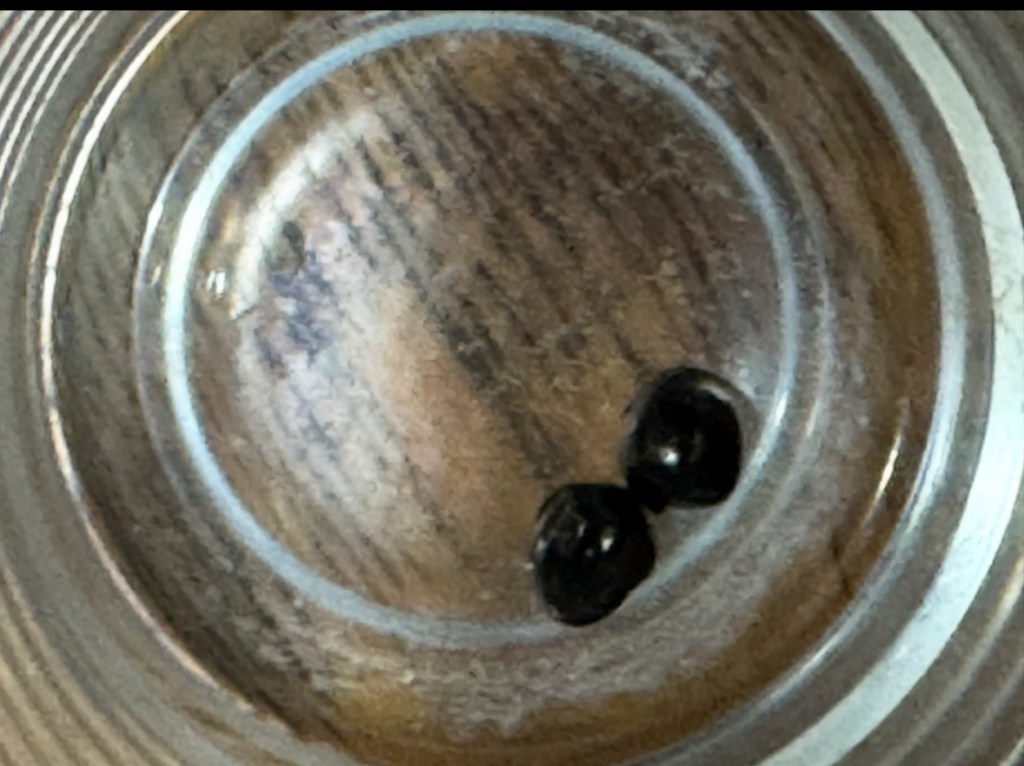
This morning I had quite a nice surprise – 6 new Mahala daylily seedlings came up in the little seedling pots! I continue to be amazed at the length of time this year’s seeds have taken to germinate. The Mahala seeds were planted in the starter pots on 4/23! Maybe the July heat, coupled with a few rainy days, was what they needed. With this nice surprise, I will leave the remaining planted Mahala seeds in the pots. Maybe more will still germinate.
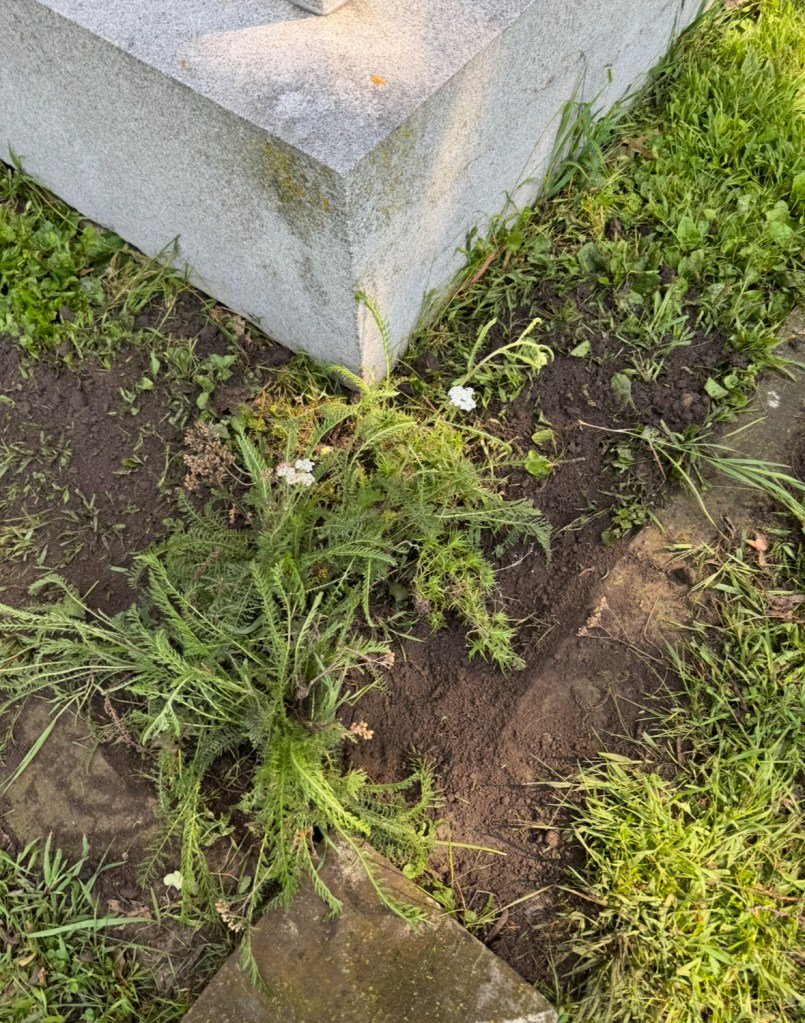
Another nice treat – a new daylily I planted at the historic cemetery last fall has also bloomed. Red Volunteer bloomed yesterday. She is every bit as beautiful as I hoped, and pictures do not do her justice. She has such a lovely presence! She will be wonderful part of the garden there.
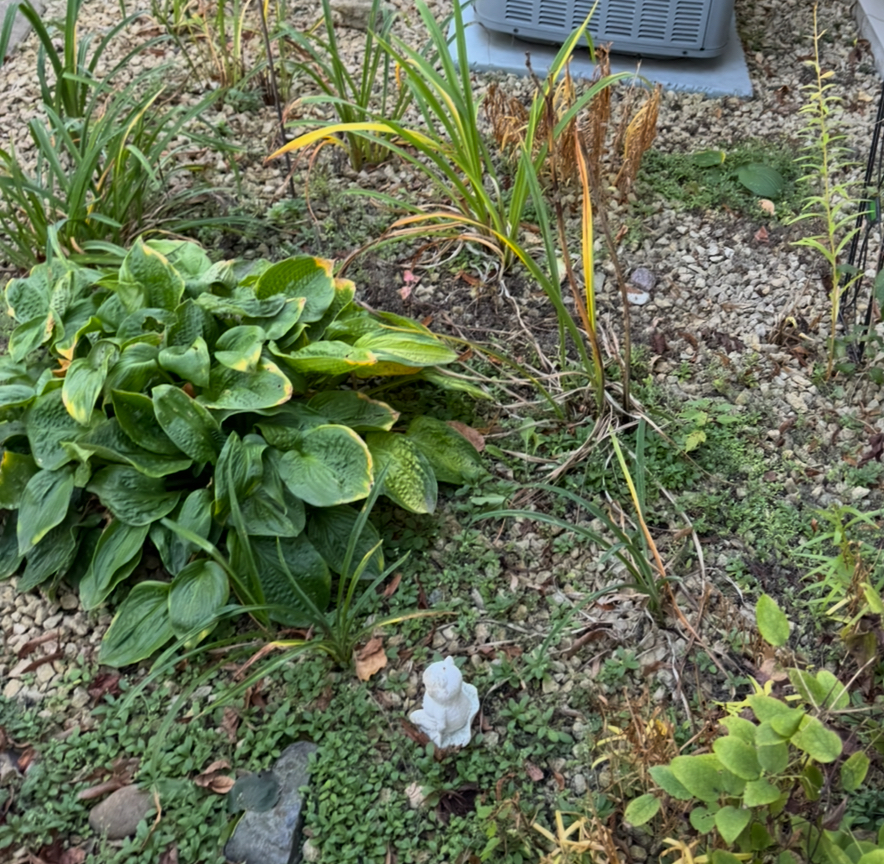
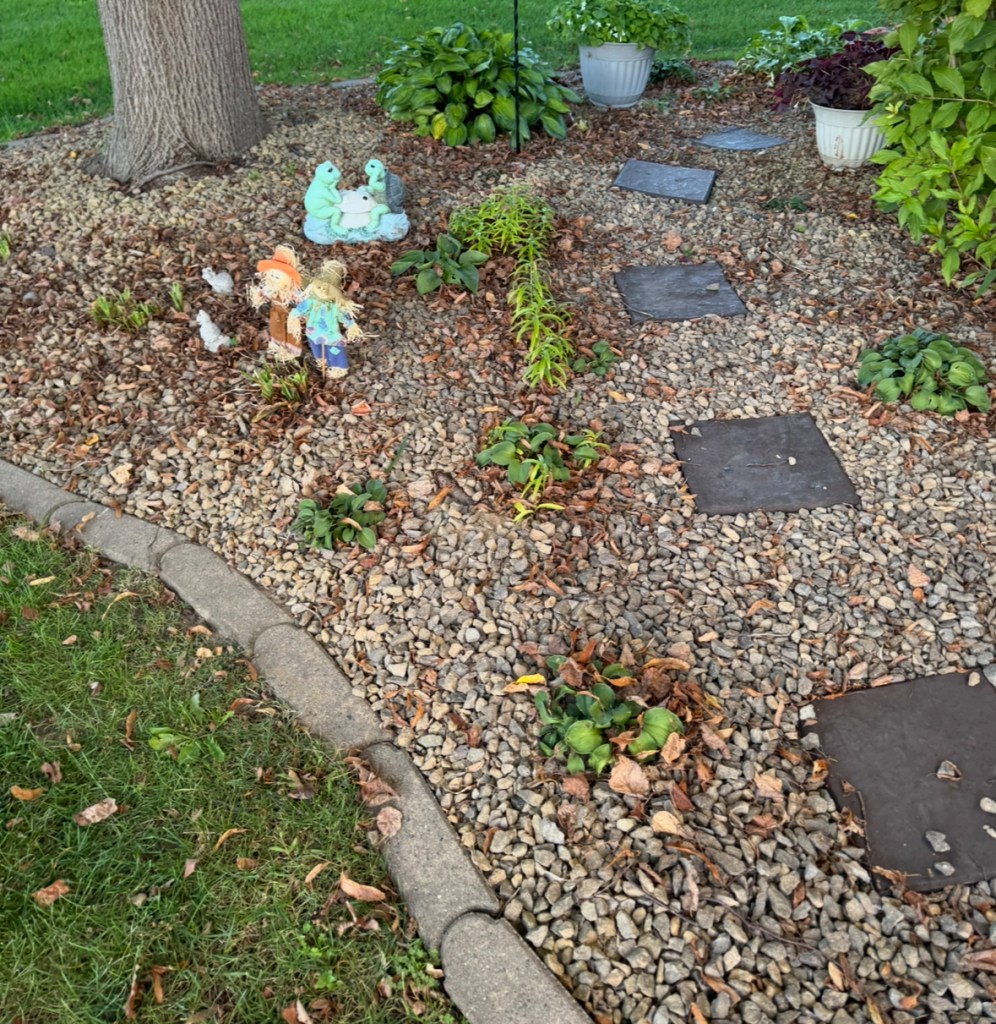
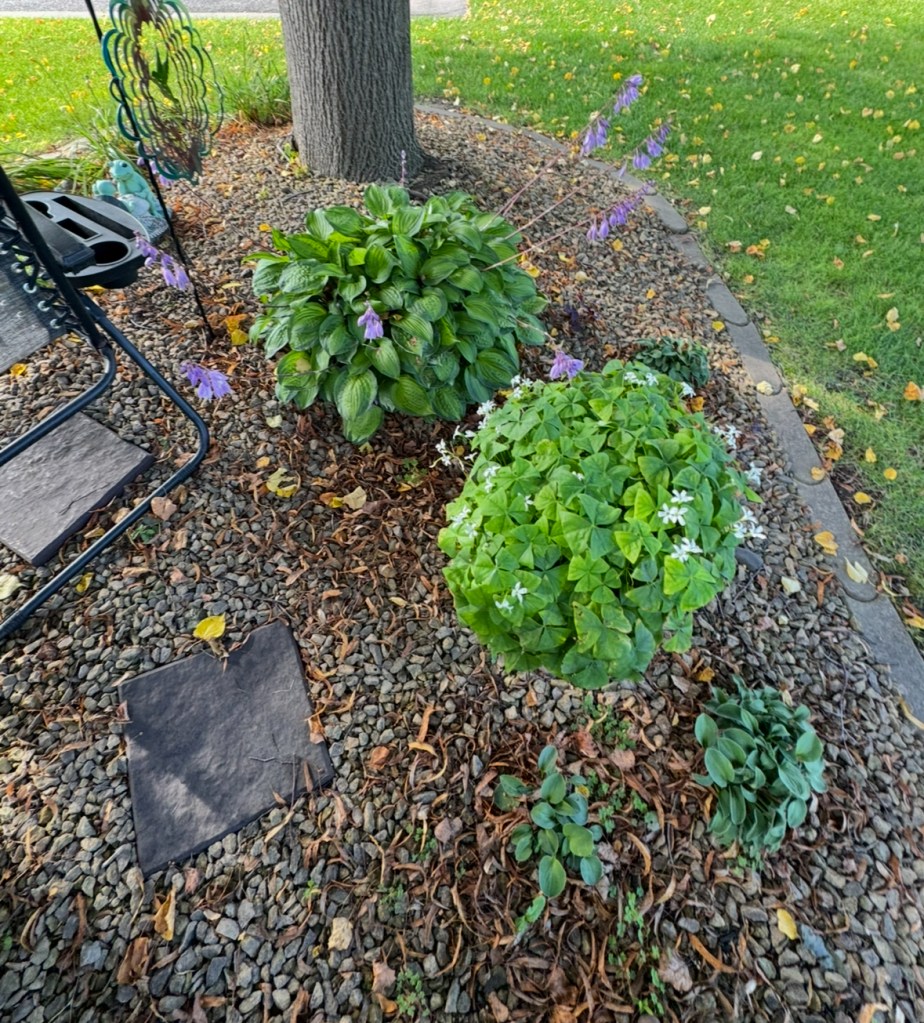
And, in the weirdest twist of the season, but a very welcome one – one, then a second, then a third, and today a fourth tiny baby hosta started to pop up in the spots where they were completely gone until a week ago, lost, even sunken ground. I have only seen that before when a plant has been dug up but a tiny part was unknowingly left behind. This whole lost hostas thing is so weird. I don’t know what to make of it. I will keep watching for more to revive.
This morning it was finally a bit cooler, so I got out into the garden with gusto. I did the last of the maintenance on the forget-me-nots that were wrapping up bloom, and then I cut the pink asian lilies all back to half height. They also wrapped up their bloom this past week. And, as my disciplined self 😉 reminded me, I needed to circle back and trim the peach asian lily stem I forgot last week, so I did that. It would have been kind of fun to see if it made seed, but, as I discovered this morning, I am already short of seedling box space 😉 We shall stick to the plan. Daylily propagation only.
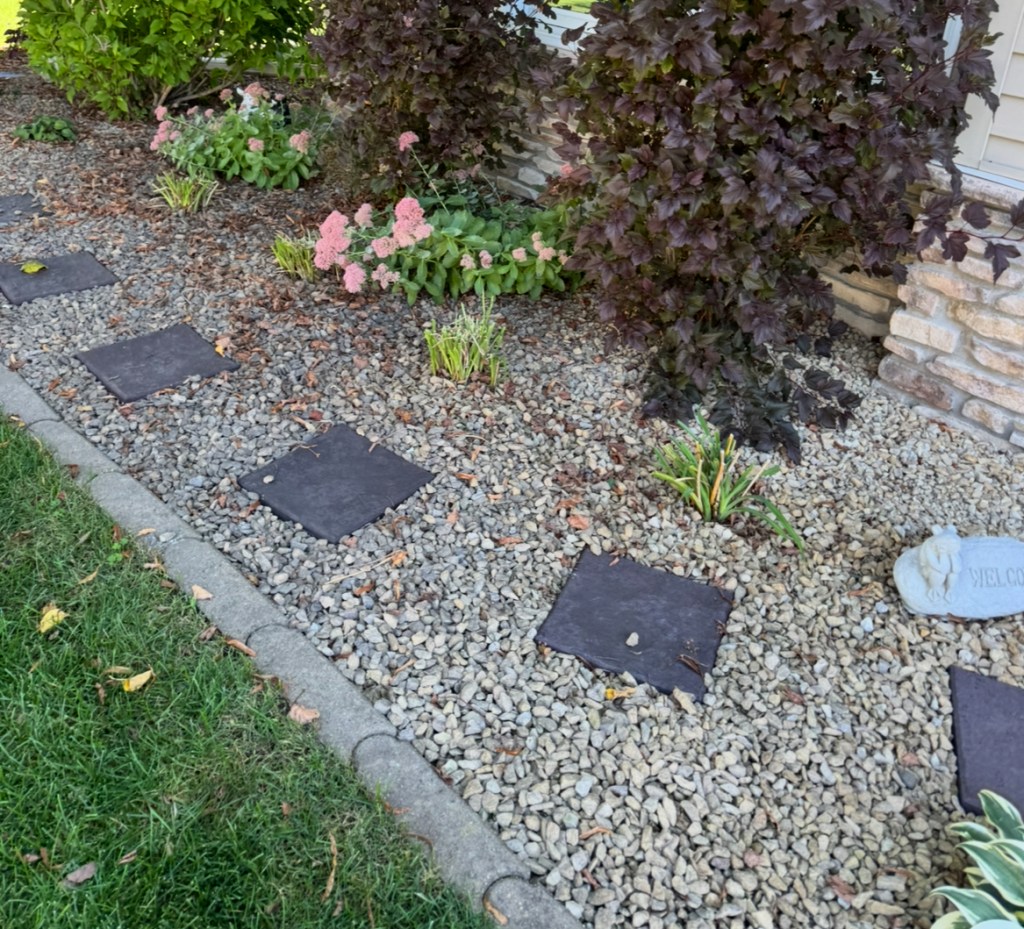
With the forget-me-nots largely gone, this week I also did some additional research on eco friendly mid-season bunny, squirrel, and other digger repellent. Lemongrass came up in my reading, and I already had some diluted in a spray bottle, so I gave the pavers a spritz. We will see how that goes. So far, whatever was digging in the shamrock plant has stopped.
The daylilies are starting to bloom now, and the garden is ready for me to do crosses. I have cleared the blooming forget-me-nots, made paths again to get to the daylilies that are farther back in the garden, cut back the plants that have already bloomed so they don’t go to seed, and found an additional eco-friendly digger deterrent to take over for the forget-me-nots that have been pared back.
Peach daylily is one of our oldest daylilies. Around 20 years. I bought two colors at the local big box store – pink and purple. Pink became peach and purple disappeared. I gave two peach clumps to my mother-in-law and one stayed here, all these years. Originally she was in the sun, but then as we went to a pellet grill she ended up way more in the shade. She began to bloom less and less until she stopped blooming altogether. Very sad. Two falls ago I transplanted her back into the sun. Last year she built up her foliage. This year she is back.
This morning it is raining and I almost missed her first return bloom.
Equal Opportunity will be this daylily’s name. It is a South Seas self seed and I think it is from 2020 seed. (I was way less concerned about documentation back then.) Equal Opportunity has everything on it’s debut – pleats, ribs, ruffles, smooth petals, “seersucker” type petals, along with many patterns. She’s kind of trying it all out. Equal Opportunity will, no doubt, work all of that out over the successive blooms and the year. We saw that with Hello Yellow too, and year 2 she is much more consistent. Oh goodness, she has it going on! It’s almost like she’s got some Pink Tirzah in her genetics. (I think she does shhhh)
About this time of year I start to make my fall list of garden changes/updates/refreshes. It can get to be quite ambitious in my mind, so getting it in black and white is important. To set healthy limits, I have a moratorium on in-ground to in-ground transplanting from late June to the beginning of September. That timeline gives me time to focus on the daylilies during bloom, and it helps give me a chance to fully assess the gardens’ future needs. It also keeps me remembering that the September heat adds to the transplanting effort and curbs my “enthusiasm”, which in turn keeps the list manageable. So the list has begun. #1 at the townhouse is dividing and transplanting more of the Blue Mouse Ears hostas. This one is already part of a long-term change for the gardens. Those Blue Mouse Ears started fairy ringing a few years ago. I divided and transplanted a few clumps last year and they are doing well, even scaping out and blooming.
The divisions this year will follow last year’s pattern, moving them more into the shade. I want to reestablish a path to the back of the garden again, so the hostas I divide will move into that area, giving more layering, which also keeps weeds down, and then the space where the Blue Mouse Ears hostas will come out of will become a footpath again.
The forget-me-nots are winding down their bloom and getting pulled out. They are biennials so as I pull more and more, only leaving them for a bunny deterrent, they will stay – but in significant moderation. I do miss them a bit, but you can imagine what I don’t miss. I don’t miss how the tall stems cling to anything fabric. So the decision is – they are awesome bunny repellent but they are not going to be taller parts of “bouquets” going forward. They can stay low. A sweet sentimental part of our garden.
The peach asian lilies are done blooming, and they have now been cut back to half height. All except one I missed. I do like that they not only look tidier but that cutting them back preserves their energy from going to seed. Oh, believe me, I am tempted to let the one I missed go to seed, but I researched to remind myself on why I don’t grow Asian lilies from seed, and to get success with bringing harvested Asian lily seed to bloom it takes a series of stratification steps, followed by 3-7 years as a seedling, before bloom. I think I may say no to that wonderful opportunity this year at least. Probably longer.
Speaking of years, 7 years in to my daylily propagation journey, I am now growing enough daylily seedlings, to bloom, to keep me (and the historic cemetery) more than good. This year we have three new daylily seedlings with scapes, and the 2024 seeds are popping up more for the future. The cloches are on the seedlings, and the Mahala Felton seeds that don’t germinate this week are going into the shamrocks with their dirt. They still will have a chance, just not a dedicated space.
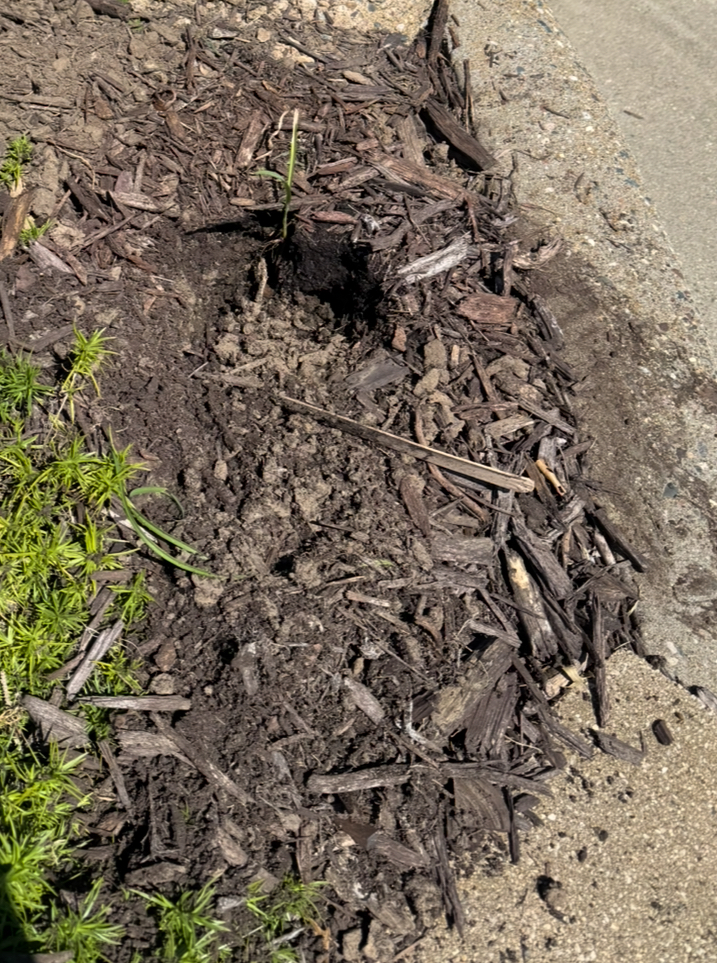
And the shamrocks? I don’t know what is going on there. Birds or bunnies or squirrels or something are starting to dig at those pots again, so I am going to do an experiment. I am going to put them in the ground in a spot where we lost a hosta. That spot is already growing some shamrocks from bird, bunny, or squirrel damage I missed collecting earlier this spring. We had a friend who somehow managed to grow them perennially, outdoors, in the ground, here in Minnesota, even though they are not supposed to be winter hardy. At this point they are getting distroyed anyway, and I have plenty saved in the house, so no big. It will be an adventure. Could be I grow them as annuals in our garden forward. Or we could have a new perennial. We shall see.
Finally, I have a seedling from the early years when I was doing uneducated crosses that is baffling me. I have looked and looked at pics and notes, and it sure looks like I successfully crossed Pink Tirza with a tetraploid. That’s what the envelope said (my handwriting) when I planted it. That should not have worked, as Pink Tirza is supposed to be a diploid. Very odd. Maybe something got crossed before I did the cross. We shall see how that matures.
Other than that, Red Volunteer bloomed its first bloom since I planted it last year at the historic cemetery, and I missed it. Hey, that’s how it goes. It has another bud that looks like it might bloom soon – maybe the 4th of July 😊
And finally, July 2nd was the 162nd anniversary of Gettysburg where one of the historic cemetery’s residents, James Akers, was killed in action.
This year I finished up adding purple irises to both sides of the fence garden. I am hoping they bloom for Memorial Day next year.
Wishing you a wonderful 4th of July if you are in the United States, and a beautiful week ahead.
Molly Cowles was the wife of SGT Asa Cowles, an American Revolutionary War patriot. SGT Asa Cowles and his brothers served in the Revolutionary War. One of his brothers did not return. His brother was taken as a prisoner of war and was assumed to have died in an English POW camp. The Cowles were patriots. How do I know this, and why? Well, it is a long story. I could give a short answer, but it really didn’t happen that way. In fact, I never would have researched anything about the Cowles had I not gone on the path I will share. The long answer to why I have this information really started many years ago with a grade school field trip I chaperoned for one of our sons’ classes. That is when history actually came alive for me. Before then I just could not get excited about paper maps being rolled down from the ceiling and wooden pointers showing us war locations and routes. I really tried. I did! But for some reason while math and English kept me wide awake, I kept dozing off in history class. Literally – dozing off. Arrggghhhh. But … I married a historian. Yah, absolutely true story. And one of our sons had that school field trip to a historic site and I agreed to be a chaperone. Well … I loved that site. Way more than our son did hahaha! It made history come alive for me. Next thing you know we were reenacting and doing historic rendezvous, in a tipi and then a wall tent. I know, crazy. So, you see, I was more interested in the everyday lives of the historic people at that point in my life, much more than the war maps in classrooms of my teen years. But everyday life history is harder to find. It is the bigger things that stand out, get documented – discoveries, settlements, births, wars. Sometimes occupation. Fast forward, many years later we moved to our current town, and my friend who is a long time historian got me hooked into local history. But wow, she is good! She got me back in through gardening. Yah, gardening. Probably because she knew this girl was not reenacting anymore. I was pretty clear about that 😉 And there you have it. Regarding history, I volunteer garden at a historic site cemetery and do garden stuff in honor of some pretty cool historic people. One of those people is Mahala Felton, the first white woman settler to our area. As that research project unfolded for me, I realized Mahala Felton’s incredible contribution to local history. I decided to name a daylily for her. And I shared the incredible history I had learned in a four part blog. I was thinking at that point that I would take a break from researching, but it was not meant to be. The answer to how I know about SGT Asa Cowles falls in the timeline at the end of my research on Mahala Felton. About that time my sister shared our ancestry chart. I was intrigued by a very unique name (Sempronia) in our family genealogy. I might have stopped there, and missed SGT Asa Cowles, but somehow the name Tirza popped up. A very unusual, yet very familiar name to me – Tirzah. As in Pink Tirzah, the daylily. Pink Tirzah has a very storied history in my garden that I shall not recount. But suffice to say, Pink Tirzah overcame many obstacles and today she is thriving. She is now knocking it out of the park. Pink Tirzah was my most successful pollen source last year. Go Pink Tirzah! But I digress, slightly. I found Tirzah Cowles but she was not in our lineage. Her brother was. And their father was SGT Asa Cowles. Now stick with me here, because I suspect, as we used to say while sitting around evening campfires at rendevous, telling stories, it will seem like this is a “smoke goes up, heads north, and makes a hard turn right” but it is not. This all ties together, I promise.
My husband and I agree on names for my daylilies. Some of my intentional crosses get female names. That’s just how it rolls. We chatted one morning about all this and agreed. The Pink Tirzah cross will be named Molly Cowles.
There may be more female names from our genealogy. I thought I saw a Civil War reference somewhere along the way but didn’t pull that url. It looks right now like our lineage goes back to Jamestown, but we shall see. We are still researching. I will write more as we go.
For the past few weeks the Asian lilies have been blooming, the remaining hostas have been scaping out, and every day I have seen more daylily scapes. The spots where we lost all the hostas have been reassigned to match our new phase of gardening here, clover has increasingly been removed, and bunny deterrents are in place.
Did you know that forget-me-nots don’t even need to bloom to deter bunnies? It is the leaves that emit a scent that the bunnies don’t like. So I am plucking away on blooms as the stems start to fall over. The flowers are pretty, and make nice little bouquets with the daylilies, but the leaves are what deter snacking bunnies.
That being said, I am also judiciously pulling the forget-me-nots where I want paths to legacy daylilies I want to use for crosses. Lots of transition in place, and the forget-me-nots are at the very top of that list. They will definitely stay, just more strategically placed.
Another fun fact – Did you know that gardens also bake donuts? Yes indeedio! Here is proof.
I have a number of layering (bouquets) in the garden, and I am embracing them more and more as I move into this next phase of the townhome gardens. Maybe the donut will get some friends. We shall see.
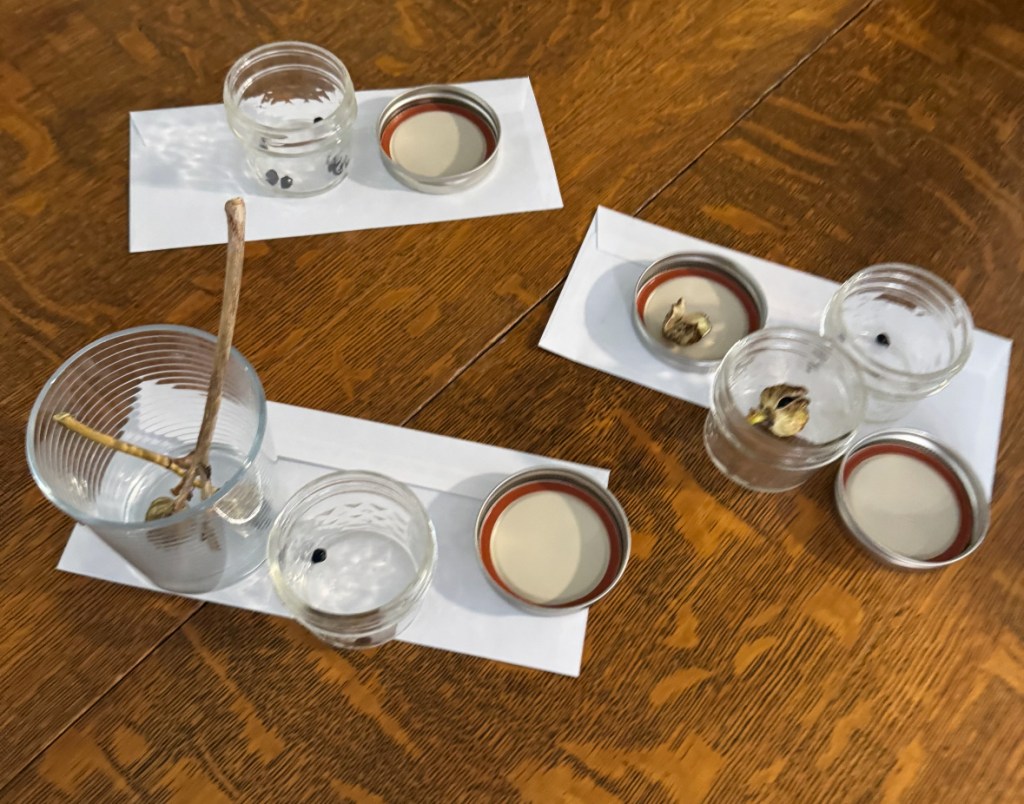
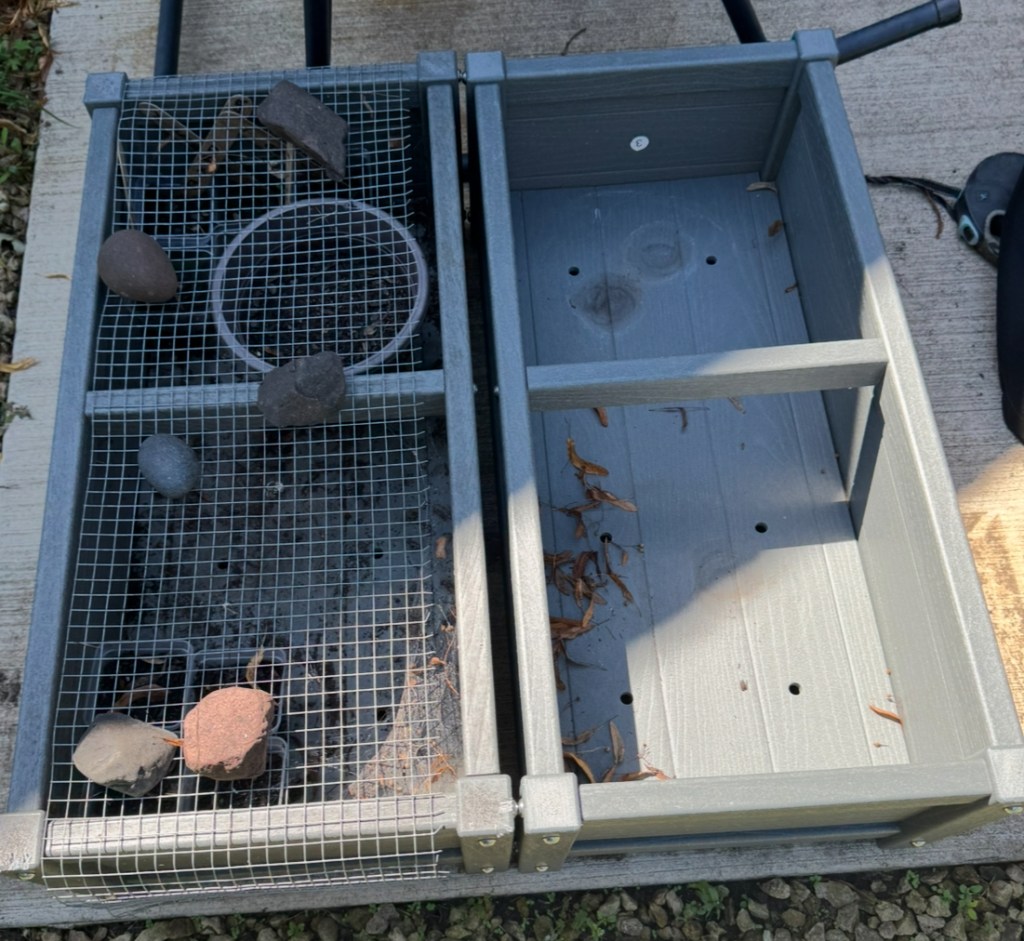
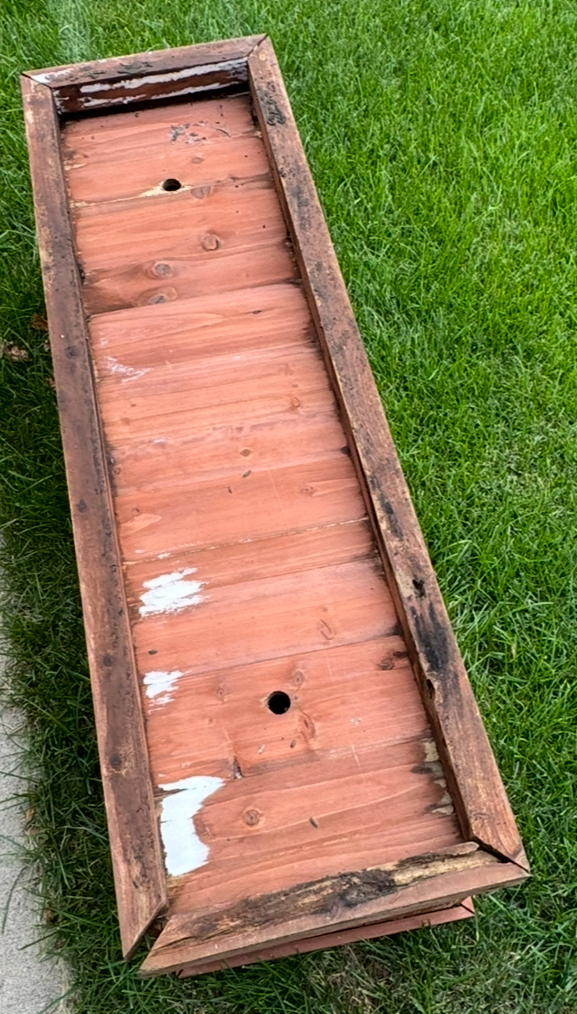
On the daylily scene, all daylily seeds harvested here in 2024 are now planted, and the seedling boxes are full, protecting them from the squirrels. I also still have a tray of planted seeds inside. I could make room in the current seedling boxes, but I want to give the Mahala seeds that haven’t germinated just a little more time. You never know.
Sadly, a few of our legacy daylilies don’t seem to be scaping out this year. That means it is division time for them this fall. More shifting. More adjusting to this next phase. And as the garden ages out on legacy plants and adds more daylily seedlings, eventually there will be a whole new look. Free as far as buying plants. And neat to see what is created. Kinda fun.