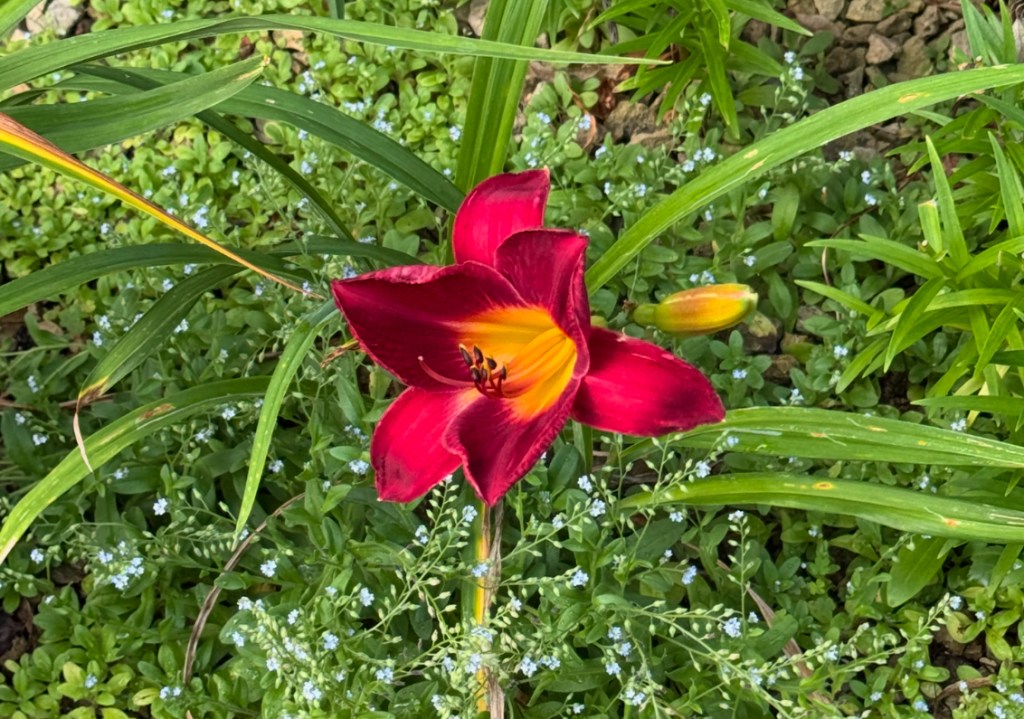
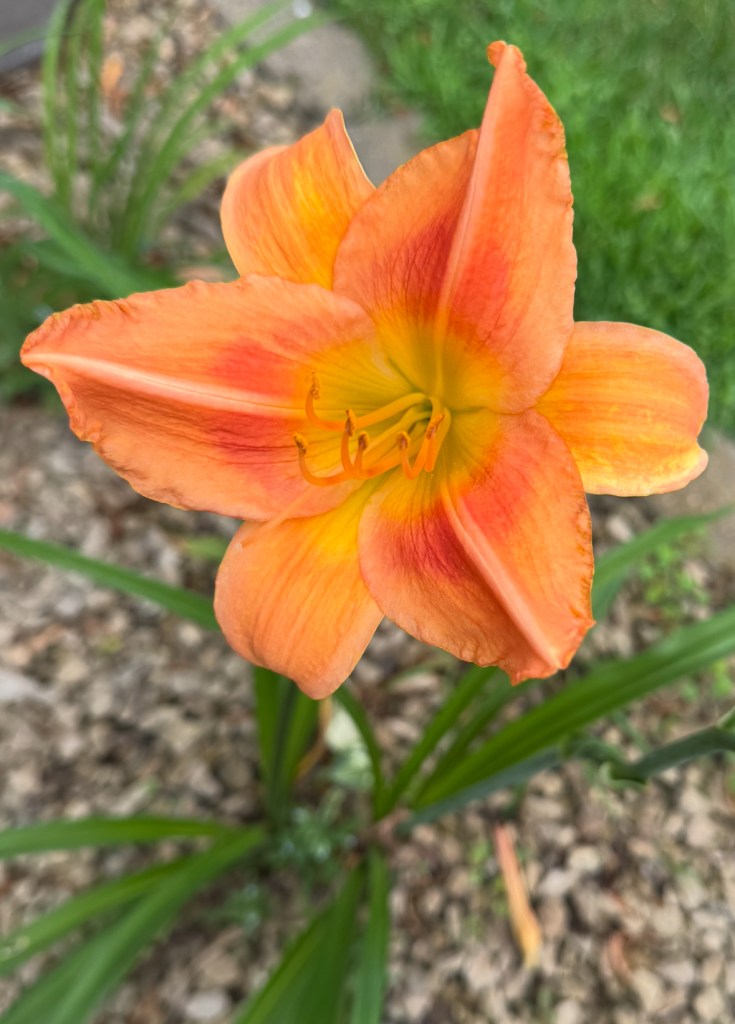
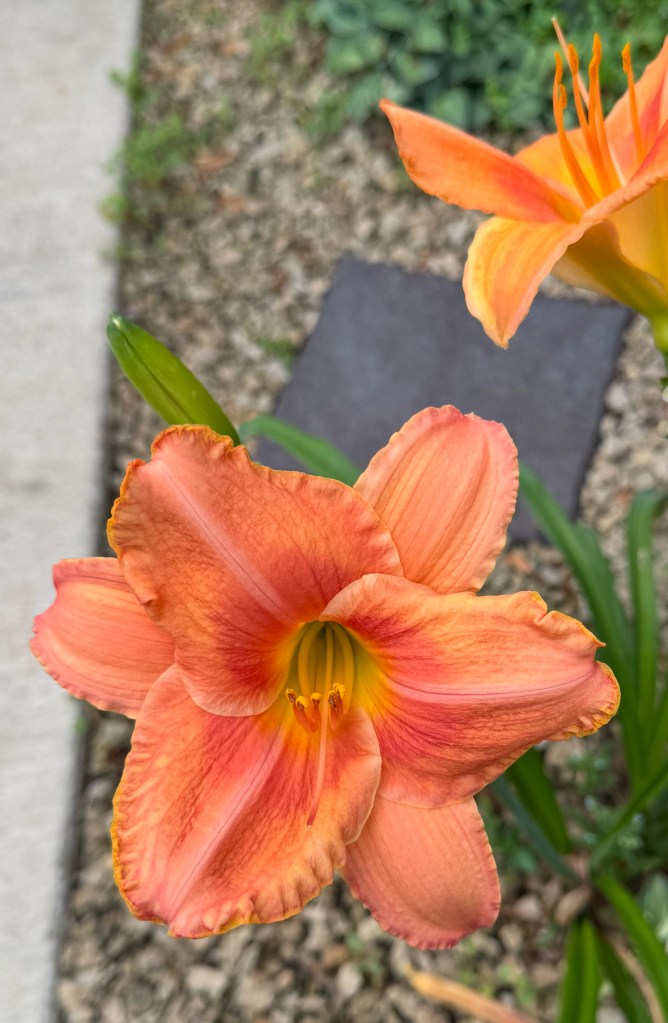
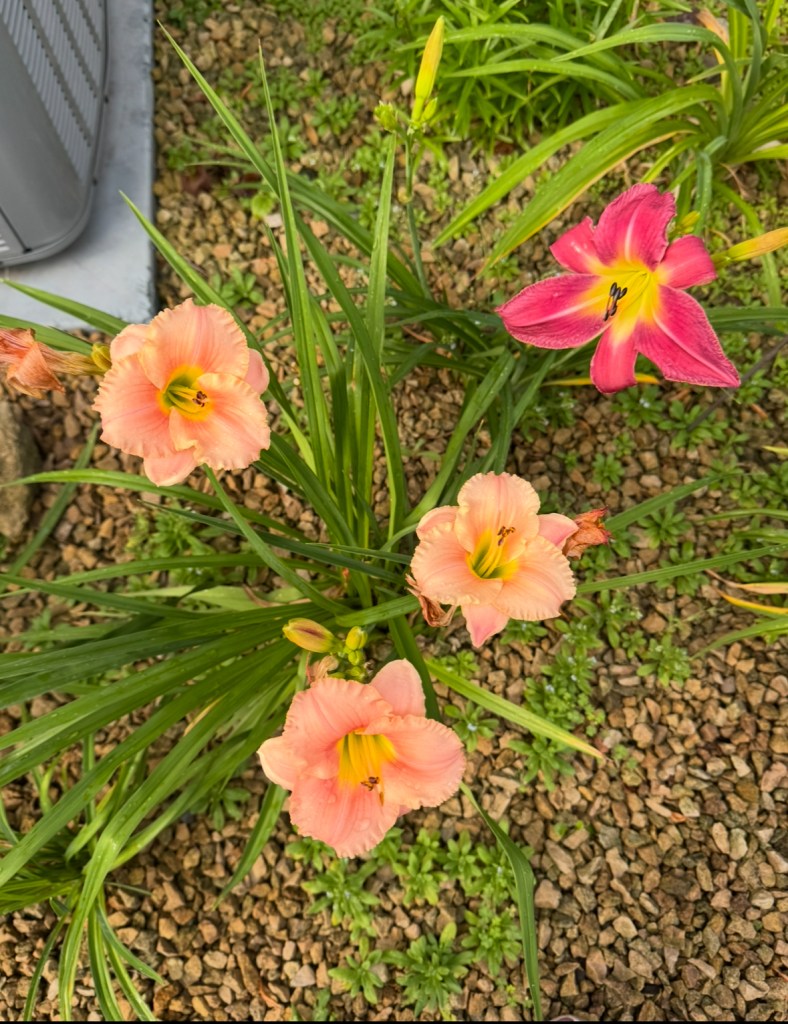
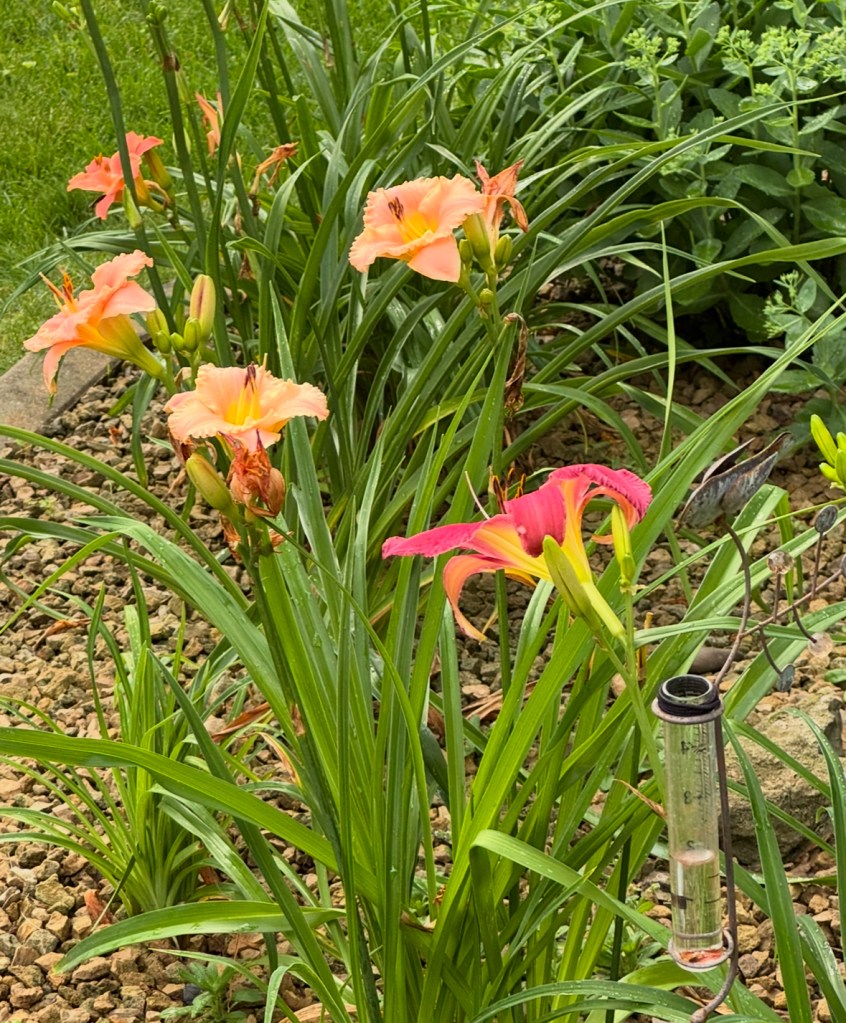
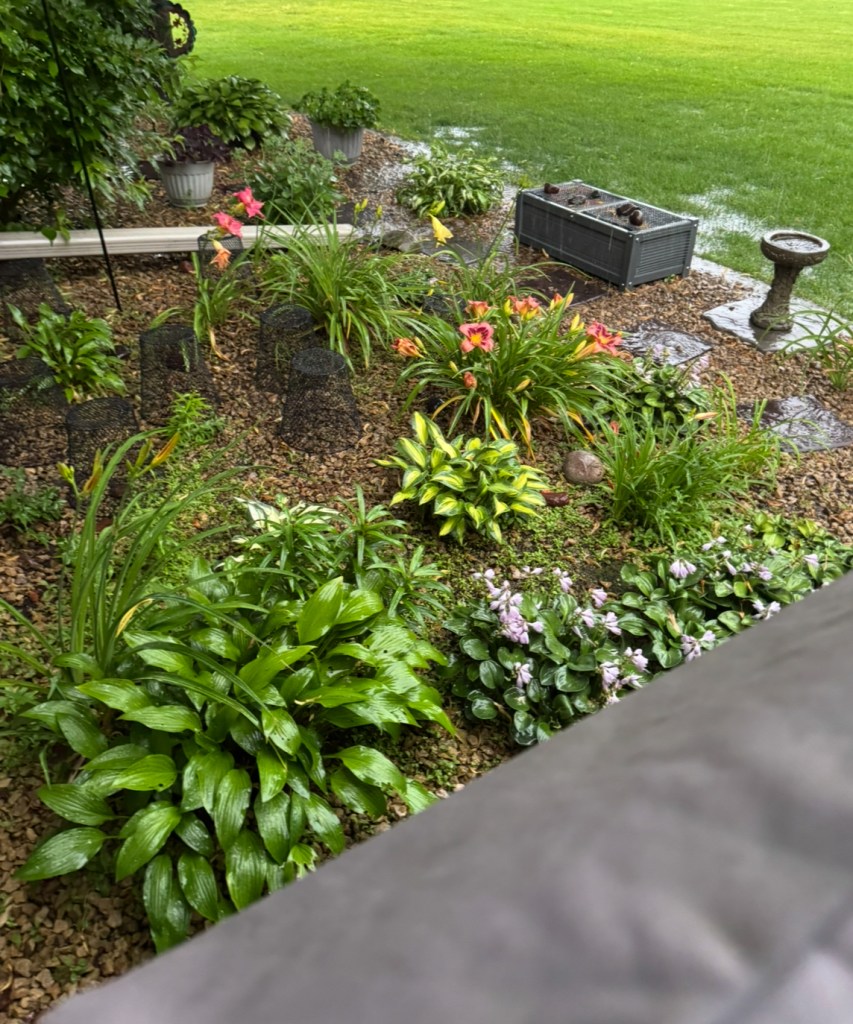
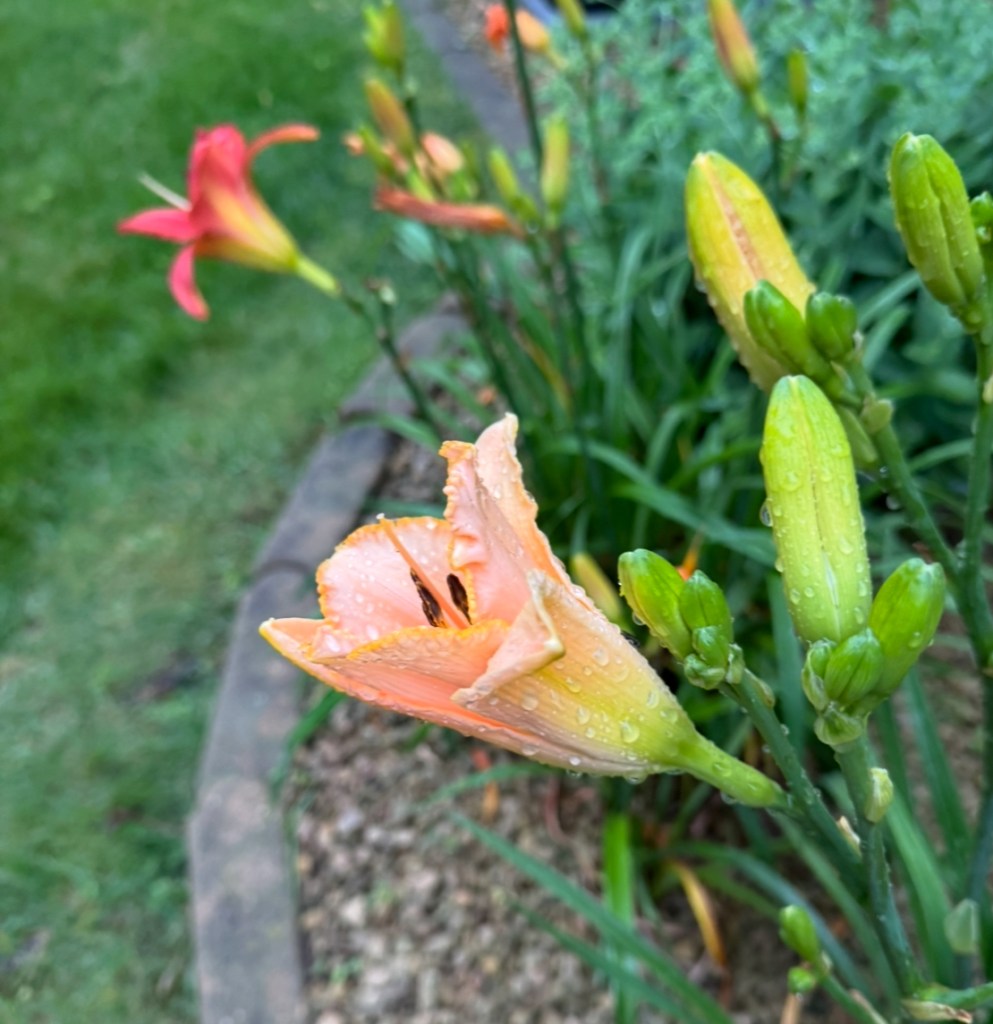
Today is my cutoff day for doing daylily crosses. I am, admittedly, a little bit sad, but I know it is a good decision. I don’t want to overwork the daylilies with pods, I am fatigued myself on all the planning and crossing and documenting, and I want to have a fall, too. If I stop now, all the pods should be through the maturity window by the time I want to stop watching for pods that are opening.
So today is it. I had all the crosses done by 10am, and now I watch and wait.
Although I do shudder a bit at the volume of crosses I have done this year, I have lots of good notes and lots of all types of pics. I also have been very pleased with the new seedling planters. I am set up with space for seeds that go to seedling next year, plus ways to protect the seedlings.
I am also reminding myself this is not the end of daylily bloom season, just the end of the crossing season. In fact, the late daylilies are not even at peak. I do, however, have all the crosses I want on those as well. So now I get to enjoy. Just enjoy. And get my creative mind going again on my fall list. What needs to be divided, what needs to go to a new location, what worked with the seedling boxes and what next year will pivot to on that setup.
I am also reminding myself this has been is a big change year for me. This hobby is now solidly very deliberate. I don’t random buy anymore. I don’t walk garden stores, seeing what they have chosen to stock. I like to see what is available through hybridizers and propagators, but I seriously consider things I did not before – timing, color compatibility, height, pollen and pod fertility, ploidy, parentage … It is still super fun, but with a specific focus I did not include before.
What happens next, yet this year? Divisions and transplanting work starts tomorrow. Not of the daylilies with pods, but of seedlings that need to come out of pots and go into the ground, and of hostas that need to be relocated. I am also looking at making sure I have paths for next year’s accessibility. If it is too hard to get to something I won’t use it for crosses. Totally OK, but again, needs to be intentional.
So tomorrow turns the corner to all that. I will continue to share as I go.
Happy wishes to you for good garden time until then!
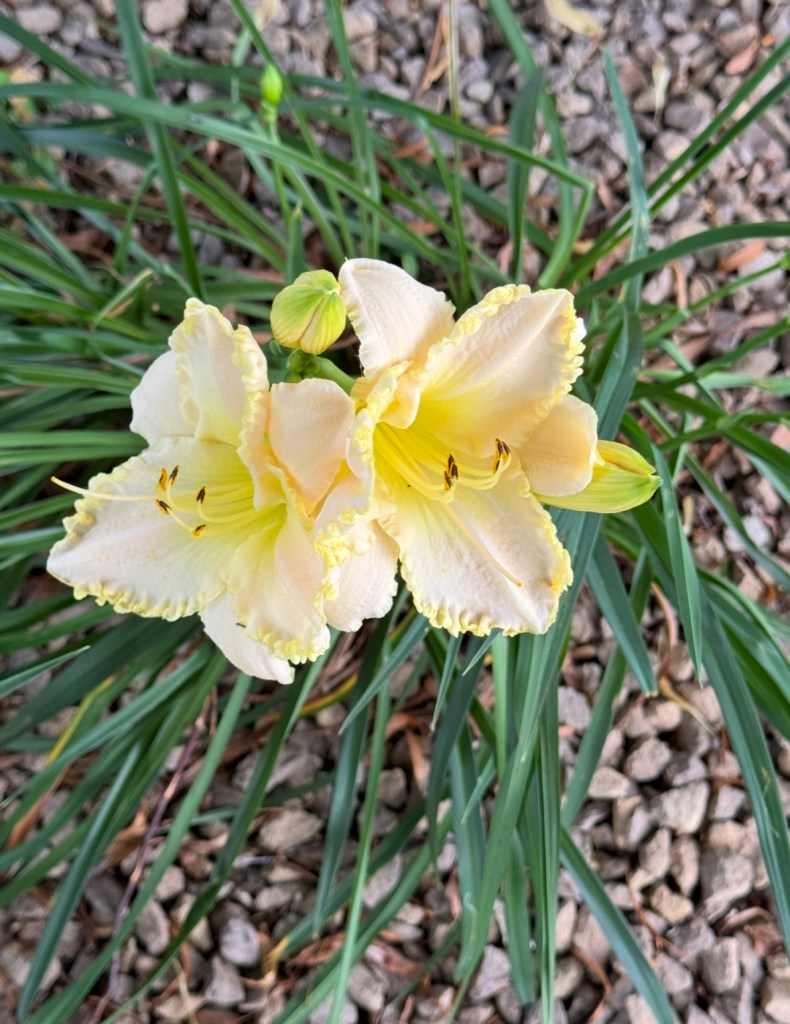
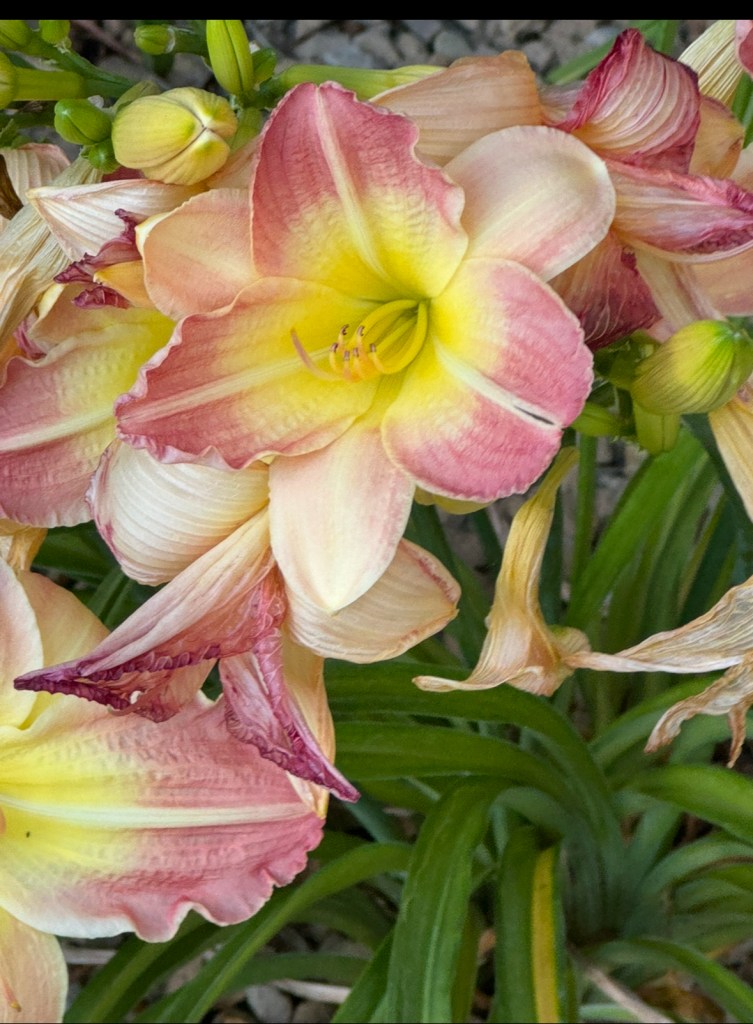
Marque Moon bloomed yesterday for the first time this season. She is, as always, absolutely beautiful this year.
Marque Moon has been in our garden for a very long time, so planning crosses with her is pretty easy. I had a number of crosses queued up waiting for her bloom and have done quite a few of those yesterday and today. There are just a few left, pending specific bloom, and then all of the crosses for the year will be done, at least once.
With Marque Moon’s bloom, we move farther into the time where I stop doing crosses for the season, and just enjoy the gardens. It gets to a point with crosses, as a hobbyist, and with the heat and air conditions that we have, where not only the daylilies wind down, but I myself begin to wind down. First, I start to want a day just enjoying the blooms, but then eventually I get to the point where I realize that “we’re good” with crosses. That’s where I am. Just a few more days to go.
Remember, by now I have done the crosses at least once, with many much more, and now we are at the volume stage. In deciding when to wrap up, I consider not over-stressing pod parents, how much I could reasonably plant and house next year if the crosses I have done would all go to seed maturity, and the pod maturity window. Then I set a date for myself when I will stop doing crosses. For me, this year, that date will be July 31. I am feeling it. Time to be done. Not with the daylilies, of course, but with crosses. And, of course, if we get self-seeds, I will let those stay.
A lot of work goes into more serious work on the crosses, a lot of documentation and tracking and planning and research. I am already considering scope for next year. I really enjoyed all the beautiful self-seeds this year, and they will be a part of the plan go forward. Maybe a bigger part than deliberate crosses. I am still considering.
But for now, the Marque Moon crosses will be done and documented, and then we watch. And enjoy late season beauty like this.
And continue the fall work list planning for 2026 improvements.
Volunteer. What a wonderful concept. Freely giving time and energy to accomplish something meaningful for and with others is a noble activity. It often gives back to the volunteer every bit as much as is given to the recipient. It is very humbling, and very rewarding. I highly recommend it.
The term Volunteer when speaking of daylilies brings an equally wonderful feeling for me. That a daylily seed from a daylily I own can fall to the ground, find a suitable place to germinate, and survive to seedling and eventually bloom is a wonderful treat for me. A gift.
I have been thinking about this. 1) Why would I not want those? 2) What can I do to encourage that (as another source of daylily creations) and still track the source? 3) Is self-seed not a form of volunteering? How wonderful is that?
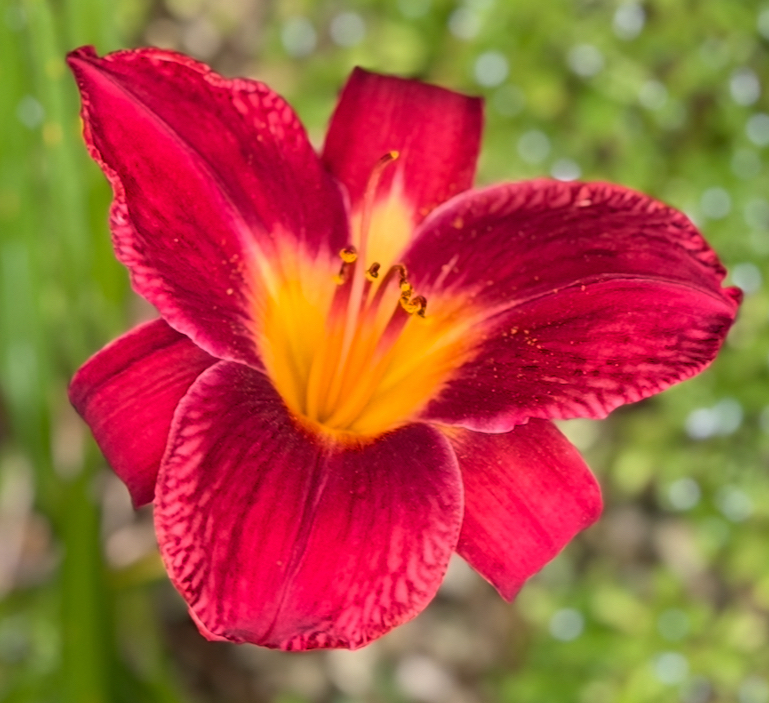
Today Red Volunteer, the daylily, bloomed for the second time in our townhome garden. I bought 3 Red Volunteer daylilies last year and planted two at the historic cemetery and one at the townhome. 2 of 3 bloomed this year. That in itself is awesome! Then the Red Volunteer that bloomed at the historic cemetery made – you guessed it – a self-seed. Oh yah. If that pod makes it to maturity, you can bet I will harvest it. And if the seeds are viable and go to seedling, you can bet I will plant the seedlings at the historic cemetery. Maybe even name them (all the same for the seedlings from that one pod of course). And what if it self-seeds again next year? The same? Could we run out of volunteer names? Not sure. But it would be wonderful to try!
Here at the townhome, I did deliberate crosses with the two Red Volunteer blooms this year. The first one – you guessed it – already has a pod. I am hoping the cross I did today is equally successful. Know why? Well … today I crossed Red Volunteer with Coral Majority. Coral Majority is very interesting. She is a super giver of pollen, she frequently self-seeds, and most often I cannot deliberately use her as a pod parent. She just isn’t built for that. She has very bold coloration, very often looks like she is tie-dyed, and is not a messy daylily. She drops her spent blooms pretty quickly if they don’t produce pods. Now doesn’t that have a lot of possibilities? And she is a child of South Seas, with a diploid in the parentage although both Coral Majority and Red Volunteer are tetraploids. Limitless ideas come to mind.
For this year, it only has the one chance. We shall see what is meant to be.
We are having a “calm” garden activity day again today. The daylily wind down has begun, and we are also having an on and off, sometimes very heavy rain day. No crosses were done today, but full disclosure, yesterday I kicked off the “wacky cross” period. I did an intentional “should not work” cross. It was probably good to take a break today haha.
I did that cross yesterday because I wanted to try a cross between two daylilies I really like. One is a diploid and one is a tetraploid that has a diploid in its parentage. What is the worst that can happen – it could fail? I took the chance. And I enjoyed the two daylilies all day. And more full disclosure, there will probably be a few more wacky tests in the weeks to come 😉 It is getting to be that time of year when I am willing to try those things. You never know. It could work. Last year, on a wind down season whim, I did the somewhat wacky color combo cross that got us the 28 Mahala Felton seeds. 24 are now seedlings. Yes, the parents were both tetraploids, so it was much more likely to succeed, but it was definitely on a whim. A very bold color cross that does not match the color palette I usually aim for. I am now very excited to see just how much it reflects the very bold Mahala Felton that I discovered in my historical research last winter.
We are also starting to approach the seed maturity window. After months of watching and tending the gardens pretty intensely, I like a little more freedom in fall when the bugs are down and the weather is getting nicer. I have learned from experience that I sometimes miss seed pod maturity when I get busy like that in the fall, so any seed pods I really really really want to catch need to be crosses done in the next couple weeks. The rest need to be ones I am ok potentially going to direct sow, or the squirrels or bunnies or birds 😉
On the bloom scene, we had one “first time seedling bloom” today. It was the last seedling scape of the season that was still pending bloom, and the reveal was a bit unexpected. It was a seedling I moved more into the sun last year. For expectation, I was going on my early years style of documentation. I was hoping for the Purple D’Oro that was in my documentation of the area I moved it from, but as the scape matured and the buds began to move to bloom, I began to suspect it was not going to be much like a Purple D’Oro. It was too tall and started to show red on the bud a few days ago. Still, I held onto hope that it was a very cool pollinator cross. Alas, today when it bloomed it looked exactly like the red daylilies we have en masse out front. It even has the signature curls at the end of the petals. That I absolutely love.
Seedling red daylily is definitely pretty, but not new. The red daylilies used to be in the area where the Purple D’Oro seedling was. I am guessing the Purple d’Oro seedling I documented did not survive and the red daylilies had a direct sow self-seed in that same area. Stuff happens. It will probably go up north as one of our “parents”.
And that leads to a further discussion on the plan that is forming for next year. It does go a few years back, for sure. Back to the years when I moved at least part of the garden to the little house up north (that we sold). In those years, we were moving toward a more “structured” look at the townhouse. At least in the front of the townhouse. We moved the red daylilies at the townhouse out of a more shady area in back to the front of the house and into much more sun. We had started with just a few big box bare roots and had grown them to the point where we had a lot of them. I wanted to further the development of our “red, white, and blue waves” theme out front. That was an awesome decision. And we are now “there”. In Spring the Bluebells clematis starts the wave. Then the red daylilies start blooming. For colorful interest, once they get going, we have at least a dozen and around peak two, even three dozen red daylily blooms each day. That wave gradually moves toward the less sunny area, and the red daylily blooms continue well into August. Just about that time the Marque Moon buds start to mature, and by the time the red daylilies start to wind down, the Marque Moon (creamy shimmery white) start to bloom. Even though they are old now and in the Linden roots, they still make a show. And the whole pattern ends at the Linden changing colors. There also used to be quite a few big hostas there, but I digress. The blue flowering hostas that are now in that area are earlier blooming, the Blue Mouse Ears divisions.
As I gradually move the daylily propagation to our land up north, the wave pattern will become de facto at the townhouse and will start to wrap around the back. Probably a different color scheme. Probably keeping more pastels. Simplified as I stop planting seedlings here. And with that decision made, now I can also start to look at what needs to be divided this fall and use that as my starting template to also bring mature daylily divisions up north. I want them to self-seed up north. I have pretty much fallen in love with self-seed, and I am thinking it will be quite a bit of my go forward approach. We have soooooo many pollinators up north. If the deer can be kept away from the daylilies, I am so excited to see what self-seeds we get. The daylily divisions we bring up can be our mature daylily test subjects, to see how the deer react to a few unprotected daylilies. Unlike the seedlings, in the spring, when the mature daylilies start to grow, I will need to remove the cloches. We shall see how that goes. It will definitely be a determining factor in the fencing approach. Step by step. This is a long game.
For today, before it rained, I worked on maintenance. One of those things was beginning to remove the scapes from the Blue Mouse Ears hostas. They are done blooming and I do not want them to spend any energy producing seed. I will be dividing more of the Blue Mouse Ears this fall, so I want to preserve their energy to help them handle division as well as possible.
And I did grab some pics to share before the rain started.
The South Seas only have five buds left after today. In our garden, 2025 is, without a doubt, the year of South Seas and family, and I am so excited to continue that as one of my focus lines.
The Coral Majority looked way less “wild child, tie dye” today. She and South Seas are the pollen rock stars this year.
And Pink Tirza wrapped up bloom out back today. I got two “wish list” crosses from her this year.
Naomi Ruth also continues to delight.
I am fully enjoying the 2025 blooms and even having a little extra creativity. And little by little we are moving into the staging for next year’s gardens and the start of the seedling garden up north.
I heard it again this week, and it is absolutely true: A garden is never done. Thank goodness 🙂
It is the time of year where I get to start relaxing my mind and start just following the palette of daylily crosses I have put together for the year, crosses put together depending on how and when each daylily bloomed. Yes, it is still a lot of work, but the template has been made, and now I get to spend more time really, deeply enjoying the second half of our daylily season.
Last Friday was our apex. The daylilies were blooming like crazy for days, and there were also spent blooms in various stages, still on the scapes, making pods. It is not my favorite “look”, but it is my craft. I let them do their best work, even if it means blooms that follow get a little compromised. It is actually my cue that the garden is about ready to move into the second half of the season. It is also a very good reminder to me that I am not the only one working on the garden. And nowhere is that more evident than in the self-seed blooms. They are all over the garden, too.
Side note – I need a spreadsheet to keep track of which daylilies are pollen producers only, pods only, and especially when I do a “one up” cross, either as a test or because I could not resist. And remember, not everything that worked last year is working this year, for both pollen and pod, and then there is rain and sprinkler patterns and location and age. It is … a lot. A lot that my very busy mind really enjoys. But there is even a point at which I say enough. This year it was the apex.
So back to self-seed. I cannot resist harvesting self-seed. This year we had quite a few South Seas self-seed seedlings go to bloom for the first time. I started this daylily propagation journey by harvesting self-seed, and South Seas is really good at self-seeding. (It could also be because I use South Seas pollen a lot, and that may cause self-seeding.)
All of the South Seas seedlings for all of the years up to 2023 seed harvest/2024 seedling, bloomed this year. And although I separated the years into separate plantings, I stored all of the South Seas self-seed harvest together, and the next year when they went to seedling, I planted them together, as a group, by year.
I am starting to see very different “looks” in the different yearly planting groups. The most dramatic has come through Equal Opportunity. Below are two scapes, and two different looks.
I love them both.
After seeing this year’s blooms, I get the feeling there is definitely a message go-forward. First, “Please don’t stop harvesting self seed!” (I won’t) and maybe even, “When harvesting self-seed – save, store, and plant each self-seed pod separately” (yet to be determined).
well … This year for the first time in at least a dozen years I only had two Purple d’Oro blooms. That was unplanned. I was staggering transplanting them. But the one I left was in the same area as all the big hostas that went missing, and it, too, is gone. The second bloom of the Purple d’Oro is happening today. I am thinking it might go to self seed. I already did a “one up” cross with the Purple D’Oro that bloomed earlier this week, and that same cross is not available today. Plus, today is supposed to be my enjoy and relax “no cross” day. We shall see. (The alternate looks a little shy to provide pollen today as well.)
Hey! what do you think of our newcomer? (Upper right corner) That is Carpenter’s Choice, a daylily I added last fall to the townhome garden. We shall not speak too much of another time I planted Carpenter’s choice. Suffice to say, it may or may not be blooming right now at the little house up north we sold a few years ago. A re-do buy and planting here was definitely in order.
This morning dawned just a tich on the cool side again – glorious! It almost felt pre-pre-fall. Very enjoyable! And we are reaching the middle of our daylily season.
About this time of the daylily season, in my gardens at least, a lot of blooms are going at once. And even overlapping.
Blooms are hard to access for crosses, they are sketchy to not disturb other blooms, and it gets kind of “not fun” to work through that. But it is beautiful!
So I am going to take a few days off crosses and just enjoy, and then we will be past the apex, and things should get easier to work around again.
Too bad because Naomi Ruth bloomed this morning for the first time this season.
Naomi Ruth going to be the next cross I try with red daylily. Pink Tirzah pollen in is not making successful crosses with red daylily this year so Naomi Ruth is going to be stepping in. Cuz red daylily is just to enticing to leave uncrossed.
But probably not today. Today is one of those days where we just enjoy a different type of look.